
Search
Search Results
##search.searchResults.foundPlural##
-

Predictors of cardiorespiratory endurance in martial arts athletes: A path analysis of body composition, hemoglobin, and motivation
Novanto Ponco Nugroho 1, Dani Nur Riyadi2, Aridhotul Haqiyah31. Universitas Islam 45 Bekasi , ID2. Universitas Islam 45 Bekasi , ID3. Universitas Islam 45 Bekasi , ID2025-07-01|page 83-94AbstractBackground: Cardiorespiratory endurance is vital to athletic performance, particularly in sports requiring sustained physical exertion such as martial arts.
Objectives: This study examined the predictive roles of body composition (BMI), hemoglobin concentration, and motivation on cardiorespiratory endurance among university-level martial arts athletes.
Methods: Using a quantitative path analysis design, data were collected from 20 purposively selected martial arts athletes who regularly trained. Cardiorespiratory endurance was assessed via the multistage fitness test, BMI was calculated using standard anthropometric measures, hemoglobin was measured using the Harenz scale, and motivation was evaluated with a validated Likert-scale questionnaire.
Results: The analysis showed that BMI (ρ = 0.705, t = 3.071, p = 0.007) and hemoglobin concentration (ρ = 0.946, t = 4.672, p < 0.001) had significant positive effects on cardiorespiratory endurance. Motivation, however, did not have a significant direct effect (ρ = 0.087, t = 0.853, p = 0.203). Additionally, BMI correlated positively with both hemoglobin (ρ = 0.923, p < 0.001) and motivation (ρ = 0.670, p = 0.034), suggesting indirect effects through physiological mechanisms.
Conclusions: The findings underscore that physiological indicators, specifically BMI and hemoglobin, are more critical predictors of aerobic capacity than psychological factors like motivation in this athletic population. Due to sport-specific demands, these results may not be generalizable to non-martial arts athletes. Future studies should incorporate additional mediators such as training intensity and account for potential self-report bias in motivation assessments.
APA Citation StyleNugroho , N. P. , Riyadi, D. N. , & Haqiyah, A. (2025). Predictors of cardiorespiratory endurance in martial arts athletes: A path analysis of body composition, hemoglobin, and motivation. Physical Education and Sports: Studies and Research, 83-94. https://doi.org/10.56003/pessr.v4i2.559 -

The relationship between arm length and body mass index (BMI) with turbo-throwing performance in elementary school students
Awaliyah Riskyta Putri1, Siti Nurrochmah21. State University of Malang , ID2. State University of Malang , ID2025-07-01|page 115-124AbstractBackground: This research is motivated by insufficient scientific research that specifically examines the relationship between arm length and Body Mass Index (BMI) on turbo throwing performance in elementary school students, especially in preparation for the National Student Sports Olympics (O2SN).
Objectives: This study examines the relationship between arm length and BMI and the turbo-throwing performance of sixth-grade students of State Elementary School Bunulrejo 1 Malang in preparation for the National Student Sports Olympics (O2SN) in 2025.
Methods: The method used is a quantitative descriptive design with a correlational study. The study population comprised 71 male students, with a sample of 45 male students. The research instrument was a turbo-throwing basic motion performance test, arm length measurement, and Body Mass Index (BMI) measurement. The analysis technique uses inferential statistics in the form of multiple correlation analysis, which is complemented by multiple regression analysis.
Results: The results were obtained using inferential statistics through multiple correlation analysis. The results of the multiple correlation test obtained a coefficient value = 0.723 and Sig. P = 0.001 < a = 0.05, and the contribution of the variable effectiveness of arm's length to turbo-throwing performance is 46.3%, while BMI is 5.9%, so the variables arm length and BMI provide an effective contribution of 52.2%.
Conclusions: Arm length and BMI significantly influence turbo-throwing performance. Arm length is the most dominant factor. These results can be a reference for teachers and coaches when selecting O2SNs and coaching athletes at the basic education level. Future researchers are expected to examine other variables that have not been studied to provide a more comprehensive picture of turbo-throwing performance.
APA Citation StylePutri, A. R. , & Nurrochmah, S. (2025). The relationship between arm length and body mass index (BMI) with turbo-throwing performance in elementary school students. Physical Education and Sports: Studies and Research, 115-124. https://doi.org/10.56003/pessr.v4i2.563 -
Associations of lower limb muscle strength and body reaction time with crescent kick performance in competitive pencak silat athletes
Jery Setiawan1, Siti Baitul Mukarromah21. State University of Semarang , ID2. State University of Semarang , ID2026-08-17|page 208-219AbstractBackground: Crescent kick performance is an important technical component of competitive pencak silat and may be associated with physical capacities such as lower limb muscle strength and reaction time. However, evidence regarding the relationships of these physical characteristics with crescent kick performance remains limited.
Objectives: This study aimed to examine the associations of lower limb muscle strength and body reaction time with crescent kick performance among competitive pencak silat athletes.
Methods: This quantitative correlational study involved 30 competitive pencak silat athletes (age: 19.8 ± 2.1 years; height: 168.4 ± 6.3 cm; body mass: 61.7 ± 8.2 kg; body mass index: 21.7 ± 2.3 kg/m²) recruited using total sampling. Lower limb muscle strength was assessed using a leg dynamometer, body reaction time using a reaction timer, and crescent kick performance using a 10-second crescent kick test. Data were analyzed using descriptive statistics, Pearson correlation, and multiple correlation analysis, with statistical significance set at p < .05.
Results: Lower limb muscle strength was positively associated with crescent kick performance (r = 0.734, p < .001), whereas body reaction time was negatively associated with crescent kick performance (r = -0.739, p < .001), indicating that shorter reaction times were associated with better kick performance. Multiple correlation analysis showed a strong combined association of lower limb muscle strength and body reaction time with crescent kick performance (R = 0.754, R² = 0.568, p < .001). Together, these variables accounted for 56.8% of the variance in crescent kick performance.
Conclusions: Greater lower limb muscle strength and shorter body reaction time were associated with better crescent kick performance among competitive pencak silat athletes. These findings highlight the relevance of muscular strength and neuromuscular responsiveness to crescent kick performance and may inform physical conditioning programs for pencak silat athletes. Further studies with larger samples and additional biomechanical, physiological, and technical measures are needed to better understand the factors associated with crescent kick performance.
APA Citation StyleSetiawan, J. , & Mukarromah, S. B. (2026). Associations of lower limb muscle strength and body reaction time with crescent kick performance in competitive pencak silat athletes. Physical Education and Sports: Studies and Research, 208-219. https://doi.org/10.56003/pessr.v5i2.762 -

The association between healthy dietary habits and physical fitness among junior high school students: A rural school case study
Moch. Yunus1, Yulingga Nanda Hanief2, Muhammad Putra Ramadhan3, Erika Ayu Sylvianingrum41. State University of Malang , ID2. State University of Malang , ID3. State University of Malang , ID4. State University of Malang , ID2025-12-30|page 344-354AbstractBackground: The health conditions of the community, particularly in relation to the physical fitness of junior high school students, require serious attention, especially in rural areas that differ significantly from urban areas. Previous research findings on dietary patterns and physical fitness still show inconsistent results.
Objectives: This study aims to investigate the relationship between healthy eating habits and physical fitness among junior high school students residing in rural areas.
Methods: This study used a quantitative design with a cross-sectional approach. The research subjects consisted of 27 students from public junior high schools in rural areas, selected through a balanced stratified random sampling process that involved all grade levels. Eating habits were measured using a 24-hour food recall, as it is an effective method for monitoring food intake over a short period. Physical fitness was measured using the Nusantara Student Fitness Test (TKPN), a national standard instrument. Data analysis was performed using descriptive statistics, Spearman's correlation, and linear regression.
Results: Most of the study participants were underweight with varied eating patterns. The analysis results showed no significant relationship between physical fitness and healthy eating patterns, as indicated by a correlation coefficient of 0.061 and a p-value of 0.764. The small effect size suggests that eating patterns did not have a significant impact on fitness levels in this group of participants.
Conclusions: The study shows that rural junior high school students achieve their physical fitness through exercise and their exercise-rest patterns and their inherited characteristics rather than their diet.APA Citation StyleYunus, M. , Hanief, Y. N. , Ramadhan, M. P. , & Sylvianingrum, E. A. (2025). The association between healthy dietary habits and physical fitness among junior high school students: A rural school case study. Physical Education and Sports: Studies and Research, 344-354. https://doi.org/10.56003/pessr.v4i3.665 -

Low-impact specialized pilates is better than low intensity steady state for increasing fitness level
Laily Mita Andriana1, Kunjung Ashadi2, Fransisca Januarumi Marhaendra Wijaya3, Muhamad Fauzi Antoni41. Universitas Negeri Surabaya , ID2. Universitas Negeri Surabaya , ID3. Universitas Negeri Surabaya , ID4. Universitas Negeri Surabaya , ID2025-07-13|page 139-151AbstractBackground: Elderly individuals with disabilities often face challenges in maintaining physical fitness, highlighting the need for effective and appropriate exercise methods tailored to their limitations.
Objectives: This study compares the effectiveness of low-impact specialized Pilates and Low-Intensity Steady-State (LISS) exercise in improving fitness levels among older adults with mild to moderate disabilities. The unique advantage of Pilates in enhancing balance and core strength is presented as a novel contribution.
Methods: A quasi-experimental design with pre-test and post-test assessments was employed, involving 40 elderly participants with disabilities divided into two intervention groups over 8 weeks. Participants were selected through purposive sampling based on the inclusion criteria of 60–75 years with mild to moderate disabilities. Fitness levels were assessed using the Senior Fitness Test, which evaluates muscular strength, balance, flexibility, and aerobic capacity.
Results: Data analysis was conducted using the Shapiro–Wilk test, paired sample t-test, and independent sample t-test. The results demonstrated that the low-impact specialized Pilates group showed significant improvements in core strength, balance, and flexibility, whereas the LISS group exhibited greater improvements in aerobic capacity.
Conclusions: In conclusion, low-impact specialized Pilates is more effective in enhancing overall fitness among elderly individuals with disabilities. Therefore, it is recommended as a suitable exercise modality for rehabilitation and health maintenance programs to improve this population's quality of life and functional independence.
APA Citation StyleAndriana, L. M. , Ashadi, K. , Wijaya, F. J. M. , & Antoni, M. F. (2025). Low-impact specialized pilates is better than low intensity steady state for increasing fitness level. Physical Education and Sports: Studies and Research, 139-151. https://doi.org/10.56003/pessr.v4i2.575 -

Improving physical self-perception and health-related fitness through gamification in physical education: A cluster randomized controlled trial
Ferdinando Cereda11. The Catholic University of the Sacred Heart in Milan , IT2026-03-08|page 7-27AbstractBackground: The global decline in adolescent physical activity necessitates pedagogical innovation to counter disengagement. Traditional norm-referenced physical education (PE) often alienates less skilled students, whereas gamification offers a promising criterion-referenced strategy to enhance motivation and learning.
Objectives: This study investigated the efficacy of a 12-week gamified didactic intervention on perceived physical self-concept, health-related fitness, and physical activity enjoyment among high school students.
Methods: A two-arm, parallel-group, cluster randomized controlled trial (Cluster-RCT) was conducted with 210 Italian adolescents (mean age 15.4 ± 0.9 years) nested within 10 intact classes (average cluster size = 21). Intact classes were randomised to an experimental group (gamified ‘MoveQuest’ module, k = 5) or a control group (traditional direct instruction, k = 5). Data were collected using the Revised Physical Self-Perception Profile (PSPP-R-IT), the ALPHA-FIT test battery, and the Physical Activity Enjoyment Scale (PACES). Following a per-protocol analytical approach, Linear mixed models (LMMs) were employed to analyse the data, accounting for the nested structure of the educational setting and handling cluster-level variance intraclass correlation coefficients (ICCs). Significance levels were interpreted considering the multiplicity of outcomes.
Results: Significant group × time interactions were observed, with the gamified group demonstrating superior improvements in sports competence (d = 0.65), physical self-worth (d = 0.58), and enjoyment (d = 0.82) compared to the control group. Physiologically, the experimental group showed significantly greater gains in cardiorespiratory fitness (V̇O₂ max) and agility, while body attractiveness remained stable in both groups.
Conclusions: Gamified didactics significantly enhance psychological engagement and specific motor performance parameters by prioritising individual progress over social comparison. This approach represents a valuable pedagogical tool for fostering physical literacy in secondary PE.APA Citation StyleCereda, F. (2026). Improving physical self-perception and health-related fitness through gamification in physical education: A cluster randomized controlled trial. Physical Education and Sports: Studies and Research, 7-27. https://doi.org/10.56003/pessr.v5i1.677 -
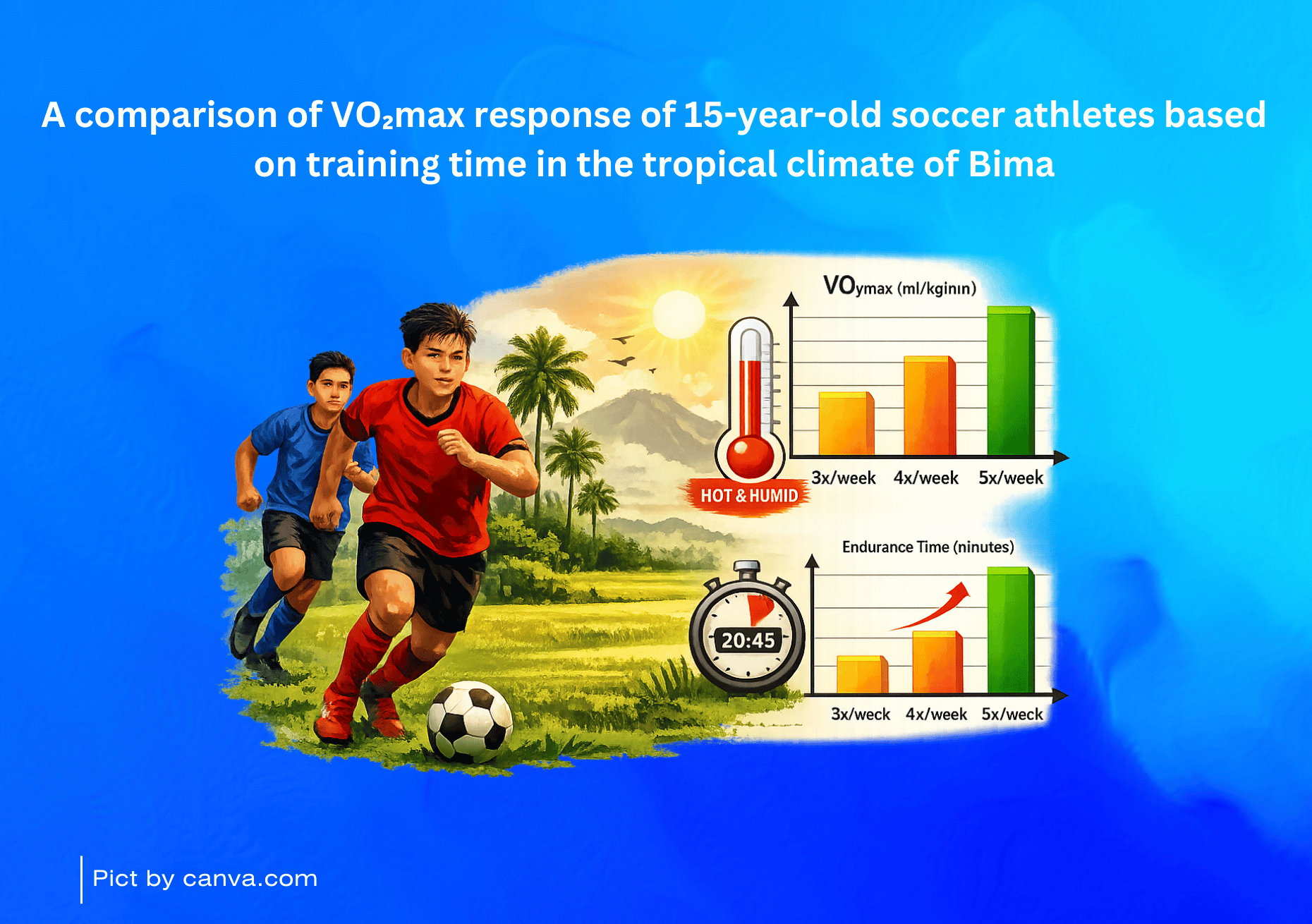
A comparison of VO₂max response of 15-year-old soccer athletes based on training time in the tropical climate of Bima
Firdaus Firdaus1, Taty Hartati2, Rabwan Satriawan3, Shutan Arie Shandi4, Nor Fazila Abd Malek51. Department of Physical Education, STKIP Taman Siswa Bima , ID2. Department of History, STKIP Taman Siswa Bima , ID3. Department of Physical Education, STKIP Taman Siswa Bima , ID4. Department of Physical Education, STKIP Taman Siswa Bima , ID5. Faculty of Sports Science and Coaching, Sultan Idris Education University , MY2026-04-14|page 125-134AbstractBackground: VO₂max is the primary indicator of a soccer athlete's aerobic capacity, but in tropical climates like Bima, high temperatures and humidity can affect VO₂max achievement. Hence, the timing of training is an important factor to consider.
Objectives: This study aims to analyze differences in VO₂max across training times (morning and afternoon) in 15-year-old youth soccer athletes from the Bima Football Association (PERSSEBI).
Methods: The study used a quantitative, comparative, cross-sectional observational design. The study subjects were 45 athletes (age 15.31±0.46; height 163.12±4.35 cm; weight 55.28±3.67 kg; and body mass index (BMI) 20.78±1.18 kg/m²) from the Bima Football Association (PERSEBI), selected by purposive sampling, and divided into morning (n=23) and afternoon (n=22) training groups. VO₂max was measured using a multistage fitness test (Bleep Test). Data analysis included descriptive statistics, the Shapiro–Wilk normality test, the Levene homogeneity test, and the independent-samples t-test at a significance level of 0.05, using IBM SPSS 25.
Results: The descriptive analysis showed that the average VO₂max of the morning group was 43.78 ± 2.34 ml/kg/minute, higher than that of the afternoon group (42.91 ± 2.29 ml/kg/minute). The results of the independent sample t-test showed that there was a significant difference in VO₂max between the two groups with a t value = 2.14 with df = 43 and a significant p value = 0.04 (p < 0.05) with an average difference of 0.87 ml/kg/minute indicating that the morning exercise group had a higher Vo2max value than the afternoon exercise group.
Conclusions: These findings suggest that training time contributes to differences in athletes' VO₂max values in tropical environments, with morning training resulting in higher performance than afternoon training. Therefore, scheduling training that accounts for environmental conditions is crucial for optimizing athletes' VO₂max.
APA Citation StyleFirdaus, F. , Hartati, T. , Satriawan, R. , Shandi, S. A. , & Malek, N. F. A. (2026). A comparison of VO₂max response of 15-year-old soccer athletes based on training time in the tropical climate of Bima. Physical Education and Sports: Studies and Research, 125-134. https://doi.org/10.56003/pessr.v5i1.709 -

A critical analysis of the disconnection between science and practice in weight training
Ferdinando Cereda11. The Catholic University of the Sacred Heart in Milan , IT2025-04-07|page 46-59AbstractBackground: Resistance training (RT) has emerged as a powerful tool for health promotion, with substantial scientific evidence supporting its beneficial effects across multiple physiological systems and psychological domains. Despite this robust knowledge base, a significant disconnection persists between scientific evidence and practical implementation in both clinical and everyday settings.
Objectives: This study aims to critically examine this science-practice gap by analyzing common misconceptions surrounding RT and proposing strategies to enhance knowledge translation.
Methods: Through a narrative review of scientific literature from PubMed, Scopus, and Google Scholar, the research synthesizes evidence regarding RT's scientifically validated benefits, prevalent myths, and effective communication approaches.
Results: Findings show a concerning lack of scientific awareness among practitioners and end-users. Persistent misconceptions, such as "RT reduces flexibility" and "plant-based proteins are inferior for muscle hypertrophy," continue to circulate despite contradictory evidence.
Conclusions: Improved scientific communication via targeted educational programs, digital platforms, and collaboration between researchers and policymakers is urgently needed to bridge this gap and maximize RT’s public health impact.
APA Citation StyleCereda, F. (2025). A critical analysis of the disconnection between science and practice in weight training. Physical Education and Sports: Studies and Research, 46-59. https://doi.org/10.56003/pessr.v4i1.499 -

Immediate effect of thoracic spinal manipulation versus passive stretching on upper trapezius pain in university students: A randomized controlled trial
Sherin Nada Salsabila1, Adnan Faris Naufal21. Universitas Muhammadiyah Surakarta , ID2. Universitas Muhammadiyah Surakarta , ID2025-11-26|page 250-265AbstractBackground: Pain disorders in the upper trapezius muscle are often experienced by students due to non-ergonomic postures and excessive duration of device use. Interventions such as spinal manipulation and stretching exercises are non-invasive interventions often used to reduce pain and improve muscle function.
Objectives: This study compares the effectiveness of two interventions in reducing trapezius muscle pain among university students.
Methods: This randomized controlled trial involved 40 physiotherapy students divided equally into two intervention groups. Group I received thoracic spinal manipulation, and Group II received passive stretching. Each intervention was administered in a single 15-minute session. Pain intensity was measured using the Numeric Rating Scale (NRS) before and immediately after treatment. Data were analyzed using the Wilcoxon Signed-Rank test for within-group comparisons and the Mann–Whitney U test for between-group analysis, with an alpha level of 0.05.
Results: The Wilcoxon test revealed a significant decrease in pain within both groups (Group I: median pre 4.5 [3.63–5] to post 2.5 [1.50–3.38], p = 0.000, r = 0.879; Group II: median pre 4.25 [3–5] to post 1 [0.13–3], p = 0.000, r = 0.84), indicating a significant effect of both interventions. The Mann–Whitney U test showed no statistically significant difference in pain reduction between the two groups (median pain difference = 2 [1–3] for both, U = 186.5, Z = –0.375, p = 0.707, r = 0.06).
Conclusions: Both thoracic spinal manipulation and passive stretching were effective in reducing upper trapezius pain immediately after a single session, but no significant difference was found between the two interventions. These findings suggest that both approaches provide comparable short-term benefits; however, further research with larger samples, multiple sessions, and more extended follow-up periods is needed to confirm their long-term efficacy.
APA Citation StyleSalsabila, S. N. , & Naufal, A. F. (2025). Immediate effect of thoracic spinal manipulation versus passive stretching on upper trapezius pain in university students: A randomized controlled trial. Physical Education and Sports: Studies and Research, 250-265. https://doi.org/10.56003/pessr.v4i3.634 -

Comparative analysis of plantar pressure distribution among football players across playing positions: A cross-sectional study
Arif Pristianto1, Anindya Maghfira Zain2, Farid Rahman3, Pungki Indarto4, Anugrah Nur Warthadi51. Department of Physiotherapy, Faculty of Health Sciences, Universitas Muhammadiyah Surakarta , ID2. Department of Physiotherapy, Faculty of Health Sciences, Universitas Muhammadiyah Surakarta , ID3. Department of Physiotherapy, Faculty of Health Sciences, Universitas Muhammadiyah Surakarta , ID4. Department of Sport Education, Faculty of Teacher Training and Education, Universitas Muhammadiyah Surakarta , ID5. Department of Sport Education, Faculty of Teacher Training and Education, Universitas Muhammadiyah Surakarta , ID2026-04-01|page 68-81AbstractBackground: Football players exhibit different muscle activation patterns during different playing activities, which can affect plantar pressure on the feet. Uneven, unbalanced plantar pressure distribution can cause muscle tension, leading to musculoskeletal injuries in the feet.
Objectives: This study aims to determine and compare plantar pressure distribution among football players based on playing position.
Methods: This study is an analytical observational study using a cross-sectional approach. The sample in this study consisted of 24 football players aged 15-18 years who met the inclusion criteria. Plantar pressure was measured using a Zebris Force Distribution Measurement (FDM) platform on the forefoot and rearfoot areas. Statistical analysis included normality tests (Shapiro-Wilk) and multivariate tests (ANOVA) according to data distribution.
Results: Differences in plantar pressure were observed between defenders, forwards, and strikers in static conditions (p < 0.05), but not in dynamic conditions (p > 0.05).
Conclusions: This study shows differences in plantar pressure distribution among football players in defender, forward, and striker positions under static conditions. However, under dynamic conditions, no significant differences were found among playing positions.
APA Citation StylePristianto, A. , Zain, A. M. , Rahman, F. , Indarto, P. , & Warthadi, A. N. (2026). Comparative analysis of plantar pressure distribution among football players across playing positions: A cross-sectional study. Physical Education and Sports: Studies and Research, 68-81. https://doi.org/10.56003/pessr.v5i1.692 -
Functional movement patterns and bilateral asymmetry in badminton athletes: A Functional Movement Screen analysis at the Malang Regional Training Center
Avi Kholifatuz Zahro'1, Muhammad Atiq Noviudin Pritama21. State University of Malang , ID2. State University of Malang , ID2026-08-17|page 196-207AbstractBackground: Badminton involves repetitive unilateral overhead movements, rapid changes of direction, and explosive actions that may contribute to side-to-side differences in functional movement patterns.
Objectives: This study aimed to describe functional movement patterns and bilateral asymmetry among badminton athletes at the Malang Regional Training Center using the Functional Movement Screen (FMS).
Methods: This cross-sectional study involved 16 sub-elite badminton athletes aged 15–20 years selected through purposive sampling. Functional movement was assessed using the seven-component FMS. Total scores were classified as high (≤14), moderate (15–17), or low (18–21) injury risk. Bilateral asymmetry was identified from differences between right- and left-side scores in five bilateral FMS components. Data were analyzed descriptively using means, standard deviations, frequencies, and percentages.
Results: Most athletes (62.5%, n = 10) were classified as having moderate injury risk, while 18.75% (n = 3) were classified as high risk and 18.75% (n = 3) as low risk. Shoulder Mobility showed the highest prevalence of bilateral asymmetry (100%, n = 16), followed by the In-Line Lunge and Rotary Stability (62.5%, n = 10 each), Hurdle Step (50.0%, n = 8), and Active Straight Leg Raise (43.75%, n = 7).
Conclusions: Bilateral functional movement asymmetry was common among badminton athletes, particularly in shoulder mobility, while most athletes were classified within the moderate injury-risk category. These findings support functional movement screening to identify movement limitations and inform individualized corrective exercise strategies.
APA Citation StyleZahro', A. K. , & Pritama, M. A. N. (2026). Functional movement patterns and bilateral asymmetry in badminton athletes: A Functional Movement Screen analysis at the Malang Regional Training Center. Physical Education and Sports: Studies and Research, 196-207. https://doi.org/10.56003/pessr.v5i2.756 -
Immunity to rhythm: Visual or auditory stimuli during intense aerobic exertion do not modulate the mood of young adults
Flavio de Souza Araujo1, Camila Maria Menezes Almeida2, Mariana Ferreira de Souza3, Marcelo Magalhães Sales4, José Fernando Vila Nova de Moraes51. Federal University of Vale do São Francisco , BR2. Federal University of Vale do São Francisco , BR3. Federal University of Vale do São Francisco , BR4. State University of Goiás , BR5. Universidade Federal do Vale do São Francisco (UNIVASF) , BR2026-04-26|page 160-171AbstractBackground: High-intensity aerobic exercise can promote higher energy expenditure when compared to low and moderate-intensity exercise. However, vigorous exercise can negatively influence mood responses related to adherence. Auditory and audiovisual resources have been used to improve psychological variables during and after exercise.
Objectives: To analyze the influence of listening to music and watching video clips on mood responses of young adults after a high-intensity aerobic exercise session.
Methods: This is a Cross-Sectional Randomized Controlled Study in which fourteen male participants (23.4 ± 3.1 years; 26.2 ± 3.4 kg/m²) randomly performed exercise sessions on a cyclergometer, at an intensity of 10% above anaerobic threshold, in three situations: control (C), listening to music (M), and watching video clips (VC). At the end of each session, participants underwent 30 min of passive recovery. Mood responses were measured using Brunel’s Mood Scale (BRUMS) before exercise, immediately after exercise, and after recovery. Friedman’s and Wilcoxon’s tests were used, with a significance level of 5%.
Results: No statistical differences were found between conditions (C, C, and VC) for the dimensions confusion, fatigue, anger, tension, and vigor (p>0.05). A statistically significant difference was found for depression before exercise, with M higher than C and VC (p<0.05); however, no differences were observed after exercise or recovery.
Conclusions: Listening to music and/or watching video clips does not influence mood responses in young adults after high-intensity aerobic exercise on a cyclergometer.
APA Citation StyleAraujo, F. D. S. , Almeida, C. M. M. , Souza, M. F. D. , Sales, M. M. , & Moraes, J. F. V. N. D. (2026). Immunity to rhythm: Visual or auditory stimuli during intense aerobic exertion do not modulate the mood of young adults. Physical Education and Sports: Studies and Research, 160-171. https://doi.org/10.56003/pessr.v5i1.702 -

The effect of championship participation on training intensity and motivation of Pencak Silat student athletes at Semarang State University, Indonesia
Achmad Alif Firmansyah1, Nanang Indardi21. State University of Semarang , ID2. State University of Semarang , ID2025-08-15|page 204-211AbstractBackground: Consistent training and high enthusiasm are the keys to an athlete's success in achieving optimal performance. However, among Pencak Silat athletes at Semarang State University (UNNES), there is a decrease in training intensity and enthusiasm when there is no championship agenda.
Objectives: The purpose of this study is to analyze the effect of participation in a championship on the training intensity and motivation of Semarang State University Pencak Silat athletes.
Methods: This study used a pre-post design with the same subjects (n = 30) and an explanatory quantitative approach to determine the effect of championship participation on training intensity and motivation. Data were collected using a Likert scale questionnaire that has been tested for validity and reliability (α = 0.872). Data analysis was performed using a paired t-test using SPSS.
Results: The results showed a significant increase in training intensity from a mean ± SD of 3.12 ± 0.54 (pre) to 3.78 ± 0.49 (post), and training motivation from 3.05 ± 0.61 (pre) to 3.85 ± 0.55 (post), with t(29) = 5.62 and 6.03, respectively, p = 0.004. Cohen's d effect sizes of 1.03 (intensity) and 1.10 (motivation) indicate significant effects.
Conclusions: These findings indicate that participation in championships is a significant external motivator in improving the quality of athletes' training. Therefore, championships can be a coaching strategy to maintain sustainable training motivation, a practical implication that this study has clearly demonstrated.
APA Citation StyleFirmansyah, A. A. , & Indardi, N. (2025). The effect of championship participation on training intensity and motivation of Pencak Silat student athletes at Semarang State University, Indonesia. Physical Education and Sports: Studies and Research, 204-211. https://doi.org/10.56003/pessr.v4i2.620 -

Improving martial arts education through gamified learning: The case of Pencak Silat with Quizizz
M. Gusti Ariadi1, Wahyu Indra Bayu2, Soleh Solahuddin31. Sriwijaya University , ID2. Sriwijaya University , ID3. Sriwijaya University , ID2025-08-09|page 186-194AbstractBackground: The use of digital media in learning is an innovative effort to improve the quality of the teaching and learning process, including in physical education, particularly in the subject of Pencak Silat
Objectives: This study aims to determine the effect of using the Quizizz application on the learning outcomes of Pencak Silat among students at Public Senior High School 1 Indralaya Selatan.
Methods: This research was conducted using a quantitative approach. The design used is a one-group pretest-posttest design. In this design, students are given a pretest before treatment, followed by a learning treatment using Quizizz media. After the treatment is completed, a posttest is administered. The population in this study consists of all 11th-grade students at Senior High School 1 Indralaya Selatan, totaling 149 students. From that population, a simple random sample of 30 students will be taken to serve as the research sample. The research instruments include a cognitive test in the form of multiple-choice questions and a psychomotor test in the form of basic pencak silat technique practice. Then the data were analyzed using the Shapiro-Wilk normality test to ensure data distribution, followed by a paired sample t-test using IBM SPSS Statistics version 30.0.0.0 (172) software.
Results: The analysis shows a significant increase in pretest to posttest scores, both in cognitive aspects (from an average of 37.87 to 58.83) and psychomotor aspects (from an average of 5.43 to 8.70). In the paired sample t-test, the significance value showed <0.001, indicating a significant effect of Quizizz media on students' learning outcomes.
Conclusions: This research concludes that the Quizizz application effectively enhances the understanding of concepts and fundamental movement skills of pencak silat in a fun and interactive way.
APA Citation StyleAriadi, M. G. , Bayu, W. I. , & Solahuddin, S. (2025). Improving martial arts education through gamified learning: The case of Pencak Silat with Quizizz. Physical Education and Sports: Studies and Research, 186-194. https://doi.org/10.56003/pessr.v4i2.579

1 - 14 of 14 items




















