Search
Search Results
##search.searchResults.foundPlural##
-

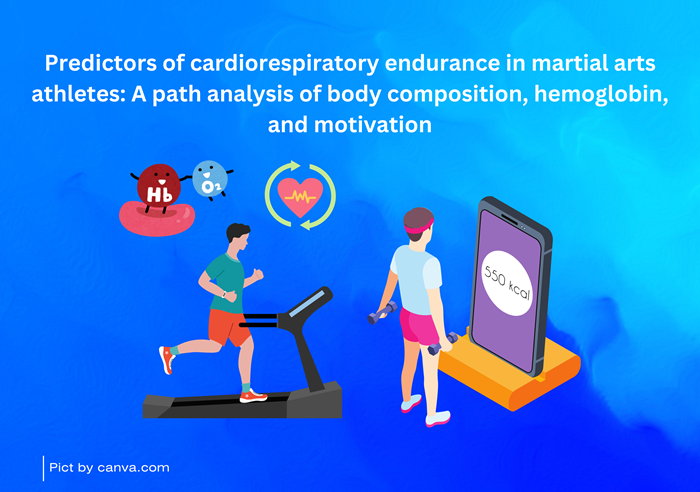
Predictors of cardiorespiratory endurance in martial arts athletes: A path analysis of body composition, hemoglobin, and motivation
Novanto Ponco Nugroho 1, Dani Nur Riyadi2, Aridhotul Haqiyah31. Universitas Islam 45 Bekasi , ID2. Universitas Islam 45 Bekasi , ID3. Universitas Islam 45 Bekasi , ID2025-07-01|page 83-94AbstractBackground: Cardiorespiratory endurance is vital to athletic performance, particularly in sports requiring sustained physical exertion such as martial arts.
Objectives: This study examined the predictive roles of body composition (BMI), hemoglobin concentration, and motivation on cardiorespiratory endurance among university-level martial arts athletes.
Methods: Using a quantitative path analysis design, data were collected from 20 purposively selected martial arts athletes who regularly trained. Cardiorespiratory endurance was assessed via the multistage fitness test, BMI was calculated using standard anthropometric measures, hemoglobin was measured using the Harenz scale, and motivation was evaluated with a validated Likert-scale questionnaire.
Results: The analysis showed that BMI (ρ = 0.705, t = 3.071, p = 0.007) and hemoglobin concentration (ρ = 0.946, t = 4.672, p < 0.001) had significant positive effects on cardiorespiratory endurance. Motivation, however, did not have a significant direct effect (ρ = 0.087, t = 0.853, p = 0.203). Additionally, BMI correlated positively with both hemoglobin (ρ = 0.923, p < 0.001) and motivation (ρ = 0.670, p = 0.034), suggesting indirect effects through physiological mechanisms.
Conclusions: The findings underscore that physiological indicators, specifically BMI and hemoglobin, are more critical predictors of aerobic capacity than psychological factors like motivation in this athletic population. Due to sport-specific demands, these results may not be generalizable to non-martial arts athletes. Future studies should incorporate additional mediators such as training intensity and account for potential self-report bias in motivation assessments.
APA Citation StyleNugroho , N. P. , Riyadi, D. N. , & Haqiyah, A. (2025). Predictors of cardiorespiratory endurance in martial arts athletes: A path analysis of body composition, hemoglobin, and motivation. Physical Education and Sports: Studies and Research, 83-94. https://doi.org/10.56003/pessr.v4i2.559 -

The association between healthy dietary habits and physical fitness among junior high school students: A rural school case study
Moch. Yunus1, Yulingga Nanda Hanief2, Muhammad Putra Ramadhan3, Erika Ayu Sylvianingrum41. State University of Malang , ID2. State University of Malang , ID3. State University of Malang , ID4. State University of Malang , ID2025-12-30|page 344-354AbstractBackground: The health conditions of the community, particularly in relation to the physical fitness of junior high school students, require serious attention, especially in rural areas that differ significantly from urban areas. Previous research findings on dietary patterns and physical fitness still show inconsistent results.
Objectives: This study aims to investigate the relationship between healthy eating habits and physical fitness among junior high school students residing in rural areas.
Methods: This study used a quantitative design with a cross-sectional approach. The research subjects consisted of 27 students from public junior high schools in rural areas, selected through a balanced stratified random sampling process that involved all grade levels. Eating habits were measured using a 24-hour food recall, as it is an effective method for monitoring food intake over a short period. Physical fitness was measured using the Nusantara Student Fitness Test (TKPN), a national standard instrument. Data analysis was performed using descriptive statistics, Spearman's correlation, and linear regression.
Results: Most of the study participants were underweight with varied eating patterns. The analysis results showed no significant relationship between physical fitness and healthy eating patterns, as indicated by a correlation coefficient of 0.061 and a p-value of 0.764. The small effect size suggests that eating patterns did not have a significant impact on fitness levels in this group of participants.
Conclusions: The study shows that rural junior high school students achieve their physical fitness through exercise and their exercise-rest patterns and their inherited characteristics rather than their diet.APA Citation StyleYunus, M. , Hanief, Y. N. , Ramadhan, M. P. , & Sylvianingrum, E. A. (2025). The association between healthy dietary habits and physical fitness among junior high school students: A rural school case study. Physical Education and Sports: Studies and Research, 344-354. https://doi.org/10.56003/pessr.v4i3.665 -
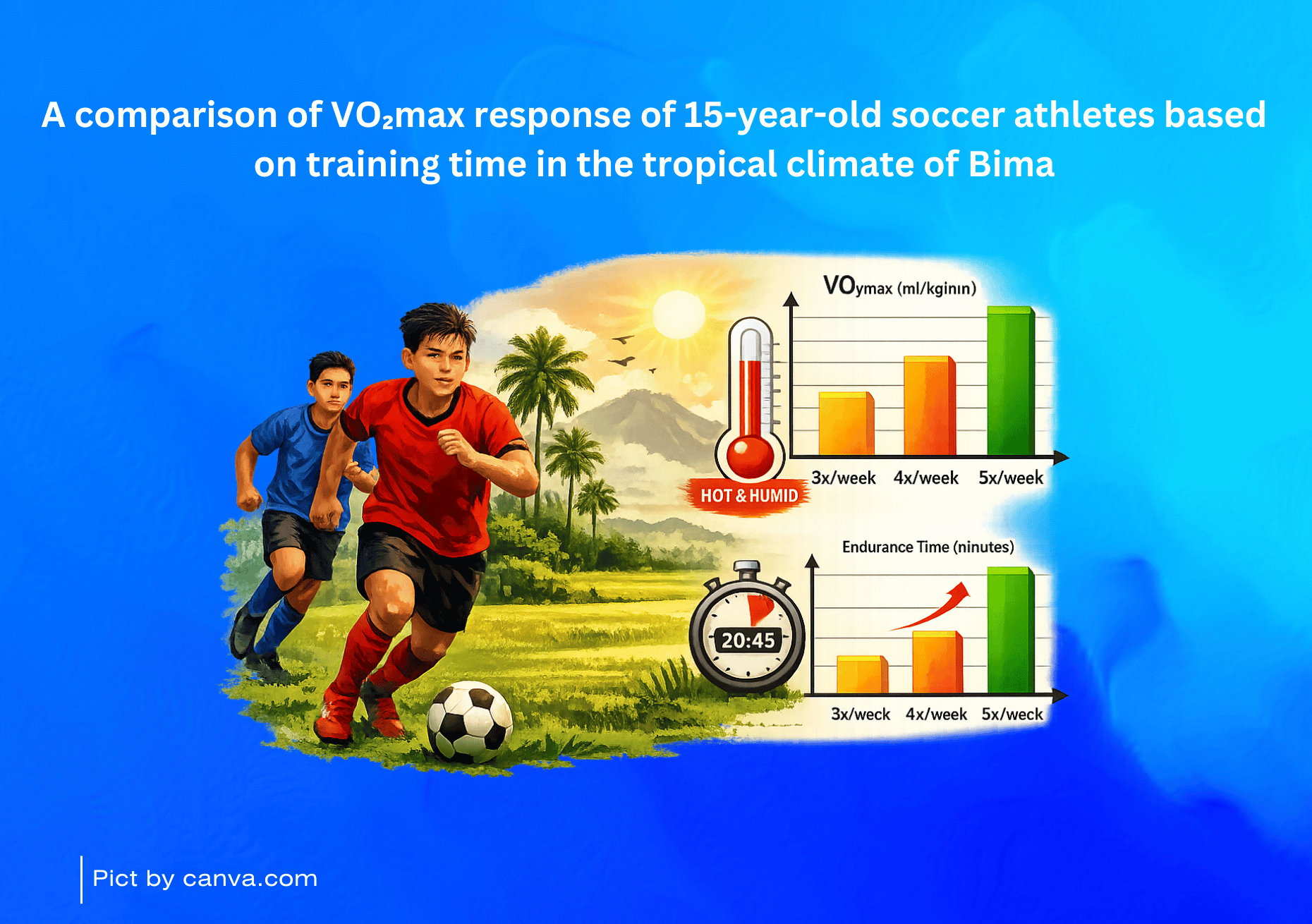
A comparison of VO₂max response of 15-year-old soccer athletes based on training time in the tropical climate of Bima
Firdaus Firdaus1, Taty Hartati2, Rabwan Satriawan3, Shutan Arie Shandi4, Nor Fazila Abd Malek51. Department of Physical Education, STKIP Taman Siswa Bima , ID2. Department of History, STKIP Taman Siswa Bima , ID3. Department of Physical Education, STKIP Taman Siswa Bima , ID4. Department of Physical Education, STKIP Taman Siswa Bima , ID5. Faculty of Sports Science and Coaching, Sultan Idris Education University , MY2026-04-14|page 125-134AbstractBackground: VO₂max is the primary indicator of a soccer athlete's aerobic capacity, but in tropical climates like Bima, high temperatures and humidity can affect VO₂max achievement. Hence, the timing of training is an important factor to consider.
Objectives: This study aims to analyze differences in VO₂max across training times (morning and afternoon) in 15-year-old youth soccer athletes from the Bima Football Association (PERSSEBI).
Methods: The study used a quantitative, comparative, cross-sectional observational design. The study subjects were 45 athletes (age 15.31±0.46; height 163.12±4.35 cm; weight 55.28±3.67 kg; and body mass index (BMI) 20.78±1.18 kg/m²) from the Bima Football Association (PERSEBI), selected by purposive sampling, and divided into morning (n=23) and afternoon (n=22) training groups. VO₂max was measured using a multistage fitness test (Bleep Test). Data analysis included descriptive statistics, the Shapiro–Wilk normality test, the Levene homogeneity test, and the independent-samples t-test at a significance level of 0.05, using IBM SPSS 25.
Results: The descriptive analysis showed that the average VO₂max of the morning group was 43.78 ± 2.34 ml/kg/minute, higher than that of the afternoon group (42.91 ± 2.29 ml/kg/minute). The results of the independent sample t-test showed that there was a significant difference in VO₂max between the two groups with a t value = 2.14 with df = 43 and a significant p value = 0.04 (p < 0.05) with an average difference of 0.87 ml/kg/minute indicating that the morning exercise group had a higher Vo2max value than the afternoon exercise group.
Conclusions: These findings suggest that training time contributes to differences in athletes' VO₂max values in tropical environments, with morning training resulting in higher performance than afternoon training. Therefore, scheduling training that accounts for environmental conditions is crucial for optimizing athletes' VO₂max.
APA Citation StyleFirdaus, F. , Hartati, T. , Satriawan, R. , Shandi, S. A. , & Malek, N. F. A. (2026). A comparison of VO₂max response of 15-year-old soccer athletes based on training time in the tropical climate of Bima. Physical Education and Sports: Studies and Research, 125-134. https://doi.org/10.56003/pessr.v5i1.709 -

Structural relationships between service quality, communication, motivation, and athlete satisfaction in basketball Indonesia
Fajar Gumilang H.M1, Agung Nugroho2, Rumpis Agus Sudarko3, Fauzi Fauzi4, Fajar Sriwahyuniati51. Yogyakarta State University , ID2. Yogyakarta State University , ID3. Yogyakarta State University , ID4. Yogyakarta State University , ID5. Yogyakarta State University , ID2026-04-09|page 113-124AbstractBackground: Many basketball clubs aim to enhance athlete satisfaction through service quality, communication, and motivation; however, empirical evidence validating these factors as measurable constructs remains limited.
Objectives: This study examines whether these variables function as latent constructs influencing athlete satisfaction and validates their measurement structure using confirmatory factor analysis.
Methods: This study used a quantitative survey and included 263 basketball athletes from various clubs in Sidoarjo, comprising 110 males and 153 females. The participant characteristics focused on players still in the developmental stage who had been actively participating in club training programs for 3 to 6 months, with educational levels ranging from junior high school to college. Participants were selected using purposive sampling. Data were collected using a valid and reliable Likert-scale questionnaire and analyzed using Structural Equation Modeling (SEM) via AMOS 22.
Results: The results demonstrate that service quality (β=0.337, ????=0.000) and communication (β=0.439, ????=0.000) significantly enhance motivation. Furthermore, motivation significantly affects athlete satisfaction (β = 0.582, ???? = 0.000). Crucially, the analysis confirms that motivation mediates the relationship between service quality (indirect effect=0.139) and communication (indirect effect=0.240) on satisfaction.
Conclusions: Theoretically, this study confirms motivation as a vital psychological mediator linking managerial inputs to athlete satisfaction. In practice, the findings demonstrate that while high-quality physical facilities provide a necessary structural foundation, they must be integrated with effective, supportive coaching communication to optimally ignite athletes' intrinsic drive and maximize their overall club experience.APA Citation StyleH.M, F. G. , Nugroho, A. , Sudarko, R. A. , Fauzi, F. , & Sriwahyuniati, F. (2026). Structural relationships between service quality, communication, motivation, and athlete satisfaction in basketball: Indonesia. Physical Education and Sports: Studies and Research, 113-124. https://doi.org/10.56003/pessr.v5i1.691 -
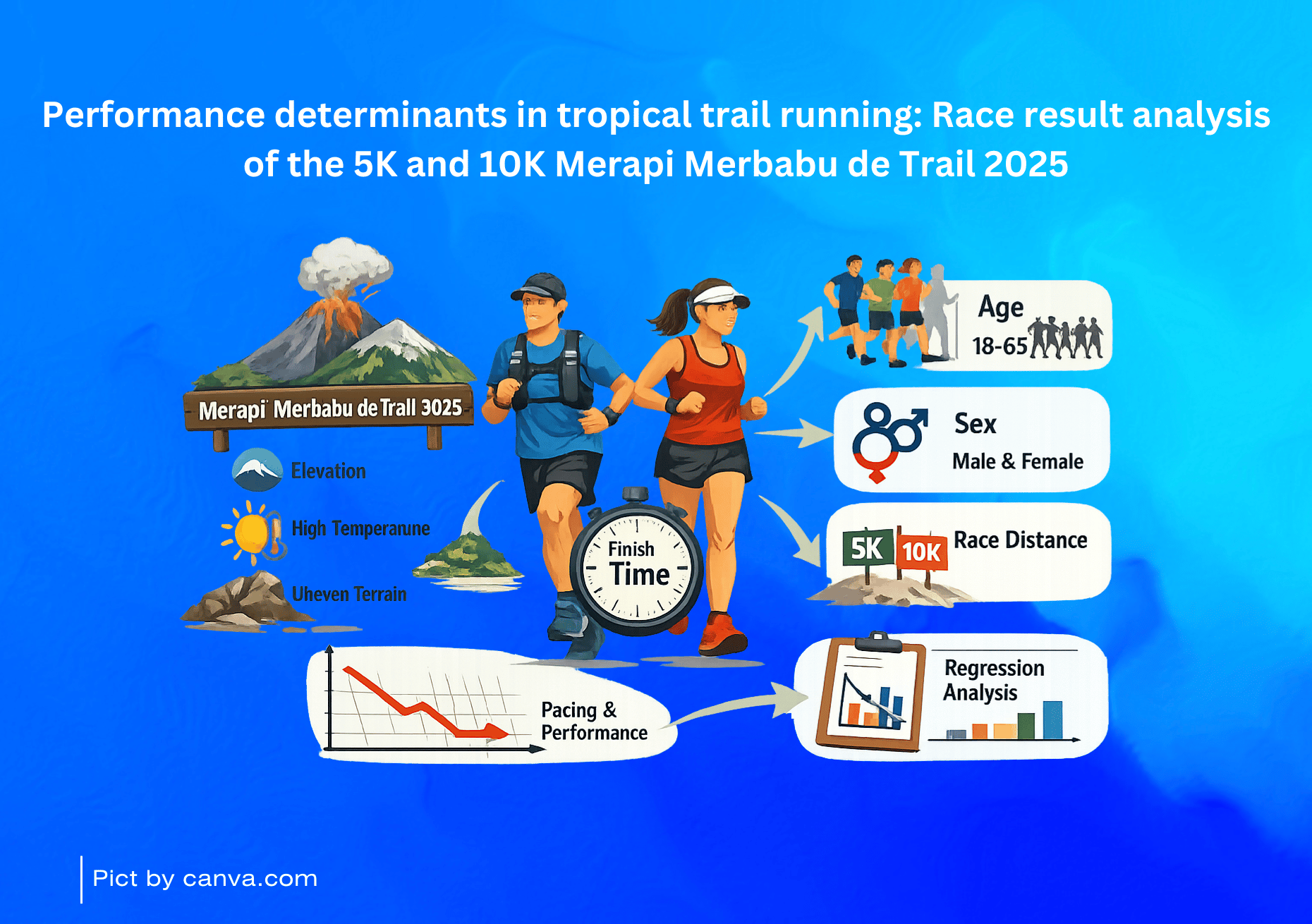
Performance determinants in tropical trail running: Race result analysis of the 5K and 10K Merapi Merbabu de Trail 2025
Siti Baitul Mukarromah1, Sugiarto Sugiarto2, Gustiana Mega Anggita3, Sri Agus Budi Santoso4, Sangheon Park5, Ambar Dwi Erawati6, Rikha Liemiyah7, Aziiz Mardanarian Rosdianto8, Ronny Lesmana9, Faisyal Syofian101. State University of Semarang , ID2. State University of Semarang , ID3. State University of Semarang , ID4. Tarra Adventure, Boyolali Regency, Central Java Province , ID5. Korea Institute of Sport Science, Seoul , KR6. Widya Husada Semarang University , ID7. Universitas Dian Nuswantoro , ID8. Universitas Padjajaran , ID9. Universitas Padjajaran , ID10. Sultan Agung Islamic University , ID2026-04-03|page 82-92AbstractBackground: The limited research on the determinants of performance in short-distance trail running in tropical environments is a major problem in understanding the influence of environmental conditions on runners' performance and pacing strategies.
Objectives: This study aimed to examine the influence of race distance, sex, and age on trail running performance in the 5K and 10K categories of the Merapi Merbabu de Trail 2025.
Methods: A retrospective observational race result analysis was conducted using official race data from the Merapi Merbabu de Trail 2025. The study included 429 runners (5K: n = 144; 10K: n = 285), consisting of 275 male and 154 female participants. The primary outcome variable was finish time (in minutes), while the independent variables included race, distance, sex, and age. Statistical analyses were performed using SPSS version 26, including descriptive statistics, independent-samples t-tests, Cohen’s d effect sizes, and multiple linear regression to evaluate predictors of performance.
Results: Results showed a significant difference in performance between race distances. The mean finish time for the 5K category was 152.8 ± 44.3 minutes, while the 10K category averaged 306.1 ± 74.3 minutes (t = -26.68, p < 0.001, Cohen’s d = 2.50). Male runners completed the 10K race faster than female runners (293 vs. 345 minutes). Regression analysis indicated that finish time increased by approximately 2–3 minutes per year of age, indicating a progressive decline in performance with increasing age.
Conclusions: These findings indicate that race distance, sex, and age are significant determinants of trail running performance in tropical environments.APA Citation StyleMukarromah, S. B. , Sugiarto, S. , Anggita, G. M. , Santoso, S. A. B. , Park, S. , Erawati, A. D. , Liemiyah, R. , Rosdianto, A. M. , Lesmana, R. , & Syofian, F. (2026). Performance determinants in tropical trail running: Race result analysis of the 5K and 10K Merapi Merbabu de Trail 2025. Physical Education and Sports: Studies and Research, 82-92. https://doi.org/10.56003/pessr.v5i1.699

1 - 5 of 5 items