
Search
Search Results
##search.searchResults.foundPlural##
-


Unveiling the digital gym: A phenomenological dive into online physical education pedagogy
Princes Lloyda Peralta11. Saint Louis College , PH2025-04-04|page 15-31AbstractBackground: The COVID-19 pandemic necessitated a rapid shift to online learning, posing significant challenges for traditionally hands-on subjects like Physical Education (PE). Limited student engagement, digital accessibility issues, and the need for pedagogical adaptation became major concerns for PE instructors.
Objectives: This study aims to explore the lived experiences of PE instructors in adapting to online instruction, identifying the strategies, challenges, and innovations they employed to maintain instructional effectiveness.
Methods: A qualitative research design utilizing Interpretative Phenomenological Analysis (IPA) was adopted to gain deep insights into instructors’ experiences. Purposive sampling was used to select seven PE instructors from urban and rural institutions, ensuring diverse teaching contexts. Data were collected through semi-structured interviews, and thematic analysis was conducted to identify key adaptation strategies.
Results: Five major themes emerged from the findings: (1) Adaptation to Online Instruction, where instructors restructured their teaching approaches to accommodate digital platforms; (2) Effective Use of Digital Tools, emphasizing the role of online resources in enhancing instructional delivery; (3) Innovative Approaches to Engagement, detailing gamification techniques and interactive pedagogies; (4) Equitable Access Strategies, addressing disparities in internet connectivity and learning resources; and (5) Assessment of Success and Progress, highlighting novel evaluation methods tailored for online PE instruction. These themes collectively form the "Navigating Instructional Delivery Through Innovation, Technology, Engagement, and Equity" framework.
Conclusions: The study provides valuable insights into how PE instructors have innovatively adapted to online learning, ensuring student engagement and equitable access to education. The findings offer implications for policy-making, teacher training programs, and the future integration of technology in PE instruction. Future research should explore student perspectives and the long-term impact of digital PE on learning outcomes.
APA Citation StylePeralta, P. L. (2025). Unveiling the digital gym: A phenomenological dive into online physical education pedagogy. Physical Education and Sports: Studies and Research, 15-31. https://doi.org/10.56003/pessr.v4i1.474 -
Examining the mediating role of perceived psychosocial support in the relationship between sport grit and psychological well-being among high school student-athletes
Daphne Scott Fernandez1, Kahreen Lou Mondina21. Saint Louis College La Union,Saint Louis College La Union , PH2. Saint Louis College La Union,Saint Louis College La Union , PH2026-08-01|page 182-195AbstractBackground: Psychological well-being is essential for student-athletes because they must simultaneously cope with competitive sport demands and academic responsibilities. Although both sport grit and perceived psychosocial support have been associated with positive psychological outcomes, the mediating role of psychosocial support in the relationship between sport grit and psychological well-being remains insufficiently understood.
Objectives: This study examined whether perceived psychosocial support mediates the relationship between sport grit and psychological well-being among high school student-athletes.
Methods: A quantitative cross-sectional correlational design with a mediation analysis framework was employed. A total of 362 high school student-athletes from the first district of La Union, Philippines, participated using total enumeration sampling. Data were collected using standardized questionnaires assessing sport grit, psychological well-being, and perceived psychosocial support. Descriptive statistics, regression analysis, and bias-corrected bootstrap mediation analysis (5,000 resamples) were performed using JASP.
Results: Student-athletes reported high levels of sport grit, psychological well-being, and perceived psychosocial support. Sport grit significantly and positively predicted psychological well-being, whereas it did not significantly predict perceived psychosocial support. Perceived psychosocial support demonstrated a significant but negative association with psychological well-being. Furthermore, the indirect effect of sport grit on psychological well-being through perceived psychosocial support was not statistically significant, indicating the absence of a mediating effect.
Conclusions: Sport grit is an important direct psychological resource associated with psychological well-being among high school student-athletes. Although perceived psychosocial support contributes to athletes' psychological functioning, it does not explain the relationship between sport grit and psychological well-being. These findings highlight the importance of strengthening athletes' internal psychological resources while maintaining supportive sport environments.
APA Citation StyleFernandez, D. S. , & Mondina, K. L. (2026). Examining the mediating role of perceived psychosocial support in the relationship between sport grit and psychological well-being among high school student-athletes. Physical Education and Sports: Studies and Research, 182-195. https://doi.org/10.56003/pessr.v5i2.725 -

Integrating technology in physical education: The impact of TPACK-based tactical and technical approaches on football skills and student motivation
Defri Mulyana1, Adang Suherman2, Komarudin Komarudin3, Bambang Abduljabar4, Fegie Rizkia Mulyana51. Indonesia University of Education , ID2. Indonesia University of Education , ID3. Indonesia University of Education , ID4. Indonesia University of Education , ID5. Siliwangi University , ID2025-05-14|page 71-82AbstractBackground: Motivation and skill development are vital in physical education, particularly football. Tactical learning emphasizes decision-making and game understanding, while technical learning focuses on mastering fundamental skills.
Objectives: This study aimed to analyze the impact of a TPACK-based tactical and technical learning approach on student motivation and football skill acquisition among high school students in Tasikmalaya.
Methods: The study applied the TPACK framework—integrating Technological, Pedagogical, and Content Knowledge—in designing the learning model. Using an experimental method with a pre-test–post-test design, 30 students were divided into two groups. Motivation was assessed via a Likert-scale questionnaire, while football skills (passing, heading, dribbling, shooting, and playing ability) were evaluated through standardized tests. Data were analyzed using paired and independent t-tests with a significance level of p < 0.05.
Results: The technical approach significantly enhanced basic football skills, notably heading (t = 8.47) and shooting (t = 8.29), proving its effectiveness in improving fundamental competencies. Conversely, the tactical approach showed a notable increase in student motivation (t = 4.98) and playing ability (t = 5.94), reflecting its strength in fostering strategic understanding and engagement. TPACK integration further reinforced both approaches through effective use of technology.
Conclusions: The study highlights the importance of combining tactical and technical approaches to promote holistic student development. Continued research is needed to explore the long-term effects and potential of integrating diverse technological tools in physical education.
APA Citation StyleMulyana, D. , Suherman, A. , Komarudin, K. , Abduljabar, B. , & Mulyana, F. R. (2025). Integrating technology in physical education: The impact of TPACK-based tactical and technical approaches on football skills and student motivation. Physical Education and Sports: Studies and Research, 71-82. https://doi.org/10.56003/pessr.v4i1.523 -

An analysis of anxiety levels among volleyball athletes during a provincial inter-club tournament in Jakarta, Indonesia
Rea Rizkita Raga1, Yunita Lasma21. Universitas Islam 45 Bekasi , ID2. Universitas Islam 45 Bekasi , ID2025-07-27|page 175-185AbstractBackground: Competitive anxiety is a key psychological factor that can significantly affect an athlete's performance. In volleyball, high-pressure situations often lead to anxiety, potentially hindering players' ability to perform optimally.
Objectives: This study aims to assess the levels of anxiety experienced by volleyball athletes competing in the Special Capital Region Jakarta Inter-Club Provincial Championship.
Methods: A descriptive quantitative design was used, with data collected through a survey involving 70 volleyball athletes. The instrument used was a 35-item anxiety questionnaire categorized into two phases: before the match (18 items) and during the match (17 items). Responses were measured using a 5-point Likert scale. Validity testing confirmed all items were valid, and the instrument showed high reliability (α = 0.954), as analyzed using SPSS 23.
Results: During the match, 35.7% of athletes experienced high anxiety, while 64.3% showed low anxiety. Prior to the match, 44.3% reported high anxiety and 55.7% reported low anxiety. Overall, 36.6% of athletes showed high anxiety levels, while 61.4% displayed low levels. These results indicate that most athletes have relatively good emotional regulation abilities in competitive situations.
Conclusions: The study underscores the critical role of psychological readiness in athletic performance. Coaches and policymakers are encouraged to integrate structured mental training programs into athlete development. Future research should explore variables contributing to anxiety, such as playing position, competitive experience, and demographic factors like age and gender.
APA Citation StyleRaga, R. R. , & Lasma, Y. (2025). An analysis of anxiety levels among volleyball athletes during a provincial inter-club tournament in Jakarta, Indonesia. Physical Education and Sports: Studies and Research, 175-185. https://doi.org/10.56003/pessr.v4i2.605 -
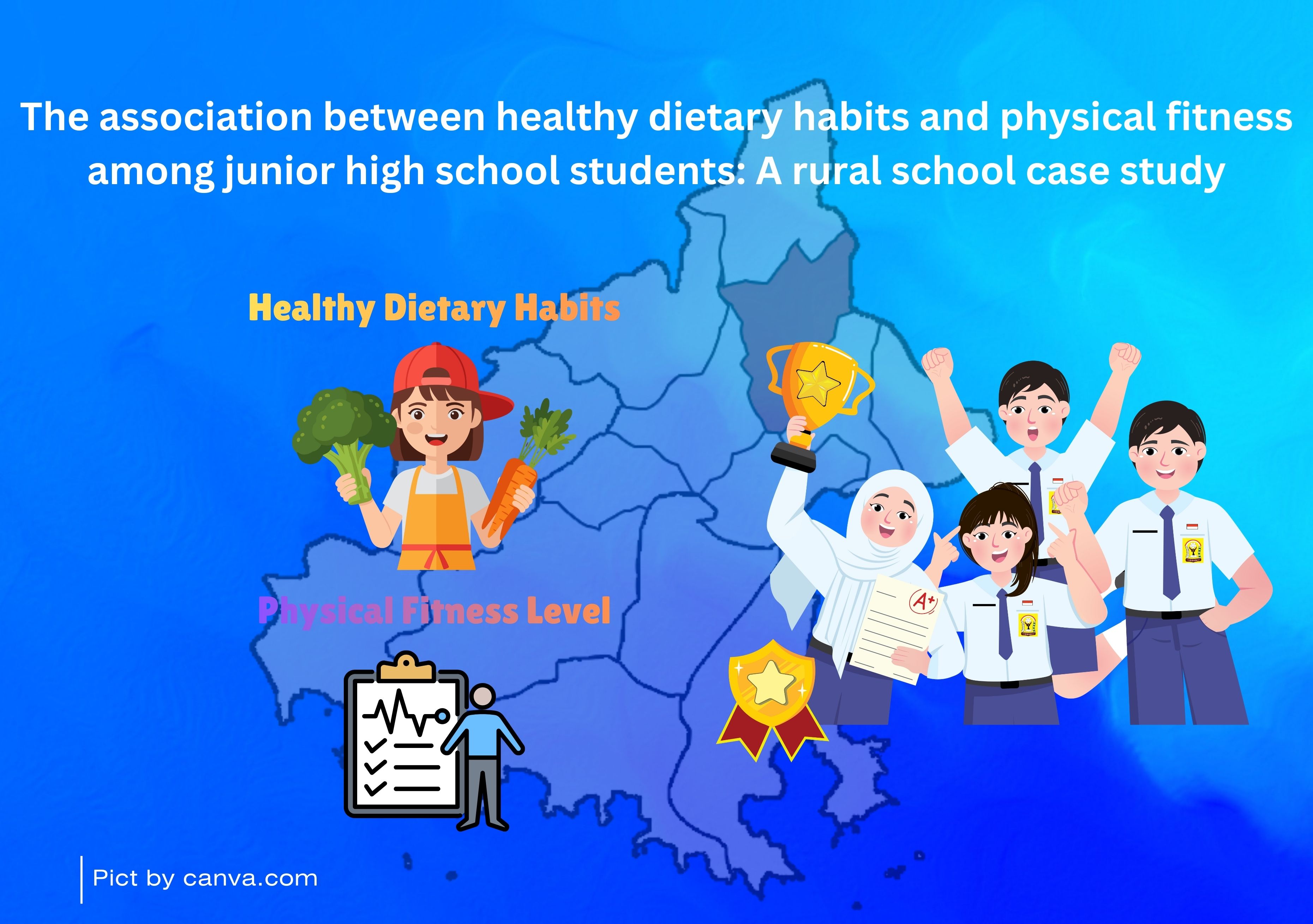
The association between healthy dietary habits and physical fitness among junior high school students: A rural school case study
Moch. Yunus1, Yulingga Nanda Hanief2, Muhammad Putra Ramadhan3, Erika Ayu Sylvianingrum41. State University of Malang , ID2. State University of Malang , ID3. State University of Malang , ID4. State University of Malang , ID2025-12-30|page 344-354AbstractBackground: The health conditions of the community, particularly in relation to the physical fitness of junior high school students, require serious attention, especially in rural areas that differ significantly from urban areas. Previous research findings on dietary patterns and physical fitness still show inconsistent results.
Objectives: This study aims to investigate the relationship between healthy eating habits and physical fitness among junior high school students residing in rural areas.
Methods: This study used a quantitative design with a cross-sectional approach. The research subjects consisted of 27 students from public junior high schools in rural areas, selected through a balanced stratified random sampling process that involved all grade levels. Eating habits were measured using a 24-hour food recall, as it is an effective method for monitoring food intake over a short period. Physical fitness was measured using the Nusantara Student Fitness Test (TKPN), a national standard instrument. Data analysis was performed using descriptive statistics, Spearman's correlation, and linear regression.
Results: Most of the study participants were underweight with varied eating patterns. The analysis results showed no significant relationship between physical fitness and healthy eating patterns, as indicated by a correlation coefficient of 0.061 and a p-value of 0.764. The small effect size suggests that eating patterns did not have a significant impact on fitness levels in this group of participants.
Conclusions: The study shows that rural junior high school students achieve their physical fitness through exercise and their exercise-rest patterns and their inherited characteristics rather than their diet.APA Citation StyleYunus, M. , Hanief, Y. N. , Ramadhan, M. P. , & Sylvianingrum, E. A. (2025). The association between healthy dietary habits and physical fitness among junior high school students: A rural school case study. Physical Education and Sports: Studies and Research, 344-354. https://doi.org/10.56003/pessr.v4i3.665 -

Development and evaluation of an Android-based multimedia application to promote healthy lifestyles in physical education: A study at State Junior High School 29 Semarang
Galang Yusuf Pujiyanto1, Ibnu Fatkhu Royana2, Muh. Isna Nurdin Wibisana31. Universitas PGRI Semarang , ID2. Universitas PGRI Semarang , ID3. Universitas PGRI Semarang , ID2025-07-23|page 162-174AbstractBackground: The integration of interactive, technology-based media in Physical Education, particularly for teaching health-related content, remains limited despite its potential to enhance student engagement and learning outcomes.
Objectives: This study aims to address this gap by developing and evaluating the effectiveness of an Android-based multimedia learning application, "Healthy Habits," designed to support the delivery of healthy lifestyle materials in Physical Education, Sports, and Health (Physical Education) subjects at the junior high school level.
Methods: The research employed a research and development (R&D) approach, involving expert validation from media and content specialists and usability trials with teachers and students.
Results: Validation results indicated a "Good" rating from the material expert (average score: 4.05) and a "Very Good" rating from the media expert (average score: 4.24), confirming the application's content quality and technical feasibility. Teacher evaluations also yielded a "Good" rating (average score: 4.07). Student trials produced positive responses, with small group testing receiving a "Very Good" rating (average score: 3.29), which increased to 4.23 ("Very Good") in large group testing. An effectiveness test assessing cognitive, affective, and psychomotor learning outcomes showed an average score of 85.6%, categorized as "Very Good." These findings demonstrate the feasibility and effectiveness of "Healthy Habits" as a digital learning tool for promoting healthy lifestyles in secondary school students.
Conclusions: The application offers practical value for educators and curriculum developers seeking to integrate mobile technology into Physical Education. Future studies are encouraged to explore the implementation of this application in varied educational contexts and its potential integration across other subject areas.
APA Citation StylePujiyanto, G. Y. , Royana, I. F. , & Wibisana, M. I. N. (2025). Development and evaluation of an Android-based multimedia application to promote healthy lifestyles in physical education: A study at State Junior High School 29 Semarang. Physical Education and Sports: Studies and Research, 162-174. https://doi.org/10.56003/pessr.v4i2.607 -
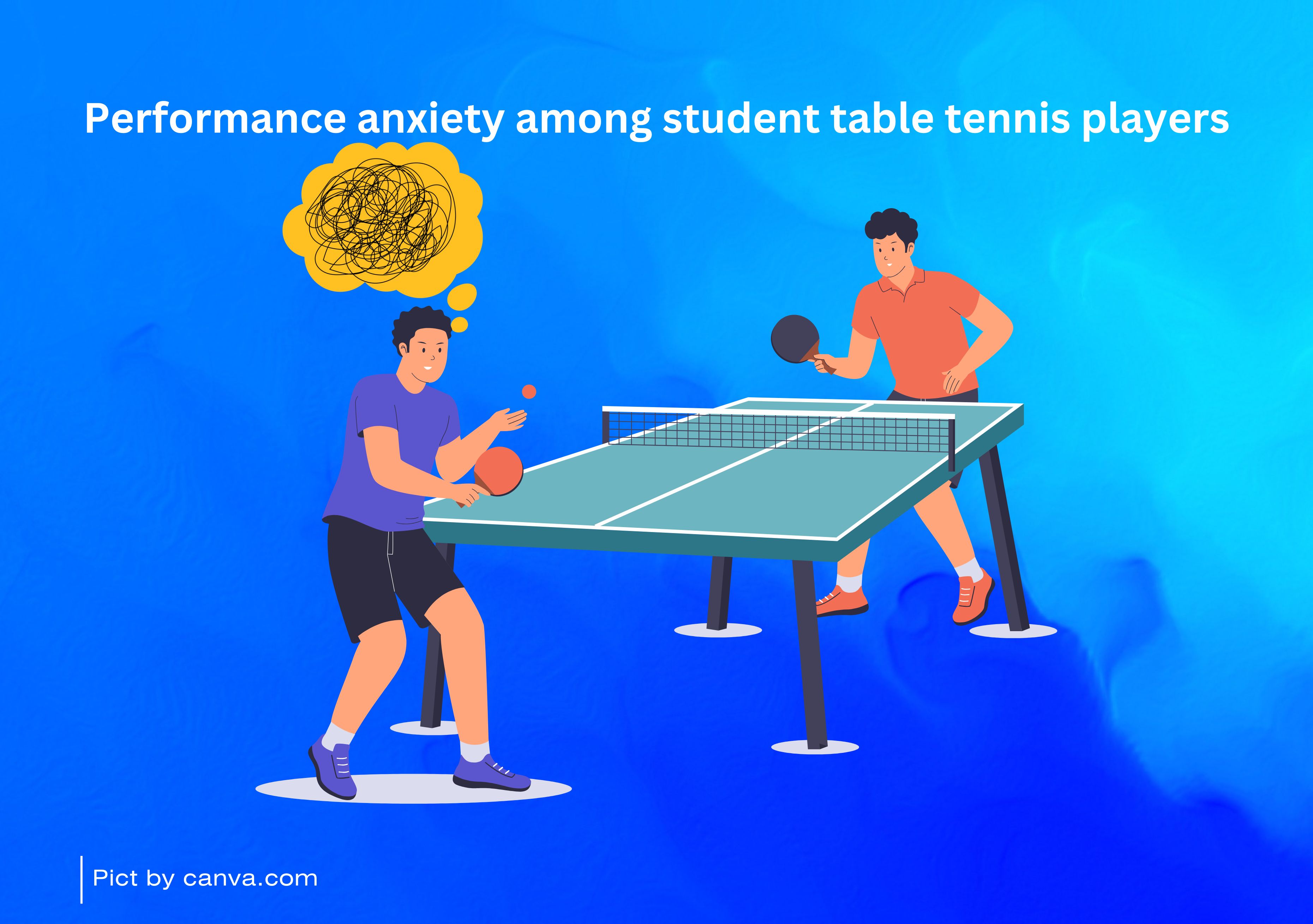
Performance anxiety among student table tennis players
Yumna Wahyuningsih1, Ibnu Fatkhu Royana2, Galih Dwi Pradipta31. Universitas PGRI Semarang , ID2. Universitas PGRI Semarang , ID3. Universitas PGRI Semarang , ID2025-12-18|page 318-331AbstractBackground: Anxiety is a common psychological factor that significantly affects athletic performance, especially in competitive settings. Student-athletes face dual pressures from academic responsibilities and athletic commitments, making them vulnerable to performance anxiety that can impair focus, concentration, and decision-making.
Objectives: This study aims to analyze performance anxiety among table tennis athletes in the Student Activity Unit (UKM) of Universitas PGRI Semarang and to examine differences in performance evaluation outcomes based on sources from internal and external factors.
Methods: A comparative quantitative design with a cross-sectional approach was used. Fifty athletes participated (n=25 assessed by internal factors, n=25 assessed by external factors). Anxiety/performance was measured using a self-report questionnaire consisting of 15 Likert-scale items (1-5 scale) validated by three sport psychology experts. Data were analyzed using one-way ANOVA after confirming normality (Shapiro-Wilk test) and homogeneity (Levene's test).
Results: The internal group had a higher mean score (M = 3.64, SD = 0.86) compared to the external group (M = 3.07, SD = 0.86). ANOVA revealed a statistically significant difference, F(1,48) = 4.92, p = 0.031, η² = 0.093, with an estimated Cohen's d of approximately 0.66, indicating a medium effect size. These findings indicate that anxiety factors affect athletes' performance, with internal factors tending to score higher than external factors.
Conclusions: This study concludes that anxiety affects the performance of table tennis athletes in the Student Activity Unit (UKM) at Universitas PGRI Semarang. Specifically, internal factors such as self-confidence and perfectionism have been proven to have a greater impact than external factors.APA Citation StyleWahyuningsih, Y. , Royana, I. F. , & Pradipta, G. D. (2025). Performance anxiety among student table tennis players. Physical Education and Sports: Studies and Research, 318-331. https://doi.org/10.56003/pessr.v4i3.618 -
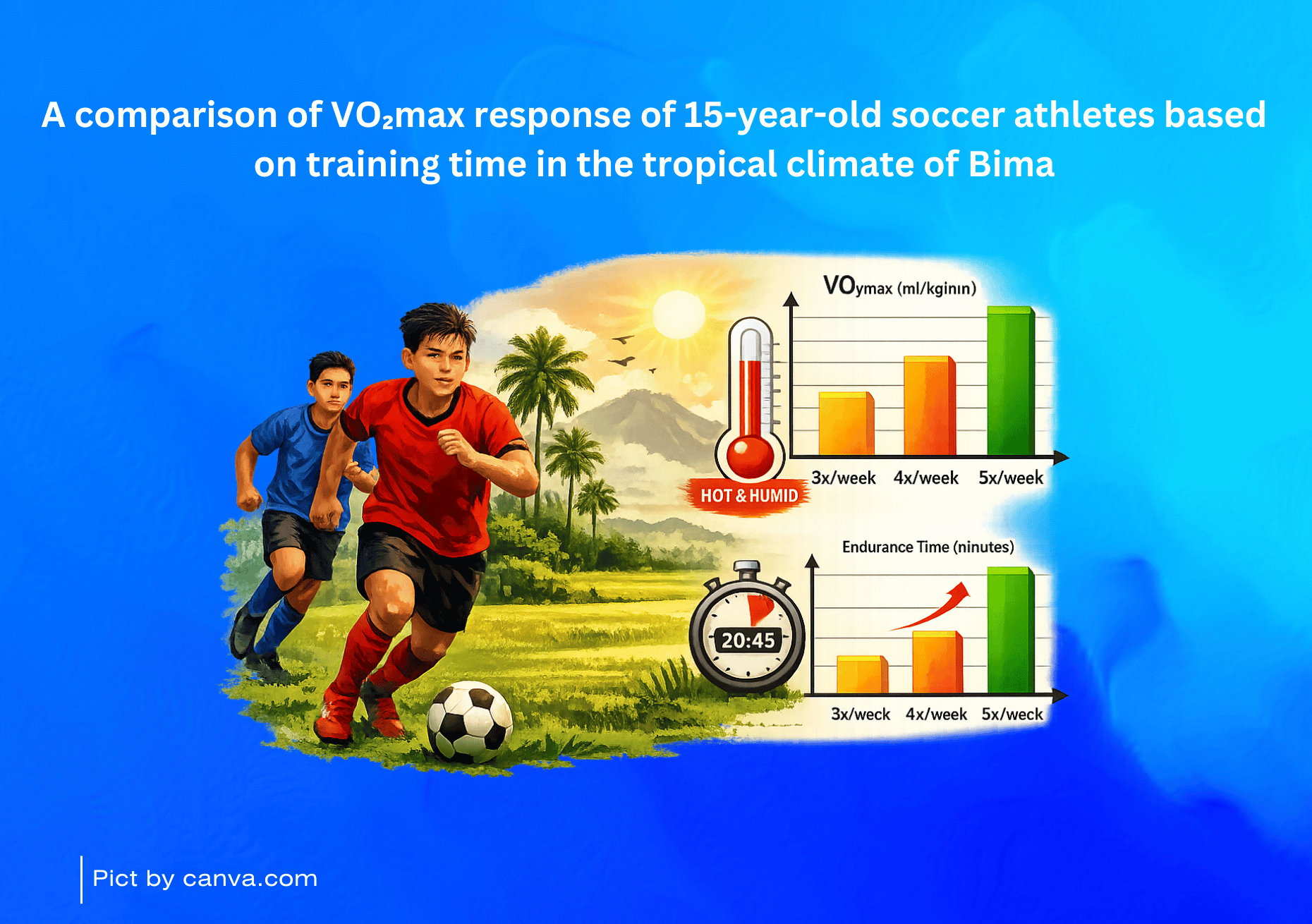
A comparison of VO₂max response of 15-year-old soccer athletes based on training time in the tropical climate of Bima
Firdaus Firdaus1, Taty Hartati2, Rabwan Satriawan3, Shutan Arie Shandi4, Nor Fazila Abd Malek51. Department of Physical Education, STKIP Taman Siswa Bima , ID2. Department of History, STKIP Taman Siswa Bima , ID3. Department of Physical Education, STKIP Taman Siswa Bima , ID4. Department of Physical Education, STKIP Taman Siswa Bima , ID5. Faculty of Sports Science and Coaching, Sultan Idris Education University , MY2026-04-14|page 125-134AbstractBackground: VO₂max is the primary indicator of a soccer athlete's aerobic capacity, but in tropical climates like Bima, high temperatures and humidity can affect VO₂max achievement. Hence, the timing of training is an important factor to consider.
Objectives: This study aims to analyze differences in VO₂max across training times (morning and afternoon) in 15-year-old youth soccer athletes from the Bima Football Association (PERSSEBI).
Methods: The study used a quantitative, comparative, cross-sectional observational design. The study subjects were 45 athletes (age 15.31±0.46; height 163.12±4.35 cm; weight 55.28±3.67 kg; and body mass index (BMI) 20.78±1.18 kg/m²) from the Bima Football Association (PERSEBI), selected by purposive sampling, and divided into morning (n=23) and afternoon (n=22) training groups. VO₂max was measured using a multistage fitness test (Bleep Test). Data analysis included descriptive statistics, the Shapiro–Wilk normality test, the Levene homogeneity test, and the independent-samples t-test at a significance level of 0.05, using IBM SPSS 25.
Results: The descriptive analysis showed that the average VO₂max of the morning group was 43.78 ± 2.34 ml/kg/minute, higher than that of the afternoon group (42.91 ± 2.29 ml/kg/minute). The results of the independent sample t-test showed that there was a significant difference in VO₂max between the two groups with a t value = 2.14 with df = 43 and a significant p value = 0.04 (p < 0.05) with an average difference of 0.87 ml/kg/minute indicating that the morning exercise group had a higher Vo2max value than the afternoon exercise group.
Conclusions: These findings suggest that training time contributes to differences in athletes' VO₂max values in tropical environments, with morning training resulting in higher performance than afternoon training. Therefore, scheduling training that accounts for environmental conditions is crucial for optimizing athletes' VO₂max.
APA Citation StyleFirdaus, F. , Hartati, T. , Satriawan, R. , Shandi, S. A. , & Malek, N. F. A. (2026). A comparison of VO₂max response of 15-year-old soccer athletes based on training time in the tropical climate of Bima. Physical Education and Sports: Studies and Research, 125-134. https://doi.org/10.56003/pessr.v5i1.709 -

Comparative analysis of plantar pressure distribution among football players across playing positions: A cross-sectional study
Arif Pristianto1, Anindya Maghfira Zain2, Farid Rahman3, Pungki Indarto4, Anugrah Nur Warthadi51. Department of Physiotherapy, Faculty of Health Sciences, Universitas Muhammadiyah Surakarta , ID2. Department of Physiotherapy, Faculty of Health Sciences, Universitas Muhammadiyah Surakarta , ID3. Department of Physiotherapy, Faculty of Health Sciences, Universitas Muhammadiyah Surakarta , ID4. Department of Sport Education, Faculty of Teacher Training and Education, Universitas Muhammadiyah Surakarta , ID5. Department of Sport Education, Faculty of Teacher Training and Education, Universitas Muhammadiyah Surakarta , ID2026-04-01|page 68-81AbstractBackground: Football players exhibit different muscle activation patterns during different playing activities, which can affect plantar pressure on the feet. Uneven, unbalanced plantar pressure distribution can cause muscle tension, leading to musculoskeletal injuries in the feet.
Objectives: This study aims to determine and compare plantar pressure distribution among football players based on playing position.
Methods: This study is an analytical observational study using a cross-sectional approach. The sample in this study consisted of 24 football players aged 15-18 years who met the inclusion criteria. Plantar pressure was measured using a Zebris Force Distribution Measurement (FDM) platform on the forefoot and rearfoot areas. Statistical analysis included normality tests (Shapiro-Wilk) and multivariate tests (ANOVA) according to data distribution.
Results: Differences in plantar pressure were observed between defenders, forwards, and strikers in static conditions (p < 0.05), but not in dynamic conditions (p > 0.05).
Conclusions: This study shows differences in plantar pressure distribution among football players in defender, forward, and striker positions under static conditions. However, under dynamic conditions, no significant differences were found among playing positions.
APA Citation StylePristianto, A. , Zain, A. M. , Rahman, F. , Indarto, P. , & Warthadi, A. N. (2026). Comparative analysis of plantar pressure distribution among football players across playing positions: A cross-sectional study. Physical Education and Sports: Studies and Research, 68-81. https://doi.org/10.56003/pessr.v5i1.692 -
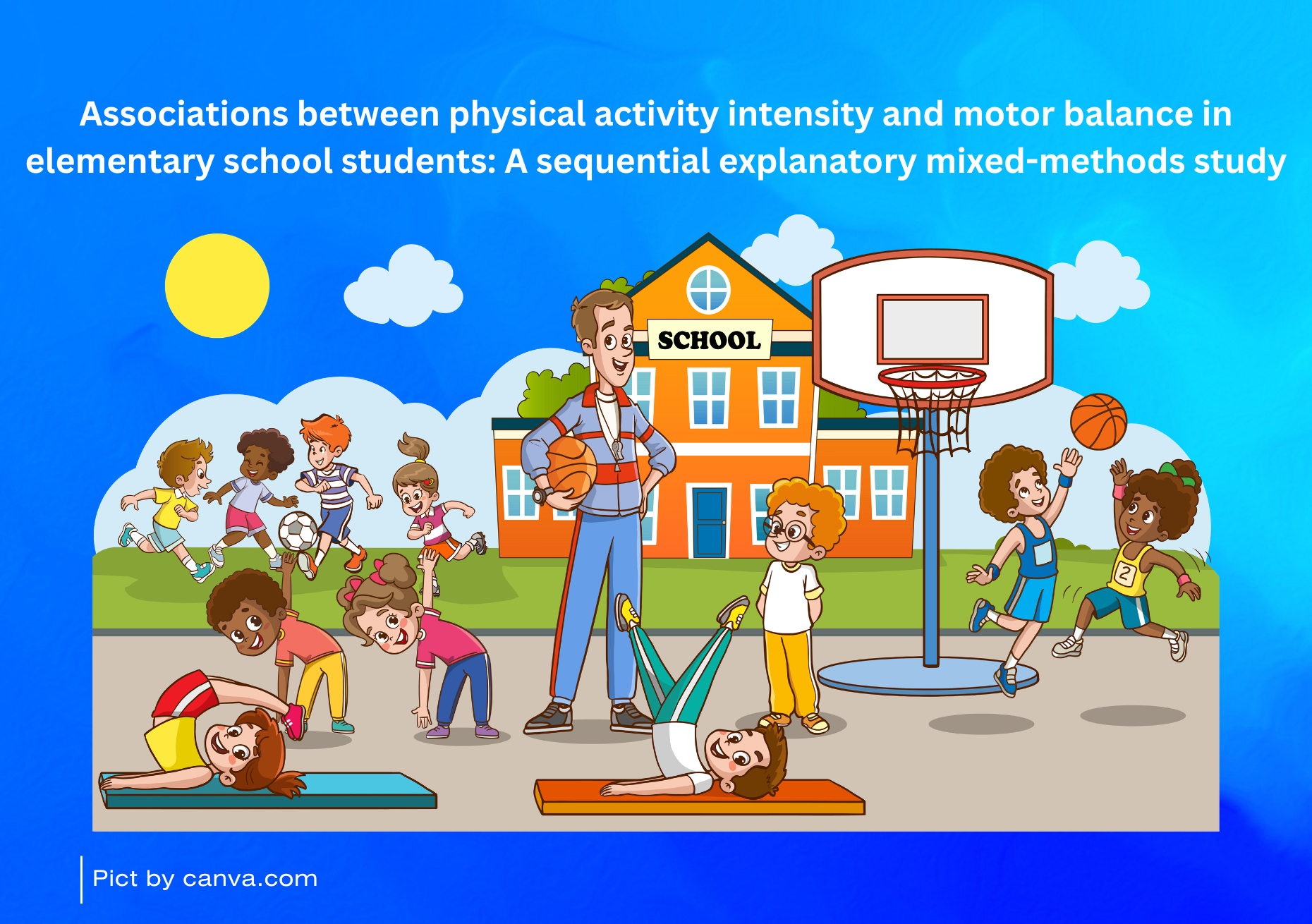
Associations between physical activity intensity and motor balance in elementary school students: A sequential explanatory mixed-methods study
Fahrurrohman Firdaus1, Indra Safari2, Rizal Ahmad Fauzi31. Indonesian University of Education , ID2. Indonesian University of Education , ID3. Indonesian University of Education , ID2026-04-01|page 47-56AbstractBackground: Children in primary school are becoming more sedentary due to advances in digital technology, which may reduce their physical activity levels. The development of motor skills, especially balance, which is an essential feature of children's motor abilities, can be impacted by a lack of physical activity.
Objectives: This study aimed to examine the association between physical activity intensity and motor balance in elementary school students.
Methods: This study used a sequential explanatory mixed-methods design. The quantitative phase involved 50 students selected using saturated sampling, while the qualitative phase involved teachers and students selected purposively. Physical activity intensity was measured using the Physical Activity Questionnaire for Older Children (PAQ-C), while motor balance was assessed using the Balance Beam Test. Quantitative data were analyzed using Spearman's rank correlation, and qualitative data were analyzed using thematic analysis in NVivo.
Results: With a correlation coefficient of r = 0.687 and p < 0.05, the analysis demonstrated a strong, substantial positive link between motor balance levels and physical activity intensity. The intensity of physical activity accounted for 47.2% of motor balance. Qualitative research revealed that students with high levels of physical activity were more likely to engage in active play, such as running outside, cycling, and soccer, which, in turn, indirectly improve balance and postural stability.
Conclusions: This study demonstrates that physical activity intensity plays an important role in the development of motor balance among elementary school students. These findings highlight the importance of integrating active movement-based learning strategies in physical education programs.
APA Citation StyleFirdaus, F. , Safari, I. , & Fauzi, R. A. (2026). Associations between physical activity intensity and motor balance in elementary school students: A sequential explanatory mixed-methods study. Physical Education and Sports: Studies and Research, 47-56. https://doi.org/10.56003/pessr.v5i1.706 -

Improving physical self-perception and health-related fitness through gamification in physical education: A cluster randomized controlled trial
Ferdinando Cereda11. The Catholic University of the Sacred Heart in Milan , IT2026-03-08|page 7-27AbstractBackground: The global decline in adolescent physical activity necessitates pedagogical innovation to counter disengagement. Traditional norm-referenced physical education (PE) often alienates less skilled students, whereas gamification offers a promising criterion-referenced strategy to enhance motivation and learning.
Objectives: This study investigated the efficacy of a 12-week gamified didactic intervention on perceived physical self-concept, health-related fitness, and physical activity enjoyment among high school students.
Methods: A two-arm, parallel-group, cluster randomized controlled trial (Cluster-RCT) was conducted with 210 Italian adolescents (mean age 15.4 ± 0.9 years) nested within 10 intact classes (average cluster size = 21). Intact classes were randomised to an experimental group (gamified ‘MoveQuest’ module, k = 5) or a control group (traditional direct instruction, k = 5). Data were collected using the Revised Physical Self-Perception Profile (PSPP-R-IT), the ALPHA-FIT test battery, and the Physical Activity Enjoyment Scale (PACES). Following a per-protocol analytical approach, Linear mixed models (LMMs) were employed to analyse the data, accounting for the nested structure of the educational setting and handling cluster-level variance intraclass correlation coefficients (ICCs). Significance levels were interpreted considering the multiplicity of outcomes.
Results: Significant group × time interactions were observed, with the gamified group demonstrating superior improvements in sports competence (d = 0.65), physical self-worth (d = 0.58), and enjoyment (d = 0.82) compared to the control group. Physiologically, the experimental group showed significantly greater gains in cardiorespiratory fitness (V̇O₂ max) and agility, while body attractiveness remained stable in both groups.
Conclusions: Gamified didactics significantly enhance psychological engagement and specific motor performance parameters by prioritising individual progress over social comparison. This approach represents a valuable pedagogical tool for fostering physical literacy in secondary PE.APA Citation StyleCereda, F. (2026). Improving physical self-perception and health-related fitness through gamification in physical education: A cluster randomized controlled trial. Physical Education and Sports: Studies and Research, 7-27. https://doi.org/10.56003/pessr.v5i1.677

1 - 11 of 11 items




















