
Search
Search Results
##search.searchResults.foundPlural##
-

Associations of lower limb muscle strength and body reaction time with crescent kick performance in competitive pencak silat athletes
Jery Setiawan1, Siti Baitul Mukarromah21. State University of Semarang , ID2. State University of Semarang , ID2026-08-17|page 208-219AbstractBackground: Crescent kick performance is an important technical component of competitive pencak silat and may be associated with physical capacities such as lower limb muscle strength and reaction time. However, evidence regarding the relationships of these physical characteristics with crescent kick performance remains limited.
Objectives: This study aimed to examine the associations of lower limb muscle strength and body reaction time with crescent kick performance among competitive pencak silat athletes.
Methods: This quantitative correlational study involved 30 competitive pencak silat athletes (age: 19.8 ± 2.1 years; height: 168.4 ± 6.3 cm; body mass: 61.7 ± 8.2 kg; body mass index: 21.7 ± 2.3 kg/m²) recruited using total sampling. Lower limb muscle strength was assessed using a leg dynamometer, body reaction time using a reaction timer, and crescent kick performance using a 10-second crescent kick test. Data were analyzed using descriptive statistics, Pearson correlation, and multiple correlation analysis, with statistical significance set at p < .05.
Results: Lower limb muscle strength was positively associated with crescent kick performance (r = 0.734, p < .001), whereas body reaction time was negatively associated with crescent kick performance (r = -0.739, p < .001), indicating that shorter reaction times were associated with better kick performance. Multiple correlation analysis showed a strong combined association of lower limb muscle strength and body reaction time with crescent kick performance (R = 0.754, R² = 0.568, p < .001). Together, these variables accounted for 56.8% of the variance in crescent kick performance.
Conclusions: Greater lower limb muscle strength and shorter body reaction time were associated with better crescent kick performance among competitive pencak silat athletes. These findings highlight the relevance of muscular strength and neuromuscular responsiveness to crescent kick performance and may inform physical conditioning programs for pencak silat athletes. Further studies with larger samples and additional biomechanical, physiological, and technical measures are needed to better understand the factors associated with crescent kick performance.
APA Citation StyleSetiawan, J. , & Mukarromah, S. B. (2026). Associations of lower limb muscle strength and body reaction time with crescent kick performance in competitive pencak silat athletes. Physical Education and Sports: Studies and Research, 208-219. https://doi.org/10.56003/pessr.v5i2.762 -
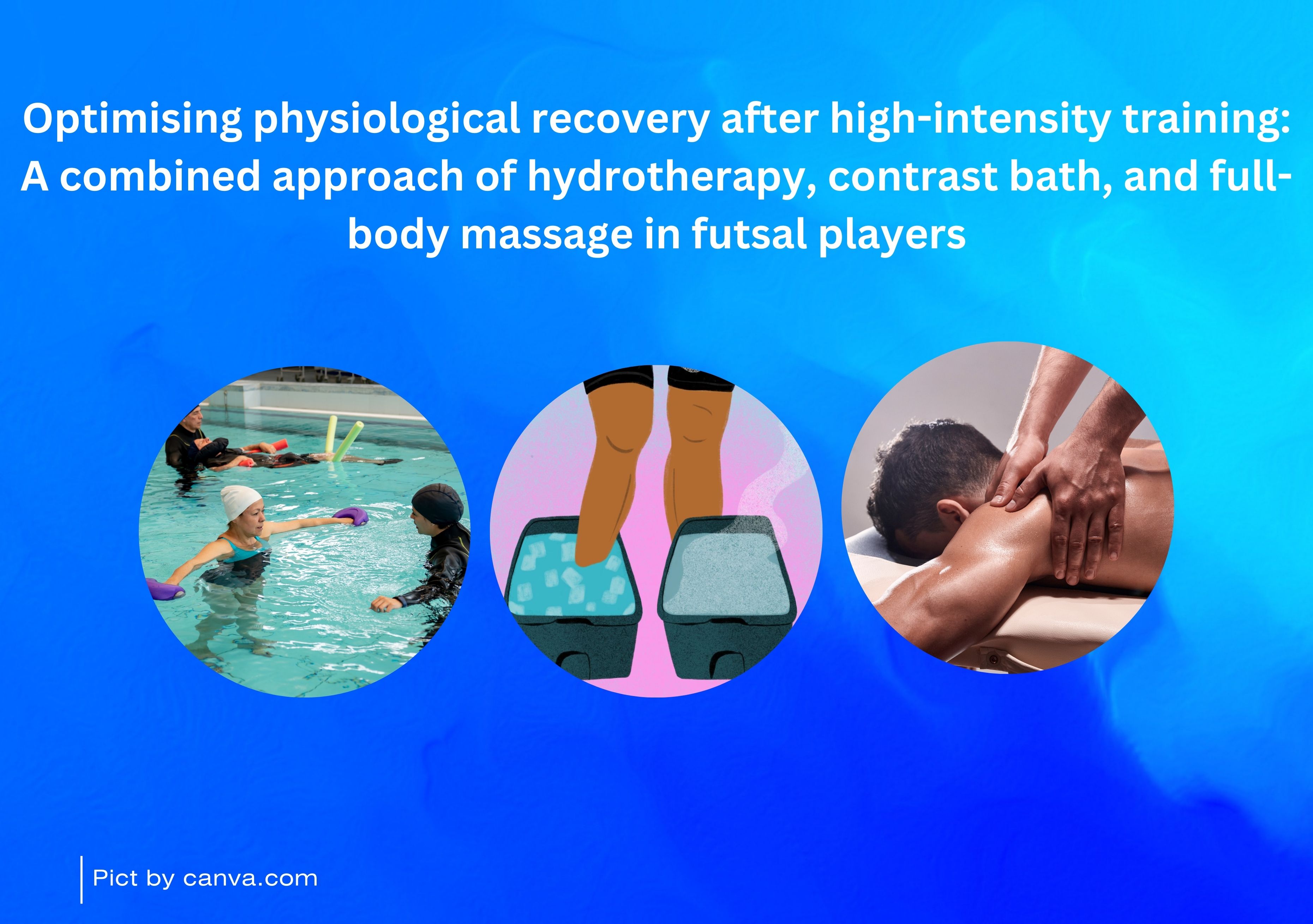
Optimising physiological recovery after high-intensity training: A combined approach of hydrotherapy, contrast bath, and full-body massage in futsal players
Afif Dwi Nugraha1, Laily Mita Andriana2, Muhamad Fauzi Antoni3, Muhammad Labib Siena Ar Rasyid4, Bhekti Lestari51. Universitas Negeri Surabaya , ID2. Universitas Negeri Surabaya , ID3. Universitas Negeri Surabaya , ID4. Universitas Negeri Surabaya , ID5. Universitas Negeri Surabaya , ID2025-12-15|page 302-317AbstractBackground: Efficient recovery after high-intensity interval training (HIIT) is crucial for maintaining optimal performance and minimizing the risk of injury.
Objectives: This study aims to analyze the effectiveness of combining hydrotherapy contrast baths and full-body massage in accelerating physiological recovery after a HIIT session, compared to the application of a single method.
Methods: This study employed a pre–post quasi-experimental design with three parallel groups (n = 45; 15 participants per group) to analyze the effectiveness of hydrotherapy combined with whole-body massage compared with each method applied separately. Participants were assigned to one of three conditions: (1) hydrotherapy contrast bath only, (2) full-body massage only, and (3) a combined intervention using both techniques. Physiological recovery was assessed using validated instruments, including heart rate monitors for heart rate recovery (HRR), portable lactate analysers for blood lactate concentration, and a visual analogue scale (VAS) for perceived muscle soreness. Data were analysed using the Shapiro–Wilk test, paired-sample t-test, and One-Way ANOVA.
Results: The findings demonstrated that the combined hydrotherapy–massage protocol resulted in greater improvements than the single-method groups, particularly in lactate reduction (e.g., -3.1 ± 0.8 mmol/L vs. - 1.9 ± 0.7 mmol/L and - 2.0 ± 0.6 mmol/L; p<0.05) and faster HRR. Participants in the combined group also reported significantly lower muscle soreness (p<0.05).
Conclusions: This suggests that integrating contrast bath hydrotherapy with full-body massage enhances circulation, accelerates metabolic waste clearance, and improves subjective recovery following HIIT. Future studies are recommended to include larger samples, compare different hydrotherapy temperatures, or examine long-term adaptations from repeated recovery sessions.APA Citation StyleNugraha, A. D. , Andriana, L. M. , Antoni, M. F. , Rasyid, M. L. S. A. , & Lestari, B. (2025). Optimising physiological recovery after high-intensity training: A combined approach of hydrotherapy, contrast bath, and full-body massage in futsal players. Physical Education and Sports: Studies and Research, 302-317. https://doi.org/10.56003/pessr.v4i3.655 -

The effect of resistance band training on the forehand smash speed of youth male badminton singles players
Danan Satria Rahadhi1, Yopi Kusdinar2, Patriana Nurmansyah Awwaludin3, Mulyana Mulyana 41. Indonesia University of Education , ID2. Indonesia University of Education , ID3. Indonesia University of Education , ID4. Indonesia University of Education , ID2025-04-30|page 60-70AbstractBackground: Forehand smash shots kill opponents with explosive blows in a badminton game. In hitting a forehand smash, there are several problems, one of which is the speed of the punch.
Objectives: This study is designed to investigate and identify alternative exercises that can enhance the speed of smash shots. The findings of this study are expected to provide valuable insights for athletes and trainers, aiding in the development of effective training programs.
Methods: The research method used in this study is an experimental method with a quantitative approach and a Two Group Pretest-Posttest Design research design. The population in this study were PB Pasundan Bandung badminton athletes, totaling 30 athletes, with a sample of 20 people using a purposive sampling technique. The instrument in this study used a smash shot speed test using the Velocity Speed Gun tool. The data was processed and analyzed using the normality test with Shapiro-Wilk and then analyzed using the independent t-test with SPSS 23.
Results: The T-test value is with a Sig value. (2-tailed) of 0.00, based on the test results, the Sig value. (2-tailed) <0.05 so that H0 is rejected. So, resistance band training has a significant effect on increasing the speed of forehand smash shots.
Conclusions: In conclusion, the consistent use of resistance bands in training sessions could be a game-changer in boosting the speed of forehand smash shots for badminton athletes. These results strongly advocate integrating resistance band training into early-stage badminton training programs. Future studies could further explore its long-term effects and application across different age groups, fostering hope for the continued evolution of training methods in badminton.
APA Citation StyleRahadhi, D. S. , Kusdinar, Y. , Awwaludin, P. N. , & Mulyana , M. (2025). The effect of resistance band training on the forehand smash speed of youth male badminton singles players. Physical Education and Sports: Studies and Research, 60-70. https://doi.org/10.56003/pessr.v4i1.524 -

The combination of plyometric and ladder drills can improve acceleration and footwork skills in badminton players
Muhammad Labib Siena Ar Rasyid1, Oce Wiriawan2, Afif Rusdiawan3, Laily Mita Andriana4, Enarnimas Dwi Ratna Damayanti51. Department of Sports Coaching Education, Faculty of Sport and Health Sciences, Universitas Negeri Surabaya , ID2. Department of Sports Coaching Education, Faculty of Sport and Health Sciences, Universitas Negeri Surabaya , ID3. Department of Sports Science, Faculty of Sport and Health Sciences, Universitas Negeri Surabaya , ID4. Department of Sports Coaching Education, Faculty of Sport and Health Sciences, Universitas Negeri Surabaya , ID5. Department of Sports Coaching Education, Faculty of Sport and Health Sciences, Universitas Negeri Surabaya , ID2026-03-08|page 28-39AbstractBackground: Recognized globally as the fastest racket sport in the world, badminton demands exceptional acceleration and footwork skills for competitive success. However, many intermediate players often struggle to produce the explosive power needed for fast-paced rallies. To enhance these physical attributes, targeted training interventions, such as a hybrid regimen of plyometric and ladder drills, are often required.
Objectives: This study aims to analyze the efficacy of integrating plyometric exercises with ladder drills in enhancing acceleration and footwork proficiency among badminton players.
Methods: This research employed a quasi-experimental design with a non-equivalent control group. Through purposive sampling, 24 male participants (aged 14-16 years) with at least 2 years of training experience, good health, and no history of recent injuries were selected. They were assigned to either the PLD Group (age: 15.00 ± 0.74 years; height: 162.00 ± 0.07 cm; weight: 50.58 ± 5.68 kg; BMI: 19.20 ± 0.88 kg/m²) or the CV Group (age: 15.00 ± 0.85 years; height: 162.08 ± 0.08 cm; weight: 51.75 ± 8.05 kg; BMI: 19.59 ± 1.56 kg/m²). The intervention spanned six weeks, with three sessions per week. Performance in acceleration was assessed using a 10-meter sprint, and footwork skills were assessed using the footwork skills test (Tohar version) pre- and post-intervention. Data analysis employed the Wilcoxon signed-rank and the Mann-Whitney tests.
Results: The Wilcoxon analysis indicated that both the PLD and CV Groups achieved improvements in acceleration and footwork skills (p<0.05). However, the Mann-Whitney test revealed a statistically significant difference between the two groups, with the PLD Group demonstrating superior gains in both acceleration (p<0.05) and footwork skills (p<0.05) compared to the CV Group.
Conclusions: Integrating plyometric training and ladder drills is an effective strategy for significantly improving acceleration and footwork skills in badminton players.
APA Citation StyleRasyid, M. L. S. A. , Wiriawan, O. , Rusdiawan, A. , Andriana, L. M. , & Damayanti, E. D. R. (2026). The combination of plyometric and ladder drills can improve acceleration and footwork skills in badminton players. Physical Education and Sports: Studies and Research, 28-39. https://doi.org/10.56003/pessr.v5i1.669 -

Impact of five-cone and ladder drill training on agility among U15 football athletes
Pupuh Harya Prembanyu1, Agus Wiyanto2, Setiyawan Setiyawan31. Universitas PGRI Semarang , ID2. Universitas PGRI Semarang , ID3. Universitas PGRI Semarang , ID2025-11-26|page 266-274AbstractBackground: Although it may seem simple, soccer has complex characteristics, which is why many children are attracted to training at soccer schools. Agility is a crucial aspect of the game, as it enables a player to move quickly, evade opponents, and control the ball effectively. At the Pemalang Regency Bina Talenta Soccer School (SSB), agility training is not conducted optimally and has not been implemented systematically with effective methods. Therefore, exercises such as the five-cone and ladder drills need to be implemented to improve player agility more effectively.
Objectives: This study aims to examine the impact of five-cone and ladder drill training on the agility of U15 football athletes.
Methods: This study used a quantitative descriptive method with a quasi-experimental approach. The experimental design was a pretest-posttest in two groups. The sampling technique used was purposive sampling with 20 players participating in a four-week training program. The instrument to measure agility was the Illinois Agility Test, with a validity level of r = 0.87. The measurement data were analyzed using a difference test with the help of SPSS software version 29.0.
Results: The five-cone drill and the ladder drill had a significant effect on agility, as both exercises had a significance value of <0.05. The five-cone drill was more effective than the ladder drill. This was due to the difference in scores between the five-cone drill, which increased by 1.04, and the ladder drill, which increased by 0.84.
Conclusions: Both training methods are effective in improving agility and can be integrated into school-based football training programs. Furthermore, the results of implementing these methods can enhance player performance and provide a valuable source of new knowledge for future researchers on agility in SSB players.
APA Citation StylePrembanyu, P. H. , Wiyanto, A. , & Setiyawan, S. (2025). Impact of five-cone and ladder drill training on agility among U15 football athletes. Physical Education and Sports: Studies and Research, 266-274. https://doi.org/10.56003/pessr.v4i3.633 -
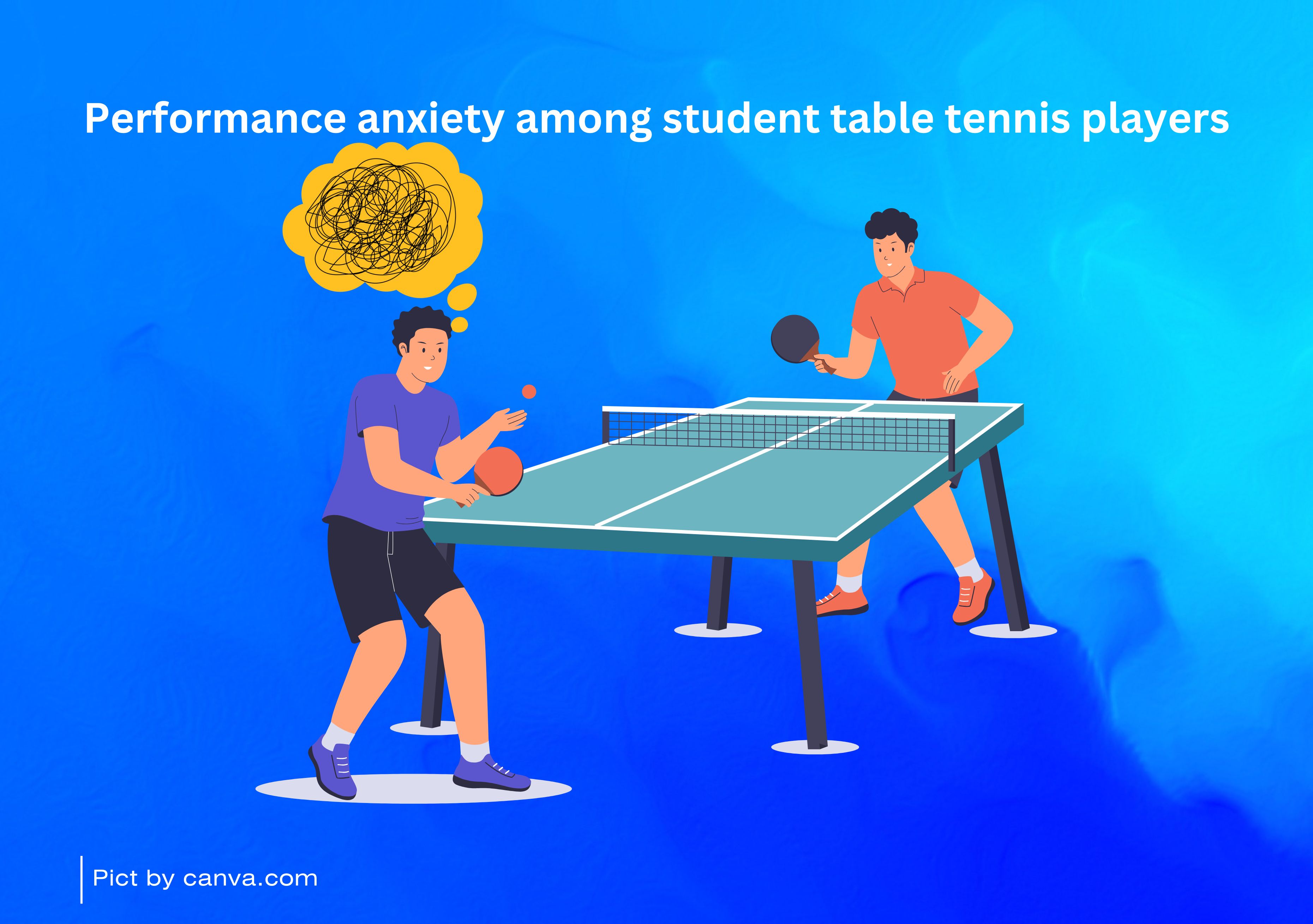
Performance anxiety among student table tennis players
Yumna Wahyuningsih1, Ibnu Fatkhu Royana2, Galih Dwi Pradipta31. Universitas PGRI Semarang , ID2. Universitas PGRI Semarang , ID3. Universitas PGRI Semarang , ID2025-12-18|page 318-331AbstractBackground: Anxiety is a common psychological factor that significantly affects athletic performance, especially in competitive settings. Student-athletes face dual pressures from academic responsibilities and athletic commitments, making them vulnerable to performance anxiety that can impair focus, concentration, and decision-making.
Objectives: This study aims to analyze performance anxiety among table tennis athletes in the Student Activity Unit (UKM) of Universitas PGRI Semarang and to examine differences in performance evaluation outcomes based on sources from internal and external factors.
Methods: A comparative quantitative design with a cross-sectional approach was used. Fifty athletes participated (n=25 assessed by internal factors, n=25 assessed by external factors). Anxiety/performance was measured using a self-report questionnaire consisting of 15 Likert-scale items (1-5 scale) validated by three sport psychology experts. Data were analyzed using one-way ANOVA after confirming normality (Shapiro-Wilk test) and homogeneity (Levene's test).
Results: The internal group had a higher mean score (M = 3.64, SD = 0.86) compared to the external group (M = 3.07, SD = 0.86). ANOVA revealed a statistically significant difference, F(1,48) = 4.92, p = 0.031, η² = 0.093, with an estimated Cohen's d of approximately 0.66, indicating a medium effect size. These findings indicate that anxiety factors affect athletes' performance, with internal factors tending to score higher than external factors.
Conclusions: This study concludes that anxiety affects the performance of table tennis athletes in the Student Activity Unit (UKM) at Universitas PGRI Semarang. Specifically, internal factors such as self-confidence and perfectionism have been proven to have a greater impact than external factors.APA Citation StyleWahyuningsih, Y. , Royana, I. F. , & Pradipta, G. D. (2025). Performance anxiety among student table tennis players. Physical Education and Sports: Studies and Research, 318-331. https://doi.org/10.56003/pessr.v4i3.618 -

An analysis of anxiety levels among volleyball athletes during a provincial inter-club tournament in Jakarta, Indonesia
Rea Rizkita Raga1, Yunita Lasma21. Universitas Islam 45 Bekasi , ID2. Universitas Islam 45 Bekasi , ID2025-07-27|page 175-185AbstractBackground: Competitive anxiety is a key psychological factor that can significantly affect an athlete's performance. In volleyball, high-pressure situations often lead to anxiety, potentially hindering players' ability to perform optimally.
Objectives: This study aims to assess the levels of anxiety experienced by volleyball athletes competing in the Special Capital Region Jakarta Inter-Club Provincial Championship.
Methods: A descriptive quantitative design was used, with data collected through a survey involving 70 volleyball athletes. The instrument used was a 35-item anxiety questionnaire categorized into two phases: before the match (18 items) and during the match (17 items). Responses were measured using a 5-point Likert scale. Validity testing confirmed all items were valid, and the instrument showed high reliability (α = 0.954), as analyzed using SPSS 23.
Results: During the match, 35.7% of athletes experienced high anxiety, while 64.3% showed low anxiety. Prior to the match, 44.3% reported high anxiety and 55.7% reported low anxiety. Overall, 36.6% of athletes showed high anxiety levels, while 61.4% displayed low levels. These results indicate that most athletes have relatively good emotional regulation abilities in competitive situations.
Conclusions: The study underscores the critical role of psychological readiness in athletic performance. Coaches and policymakers are encouraged to integrate structured mental training programs into athlete development. Future research should explore variables contributing to anxiety, such as playing position, competitive experience, and demographic factors like age and gender.
APA Citation StyleRaga, R. R. , & Lasma, Y. (2025). An analysis of anxiety levels among volleyball athletes during a provincial inter-club tournament in Jakarta, Indonesia. Physical Education and Sports: Studies and Research, 175-185. https://doi.org/10.56003/pessr.v4i2.605

1 - 7 of 7 items




















