
Search
Search Results
##search.searchResults.foundPlural##
-

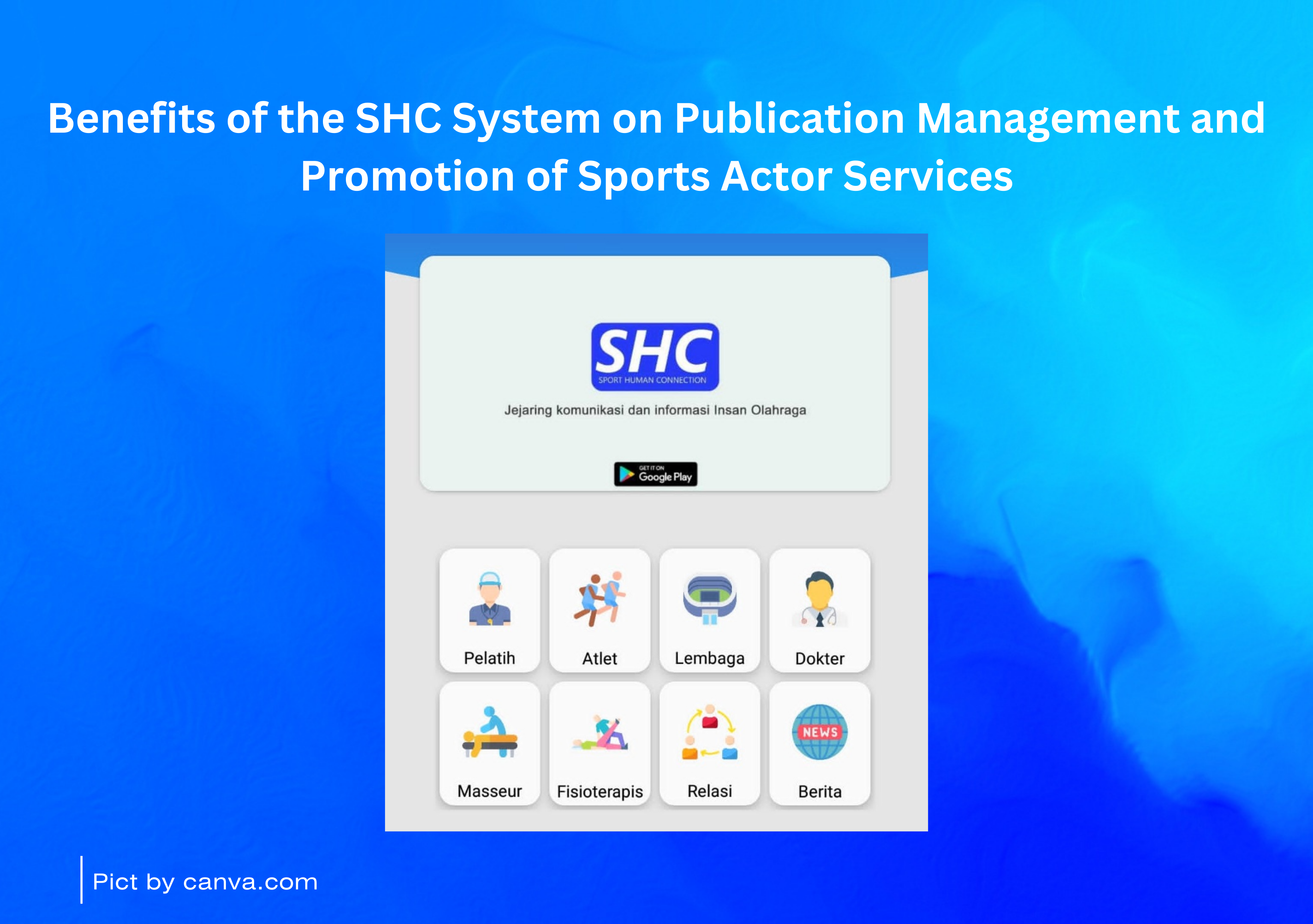
Benefits of the SHC System on Publication Management and Promotion of Sports Actor Services
Sapto Adi1, Abi Fajar Fathoni21. State University of Malang , ID2. State University of Malang , ID2022-04-06|page 1-20AbstractBackground: Publication and promotion of the profession as a sports actor has not been seen optimally. One that shows this is that it is difficult to find traces of the legality of the profession, its achievements, and its relationships. Some of these traces are very important to know because they can be a measure of the quality of services so that the public can determine the appropriate sports players to meet the needs of services in the field of sports. For this reason, it is necessary to develop an online system that makes it easier for the public to obtain information related to sports actors. As well as helping sports actors for the publication and promotion of their profession.
Objectives: The purpose of the research is to develop a Sport Human Connection (SHC) system that can help sports players for publication and promotion of their profession.
Methods: This research method uses research and development methods. The research subjects were sports actors (coaches, athletes, management of sports institutions, masseurs, and physiotherapists) as many as 60 people. The selection of research subjects was done randomly. The data collection technique was carried out by conducting a survey. The research instrument used closed and open questionnaires. The data analysis technique used is descriptive quantitative data analysis and narrative analysis.
Results: From the data obtained from the research subjects, it can be said that the SHC system has benefits for the publication and promotion of the profession of sports players with the support of features that display professional legality, achievements, relations, and communication features.
Conclusion: Looking at the results of the study, it can be concluded that the SHC system provides the benefits of publication and promotion of the profession of sports players.
APA Citation StyleAdi, S. , & Fathoni, A. F. (2022). Benefits of the SHC System on Publication Management and Promotion of Sports Actor Services. Physical Education and Sports: Studies and Research, 1-20. https://doi.org/10.56003/pessr.v1i1.71 -

Analysis of stroke rate (SR) and Stroke Length (SL) the Three Fastest Breaststroke Swimmers at the Tokyo Olympics 2021
Novan Purnama Alim1, Supriatna Supriatna2, Yulingga Nanda Hanief31. Malang State University , ID2. Malang State University , ID3. Malang State University , ID2024-10-27|page 137-154AbstractBackground: Swimming velocity results from a combination of stroke rate (SR) and stroke length (SL). Previously, it was rare to find studies that discussed the pattern of SR and SL length in Olympic swimmers, especially in breaststroke swimmers, as a benchmark reference in a study.
Objectives: This study aimed to determine the practical pattern of the stroke rate (SR) and stroke length (SL) of 100 m and 200 m breaststroke swimmers ranked first to third at the 2021 Tokyo Olympics.
Methods: This study uses quantitative descriptive analysis research with non-test techniques using observation. These non-test techniques involve the systematic observation and recording of the SR and SL length of breaststroke swimmers at the 2021 Tokyo Olympics, as this study aims to determine their patterns.
Results: The results of this study show: in the 100 meters breaststroke men's effective SR pattern (45-75 strokes/min) and SL length (1.33-2.14 m/stroke); 200 meters breaststroke men's effective SR pattern (33-49 strokes/min) and SL length (1.55-2.77 m/stroke); 100 meters breaststroke women's effective SR pattern (30-63 strokes/min) and SL length (1-2.14 m/stroke); and 200 meters breaststroke women's effective SR pattern (32-48 strokes/min) and SL length (1.6-2.5 m/stroke).
Conclusion: This research concludes that the effective pattern of SR and SL of 100 m and 200 m breaststroke swimmers, as identified in the results, can serve as a benchmark for understanding and improving the performance of competitive breaststroke swimmers.
APA Citation StyleAlim, N. P. , Supriatna, S. , & Hanief, Y. N. (2024). Analysis of stroke rate (SR) and Stroke Length (SL) the Three Fastest Breaststroke Swimmers at the Tokyo Olympics 2021. Physical Education and Sports: Studies and Research, 137-154. https://doi.org/10.56003/pessr.v3i2.388 -
Survey of Interest and Talent in Participating in Aerobic Gymnastics on the Nusantara Aerobic Gymnastics Team in 2021
Arum Dwi Masruroh1, Puspodari2, Reo Prasetiyo Herpandika31. Universitas Nusantara PGRI Kediri , ID2. Universitas Nusantara PGRI Kediri , ID3. Universitas Nusantara PGRI Kediri , ID2022-04-07|page 29-37AbstractBackground: The background of this research is based on the results of the researchers' observations, namely the Nusantara aerobics gymnastics team that has not been able to recruit new members from other majors and the uneven development of aerobic gymnastics talent possessed by members.
Objectives: This study aimed to determine the level of interest and talent in aerobics among members of the Nusantara Aerobics Gymnastics Team in 2021.
Methods: This study used a quantitative descriptive approach with a survey method. The subjects in this study were members of the Nusantara Aerobics Gymnastics Team, which consisted of 30 members. The sampling technique used is total sampling because the number of members is relatively small. The data collection technique used an instrument in the form of a questionnaire for interest data and a potential talent test in a sports search. The data analysis technique is in the form of a percentage using Microsoft Excel 2016 and SPSS v.23 software for windows.
Results: Based on the study results and the results of the analysis, it can be seen that the level of interest in participating in aerobic exercise on the Aerobic Gymnastics Team is included in the very high category with a percentage score range of 90% - 100%. While the aerobic gymnastics talent possessed by members of the Aerobics Gymnastics Team can be seen in the results, namely, five members are classified as potential with a percentage of 16.7%, nine members are quite potential with a percentage of 30%, 13 members are classified as less potential with a percentage 43.3%, and three members are classified as not potential with a percentage of 10%.
Conclusion: In conclusion, the interest of the Nusantara Aerobics gymnastics team members is very high, but they are less talented.
APA Citation StyleMasruroh, A. D. , Puspodari, P. , & Herpandika, R. P. (2022). Survey of Interest and Talent in Participating in Aerobic Gymnastics on the Nusantara Aerobic Gymnastics Team in 2021. Physical Education and Sports: Studies and Research, 29-37. https://doi.org/10.56003/pessr.v1i1.94 -

Integrity in the age of AI: navigating authorship, accountability and ethical publishing
Yulingga Nanda Hanief11. State University of Malang , ID2026-04-03|page 106-112AbstractThe rapid emergence of generative artificial intelligence (AI) is reshaping the landscape of academic writing and scholarly publishing, offering both opportunities and ethical challenges. This editorial reflects on the growing implications of AI-assisted authorship, particularly regarding authorship, accountability, and research integrity. While AI tools can improve clarity and accessibility, their misuse raises concerns about the erosion of critical thinking and the reliability of scientific results.
A key issue highlighted in this discussion is the increasing incidence of false or unverifiable references generated through AI-assisted processes. These practices threaten the credibility of scholarly communication and increase the burden on editors and reviewers. In response, this editorial emphasizes the importance of responsible AI use, transparency in authorship, and rigorous source verification.
Furthermore, the article outlines the journal's commitment to maintaining high standards of quality and ethical publishing. This includes strengthening editorial policies, promoting integrity in manuscript preparation, and encouraging accountability among authors. The editorial also calls on the academic community to adopt responsible practices in the use of emerging technologies.
In line with international publishing standards, this editorial is designed to provide critical perspectives, articulate editorial responsibilities, and offer a forward-looking stance on ethical scientific communication. Ultimately, maintaining trust and credibility in the AI era requires a collective commitment to transparency, rigor, and integrity at every stage of the publication process.
APA Citation StyleHanief, Y. N. (2026). Integrity in the age of AI: navigating authorship, accountability and ethical publishing. Physical Education and Sports: Studies and Research, 106-112. https://doi.org/10.56003/pessr.v5i1.720 -
Comparative Analysis of Soccer and Futsal Extracurriculars: A Survey Study of Physical Fitness Profiles
Didi Suryadi1, Mikkey Anggara Suganda2, Makan Sacko3, Y. Touvan Juni Samodra4, Rubiyatno Rubiyatno5, Eka Supriatna6, Isti Dwi Puspita Wati7, Ardo Okilanda81. Tanjungpura University , ID2. Nahdlatul Ulama University Cirebon , ID3. Centre des Langues de Badalabougou , ML4. Tanjungpura University , ID5. Tanjungpura University , ID6. Tanjungpura University , ID7. Tanjungpura University , ID8. State University of Padang , ID2023-04-28|page 59-71AbstractBackground: Futsal and soccer are sports that require endurance and good physical fitness. However, the striking difference, especially in terms of the field used, causes various assumptions.
Objectives: The purpose of this study is to compare the levels of physical fitness required for futsal and soccer as extracurricular activities.
Methods: The Indonesian Physical Fitness Test (TKJI), In this study, a survey administered to extracurricular football and futsal players aged 13 to 15 was used as a quantitative method. Male students from two separate schools who were involved in extracurricular activities participated in this study, including soccer at State Junior High School 3 Sukadana, and futsal at Madrasah Tsanawiyah State 1 Pontianak. Applying a purposive sampling strategy to collect the sample, 20 futsal extracurricular students and 20 soccer extracurricular students were obtained. The SPSS version 26 program was used to aid in the data analysis for this investigation.
Results: According to the study's findings, the average physical fitness score for soccer extracurricular was 15.1, while the average for futsal extracurricular was 11.75. Additionally, the significance value is 0.000 0.05, demonstrating a significant distinction between football and futsal as extracurricular activities.
Conclusion: The study on the degree of physical fitness in extracurricular futsal and football found that there is a big gap. These preliminary results might improve understanding of student fitness developments among exercise professionals.
APA Citation StyleSuryadi, D. , Suganda, M. A. , Sacko, M. , Samodra, Y. T. J. , Rubiyatno, R. , Supriatna, E. , Wati, I. D. P. , & Okilanda, A. (2023). Comparative Analysis of Soccer and Futsal Extracurriculars: A Survey Study of Physical Fitness Profiles. Physical Education and Sports: Studies and Research, 59-71. https://doi.org/10.56003/pessr.v2i1.182 -

Capabilities in Physical Education: A Comparative Analysis of School Heads’ and Teachers’ Perspectives
Davidsol Mendoza1, Maryjane Calabia21. Batangas State University , PH2. Padre Garcia Integrated National High School , PH2024-04-29|page 26-45AbstractBackground: Effective education delivery relies on PE teachers’ abilities. Research indicates that students’ school performance significantly depends on the quality of PE teaching.
Objectives: This study focused on assessing instructional capabilities in physical education. Specifically, it examined how school heads and teachers evaluated teachers’ abilities in content knowledge, pedagogical skills, communication, and professionalism. Additionally, the study compared assessments between the two groups.
Methods: The study employed a descriptive research design involving 98 physical education teachers and 59 school heads from the Division of Batangas City. Data collection utilized a researcher-made questionnaire and interviews. Statistical analysis involved weighted mean and independent t-tests for data interpretation.
Results: The assessment revealed valuable insights regarding PE teachers’ instructional capabilities. Administrators acknowledged strengths in lesson introduction and accurate content delivery. However, areas for improvement included integrating key elements and promoting higher-order thinking skills. PE teachers felt confident introducing lessons but recognized a need to refine performance demonstrations. Administrators praised diverse teaching methods but suggested creating more challenging experiences. Communication skills were positive, with room for improvement in grammatical accuracy. PE teachers expressed dedication to student physical education but identified a need for more decisive leadership in school-based activities. The findings highlighted specific improvement needs while emphasizing contrasting perceptions between administrators and PE teachers.
Conclusion: The assessment found that physical education (PE) teachers are capable in delivering junior high school PE. However, they need familiarity with emerging trends to enhance instruction. School heads and PE teachers have differing views on instructional capabilities, attributed to assessment sources: administrators rely on scheduled observations, while PE instructors use self-assessment and daily teaching experiences.
APA Citation StyleMendoza, D. , & Calabia, M. (2024). Capabilities in Physical Education: A Comparative Analysis of School Heads’ and Teachers’ Perspectives. Physical Education and Sports: Studies and Research, 26-45. https://doi.org/10.56003/pessr.v3i1.347 -

A Study on the Impact of Various Motor Fitness Characteristics on Performing Ability in High and Low-Performing Divisional Women Cricket Players
Farjana Akter Boby11. Jashore University of Science & Technology , BD2023-04-26|page 44-58AbstractBackground: Motor fitness has a big impact on the cricket performance pyramid.
Objectives: The research concentrates on certain motor fitness components to improve playing competency in both high- and low-performing Divisional women cricket players.
Methods: For this study, 36 female players were randomly selected as subjects from the Bangladesh Women's National Cricket League held in Sylhet in 2022-23. They ranged in age from 16 to 27 years. Three equal groups of twelve people each were formed from the chosen subjects. Khulna, Sylhet, and Dhaka teams were represented by Group I, Group II, and Group III, respectively. Regular exercises and training were provided to enhance the player's performance in the game. Our research scholar additionally prepared the questionnaires with the help of the literature review. The researcher reported the following motor fitness factors: explosive leg power, speed, agility, and cardiovascular endurance. The generated data were gathered during the competition and statistically evaluated after the competition by applying ANOVA and Post Hoc Test (Tukey HSD). The researcher used the statistical software package SPSS version 26 for data analysis.
Results: The results of the study showed that there were significant differences in motor fitness characteristics between high and low-performing Divisional women cricket players. High-performing players had significantly better scores on cardiovascular endurance (p=.000), explosive leg power (p=.013), speed (p=.002), and agility (p=.000) than low-performing players. The Champion Team (Sylhet) of the league was discovered to be more successful than other teams in achieving high-level performance.
Conclusion The study concluded that to execute the best gaming plan, playing skill exclusively depends on physical condition and a stress-free mind. The study highlights the importance of motor fitness characteristics in cricket performance. The findings may have implications for developing training programs tailored to improve specific motor fitness characteristics for players at different performance levels.
APA Citation StyleBoby, F. A. (2023). A Study on the Impact of Various Motor Fitness Characteristics on Performing Ability in High and Low-Performing Divisional Women Cricket Players. Physical Education and Sports: Studies and Research, 44-58. https://doi.org/10.56003/pessr.v2i1.179 -
The Impact of the Sports Education Athletic Season on the Learning Motivation as Supporters of the Kurikulum Merdeka
Agi Ginanjar1, Reni Anggraeni21. STKIP Nahdlatul Ulama Indramayu, Indonesia , ID2. Indonesian Institute of the Arts Denpasar, Indonesia , ID2024-03-12|page 1-9AbstractBackground: Physical education learning in Indonesia has had to switch to using the Kurikulum Merdeka which focuses more on students as the center of learning with project reports and project themes. Motivation is very important for students in following the learning process. Sport Education is a learning strategy that facilitates students and teachers with projects in the learning process and can increase student learning motivation.
Objectives: The aim of the research was to examine the influence of SE on learning motivation in MTs students.
Methods: The research method used in this research uses an experimental research method with a one-shot case study design. Participants in this research were 48 students at one of the MTs in Indramayu Regency. The instrument in this research used a student learning motivation questionnaire. The data analysis technique uses a one-sample t test.
Results: The results of this research obtained t count = 7.05 with Sig. 0.00 < 0.05, which means that there is an influence of SE on the learning motivation of MTs students.
Conclusion: This research concludes that there is an influence of SE on learning motivation in Junior High Schoolstudents.
APA Citation StyleGinanjar, A. , & Anggraeni, R. (2024). The Impact of the Sports Education Athletic Season on the Learning Motivation as Supporters of the Kurikulum Merdeka. Physical Education and Sports: Studies and Research, 1-9. https://doi.org/10.56003/pessr.v3i1.315 -
Addendum: Analysis of game variables and influence on defensive success in elite handball
Iván González-García11. Faculty of Health Sciences, Universidad Isabel I, Burgos , ES2025-04-30|page 83AbstractThis addendum provides additional statements on informed consent, data availability, and AI disclosure to enhance transparency and align the original article with current international publication standards. These updates do not affect the results, interpretation, or conclusions of the original publication.
APA Citation StyleGonzález-García, I. (2025). Addendum: Analysis of game variables and influence on defensive success in elite handball. Physical Education and Sports: Studies and Research, 83. https://doi.org/10.56003/pessr.v4i1.722 -

A Modern Pedagogical Approach in The Subject of Physical Education
Ferdinando Cereda11. The Catholic University of the Sacred Heart in Milan , IT2023-10-31|page 126-141AbstractBackground: The pedagogical paradigm (PP) is a complex framework encompassing various pedagogical elements integral to the instructional and educational process. These paradigms manifest in diverse forms without entirely replacing their precursor frameworks, as they are built upon established principles and concepts. Understanding the architectural structure of each paradigm is crucial in distinguishing these pedagogical models.
Objective: This exposition aims to provide a rationale for the integration of the pedagogical paradigm within the realm of PE.
Methods: In the literature review, the EBSCO database was utilized via SPORTDiscus. This theoretical review draws upon various scholarly sources, including Taylor and Francis, ERIC, Scopus, Google Scholar These repositories provide a global perspective, with the majority of references selected from the decade leading up to the onset of the pandemic.
Results: The literature analysis reveals the intricate nature of pedagogical paradigms and their importance in the field of PE. It underscores the need for instructors to adapt their teaching approaches to meet the specific needs of students based on their age and developmental stage. The integration of the pedagogical paradigm within PE is proposed as a valuable concept to enhance the quality of physical education programs.
Conclusion: The incorporation of the PP into the domain of PE holds promise for improving the effectiveness of PE instruction. This review, based on a thorough examination of pertinent literature, highlights the relevance of PP in adapting teaching methodologies to suit the diverse needs of students. While this study does not provide empirical evidence, it lays the theoretical groundwork for future research and practical applications in the field of PE. Further investigations and practical implementations are warranted to assess the feasibility and benefits of incorporating PP within PE instruction.
APA Citation StyleCereda, F. (2023). A Modern Pedagogical Approach in The Subject of Physical Education. Physical Education and Sports: Studies and Research, 126-141. https://doi.org/10.56003/pessr.v2i2.265 -
Promoting gender responsiveness in teaching physical education
Ryan Cazel Lalog11. Batangas State University , PH2025-04-04|page 1-14AbstractBackground: Implementing gender policies in physical education at Batangas State University remains moderate, with challenges in ensuring gender-responsive and equitable activities for male and female students. Issues such as students' self-confidence, self-perception, and limited gender mainstreaming strategies and resources hinder the development of a more inclusive learning environment.
Objectives: This study examined gender policy implementation, the use of strategies and resources in various physical education activities, differences in male and female instructors' assessments, challenges in gender mainstreaming, and the development of gender-responsive activities.
Methods: A descriptive research method was used, collecting data from 105 university physical education instructors (77 males, 28 females) through a researcher-made survey questionnaire.
Results: Findings revealed that gender policies were moderately implemented (mean score: 3.47), while both male (3.67) and female (3.63) instructors highly utilized strategies and resources in physical fitness, rhythmic activities, individual and dual sports, and team sports. No significant differences were observed in male and female educators' assessments, indicating shared perspectives on gender mainstreaming.
Conclusions: The study emphasizes the need for more vigorous policy enforcement and improvements in sports-related content to enhance gender inclusivity. Addressing self-confidence, self-perception, and individual differences is crucial for fostering equitable learning experiences. Universities should provide continuous professional development for PE instructors on gender-sensitive teaching strategies. Future research should explore the long-term impact of gender-responsive approaches on student engagement, performance, and overall well-being in physical education.
APA Citation StyleLalog, R. C. (2025). Promoting gender responsiveness in teaching physical education. Physical Education and Sports: Studies and Research, 1-14. https://doi.org/10.56003/pessr.v4i1.392 -

Survey on the Effectiveness of the Online Learning Process Due to the Coronavirus Pandemic in Physical Education
Indung Pranata1, Ari Wibowo Kurniawan21. State University of Malang , ID2. State University of Malang , ID2022-03-31|page 51-62AbstractBackground: Since the outbreak of the coronavirus covid-19 in Indonesia, education has offered online learning. Online learning requires system support, namely hardware (smartphone, tablet, or laptop/personal computer), internet network, and human resources. However, the implementation of online learning encounters several challenges and obstacles, especially online learning in physical education in elementary schools.
Objectives: The purpose of this study was to determine and examine the effectiveness of the online learning process due to the coronavirus pandemic in Physical Education and Health subjects at SD Negeri 6 Sumbermanjingkulon, Pagak District, Malang Regency.
Methods: This study used a descriptive research design with a survey method. This study involved 48 elementary school students. The data collected through a questionnaire method or a google form-based questionnaire that has been tested for validity by an expert. Data analysis was carried out on five indicators in the study. The indicators consist of student interest, interest, benefits, learning facilities and infrastructure, and quality of interaction.
Results: The results of the study indicate that the effectiveness of online learning at SD Negeri 6 Sumbermanjingkulon is in the criteria of being quite effective with a percentage of 46.90%.
Conclusion: Based on the results of the study, it shows that overall online learning in physical education and health subjects is quite effective, but the percentage obtained between quite effective and ineffective is only a slight difference.
APA Citation StylePranata, I. , & Kurniawan, A. W. (2022). Survey on the Effectiveness of the Online Learning Process Due to the Coronavirus Pandemic in Physical Education. Physical Education and Sports: Studies and Research, 51-62. https://doi.org/10.56003/pessr.v1i1.112 -
The Impact of Drill Exercise and Games Approach on Improving Under-Passing Ability in Adolescent Female Volleyball Athletes
Dwi Khoirudin1, Henri Gunawan Pratama2, Danang Ari Santoso3, Baskoro Nugroho Putro41. STKIP PGRI Trenggalek, Indonesia , ID2. STKIP PGRI Trenggalek, Indonesia , ID3. Universitas PGRI Banyuwangi, Indonesia , ID4. Universitas Sebelas Maret Surakarta, Indonesia , ID2023-10-31|page 142-151AbstractBackground: A long-term training process is required to train athletes, which requires systematic, targeted, planned, and repetitive handling. Training methods improve the mastery of fundamental techniques for beginner athletes. Training volleyball methods are essential for beginners as they make the exercise more focused and gradual to improve their under-passing. Coach training methods make it easier to give practical and concentrated exercises to the areas you want to enhance.
Objective: The study aims to determine whether drill exercise and game approach can significantly improve female athletes' use of under-passing volleyball.
Methods: With the type of research being Quasi-Experimental. The research design used was Randomized Control Group Pretest-Posttest Design. A total of 24 athletes were given treatment for two months. The instrument used was the Braddy Volleyball Test, and data analysis used the T-Test.
Results: Results for the drill exercise experimental group were 0.695 > 0.05, and for the experimental group, the playing method was 0.695 > 0.05. This means that drill exercises and game approaches significantly improve the skills of passing volleyball.
Conclusion: In experimental groups, I and II, athletes who were given a drill exercise program and game approach both improved their skills in the basic techniques of skills under-passing volleyball. The average posttest results of both groups of experiments are higher than the average pretest results. It shows a difference between the drill exercise program and the game approach.
APA Citation StyleKhoirudin, D. , Pratama, H. G. , Santoso, D. A. , & Putro, B. N. (2023). The Impact of Drill Exercise and Games Approach on Improving Under-Passing Ability in Adolescent Female Volleyball Athletes. Physical Education and Sports: Studies and Research, 142-151. https://doi.org/10.56003/pessr.v2i2.276 -
Body Composition Analysis Junior Basketball Players
Nur Luthfiatus Solikah1, Heri Wahyudi2, Achmad Widodo3, Awang Firmansyah4, Jagat Shine Muarif5, Asep Aziz Muslim61. Universitas Negeri Surabaya , ID2. Universitas Negeri Surabaya , ID3. Universitas Negeri Surabaya , ID4. Universitas Negeri Surabaya , ID5. Universitas Negeri Surabaya , ID6. Universitas Negeri Surabaya , ID2024-10-25|page 126-136AbstractBackground: Athletes must maintain top physical condition to compete, with body composition a crucial indicator. Skeletal muscle mass and body fat are related to performance, with a lower fat percentage increasing physical ability. Nutritional needs also play a role, where athletes consume carbohydrates for 60-70% of their energy. These factors are essential for optimal performance and overall health.
Objectives: This study aimed to investigate the body composition of junior basketball athletes regarding gender.
Methods: This study employed a rigorous cross-sectional research design to analyze the body composition measurements of elite athletes and junior basketball players. The participants were carefully selected based on age, injury history, national-level achievements, and recent injury training. A total of 24 junior basketball athletes, evenly split between elite junior male and female athletes, participated in the test. The data was meticulously analyzed using Minitab software and the T-test to determine gender differences, ensuring the validity and reliability of the results.
Results: The athletes were aged 16-17, weighing 50-65 kg to 95-108 kg. They had BMI characteristics of 8.3% underweight, 79.2% normal, 12.5% overweight, and 0% obese. Significant differences were found in body composition characteristics for each gender. The T-test results show significant differences between the variables with a P value <0.05.
Conclusion: They indicate that female basketball athletes tend to have a higher fat percentage, while male athletes typically possess significantly greater muscle mass. These insights can be instrumental in developing gender-specific training and nutrition programs, thereby enhancing the performance and health of junior basketball athletes.
APA Citation StyleSolikah, N. L. , Wahyudi, H. , Widodo, A. , Firmansyah, A. , Muarif, J. S. , & Muslim, A. A. (2024). Body Composition Analysis Junior Basketball Players. Physical Education and Sports: Studies and Research, 126-136. https://doi.org/10.56003/pessr.v3i2.382 -
Effect of High Heeled Shoe Sole to the Vertical Jump Performance of Volleyball Women Student Athletes
Arjay Maiquez Olivar1, Jomel Nasayao Reyes2, John Paul Taguba Balisi3, Teejay Dela Cueva Panganiban41. Batangas State University TNEU JPLPC-Malvar, 4233, Philippines , PH2. Batangas State University TNEU JPLPC-Malvar, 4233, Philippines , PH3. Batangas State University TNEU JPLPC-Malvar, 4233, Philippines , PH4. Batangas State University TNEU JPLPC-Malvar Campus , PH2024-10-25|page 116-125AbstractBackground: The study investigates the effect of wearing high heeled shoe soles on the vertical jump performance of volleyball women student athletes compared to their performance in standard footwear. This research aims to address the problem of whether high heeled shoe soles negatively affect vertical jump ability, which is a critical factor in their sport performance.
Objectives: This study investigated the influence of high heeled shoe soles on female volleyball athletes' vertical leap performance.
Methods: Using a quasi-experimental design, the study included 15 female volleyball student-athletes from Batangas State University TNEU JPLPC-Malvar Campus in 2023-2024. Participants performed vertical jump tests under two conditions—wearing high heeled shoe soles and standard footwear—over two weeks, with three attempts per condition. Paired t-tests assessed performance differences between the two footwear types.
Results: Results indicated that wearing high heeled shoe soles significantly improved jump heights, with average increases of 2.13 inches initially and 3.6 inches in post-tests. Statistical analysis yielded t-test values of 35.87 for pre-performance and 697.14 for post-performance, both showing significant gains.
Conclusion: The study concludes that high heeled shoe soles positively influence vertical jump performance in female volleyball athletes, suggesting that this footwear could enhance athletic outcomes.
APA Citation StyleOlivar, A. M. , Reyes, J. N. , Balisi, J. P. T. , & Panganiban, T. D. C. (2024). Effect of High Heeled Shoe Sole to the Vertical Jump Performance of Volleyball Women Student Athletes. Physical Education and Sports: Studies and Research, 116-125. https://doi.org/10.56003/pessr.v3i2.369 -
An Examination of Meaningful Experiences During Sport Education
Ali Nasser Alshuraymi1, Peter Hastie21. College of Education, King Saud University, Riyadh , SA2. Auburn University , US2024-04-30|page 46-56AbstractBackground: In recent research years, there has been an increasing focus on the meaningfulness of physical education experiences. While it has been suggested that certain curriculum models such as sport education or cooperative learning provide opportunities for meaningful engagement in physical education, to date there has been no empirical study of those claims.
Objectives: The purpose of this study was to quantitatively examine students’ perceptions of meaningfulness in two physical education contexts: traditional multi-activity format, and sport education.
Methods: Sixty seventh-grade students aged 12 to 14 completed a 20-item survey titled "Meaningful Experiences in Physical Education Survey (MEPES)" prior to and at the completion of one of three sport education seasons. The analysis consisted of independent samples t-test comparisons between the two contexts (previous physical education experiences, and sport education) for each of the five dimensions of meaningfulness. A Pearson correlation was conducted to examine if there were significant relationships between the five dimensions.
Results: Results of the independent samples t-test showed that significantly higher levels of meaningfulness were identified from participation in sport education than in previous physical education for four of the five dimensions. Pearson's coefficient results indicated significant positive correlations between all five meaningfulness dimensions.
Conclusion: Sport education has structural elements that promote a sense of meaningfulness within physical education.
APA Citation StyleAlshuraymi, A. N. , & Hastie, P. (2024). An Examination of Meaningful Experiences During Sport Education. Physical Education and Sports: Studies and Research, 46-56. https://doi.org/10.56003/pessr.v3i1.355 -
Exploratory machine-learning classification of student performance in physical education using fitness, engagement, and academic indicators
Princes Lloyda Peralta1, Shekiro Raposas2, Reinalyn Bucsit31. General Education Department, College of Inclusive Education, Lorma Colleges , PH2. College of Computer Studies and Engineering, Lorma Colleges , PH3. General Education Department, College of Inclusive Education, Lorma Colleges , PH2026-09-09|page 276-289AbstractBackground: Physical Education (PE) performance is multidimensional and may be associated with fitness, engagement, attendance, motivation, and prior achievement. Machine learning can identify classification patterns across these indicators, but predictive claims require clear temporal ordering and rigorous validation.
Objective: This study compared four machine-learning classifiers for categorizing student PE performance while minimizing target leakage and addressing class imbalance.
Methods: An exploratory, leakage-controlled classification analysis used a public Kaggle dataset of uncertain provenance. The dataset contained 500 records, 19 substantive variables, and one identifier, with Performance categorized as Low, Average, or High Performer. Because the label-construction rule was undocumented, Performance was treated as an inherited categorical outcome. Overall PE Performance Score, Improvement Rate, and Final Grade were excluded because they could contain current, change-based, or outcome-related information. Categorical predictors were one-hot encoded, numeric predictors were standardized, and preprocessing was performed within training folds. Random Forest, Decision Tree, Support Vector Machine, and Logistic Regression were evaluated using stratified five-fold cross-validation with class-weighted learning.
Results: Random Forest achieved the highest accuracy (0.856), whereas Logistic Regression achieved the highest balanced accuracy (0.749) and macro-F1 (0.645). Its out-of-fold recall was 0.759 for Low, 0.720 for Average, and 0.750 for High Performers, indicating that accuracy alone may inadequately reflect performance in an imbalanced multiclass setting.
Conclusion: Leakage-controlled, class-aware evaluation is essential in machine-learning classification of student performance. These findings are exploratory and should not be interpreted as validated prospective predictions. Future studies should use documented data, explicit temporal ordering, larger balanced samples, and independent external validation.
APA Citation StylePeralta, P. L. , Raposas, S. , & Bucsit, R. (2026). Exploratory machine-learning classification of student performance in physical education using fitness, engagement, and academic indicators. Physical Education and Sports: Studies and Research, 276-289. https://journal.rezkimedia.or.id/pes/article/view/790 -
Association between SDQ-TR-assessed hyperactivity symptoms and step count during school activities in school-aged children
Najwa Citamajida1, Adnan Faris Naufal21. Faculty of Health Science, Universitas Muhammadiyah Surakarta , ID2. Faculty of Health Science, Universitas Muhammadiyah Surakarta , ID2026-09-07|page 264-275AbstractBackground: Hyperactivity is a core symptom of attention-deficit/hyperactivity disorder (ADHD) and may manifest as increased motor activity. Objectively measured step count may provide information about ambulatory movement associated with hyperactivity symptoms, while developmental differences may also influence movement patterns in children.
Objective: To examine the association between hyperactivity symptom severity and step count during school activities and to compare step count and hyperactivity scores between children aged 5 and 12 years.
Methods: This cross-sectional study included 40 children (20 males and 20 females) aged 5 and 12 years from two schools in Surakarta, Indonesia, recruited using total sampling. Hyperactivity symptoms were assessed using the hyperactivity/inattention subscale of the Strengths and Difficulties Questionnaire Teacher Report (SDQ-TR), while step count was objectively measured using a Maxfit pedometer during one school day. Spearman's rank correlation, independent-samples t-tests, and Mann–Whitney U tests were used for statistical analysis.
Results: Hyperactivity scores were strongly and positively correlated with step count (rₛ = 0.918, p < 0.001). Step count differed significantly between the age groups (p = 0.041), with higher values observed among 5-year-old children than among 12-year-old children. In contrast, hyperactivity scores did not differ significantly between the two age groups (p = 0.701).
Conclusion: Higher hyperactivity symptom severity was associated with greater step count during school activities. Step count differed between the two age groups, whereas hyperactivity scores did not. These findings suggest that objectively measured ambulatory movement and hyperactivity symptoms may capture related but developmentally distinct aspects of children's behaviour.
APA Citation StyleCitamajida, N. , & Naufal, A. F. (2026). Association between SDQ-TR-assessed hyperactivity symptoms and step count during school activities in school-aged children. Physical Education and Sports: Studies and Research, 264-275. https://journal.rezkimedia.or.id/pes/article/view/778





















