
Search
Search Results
##search.searchResults.foundPlural##
-

Medical observations and injury analysis: All Girls Touch Rugby Championship 2024
Mohamad Nizam Nazarudin1, Yong Qin Tan2, Ardo Okilanda3, Yovhandra Ockta4, Reshandi Nugraha51. National University of Malaysia , MY2. National University of Malaysia , MY3. State University of Padang , ID4. Universitas Teuku Umar , ID5. UniversitasPendidikan Indonesia , ID2025-04-04|page 32-45AbstractBackground: Touch rugby is a high-intensity, non-contact sport requiring agility, speed, and coordination. This study analyzes injury distribution, treatment effectiveness, and preventive measures among youth touch rugby players.
Objectives: This study examined injury patterns among adolescent female athletes during the 2024 All-Girls Touch Rugby Championship (AGTR 2024).
Methods: A retrospective observational study was conducted using medical reports from the two-day All-Girls Touch Rugby Championship 2024 (AGTR 2024) at Universiti Putra Malaysia. The study examined 484 female athletes (ages 9–18 years), with 176 injuries recorded and categorized as soft tissue injuries (52.3%), abrasions (23.9%), and sprains (14.2%). Descriptive statistics were used to assess injury distribution, while chi-square analysis (χ² = 10.45, p < 0.01) evaluated the relationship between injury type and age group.
Results: Younger players (10–14 years) sustained more abrasions (60%), whereas older athletes (15–18 years) had a higher incidence of soft tissue injuries (68%). Injuries increased by 66.7% on Day 2, highlighting the impact of cumulative fatigue and tournament intensity. Ice therapy (68%) and bandaging (55%) were the most utilized treatments, with only 7% of cases requiring outpatient referrals.
Conclusions: Findings underscore the need for structured warm-ups, enhanced hydration protocols, and targeted strength training to reduce injury risks. The study emphasizes the role of injury surveillance, playing surface improvements, and gender-specific training programs in preventing injuries and enhancing athlete safety. Implementing evidence-based preventive strategies can promote the long-term development and sustainability of touch rugby for adolescent athletes. Future research should focus on longitudinal injury tracking and tailored intervention strategies.
APA Citation StyleNazarudin, M. N. , Tan, Y. Q. , Okilanda, A. , Ockta, Y. , & Nugraha, R. (2025). Medical observations and injury analysis: All Girls Touch Rugby Championship 2024. Physical Education and Sports: Studies and Research, 32-45. https://doi.org/10.56003/pessr.v4i1.495 -
Weightlifting coaches' and athletes' understanding of injury prevention programs: a case study of Lumajang and Malang
Muhammad Izzan Atmagara1, Yulingga Nanda Hanief21. State University of Malang , ID2. State University of Malang , ID2025-09-21|page 222-235AbstractBackground: Weightlifting is a high-intensity sport with a high risk of injuries due to improper technique, insufficient warm-up, and excessive training loads.
Objectives: This study explores the understanding, strategies, and barriers of weightlifting coaches and athletes in Lumajang District and Malang City related to implementing injury prevention programs in performance sports.
Methods: This study used a qualitative case study approach. Participants were selected using purposive sampling, consisting of weightlifting coaches with at least one year of experience and athletes who had trained and competed at the regional level. Data were collected through interviews, observations, and document analysis, while data were analyzed using the Miles and Huberman model, including reduction, presentation, and conclusion.
Results: The results showed that coaches and athletes emphasized dynamic warm-ups, core and back strengthening exercises, and correct lifting techniques as the main strategies to prevent injuries. However, limitations in facilities, literature access, and training variety were identified as barriers to implementing optimal injury prevention programs.
Conclusions: This study concludes that effective injury prevention in weightlifting requires structured warm-up routines, individualized training programs, and adequate supporting equipment. Strengthening coaches’ knowledge and providing better facilities are crucial to minimize injuries and enhance athlete performance.APA Citation StyleAtmagara, M. I. , & Hanief, Y. N. (2025). Weightlifting coaches' and athletes' understanding of injury prevention programs: a case study of Lumajang and Malang. Physical Education and Sports: Studies and Research, 222-235. https://doi.org/10.56003/pessr.v4i2.601 -
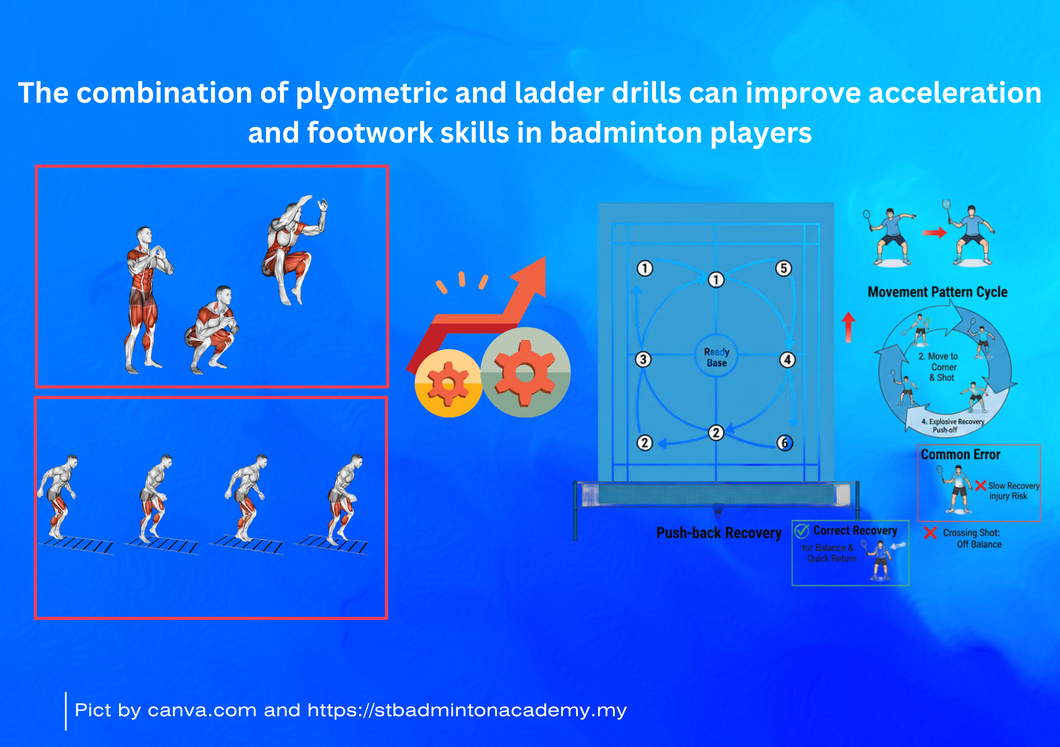
The combination of plyometric and ladder drills can improve acceleration and footwork skills in badminton players
Muhammad Labib Siena Ar Rasyid1, Oce Wiriawan2, Afif Rusdiawan3, Laily Mita Andriana4, Enarnimas Dwi Ratna Damayanti51. Department of Sports Coaching Education, Faculty of Sport and Health Sciences, Universitas Negeri Surabaya , ID2. Department of Sports Coaching Education, Faculty of Sport and Health Sciences, Universitas Negeri Surabaya , ID3. Department of Sports Science, Faculty of Sport and Health Sciences, Universitas Negeri Surabaya , ID4. Department of Sports Coaching Education, Faculty of Sport and Health Sciences, Universitas Negeri Surabaya , ID5. Department of Sports Coaching Education, Faculty of Sport and Health Sciences, Universitas Negeri Surabaya , ID2026-03-08|page 28-39AbstractBackground: Recognized globally as the fastest racket sport in the world, badminton demands exceptional acceleration and footwork skills for competitive success. However, many intermediate players often struggle to produce the explosive power needed for fast-paced rallies. To enhance these physical attributes, targeted training interventions, such as a hybrid regimen of plyometric and ladder drills, are often required.
Objectives: This study aims to analyze the efficacy of integrating plyometric exercises with ladder drills in enhancing acceleration and footwork proficiency among badminton players.
Methods: This research employed a quasi-experimental design with a non-equivalent control group. Through purposive sampling, 24 male participants (aged 14-16 years) with at least 2 years of training experience, good health, and no history of recent injuries were selected. They were assigned to either the PLD Group (age: 15.00 ± 0.74 years; height: 162.00 ± 0.07 cm; weight: 50.58 ± 5.68 kg; BMI: 19.20 ± 0.88 kg/m²) or the CV Group (age: 15.00 ± 0.85 years; height: 162.08 ± 0.08 cm; weight: 51.75 ± 8.05 kg; BMI: 19.59 ± 1.56 kg/m²). The intervention spanned six weeks, with three sessions per week. Performance in acceleration was assessed using a 10-meter sprint, and footwork skills were assessed using the footwork skills test (Tohar version) pre- and post-intervention. Data analysis employed the Wilcoxon signed-rank and the Mann-Whitney tests.
Results: The Wilcoxon analysis indicated that both the PLD and CV Groups achieved improvements in acceleration and footwork skills (p<0.05). However, the Mann-Whitney test revealed a statistically significant difference between the two groups, with the PLD Group demonstrating superior gains in both acceleration (p<0.05) and footwork skills (p<0.05) compared to the CV Group.
Conclusions: Integrating plyometric training and ladder drills is an effective strategy for significantly improving acceleration and footwork skills in badminton players.
APA Citation StyleRasyid, M. L. S. A. , Wiriawan, O. , Rusdiawan, A. , Andriana, L. M. , & Damayanti, E. D. R. (2026). The combination of plyometric and ladder drills can improve acceleration and footwork skills in badminton players. Physical Education and Sports: Studies and Research, 28-39. https://doi.org/10.56003/pessr.v5i1.669 -
Impact of plyometric training using step-up and lateral box jumps on the improvement of leg muscle power in youth school futsal athletes
Risky Sandy Kurniawan1, Donny Anhar Fahmi2, Setiyawan Setiyawan31. Universitas PGRI Semarang , ID2. Universitas PGRI Semarang , ID3. Universitas PGRI Semarang , ID2025-08-15|page 212-221AbstractBackground: Futsal is a high-intensity sport that requires leg muscle power, especially in aerial duels, anticipating the ball, and performing powerful kicks. Limited jumping ability can reduce leg muscle power and overall performance.
Objectives: This study aims to test the impact of plyometric training using step-up and lateral box jumps on the improvement of leg muscle power in youth school futsal athletes.
Methods: A quasi-experimental single-group pretest-posttest design was conducted with 40 male participants over a four-week plyometric training program. Leg muscle power was measured using a vertical jump test before and after the intervention. Data were analyzed using a t-test with the assistance of SPSS.
Results: Both step-up and lateral box jumps significantly increased leg muscle power (p < 0.05). The step-up group showed an average increase of 4.20 cm, while the lateral box jump group showed an average increase of 3.45 cm, with no statistically significant difference (p = 0.326).
Conclusions: Both training methods effectively enhance leg muscle power and can be integrated into school-based futsal training programs to improve performance.
APA Citation StyleKurniawan, R. S. , Fahmi, D. A. , & Setiyawan, S. (2025). Impact of plyometric training using step-up and lateral box jumps on the improvement of leg muscle power in youth school futsal athletes. Physical Education and Sports: Studies and Research, 212-221. https://doi.org/10.56003/pessr.v4i2.611 -
Functional movement patterns and bilateral asymmetry in badminton athletes: A Functional Movement Screen analysis at the Malang Regional Training Center
Avi Kholifatuz Zahro'1, Muhammad Atiq Noviudin Pritama21. State University of Malang , ID2. State University of Malang , ID2026-08-17|page 196-207AbstractBackground: Badminton involves repetitive unilateral overhead movements, rapid changes of direction, and explosive actions that may contribute to side-to-side differences in functional movement patterns.
Objectives: This study aimed to describe functional movement patterns and bilateral asymmetry among badminton athletes at the Malang Regional Training Center using the Functional Movement Screen (FMS).
Methods: This cross-sectional study involved 16 sub-elite badminton athletes aged 15–20 years selected through purposive sampling. Functional movement was assessed using the seven-component FMS. Total scores were classified as high (≤14), moderate (15–17), or low (18–21) injury risk. Bilateral asymmetry was identified from differences between right- and left-side scores in five bilateral FMS components. Data were analyzed descriptively using means, standard deviations, frequencies, and percentages.
Results: Most athletes (62.5%, n = 10) were classified as having moderate injury risk, while 18.75% (n = 3) were classified as high risk and 18.75% (n = 3) as low risk. Shoulder Mobility showed the highest prevalence of bilateral asymmetry (100%, n = 16), followed by the In-Line Lunge and Rotary Stability (62.5%, n = 10 each), Hurdle Step (50.0%, n = 8), and Active Straight Leg Raise (43.75%, n = 7).
Conclusions: Bilateral functional movement asymmetry was common among badminton athletes, particularly in shoulder mobility, while most athletes were classified within the moderate injury-risk category. These findings support functional movement screening to identify movement limitations and inform individualized corrective exercise strategies.
APA Citation StyleZahro', A. K. , & Pritama, M. A. N. (2026). Functional movement patterns and bilateral asymmetry in badminton athletes: A Functional Movement Screen analysis at the Malang Regional Training Center. Physical Education and Sports: Studies and Research, 196-207. https://doi.org/10.56003/pessr.v5i2.756 -
Impact of five-cone and ladder drill training on agility among U15 football athletes
Pupuh Harya Prembanyu1, Agus Wiyanto2, Setiyawan Setiyawan31. Universitas PGRI Semarang , ID2. Universitas PGRI Semarang , ID3. Universitas PGRI Semarang , ID2025-11-26|page 266-274AbstractBackground: Although it may seem simple, soccer has complex characteristics, which is why many children are attracted to training at soccer schools. Agility is a crucial aspect of the game, as it enables a player to move quickly, evade opponents, and control the ball effectively. At the Pemalang Regency Bina Talenta Soccer School (SSB), agility training is not conducted optimally and has not been implemented systematically with effective methods. Therefore, exercises such as the five-cone and ladder drills need to be implemented to improve player agility more effectively.
Objectives: This study aims to examine the impact of five-cone and ladder drill training on the agility of U15 football athletes.
Methods: This study used a quantitative descriptive method with a quasi-experimental approach. The experimental design was a pretest-posttest in two groups. The sampling technique used was purposive sampling with 20 players participating in a four-week training program. The instrument to measure agility was the Illinois Agility Test, with a validity level of r = 0.87. The measurement data were analyzed using a difference test with the help of SPSS software version 29.0.
Results: The five-cone drill and the ladder drill had a significant effect on agility, as both exercises had a significance value of <0.05. The five-cone drill was more effective than the ladder drill. This was due to the difference in scores between the five-cone drill, which increased by 1.04, and the ladder drill, which increased by 0.84.
Conclusions: Both training methods are effective in improving agility and can be integrated into school-based football training programs. Furthermore, the results of implementing these methods can enhance player performance and provide a valuable source of new knowledge for future researchers on agility in SSB players.
APA Citation StylePrembanyu, P. H. , Wiyanto, A. , & Setiyawan, S. (2025). Impact of five-cone and ladder drill training on agility among U15 football athletes. Physical Education and Sports: Studies and Research, 266-274. https://doi.org/10.56003/pessr.v4i3.633 -
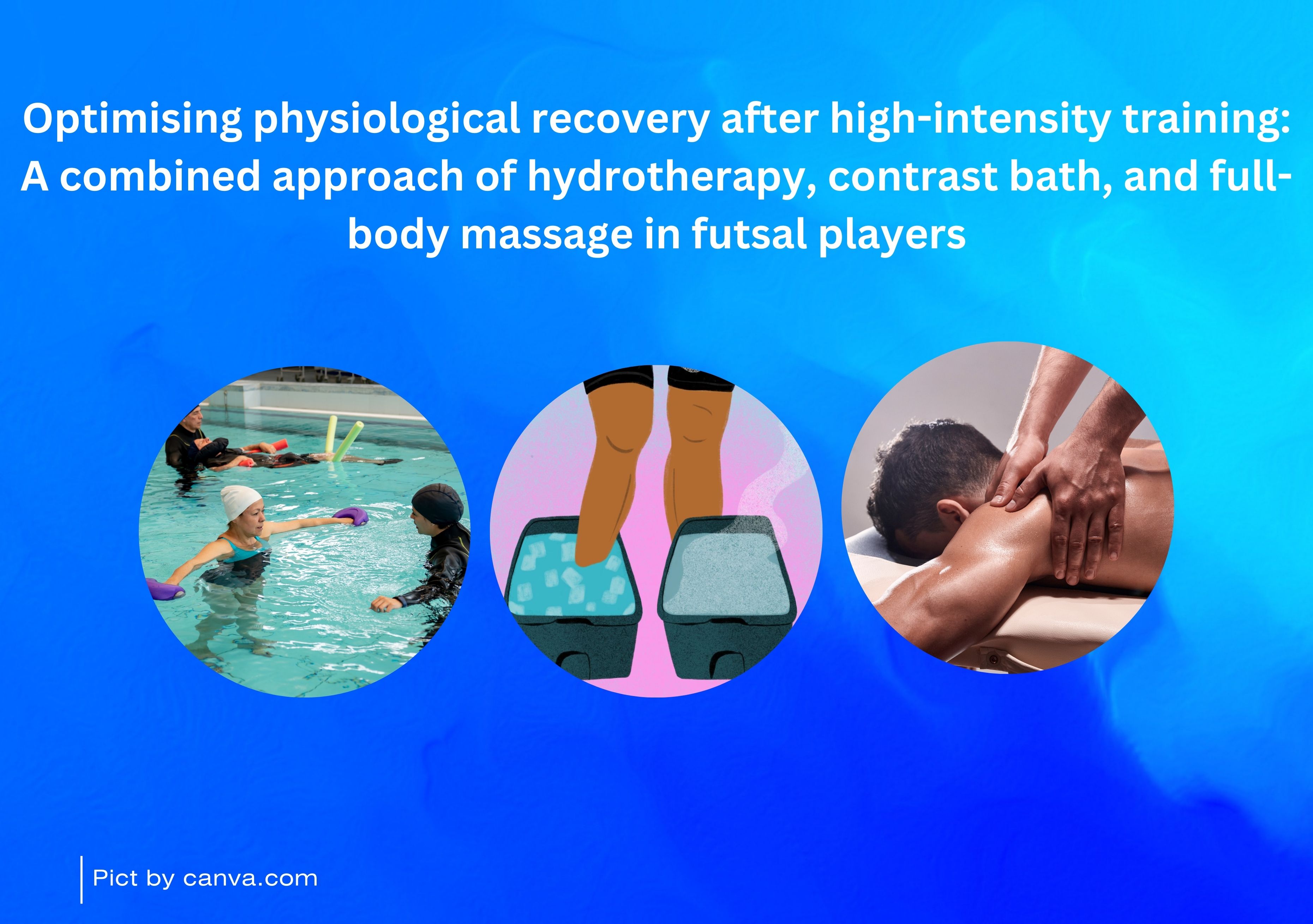
Optimising physiological recovery after high-intensity training: A combined approach of hydrotherapy, contrast bath, and full-body massage in futsal players
Afif Dwi Nugraha1, Laily Mita Andriana2, Muhamad Fauzi Antoni3, Muhammad Labib Siena Ar Rasyid4, Bhekti Lestari51. Universitas Negeri Surabaya , ID2. Universitas Negeri Surabaya , ID3. Universitas Negeri Surabaya , ID4. Universitas Negeri Surabaya , ID5. Universitas Negeri Surabaya , ID2025-12-15|page 302-317AbstractBackground: Efficient recovery after high-intensity interval training (HIIT) is crucial for maintaining optimal performance and minimizing the risk of injury.
Objectives: This study aims to analyze the effectiveness of combining hydrotherapy contrast baths and full-body massage in accelerating physiological recovery after a HIIT session, compared to the application of a single method.
Methods: This study employed a pre–post quasi-experimental design with three parallel groups (n = 45; 15 participants per group) to analyze the effectiveness of hydrotherapy combined with whole-body massage compared with each method applied separately. Participants were assigned to one of three conditions: (1) hydrotherapy contrast bath only, (2) full-body massage only, and (3) a combined intervention using both techniques. Physiological recovery was assessed using validated instruments, including heart rate monitors for heart rate recovery (HRR), portable lactate analysers for blood lactate concentration, and a visual analogue scale (VAS) for perceived muscle soreness. Data were analysed using the Shapiro–Wilk test, paired-sample t-test, and One-Way ANOVA.
Results: The findings demonstrated that the combined hydrotherapy–massage protocol resulted in greater improvements than the single-method groups, particularly in lactate reduction (e.g., -3.1 ± 0.8 mmol/L vs. - 1.9 ± 0.7 mmol/L and - 2.0 ± 0.6 mmol/L; p<0.05) and faster HRR. Participants in the combined group also reported significantly lower muscle soreness (p<0.05).
Conclusions: This suggests that integrating contrast bath hydrotherapy with full-body massage enhances circulation, accelerates metabolic waste clearance, and improves subjective recovery following HIIT. Future studies are recommended to include larger samples, compare different hydrotherapy temperatures, or examine long-term adaptations from repeated recovery sessions.APA Citation StyleNugraha, A. D. , Andriana, L. M. , Antoni, M. F. , Rasyid, M. L. S. A. , & Lestari, B. (2025). Optimising physiological recovery after high-intensity training: A combined approach of hydrotherapy, contrast bath, and full-body massage in futsal players. Physical Education and Sports: Studies and Research, 302-317. https://doi.org/10.56003/pessr.v4i3.655 -

Fun game–based learning improves gross motor skills in early primary school children
Ahmad Muttaqin Darussalam1, Sugiharto Sugiharto2, Sapto Adi31. State University of Malang , ID2. State University of Malang , ID3. State University of Malang , ID2025-11-23|page 236-249AbstractBackground: Children who face difficulties in gross motor skill development may withdraw from physical activities, experience low self-esteem, and suffer from social anxiety. Physical education plays a vital role in fostering gross motor development, especially when delivered through enjoyable and engaging activities such as fun games.
Objectives: This study aimed to investigate the impact of fun game–based learning on the development of gross motor skills in early primary school children.
Methods: The study employed a quasi-experimental design with a non-equivalent control group. A total of 36 second-grade students from SDIT Mutiara Hati in Malang participated in this study. Participants were assigned to one of three groups: a control group, a group-based fun games intervention, and an individual-based fun games intervention. The interventions were implemented three times a week for 30 minutes over a period of seven weeks. Gross motor skills were measured before and after the intervention using the Test of Gross Motor Development–Third Edition (TGMD-3), a reliable and validated instrument. Data were analyzed using homogeneity and normality tests, paired-sample t-tests, one-way ANOVA, and Tukey's HSD post hoc tests, with a significance level set at p < 0.05 (SPSS version 25).
Results: Both the individual and group fun game–based learning interventions produced significant improvements in gross motor skills compared with the control group (p < 0.05). Moreover, a significant difference was found between the two intervention types, indicating that the mode of fun game delivery influences outcomes (p < 0.05).
Conclusions: Fun game–based learning, whether delivered individually or in groups, effectively enhances gross motor skills among early primary school children. Additionally, individual fun game–based learning demonstrated a significantly greater improvement compared to group-based learning.APA Citation StyleDarussalam, A. M. , Sugiharto, S. , & Adi, S. (2025). Fun game–based learning improves gross motor skills in early primary school children. Physical Education and Sports: Studies and Research, 236-249. https://doi.org/10.56003/pessr.v4i3.613 -
Examining the mediating role of perceived psychosocial support in the relationship between sport grit and psychological well-being among high school student-athletes
Daphne Scott Fernandez1, Kahreen Lou Mondina21. Saint Louis College La Union,Saint Louis College La Union , PH2. Saint Louis College La Union,Saint Louis College La Union , PH2026-08-01|page 182-195AbstractBackground: Psychological well-being is essential for student-athletes because they must simultaneously cope with competitive sport demands and academic responsibilities. Although both sport grit and perceived psychosocial support have been associated with positive psychological outcomes, the mediating role of psychosocial support in the relationship between sport grit and psychological well-being remains insufficiently understood.
Objectives: This study examined whether perceived psychosocial support mediates the relationship between sport grit and psychological well-being among high school student-athletes.
Methods: A quantitative cross-sectional correlational design with a mediation analysis framework was employed. A total of 362 high school student-athletes from the first district of La Union, Philippines, participated using total enumeration sampling. Data were collected using standardized questionnaires assessing sport grit, psychological well-being, and perceived psychosocial support. Descriptive statistics, regression analysis, and bias-corrected bootstrap mediation analysis (5,000 resamples) were performed using JASP.
Results: Student-athletes reported high levels of sport grit, psychological well-being, and perceived psychosocial support. Sport grit significantly and positively predicted psychological well-being, whereas it did not significantly predict perceived psychosocial support. Perceived psychosocial support demonstrated a significant but negative association with psychological well-being. Furthermore, the indirect effect of sport grit on psychological well-being through perceived psychosocial support was not statistically significant, indicating the absence of a mediating effect.
Conclusions: Sport grit is an important direct psychological resource associated with psychological well-being among high school student-athletes. Although perceived psychosocial support contributes to athletes' psychological functioning, it does not explain the relationship between sport grit and psychological well-being. These findings highlight the importance of strengthening athletes' internal psychological resources while maintaining supportive sport environments.
APA Citation StyleFernandez, D. S. , & Mondina, K. L. (2026). Examining the mediating role of perceived psychosocial support in the relationship between sport grit and psychological well-being among high school student-athletes. Physical Education and Sports: Studies and Research, 182-195. https://doi.org/10.56003/pessr.v5i2.725

1 - 9 of 9 items




















