
Search
Search Results
##search.searchResults.foundPlural##
-

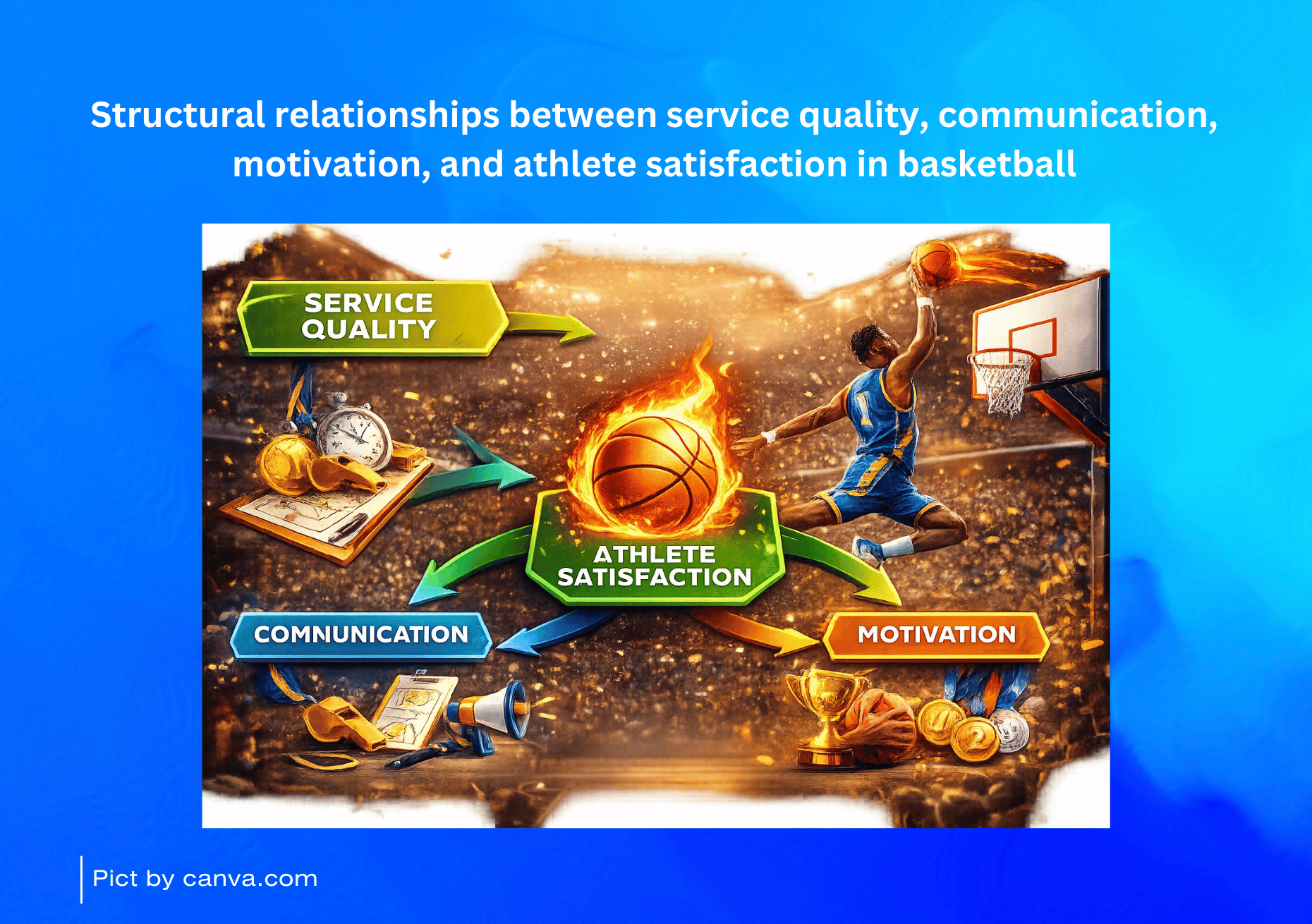
Structural relationships between service quality, communication, motivation, and athlete satisfaction in basketball Indonesia
Fajar Gumilang H.M1, Agung Nugroho2, Rumpis Agus Sudarko3, Fauzi Fauzi4, Fajar Sriwahyuniati51. Yogyakarta State University , ID2. Yogyakarta State University , ID3. Yogyakarta State University , ID4. Yogyakarta State University , ID5. Yogyakarta State University , ID2026-04-09|page 113-124AbstractBackground: Many basketball clubs aim to enhance athlete satisfaction through service quality, communication, and motivation; however, empirical evidence validating these factors as measurable constructs remains limited.
Objectives: This study examines whether these variables function as latent constructs influencing athlete satisfaction and validates their measurement structure using confirmatory factor analysis.
Methods: This study used a quantitative survey and included 263 basketball athletes from various clubs in Sidoarjo, comprising 110 males and 153 females. The participant characteristics focused on players still in the developmental stage who had been actively participating in club training programs for 3 to 6 months, with educational levels ranging from junior high school to college. Participants were selected using purposive sampling. Data were collected using a valid and reliable Likert-scale questionnaire and analyzed using Structural Equation Modeling (SEM) via AMOS 22.
Results: The results demonstrate that service quality (β=0.337, ????=0.000) and communication (β=0.439, ????=0.000) significantly enhance motivation. Furthermore, motivation significantly affects athlete satisfaction (β = 0.582, ???? = 0.000). Crucially, the analysis confirms that motivation mediates the relationship between service quality (indirect effect=0.139) and communication (indirect effect=0.240) on satisfaction.
Conclusions: Theoretically, this study confirms motivation as a vital psychological mediator linking managerial inputs to athlete satisfaction. In practice, the findings demonstrate that while high-quality physical facilities provide a necessary structural foundation, they must be integrated with effective, supportive coaching communication to optimally ignite athletes' intrinsic drive and maximize their overall club experience.APA Citation StyleH.M, F. G. , Nugroho, A. , Sudarko, R. A. , Fauzi, F. , & Sriwahyuniati, F. (2026). Structural relationships between service quality, communication, motivation, and athlete satisfaction in basketball: Indonesia. Physical Education and Sports: Studies and Research, 113-124. https://doi.org/10.56003/pessr.v5i1.691 -

The impact of coaching communication styles and training programs on novice tennis player satisfaction: A case study from Indonesia
Mohammad Aldi Zakaria1, Limpad Nurrachmad21. State University of Semarang , ID2. State University of Semarang , ID2025-07-17|page 152-161AbstractBackground: The satisfaction of beginner tennis players is often influenced by coaches' communication styles and the structure of training programs.
Objectives: This study analyzed the effects of coaching communication style and training program design on player satisfaction at Club First Tennis.
Methods: A quantitative, descriptive-associative approach was used with 50 beginner players in regular training sessions. Data were collected using a Likert-scale questionnaire covering coach communication style, training program design, and player satisfaction. Statistical analyses included validity and reliability tests, normality checks, and Spearman's rank correlation due to non-parametric data.
Results: Results showed strong, significant relationships between coaching communication and player satisfaction (r = 0.615, p < 0.05), as well as between training programs and satisfaction (r = 0.620, p < 0.05). These findings indicate that supportive and adaptive communication and well-structured training enhance athlete satisfaction and engagement.
Conclusions: The study highlights the importance of integrating effective communication and program planning in coaching beginner athletes. Future studies are encouraged to explore additional influencing factors such as intrinsic motivation or external support, and to involve larger sample sizes for broader generalizability.
APA Citation StyleZakaria, M. A. , & Nurrachmad, L. (2025). The impact of coaching communication styles and training programs on novice tennis player satisfaction: A case study from Indonesia. Physical Education and Sports: Studies and Research, 152-161. https://doi.org/10.56003/pessr.v4i2.603 -
Physical Activity Participation of Persons Deprived of Liberty in Santiago City District Jail, Philippines
Niño Nadera Baldonado1, Ana Maria Libao Demot2, Peter John Aguinaldo Villaflores3, Geneviv Gumpal Dayag4, Esperanza Leonidas Buado5, Christian Velasco Ramos6, Gil Vincent Tiaño Dela Cruz7, Rhealyn Galaus Martinez81. Don Mariano Marcos Memorial State University South La Union , PH2. Don Mariano Marcos Memorial State University South La Union , PH3. Philippine Normal University-North Luzon , PH4. Philippine Normal University-North Luzon , PH5. Philippine Normal University-North Luzon , PH6. Philippine Normal University-North Luzon , PH7. Philippine Normal University-North Luzon , PH8. Philippine Normal University-North Luzon , PH2022-07-07|page 91-106AbstractBackground: Physical activity in prison systems worldwide has been ignored for decades. The congested status of penal institutions around the country tends to breed unhealthy living conditions. Also, they are often deprived of physical activities due to limited opportunities. A person deprived of liberty means a person who has been arrested, held in lawful custody, detained, or imprisoned in execution of a lawful sentence.
Objectives: This study aims to determine the physical activities and the scale of physical activity satisfaction of persons deprived of liberty in Santiago City District Jail, Philippines.
Methods: This descriptive study utilized a survey of 140 randomly selected detainees and face-to-face interviews with 30 randomly chosen detainees. The questionnaire is divided into three parts: respondents' profiles, physical activities, and the scale of physical activity satisfaction. The interview method validated the results of the survey. Jacob G. Beard and Mounir G. Ragheb developed the Physical Activity Satisfaction Scale. It was adopted, validated, and used to determine the inmates' physical activity level of satisfaction.
Results: Findings show that most of the inmate-respondents are generally engaged in games or sports, dance, and other livelihood activities on an irregular basis. They also pronounced their satisfaction with their physical activities as they benefited from physiological, relaxational, educational, psychological, social, and aesthetic domains.
Conclusion: It can be concluded that games and sports activities are moderately and positively related to physical activities' psychological and relaxational domains of the inmates.
APA Citation StyleBaldonado, N. N. , Demot, A. M. L. , Villaflores, P. J. A. , Dayag, G. G. , Buado, E. L. , Ramos, C. V. , Cruz, G. V. T. D. , & Martinez, R. G. (2022). Physical Activity Participation of Persons Deprived of Liberty in Santiago City District Jail, Philippines. Physical Education and Sports: Studies and Research, 91-106. https://doi.org/10.56003/pessr.v1i2.114 -
Enhancing locomotor skills in preschoolers through play jump rope
Nancy Trisari Schiff1, Andy Supriady21. Sekolah Tinggi Keguruan dan Ilmu Pendidikan (STKIP) Pasundan , ID2. Sekolah Tinggi Keguruan dan Ilmu Pendidikan (STKIP) Pasundan , ID2026-04-14|page 135-146AbstractBackground: Fundamental Motor Skills (FMS), particularly in the Locomotor Skills domain, are an essential prerequisite for lifelong physical participation. However, the dominance of a sedentary lifestyle threatens young children's mastery of these skills.
Objectives: This study aims to test and prove the effectiveness of the jump rope play intervention program in improving locomotor skills in 5–6-year-old children.
Methods: This research uses a quasi-experimental one-group pretest-posttest design. The sample consisted of 19 males and 11 females, for a total of 30 children. Locomotor skills are measured objectively using the Locomotor subtest of the Test of Gross Motor Development-2 (TGMD-2). The Jump Rope Game intervention was implemented in a structured manner over 8 weeks (3 sessions/week). The data were analyzed using the Paired-Samples T-Test.
Results: The research results show a highly significant improvement in locomotor skills scores after the intervention. The average score increased from 23.30 on the pretest to 27.87 on the posttest, reflecting a 19.61% increase. The paired-samples t-test yielded a p-value of 0.000 (p<0.05), confirming that the difference between the two measurements was statistically significant.
Conclusions: Jump rope games have proven to be an effective, efficient, and enjoyable intervention for significantly improving young children's locomotor skills. This research recommends integrating inexpensive, easily accessible play-based activities into the early childhood education curriculum as a practical strategy to support physical literacy and address basic movement deficits.
APA Citation StyleSchiff, N. T. , & Supriady, A. (2026). Enhancing locomotor skills in preschoolers through play jump rope. Physical Education and Sports: Studies and Research, 135-146. https://doi.org/10.56003/pessr.v5i1.652 -
Examining the mediating role of perceived psychosocial support in the relationship between sport grit and psychological well-being among high school student-athletes
Daphne Scott Fernandez1, Kahreen Lou Mondina21. Saint Louis College La Union,Saint Louis College La Union , PH2. Saint Louis College La Union,Saint Louis College La Union , PH2026-08-01|page 182-195AbstractBackground: Psychological well-being is essential for student-athletes because they must simultaneously cope with competitive sport demands and academic responsibilities. Although both sport grit and perceived psychosocial support have been associated with positive psychological outcomes, the mediating role of psychosocial support in the relationship between sport grit and psychological well-being remains insufficiently understood.
Objectives: This study examined whether perceived psychosocial support mediates the relationship between sport grit and psychological well-being among high school student-athletes.
Methods: A quantitative cross-sectional correlational design with a mediation analysis framework was employed. A total of 362 high school student-athletes from the first district of La Union, Philippines, participated using total enumeration sampling. Data were collected using standardized questionnaires assessing sport grit, psychological well-being, and perceived psychosocial support. Descriptive statistics, regression analysis, and bias-corrected bootstrap mediation analysis (5,000 resamples) were performed using JASP.
Results: Student-athletes reported high levels of sport grit, psychological well-being, and perceived psychosocial support. Sport grit significantly and positively predicted psychological well-being, whereas it did not significantly predict perceived psychosocial support. Perceived psychosocial support demonstrated a significant but negative association with psychological well-being. Furthermore, the indirect effect of sport grit on psychological well-being through perceived psychosocial support was not statistically significant, indicating the absence of a mediating effect.
Conclusions: Sport grit is an important direct psychological resource associated with psychological well-being among high school student-athletes. Although perceived psychosocial support contributes to athletes' psychological functioning, it does not explain the relationship between sport grit and psychological well-being. These findings highlight the importance of strengthening athletes' internal psychological resources while maintaining supportive sport environments.
APA Citation StyleFernandez, D. S. , & Mondina, K. L. (2026). Examining the mediating role of perceived psychosocial support in the relationship between sport grit and psychological well-being among high school student-athletes. Physical Education and Sports: Studies and Research, 182-195. https://doi.org/10.56003/pessr.v5i2.725 -
Perceptions of the sports community toward gymnastics achievement in Semarang City
Unique Mierdha Denata Winarko1, Said Junaidi21. State University of Semarang , ID2. State University of Semarang , ID2026-01-05|page 355-362AbstractBackground: Gymnastics is a fundamental sport that supports physical fitness development and long-term athletic performance through complex physical demands such as strength, flexibility, balance, coordination, and explosive power. However, its development as an achievement sport often receives limited structural and institutional support at the local level.
Objectives: : This study aimed to analyze the perceptions of the sports community toward gymnastics achievements in Semarang City and to identify discrepancies between conceptual support and perceived developmental conditions.
Methods: A quantitative descriptive survey design was employed involving 60 respondents from the sports community, including sport science students, physical education teachers, and sports practitioners. Data were collected using a validated and reliable closed-ended questionnaire measuring three perception indicators: acceptance, understanding, and appraisal of gymnastics as an achievement sport. Responses were assessed using a four-point Likert scale. Data analysis was conducted using descriptive statistics alongside validity and reliability testing.
Results: Item-level analysis indicated positive perceptions, with mean scores ranging from 3.05 to 3.79, reflecting strong recognition of gymnastics’ value and potential. However, classification of total perception scores showed that 58.33% of respondents rated the current condition of gymnastics development as very poor. This contrast highlights a clear gap between conceptual appreciation and perceived realities, particularly regarding infrastructure availability, coaching quality, and competition opportunities.
Conclusions: The sports community in Semarang City demonstrates strong conceptual support for gymnastics as an achievement sport, yet perceives substantial limitations in its practical development. Strengthening facilities, coaching systems, and competitive structures is essential to transform positive perceptions into sustainable athletic performance.APA Citation StyleWinarko, U. M. D. , & Junaidi, S. (2026). Perceptions of the sports community toward gymnastics achievement in Semarang City. Physical Education and Sports: Studies and Research, 355-362. https://doi.org/10.56003/pessr.v4i3.609 -
Improving physical self-perception and health-related fitness through gamification in physical education: A cluster randomized controlled trial
Ferdinando Cereda11. The Catholic University of the Sacred Heart in Milan , IT2026-03-08|page 7-27AbstractBackground: The global decline in adolescent physical activity necessitates pedagogical innovation to counter disengagement. Traditional norm-referenced physical education (PE) often alienates less skilled students, whereas gamification offers a promising criterion-referenced strategy to enhance motivation and learning.
Objectives: This study investigated the efficacy of a 12-week gamified didactic intervention on perceived physical self-concept, health-related fitness, and physical activity enjoyment among high school students.
Methods: A two-arm, parallel-group, cluster randomized controlled trial (Cluster-RCT) was conducted with 210 Italian adolescents (mean age 15.4 ± 0.9 years) nested within 10 intact classes (average cluster size = 21). Intact classes were randomised to an experimental group (gamified ‘MoveQuest’ module, k = 5) or a control group (traditional direct instruction, k = 5). Data were collected using the Revised Physical Self-Perception Profile (PSPP-R-IT), the ALPHA-FIT test battery, and the Physical Activity Enjoyment Scale (PACES). Following a per-protocol analytical approach, Linear mixed models (LMMs) were employed to analyse the data, accounting for the nested structure of the educational setting and handling cluster-level variance intraclass correlation coefficients (ICCs). Significance levels were interpreted considering the multiplicity of outcomes.
Results: Significant group × time interactions were observed, with the gamified group demonstrating superior improvements in sports competence (d = 0.65), physical self-worth (d = 0.58), and enjoyment (d = 0.82) compared to the control group. Physiologically, the experimental group showed significantly greater gains in cardiorespiratory fitness (V̇O₂ max) and agility, while body attractiveness remained stable in both groups.
Conclusions: Gamified didactics significantly enhance psychological engagement and specific motor performance parameters by prioritising individual progress over social comparison. This approach represents a valuable pedagogical tool for fostering physical literacy in secondary PE.APA Citation StyleCereda, F. (2026). Improving physical self-perception and health-related fitness through gamification in physical education: A cluster randomized controlled trial. Physical Education and Sports: Studies and Research, 7-27. https://doi.org/10.56003/pessr.v5i1.677 -

Determinants of athlete motivation and engagement in collegiate team sports: Toward a sports development framework
Teejay D. Panganiban1, Samboy Nabor21. Batangas State University TNEU JPLPC-Malvar , PH2. University of Perpetual Help System Dalta Las Piñas , PH2026-04-14|page 147-159AbstractBackground: Athlete motivation and sustained engagement are essential for retention in collegiate sports programs; however, the institutional and environmental factors that influence these outcomes remain underexplored.
Objectives: This study aimed to examine the determinants of athlete motivation and engagement in collegiate team sports using a Self-Determination Theory perspective, with engagement serving as a proxy for retention behavior.
Methods: A mixed-methods design was employed involving 75 collegiate student-athletes representing basketball, volleyball (men and women), baseball, and softball teams. Quantitative data were collected using a validated, researcher-developed questionnaire based on Self-Determination Theory and analyzed using descriptive statistics, Pearson's correlation, multiple regression, and Structural Equation Modeling (SEM). In contrast, qualitative data were analyzed using thematic analysis.
Results: Findings revealed that organizational commitment (M = 3.42) and environmental support (M = 3.47) were rated very high, while incentives and facilities were rated high. All program components were significantly associated with athlete engagement (p < .05). Regression analysis showed that environmental support (β = .36) and perceived support (β = .31) were the strongest predictors, explaining 68% of the variance (R² = 0.68). SEM results indicated a good model fit (CFI = 0.95; RMSEA = 0.061).
Conclusions: Qualitative findings highlighted intrinsic motivations, such as passion and belonging, as well as extrinsic motivators, including scholarships and rewards, alongside barriers, including financial delays, academic conflicts, and burnout. The study concludes that environmental and perceived support are the primary determinants of athlete engagement, emphasizing the critical role of competence-supportive environments in sustaining motivation and improving athlete retention.
APA Citation StylePanganiban, T. D. , & Nabor, S. (2026). Determinants of athlete motivation and engagement in collegiate team sports: Toward a sports development framework. Physical Education and Sports: Studies and Research, 147-159. https://doi.org/10.56003/pessr.v5i1.718 -
Predictors of cardiorespiratory endurance in martial arts athletes: A path analysis of body composition, hemoglobin, and motivation
Novanto Ponco Nugroho 1, Dani Nur Riyadi2, Aridhotul Haqiyah31. Universitas Islam 45 Bekasi , ID2. Universitas Islam 45 Bekasi , ID3. Universitas Islam 45 Bekasi , ID2025-07-01|page 83-94AbstractBackground: Cardiorespiratory endurance is vital to athletic performance, particularly in sports requiring sustained physical exertion such as martial arts.
Objectives: This study examined the predictive roles of body composition (BMI), hemoglobin concentration, and motivation on cardiorespiratory endurance among university-level martial arts athletes.
Methods: Using a quantitative path analysis design, data were collected from 20 purposively selected martial arts athletes who regularly trained. Cardiorespiratory endurance was assessed via the multistage fitness test, BMI was calculated using standard anthropometric measures, hemoglobin was measured using the Harenz scale, and motivation was evaluated with a validated Likert-scale questionnaire.
Results: The analysis showed that BMI (ρ = 0.705, t = 3.071, p = 0.007) and hemoglobin concentration (ρ = 0.946, t = 4.672, p < 0.001) had significant positive effects on cardiorespiratory endurance. Motivation, however, did not have a significant direct effect (ρ = 0.087, t = 0.853, p = 0.203). Additionally, BMI correlated positively with both hemoglobin (ρ = 0.923, p < 0.001) and motivation (ρ = 0.670, p = 0.034), suggesting indirect effects through physiological mechanisms.
Conclusions: The findings underscore that physiological indicators, specifically BMI and hemoglobin, are more critical predictors of aerobic capacity than psychological factors like motivation in this athletic population. Due to sport-specific demands, these results may not be generalizable to non-martial arts athletes. Future studies should incorporate additional mediators such as training intensity and account for potential self-report bias in motivation assessments.
APA Citation StyleNugroho , N. P. , Riyadi, D. N. , & Haqiyah, A. (2025). Predictors of cardiorespiratory endurance in martial arts athletes: A path analysis of body composition, hemoglobin, and motivation. Physical Education and Sports: Studies and Research, 83-94. https://doi.org/10.56003/pessr.v4i2.559 -

The Relationship of Sports Participation in Academic Performance among College of Arts and Sciences Varsity Players
John Michael Aquino1, Mary Grace Reyes21. Laguna State Polytechnic University , PH2. Laguna State Polytechnic University , PH2022-09-10|page 107-122AbstractBackground: Sports are featured in the curriculums of state universities and colleges (SUCs). The Laguna State Polytechnic University (LSPU) shines in sports competition throughout Region IV, and the College of Arts and Sciences (CAS) varsity athletes are actively engaging in this sports competition. Nevertheless, during the previous decade, the CAS had been routinely rated third to fifth in intramurals.
Objectives: The researcher wish to ascertain the embodiment of CAS student athletes' experiences in sports involvement and academic performances to discover the significance of participation in sports and academic performance of students. The findings serve as the foundation for crafting Student Intervention Program.
Methods: The descriptive survey approach was used to a total of 30 varsity players in CAS from the 5 programs. The Cronbach alpha was utilized to assess the overall consistency of the self-made instrument and was carried out to CAS students belong to the varsity team using an internet web service.
Results: It was established that the student-athletes felt that all the assertions were evaluated as great in the university, especially in CAS, indicating satisfaction with the university's operations. Consequently, athletes excel in both athletics and academics.
Conclusion: It was notably that CAS varsity players were deemed to be great by the student-athletes. Respondents were happy with the university's procedures as viewed and experienced in prior sports competitions held not just within the LSPU System but also at the Regional STRASUC or even National SCUAA. Students participating in sports are much more likely to excel academically.
APA Citation StyleAquino, J. M. , & Reyes, M. G. (2022). The Relationship of Sports Participation in Academic Performance among College of Arts and Sciences Varsity Players. Physical Education and Sports: Studies and Research, 107-122. https://doi.org/10.56003/pessr.v1i2.129 -

The effect of championship participation on training intensity and motivation of Pencak Silat student athletes at Semarang State University, Indonesia
Achmad Alif Firmansyah1, Nanang Indardi21. State University of Semarang , ID2. State University of Semarang , ID2025-08-15|page 204-211AbstractBackground: Consistent training and high enthusiasm are the keys to an athlete's success in achieving optimal performance. However, among Pencak Silat athletes at Semarang State University (UNNES), there is a decrease in training intensity and enthusiasm when there is no championship agenda.
Objectives: The purpose of this study is to analyze the effect of participation in a championship on the training intensity and motivation of Semarang State University Pencak Silat athletes.
Methods: This study used a pre-post design with the same subjects (n = 30) and an explanatory quantitative approach to determine the effect of championship participation on training intensity and motivation. Data were collected using a Likert scale questionnaire that has been tested for validity and reliability (α = 0.872). Data analysis was performed using a paired t-test using SPSS.
Results: The results showed a significant increase in training intensity from a mean ± SD of 3.12 ± 0.54 (pre) to 3.78 ± 0.49 (post), and training motivation from 3.05 ± 0.61 (pre) to 3.85 ± 0.55 (post), with t(29) = 5.62 and 6.03, respectively, p = 0.004. Cohen's d effect sizes of 1.03 (intensity) and 1.10 (motivation) indicate significant effects.
Conclusions: These findings indicate that participation in championships is a significant external motivator in improving the quality of athletes' training. Therefore, championships can be a coaching strategy to maintain sustainable training motivation, a practical implication that this study has clearly demonstrated.
APA Citation StyleFirmansyah, A. A. , & Indardi, N. (2025). The effect of championship participation on training intensity and motivation of Pencak Silat student athletes at Semarang State University, Indonesia. Physical Education and Sports: Studies and Research, 204-211. https://doi.org/10.56003/pessr.v4i2.620 -

The effect of peer teaching and think pair share on rhythmic gymnastics learning outcomes
Muhammad Lutfi Hasan1, Ibnu Fatkhu Royana2, Utvi Hinda Zhannisa31. Universitas PGRI Semarang , ID2. Universitas PGRI Semarang , ID3. Universitas PGRI Semarang , ID2025-08-14|page 195-203AbstractBackground: Rhythmic gymnastics plays a vital role in developing students' motor skills, coordination, and rhythm, yet many still face challenges in mastering movement concepts.
Objectives: This study compared the effectiveness of Peer Teaching and Think Pair Share (TPS) cooperative learning models in improving rhythmic gymnastics learning outcomes.
Methods: A quasi-experimental design with a two-group pretest–posttest was conducted on 68 eighth-grade students (male and female) at State Junior High School 4 Semarang, divided into Peer Teaching (n=34) and TPS (n=34) groups. Learning outcomes were assessed using a validated rhythmic gymnastics performance test, and data were analyzed descriptively with gain score calculation.
Results: The TPS group achieved a greater improvement in posttest scores (from 67.21 to 79.59; +18.41%) compared to the Peer Teaching group (from 79.18 to 79.85; +0.85%). These results indicate that TPS enhances students' understanding, coordination, and engagement in rhythmic gymnastics learning.
Conclusions: TPS is recommended for physical education teachers to improve performance, particularly for students with lower initial skills. Further studies should explore its long-term effects and retention.
APA Citation StyleHasan, M. L. , Royana, I. F. , & Zhannisa, U. H. (2025). The effect of peer teaching and think pair share on rhythmic gymnastics learning outcomes. Physical Education and Sports: Studies and Research, 195-203. https://doi.org/10.56003/pessr.v4i2.619

1 - 12 of 12 items




















