
Search
Search Results
##search.searchResults.foundPlural##
-

Professional and Elite Young Soccer Players: Differences in Functional Movement ScreenTM Values
Italo Sannicandro1, Giacomo Cofano2, Rosario D'Onofrio3, Andrea Piccinno41. Clinical and Experimental Medicine Department, University of Foggia , IT2. Master degree in Sciences and techniques of preventive and adapted motor activities, University of Foggia; Professional Soccer Strenght and Conditioning , IT3. Member of the Medical-Scientific Multidisciplinary Commission, Italian Football Doctors Association - L.A.M.I.CA. , IT4. Master degree in Motor Sciences, University of Salento, Lecce , IT2023-10-31|page 116-125AbstractBackground: Soccer is a sport that requires very complex movements performed at high speeds: running, jumping, decelerating, changing direction or running direction, and kicking are complex movements that require high control and significant joint stability at all ages. Control of the body and individual body districts becomes important for both performance and injury prevention.
Objective: This study aims to verify the Functional Movement Screen (FMSTM) values in different categories of players, from the youth leagues to professional soccer players.
Methods: A sample of soccer players (n=112) took part in the study. The sample was subdivided according to their category, resulting in the following subgroups: a) professional soccer players (PSP, n=56,), Under 19 - Primavera (U19, n=29), Under 17 (U17, n=27). The FMS protocol was used to assess the seven functional movements and the associated risk of non-contact injury.
Results: Statistically significant differences emerged in the total scores between the U17 group and the PSP group (14.8±2.9 vs 19.1±1.4, p<0.01), between the U17 group and the Under 19 - Primavera group (14.8±2.9 vs 16.2±2.1, p<0.05) and between the Under 19 - Primavera group and the PSP (16.2±2.1 vs 19.1±1.4, p<0.01).
Conclusion: The values obtained show that young soccer players have a very different qualitative control of movement than highly qualified players. This study shows significant differences not only between the total scores, but more importantly between the individual 7 assessment tests that the FMS protocol includes: these values provide insight into which movements should receive more attention in athletic conditioning in the youth sector.
APA Citation StyleSannicandro, I. , Cofano, G. , D'Onofrio, R. , & Piccinno, A. (2023). Professional and Elite Young Soccer Players: Differences in Functional Movement ScreenTM Values. Physical Education and Sports: Studies and Research, 116-125. https://doi.org/10.56003/pessr.v2i2.269 -
Association between SDQ-TR-assessed hyperactivity symptoms and step count during school activities in school-aged children
Najwa Citamajida1, Adnan Faris Naufal21. Faculty of Health Science, Universitas Muhammadiyah Surakarta , ID2. Faculty of Health Science, Universitas Muhammadiyah Surakarta , ID2026-09-07|page 264-275AbstractBackground: Hyperactivity is a core symptom of attention-deficit/hyperactivity disorder (ADHD) and may manifest as increased motor activity. Objectively measured step count may provide information about ambulatory movement associated with hyperactivity symptoms, while developmental differences may also influence movement patterns in children.
Objective: To examine the association between hyperactivity symptom severity and step count during school activities and to compare step count and hyperactivity scores between children aged 5 and 12 years.
Methods: This cross-sectional study included 40 children (20 males and 20 females) aged 5 and 12 years from two schools in Surakarta, Indonesia, recruited using total sampling. Hyperactivity symptoms were assessed using the hyperactivity/inattention subscale of the Strengths and Difficulties Questionnaire Teacher Report (SDQ-TR), while step count was objectively measured using a Maxfit pedometer during one school day. Spearman's rank correlation, independent-samples t-tests, and Mann–Whitney U tests were used for statistical analysis.
Results: Hyperactivity scores were strongly and positively correlated with step count (rₛ = 0.918, p < 0.001). Step count differed significantly between the age groups (p = 0.041), with higher values observed among 5-year-old children than among 12-year-old children. In contrast, hyperactivity scores did not differ significantly between the two age groups (p = 0.701).
Conclusion: Higher hyperactivity symptom severity was associated with greater step count during school activities. Step count differed between the two age groups, whereas hyperactivity scores did not. These findings suggest that objectively measured ambulatory movement and hyperactivity symptoms may capture related but developmentally distinct aspects of children's behaviour.
APA Citation StyleCitamajida, N. , & Naufal, A. F. (2026). Association between SDQ-TR-assessed hyperactivity symptoms and step count during school activities in school-aged children. Physical Education and Sports: Studies and Research, 264-275. https://journal.rezkimedia.or.id/pes/article/view/778 -
Association between External Load and Injury Incidence in Professional and Elite-Youth Football Players
Georgios Georgiadis1, Rainer van Gaal Appelhof2, Rick Stoop3, Jeroen Peters4, Johannes Essers51. Department of Nutrition and Movement Sciences, NUTRIM School of Nutrition and Translational Research in Metabolism, Maastricht University , NL2. Football Club Utrecht, Herculesplein 241, 3584 AA Utrecht, The Netherlands , NL3. Football Club Utrecht, Herculesplein 241, 3584 AA Utrecht, The Netherlands , NL4. Football Club Utrecht, Herculesplein 241, 3584 AA Utrecht, The Netherlands , NL5. Department of Nutrition and Movement Sciences, NUTRIM School of Nutrition and Translational Research in Metabolism, Maastricht University , NL2024-04-19|page 10-25AbstractBackground: Elite football players are monitored daily to minimize injury risks and maximize performance.
Objectives: The aim of the study was to investigate injury incidence differences between competition and training and differences in key external load indicators during 1-, 2-, 3- or 4-weeks prior to the injury (WPI) with respect to the season average week (SAW).
Methods: Data of 224 unique players of five teams (1st, under-23, under-18, under-17, and under-16) were collected during 3.5 seasons of competition and training resulting in 467 player records in total. Collected data included kinematics from Global Positioning System tracking units (Viper Units, STATSports) and 528 injury incident records. External load was expressed in terms of acceleration counts (ACC), deceleration counts (DEC), total training time (TT), total distance (TD), and distance covered in high-speed zones: 14.4-19.7 km/h (Z4), 19.7-25.1 km/h (Z5), and >25.1 km/h (Z6). Injury incidence was derived as number of injuries per 1000 hours of exposure.
Results: Incidence rate was on average 4-11 times higher during competition than training for all teams except under-16 (incidence rate: 2.5, p=.153). In the 1st Team, external load (i.e. ACC, TT, and TD) were significantly different between 1-, 2-, 3-, and 4-WPI and SAW (p=.041, p=.037, and p=.049 respectively). For ACC and TT, the 3-WPI loads, were significantly higher than during SAW (p=.044 and p=.038, respectively).
Conclusion: These findings can assist professionals and scientists to improve their understanding of the relationship between external load indicators and injury incidence and consequently improve player health and performance.
APA Citation StyleGeorgiadis, G. , van Gaal Appelhof, R. , Stoop, R. , Peters, J. , & Essers, J. (2024). Association between External Load and Injury Incidence in Professional and Elite-Youth Football Players. Physical Education and Sports: Studies and Research, 10-25. https://doi.org/10.56003/pessr.v3i1.316 -

A critical analysis of the disconnection between science and practice in weight training
Ferdinando Cereda11. The Catholic University of the Sacred Heart in Milan , IT2025-04-07|page 46-59AbstractBackground: Resistance training (RT) has emerged as a powerful tool for health promotion, with substantial scientific evidence supporting its beneficial effects across multiple physiological systems and psychological domains. Despite this robust knowledge base, a significant disconnection persists between scientific evidence and practical implementation in both clinical and everyday settings.
Objectives: This study aims to critically examine this science-practice gap by analyzing common misconceptions surrounding RT and proposing strategies to enhance knowledge translation.
Methods: Through a narrative review of scientific literature from PubMed, Scopus, and Google Scholar, the research synthesizes evidence regarding RT's scientifically validated benefits, prevalent myths, and effective communication approaches.
Results: Findings show a concerning lack of scientific awareness among practitioners and end-users. Persistent misconceptions, such as "RT reduces flexibility" and "plant-based proteins are inferior for muscle hypertrophy," continue to circulate despite contradictory evidence.
Conclusions: Improved scientific communication via targeted educational programs, digital platforms, and collaboration between researchers and policymakers is urgently needed to bridge this gap and maximize RT’s public health impact.
APA Citation StyleCereda, F. (2025). A critical analysis of the disconnection between science and practice in weight training. Physical Education and Sports: Studies and Research, 46-59. https://doi.org/10.56003/pessr.v4i1.499 -

Development and validation of a table tennis serve skill assessment instrument for junior high school students: A psychometric approach
Muhammad Aliffajaruddin Alfani1, M. E. Winarno2, Siti Nurrochmah31. State University of Malang , ID2. State University of Malang , ID3. State University of Malang , ID2025-07-01|page 95-102AbstractBackground: The highest assessment weight in physical education lessons lies in psychomotor skills. In order to find out how far the competencies possessed by students, a clear and comprehensive assessment tool or instrument is needed.
Objectives: The research aims to develop a test instrument for forehand and backhand service skills in table tennis small ball games.
Methods: The development of this instrument uses a research and development scheme, with predetermined steps (1) determining objectives, (2) analyzing literature, (3) developing specifications, (4) administering, (5) conducting tests, (6) analyzing data validity, reliability, and objectivity. The cluster sampling procedure was conducted on students aged 13-15 who met the inclusion criteria, involving junior high school students (n=80), consisting of 41 female students and 39 male students. Data were analyzed using IBM SPSS Statistics version 11.0. The basis for decision-making is the Pearson correlation test. The analysis technique in the reliability test uses a test and retest external estimation approach.
Results: The forehand serve variable has a calculated r-value of 0.456> r-table 0.312, and the backhand serve variable obtained a calculated R-value of 0.352> r-table 0.312, so the table tennis skill instrument on that variable was declared valid. At the same time, the reliability test shows a value above 0.70; the instrument that has been prepared can be declared reliable.
Conclusions: The assessment instrument for forehand and backhand serve skills in table tennis games for junior high school students has met the validity and reliability criteria. This shows that the instrument is suitable for teachers as an objective and consistent measuring tool in evaluating basic table tennis skills in students. Recommendations for future studies are encouraged to expand the sample size and integrate digital features to enhance the scalability and objectivity of the assessment.
APA Citation StyleAlfani, M. A. , Winarno, M. E. , & Nurrochmah, S. (2025). Development and validation of a table tennis serve skill assessment instrument for junior high school students: A psychometric approach. Physical Education and Sports: Studies and Research, 95-102. https://doi.org/10.56003/pessr.v4i2.525 -

Promoting gender responsiveness in teaching physical education
Ryan Cazel Lalog11. Batangas State University , PH2025-04-04|page 1-14AbstractBackground: Implementing gender policies in physical education at Batangas State University remains moderate, with challenges in ensuring gender-responsive and equitable activities for male and female students. Issues such as students' self-confidence, self-perception, and limited gender mainstreaming strategies and resources hinder the development of a more inclusive learning environment.
Objectives: This study examined gender policy implementation, the use of strategies and resources in various physical education activities, differences in male and female instructors' assessments, challenges in gender mainstreaming, and the development of gender-responsive activities.
Methods: A descriptive research method was used, collecting data from 105 university physical education instructors (77 males, 28 females) through a researcher-made survey questionnaire.
Results: Findings revealed that gender policies were moderately implemented (mean score: 3.47), while both male (3.67) and female (3.63) instructors highly utilized strategies and resources in physical fitness, rhythmic activities, individual and dual sports, and team sports. No significant differences were observed in male and female educators' assessments, indicating shared perspectives on gender mainstreaming.
Conclusions: The study emphasizes the need for more vigorous policy enforcement and improvements in sports-related content to enhance gender inclusivity. Addressing self-confidence, self-perception, and individual differences is crucial for fostering equitable learning experiences. Universities should provide continuous professional development for PE instructors on gender-sensitive teaching strategies. Future research should explore the long-term impact of gender-responsive approaches on student engagement, performance, and overall well-being in physical education.
APA Citation StyleLalog, R. C. (2025). Promoting gender responsiveness in teaching physical education. Physical Education and Sports: Studies and Research, 1-14. https://doi.org/10.56003/pessr.v4i1.392 -

First Aid Skills of Pre-Service Physical Education Teachers at Batangas State University
Davidsol Mendoza1, Mauricio Atienza Junior2, Kyla Marie Torino Maralit3, Chino Randel Odello41. Batangas State University-Pablo Borbon , PH2. Batangas State University , PH3. Batangas State University , PH4. Batangas State University , PH2023-10-31|page 83-99AbstractBackground: The researchers believe acquiring knowledge and first aid skills can improve the instruction of Physical Education. Thus, no matter how proactive a teacher can be, there will be possibilities that an unnecessary situation may occur because it is movement education.
Objectives: The study aimed to determine the first aid skills of pre-service physical education teachers at Batangas State University. Specifically, the study determined the respondents' extent of manifestation of competencies in providing first aid skill components as assessed by the instructors and students, along with cardiopulmonary resuscitation, management of bleeding, and fracture. The study also compares the responses of the two groups of respondents. The issues and challenges in developing first aid skills were also ascertained to propose training activities to intensify students' skills and competencies.
Methods: This study used descriptive research and a researcher-made questionnaire to gather data from 186 participants, including 159 physical education students and 27 teachers from Batangas State University during the 2021-2022 academic year.
Results: The study found that students had moderate competency in applying CPR, recognizing victim situations, and performing two rescue breaths correctly. Similarly, students had moderate competency in managing bleeding and identifying fracture types. However, the two groups of respondents had no significant difference in competency. The biggest challenge identified by students was the need for more training and workshops related to first aid, while linguistic barriers and inconsistent training were less significant challenges.
Conclusion: The findings show that Bachelor of Physical Education students greatly manifest first aid skills in CPR, managing bleeding, and treating fractures but need improvements in specific competencies. There was no significant difference in the assessment between the two groups of respondents. However, attendance to training and workshops was the primary issue and challenge in developing the first aid skills of BPEd students.
APA Citation StyleMendoza, D. , Junior, M. A. , Maralit, K. M. T. , & Odello, C. R. (2023). First Aid Skills of Pre-Service Physical Education Teachers at Batangas State University. Physical Education and Sports: Studies and Research, 83-99. https://doi.org/10.56003/pessr.v2i2.208 -

Reclaiming the value of qualitative analysis in sports performance research
Spyridon Plakias11. Department of Physical Education and Sport Science, University of Thessaly , GR2026-03-03|page 1-6AbstractQuantitative metrics and technology-driven approaches have reshaped sports performance analysis (SPA), yet they risk overshadowing the equally vital contribution of qualitative methods. This opinion paper highlights the value of qualitative analysis in capturing the complexity, context, and meaning of player and team behaviors, elements that numbers alone cannot explain. Drawing on video-based evaluations, case studies, and narrative reconstructions, qualitative approaches provide insights into tactical, psychological, and interactional dimensions of performance that are indispensable for bridging the science–practice gap. By integrating qualitative and quantitative perspectives, SPA can achieve a more balanced and applicable paradigm, ensuring that scientific research remains relevant to real-world coaching and athlete development. This paper calls for a renewed recognition of qualitative methods as a central pillar of SPA and invites further scholarly contributions to this evolving discussion.
APA Citation StylePlakias, S. (2026). Reclaiming the value of qualitative analysis in sports performance research. Physical Education and Sports: Studies and Research, 1-6. https://doi.org/10.56003/pessr.v5i1.672 -
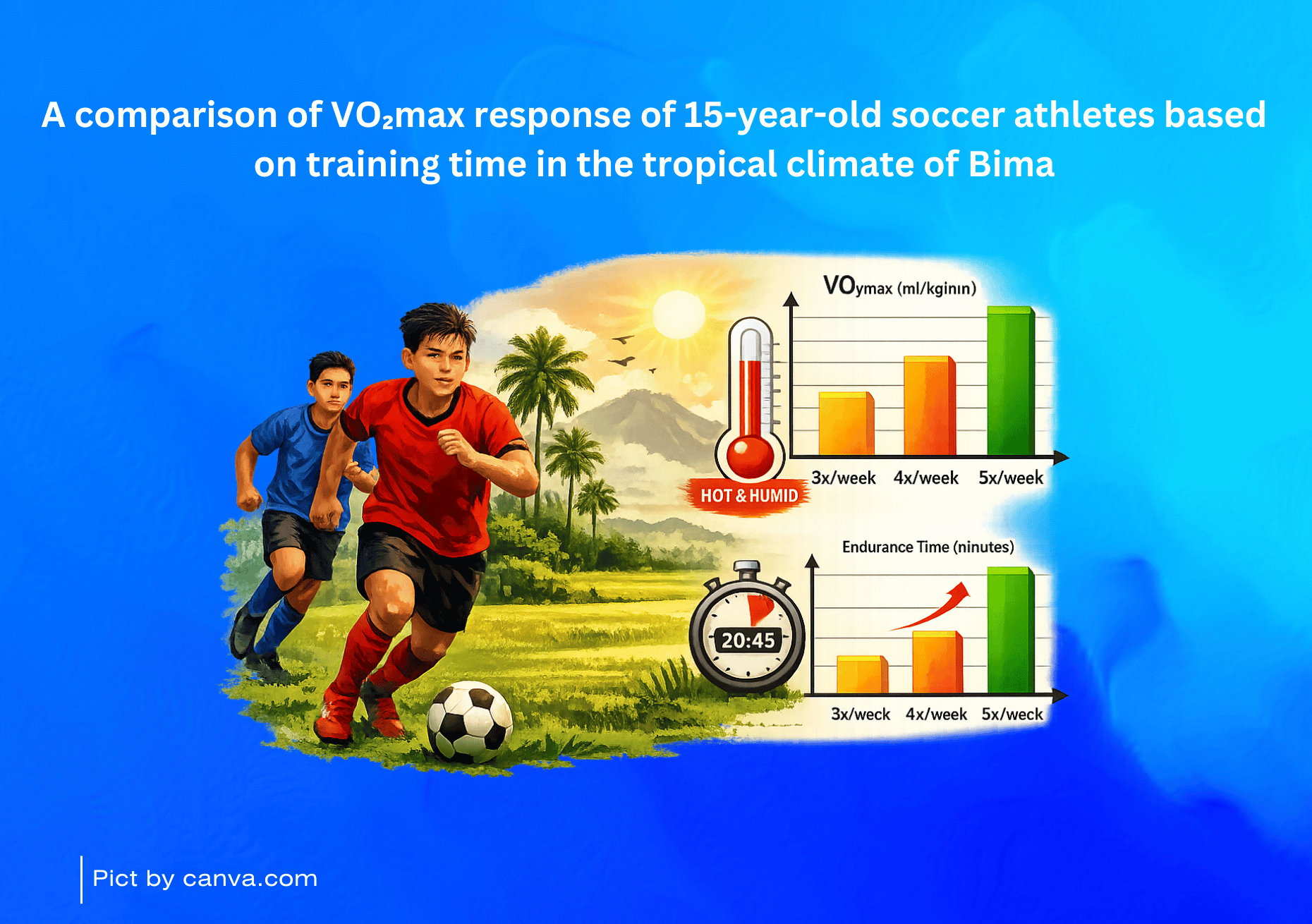
A comparison of VO₂max response of 15-year-old soccer athletes based on training time in the tropical climate of Bima
Firdaus Firdaus1, Taty Hartati2, Rabwan Satriawan3, Shutan Arie Shandi4, Nor Fazila Abd Malek51. Department of Physical Education, STKIP Taman Siswa Bima , ID2. Department of History, STKIP Taman Siswa Bima , ID3. Department of Physical Education, STKIP Taman Siswa Bima , ID4. Department of Physical Education, STKIP Taman Siswa Bima , ID5. Faculty of Sports Science and Coaching, Sultan Idris Education University , MY2026-04-14|page 125-134AbstractBackground: VO₂max is the primary indicator of a soccer athlete's aerobic capacity, but in tropical climates like Bima, high temperatures and humidity can affect VO₂max achievement. Hence, the timing of training is an important factor to consider.
Objectives: This study aims to analyze differences in VO₂max across training times (morning and afternoon) in 15-year-old youth soccer athletes from the Bima Football Association (PERSSEBI).
Methods: The study used a quantitative, comparative, cross-sectional observational design. The study subjects were 45 athletes (age 15.31±0.46; height 163.12±4.35 cm; weight 55.28±3.67 kg; and body mass index (BMI) 20.78±1.18 kg/m²) from the Bima Football Association (PERSEBI), selected by purposive sampling, and divided into morning (n=23) and afternoon (n=22) training groups. VO₂max was measured using a multistage fitness test (Bleep Test). Data analysis included descriptive statistics, the Shapiro–Wilk normality test, the Levene homogeneity test, and the independent-samples t-test at a significance level of 0.05, using IBM SPSS 25.
Results: The descriptive analysis showed that the average VO₂max of the morning group was 43.78 ± 2.34 ml/kg/minute, higher than that of the afternoon group (42.91 ± 2.29 ml/kg/minute). The results of the independent sample t-test showed that there was a significant difference in VO₂max between the two groups with a t value = 2.14 with df = 43 and a significant p value = 0.04 (p < 0.05) with an average difference of 0.87 ml/kg/minute indicating that the morning exercise group had a higher Vo2max value than the afternoon exercise group.
Conclusions: These findings suggest that training time contributes to differences in athletes' VO₂max values in tropical environments, with morning training resulting in higher performance than afternoon training. Therefore, scheduling training that accounts for environmental conditions is crucial for optimizing athletes' VO₂max.
APA Citation StyleFirdaus, F. , Hartati, T. , Satriawan, R. , Shandi, S. A. , & Malek, N. F. A. (2026). A comparison of VO₂max response of 15-year-old soccer athletes based on training time in the tropical climate of Bima. Physical Education and Sports: Studies and Research, 125-134. https://doi.org/10.56003/pessr.v5i1.709 -
Performance anxiety among student table tennis players
Yumna Wahyuningsih1, Ibnu Fatkhu Royana2, Galih Dwi Pradipta31. Universitas PGRI Semarang , ID2. Universitas PGRI Semarang , ID3. Universitas PGRI Semarang , ID2025-12-18|page 318-331AbstractBackground: Anxiety is a common psychological factor that significantly affects athletic performance, especially in competitive settings. Student-athletes face dual pressures from academic responsibilities and athletic commitments, making them vulnerable to performance anxiety that can impair focus, concentration, and decision-making.
Objectives: This study aims to analyze performance anxiety among table tennis athletes in the Student Activity Unit (UKM) of Universitas PGRI Semarang and to examine differences in performance evaluation outcomes based on sources from internal and external factors.
Methods: A comparative quantitative design with a cross-sectional approach was used. Fifty athletes participated (n=25 assessed by internal factors, n=25 assessed by external factors). Anxiety/performance was measured using a self-report questionnaire consisting of 15 Likert-scale items (1-5 scale) validated by three sport psychology experts. Data were analyzed using one-way ANOVA after confirming normality (Shapiro-Wilk test) and homogeneity (Levene's test).
Results: The internal group had a higher mean score (M = 3.64, SD = 0.86) compared to the external group (M = 3.07, SD = 0.86). ANOVA revealed a statistically significant difference, F(1,48) = 4.92, p = 0.031, η² = 0.093, with an estimated Cohen's d of approximately 0.66, indicating a medium effect size. These findings indicate that anxiety factors affect athletes' performance, with internal factors tending to score higher than external factors.
Conclusions: This study concludes that anxiety affects the performance of table tennis athletes in the Student Activity Unit (UKM) at Universitas PGRI Semarang. Specifically, internal factors such as self-confidence and perfectionism have been proven to have a greater impact than external factors.APA Citation StyleWahyuningsih, Y. , Royana, I. F. , & Pradipta, G. D. (2025). Performance anxiety among student table tennis players. Physical Education and Sports: Studies and Research, 318-331. https://doi.org/10.56003/pessr.v4i3.618 -
Predictors of cardiorespiratory endurance in martial arts athletes: A path analysis of body composition, hemoglobin, and motivation
Novanto Ponco Nugroho 1, Dani Nur Riyadi2, Aridhotul Haqiyah31. Universitas Islam 45 Bekasi , ID2. Universitas Islam 45 Bekasi , ID3. Universitas Islam 45 Bekasi , ID2025-07-01|page 83-94AbstractBackground: Cardiorespiratory endurance is vital to athletic performance, particularly in sports requiring sustained physical exertion such as martial arts.
Objectives: This study examined the predictive roles of body composition (BMI), hemoglobin concentration, and motivation on cardiorespiratory endurance among university-level martial arts athletes.
Methods: Using a quantitative path analysis design, data were collected from 20 purposively selected martial arts athletes who regularly trained. Cardiorespiratory endurance was assessed via the multistage fitness test, BMI was calculated using standard anthropometric measures, hemoglobin was measured using the Harenz scale, and motivation was evaluated with a validated Likert-scale questionnaire.
Results: The analysis showed that BMI (ρ = 0.705, t = 3.071, p = 0.007) and hemoglobin concentration (ρ = 0.946, t = 4.672, p < 0.001) had significant positive effects on cardiorespiratory endurance. Motivation, however, did not have a significant direct effect (ρ = 0.087, t = 0.853, p = 0.203). Additionally, BMI correlated positively with both hemoglobin (ρ = 0.923, p < 0.001) and motivation (ρ = 0.670, p = 0.034), suggesting indirect effects through physiological mechanisms.
Conclusions: The findings underscore that physiological indicators, specifically BMI and hemoglobin, are more critical predictors of aerobic capacity than psychological factors like motivation in this athletic population. Due to sport-specific demands, these results may not be generalizable to non-martial arts athletes. Future studies should incorporate additional mediators such as training intensity and account for potential self-report bias in motivation assessments.
APA Citation StyleNugroho , N. P. , Riyadi, D. N. , & Haqiyah, A. (2025). Predictors of cardiorespiratory endurance in martial arts athletes: A path analysis of body composition, hemoglobin, and motivation. Physical Education and Sports: Studies and Research, 83-94. https://doi.org/10.56003/pessr.v4i2.559 -

Immediate effect of thoracic spinal manipulation versus passive stretching on upper trapezius pain in university students: A randomized controlled trial
Sherin Nada Salsabila1, Adnan Faris Naufal21. Universitas Muhammadiyah Surakarta , ID2. Universitas Muhammadiyah Surakarta , ID2025-11-26|page 250-265AbstractBackground: Pain disorders in the upper trapezius muscle are often experienced by students due to non-ergonomic postures and excessive duration of device use. Interventions such as spinal manipulation and stretching exercises are non-invasive interventions often used to reduce pain and improve muscle function.
Objectives: This study compares the effectiveness of two interventions in reducing trapezius muscle pain among university students.
Methods: This randomized controlled trial involved 40 physiotherapy students divided equally into two intervention groups. Group I received thoracic spinal manipulation, and Group II received passive stretching. Each intervention was administered in a single 15-minute session. Pain intensity was measured using the Numeric Rating Scale (NRS) before and immediately after treatment. Data were analyzed using the Wilcoxon Signed-Rank test for within-group comparisons and the Mann–Whitney U test for between-group analysis, with an alpha level of 0.05.
Results: The Wilcoxon test revealed a significant decrease in pain within both groups (Group I: median pre 4.5 [3.63–5] to post 2.5 [1.50–3.38], p = 0.000, r = 0.879; Group II: median pre 4.25 [3–5] to post 1 [0.13–3], p = 0.000, r = 0.84), indicating a significant effect of both interventions. The Mann–Whitney U test showed no statistically significant difference in pain reduction between the two groups (median pain difference = 2 [1–3] for both, U = 186.5, Z = –0.375, p = 0.707, r = 0.06).
Conclusions: Both thoracic spinal manipulation and passive stretching were effective in reducing upper trapezius pain immediately after a single session, but no significant difference was found between the two interventions. These findings suggest that both approaches provide comparable short-term benefits; however, further research with larger samples, multiple sessions, and more extended follow-up periods is needed to confirm their long-term efficacy.
APA Citation StyleSalsabila, S. N. , & Naufal, A. F. (2025). Immediate effect of thoracic spinal manipulation versus passive stretching on upper trapezius pain in university students: A randomized controlled trial. Physical Education and Sports: Studies and Research, 250-265. https://doi.org/10.56003/pessr.v4i3.634 -
Addendum: Professional and elite young soccer players: Differences in functional movement screen™ values
Italo Sannicandro1, Giacomo Cofano2, Rosario D'Onofrio3, Andrea Piccinno41. Clinical and Experimental Medicine Department, University of Foggia , IT2. Master degree in Sciences and techniques of preventive and adapted motor activities, University of Foggia; Professional Soccer Strenght and Conditioning , IT3. Member of the Medical-Scientific Multidisciplinary Commission, Italian Football Doctors Association - L.A.M.I.CA. , IT4. Master degree in Motor Sciences, University of Salento, Lecce, Italy , IT2026-04-10|page 84AbstractThis addendum provides additional statements on data availability and AI disclosure to enhance transparency and align the original article with current international publication standards. These updates do not affect the results, interpretation, or conclusions of the original publication.
APA Citation StyleSannicandro, I. , Cofano, G. , D'Onofrio, R. , & Piccinno, A. (2026). Addendum: Professional and elite young soccer players: Differences in functional movement screen™ values. Physical Education and Sports: Studies and Research, 84. https://doi.org/10.56003/pessr.v4i1.732





















