
Search
Search Results
##search.searchResults.foundPlural##
-

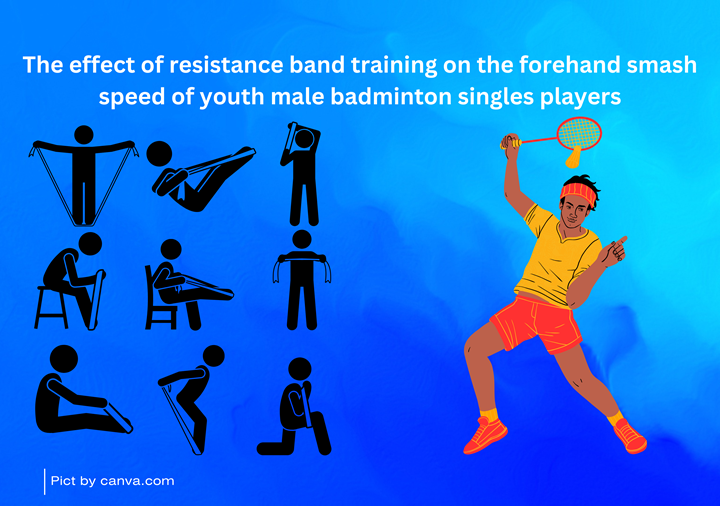
The effect of resistance band training on the forehand smash speed of youth male badminton singles players
Danan Satria Rahadhi1, Yopi Kusdinar2, Patriana Nurmansyah Awwaludin3, Mulyana Mulyana 41. Indonesia University of Education , ID2. Indonesia University of Education , ID3. Indonesia University of Education , ID4. Indonesia University of Education , ID2025-04-30|page 60-70AbstractBackground: Forehand smash shots kill opponents with explosive blows in a badminton game. In hitting a forehand smash, there are several problems, one of which is the speed of the punch.
Objectives: This study is designed to investigate and identify alternative exercises that can enhance the speed of smash shots. The findings of this study are expected to provide valuable insights for athletes and trainers, aiding in the development of effective training programs.
Methods: The research method used in this study is an experimental method with a quantitative approach and a Two Group Pretest-Posttest Design research design. The population in this study were PB Pasundan Bandung badminton athletes, totaling 30 athletes, with a sample of 20 people using a purposive sampling technique. The instrument in this study used a smash shot speed test using the Velocity Speed Gun tool. The data was processed and analyzed using the normality test with Shapiro-Wilk and then analyzed using the independent t-test with SPSS 23.
Results: The T-test value is with a Sig value. (2-tailed) of 0.00, based on the test results, the Sig value. (2-tailed) <0.05 so that H0 is rejected. So, resistance band training has a significant effect on increasing the speed of forehand smash shots.
Conclusions: In conclusion, the consistent use of resistance bands in training sessions could be a game-changer in boosting the speed of forehand smash shots for badminton athletes. These results strongly advocate integrating resistance band training into early-stage badminton training programs. Future studies could further explore its long-term effects and application across different age groups, fostering hope for the continued evolution of training methods in badminton.
APA Citation StyleRahadhi, D. S. , Kusdinar, Y. , Awwaludin, P. N. , & Mulyana , M. (2025). The effect of resistance band training on the forehand smash speed of youth male badminton singles players. Physical Education and Sports: Studies and Research, 60-70. https://doi.org/10.56003/pessr.v4i1.524 -
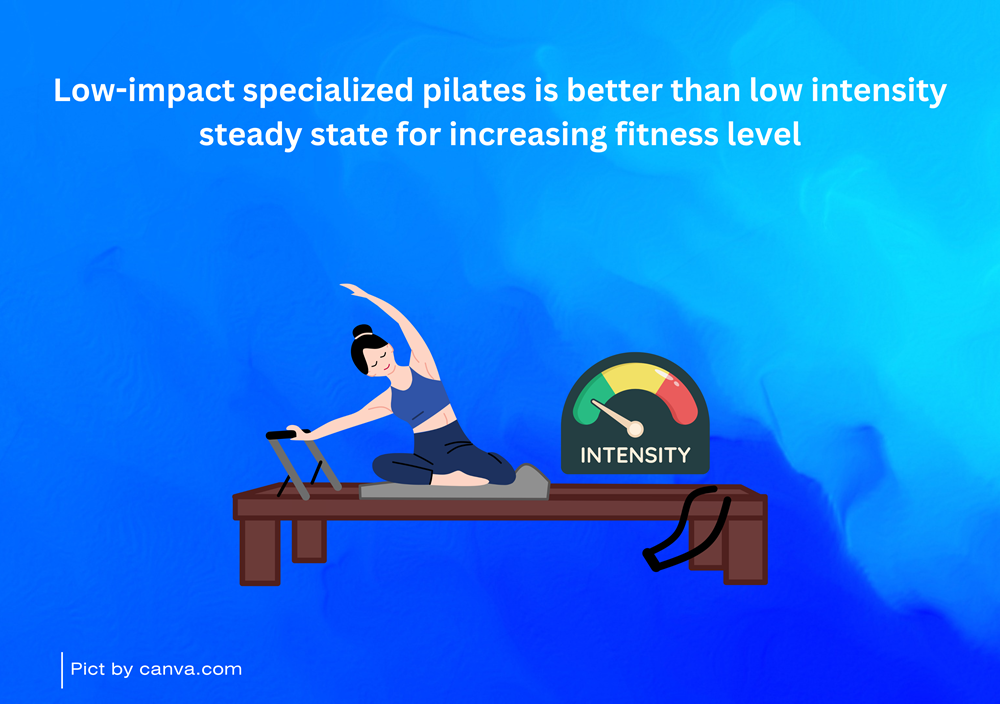
Low-impact specialized pilates is better than low intensity steady state for increasing fitness level
Laily Mita Andriana1, Kunjung Ashadi2, Fransisca Januarumi Marhaendra Wijaya3, Muhamad Fauzi Antoni41. Universitas Negeri Surabaya , ID2. Universitas Negeri Surabaya , ID3. Universitas Negeri Surabaya , ID4. Universitas Negeri Surabaya , ID2025-07-13|page 139-151AbstractBackground: Elderly individuals with disabilities often face challenges in maintaining physical fitness, highlighting the need for effective and appropriate exercise methods tailored to their limitations.
Objectives: This study compares the effectiveness of low-impact specialized Pilates and Low-Intensity Steady-State (LISS) exercise in improving fitness levels among older adults with mild to moderate disabilities. The unique advantage of Pilates in enhancing balance and core strength is presented as a novel contribution.
Methods: A quasi-experimental design with pre-test and post-test assessments was employed, involving 40 elderly participants with disabilities divided into two intervention groups over 8 weeks. Participants were selected through purposive sampling based on the inclusion criteria of 60–75 years with mild to moderate disabilities. Fitness levels were assessed using the Senior Fitness Test, which evaluates muscular strength, balance, flexibility, and aerobic capacity.
Results: Data analysis was conducted using the Shapiro–Wilk test, paired sample t-test, and independent sample t-test. The results demonstrated that the low-impact specialized Pilates group showed significant improvements in core strength, balance, and flexibility, whereas the LISS group exhibited greater improvements in aerobic capacity.
Conclusions: In conclusion, low-impact specialized Pilates is more effective in enhancing overall fitness among elderly individuals with disabilities. Therefore, it is recommended as a suitable exercise modality for rehabilitation and health maintenance programs to improve this population's quality of life and functional independence.
APA Citation StyleAndriana, L. M. , Ashadi, K. , Wijaya, F. J. M. , & Antoni, M. F. (2025). Low-impact specialized pilates is better than low intensity steady state for increasing fitness level. Physical Education and Sports: Studies and Research, 139-151. https://doi.org/10.56003/pessr.v4i2.575 -
Examining the mediating role of perceived psychosocial support in the relationship between sport grit and psychological well-being among high school student-athletes
Daphne Scott Fernandez1, Kahreen Lou Mondina21. Saint Louis College La Union,Saint Louis College La Union , PH2. Saint Louis College La Union,Saint Louis College La Union , PH2026-08-01|page 182-195AbstractBackground: Psychological well-being is essential for student-athletes because they must simultaneously cope with competitive sport demands and academic responsibilities. Although both sport grit and perceived psychosocial support have been associated with positive psychological outcomes, the mediating role of psychosocial support in the relationship between sport grit and psychological well-being remains insufficiently understood.
Objectives: This study examined whether perceived psychosocial support mediates the relationship between sport grit and psychological well-being among high school student-athletes.
Methods: A quantitative cross-sectional correlational design with a mediation analysis framework was employed. A total of 362 high school student-athletes from the first district of La Union, Philippines, participated using total enumeration sampling. Data were collected using standardized questionnaires assessing sport grit, psychological well-being, and perceived psychosocial support. Descriptive statistics, regression analysis, and bias-corrected bootstrap mediation analysis (5,000 resamples) were performed using JASP.
Results: Student-athletes reported high levels of sport grit, psychological well-being, and perceived psychosocial support. Sport grit significantly and positively predicted psychological well-being, whereas it did not significantly predict perceived psychosocial support. Perceived psychosocial support demonstrated a significant but negative association with psychological well-being. Furthermore, the indirect effect of sport grit on psychological well-being through perceived psychosocial support was not statistically significant, indicating the absence of a mediating effect.
Conclusions: Sport grit is an important direct psychological resource associated with psychological well-being among high school student-athletes. Although perceived psychosocial support contributes to athletes' psychological functioning, it does not explain the relationship between sport grit and psychological well-being. These findings highlight the importance of strengthening athletes' internal psychological resources while maintaining supportive sport environments.
APA Citation StyleFernandez, D. S. , & Mondina, K. L. (2026). Examining the mediating role of perceived psychosocial support in the relationship between sport grit and psychological well-being among high school student-athletes. Physical Education and Sports: Studies and Research, 182-195. https://doi.org/10.56003/pessr.v5i2.725 -

Analysis of stroke rate (SR) and Stroke Length (SL) the Three Fastest Breaststroke Swimmers at the Tokyo Olympics 2021
Novan Purnama Alim1, Supriatna Supriatna2, Yulingga Nanda Hanief31. Malang State University , ID2. Malang State University , ID3. Malang State University , ID2024-10-27|page 137-154AbstractBackground: Swimming velocity results from a combination of stroke rate (SR) and stroke length (SL). Previously, it was rare to find studies that discussed the pattern of SR and SL length in Olympic swimmers, especially in breaststroke swimmers, as a benchmark reference in a study.
Objectives: This study aimed to determine the practical pattern of the stroke rate (SR) and stroke length (SL) of 100 m and 200 m breaststroke swimmers ranked first to third at the 2021 Tokyo Olympics.
Methods: This study uses quantitative descriptive analysis research with non-test techniques using observation. These non-test techniques involve the systematic observation and recording of the SR and SL length of breaststroke swimmers at the 2021 Tokyo Olympics, as this study aims to determine their patterns.
Results: The results of this study show: in the 100 meters breaststroke men's effective SR pattern (45-75 strokes/min) and SL length (1.33-2.14 m/stroke); 200 meters breaststroke men's effective SR pattern (33-49 strokes/min) and SL length (1.55-2.77 m/stroke); 100 meters breaststroke women's effective SR pattern (30-63 strokes/min) and SL length (1-2.14 m/stroke); and 200 meters breaststroke women's effective SR pattern (32-48 strokes/min) and SL length (1.6-2.5 m/stroke).
Conclusion: This research concludes that the effective pattern of SR and SL of 100 m and 200 m breaststroke swimmers, as identified in the results, can serve as a benchmark for understanding and improving the performance of competitive breaststroke swimmers.
APA Citation StyleAlim, N. P. , Supriatna, S. , & Hanief, Y. N. (2024). Analysis of stroke rate (SR) and Stroke Length (SL) the Three Fastest Breaststroke Swimmers at the Tokyo Olympics 2021. Physical Education and Sports: Studies and Research, 137-154. https://doi.org/10.56003/pessr.v3i2.388

1 - 4 of 4 items




















