
Search
Search Results
##search.searchResults.foundPlural##
-

First Aid Skills of Pre-Service Physical Education Teachers at Batangas State University
Davidsol Mendoza1, Mauricio Atienza Junior2, Kyla Marie Torino Maralit3, Chino Randel Odello41. Batangas State University-Pablo Borbon , PH2. Batangas State University , PH3. Batangas State University , PH4. Batangas State University , PH2023-10-31|page 83-99AbstractBackground: The researchers believe acquiring knowledge and first aid skills can improve the instruction of Physical Education. Thus, no matter how proactive a teacher can be, there will be possibilities that an unnecessary situation may occur because it is movement education.
Objectives: The study aimed to determine the first aid skills of pre-service physical education teachers at Batangas State University. Specifically, the study determined the respondents' extent of manifestation of competencies in providing first aid skill components as assessed by the instructors and students, along with cardiopulmonary resuscitation, management of bleeding, and fracture. The study also compares the responses of the two groups of respondents. The issues and challenges in developing first aid skills were also ascertained to propose training activities to intensify students' skills and competencies.
Methods: This study used descriptive research and a researcher-made questionnaire to gather data from 186 participants, including 159 physical education students and 27 teachers from Batangas State University during the 2021-2022 academic year.
Results: The study found that students had moderate competency in applying CPR, recognizing victim situations, and performing two rescue breaths correctly. Similarly, students had moderate competency in managing bleeding and identifying fracture types. However, the two groups of respondents had no significant difference in competency. The biggest challenge identified by students was the need for more training and workshops related to first aid, while linguistic barriers and inconsistent training were less significant challenges.
Conclusion: The findings show that Bachelor of Physical Education students greatly manifest first aid skills in CPR, managing bleeding, and treating fractures but need improvements in specific competencies. There was no significant difference in the assessment between the two groups of respondents. However, attendance to training and workshops was the primary issue and challenge in developing the first aid skills of BPEd students.
APA Citation StyleMendoza, D. , Junior, M. A. , Maralit, K. M. T. , & Odello, C. R. (2023). First Aid Skills of Pre-Service Physical Education Teachers at Batangas State University. Physical Education and Sports: Studies and Research, 83-99. https://doi.org/10.56003/pessr.v2i2.208 -

Medical observations and injury analysis: All Girls Touch Rugby Championship 2024
Mohamad Nizam Nazarudin1, Yong Qin Tan2, Ardo Okilanda3, Yovhandra Ockta4, Reshandi Nugraha51. National University of Malaysia , MY2. National University of Malaysia , MY3. State University of Padang , ID4. Universitas Teuku Umar , ID5. UniversitasPendidikan Indonesia , ID2025-04-04|page 32-45AbstractBackground: Touch rugby is a high-intensity, non-contact sport requiring agility, speed, and coordination. This study analyzes injury distribution, treatment effectiveness, and preventive measures among youth touch rugby players.
Objectives: This study examined injury patterns among adolescent female athletes during the 2024 All-Girls Touch Rugby Championship (AGTR 2024).
Methods: A retrospective observational study was conducted using medical reports from the two-day All-Girls Touch Rugby Championship 2024 (AGTR 2024) at Universiti Putra Malaysia. The study examined 484 female athletes (ages 9–18 years), with 176 injuries recorded and categorized as soft tissue injuries (52.3%), abrasions (23.9%), and sprains (14.2%). Descriptive statistics were used to assess injury distribution, while chi-square analysis (χ² = 10.45, p < 0.01) evaluated the relationship between injury type and age group.
Results: Younger players (10–14 years) sustained more abrasions (60%), whereas older athletes (15–18 years) had a higher incidence of soft tissue injuries (68%). Injuries increased by 66.7% on Day 2, highlighting the impact of cumulative fatigue and tournament intensity. Ice therapy (68%) and bandaging (55%) were the most utilized treatments, with only 7% of cases requiring outpatient referrals.
Conclusions: Findings underscore the need for structured warm-ups, enhanced hydration protocols, and targeted strength training to reduce injury risks. The study emphasizes the role of injury surveillance, playing surface improvements, and gender-specific training programs in preventing injuries and enhancing athlete safety. Implementing evidence-based preventive strategies can promote the long-term development and sustainability of touch rugby for adolescent athletes. Future research should focus on longitudinal injury tracking and tailored intervention strategies.
APA Citation StyleNazarudin, M. N. , Tan, Y. Q. , Okilanda, A. , Ockta, Y. , & Nugraha, R. (2025). Medical observations and injury analysis: All Girls Touch Rugby Championship 2024. Physical Education and Sports: Studies and Research, 32-45. https://doi.org/10.56003/pessr.v4i1.495 -

Comparative Analysis of Soccer and Futsal Extracurriculars: A Survey Study of Physical Fitness Profiles
Didi Suryadi1, Mikkey Anggara Suganda2, Makan Sacko3, Y. Touvan Juni Samodra4, Rubiyatno Rubiyatno5, Eka Supriatna6, Isti Dwi Puspita Wati7, Ardo Okilanda81. Tanjungpura University , ID2. Nahdlatul Ulama University Cirebon , ID3. Centre des Langues de Badalabougou , ML4. Tanjungpura University , ID5. Tanjungpura University , ID6. Tanjungpura University , ID7. Tanjungpura University , ID8. State University of Padang , ID2023-04-28|page 59-71AbstractBackground: Futsal and soccer are sports that require endurance and good physical fitness. However, the striking difference, especially in terms of the field used, causes various assumptions.
Objectives: The purpose of this study is to compare the levels of physical fitness required for futsal and soccer as extracurricular activities.
Methods: The Indonesian Physical Fitness Test (TKJI), In this study, a survey administered to extracurricular football and futsal players aged 13 to 15 was used as a quantitative method. Male students from two separate schools who were involved in extracurricular activities participated in this study, including soccer at State Junior High School 3 Sukadana, and futsal at Madrasah Tsanawiyah State 1 Pontianak. Applying a purposive sampling strategy to collect the sample, 20 futsal extracurricular students and 20 soccer extracurricular students were obtained. The SPSS version 26 program was used to aid in the data analysis for this investigation.
Results: According to the study's findings, the average physical fitness score for soccer extracurricular was 15.1, while the average for futsal extracurricular was 11.75. Additionally, the significance value is 0.000 0.05, demonstrating a significant distinction between football and futsal as extracurricular activities.
Conclusion: The study on the degree of physical fitness in extracurricular futsal and football found that there is a big gap. These preliminary results might improve understanding of student fitness developments among exercise professionals.
APA Citation StyleSuryadi, D. , Suganda, M. A. , Sacko, M. , Samodra, Y. T. J. , Rubiyatno, R. , Supriatna, E. , Wati, I. D. P. , & Okilanda, A. (2023). Comparative Analysis of Soccer and Futsal Extracurriculars: A Survey Study of Physical Fitness Profiles. Physical Education and Sports: Studies and Research, 59-71. https://doi.org/10.56003/pessr.v2i1.182 -
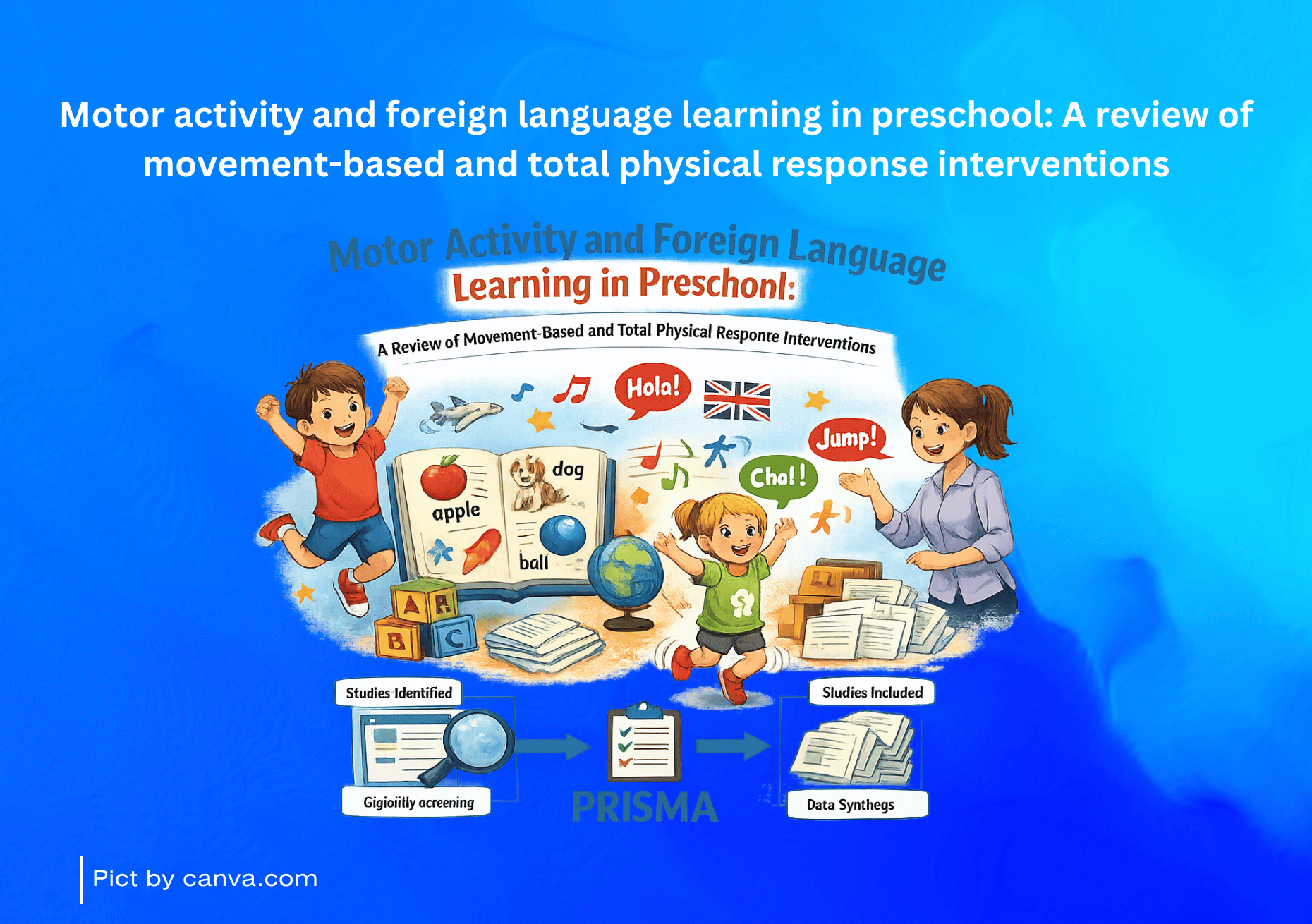
Motor activity and foreign language learning in preschool: A review of movement-based and total physical response interventions
Manuela Valentini1, Nausicaa Simone2, Alessandro Beretta31. Department of Humanities, University of Urbino Carlo Bo , IT2. Department of Humanities, University of Urbino Carlo Bo , IT3. Department of Humanities, University of Urbino Carlo Bo , IT2026-04-02|page 93-105AbstractBackground: Movement may support early foreign-language learning through embodied learning, but the preschool evidence base is fragmented.
Objective: To review empirical studies on movement-based and Total Physical Response (TPR) interventions for foreign-language learning in preschool children.
Method: This study employed a systematic review design based on PRISMA 2020 guidelines, involving database searches and citation tracking to identify empirical studies on movement-based and Total Physical Response (TPR) interventions in preschool foreign-language learning. Studies were screened using predefined eligibility criteria and appraised using the Mixed Methods Appraisal Tool (MMAT). Data from eligible studies were extracted and synthesized narratively due to methodological heterogeneity.
Results: Eight studies met the inclusion criteria. Across stronger controlled studies, semantically integrated movement generally produced more favorable vocabulary and verbal memory outcomes than sedentary teaching or less integrated movement. Evidence focused specifically on TPR was positive in terms of engagement and short-term learning, but methodologically heterogeneous and less robust.
Conclusion: Current preschool evidence supports the promise of integrated movement-based language teaching, particularly when movement is tightly aligned with instructional content. However, the evidence base remains small, largely limited to vocabulary-related outcomes, and further rigorous preschool trials are needed to clarify optimal implementation and the distinct contribution of TPR.APA Citation StyleValentini, M. , Simone, N. , & Beretta, A. (2026). Motor activity and foreign language learning in preschool: A review of movement-based and total physical response interventions. Physical Education and Sports: Studies and Research, 93-105. https://doi.org/10.56003/pessr.v5i1.694 -
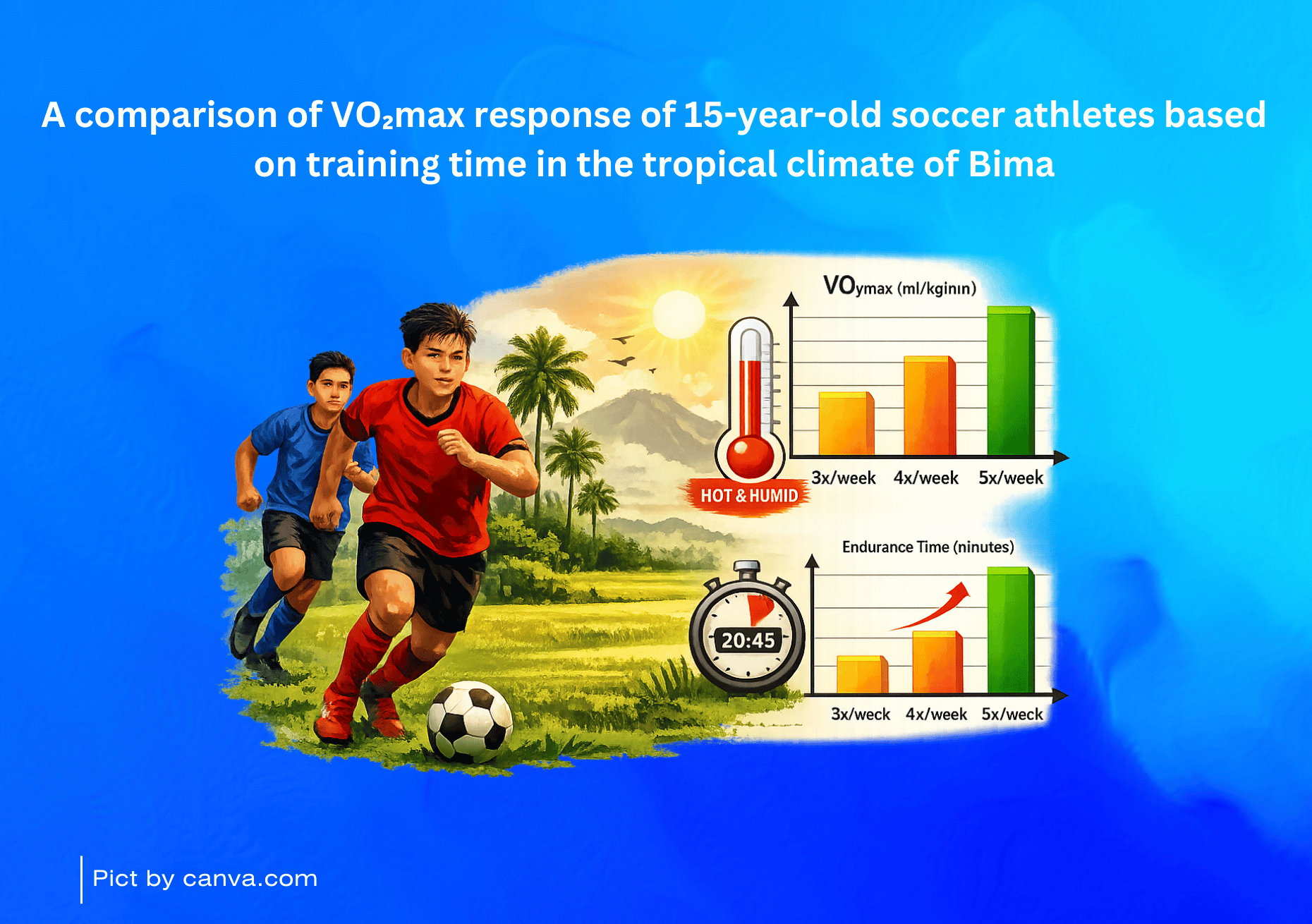
A comparison of VO₂max response of 15-year-old soccer athletes based on training time in the tropical climate of Bima
Firdaus Firdaus1, Taty Hartati2, Rabwan Satriawan3, Shutan Arie Shandi4, Nor Fazila Abd Malek51. Department of Physical Education, STKIP Taman Siswa Bima , ID2. Department of History, STKIP Taman Siswa Bima , ID3. Department of Physical Education, STKIP Taman Siswa Bima , ID4. Department of Physical Education, STKIP Taman Siswa Bima , ID5. Faculty of Sports Science and Coaching, Sultan Idris Education University , MY2026-04-14|page 125-134AbstractBackground: VO₂max is the primary indicator of a soccer athlete's aerobic capacity, but in tropical climates like Bima, high temperatures and humidity can affect VO₂max achievement. Hence, the timing of training is an important factor to consider.
Objectives: This study aims to analyze differences in VO₂max across training times (morning and afternoon) in 15-year-old youth soccer athletes from the Bima Football Association (PERSSEBI).
Methods: The study used a quantitative, comparative, cross-sectional observational design. The study subjects were 45 athletes (age 15.31±0.46; height 163.12±4.35 cm; weight 55.28±3.67 kg; and body mass index (BMI) 20.78±1.18 kg/m²) from the Bima Football Association (PERSEBI), selected by purposive sampling, and divided into morning (n=23) and afternoon (n=22) training groups. VO₂max was measured using a multistage fitness test (Bleep Test). Data analysis included descriptive statistics, the Shapiro–Wilk normality test, the Levene homogeneity test, and the independent-samples t-test at a significance level of 0.05, using IBM SPSS 25.
Results: The descriptive analysis showed that the average VO₂max of the morning group was 43.78 ± 2.34 ml/kg/minute, higher than that of the afternoon group (42.91 ± 2.29 ml/kg/minute). The results of the independent sample t-test showed that there was a significant difference in VO₂max between the two groups with a t value = 2.14 with df = 43 and a significant p value = 0.04 (p < 0.05) with an average difference of 0.87 ml/kg/minute indicating that the morning exercise group had a higher Vo2max value than the afternoon exercise group.
Conclusions: These findings suggest that training time contributes to differences in athletes' VO₂max values in tropical environments, with morning training resulting in higher performance than afternoon training. Therefore, scheduling training that accounts for environmental conditions is crucial for optimizing athletes' VO₂max.
APA Citation StyleFirdaus, F. , Hartati, T. , Satriawan, R. , Shandi, S. A. , & Malek, N. F. A. (2026). A comparison of VO₂max response of 15-year-old soccer athletes based on training time in the tropical climate of Bima. Physical Education and Sports: Studies and Research, 125-134. https://doi.org/10.56003/pessr.v5i1.709 -

Weightlifting coaches' and athletes' understanding of injury prevention programs: a case study of Lumajang and Malang
Muhammad Izzan Atmagara1, Yulingga Nanda Hanief21. State University of Malang , ID2. State University of Malang , ID2025-09-21|page 222-235AbstractBackground: Weightlifting is a high-intensity sport with a high risk of injuries due to improper technique, insufficient warm-up, and excessive training loads.
Objectives: This study explores the understanding, strategies, and barriers of weightlifting coaches and athletes in Lumajang District and Malang City related to implementing injury prevention programs in performance sports.
Methods: This study used a qualitative case study approach. Participants were selected using purposive sampling, consisting of weightlifting coaches with at least one year of experience and athletes who had trained and competed at the regional level. Data were collected through interviews, observations, and document analysis, while data were analyzed using the Miles and Huberman model, including reduction, presentation, and conclusion.
Results: The results showed that coaches and athletes emphasized dynamic warm-ups, core and back strengthening exercises, and correct lifting techniques as the main strategies to prevent injuries. However, limitations in facilities, literature access, and training variety were identified as barriers to implementing optimal injury prevention programs.
Conclusions: This study concludes that effective injury prevention in weightlifting requires structured warm-up routines, individualized training programs, and adequate supporting equipment. Strengthening coaches’ knowledge and providing better facilities are crucial to minimize injuries and enhance athlete performance.APA Citation StyleAtmagara, M. I. , & Hanief, Y. N. (2025). Weightlifting coaches' and athletes' understanding of injury prevention programs: a case study of Lumajang and Malang. Physical Education and Sports: Studies and Research, 222-235. https://doi.org/10.56003/pessr.v4i2.601 -

The effect of peer teaching and think pair share on rhythmic gymnastics learning outcomes
Muhammad Lutfi Hasan1, Ibnu Fatkhu Royana2, Utvi Hinda Zhannisa31. Universitas PGRI Semarang , ID2. Universitas PGRI Semarang , ID3. Universitas PGRI Semarang , ID2025-08-14|page 195-203AbstractBackground: Rhythmic gymnastics plays a vital role in developing students' motor skills, coordination, and rhythm, yet many still face challenges in mastering movement concepts.
Objectives: This study compared the effectiveness of Peer Teaching and Think Pair Share (TPS) cooperative learning models in improving rhythmic gymnastics learning outcomes.
Methods: A quasi-experimental design with a two-group pretest–posttest was conducted on 68 eighth-grade students (male and female) at State Junior High School 4 Semarang, divided into Peer Teaching (n=34) and TPS (n=34) groups. Learning outcomes were assessed using a validated rhythmic gymnastics performance test, and data were analyzed descriptively with gain score calculation.
Results: The TPS group achieved a greater improvement in posttest scores (from 67.21 to 79.59; +18.41%) compared to the Peer Teaching group (from 79.18 to 79.85; +0.85%). These results indicate that TPS enhances students' understanding, coordination, and engagement in rhythmic gymnastics learning.
Conclusions: TPS is recommended for physical education teachers to improve performance, particularly for students with lower initial skills. Further studies should explore its long-term effects and retention.
APA Citation StyleHasan, M. L. , Royana, I. F. , & Zhannisa, U. H. (2025). The effect of peer teaching and think pair share on rhythmic gymnastics learning outcomes. Physical Education and Sports: Studies and Research, 195-203. https://doi.org/10.56003/pessr.v4i2.619

1 - 7 of 7 items




















