
Search
Search Results
##search.searchResults.foundPlural##
-


The impact of coaching communication styles and training programs on novice tennis player satisfaction: A case study from Indonesia
Mohammad Aldi Zakaria1, Limpad Nurrachmad21. State University of Semarang , ID2. State University of Semarang , ID2025-07-17|page 152-161AbstractBackground: The satisfaction of beginner tennis players is often influenced by coaches' communication styles and the structure of training programs.
Objectives: This study analyzed the effects of coaching communication style and training program design on player satisfaction at Club First Tennis.
Methods: A quantitative, descriptive-associative approach was used with 50 beginner players in regular training sessions. Data were collected using a Likert-scale questionnaire covering coach communication style, training program design, and player satisfaction. Statistical analyses included validity and reliability tests, normality checks, and Spearman's rank correlation due to non-parametric data.
Results: Results showed strong, significant relationships between coaching communication and player satisfaction (r = 0.615, p < 0.05), as well as between training programs and satisfaction (r = 0.620, p < 0.05). These findings indicate that supportive and adaptive communication and well-structured training enhance athlete satisfaction and engagement.
Conclusions: The study highlights the importance of integrating effective communication and program planning in coaching beginner athletes. Future studies are encouraged to explore additional influencing factors such as intrinsic motivation or external support, and to involve larger sample sizes for broader generalizability.
APA Citation StyleZakaria, M. A. , & Nurrachmad, L. (2025). The impact of coaching communication styles and training programs on novice tennis player satisfaction: A case study from Indonesia. Physical Education and Sports: Studies and Research, 152-161. https://doi.org/10.56003/pessr.v4i2.603 -
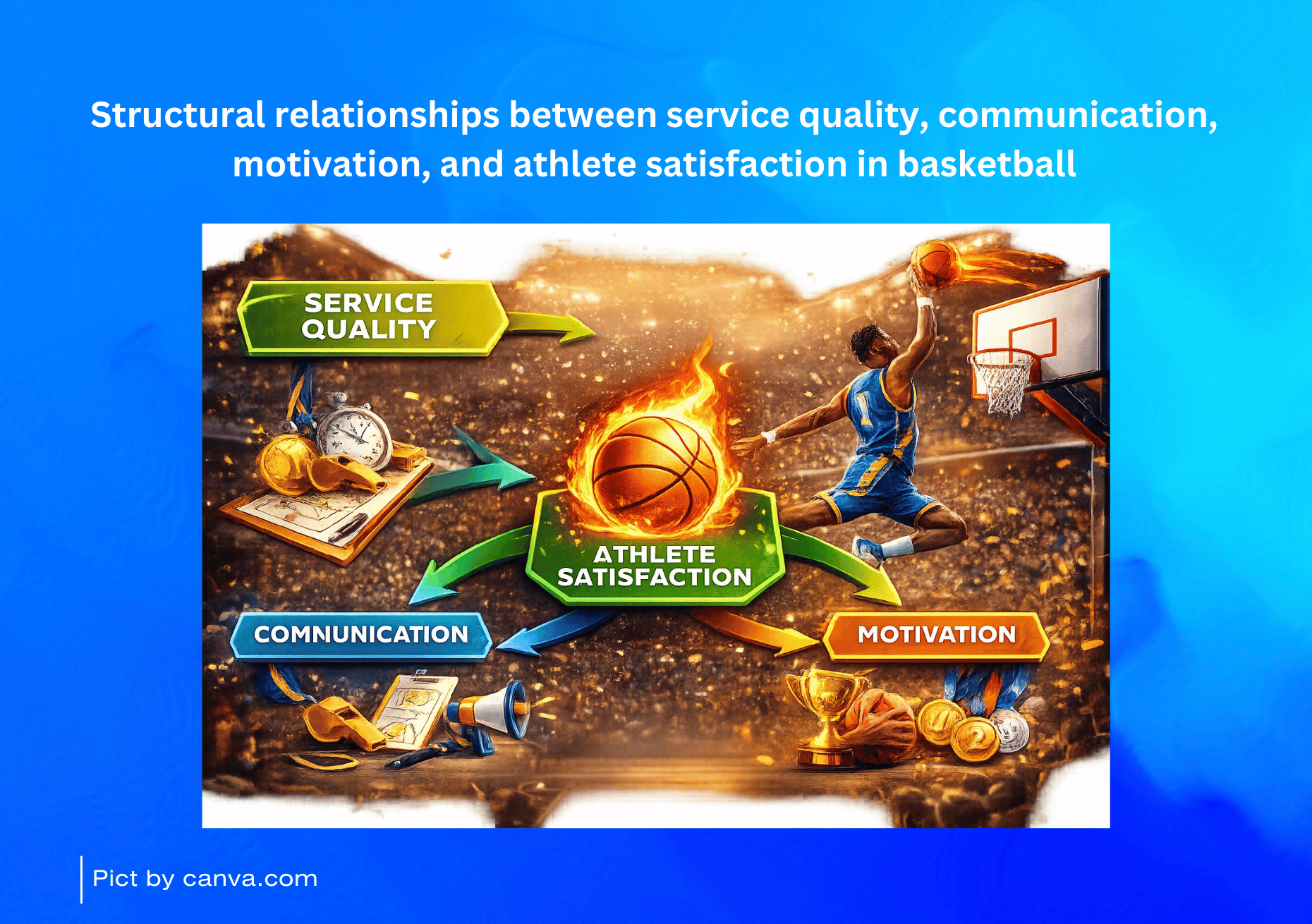
Structural relationships between service quality, communication, motivation, and athlete satisfaction in basketball Indonesia
Fajar Gumilang H.M1, Agung Nugroho2, Rumpis Agus Sudarko3, Fauzi Fauzi4, Fajar Sriwahyuniati51. Yogyakarta State University , ID2. Yogyakarta State University , ID3. Yogyakarta State University , ID4. Yogyakarta State University , ID5. Yogyakarta State University , ID2026-04-09|page 113-124AbstractBackground: Many basketball clubs aim to enhance athlete satisfaction through service quality, communication, and motivation; however, empirical evidence validating these factors as measurable constructs remains limited.
Objectives: This study examines whether these variables function as latent constructs influencing athlete satisfaction and validates their measurement structure using confirmatory factor analysis.
Methods: This study used a quantitative survey and included 263 basketball athletes from various clubs in Sidoarjo, comprising 110 males and 153 females. The participant characteristics focused on players still in the developmental stage who had been actively participating in club training programs for 3 to 6 months, with educational levels ranging from junior high school to college. Participants were selected using purposive sampling. Data were collected using a valid and reliable Likert-scale questionnaire and analyzed using Structural Equation Modeling (SEM) via AMOS 22.
Results: The results demonstrate that service quality (β=0.337, ????=0.000) and communication (β=0.439, ????=0.000) significantly enhance motivation. Furthermore, motivation significantly affects athlete satisfaction (β = 0.582, ???? = 0.000). Crucially, the analysis confirms that motivation mediates the relationship between service quality (indirect effect=0.139) and communication (indirect effect=0.240) on satisfaction.
Conclusions: Theoretically, this study confirms motivation as a vital psychological mediator linking managerial inputs to athlete satisfaction. In practice, the findings demonstrate that while high-quality physical facilities provide a necessary structural foundation, they must be integrated with effective, supportive coaching communication to optimally ignite athletes' intrinsic drive and maximize their overall club experience.APA Citation StyleH.M, F. G. , Nugroho, A. , Sudarko, R. A. , Fauzi, F. , & Sriwahyuniati, F. (2026). Structural relationships between service quality, communication, motivation, and athlete satisfaction in basketball: Indonesia. Physical Education and Sports: Studies and Research, 113-124. https://doi.org/10.56003/pessr.v5i1.691

1 - 2 of 2 items




















