
Search
Search Results
##search.searchResults.foundPlural##
-

Psychosocial predictors of academic achievement in physical education among Indonesian university students: Testing the mediating role of mental toughness
Muhad Fatoni1, Agam Akhmad Syaukani2, Pungki Indarto3, Imron Nugroho Saputro4, Ismi Husniyah Musyfiroh51. Muhammadiyah University of Surakarta , ID2. University of Technology Malaysia , MY3. Muhammadiyah University of Surakarta , ID4. Muhammadiyah University of Surakarta , ID5. Muhammadiyah University of Surakarta , ID2025-12-12|page 291-301AbstractBackground: Academic performance in this context is conceptualized holistically, encompassing the integration of cognitive, affective, psychomotor, and physical achievements. Grounded in Self-Determination Theory and Social Cognitive Theory, the study posits that physical activity interest and social skills serve as predictors of both mental toughness and academic outcomes.
Objectives: This study examines the mediating role of mental toughness in the relationship between physical activity interest, social skills, and academic performance among university students enrolled in physical education programs.
Methods: A quantitative approach was employed, involving the administration of structured questionnaires to 235 active students. Data were analyzed using Structural Equation Modeling with a Partial Least Squares approach to assess construct validity and the relationships among variables.
Results: The results reveal that interest in physical activity and social skills has a significant influence on both mental toughness and academic performance. However, mental toughness did not serve as a substantial mediator within the proposed model.
Conclusions: These findings underscore the critical direct roles of affective and social factors in predicting academic success in physical education contexts. Theoretically, this study clarifies the functional position of mental toughness, while practically, it promotes the development of instructional strategies that enhance intrinsic motivation and collaborative skills within physical education curricula.APA Citation StyleFatoni, M. , Syaukani, A. A. , Indarto, P. , Saputro, I. N. , & Musyfiroh, I. H. (2025). Psychosocial predictors of academic achievement in physical education among Indonesian university students: Testing the mediating role of mental toughness. Physical Education and Sports: Studies and Research, 291-301. https://doi.org/10.56003/pessr.v4i3.624 -
Analyzing the promotion of social skills and values in physical education texts and programmes
Loubna Belabbes1, Omar Ben Rakaa2, Moulay Smail Hafidi Alaoui31. Mohammed-V University , MA2. Hassan II University of Casablanca , MA3. Mohammed-V University , MA2025-12-12|page 275-290AbstractBackground: Global education systems increasingly emphasize holistic development by integrating social skills and ethical values into curricula, with physical education playing a central role in shaping students' cognitive, emotional, and civic competencies.
Objectives: This study examines how educational programs and policy documents promote social skills (e.g., empathy, communication, collaboration, autonomy) and ethical principles, with particular attention to the contribution of physical education in fostering academic achievement and responsible citizenship.
Methods: A structured literature review was conducted, applying predefined eligibility criteria and guided by socio-emotional learning and self-determination theory. Forty-five academic and institutional texts (published between 2013 and 2023), including frameworks from UNESCO and the Moroccan Ministry of Education, as well as programs such as PATHS and Second Step, were analyzed across diverse linguistic and cultural contexts, with a primary focus on Morocco.
Results: Communication (11.11%; 5/45), autonomy (8.89%; 4/45), and cooperation (8.89%; 4/45) emerged as the most frequently emphasized competencies in both Moroccan and international curricula. Physical education was found to reinforce resilience, leadership, and collaborative skills, whereas empathy (4.44%; 2/45) remained underrepresented—reflecting the prevailing prioritization of technical rather than socio-emotional competencies. Implementation remains constrained by structural barriers, including limited resources and cultural misalignment, despite the legislative support of Morocco's framework law 51-17.
Conclusions: Embedding social skills within physical education supports students' holistic development. Achieving meaningful implementation requires: (1) short-term alignment of system-level policies and teacher training, and (2) long-term cultural adaptation of programs supported by measurable monitoring indicators.APA Citation StyleBelabbes, L. , Ben Rakaa, O. , & Alaoui, M. S. H. (2025). Analyzing the promotion of social skills and values in physical education texts and programmes. Physical Education and Sports: Studies and Research, 275-290. https://doi.org/10.56003/pessr.v4i3.493 -
Performance anxiety among student table tennis players
Yumna Wahyuningsih1, Ibnu Fatkhu Royana2, Galih Dwi Pradipta31. Universitas PGRI Semarang , ID2. Universitas PGRI Semarang , ID3. Universitas PGRI Semarang , ID2025-12-18|page 318-331AbstractBackground: Anxiety is a common psychological factor that significantly affects athletic performance, especially in competitive settings. Student-athletes face dual pressures from academic responsibilities and athletic commitments, making them vulnerable to performance anxiety that can impair focus, concentration, and decision-making.
Objectives: This study aims to analyze performance anxiety among table tennis athletes in the Student Activity Unit (UKM) of Universitas PGRI Semarang and to examine differences in performance evaluation outcomes based on sources from internal and external factors.
Methods: A comparative quantitative design with a cross-sectional approach was used. Fifty athletes participated (n=25 assessed by internal factors, n=25 assessed by external factors). Anxiety/performance was measured using a self-report questionnaire consisting of 15 Likert-scale items (1-5 scale) validated by three sport psychology experts. Data were analyzed using one-way ANOVA after confirming normality (Shapiro-Wilk test) and homogeneity (Levene's test).
Results: The internal group had a higher mean score (M = 3.64, SD = 0.86) compared to the external group (M = 3.07, SD = 0.86). ANOVA revealed a statistically significant difference, F(1,48) = 4.92, p = 0.031, η² = 0.093, with an estimated Cohen's d of approximately 0.66, indicating a medium effect size. These findings indicate that anxiety factors affect athletes' performance, with internal factors tending to score higher than external factors.
Conclusions: This study concludes that anxiety affects the performance of table tennis athletes in the Student Activity Unit (UKM) at Universitas PGRI Semarang. Specifically, internal factors such as self-confidence and perfectionism have been proven to have a greater impact than external factors.APA Citation StyleWahyuningsih, Y. , Royana, I. F. , & Pradipta, G. D. (2025). Performance anxiety among student table tennis players. Physical Education and Sports: Studies and Research, 318-331. https://doi.org/10.56003/pessr.v4i3.618 -

The relationship between limb length and lower-limb explosive power on squat-style long jump performance in junior secondary students
Karina Octaviani1, Siti Nurrochmah21. State University of Malang , ID2. State University of Malang , ID2025-07-01|page 103-114AbstractBackground: To determine the relationship between leg length and leg muscle explosive power with squat style long jump performance applied to junior high school students.
Objectives: This study examines the relationship between leg length, leg muscle explosive power, and the ability to jump squatting style long.
Methods: The method used is a quantitative descriptive design with a correlational study. The study population amounted to 60 male students in class VIII. Sampling using the Purposive Proportional Systematic Random Sampling technique amounted to 45 students. The collected data were analyzed using three prerequisite tests: data normality test, homogeneity test, and linearity test. After fulfilling the prerequisite test requirements, it can be continued with 4 hypothesis tests, product moment test, multiple correlation test, regression equation line, and practical contribution and relative contribution.
Results: The data obtained using inferential statistics in multiple correlation analysis is complemented by multiple regression analysis. The results of the multiple correlation test obtained a coefficient = 0.687 and Sig. P = 0.001 < a = 0.05.
Conclusions: The study concludes a positive and linear relationship between leg length and leg muscle explosive power with squat-style long jump performance. Based on these findings, further research is recommended to explore additional variables such as speed, flexibility, and confidence, which may influence squat-style long jump performance.
APA Citation StyleOctaviani, K. , & Nurrochmah, S. (2025). The relationship between limb length and lower-limb explosive power on squat-style long jump performance in junior secondary students. Physical Education and Sports: Studies and Research, 103-114. https://doi.org/10.56003/pessr.v4i2.561 -

Fun game–based learning improves gross motor skills in early primary school children
Ahmad Muttaqin Darussalam1, Sugiharto Sugiharto2, Sapto Adi31. State University of Malang , ID2. State University of Malang , ID3. State University of Malang , ID2025-11-23|page 236-249AbstractBackground: Children who face difficulties in gross motor skill development may withdraw from physical activities, experience low self-esteem, and suffer from social anxiety. Physical education plays a vital role in fostering gross motor development, especially when delivered through enjoyable and engaging activities such as fun games.
Objectives: This study aimed to investigate the impact of fun game–based learning on the development of gross motor skills in early primary school children.
Methods: The study employed a quasi-experimental design with a non-equivalent control group. A total of 36 second-grade students from SDIT Mutiara Hati in Malang participated in this study. Participants were assigned to one of three groups: a control group, a group-based fun games intervention, and an individual-based fun games intervention. The interventions were implemented three times a week for 30 minutes over a period of seven weeks. Gross motor skills were measured before and after the intervention using the Test of Gross Motor Development–Third Edition (TGMD-3), a reliable and validated instrument. Data were analyzed using homogeneity and normality tests, paired-sample t-tests, one-way ANOVA, and Tukey's HSD post hoc tests, with a significance level set at p < 0.05 (SPSS version 25).
Results: Both the individual and group fun game–based learning interventions produced significant improvements in gross motor skills compared with the control group (p < 0.05). Moreover, a significant difference was found between the two intervention types, indicating that the mode of fun game delivery influences outcomes (p < 0.05).
Conclusions: Fun game–based learning, whether delivered individually or in groups, effectively enhances gross motor skills among early primary school children. Additionally, individual fun game–based learning demonstrated a significantly greater improvement compared to group-based learning.APA Citation StyleDarussalam, A. M. , Sugiharto, S. , & Adi, S. (2025). Fun game–based learning improves gross motor skills in early primary school children. Physical Education and Sports: Studies and Research, 236-249. https://doi.org/10.56003/pessr.v4i3.613 -
Examining the mediating role of perceived psychosocial support in the relationship between sport grit and psychological well-being among high school student-athletes
Daphne Scott Fernandez1, Kahreen Lou Mondina21. Saint Louis College La Union,Saint Louis College La Union , PH2. Saint Louis College La Union,Saint Louis College La Union , PH2026-08-01|page 182-195AbstractBackground: Psychological well-being is essential for student-athletes because they must simultaneously cope with competitive sport demands and academic responsibilities. Although both sport grit and perceived psychosocial support have been associated with positive psychological outcomes, the mediating role of psychosocial support in the relationship between sport grit and psychological well-being remains insufficiently understood.
Objectives: This study examined whether perceived psychosocial support mediates the relationship between sport grit and psychological well-being among high school student-athletes.
Methods: A quantitative cross-sectional correlational design with a mediation analysis framework was employed. A total of 362 high school student-athletes from the first district of La Union, Philippines, participated using total enumeration sampling. Data were collected using standardized questionnaires assessing sport grit, psychological well-being, and perceived psychosocial support. Descriptive statistics, regression analysis, and bias-corrected bootstrap mediation analysis (5,000 resamples) were performed using JASP.
Results: Student-athletes reported high levels of sport grit, psychological well-being, and perceived psychosocial support. Sport grit significantly and positively predicted psychological well-being, whereas it did not significantly predict perceived psychosocial support. Perceived psychosocial support demonstrated a significant but negative association with psychological well-being. Furthermore, the indirect effect of sport grit on psychological well-being through perceived psychosocial support was not statistically significant, indicating the absence of a mediating effect.
Conclusions: Sport grit is an important direct psychological resource associated with psychological well-being among high school student-athletes. Although perceived psychosocial support contributes to athletes' psychological functioning, it does not explain the relationship between sport grit and psychological well-being. These findings highlight the importance of strengthening athletes' internal psychological resources while maintaining supportive sport environments.
APA Citation StyleFernandez, D. S. , & Mondina, K. L. (2026). Examining the mediating role of perceived psychosocial support in the relationship between sport grit and psychological well-being among high school student-athletes. Physical Education and Sports: Studies and Research, 182-195. https://doi.org/10.56003/pessr.v5i2.725 -

The effect of peer teaching and think pair share on rhythmic gymnastics learning outcomes
Muhammad Lutfi Hasan1, Ibnu Fatkhu Royana2, Utvi Hinda Zhannisa31. Universitas PGRI Semarang , ID2. Universitas PGRI Semarang , ID3. Universitas PGRI Semarang , ID2025-08-14|page 195-203AbstractBackground: Rhythmic gymnastics plays a vital role in developing students' motor skills, coordination, and rhythm, yet many still face challenges in mastering movement concepts.
Objectives: This study compared the effectiveness of Peer Teaching and Think Pair Share (TPS) cooperative learning models in improving rhythmic gymnastics learning outcomes.
Methods: A quasi-experimental design with a two-group pretest–posttest was conducted on 68 eighth-grade students (male and female) at State Junior High School 4 Semarang, divided into Peer Teaching (n=34) and TPS (n=34) groups. Learning outcomes were assessed using a validated rhythmic gymnastics performance test, and data were analyzed descriptively with gain score calculation.
Results: The TPS group achieved a greater improvement in posttest scores (from 67.21 to 79.59; +18.41%) compared to the Peer Teaching group (from 79.18 to 79.85; +0.85%). These results indicate that TPS enhances students' understanding, coordination, and engagement in rhythmic gymnastics learning.
Conclusions: TPS is recommended for physical education teachers to improve performance, particularly for students with lower initial skills. Further studies should explore its long-term effects and retention.
APA Citation StyleHasan, M. L. , Royana, I. F. , & Zhannisa, U. H. (2025). The effect of peer teaching and think pair share on rhythmic gymnastics learning outcomes. Physical Education and Sports: Studies and Research, 195-203. https://doi.org/10.56003/pessr.v4i2.619 -

Development and validation of a table tennis serve skill assessment instrument for junior high school students: A psychometric approach
Muhammad Aliffajaruddin Alfani1, M. E. Winarno2, Siti Nurrochmah31. State University of Malang , ID2. State University of Malang , ID3. State University of Malang , ID2025-07-01|page 95-102AbstractBackground: The highest assessment weight in physical education lessons lies in psychomotor skills. In order to find out how far the competencies possessed by students, a clear and comprehensive assessment tool or instrument is needed.
Objectives: The research aims to develop a test instrument for forehand and backhand service skills in table tennis small ball games.
Methods: The development of this instrument uses a research and development scheme, with predetermined steps (1) determining objectives, (2) analyzing literature, (3) developing specifications, (4) administering, (5) conducting tests, (6) analyzing data validity, reliability, and objectivity. The cluster sampling procedure was conducted on students aged 13-15 who met the inclusion criteria, involving junior high school students (n=80), consisting of 41 female students and 39 male students. Data were analyzed using IBM SPSS Statistics version 11.0. The basis for decision-making is the Pearson correlation test. The analysis technique in the reliability test uses a test and retest external estimation approach.
Results: The forehand serve variable has a calculated r-value of 0.456> r-table 0.312, and the backhand serve variable obtained a calculated R-value of 0.352> r-table 0.312, so the table tennis skill instrument on that variable was declared valid. At the same time, the reliability test shows a value above 0.70; the instrument that has been prepared can be declared reliable.
Conclusions: The assessment instrument for forehand and backhand serve skills in table tennis games for junior high school students has met the validity and reliability criteria. This shows that the instrument is suitable for teachers as an objective and consistent measuring tool in evaluating basic table tennis skills in students. Recommendations for future studies are encouraged to expand the sample size and integrate digital features to enhance the scalability and objectivity of the assessment.
APA Citation StyleAlfani, M. A. , Winarno, M. E. , & Nurrochmah, S. (2025). Development and validation of a table tennis serve skill assessment instrument for junior high school students: A psychometric approach. Physical Education and Sports: Studies and Research, 95-102. https://doi.org/10.56003/pessr.v4i2.525 -
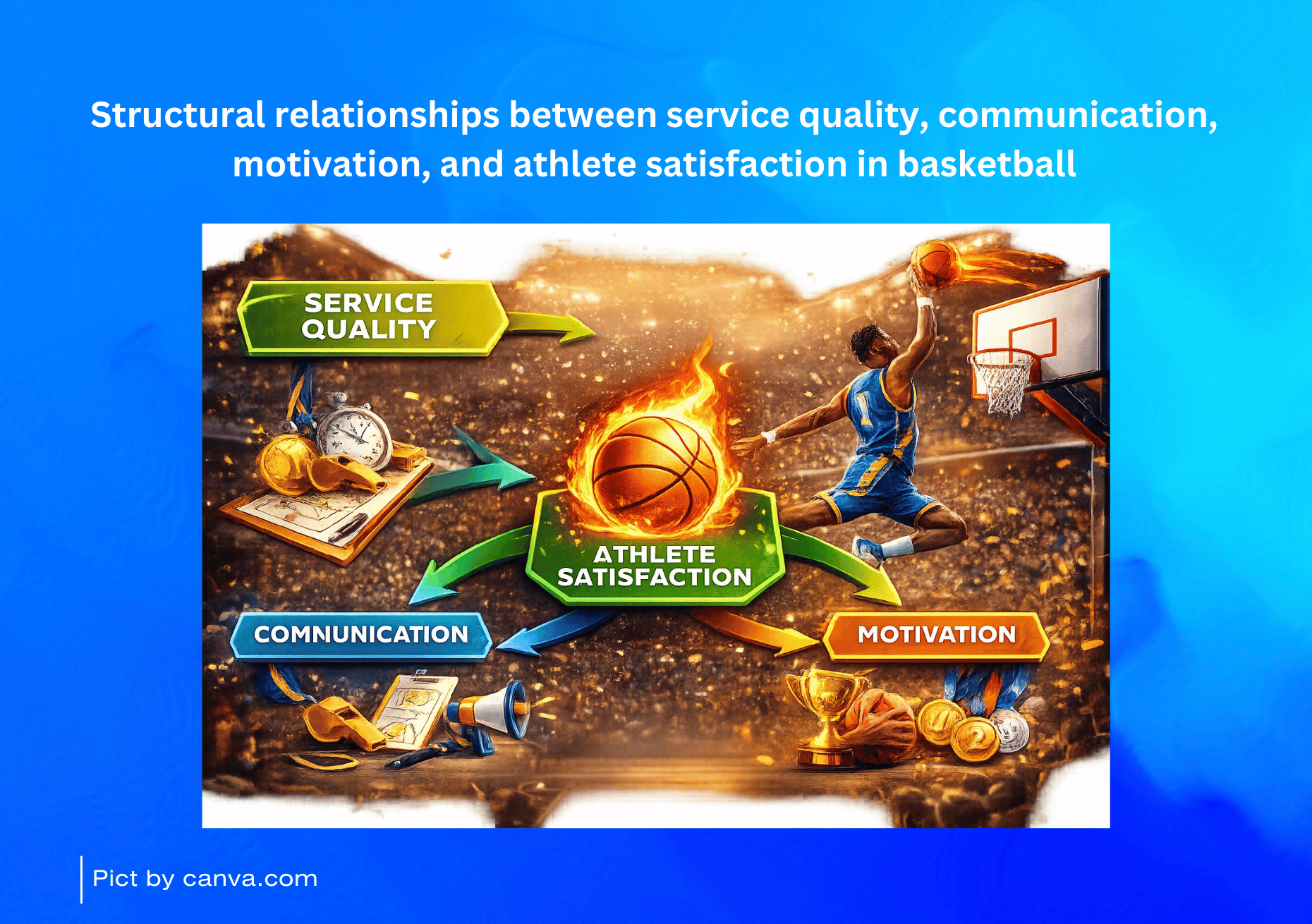
Structural relationships between service quality, communication, motivation, and athlete satisfaction in basketball Indonesia
Fajar Gumilang H.M1, Agung Nugroho2, Rumpis Agus Sudarko3, Fauzi Fauzi4, Fajar Sriwahyuniati51. Yogyakarta State University , ID2. Yogyakarta State University , ID3. Yogyakarta State University , ID4. Yogyakarta State University , ID5. Yogyakarta State University , ID2026-04-09|page 113-124AbstractBackground: Many basketball clubs aim to enhance athlete satisfaction through service quality, communication, and motivation; however, empirical evidence validating these factors as measurable constructs remains limited.
Objectives: This study examines whether these variables function as latent constructs influencing athlete satisfaction and validates their measurement structure using confirmatory factor analysis.
Methods: This study used a quantitative survey and included 263 basketball athletes from various clubs in Sidoarjo, comprising 110 males and 153 females. The participant characteristics focused on players still in the developmental stage who had been actively participating in club training programs for 3 to 6 months, with educational levels ranging from junior high school to college. Participants were selected using purposive sampling. Data were collected using a valid and reliable Likert-scale questionnaire and analyzed using Structural Equation Modeling (SEM) via AMOS 22.
Results: The results demonstrate that service quality (β=0.337, ????=0.000) and communication (β=0.439, ????=0.000) significantly enhance motivation. Furthermore, motivation significantly affects athlete satisfaction (β = 0.582, ???? = 0.000). Crucially, the analysis confirms that motivation mediates the relationship between service quality (indirect effect=0.139) and communication (indirect effect=0.240) on satisfaction.
Conclusions: Theoretically, this study confirms motivation as a vital psychological mediator linking managerial inputs to athlete satisfaction. In practice, the findings demonstrate that while high-quality physical facilities provide a necessary structural foundation, they must be integrated with effective, supportive coaching communication to optimally ignite athletes' intrinsic drive and maximize their overall club experience.APA Citation StyleH.M, F. G. , Nugroho, A. , Sudarko, R. A. , Fauzi, F. , & Sriwahyuniati, F. (2026). Structural relationships between service quality, communication, motivation, and athlete satisfaction in basketball: Indonesia. Physical Education and Sports: Studies and Research, 113-124. https://doi.org/10.56003/pessr.v5i1.691 -
Exploratory machine-learning classification of student performance in physical education using fitness, engagement, and academic indicators
Princes Lloyda Peralta1, Shekiro Raposas2, Reinalyn Bucsit31. General Education Department, College of Inclusive Education, Lorma Colleges , PH2. College of Computer Studies and Engineering, Lorma Colleges , PH3. General Education Department, College of Inclusive Education, Lorma Colleges , PH2026-09-09|page 276-289AbstractBackground: Physical Education (PE) performance is multidimensional and may be associated with fitness, engagement, attendance, motivation, and prior achievement. Machine learning can identify classification patterns across these indicators, but predictive claims require clear temporal ordering and rigorous validation.
Objective: This study compared four machine-learning classifiers for categorizing student PE performance while minimizing target leakage and addressing class imbalance.
Methods: An exploratory, leakage-controlled classification analysis used a public Kaggle dataset of uncertain provenance. The dataset contained 500 records, 19 substantive variables, and one identifier, with Performance categorized as Low, Average, or High Performer. Because the label-construction rule was undocumented, Performance was treated as an inherited categorical outcome. Overall PE Performance Score, Improvement Rate, and Final Grade were excluded because they could contain current, change-based, or outcome-related information. Categorical predictors were one-hot encoded, numeric predictors were standardized, and preprocessing was performed within training folds. Random Forest, Decision Tree, Support Vector Machine, and Logistic Regression were evaluated using stratified five-fold cross-validation with class-weighted learning.
Results: Random Forest achieved the highest accuracy (0.856), whereas Logistic Regression achieved the highest balanced accuracy (0.749) and macro-F1 (0.645). Its out-of-fold recall was 0.759 for Low, 0.720 for Average, and 0.750 for High Performers, indicating that accuracy alone may inadequately reflect performance in an imbalanced multiclass setting.
Conclusion: Leakage-controlled, class-aware evaluation is essential in machine-learning classification of student performance. These findings are exploratory and should not be interpreted as validated prospective predictions. Future studies should use documented data, explicit temporal ordering, larger balanced samples, and independent external validation.
APA Citation StylePeralta, P. L. , Raposas, S. , & Bucsit, R. (2026). Exploratory machine-learning classification of student performance in physical education using fitness, engagement, and academic indicators. Physical Education and Sports: Studies and Research, 276-289. https://journal.rezkimedia.or.id/pes/article/view/790

1 - 10 of 10 items




















