
Search
Search Results
##search.searchResults.foundPlural##
-


Integrating technology in physical education: The impact of TPACK-based tactical and technical approaches on football skills and student motivation
Defri Mulyana1, Adang Suherman2, Komarudin Komarudin3, Bambang Abduljabar4, Fegie Rizkia Mulyana51. Indonesia University of Education , ID2. Indonesia University of Education , ID3. Indonesia University of Education , ID4. Indonesia University of Education , ID5. Siliwangi University , ID2025-05-14|page 71-82AbstractBackground: Motivation and skill development are vital in physical education, particularly football. Tactical learning emphasizes decision-making and game understanding, while technical learning focuses on mastering fundamental skills.
Objectives: This study aimed to analyze the impact of a TPACK-based tactical and technical learning approach on student motivation and football skill acquisition among high school students in Tasikmalaya.
Methods: The study applied the TPACK framework—integrating Technological, Pedagogical, and Content Knowledge—in designing the learning model. Using an experimental method with a pre-test–post-test design, 30 students were divided into two groups. Motivation was assessed via a Likert-scale questionnaire, while football skills (passing, heading, dribbling, shooting, and playing ability) were evaluated through standardized tests. Data were analyzed using paired and independent t-tests with a significance level of p < 0.05.
Results: The technical approach significantly enhanced basic football skills, notably heading (t = 8.47) and shooting (t = 8.29), proving its effectiveness in improving fundamental competencies. Conversely, the tactical approach showed a notable increase in student motivation (t = 4.98) and playing ability (t = 5.94), reflecting its strength in fostering strategic understanding and engagement. TPACK integration further reinforced both approaches through effective use of technology.
Conclusions: The study highlights the importance of combining tactical and technical approaches to promote holistic student development. Continued research is needed to explore the long-term effects and potential of integrating diverse technological tools in physical education.
APA Citation StyleMulyana, D. , Suherman, A. , Komarudin, K. , Abduljabar, B. , & Mulyana, F. R. (2025). Integrating technology in physical education: The impact of TPACK-based tactical and technical approaches on football skills and student motivation. Physical Education and Sports: Studies and Research, 71-82. https://doi.org/10.56003/pessr.v4i1.523 -

A critical analysis of the disconnection between science and practice in weight training
Ferdinando Cereda11. The Catholic University of the Sacred Heart in Milan , IT2025-04-07|page 46-59AbstractBackground: Resistance training (RT) has emerged as a powerful tool for health promotion, with substantial scientific evidence supporting its beneficial effects across multiple physiological systems and psychological domains. Despite this robust knowledge base, a significant disconnection persists between scientific evidence and practical implementation in both clinical and everyday settings.
Objectives: This study aims to critically examine this science-practice gap by analyzing common misconceptions surrounding RT and proposing strategies to enhance knowledge translation.
Methods: Through a narrative review of scientific literature from PubMed, Scopus, and Google Scholar, the research synthesizes evidence regarding RT's scientifically validated benefits, prevalent myths, and effective communication approaches.
Results: Findings show a concerning lack of scientific awareness among practitioners and end-users. Persistent misconceptions, such as "RT reduces flexibility" and "plant-based proteins are inferior for muscle hypertrophy," continue to circulate despite contradictory evidence.
Conclusions: Improved scientific communication via targeted educational programs, digital platforms, and collaboration between researchers and policymakers is urgently needed to bridge this gap and maximize RT’s public health impact.
APA Citation StyleCereda, F. (2025). A critical analysis of the disconnection between science and practice in weight training. Physical Education and Sports: Studies and Research, 46-59. https://doi.org/10.56003/pessr.v4i1.499 -

Development and evaluation of an Android-based multimedia application to promote healthy lifestyles in physical education: A study at State Junior High School 29 Semarang
Galang Yusuf Pujiyanto1, Ibnu Fatkhu Royana2, Muh. Isna Nurdin Wibisana31. Universitas PGRI Semarang , ID2. Universitas PGRI Semarang , ID3. Universitas PGRI Semarang , ID2025-07-23|page 162-174AbstractBackground: The integration of interactive, technology-based media in Physical Education, particularly for teaching health-related content, remains limited despite its potential to enhance student engagement and learning outcomes.
Objectives: This study aims to address this gap by developing and evaluating the effectiveness of an Android-based multimedia learning application, "Healthy Habits," designed to support the delivery of healthy lifestyle materials in Physical Education, Sports, and Health (Physical Education) subjects at the junior high school level.
Methods: The research employed a research and development (R&D) approach, involving expert validation from media and content specialists and usability trials with teachers and students.
Results: Validation results indicated a "Good" rating from the material expert (average score: 4.05) and a "Very Good" rating from the media expert (average score: 4.24), confirming the application's content quality and technical feasibility. Teacher evaluations also yielded a "Good" rating (average score: 4.07). Student trials produced positive responses, with small group testing receiving a "Very Good" rating (average score: 3.29), which increased to 4.23 ("Very Good") in large group testing. An effectiveness test assessing cognitive, affective, and psychomotor learning outcomes showed an average score of 85.6%, categorized as "Very Good." These findings demonstrate the feasibility and effectiveness of "Healthy Habits" as a digital learning tool for promoting healthy lifestyles in secondary school students.
Conclusions: The application offers practical value for educators and curriculum developers seeking to integrate mobile technology into Physical Education. Future studies are encouraged to explore the implementation of this application in varied educational contexts and its potential integration across other subject areas.
APA Citation StylePujiyanto, G. Y. , Royana, I. F. , & Wibisana, M. I. N. (2025). Development and evaluation of an Android-based multimedia application to promote healthy lifestyles in physical education: A study at State Junior High School 29 Semarang. Physical Education and Sports: Studies and Research, 162-174. https://doi.org/10.56003/pessr.v4i2.607 -
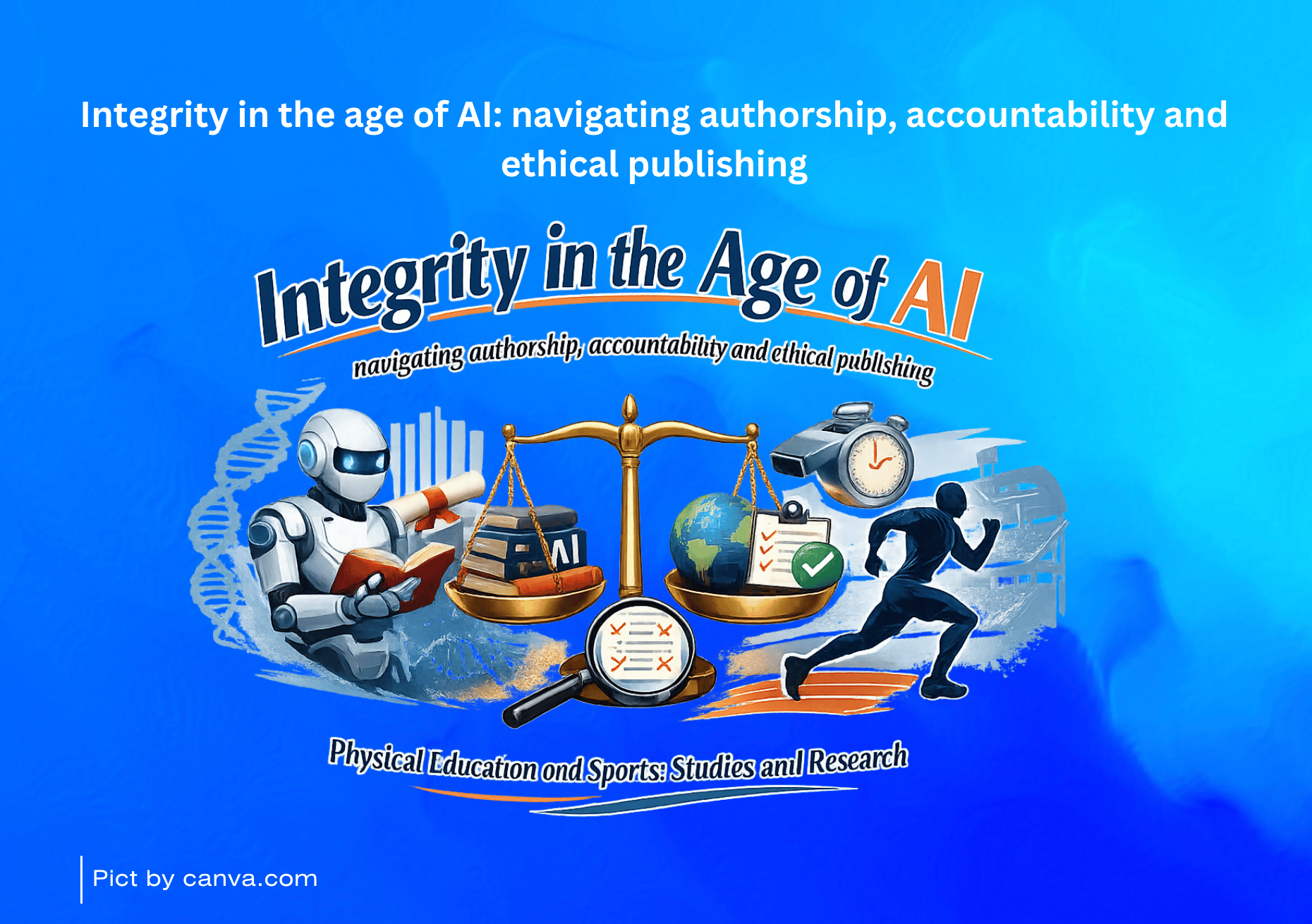
Integrity in the age of AI: navigating authorship, accountability and ethical publishing
Yulingga Nanda Hanief11. State University of Malang , ID2026-04-03|page 106-112AbstractThe rapid emergence of generative artificial intelligence (AI) is reshaping the landscape of academic writing and scholarly publishing, offering both opportunities and ethical challenges. This editorial reflects on the growing implications of AI-assisted authorship, particularly regarding authorship, accountability, and research integrity. While AI tools can improve clarity and accessibility, their misuse raises concerns about the erosion of critical thinking and the reliability of scientific results.
A key issue highlighted in this discussion is the increasing incidence of false or unverifiable references generated through AI-assisted processes. These practices threaten the credibility of scholarly communication and increase the burden on editors and reviewers. In response, this editorial emphasizes the importance of responsible AI use, transparency in authorship, and rigorous source verification.
Furthermore, the article outlines the journal's commitment to maintaining high standards of quality and ethical publishing. This includes strengthening editorial policies, promoting integrity in manuscript preparation, and encouraging accountability among authors. The editorial also calls on the academic community to adopt responsible practices in the use of emerging technologies.
In line with international publishing standards, this editorial is designed to provide critical perspectives, articulate editorial responsibilities, and offer a forward-looking stance on ethical scientific communication. Ultimately, maintaining trust and credibility in the AI era requires a collective commitment to transparency, rigor, and integrity at every stage of the publication process.
APA Citation StyleHanief, Y. N. (2026). Integrity in the age of AI: navigating authorship, accountability and ethical publishing. Physical Education and Sports: Studies and Research, 106-112. https://doi.org/10.56003/pessr.v5i1.720 -

Promoting gender responsiveness in teaching physical education
Ryan Cazel Lalog11. Batangas State University , PH2025-04-04|page 1-14AbstractBackground: Implementing gender policies in physical education at Batangas State University remains moderate, with challenges in ensuring gender-responsive and equitable activities for male and female students. Issues such as students' self-confidence, self-perception, and limited gender mainstreaming strategies and resources hinder the development of a more inclusive learning environment.
Objectives: This study examined gender policy implementation, the use of strategies and resources in various physical education activities, differences in male and female instructors' assessments, challenges in gender mainstreaming, and the development of gender-responsive activities.
Methods: A descriptive research method was used, collecting data from 105 university physical education instructors (77 males, 28 females) through a researcher-made survey questionnaire.
Results: Findings revealed that gender policies were moderately implemented (mean score: 3.47), while both male (3.67) and female (3.63) instructors highly utilized strategies and resources in physical fitness, rhythmic activities, individual and dual sports, and team sports. No significant differences were observed in male and female educators' assessments, indicating shared perspectives on gender mainstreaming.
Conclusions: The study emphasizes the need for more vigorous policy enforcement and improvements in sports-related content to enhance gender inclusivity. Addressing self-confidence, self-perception, and individual differences is crucial for fostering equitable learning experiences. Universities should provide continuous professional development for PE instructors on gender-sensitive teaching strategies. Future research should explore the long-term impact of gender-responsive approaches on student engagement, performance, and overall well-being in physical education.
APA Citation StyleLalog, R. C. (2025). Promoting gender responsiveness in teaching physical education. Physical Education and Sports: Studies and Research, 1-14. https://doi.org/10.56003/pessr.v4i1.392 -
Improving physical self-perception and health-related fitness through gamification in physical education: A cluster randomized controlled trial
Ferdinando Cereda11. The Catholic University of the Sacred Heart in Milan , IT2026-03-08|page 7-27AbstractBackground: The global decline in adolescent physical activity necessitates pedagogical innovation to counter disengagement. Traditional norm-referenced physical education (PE) often alienates less skilled students, whereas gamification offers a promising criterion-referenced strategy to enhance motivation and learning.
Objectives: This study investigated the efficacy of a 12-week gamified didactic intervention on perceived physical self-concept, health-related fitness, and physical activity enjoyment among high school students.
Methods: A two-arm, parallel-group, cluster randomized controlled trial (Cluster-RCT) was conducted with 210 Italian adolescents (mean age 15.4 ± 0.9 years) nested within 10 intact classes (average cluster size = 21). Intact classes were randomised to an experimental group (gamified ‘MoveQuest’ module, k = 5) or a control group (traditional direct instruction, k = 5). Data were collected using the Revised Physical Self-Perception Profile (PSPP-R-IT), the ALPHA-FIT test battery, and the Physical Activity Enjoyment Scale (PACES). Following a per-protocol analytical approach, Linear mixed models (LMMs) were employed to analyse the data, accounting for the nested structure of the educational setting and handling cluster-level variance intraclass correlation coefficients (ICCs). Significance levels were interpreted considering the multiplicity of outcomes.
Results: Significant group × time interactions were observed, with the gamified group demonstrating superior improvements in sports competence (d = 0.65), physical self-worth (d = 0.58), and enjoyment (d = 0.82) compared to the control group. Physiologically, the experimental group showed significantly greater gains in cardiorespiratory fitness (V̇O₂ max) and agility, while body attractiveness remained stable in both groups.
Conclusions: Gamified didactics significantly enhance psychological engagement and specific motor performance parameters by prioritising individual progress over social comparison. This approach represents a valuable pedagogical tool for fostering physical literacy in secondary PE.APA Citation StyleCereda, F. (2026). Improving physical self-perception and health-related fitness through gamification in physical education: A cluster randomized controlled trial. Physical Education and Sports: Studies and Research, 7-27. https://doi.org/10.56003/pessr.v5i1.677 -
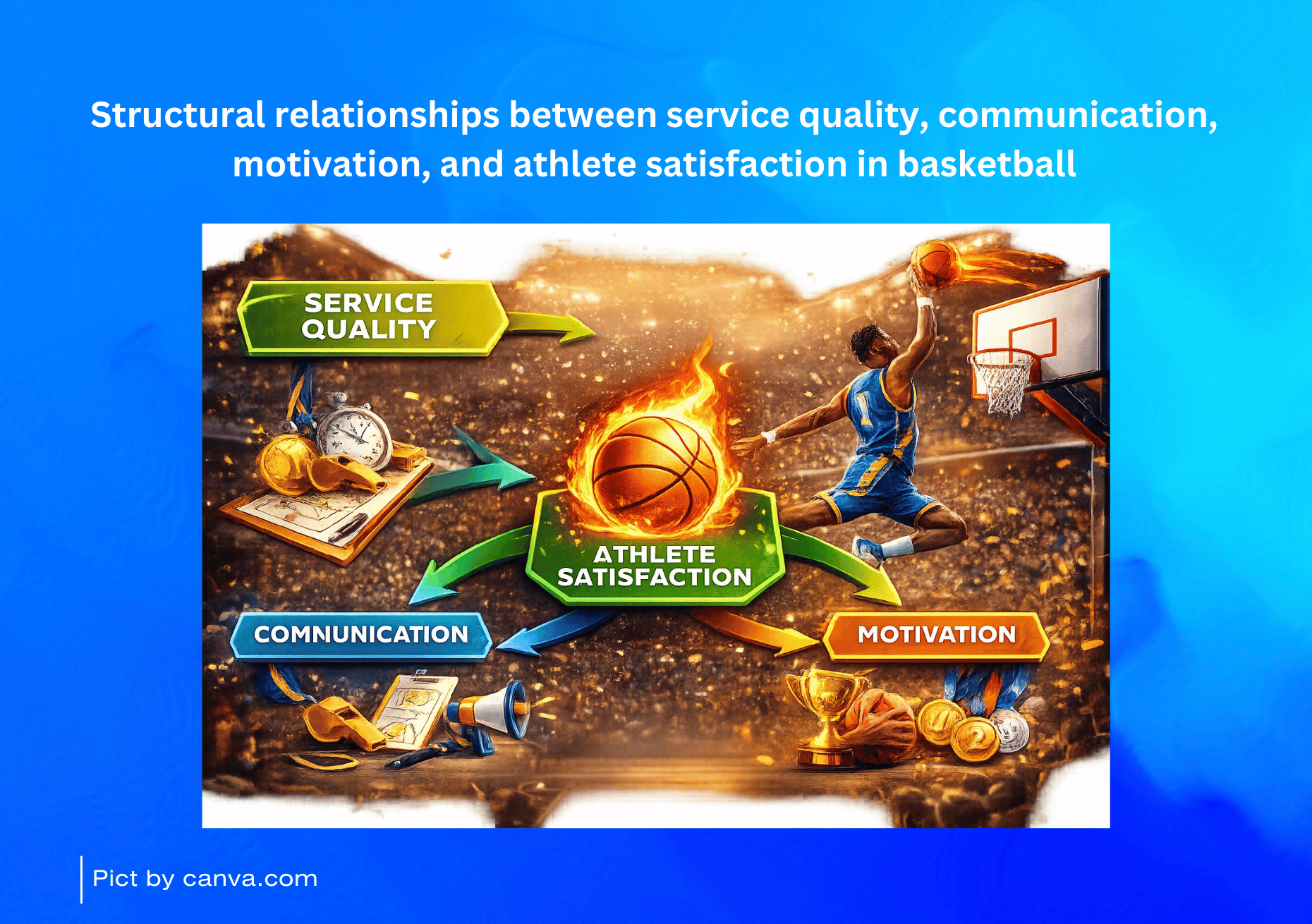
Structural relationships between service quality, communication, motivation, and athlete satisfaction in basketball Indonesia
Fajar Gumilang H.M1, Agung Nugroho2, Rumpis Agus Sudarko3, Fauzi Fauzi4, Fajar Sriwahyuniati51. Yogyakarta State University , ID2. Yogyakarta State University , ID3. Yogyakarta State University , ID4. Yogyakarta State University , ID5. Yogyakarta State University , ID2026-04-09|page 113-124AbstractBackground: Many basketball clubs aim to enhance athlete satisfaction through service quality, communication, and motivation; however, empirical evidence validating these factors as measurable constructs remains limited.
Objectives: This study examines whether these variables function as latent constructs influencing athlete satisfaction and validates their measurement structure using confirmatory factor analysis.
Methods: This study used a quantitative survey and included 263 basketball athletes from various clubs in Sidoarjo, comprising 110 males and 153 females. The participant characteristics focused on players still in the developmental stage who had been actively participating in club training programs for 3 to 6 months, with educational levels ranging from junior high school to college. Participants were selected using purposive sampling. Data were collected using a valid and reliable Likert-scale questionnaire and analyzed using Structural Equation Modeling (SEM) via AMOS 22.
Results: The results demonstrate that service quality (β=0.337, ????=0.000) and communication (β=0.439, ????=0.000) significantly enhance motivation. Furthermore, motivation significantly affects athlete satisfaction (β = 0.582, ???? = 0.000). Crucially, the analysis confirms that motivation mediates the relationship between service quality (indirect effect=0.139) and communication (indirect effect=0.240) on satisfaction.
Conclusions: Theoretically, this study confirms motivation as a vital psychological mediator linking managerial inputs to athlete satisfaction. In practice, the findings demonstrate that while high-quality physical facilities provide a necessary structural foundation, they must be integrated with effective, supportive coaching communication to optimally ignite athletes' intrinsic drive and maximize their overall club experience.APA Citation StyleH.M, F. G. , Nugroho, A. , Sudarko, R. A. , Fauzi, F. , & Sriwahyuniati, F. (2026). Structural relationships between service quality, communication, motivation, and athlete satisfaction in basketball: Indonesia. Physical Education and Sports: Studies and Research, 113-124. https://doi.org/10.56003/pessr.v5i1.691 -

The effect of peer teaching and think pair share on rhythmic gymnastics learning outcomes
Muhammad Lutfi Hasan1, Ibnu Fatkhu Royana2, Utvi Hinda Zhannisa31. Universitas PGRI Semarang , ID2. Universitas PGRI Semarang , ID3. Universitas PGRI Semarang , ID2025-08-14|page 195-203AbstractBackground: Rhythmic gymnastics plays a vital role in developing students' motor skills, coordination, and rhythm, yet many still face challenges in mastering movement concepts.
Objectives: This study compared the effectiveness of Peer Teaching and Think Pair Share (TPS) cooperative learning models in improving rhythmic gymnastics learning outcomes.
Methods: A quasi-experimental design with a two-group pretest–posttest was conducted on 68 eighth-grade students (male and female) at State Junior High School 4 Semarang, divided into Peer Teaching (n=34) and TPS (n=34) groups. Learning outcomes were assessed using a validated rhythmic gymnastics performance test, and data were analyzed descriptively with gain score calculation.
Results: The TPS group achieved a greater improvement in posttest scores (from 67.21 to 79.59; +18.41%) compared to the Peer Teaching group (from 79.18 to 79.85; +0.85%). These results indicate that TPS enhances students' understanding, coordination, and engagement in rhythmic gymnastics learning.
Conclusions: TPS is recommended for physical education teachers to improve performance, particularly for students with lower initial skills. Further studies should explore its long-term effects and retention.
APA Citation StyleHasan, M. L. , Royana, I. F. , & Zhannisa, U. H. (2025). The effect of peer teaching and think pair share on rhythmic gymnastics learning outcomes. Physical Education and Sports: Studies and Research, 195-203. https://doi.org/10.56003/pessr.v4i2.619 -
Examining the mediating role of perceived psychosocial support in the relationship between sport grit and psychological well-being among high school student-athletes
Daphne Scott Fernandez1, Kahreen Lou Mondina21. Saint Louis College La Union,Saint Louis College La Union , PH2. Saint Louis College La Union,Saint Louis College La Union , PH2026-08-01|page 182-195AbstractBackground: Psychological well-being is essential for student-athletes because they must simultaneously cope with competitive sport demands and academic responsibilities. Although both sport grit and perceived psychosocial support have been associated with positive psychological outcomes, the mediating role of psychosocial support in the relationship between sport grit and psychological well-being remains insufficiently understood.
Objectives: This study examined whether perceived psychosocial support mediates the relationship between sport grit and psychological well-being among high school student-athletes.
Methods: A quantitative cross-sectional correlational design with a mediation analysis framework was employed. A total of 362 high school student-athletes from the first district of La Union, Philippines, participated using total enumeration sampling. Data were collected using standardized questionnaires assessing sport grit, psychological well-being, and perceived psychosocial support. Descriptive statistics, regression analysis, and bias-corrected bootstrap mediation analysis (5,000 resamples) were performed using JASP.
Results: Student-athletes reported high levels of sport grit, psychological well-being, and perceived psychosocial support. Sport grit significantly and positively predicted psychological well-being, whereas it did not significantly predict perceived psychosocial support. Perceived psychosocial support demonstrated a significant but negative association with psychological well-being. Furthermore, the indirect effect of sport grit on psychological well-being through perceived psychosocial support was not statistically significant, indicating the absence of a mediating effect.
Conclusions: Sport grit is an important direct psychological resource associated with psychological well-being among high school student-athletes. Although perceived psychosocial support contributes to athletes' psychological functioning, it does not explain the relationship between sport grit and psychological well-being. These findings highlight the importance of strengthening athletes' internal psychological resources while maintaining supportive sport environments.
APA Citation StyleFernandez, D. S. , & Mondina, K. L. (2026). Examining the mediating role of perceived psychosocial support in the relationship between sport grit and psychological well-being among high school student-athletes. Physical Education and Sports: Studies and Research, 182-195. https://doi.org/10.56003/pessr.v5i2.725 -

Out-of-Field Public Senior High School Teachers: Competencies in Teaching Physical Education
John Clark Martos Mesias11. Burauen Comprehensive National High School, Leyte Division , PH2022-10-28|page 123-135AbstractBackground: Making sure that Physical Education (PE) classes are staffed with qualified and trained PE teacher is the most indispensable ingredient to a quality PE program. Only certified PE teachers should be given the accountability of teaching the skills and giving instruction that our young people need to adopt and maintain a physically active routine.
Objectives: The purpose of this qualitative study was to draw out the lived experiences of out-of-field public Senior High School teachers on teaching Physical Education, identify the trainings and seminars’ relevant to their professional development and advancement.
Methods: Through the descriptive narrative method, 22 out-of-field public senior high school teachers who were teaching PE from Areas 2A and 2B in Leyte Division served as participants and results derived from the interviews were coded and transcribed to come up with themes and sub-themes that follows: content knowledge with sub-themes; mastery of skills taught, sports-related trainings and dance pedagogy; pedagogical skills with sub-themes promotion of cooperative learning, stimulation of assigning leaders per group activities, inclusion of appropriate assessment tool or rubrics, and assurance of learners’ safety.
Results: The study confirms that mastery of subject discipline is essential to a teacher. Teaching PE subjects is more than the theory; it delves more on skills demonstration and acquisition. If teachers are expert in the field they teach, they can demonstrate the skills, clearly answer students’ questions, and lessen the workload as they have but minor adjustment as far as the subject matter is concerned.
Conclusion: This study confirms that mastery of the content is essential in the teaching-learning process. Teaching PE subjects is not all about imparting the content of the subject theoretically; it more on skills demonstration and acquisition.
APA Citation StyleMesias, J. C. M. (2022). Out-of-Field Public Senior High School Teachers: Competencies in Teaching Physical Education. Physical Education and Sports: Studies and Research, 123-135. https://doi.org/10.56003/pessr.v1i2.137 -
A domain-specific peer-review checklist for sport science journals: Translating a conceptual framework into practice
Spyridon Plakias11. University of Thessaly , GR2026-08-01|page 172-181AbstractThe peer-review process plays a central role in ensuring the quality and credibility of scientific research; however, it remains characterized by variability, limited standardization, and a lack of domain-specific evaluation criteria. These limitations are particularly evident in sport science, a multidisciplinary field involving complex, context-dependent, and applied performance data. Although several guidelines for peer-review exist, they are often either generic or tailored to specific domains, limiting their applicability to sport science research. The aim of the present study was to develop a comprehensive, domain-specific reviewer checklist for sport science journals. Building on a previously proposed conceptual framework of publishable research, the checklist operationalizes key dimensions of manuscript evaluation into structured criteria, spanning editorial screening, conceptual foundation, methodological and analytical rigor, research transparency, scientific communication, and scientific and practical impact. In addition, the framework integrates both hierarchical and iterative elements of the peer-review process, conceptualizing manuscript evaluation as a cyclical process that begins and concludes with editorial decision-making. The proposed checklist provides a structured and contextually relevant tool to support reviewers in conducting more consistent and transparent evaluations, while assisting editors in decision-making and offering authors clearer expectations. Although not yet empirically validated, the proposed framework represents a step toward improving the quality, consistency, and contextual relevance of peer-review in sport science.
APA Citation StylePlakias, S. (2026). A domain-specific peer-review checklist for sport science journals: Translating a conceptual framework into practice. Physical Education and Sports: Studies and Research, 172-181. https://doi.org/10.56003/pessr.v5i2.741 -

The impact of coaching communication styles and training programs on novice tennis player satisfaction: A case study from Indonesia
Mohammad Aldi Zakaria1, Limpad Nurrachmad21. State University of Semarang , ID2. State University of Semarang , ID2025-07-17|page 152-161AbstractBackground: The satisfaction of beginner tennis players is often influenced by coaches' communication styles and the structure of training programs.
Objectives: This study analyzed the effects of coaching communication style and training program design on player satisfaction at Club First Tennis.
Methods: A quantitative, descriptive-associative approach was used with 50 beginner players in regular training sessions. Data were collected using a Likert-scale questionnaire covering coach communication style, training program design, and player satisfaction. Statistical analyses included validity and reliability tests, normality checks, and Spearman's rank correlation due to non-parametric data.
Results: Results showed strong, significant relationships between coaching communication and player satisfaction (r = 0.615, p < 0.05), as well as between training programs and satisfaction (r = 0.620, p < 0.05). These findings indicate that supportive and adaptive communication and well-structured training enhance athlete satisfaction and engagement.
Conclusions: The study highlights the importance of integrating effective communication and program planning in coaching beginner athletes. Future studies are encouraged to explore additional influencing factors such as intrinsic motivation or external support, and to involve larger sample sizes for broader generalizability.
APA Citation StyleZakaria, M. A. , & Nurrachmad, L. (2025). The impact of coaching communication styles and training programs on novice tennis player satisfaction: A case study from Indonesia. Physical Education and Sports: Studies and Research, 152-161. https://doi.org/10.56003/pessr.v4i2.603 -

Impact of five-cone and ladder drill training on agility among U15 football athletes
Pupuh Harya Prembanyu1, Agus Wiyanto2, Setiyawan Setiyawan31. Universitas PGRI Semarang , ID2. Universitas PGRI Semarang , ID3. Universitas PGRI Semarang , ID2025-11-26|page 266-274AbstractBackground: Although it may seem simple, soccer has complex characteristics, which is why many children are attracted to training at soccer schools. Agility is a crucial aspect of the game, as it enables a player to move quickly, evade opponents, and control the ball effectively. At the Pemalang Regency Bina Talenta Soccer School (SSB), agility training is not conducted optimally and has not been implemented systematically with effective methods. Therefore, exercises such as the five-cone and ladder drills need to be implemented to improve player agility more effectively.
Objectives: This study aims to examine the impact of five-cone and ladder drill training on the agility of U15 football athletes.
Methods: This study used a quantitative descriptive method with a quasi-experimental approach. The experimental design was a pretest-posttest in two groups. The sampling technique used was purposive sampling with 20 players participating in a four-week training program. The instrument to measure agility was the Illinois Agility Test, with a validity level of r = 0.87. The measurement data were analyzed using a difference test with the help of SPSS software version 29.0.
Results: The five-cone drill and the ladder drill had a significant effect on agility, as both exercises had a significance value of <0.05. The five-cone drill was more effective than the ladder drill. This was due to the difference in scores between the five-cone drill, which increased by 1.04, and the ladder drill, which increased by 0.84.
Conclusions: Both training methods are effective in improving agility and can be integrated into school-based football training programs. Furthermore, the results of implementing these methods can enhance player performance and provide a valuable source of new knowledge for future researchers on agility in SSB players.
APA Citation StylePrembanyu, P. H. , Wiyanto, A. , & Setiyawan, S. (2025). Impact of five-cone and ladder drill training on agility among U15 football athletes. Physical Education and Sports: Studies and Research, 266-274. https://doi.org/10.56003/pessr.v4i3.633 -

Capabilities in Physical Education: A Comparative Analysis of School Heads’ and Teachers’ Perspectives
Davidsol Mendoza1, Maryjane Calabia21. Batangas State University , PH2. Padre Garcia Integrated National High School , PH2024-04-29|page 26-45AbstractBackground: Effective education delivery relies on PE teachers’ abilities. Research indicates that students’ school performance significantly depends on the quality of PE teaching.
Objectives: This study focused on assessing instructional capabilities in physical education. Specifically, it examined how school heads and teachers evaluated teachers’ abilities in content knowledge, pedagogical skills, communication, and professionalism. Additionally, the study compared assessments between the two groups.
Methods: The study employed a descriptive research design involving 98 physical education teachers and 59 school heads from the Division of Batangas City. Data collection utilized a researcher-made questionnaire and interviews. Statistical analysis involved weighted mean and independent t-tests for data interpretation.
Results: The assessment revealed valuable insights regarding PE teachers’ instructional capabilities. Administrators acknowledged strengths in lesson introduction and accurate content delivery. However, areas for improvement included integrating key elements and promoting higher-order thinking skills. PE teachers felt confident introducing lessons but recognized a need to refine performance demonstrations. Administrators praised diverse teaching methods but suggested creating more challenging experiences. Communication skills were positive, with room for improvement in grammatical accuracy. PE teachers expressed dedication to student physical education but identified a need for more decisive leadership in school-based activities. The findings highlighted specific improvement needs while emphasizing contrasting perceptions between administrators and PE teachers.
Conclusion: The assessment found that physical education (PE) teachers are capable in delivering junior high school PE. However, they need familiarity with emerging trends to enhance instruction. School heads and PE teachers have differing views on instructional capabilities, attributed to assessment sources: administrators rely on scheduled observations, while PE instructors use self-assessment and daily teaching experiences.
APA Citation StyleMendoza, D. , & Calabia, M. (2024). Capabilities in Physical Education: A Comparative Analysis of School Heads’ and Teachers’ Perspectives. Physical Education and Sports: Studies and Research, 26-45. https://doi.org/10.56003/pessr.v3i1.347 -
Psychosocial predictors of academic achievement in physical education among Indonesian university students: Testing the mediating role of mental toughness
Muhad Fatoni1, Agam Akhmad Syaukani2, Pungki Indarto3, Imron Nugroho Saputro4, Ismi Husniyah Musyfiroh51. Muhammadiyah University of Surakarta , ID2. University of Technology Malaysia , MY3. Muhammadiyah University of Surakarta , ID4. Muhammadiyah University of Surakarta , ID5. Muhammadiyah University of Surakarta , ID2025-12-12|page 291-301AbstractBackground: Academic performance in this context is conceptualized holistically, encompassing the integration of cognitive, affective, psychomotor, and physical achievements. Grounded in Self-Determination Theory and Social Cognitive Theory, the study posits that physical activity interest and social skills serve as predictors of both mental toughness and academic outcomes.
Objectives: This study examines the mediating role of mental toughness in the relationship between physical activity interest, social skills, and academic performance among university students enrolled in physical education programs.
Methods: A quantitative approach was employed, involving the administration of structured questionnaires to 235 active students. Data were analyzed using Structural Equation Modeling with a Partial Least Squares approach to assess construct validity and the relationships among variables.
Results: The results reveal that interest in physical activity and social skills has a significant influence on both mental toughness and academic performance. However, mental toughness did not serve as a substantial mediator within the proposed model.
Conclusions: These findings underscore the critical direct roles of affective and social factors in predicting academic success in physical education contexts. Theoretically, this study clarifies the functional position of mental toughness, while practically, it promotes the development of instructional strategies that enhance intrinsic motivation and collaborative skills within physical education curricula.APA Citation StyleFatoni, M. , Syaukani, A. A. , Indarto, P. , Saputro, I. N. , & Musyfiroh, I. H. (2025). Psychosocial predictors of academic achievement in physical education among Indonesian university students: Testing the mediating role of mental toughness. Physical Education and Sports: Studies and Research, 291-301. https://doi.org/10.56003/pessr.v4i3.624 -

Fun game–based learning improves gross motor skills in early primary school children
Ahmad Muttaqin Darussalam1, Sugiharto Sugiharto2, Sapto Adi31. State University of Malang , ID2. State University of Malang , ID3. State University of Malang , ID2025-11-23|page 236-249AbstractBackground: Children who face difficulties in gross motor skill development may withdraw from physical activities, experience low self-esteem, and suffer from social anxiety. Physical education plays a vital role in fostering gross motor development, especially when delivered through enjoyable and engaging activities such as fun games.
Objectives: This study aimed to investigate the impact of fun game–based learning on the development of gross motor skills in early primary school children.
Methods: The study employed a quasi-experimental design with a non-equivalent control group. A total of 36 second-grade students from SDIT Mutiara Hati in Malang participated in this study. Participants were assigned to one of three groups: a control group, a group-based fun games intervention, and an individual-based fun games intervention. The interventions were implemented three times a week for 30 minutes over a period of seven weeks. Gross motor skills were measured before and after the intervention using the Test of Gross Motor Development–Third Edition (TGMD-3), a reliable and validated instrument. Data were analyzed using homogeneity and normality tests, paired-sample t-tests, one-way ANOVA, and Tukey's HSD post hoc tests, with a significance level set at p < 0.05 (SPSS version 25).
Results: Both the individual and group fun game–based learning interventions produced significant improvements in gross motor skills compared with the control group (p < 0.05). Moreover, a significant difference was found between the two intervention types, indicating that the mode of fun game delivery influences outcomes (p < 0.05).
Conclusions: Fun game–based learning, whether delivered individually or in groups, effectively enhances gross motor skills among early primary school children. Additionally, individual fun game–based learning demonstrated a significantly greater improvement compared to group-based learning.APA Citation StyleDarussalam, A. M. , Sugiharto, S. , & Adi, S. (2025). Fun game–based learning improves gross motor skills in early primary school children. Physical Education and Sports: Studies and Research, 236-249. https://doi.org/10.56003/pessr.v4i3.613

1 - 16 of 16 items




















