
Search
Search Results
##search.searchResults.foundPlural##
-


Improving martial arts education through gamified learning: The case of Pencak Silat with Quizizz
M. Gusti Ariadi1, Wahyu Indra Bayu2, Soleh Solahuddin31. Sriwijaya University , ID2. Sriwijaya University , ID3. Sriwijaya University , ID2025-08-09|page 186-194AbstractBackground: The use of digital media in learning is an innovative effort to improve the quality of the teaching and learning process, including in physical education, particularly in the subject of Pencak Silat
Objectives: This study aims to determine the effect of using the Quizizz application on the learning outcomes of Pencak Silat among students at Public Senior High School 1 Indralaya Selatan.
Methods: This research was conducted using a quantitative approach. The design used is a one-group pretest-posttest design. In this design, students are given a pretest before treatment, followed by a learning treatment using Quizizz media. After the treatment is completed, a posttest is administered. The population in this study consists of all 11th-grade students at Senior High School 1 Indralaya Selatan, totaling 149 students. From that population, a simple random sample of 30 students will be taken to serve as the research sample. The research instruments include a cognitive test in the form of multiple-choice questions and a psychomotor test in the form of basic pencak silat technique practice. Then the data were analyzed using the Shapiro-Wilk normality test to ensure data distribution, followed by a paired sample t-test using IBM SPSS Statistics version 30.0.0.0 (172) software.
Results: The analysis shows a significant increase in pretest to posttest scores, both in cognitive aspects (from an average of 37.87 to 58.83) and psychomotor aspects (from an average of 5.43 to 8.70). In the paired sample t-test, the significance value showed <0.001, indicating a significant effect of Quizizz media on students' learning outcomes.
Conclusions: This research concludes that the Quizizz application effectively enhances the understanding of concepts and fundamental movement skills of pencak silat in a fun and interactive way.
APA Citation StyleAriadi, M. G. , Bayu, W. I. , & Solahuddin, S. (2025). Improving martial arts education through gamified learning: The case of Pencak Silat with Quizizz. Physical Education and Sports: Studies and Research, 186-194. https://doi.org/10.56003/pessr.v4i2.579 -
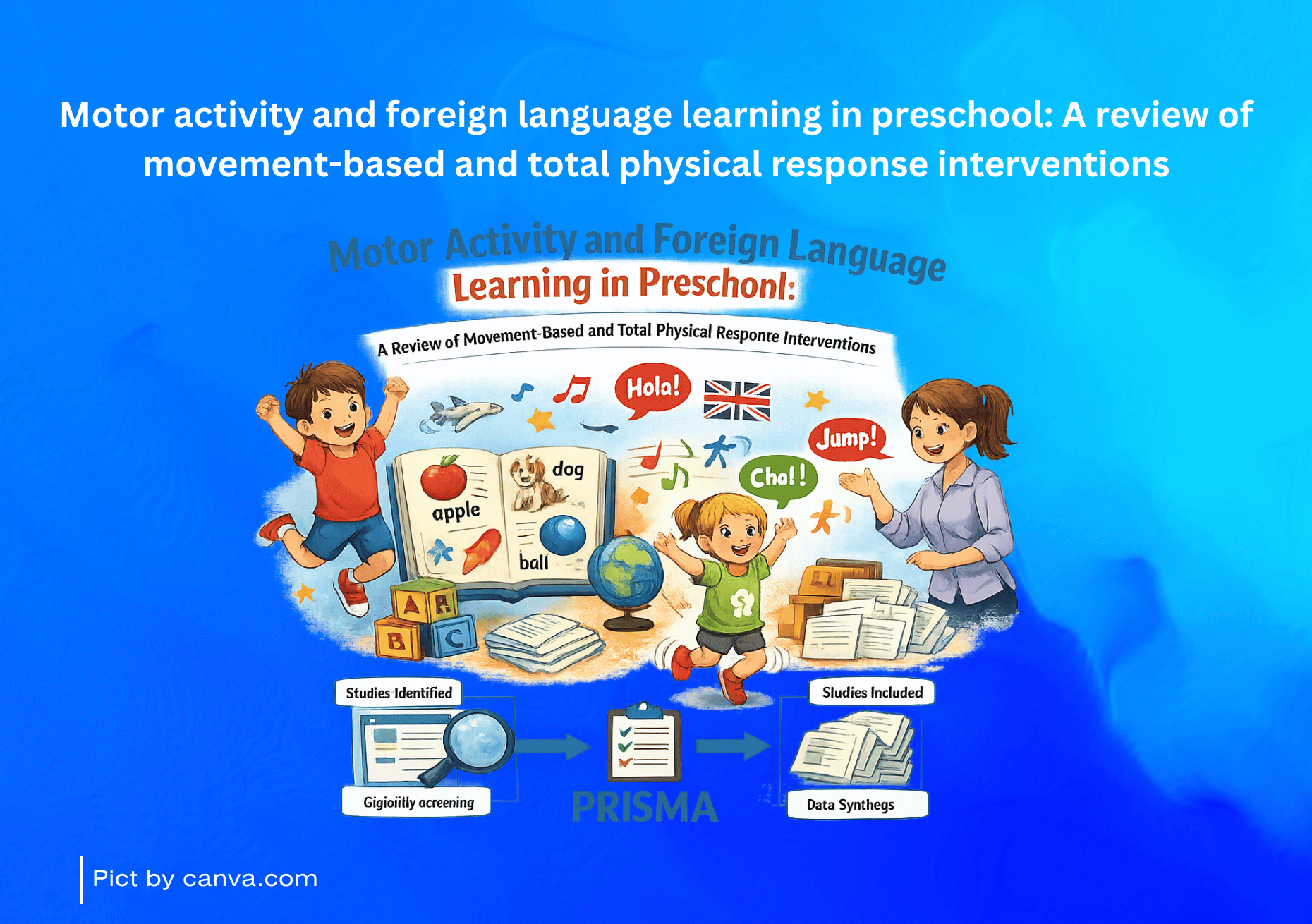
Motor activity and foreign language learning in preschool: A review of movement-based and total physical response interventions
Manuela Valentini1, Nausicaa Simone2, Alessandro Beretta31. Department of Humanities, University of Urbino Carlo Bo , IT2. Department of Humanities, University of Urbino Carlo Bo , IT3. Department of Humanities, University of Urbino Carlo Bo , IT2026-04-02|page 93-105AbstractBackground: Movement may support early foreign-language learning through embodied learning, but the preschool evidence base is fragmented.
Objective: To review empirical studies on movement-based and Total Physical Response (TPR) interventions for foreign-language learning in preschool children.
Method: This study employed a systematic review design based on PRISMA 2020 guidelines, involving database searches and citation tracking to identify empirical studies on movement-based and Total Physical Response (TPR) interventions in preschool foreign-language learning. Studies were screened using predefined eligibility criteria and appraised using the Mixed Methods Appraisal Tool (MMAT). Data from eligible studies were extracted and synthesized narratively due to methodological heterogeneity.
Results: Eight studies met the inclusion criteria. Across stronger controlled studies, semantically integrated movement generally produced more favorable vocabulary and verbal memory outcomes than sedentary teaching or less integrated movement. Evidence focused specifically on TPR was positive in terms of engagement and short-term learning, but methodologically heterogeneous and less robust.
Conclusion: Current preschool evidence supports the promise of integrated movement-based language teaching, particularly when movement is tightly aligned with instructional content. However, the evidence base remains small, largely limited to vocabulary-related outcomes, and further rigorous preschool trials are needed to clarify optimal implementation and the distinct contribution of TPR.APA Citation StyleValentini, M. , Simone, N. , & Beretta, A. (2026). Motor activity and foreign language learning in preschool: A review of movement-based and total physical response interventions. Physical Education and Sports: Studies and Research, 93-105. https://doi.org/10.56003/pessr.v5i1.694 -
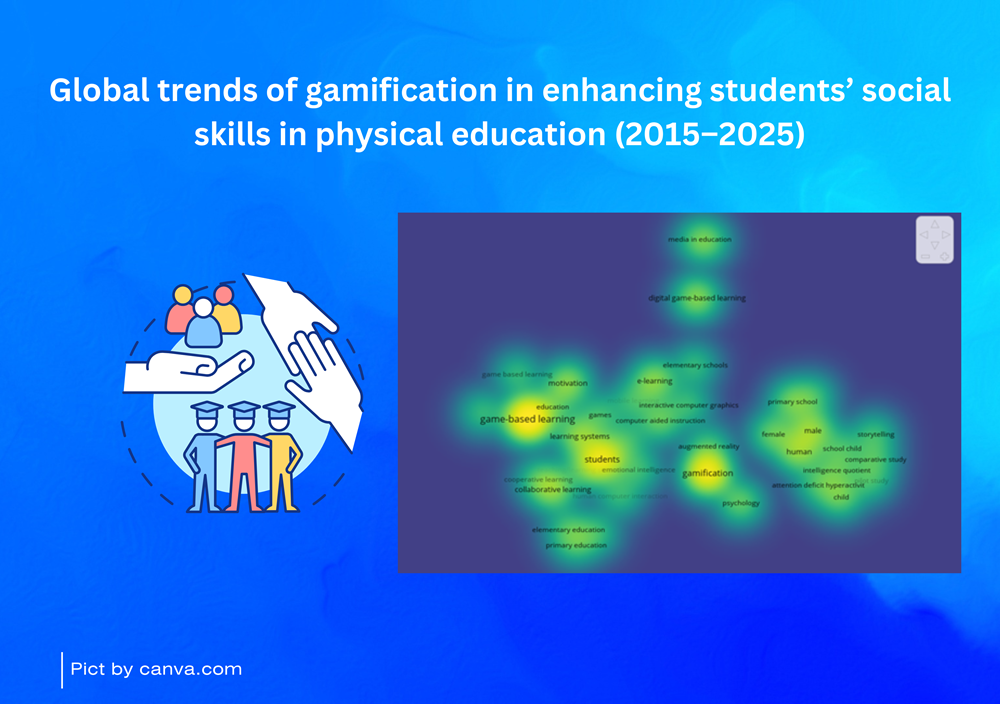
Global trends of gamification in enhancing students’ social skills in physical education (2015–2025)
Rajip Mustafillah Rusdiyanto1, Ari Wibowo Kurniawan21. State University of Malang , ID2. State University of Malang , ID2025-07-01|page 125-138AbstractBackground: The development of digital technology has triggered a more interactive learning transformation through gamification, namely using game elements to increase students' motivation, engagement, and social skills, such as cooperation, communication, empathy, and problem solving.
Objectives: This study aims to analyze global research trends on gamification in enhancing students' social skills, particularly in physical education, through a bibliometric analysis from 2015 to 2025.
Methods: This study employed a bibliometric design. Data were retrived from the Scopus database on April 22, 2025, using specific keywords: (gamification OR gamified learning OR game-base-based learning) AND ("physical education" OR "PE class" OR "sport education") AND (social skills" OR "social competence" OR "social interaction") AND (elementary school" OR "primary school" OR "midle school" OR "junior high school" OR "high school" OR "secondary school" From an initial 120 documents, 47 met the inclusion criteria. VOSViewer was used to analyze keyword co-occurrence, visualize trends, and identify thematic clusters by completely counting on all keywords with at least two documents per author.
Results: 47 relevant articles were identified, with publication peaking in 2020. Keyword analysis revealed five main thematic clusters: gamification in education, digital game-based learning, collaborative learning, emerging technologies, and motivation. The most frequent keywords were game-based learning (n=12), gamification (n=9), and students (n=8). The University of Patras emerged as the most productive institution, while the leading journal was the International Journal of Learning, Teaching and Educational Research.
Conclusions: Although research on gamification has grown significantly, its application in physical education remains underexplored. This study reveals a gap in leveraging gamification to develop students' social skills in physical education. Future research should focus on integrating gamification in this context while considering sociocultural and technological factors to ensure inclusive and effective implementation.
APA Citation StyleRusdiyanto, R. M. , & Kurniawan, A. W. (2025). Global trends of gamification in enhancing students’ social skills in physical education (2015–2025). Physical Education and Sports: Studies and Research, 125-138. https://doi.org/10.56003/pessr.v4i2.598 -

Coping Strategies of Students in the Online Teaching and Learning of Physical Education
Davidsol Mendoza11. Batangas State University , PH2023-04-20|page 10-25AbstractBackground: The emergence of Covid-19 pandemic has brought a lot of changes in the educational system of the country. As the new normal of teaching and learning arose, challenges did the same. There are the teachers and students who must adopt certain adjustments to cope up with the implications of online classroom just to acquire knowledge and reach the target learning without freezing the education.
Objectives: This study was conducted with the purpose of determining the problems encountered and the coping strategies of the students in the online teaching and learning of Physical Education.
Methods: This study is a descriptive quantitative type of research. Participants were 255 randomly selected students of PE 103-Individual and Dual Sports. In collection of data needed, the researchers utilized a survey questionnaire that contained questions about student’s experiences, students coping strategies, and problems encountered by the students in the online teaching teaching and learning of Physical Education.
Results: The results shows that most of the students strongly agreed with the instruction and assessment utilized by their PE instructors; in terms of students coping strategies, most of the students shows less interest in performing physical activities during online classes, and also most of the students engaged in listening to calming music to relax; and in terms of the problems that they have encountered, most of the students experienced problem with their online connections, and most of the students disagree that they have poor comprehensions during online classes.
Conclusion: It is concluded that within the experiences of students towards instruction, physical education instructors utilized digital platforms in discussing lessons and gave considerable time for the students to finish and submit all the assigned tasks. Students had engaged themselves in listening to calming music that helps them avoid stress during online learning but engaged less in doing an activity such as stretching for their physical health. Most of the students highly encountered difficulties towards internet connection during online individual and dual sports but they still have a high comprehension level.
APA Citation StyleMendoza, D. (2023). Coping Strategies of Students in the Online Teaching and Learning of Physical Education. Physical Education and Sports: Studies and Research, 10-25. https://doi.org/10.56003/pessr.v2i1.207 -
Association between ADHD symptom severity and motor activity in preschool children: A cross-sectional study
Adnan Faris Naufal1, Chevanya Diva Titania Davinci2, Anida Azkia Fitri31. Department of Physiotherapy, Faculty of Health Science, Universitas Muhammadiyah Surakarta , ID2. Department of Physiotherapy, Faculty of Health Science, Universitas Muhammadiyah Surakarta , ID3. Department of Physiotherapy, Faculty of Health Science, Universitas Muhammadiyah Surakarta , ID2026-08-24|page 220-232AbstractBackground: Attention-deficit/hyperactivity disorder (ADHD) is a neurodevelopmental disorder characterized by inattention, hyperactivity, and impulsivity. Objective measurement of motor activity may complement parent-reported assessment of ADHD symptoms.
Objectives: This study aimed to examine the association between ADHD Rating Scale-5 scores and step counts, used as an objective indicator of motor activity, among children aged 4–6 years.
Methods: A cross-sectional observational study was conducted among 110 children aged 4–6 years selected through purposive sampling. ADHD symptoms were assessed using the parent-completed ADHD Rating Scale-5, while step counts were measured using a digital pedometer during a 15-minute school recess. Data normality was assessed using the Kolmogorov–Smirnov test. Pearson's product–moment correlation was used to examine the association between total ADHD Rating Scale-5 scores and step counts, whereas Spearman's rank correlation was used for the Inattention and Hyperactivity–Impulsivity domain scores.
Results: Total ADHD Rating Scale-5 scores showed a very strong positive correlation with step counts (r = .865, p < .001). At the domain level, Inattention scores showed a strong positive correlation with step counts (ρ = .756, p < .001), while Hyperactivity–Impulsivity scores showed a very strong positive correlation (ρ = .818, p < .001).
Conclusions: Higher ADHD symptom scores were strongly associated with higher motor activity, as indicated by step counts, among preschool children. Step-count measurement may provide a simple objective measure that complements parent-reported assessment of ADHD symptoms; however, it should not be interpreted as a diagnostic measure for ADHD.
APA Citation StyleNaufal, A. F. , Davinci, C. D. T. , & Fitri, A. A. (2026). Association between ADHD symptom severity and motor activity in preschool children: A cross-sectional study. Physical Education and Sports: Studies and Research, 220-232. https://doi.org/10.56003/pessr.v5i2.777 -
Physical Activity Participation of Persons Deprived of Liberty in Santiago City District Jail, Philippines
Niño Nadera Baldonado1, Ana Maria Libao Demot2, Peter John Aguinaldo Villaflores3, Geneviv Gumpal Dayag4, Esperanza Leonidas Buado5, Christian Velasco Ramos6, Gil Vincent Tiaño Dela Cruz7, Rhealyn Galaus Martinez81. Don Mariano Marcos Memorial State University South La Union , PH2. Don Mariano Marcos Memorial State University South La Union , PH3. Philippine Normal University-North Luzon , PH4. Philippine Normal University-North Luzon , PH5. Philippine Normal University-North Luzon , PH6. Philippine Normal University-North Luzon , PH7. Philippine Normal University-North Luzon , PH8. Philippine Normal University-North Luzon , PH2022-07-07|page 91-106AbstractBackground: Physical activity in prison systems worldwide has been ignored for decades. The congested status of penal institutions around the country tends to breed unhealthy living conditions. Also, they are often deprived of physical activities due to limited opportunities. A person deprived of liberty means a person who has been arrested, held in lawful custody, detained, or imprisoned in execution of a lawful sentence.
Objectives: This study aims to determine the physical activities and the scale of physical activity satisfaction of persons deprived of liberty in Santiago City District Jail, Philippines.
Methods: This descriptive study utilized a survey of 140 randomly selected detainees and face-to-face interviews with 30 randomly chosen detainees. The questionnaire is divided into three parts: respondents' profiles, physical activities, and the scale of physical activity satisfaction. The interview method validated the results of the survey. Jacob G. Beard and Mounir G. Ragheb developed the Physical Activity Satisfaction Scale. It was adopted, validated, and used to determine the inmates' physical activity level of satisfaction.
Results: Findings show that most of the inmate-respondents are generally engaged in games or sports, dance, and other livelihood activities on an irregular basis. They also pronounced their satisfaction with their physical activities as they benefited from physiological, relaxational, educational, psychological, social, and aesthetic domains.
Conclusion: It can be concluded that games and sports activities are moderately and positively related to physical activities' psychological and relaxational domains of the inmates.
APA Citation StyleBaldonado, N. N. , Demot, A. M. L. , Villaflores, P. J. A. , Dayag, G. G. , Buado, E. L. , Ramos, C. V. , Cruz, G. V. T. D. , & Martinez, R. G. (2022). Physical Activity Participation of Persons Deprived of Liberty in Santiago City District Jail, Philippines. Physical Education and Sports: Studies and Research, 91-106. https://doi.org/10.56003/pessr.v1i2.114 -

Efforts to Improve the Physical Conditions of Banyuwangi Teenage and Junior Wrestling Athletes After Coronavirus Outbreak Covid-19
Surya Adi Saputra1, Rohmat Al Wafi2, Tatok Sugiarto31. State University of Malang , ID2. State University of Malang , ID3. State University of Malang , ID2022-04-17|page 38-50AbstractBackground: The decreased intensity of exercise accompanied by the absence of an exercise program aimed at maintaining physical condition during the COVID-19 outbreak caused the wrestling athletes of Camp Satria Perkasa Kedunggebang to experience a decrease in physical condition.
Objectives: This study aims to improve the physical quality of 20 athletes categorized according to their teens (ages 13-16 years) and juniors (ages 17-21 years), consisting of 14 males and 6 females.
Methods: The research method used is a quantitative research type within action sports research. In this sports action research, there are two cycles, and each cycle consists of 3 to 5 meetings, where each cycle consists of 4 stages, namely planning, action/treatment, observation/observation, and reflection.
Results: From the results of the tests that have been carried out, many athletes have managed to improve their speed quality as much as 70% of the total athletes, 75% agility quality, 85% strength component and 75% endurance.
Conclusion: That all components of the athlete's physical condition have successfully met the previously targeted success criteria.
APA Citation StyleSaputra, S. A. , Wafi, R. A. , & Sugiarto, T. (2022). Efforts to Improve the Physical Conditions of Banyuwangi Teenage and Junior Wrestling Athletes After Coronavirus Outbreak Covid-19. Physical Education and Sports: Studies and Research, 38-50. https://doi.org/10.56003/pessr.v1i1.106 -

The Impact of the Sports Education Athletic Season on the Learning Motivation as Supporters of the Kurikulum Merdeka
Agi Ginanjar1, Reni Anggraeni21. STKIP Nahdlatul Ulama Indramayu, Indonesia , ID2. Indonesian Institute of the Arts Denpasar, Indonesia , ID2024-03-12|page 1-9AbstractBackground: Physical education learning in Indonesia has had to switch to using the Kurikulum Merdeka which focuses more on students as the center of learning with project reports and project themes. Motivation is very important for students in following the learning process. Sport Education is a learning strategy that facilitates students and teachers with projects in the learning process and can increase student learning motivation.
Objectives: The aim of the research was to examine the influence of SE on learning motivation in MTs students.
Methods: The research method used in this research uses an experimental research method with a one-shot case study design. Participants in this research were 48 students at one of the MTs in Indramayu Regency. The instrument in this research used a student learning motivation questionnaire. The data analysis technique uses a one-sample t test.
Results: The results of this research obtained t count = 7.05 with Sig. 0.00 < 0.05, which means that there is an influence of SE on the learning motivation of MTs students.
Conclusion: This research concludes that there is an influence of SE on learning motivation in Junior High Schoolstudents.
APA Citation StyleGinanjar, A. , & Anggraeni, R. (2024). The Impact of the Sports Education Athletic Season on the Learning Motivation as Supporters of the Kurikulum Merdeka. Physical Education and Sports: Studies and Research, 1-9. https://doi.org/10.56003/pessr.v3i1.315 -

Comparative Analysis of Soccer and Futsal Extracurriculars: A Survey Study of Physical Fitness Profiles
Didi Suryadi1, Mikkey Anggara Suganda2, Makan Sacko3, Y. Touvan Juni Samodra4, Rubiyatno Rubiyatno5, Eka Supriatna6, Isti Dwi Puspita Wati7, Ardo Okilanda81. Tanjungpura University , ID2. Nahdlatul Ulama University Cirebon , ID3. Centre des Langues de Badalabougou , ML4. Tanjungpura University , ID5. Tanjungpura University , ID6. Tanjungpura University , ID7. Tanjungpura University , ID8. State University of Padang , ID2023-04-28|page 59-71AbstractBackground: Futsal and soccer are sports that require endurance and good physical fitness. However, the striking difference, especially in terms of the field used, causes various assumptions.
Objectives: The purpose of this study is to compare the levels of physical fitness required for futsal and soccer as extracurricular activities.
Methods: The Indonesian Physical Fitness Test (TKJI), In this study, a survey administered to extracurricular football and futsal players aged 13 to 15 was used as a quantitative method. Male students from two separate schools who were involved in extracurricular activities participated in this study, including soccer at State Junior High School 3 Sukadana, and futsal at Madrasah Tsanawiyah State 1 Pontianak. Applying a purposive sampling strategy to collect the sample, 20 futsal extracurricular students and 20 soccer extracurricular students were obtained. The SPSS version 26 program was used to aid in the data analysis for this investigation.
Results: According to the study's findings, the average physical fitness score for soccer extracurricular was 15.1, while the average for futsal extracurricular was 11.75. Additionally, the significance value is 0.000 0.05, demonstrating a significant distinction between football and futsal as extracurricular activities.
Conclusion: The study on the degree of physical fitness in extracurricular futsal and football found that there is a big gap. These preliminary results might improve understanding of student fitness developments among exercise professionals.
APA Citation StyleSuryadi, D. , Suganda, M. A. , Sacko, M. , Samodra, Y. T. J. , Rubiyatno, R. , Supriatna, E. , Wati, I. D. P. , & Okilanda, A. (2023). Comparative Analysis of Soccer and Futsal Extracurriculars: A Survey Study of Physical Fitness Profiles. Physical Education and Sports: Studies and Research, 59-71. https://doi.org/10.56003/pessr.v2i1.182 -

Survey of Interest and Talent in Participating in Aerobic Gymnastics on the Nusantara Aerobic Gymnastics Team in 2021
Arum Dwi Masruroh1, Puspodari2, Reo Prasetiyo Herpandika31. Universitas Nusantara PGRI Kediri , ID2. Universitas Nusantara PGRI Kediri , ID3. Universitas Nusantara PGRI Kediri , ID2022-04-07|page 29-37AbstractBackground: The background of this research is based on the results of the researchers' observations, namely the Nusantara aerobics gymnastics team that has not been able to recruit new members from other majors and the uneven development of aerobic gymnastics talent possessed by members.
Objectives: This study aimed to determine the level of interest and talent in aerobics among members of the Nusantara Aerobics Gymnastics Team in 2021.
Methods: This study used a quantitative descriptive approach with a survey method. The subjects in this study were members of the Nusantara Aerobics Gymnastics Team, which consisted of 30 members. The sampling technique used is total sampling because the number of members is relatively small. The data collection technique used an instrument in the form of a questionnaire for interest data and a potential talent test in a sports search. The data analysis technique is in the form of a percentage using Microsoft Excel 2016 and SPSS v.23 software for windows.
Results: Based on the study results and the results of the analysis, it can be seen that the level of interest in participating in aerobic exercise on the Aerobic Gymnastics Team is included in the very high category with a percentage score range of 90% - 100%. While the aerobic gymnastics talent possessed by members of the Aerobics Gymnastics Team can be seen in the results, namely, five members are classified as potential with a percentage of 16.7%, nine members are quite potential with a percentage of 30%, 13 members are classified as less potential with a percentage 43.3%, and three members are classified as not potential with a percentage of 10%.
Conclusion: In conclusion, the interest of the Nusantara Aerobics gymnastics team members is very high, but they are less talented.
APA Citation StyleMasruroh, A. D. , Puspodari, P. , & Herpandika, R. P. (2022). Survey of Interest and Talent in Participating in Aerobic Gymnastics on the Nusantara Aerobic Gymnastics Team in 2021. Physical Education and Sports: Studies and Research, 29-37. https://doi.org/10.56003/pessr.v1i1.94





















