
Search
Search Results
##search.searchResults.foundPlural##
-

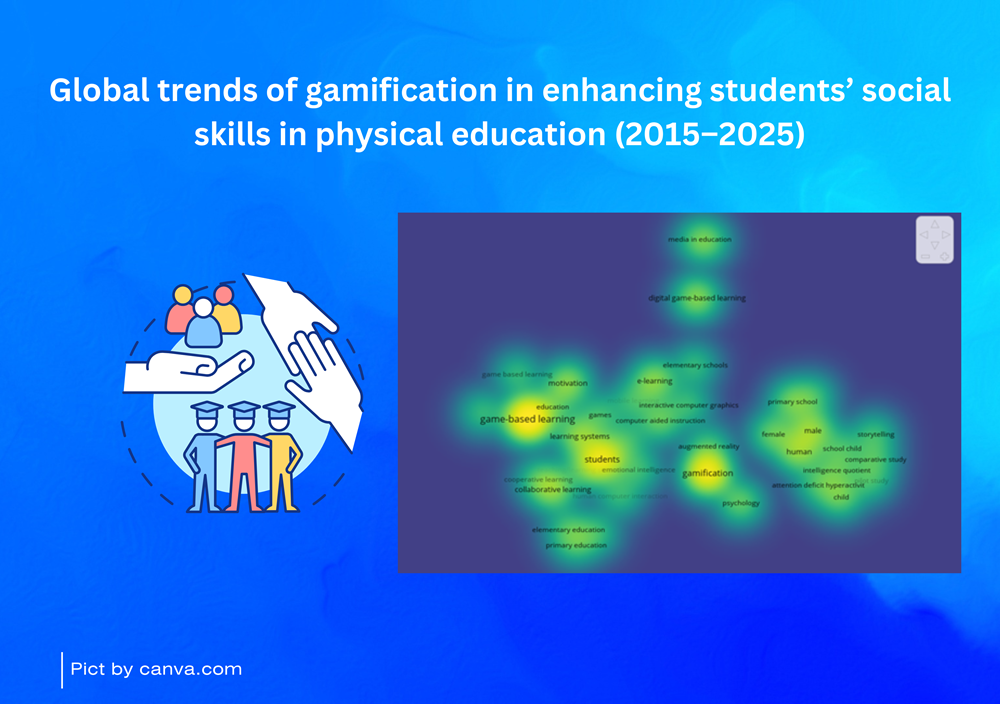
Global trends of gamification in enhancing students’ social skills in physical education (2015–2025)
Rajip Mustafillah Rusdiyanto1, Ari Wibowo Kurniawan21. State University of Malang , ID2. State University of Malang , ID2025-07-01|page 125-138AbstractBackground: The development of digital technology has triggered a more interactive learning transformation through gamification, namely using game elements to increase students' motivation, engagement, and social skills, such as cooperation, communication, empathy, and problem solving.
Objectives: This study aims to analyze global research trends on gamification in enhancing students' social skills, particularly in physical education, through a bibliometric analysis from 2015 to 2025.
Methods: This study employed a bibliometric design. Data were retrived from the Scopus database on April 22, 2025, using specific keywords: (gamification OR gamified learning OR game-base-based learning) AND ("physical education" OR "PE class" OR "sport education") AND (social skills" OR "social competence" OR "social interaction") AND (elementary school" OR "primary school" OR "midle school" OR "junior high school" OR "high school" OR "secondary school" From an initial 120 documents, 47 met the inclusion criteria. VOSViewer was used to analyze keyword co-occurrence, visualize trends, and identify thematic clusters by completely counting on all keywords with at least two documents per author.
Results: 47 relevant articles were identified, with publication peaking in 2020. Keyword analysis revealed five main thematic clusters: gamification in education, digital game-based learning, collaborative learning, emerging technologies, and motivation. The most frequent keywords were game-based learning (n=12), gamification (n=9), and students (n=8). The University of Patras emerged as the most productive institution, while the leading journal was the International Journal of Learning, Teaching and Educational Research.
Conclusions: Although research on gamification has grown significantly, its application in physical education remains underexplored. This study reveals a gap in leveraging gamification to develop students' social skills in physical education. Future research should focus on integrating gamification in this context while considering sociocultural and technological factors to ensure inclusive and effective implementation.
APA Citation StyleRusdiyanto, R. M. , & Kurniawan, A. W. (2025). Global trends of gamification in enhancing students’ social skills in physical education (2015–2025). Physical Education and Sports: Studies and Research, 125-138. https://doi.org/10.56003/pessr.v4i2.598 -
Analyzing the promotion of social skills and values in physical education texts and programmes
Loubna Belabbes1, Omar Ben Rakaa2, Moulay Smail Hafidi Alaoui31. Mohammed-V University , MA2. Hassan II University of Casablanca , MA3. Mohammed-V University , MA2025-12-12|page 275-290AbstractBackground: Global education systems increasingly emphasize holistic development by integrating social skills and ethical values into curricula, with physical education playing a central role in shaping students' cognitive, emotional, and civic competencies.
Objectives: This study examines how educational programs and policy documents promote social skills (e.g., empathy, communication, collaboration, autonomy) and ethical principles, with particular attention to the contribution of physical education in fostering academic achievement and responsible citizenship.
Methods: A structured literature review was conducted, applying predefined eligibility criteria and guided by socio-emotional learning and self-determination theory. Forty-five academic and institutional texts (published between 2013 and 2023), including frameworks from UNESCO and the Moroccan Ministry of Education, as well as programs such as PATHS and Second Step, were analyzed across diverse linguistic and cultural contexts, with a primary focus on Morocco.
Results: Communication (11.11%; 5/45), autonomy (8.89%; 4/45), and cooperation (8.89%; 4/45) emerged as the most frequently emphasized competencies in both Moroccan and international curricula. Physical education was found to reinforce resilience, leadership, and collaborative skills, whereas empathy (4.44%; 2/45) remained underrepresented—reflecting the prevailing prioritization of technical rather than socio-emotional competencies. Implementation remains constrained by structural barriers, including limited resources and cultural misalignment, despite the legislative support of Morocco's framework law 51-17.
Conclusions: Embedding social skills within physical education supports students' holistic development. Achieving meaningful implementation requires: (1) short-term alignment of system-level policies and teacher training, and (2) long-term cultural adaptation of programs supported by measurable monitoring indicators.APA Citation StyleBelabbes, L. , Ben Rakaa, O. , & Alaoui, M. S. H. (2025). Analyzing the promotion of social skills and values in physical education texts and programmes. Physical Education and Sports: Studies and Research, 275-290. https://doi.org/10.56003/pessr.v4i3.493 -
First Aid Skills of Pre-Service Physical Education Teachers at Batangas State University
Davidsol Mendoza1, Mauricio Atienza Junior2, Kyla Marie Torino Maralit3, Chino Randel Odello41. Batangas State University-Pablo Borbon , PH2. Batangas State University , PH3. Batangas State University , PH4. Batangas State University , PH2023-10-31|page 83-99AbstractBackground: The researchers believe acquiring knowledge and first aid skills can improve the instruction of Physical Education. Thus, no matter how proactive a teacher can be, there will be possibilities that an unnecessary situation may occur because it is movement education.
Objectives: The study aimed to determine the first aid skills of pre-service physical education teachers at Batangas State University. Specifically, the study determined the respondents' extent of manifestation of competencies in providing first aid skill components as assessed by the instructors and students, along with cardiopulmonary resuscitation, management of bleeding, and fracture. The study also compares the responses of the two groups of respondents. The issues and challenges in developing first aid skills were also ascertained to propose training activities to intensify students' skills and competencies.
Methods: This study used descriptive research and a researcher-made questionnaire to gather data from 186 participants, including 159 physical education students and 27 teachers from Batangas State University during the 2021-2022 academic year.
Results: The study found that students had moderate competency in applying CPR, recognizing victim situations, and performing two rescue breaths correctly. Similarly, students had moderate competency in managing bleeding and identifying fracture types. However, the two groups of respondents had no significant difference in competency. The biggest challenge identified by students was the need for more training and workshops related to first aid, while linguistic barriers and inconsistent training were less significant challenges.
Conclusion: The findings show that Bachelor of Physical Education students greatly manifest first aid skills in CPR, managing bleeding, and treating fractures but need improvements in specific competencies. There was no significant difference in the assessment between the two groups of respondents. However, attendance to training and workshops was the primary issue and challenge in developing the first aid skills of BPEd students.
APA Citation StyleMendoza, D. , Junior, M. A. , Maralit, K. M. T. , & Odello, C. R. (2023). First Aid Skills of Pre-Service Physical Education Teachers at Batangas State University. Physical Education and Sports: Studies and Research, 83-99. https://doi.org/10.56003/pessr.v2i2.208 -
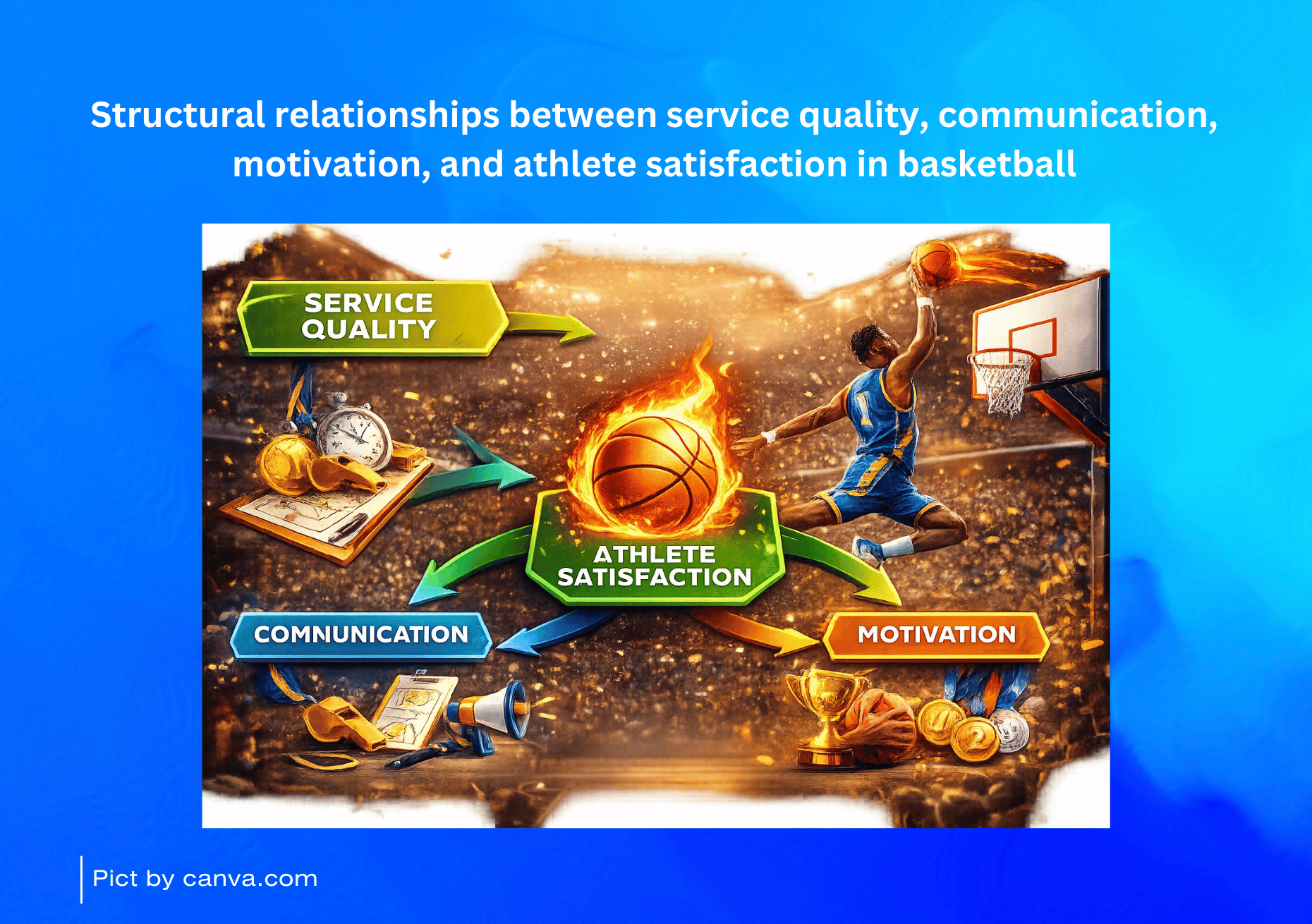
Structural relationships between service quality, communication, motivation, and athlete satisfaction in basketball Indonesia
Fajar Gumilang H.M1, Agung Nugroho2, Rumpis Agus Sudarko3, Fauzi Fauzi4, Fajar Sriwahyuniati51. Yogyakarta State University , ID2. Yogyakarta State University , ID3. Yogyakarta State University , ID4. Yogyakarta State University , ID5. Yogyakarta State University , ID2026-04-09|page 113-124AbstractBackground: Many basketball clubs aim to enhance athlete satisfaction through service quality, communication, and motivation; however, empirical evidence validating these factors as measurable constructs remains limited.
Objectives: This study examines whether these variables function as latent constructs influencing athlete satisfaction and validates their measurement structure using confirmatory factor analysis.
Methods: This study used a quantitative survey and included 263 basketball athletes from various clubs in Sidoarjo, comprising 110 males and 153 females. The participant characteristics focused on players still in the developmental stage who had been actively participating in club training programs for 3 to 6 months, with educational levels ranging from junior high school to college. Participants were selected using purposive sampling. Data were collected using a valid and reliable Likert-scale questionnaire and analyzed using Structural Equation Modeling (SEM) via AMOS 22.
Results: The results demonstrate that service quality (β=0.337, ????=0.000) and communication (β=0.439, ????=0.000) significantly enhance motivation. Furthermore, motivation significantly affects athlete satisfaction (β = 0.582, ???? = 0.000). Crucially, the analysis confirms that motivation mediates the relationship between service quality (indirect effect=0.139) and communication (indirect effect=0.240) on satisfaction.
Conclusions: Theoretically, this study confirms motivation as a vital psychological mediator linking managerial inputs to athlete satisfaction. In practice, the findings demonstrate that while high-quality physical facilities provide a necessary structural foundation, they must be integrated with effective, supportive coaching communication to optimally ignite athletes' intrinsic drive and maximize their overall club experience.APA Citation StyleH.M, F. G. , Nugroho, A. , Sudarko, R. A. , Fauzi, F. , & Sriwahyuniati, F. (2026). Structural relationships between service quality, communication, motivation, and athlete satisfaction in basketball: Indonesia. Physical Education and Sports: Studies and Research, 113-124. https://doi.org/10.56003/pessr.v5i1.691 -
Predictors of cardiorespiratory endurance in martial arts athletes: A path analysis of body composition, hemoglobin, and motivation
Novanto Ponco Nugroho 1, Dani Nur Riyadi2, Aridhotul Haqiyah31. Universitas Islam 45 Bekasi , ID2. Universitas Islam 45 Bekasi , ID3. Universitas Islam 45 Bekasi , ID2025-07-01|page 83-94AbstractBackground: Cardiorespiratory endurance is vital to athletic performance, particularly in sports requiring sustained physical exertion such as martial arts.
Objectives: This study examined the predictive roles of body composition (BMI), hemoglobin concentration, and motivation on cardiorespiratory endurance among university-level martial arts athletes.
Methods: Using a quantitative path analysis design, data were collected from 20 purposively selected martial arts athletes who regularly trained. Cardiorespiratory endurance was assessed via the multistage fitness test, BMI was calculated using standard anthropometric measures, hemoglobin was measured using the Harenz scale, and motivation was evaluated with a validated Likert-scale questionnaire.
Results: The analysis showed that BMI (ρ = 0.705, t = 3.071, p = 0.007) and hemoglobin concentration (ρ = 0.946, t = 4.672, p < 0.001) had significant positive effects on cardiorespiratory endurance. Motivation, however, did not have a significant direct effect (ρ = 0.087, t = 0.853, p = 0.203). Additionally, BMI correlated positively with both hemoglobin (ρ = 0.923, p < 0.001) and motivation (ρ = 0.670, p = 0.034), suggesting indirect effects through physiological mechanisms.
Conclusions: The findings underscore that physiological indicators, specifically BMI and hemoglobin, are more critical predictors of aerobic capacity than psychological factors like motivation in this athletic population. Due to sport-specific demands, these results may not be generalizable to non-martial arts athletes. Future studies should incorporate additional mediators such as training intensity and account for potential self-report bias in motivation assessments.
APA Citation StyleNugroho , N. P. , Riyadi, D. N. , & Haqiyah, A. (2025). Predictors of cardiorespiratory endurance in martial arts athletes: A path analysis of body composition, hemoglobin, and motivation. Physical Education and Sports: Studies and Research, 83-94. https://doi.org/10.56003/pessr.v4i2.559





















