
Vol. 2 No. 2 (2023): Physical Education and Sports: Studies and Research

Physical Education and Sports: Studies and Research (PESSR), Volume 2, Number 2 (2023), features 6 scientific publications, comprising 5 original research articles and 1 literature reviews, with 18 authorship contributions representing 18 individual researchers from 3 countries.
The geographical distribution of author affiliations covers Indonesia (8 author contributions), the Philippines (5), and Italy (5). These contributions represent 10 academic, educational, and professional institutions across 3 countries.
Institutional affiliations in Indonesia include Universitas Pendidikan Ganesha (4 author contributions, Bali), STKIP PGRI Trenggalek (2, East Java), Universitas PGRI Banyuwangi (1, East Java), and Universitas Sebelas Maret (1, Central Java).
International institutional affiliations include Batangas State University (4 author contributions) and Sta. Catalina National High School, Department of Education (1) in the Philippines; and the Catholic University of the Sacred Heart in Milan (1), University of Foggia (2), Italian Football Doctors Association (1), and University of Salento (1) in Italy.
This issue reflects international scholarly contributions covering physical education pedagogy, sports coaching, motor performance assessment, injury prevention education, and instructional innovation. The published studies address project-based learning assisted by flashcards in Pencak Silat, first aid skills among pre-service physical education teachers, video-based presentations in physical education, modern pedagogical approaches, functional movement screening among professional and elite youth soccer players, and drill- and game-based approaches to improving volleyball skills.
Published:
2023-10-31
Original Research
-


The Effect of Project Based Learning Assisted with Flashcards towards Students’ Learning Outcomes in Learning Pencak Silat
I Gede Suwiwa1, I Ketut Budaya Astra2, I Ketut Yoda3, I Made Satyawan41. Ganesha University of Education , ID2. Ganesha University of Education , ID3. Ganesha University of Education , ID4. Ganesha University of Education , ID|867 views | 556 downloads | page 72-82AbstractBackground: Motion-based learning, especially Pencak Silat material taught at the Senior High School level always presents challenges for Physical Education (PE) Teachers.
Objectives: This study aimed to investigate the effect of project-based learning assisted with flashcards on students’ learning outcomes in learning Pencak Silat.
Methods: Quasi-experimental was used as a research design by conducting pretest and posttest. There were 312 eleventh-grade students in this study, which was conducted at Senior High School of Laboratorium Universitas Pendidikan Ganesha (Undiksha) and Senior High School 1 Sukasada. A simple random sampling technique was performed to select the sample of this study. One hundred twenty students were chosen as a research sample and divided into experimental and control groups. The data were collected by conducting pre-tests and post-tests. The instrument used in this study was the basic attitudes test of Pencak Silat. The collected data were analyzed quantitatively through inferential statistics (independent sample t-test) with the assistance of SPSS 22.
Results: The results showed a significant difference between the post-test gained by the experimental group treated by project-based learning assisted with flashcards and the control group treated by conventional education. Sig proved it. (2-tailed) the post-test data was 0.01, indicating that the significant value was less than 0.05 as consideration. The effect size found through the calculation of Eta Squared proposed by Cohen was 0.08, categorized as a high level.
Conclusion: It could be concluded that there was an effect of project-based learning assisted with flashcards towards students’ learning outcomes in learning Pencak Silat since this study is focused on learning.
APA Citation StyleSuwiwa, I. G. , Astra, I. K. B. , Yoda, I. K. , & Satyawan, I. M. (2023). The Effect of Project Based Learning Assisted with Flashcards towards Students’ Learning Outcomes in Learning Pencak Silat. Physical Education and Sports: Studies and Research, 2(2), 72-82. https://doi.org/10.56003/pessr.v2i2.235 -
First Aid Skills of Pre-Service Physical Education Teachers at Batangas State University
Davidsol Mendoza1, Mauricio Atienza Junior2, Kyla Marie Torino Maralit3, Chino Randel Odello41. Batangas State University-Pablo Borbon , PH2. Batangas State University , PH3. Batangas State University , PH4. Batangas State University , PH|4098 views | 1698 downloads | page 83-99AbstractBackground: The researchers believe acquiring knowledge and first aid skills can improve the instruction of Physical Education. Thus, no matter how proactive a teacher can be, there will be possibilities that an unnecessary situation may occur because it is movement education.
Objectives: The study aimed to determine the first aid skills of pre-service physical education teachers at Batangas State University. Specifically, the study determined the respondents' extent of manifestation of competencies in providing first aid skill components as assessed by the instructors and students, along with cardiopulmonary resuscitation, management of bleeding, and fracture. The study also compares the responses of the two groups of respondents. The issues and challenges in developing first aid skills were also ascertained to propose training activities to intensify students' skills and competencies.
Methods: This study used descriptive research and a researcher-made questionnaire to gather data from 186 participants, including 159 physical education students and 27 teachers from Batangas State University during the 2021-2022 academic year.
Results: The study found that students had moderate competency in applying CPR, recognizing victim situations, and performing two rescue breaths correctly. Similarly, students had moderate competency in managing bleeding and identifying fracture types. However, the two groups of respondents had no significant difference in competency. The biggest challenge identified by students was the need for more training and workshops related to first aid, while linguistic barriers and inconsistent training were less significant challenges.
Conclusion: The findings show that Bachelor of Physical Education students greatly manifest first aid skills in CPR, managing bleeding, and treating fractures but need improvements in specific competencies. There was no significant difference in the assessment between the two groups of respondents. However, attendance to training and workshops was the primary issue and challenge in developing the first aid skills of BPEd students.
APA Citation StyleMendoza, D. , Junior, M. A. , Maralit, K. M. T. , & Odello, C. R. (2023). First Aid Skills of Pre-Service Physical Education Teachers at Batangas State University. Physical Education and Sports: Studies and Research, 2(2), 83-99. https://doi.org/10.56003/pessr.v2i2.208 -

Improving Learning Performance in Physical Education through Video-Based Presentations (VBP) Approach
Carla Jobelle Culajara11. Sta. Catalina National High School, Department of Education , PH|2043 views | 884 downloads | page 100-115AbstractBackground: Technology plays a pivotal role in the learning and teaching process. Technology has become a powerful tool for enhancing students' performance in Physical Education. The study aims to assess the effect of video-based presentations on students' physical education learning performance.
Objectives: The study aims to assess the effects of video-based presentations as an intervention tool in enhancing students' performance. Specifically, this is to answer the following objectives: (1) mean scores in the pre-test and post-test, (2) significant difference between before and after intervention, and (3) student's experiences in using video-based presentations in the learning performance in physical education.
Methods: The researcher used a sequential mixed-method research design with a one-group pre-test and post-test design, which was participated by 52 students in one of the secondary schools in the Philippines and five students in the focus group discussion. Purposive sampling was used to choose the participants to assess the effect of the video-based presentations. JASP Software was used to analyze the data.
Results: Based on the result, the study shows that before the intervention, students needed more knowledge and more participation in the discussion. However, utilizing the intervention indicates that the video-based presentation significantly affects students' learning performance, which shows that the video-based presentation has a positive impact on the students' learning performance. Moreover, two themes emerged in the focus group discussion: independent learning and flexible instruction.
Conclusion: As education becomes man's equalizer, students must adopt 21st-century skills, and through the intervention used, this will pave the way for developing their capabilities and skills in the education trends. This implies that with the progressive world facing the ever-changing education landscape, teachers must have the desire to build their technological capabilities by upskilling and retooling their innovativeness and creativity in delivering instructions.
APA Citation StyleCulajara, C. J. (2023). Improving Learning Performance in Physical Education through Video-Based Presentations (VBP) Approach. Physical Education and Sports: Studies and Research, 2(2), 100-115. https://doi.org/10.56003/pessr.v2i2.251 -
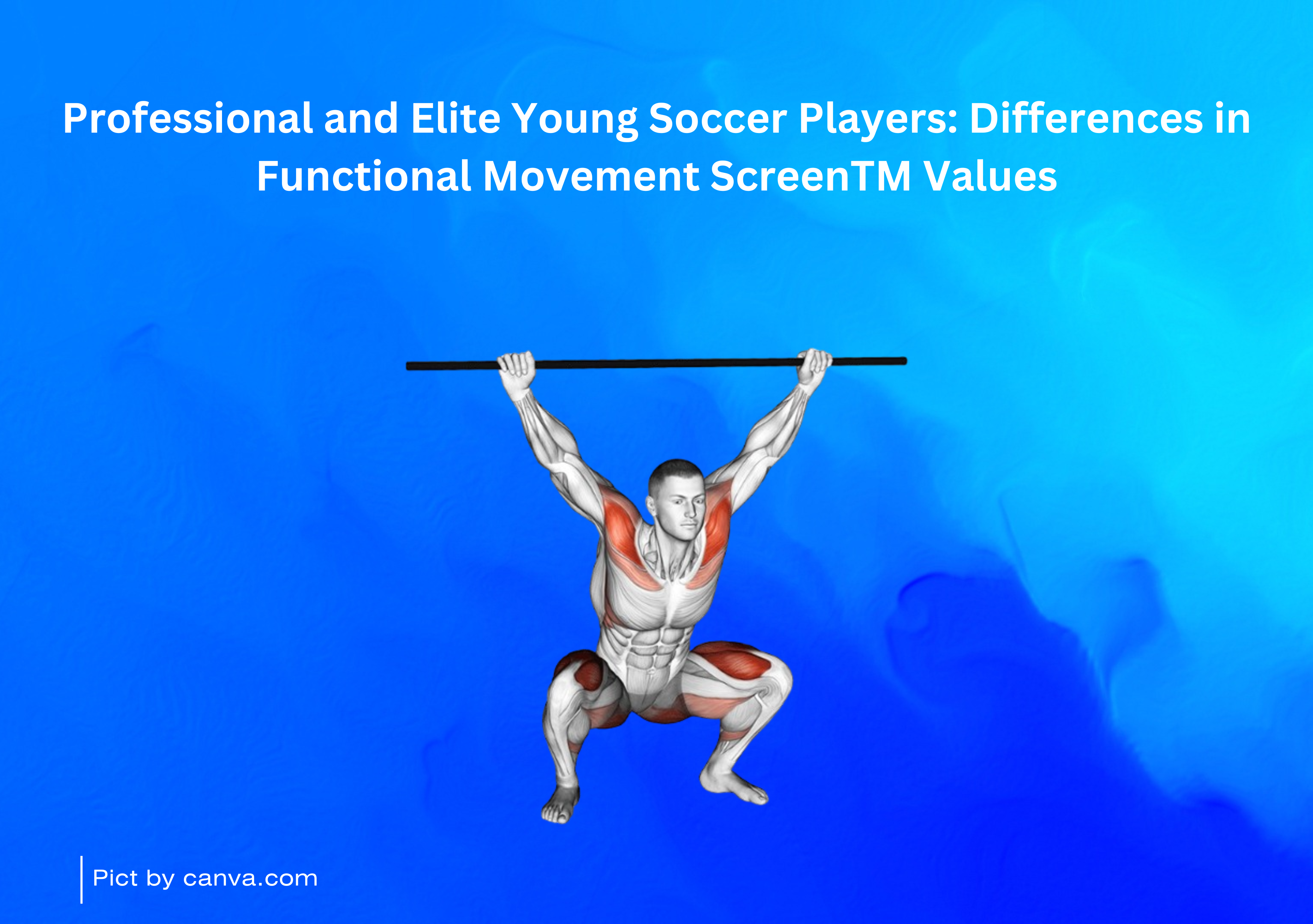
Professional and Elite Young Soccer Players: Differences in Functional Movement ScreenTM Values
Italo Sannicandro1, Giacomo Cofano2, Rosario D'Onofrio3, Andrea Piccinno41. Clinical and Experimental Medicine Department, University of Foggia , IT2. Master degree in Sciences and techniques of preventive and adapted motor activities, University of Foggia; Professional Soccer Strenght and Conditioning , IT3. Member of the Medical-Scientific Multidisciplinary Commission, Italian Football Doctors Association - L.A.M.I.CA. , IT4. Master degree in Motor Sciences, University of Salento, Lecce , IT|2117 views | 406 downloads | page 116-125AbstractBackground: Soccer is a sport that requires very complex movements performed at high speeds: running, jumping, decelerating, changing direction or running direction, and kicking are complex movements that require high control and significant joint stability at all ages. Control of the body and individual body districts becomes important for both performance and injury prevention.
Objective: This study aims to verify the Functional Movement Screen (FMSTM) values in different categories of players, from the youth leagues to professional soccer players.
Methods: A sample of soccer players (n=112) took part in the study. The sample was subdivided according to their category, resulting in the following subgroups: a) professional soccer players (PSP, n=56,), Under 19 - Primavera (U19, n=29), Under 17 (U17, n=27). The FMS protocol was used to assess the seven functional movements and the associated risk of non-contact injury.
Results: Statistically significant differences emerged in the total scores between the U17 group and the PSP group (14.8±2.9 vs 19.1±1.4, p<0.01), between the U17 group and the Under 19 - Primavera group (14.8±2.9 vs 16.2±2.1, p<0.05) and between the Under 19 - Primavera group and the PSP (16.2±2.1 vs 19.1±1.4, p<0.01).
Conclusion: The values obtained show that young soccer players have a very different qualitative control of movement than highly qualified players. This study shows significant differences not only between the total scores, but more importantly between the individual 7 assessment tests that the FMS protocol includes: these values provide insight into which movements should receive more attention in athletic conditioning in the youth sector.
APA Citation StyleSannicandro, I. , Cofano, G. , D'Onofrio, R. , & Piccinno, A. (2023). Professional and Elite Young Soccer Players: Differences in Functional Movement ScreenTM Values. Physical Education and Sports: Studies and Research, 2(2), 116-125. https://doi.org/10.56003/pessr.v2i2.269 -
The Impact of Drill Exercise and Games Approach on Improving Under-Passing Ability in Adolescent Female Volleyball Athletes
Dwi Khoirudin1, Henri Gunawan Pratama2, Danang Ari Santoso3, Baskoro Nugroho Putro41. STKIP PGRI Trenggalek, Indonesia , ID2. STKIP PGRI Trenggalek, Indonesia , ID3. Universitas PGRI Banyuwangi, Indonesia , ID4. Universitas Sebelas Maret Surakarta, Indonesia , ID|1573 views | 523 downloads | page 142-151AbstractBackground: A long-term training process is required to train athletes, which requires systematic, targeted, planned, and repetitive handling. Training methods improve the mastery of fundamental techniques for beginner athletes. Training volleyball methods are essential for beginners as they make the exercise more focused and gradual to improve their under-passing. Coach training methods make it easier to give practical and concentrated exercises to the areas you want to enhance.
Objective: The study aims to determine whether drill exercise and game approach can significantly improve female athletes' use of under-passing volleyball.
Methods: With the type of research being Quasi-Experimental. The research design used was Randomized Control Group Pretest-Posttest Design. A total of 24 athletes were given treatment for two months. The instrument used was the Braddy Volleyball Test, and data analysis used the T-Test.
Results: Results for the drill exercise experimental group were 0.695 > 0.05, and for the experimental group, the playing method was 0.695 > 0.05. This means that drill exercises and game approaches significantly improve the skills of passing volleyball.
Conclusion: In experimental groups, I and II, athletes who were given a drill exercise program and game approach both improved their skills in the basic techniques of skills under-passing volleyball. The average posttest results of both groups of experiments are higher than the average pretest results. It shows a difference between the drill exercise program and the game approach.
APA Citation StyleKhoirudin, D. , Pratama, H. G. , Santoso, D. A. , & Putro, B. N. (2023). The Impact of Drill Exercise and Games Approach on Improving Under-Passing Ability in Adolescent Female Volleyball Athletes. Physical Education and Sports: Studies and Research, 2(2), 142-151. https://doi.org/10.56003/pessr.v2i2.276

Literature Reviews
-

A Modern Pedagogical Approach in The Subject of Physical Education
Ferdinando Cereda11. The Catholic University of the Sacred Heart in Milan , IT|2414 views | 937 downloads | page 126-141AbstractBackground: The pedagogical paradigm (PP) is a complex framework encompassing various pedagogical elements integral to the instructional and educational process. These paradigms manifest in diverse forms without entirely replacing their precursor frameworks, as they are built upon established principles and concepts. Understanding the architectural structure of each paradigm is crucial in distinguishing these pedagogical models.
Objective: This exposition aims to provide a rationale for the integration of the pedagogical paradigm within the realm of PE.
Methods: In the literature review, the EBSCO database was utilized via SPORTDiscus. This theoretical review draws upon various scholarly sources, including Taylor and Francis, ERIC, Scopus, Google Scholar These repositories provide a global perspective, with the majority of references selected from the decade leading up to the onset of the pandemic.
Results: The literature analysis reveals the intricate nature of pedagogical paradigms and their importance in the field of PE. It underscores the need for instructors to adapt their teaching approaches to meet the specific needs of students based on their age and developmental stage. The integration of the pedagogical paradigm within PE is proposed as a valuable concept to enhance the quality of physical education programs.
Conclusion: The incorporation of the PP into the domain of PE holds promise for improving the effectiveness of PE instruction. This review, based on a thorough examination of pertinent literature, highlights the relevance of PP in adapting teaching methodologies to suit the diverse needs of students. While this study does not provide empirical evidence, it lays the theoretical groundwork for future research and practical applications in the field of PE. Further investigations and practical implementations are warranted to assess the feasibility and benefits of incorporating PP within PE instruction.
APA Citation StyleCereda, F. (2023). A Modern Pedagogical Approach in The Subject of Physical Education. Physical Education and Sports: Studies and Research, 2(2), 126-141. https://doi.org/10.56003/pessr.v2i2.265




















