
Search
Search Results
##search.searchResults.foundPlural##
-

Associations of lower limb muscle strength and body reaction time with crescent kick performance in competitive pencak silat athletes
Jery Setiawan1, Siti Baitul Mukarromah21. State University of Semarang , ID2. State University of Semarang , ID2026-08-17|page 208-219AbstractBackground: Crescent kick performance is an important technical component of competitive pencak silat and may be associated with physical capacities such as lower limb muscle strength and reaction time. However, evidence regarding the relationships of these physical characteristics with crescent kick performance remains limited.
Objectives: This study aimed to examine the associations of lower limb muscle strength and body reaction time with crescent kick performance among competitive pencak silat athletes.
Methods: This quantitative correlational study involved 30 competitive pencak silat athletes (age: 19.8 ± 2.1 years; height: 168.4 ± 6.3 cm; body mass: 61.7 ± 8.2 kg; body mass index: 21.7 ± 2.3 kg/m²) recruited using total sampling. Lower limb muscle strength was assessed using a leg dynamometer, body reaction time using a reaction timer, and crescent kick performance using a 10-second crescent kick test. Data were analyzed using descriptive statistics, Pearson correlation, and multiple correlation analysis, with statistical significance set at p < .05.
Results: Lower limb muscle strength was positively associated with crescent kick performance (r = 0.734, p < .001), whereas body reaction time was negatively associated with crescent kick performance (r = -0.739, p < .001), indicating that shorter reaction times were associated with better kick performance. Multiple correlation analysis showed a strong combined association of lower limb muscle strength and body reaction time with crescent kick performance (R = 0.754, R² = 0.568, p < .001). Together, these variables accounted for 56.8% of the variance in crescent kick performance.
Conclusions: Greater lower limb muscle strength and shorter body reaction time were associated with better crescent kick performance among competitive pencak silat athletes. These findings highlight the relevance of muscular strength and neuromuscular responsiveness to crescent kick performance and may inform physical conditioning programs for pencak silat athletes. Further studies with larger samples and additional biomechanical, physiological, and technical measures are needed to better understand the factors associated with crescent kick performance.
APA Citation StyleSetiawan, J. , & Mukarromah, S. B. (2026). Associations of lower limb muscle strength and body reaction time with crescent kick performance in competitive pencak silat athletes. Physical Education and Sports: Studies and Research, 208-219. https://doi.org/10.56003/pessr.v5i2.762 -
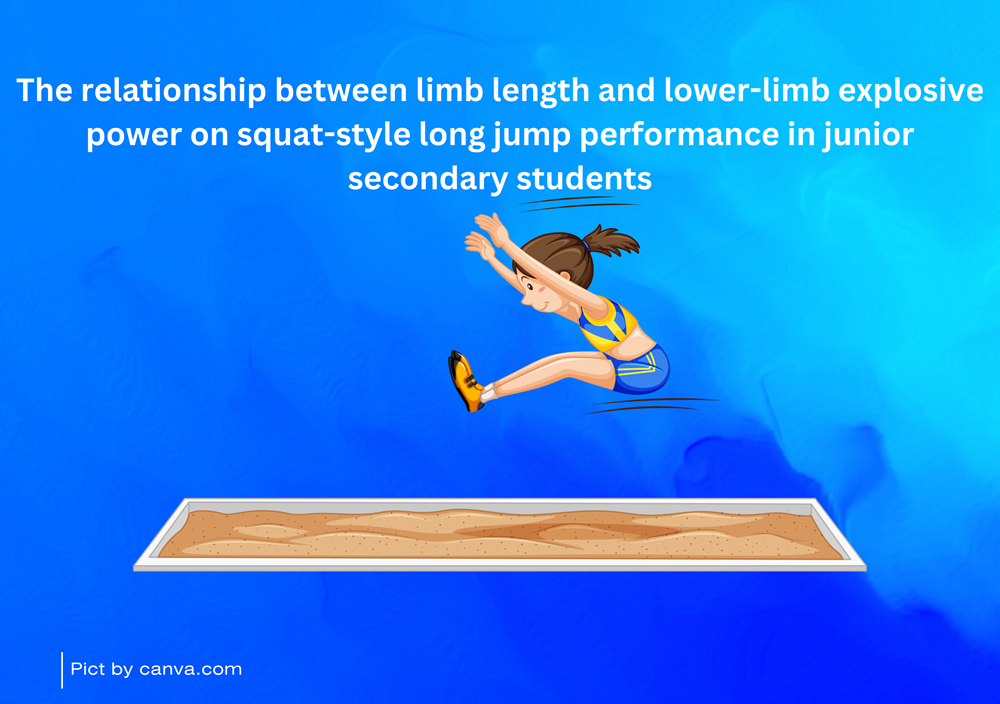
The relationship between limb length and lower-limb explosive power on squat-style long jump performance in junior secondary students
Karina Octaviani1, Siti Nurrochmah21. State University of Malang , ID2. State University of Malang , ID2025-07-01|page 103-114AbstractBackground: To determine the relationship between leg length and leg muscle explosive power with squat style long jump performance applied to junior high school students.
Objectives: This study examines the relationship between leg length, leg muscle explosive power, and the ability to jump squatting style long.
Methods: The method used is a quantitative descriptive design with a correlational study. The study population amounted to 60 male students in class VIII. Sampling using the Purposive Proportional Systematic Random Sampling technique amounted to 45 students. The collected data were analyzed using three prerequisite tests: data normality test, homogeneity test, and linearity test. After fulfilling the prerequisite test requirements, it can be continued with 4 hypothesis tests, product moment test, multiple correlation test, regression equation line, and practical contribution and relative contribution.
Results: The data obtained using inferential statistics in multiple correlation analysis is complemented by multiple regression analysis. The results of the multiple correlation test obtained a coefficient = 0.687 and Sig. P = 0.001 < a = 0.05.
Conclusions: The study concludes a positive and linear relationship between leg length and leg muscle explosive power with squat-style long jump performance. Based on these findings, further research is recommended to explore additional variables such as speed, flexibility, and confidence, which may influence squat-style long jump performance.
APA Citation StyleOctaviani, K. , & Nurrochmah, S. (2025). The relationship between limb length and lower-limb explosive power on squat-style long jump performance in junior secondary students. Physical Education and Sports: Studies and Research, 103-114. https://doi.org/10.56003/pessr.v4i2.561 -
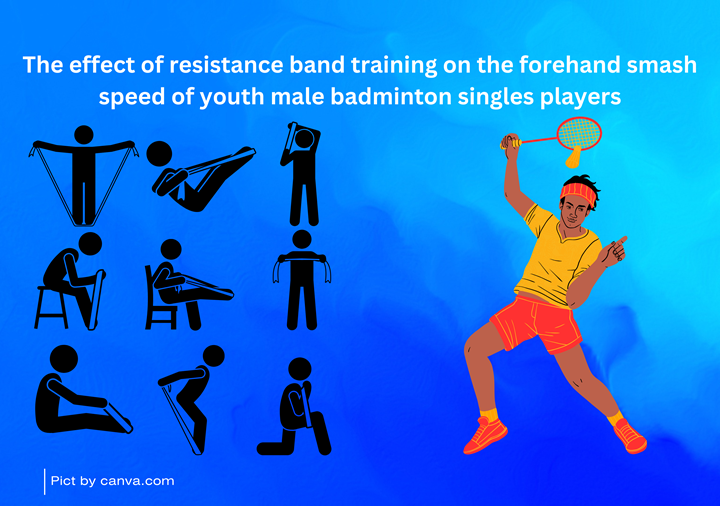
The effect of resistance band training on the forehand smash speed of youth male badminton singles players
Danan Satria Rahadhi1, Yopi Kusdinar2, Patriana Nurmansyah Awwaludin3, Mulyana Mulyana 41. Indonesia University of Education , ID2. Indonesia University of Education , ID3. Indonesia University of Education , ID4. Indonesia University of Education , ID2025-04-30|page 60-70AbstractBackground: Forehand smash shots kill opponents with explosive blows in a badminton game. In hitting a forehand smash, there are several problems, one of which is the speed of the punch.
Objectives: This study is designed to investigate and identify alternative exercises that can enhance the speed of smash shots. The findings of this study are expected to provide valuable insights for athletes and trainers, aiding in the development of effective training programs.
Methods: The research method used in this study is an experimental method with a quantitative approach and a Two Group Pretest-Posttest Design research design. The population in this study were PB Pasundan Bandung badminton athletes, totaling 30 athletes, with a sample of 20 people using a purposive sampling technique. The instrument in this study used a smash shot speed test using the Velocity Speed Gun tool. The data was processed and analyzed using the normality test with Shapiro-Wilk and then analyzed using the independent t-test with SPSS 23.
Results: The T-test value is with a Sig value. (2-tailed) of 0.00, based on the test results, the Sig value. (2-tailed) <0.05 so that H0 is rejected. So, resistance band training has a significant effect on increasing the speed of forehand smash shots.
Conclusions: In conclusion, the consistent use of resistance bands in training sessions could be a game-changer in boosting the speed of forehand smash shots for badminton athletes. These results strongly advocate integrating resistance band training into early-stage badminton training programs. Future studies could further explore its long-term effects and application across different age groups, fostering hope for the continued evolution of training methods in badminton.
APA Citation StyleRahadhi, D. S. , Kusdinar, Y. , Awwaludin, P. N. , & Mulyana , M. (2025). The effect of resistance band training on the forehand smash speed of youth male badminton singles players. Physical Education and Sports: Studies and Research, 60-70. https://doi.org/10.56003/pessr.v4i1.524 -
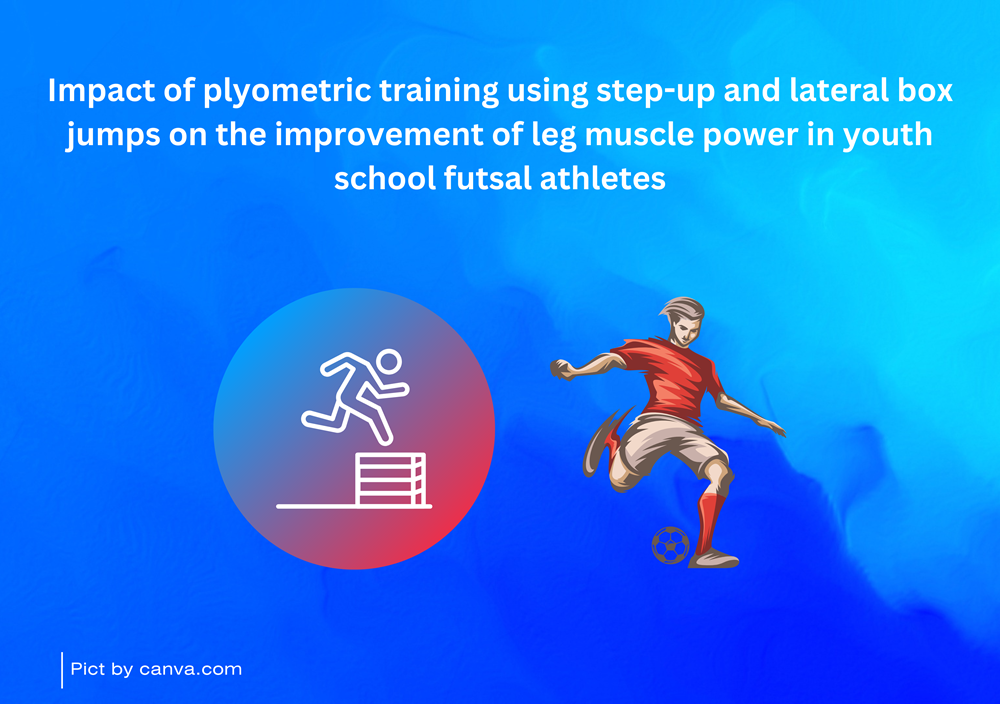
Impact of plyometric training using step-up and lateral box jumps on the improvement of leg muscle power in youth school futsal athletes
Risky Sandy Kurniawan1, Donny Anhar Fahmi2, Setiyawan Setiyawan31. Universitas PGRI Semarang , ID2. Universitas PGRI Semarang , ID3. Universitas PGRI Semarang , ID2025-08-15|page 212-221AbstractBackground: Futsal is a high-intensity sport that requires leg muscle power, especially in aerial duels, anticipating the ball, and performing powerful kicks. Limited jumping ability can reduce leg muscle power and overall performance.
Objectives: This study aims to test the impact of plyometric training using step-up and lateral box jumps on the improvement of leg muscle power in youth school futsal athletes.
Methods: A quasi-experimental single-group pretest-posttest design was conducted with 40 male participants over a four-week plyometric training program. Leg muscle power was measured using a vertical jump test before and after the intervention. Data were analyzed using a t-test with the assistance of SPSS.
Results: Both step-up and lateral box jumps significantly increased leg muscle power (p < 0.05). The step-up group showed an average increase of 4.20 cm, while the lateral box jump group showed an average increase of 3.45 cm, with no statistically significant difference (p = 0.326).
Conclusions: Both training methods effectively enhance leg muscle power and can be integrated into school-based futsal training programs to improve performance.
APA Citation StyleKurniawan, R. S. , Fahmi, D. A. , & Setiyawan, S. (2025). Impact of plyometric training using step-up and lateral box jumps on the improvement of leg muscle power in youth school futsal athletes. Physical Education and Sports: Studies and Research, 212-221. https://doi.org/10.56003/pessr.v4i2.611 -
Functional movement patterns and bilateral asymmetry in badminton athletes: A Functional Movement Screen analysis at the Malang Regional Training Center
Avi Kholifatuz Zahro'1, Muhammad Atiq Noviudin Pritama21. State University of Malang , ID2. State University of Malang , ID2026-08-17|page 196-207AbstractBackground: Badminton involves repetitive unilateral overhead movements, rapid changes of direction, and explosive actions that may contribute to side-to-side differences in functional movement patterns.
Objectives: This study aimed to describe functional movement patterns and bilateral asymmetry among badminton athletes at the Malang Regional Training Center using the Functional Movement Screen (FMS).
Methods: This cross-sectional study involved 16 sub-elite badminton athletes aged 15–20 years selected through purposive sampling. Functional movement was assessed using the seven-component FMS. Total scores were classified as high (≤14), moderate (15–17), or low (18–21) injury risk. Bilateral asymmetry was identified from differences between right- and left-side scores in five bilateral FMS components. Data were analyzed descriptively using means, standard deviations, frequencies, and percentages.
Results: Most athletes (62.5%, n = 10) were classified as having moderate injury risk, while 18.75% (n = 3) were classified as high risk and 18.75% (n = 3) as low risk. Shoulder Mobility showed the highest prevalence of bilateral asymmetry (100%, n = 16), followed by the In-Line Lunge and Rotary Stability (62.5%, n = 10 each), Hurdle Step (50.0%, n = 8), and Active Straight Leg Raise (43.75%, n = 7).
Conclusions: Bilateral functional movement asymmetry was common among badminton athletes, particularly in shoulder mobility, while most athletes were classified within the moderate injury-risk category. These findings support functional movement screening to identify movement limitations and inform individualized corrective exercise strategies.
APA Citation StyleZahro', A. K. , & Pritama, M. A. N. (2026). Functional movement patterns and bilateral asymmetry in badminton athletes: A Functional Movement Screen analysis at the Malang Regional Training Center. Physical Education and Sports: Studies and Research, 196-207. https://doi.org/10.56003/pessr.v5i2.756 -

Medical observations and injury analysis: All Girls Touch Rugby Championship 2024
Mohamad Nizam Nazarudin1, Yong Qin Tan2, Ardo Okilanda3, Yovhandra Ockta4, Reshandi Nugraha51. National University of Malaysia , MY2. National University of Malaysia , MY3. State University of Padang , ID4. Universitas Teuku Umar , ID5. UniversitasPendidikan Indonesia , ID2025-04-04|page 32-45AbstractBackground: Touch rugby is a high-intensity, non-contact sport requiring agility, speed, and coordination. This study analyzes injury distribution, treatment effectiveness, and preventive measures among youth touch rugby players.
Objectives: This study examined injury patterns among adolescent female athletes during the 2024 All-Girls Touch Rugby Championship (AGTR 2024).
Methods: A retrospective observational study was conducted using medical reports from the two-day All-Girls Touch Rugby Championship 2024 (AGTR 2024) at Universiti Putra Malaysia. The study examined 484 female athletes (ages 9–18 years), with 176 injuries recorded and categorized as soft tissue injuries (52.3%), abrasions (23.9%), and sprains (14.2%). Descriptive statistics were used to assess injury distribution, while chi-square analysis (χ² = 10.45, p < 0.01) evaluated the relationship between injury type and age group.
Results: Younger players (10–14 years) sustained more abrasions (60%), whereas older athletes (15–18 years) had a higher incidence of soft tissue injuries (68%). Injuries increased by 66.7% on Day 2, highlighting the impact of cumulative fatigue and tournament intensity. Ice therapy (68%) and bandaging (55%) were the most utilized treatments, with only 7% of cases requiring outpatient referrals.
Conclusions: Findings underscore the need for structured warm-ups, enhanced hydration protocols, and targeted strength training to reduce injury risks. The study emphasizes the role of injury surveillance, playing surface improvements, and gender-specific training programs in preventing injuries and enhancing athlete safety. Implementing evidence-based preventive strategies can promote the long-term development and sustainability of touch rugby for adolescent athletes. Future research should focus on longitudinal injury tracking and tailored intervention strategies.
APA Citation StyleNazarudin, M. N. , Tan, Y. Q. , Okilanda, A. , Ockta, Y. , & Nugraha, R. (2025). Medical observations and injury analysis: All Girls Touch Rugby Championship 2024. Physical Education and Sports: Studies and Research, 32-45. https://doi.org/10.56003/pessr.v4i1.495 -

Comparative analysis of plantar pressure distribution among football players across playing positions: A cross-sectional study
Arif Pristianto1, Anindya Maghfira Zain2, Farid Rahman3, Pungki Indarto4, Anugrah Nur Warthadi51. Department of Physiotherapy, Faculty of Health Sciences, Universitas Muhammadiyah Surakarta , ID2. Department of Physiotherapy, Faculty of Health Sciences, Universitas Muhammadiyah Surakarta , ID3. Department of Physiotherapy, Faculty of Health Sciences, Universitas Muhammadiyah Surakarta , ID4. Department of Sport Education, Faculty of Teacher Training and Education, Universitas Muhammadiyah Surakarta , ID5. Department of Sport Education, Faculty of Teacher Training and Education, Universitas Muhammadiyah Surakarta , ID2026-04-01|page 68-81AbstractBackground: Football players exhibit different muscle activation patterns during different playing activities, which can affect plantar pressure on the feet. Uneven, unbalanced plantar pressure distribution can cause muscle tension, leading to musculoskeletal injuries in the feet.
Objectives: This study aims to determine and compare plantar pressure distribution among football players based on playing position.
Methods: This study is an analytical observational study using a cross-sectional approach. The sample in this study consisted of 24 football players aged 15-18 years who met the inclusion criteria. Plantar pressure was measured using a Zebris Force Distribution Measurement (FDM) platform on the forefoot and rearfoot areas. Statistical analysis included normality tests (Shapiro-Wilk) and multivariate tests (ANOVA) according to data distribution.
Results: Differences in plantar pressure were observed between defenders, forwards, and strikers in static conditions (p < 0.05), but not in dynamic conditions (p > 0.05).
Conclusions: This study shows differences in plantar pressure distribution among football players in defender, forward, and striker positions under static conditions. However, under dynamic conditions, no significant differences were found among playing positions.
APA Citation StylePristianto, A. , Zain, A. M. , Rahman, F. , Indarto, P. , & Warthadi, A. N. (2026). Comparative analysis of plantar pressure distribution among football players across playing positions: A cross-sectional study. Physical Education and Sports: Studies and Research, 68-81. https://doi.org/10.56003/pessr.v5i1.692 -
Enhancing locomotor skills in preschoolers through play jump rope
Nancy Trisari Schiff1, Andy Supriady21. Sekolah Tinggi Keguruan dan Ilmu Pendidikan (STKIP) Pasundan , ID2. Sekolah Tinggi Keguruan dan Ilmu Pendidikan (STKIP) Pasundan , ID2026-04-14|page 135-146AbstractBackground: Fundamental Motor Skills (FMS), particularly in the Locomotor Skills domain, are an essential prerequisite for lifelong physical participation. However, the dominance of a sedentary lifestyle threatens young children's mastery of these skills.
Objectives: This study aims to test and prove the effectiveness of the jump rope play intervention program in improving locomotor skills in 5–6-year-old children.
Methods: This research uses a quasi-experimental one-group pretest-posttest design. The sample consisted of 19 males and 11 females, for a total of 30 children. Locomotor skills are measured objectively using the Locomotor subtest of the Test of Gross Motor Development-2 (TGMD-2). The Jump Rope Game intervention was implemented in a structured manner over 8 weeks (3 sessions/week). The data were analyzed using the Paired-Samples T-Test.
Results: The research results show a highly significant improvement in locomotor skills scores after the intervention. The average score increased from 23.30 on the pretest to 27.87 on the posttest, reflecting a 19.61% increase. The paired-samples t-test yielded a p-value of 0.000 (p<0.05), confirming that the difference between the two measurements was statistically significant.
Conclusions: Jump rope games have proven to be an effective, efficient, and enjoyable intervention for significantly improving young children's locomotor skills. This research recommends integrating inexpensive, easily accessible play-based activities into the early childhood education curriculum as a practical strategy to support physical literacy and address basic movement deficits.
APA Citation StyleSchiff, N. T. , & Supriady, A. (2026). Enhancing locomotor skills in preschoolers through play jump rope. Physical Education and Sports: Studies and Research, 135-146. https://doi.org/10.56003/pessr.v5i1.652

1 - 8 of 8 items




















