
Search
Search Results
##search.searchResults.foundPlural##
-


Fun game–based learning improves gross motor skills in early primary school children
Ahmad Muttaqin Darussalam1, Sugiharto Sugiharto2, Sapto Adi31. State University of Malang , ID2. State University of Malang , ID3. State University of Malang , ID2025-11-23|page 236-249AbstractBackground: Children who face difficulties in gross motor skill development may withdraw from physical activities, experience low self-esteem, and suffer from social anxiety. Physical education plays a vital role in fostering gross motor development, especially when delivered through enjoyable and engaging activities such as fun games.
Objectives: This study aimed to investigate the impact of fun game–based learning on the development of gross motor skills in early primary school children.
Methods: The study employed a quasi-experimental design with a non-equivalent control group. A total of 36 second-grade students from SDIT Mutiara Hati in Malang participated in this study. Participants were assigned to one of three groups: a control group, a group-based fun games intervention, and an individual-based fun games intervention. The interventions were implemented three times a week for 30 minutes over a period of seven weeks. Gross motor skills were measured before and after the intervention using the Test of Gross Motor Development–Third Edition (TGMD-3), a reliable and validated instrument. Data were analyzed using homogeneity and normality tests, paired-sample t-tests, one-way ANOVA, and Tukey's HSD post hoc tests, with a significance level set at p < 0.05 (SPSS version 25).
Results: Both the individual and group fun game–based learning interventions produced significant improvements in gross motor skills compared with the control group (p < 0.05). Moreover, a significant difference was found between the two intervention types, indicating that the mode of fun game delivery influences outcomes (p < 0.05).
Conclusions: Fun game–based learning, whether delivered individually or in groups, effectively enhances gross motor skills among early primary school children. Additionally, individual fun game–based learning demonstrated a significantly greater improvement compared to group-based learning.APA Citation StyleDarussalam, A. M. , Sugiharto, S. , & Adi, S. (2025). Fun game–based learning improves gross motor skills in early primary school children. Physical Education and Sports: Studies and Research, 236-249. https://doi.org/10.56003/pessr.v4i3.613 -
The association between healthy dietary habits and physical fitness among junior high school students: A rural school case study
Moch. Yunus1, Yulingga Nanda Hanief2, Muhammad Putra Ramadhan3, Erika Ayu Sylvianingrum41. State University of Malang , ID2. State University of Malang , ID3. State University of Malang , ID4. State University of Malang , ID2025-12-30|page 344-354AbstractBackground: The health conditions of the community, particularly in relation to the physical fitness of junior high school students, require serious attention, especially in rural areas that differ significantly from urban areas. Previous research findings on dietary patterns and physical fitness still show inconsistent results.
Objectives: This study aims to investigate the relationship between healthy eating habits and physical fitness among junior high school students residing in rural areas.
Methods: This study used a quantitative design with a cross-sectional approach. The research subjects consisted of 27 students from public junior high schools in rural areas, selected through a balanced stratified random sampling process that involved all grade levels. Eating habits were measured using a 24-hour food recall, as it is an effective method for monitoring food intake over a short period. Physical fitness was measured using the Nusantara Student Fitness Test (TKPN), a national standard instrument. Data analysis was performed using descriptive statistics, Spearman's correlation, and linear regression.
Results: Most of the study participants were underweight with varied eating patterns. The analysis results showed no significant relationship between physical fitness and healthy eating patterns, as indicated by a correlation coefficient of 0.061 and a p-value of 0.764. The small effect size suggests that eating patterns did not have a significant impact on fitness levels in this group of participants.
Conclusions: The study shows that rural junior high school students achieve their physical fitness through exercise and their exercise-rest patterns and their inherited characteristics rather than their diet.APA Citation StyleYunus, M. , Hanief, Y. N. , Ramadhan, M. P. , & Sylvianingrum, E. A. (2025). The association between healthy dietary habits and physical fitness among junior high school students: A rural school case study. Physical Education and Sports: Studies and Research, 344-354. https://doi.org/10.56003/pessr.v4i3.665 -
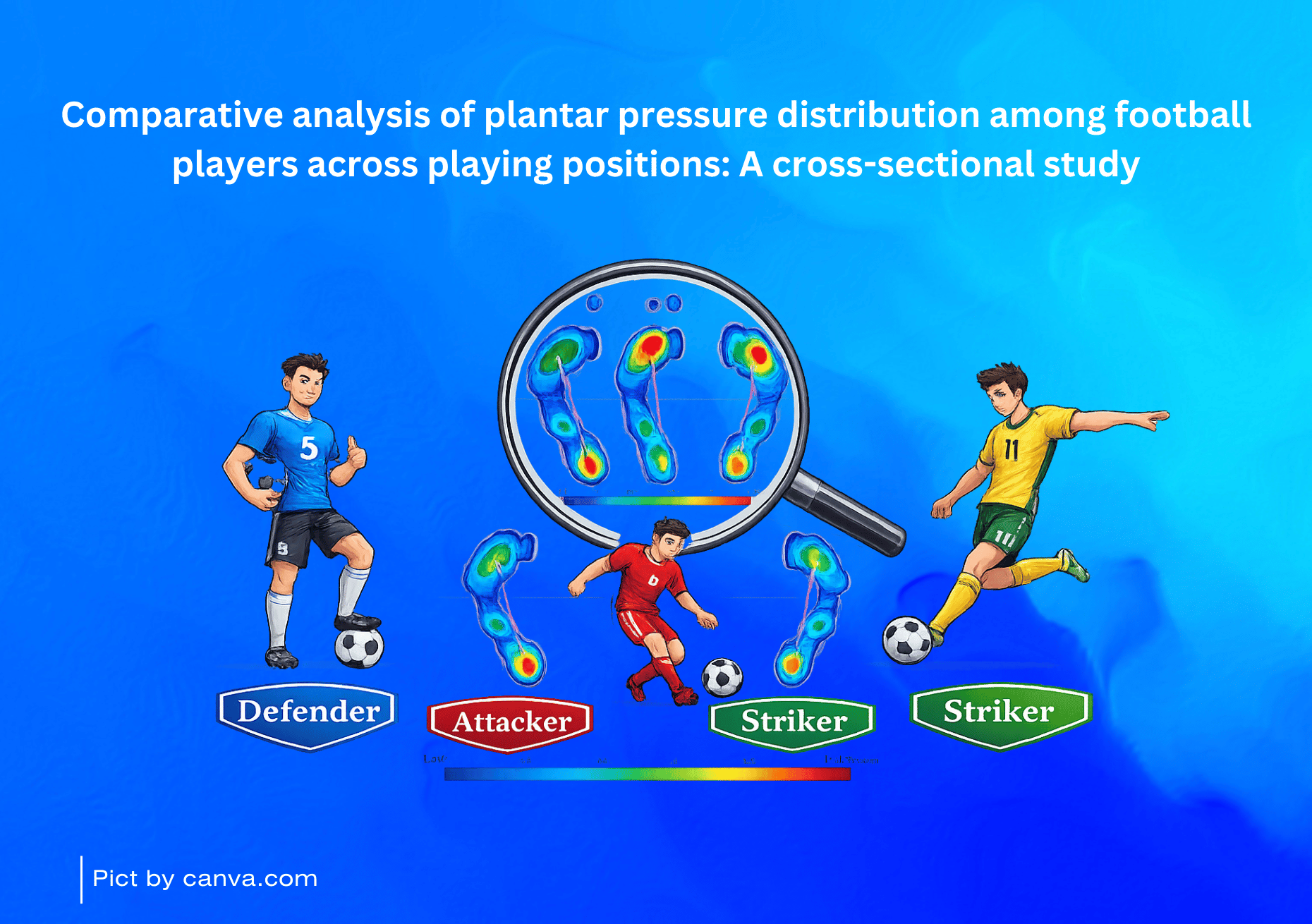
Comparative analysis of plantar pressure distribution among football players across playing positions: A cross-sectional study
Arif Pristianto1, Anindya Maghfira Zain2, Farid Rahman3, Pungki Indarto4, Anugrah Nur Warthadi51. Department of Physiotherapy, Faculty of Health Sciences, Universitas Muhammadiyah Surakarta , ID2. Department of Physiotherapy, Faculty of Health Sciences, Universitas Muhammadiyah Surakarta , ID3. Department of Physiotherapy, Faculty of Health Sciences, Universitas Muhammadiyah Surakarta , ID4. Department of Sport Education, Faculty of Teacher Training and Education, Universitas Muhammadiyah Surakarta , ID5. Department of Sport Education, Faculty of Teacher Training and Education, Universitas Muhammadiyah Surakarta , ID2026-04-01|page 68-81AbstractBackground: Football players exhibit different muscle activation patterns during different playing activities, which can affect plantar pressure on the feet. Uneven, unbalanced plantar pressure distribution can cause muscle tension, leading to musculoskeletal injuries in the feet.
Objectives: This study aims to determine and compare plantar pressure distribution among football players based on playing position.
Methods: This study is an analytical observational study using a cross-sectional approach. The sample in this study consisted of 24 football players aged 15-18 years who met the inclusion criteria. Plantar pressure was measured using a Zebris Force Distribution Measurement (FDM) platform on the forefoot and rearfoot areas. Statistical analysis included normality tests (Shapiro-Wilk) and multivariate tests (ANOVA) according to data distribution.
Results: Differences in plantar pressure were observed between defenders, forwards, and strikers in static conditions (p < 0.05), but not in dynamic conditions (p > 0.05).
Conclusions: This study shows differences in plantar pressure distribution among football players in defender, forward, and striker positions under static conditions. However, under dynamic conditions, no significant differences were found among playing positions.
APA Citation StylePristianto, A. , Zain, A. M. , Rahman, F. , Indarto, P. , & Warthadi, A. N. (2026). Comparative analysis of plantar pressure distribution among football players across playing positions: A cross-sectional study. Physical Education and Sports: Studies and Research, 68-81. https://doi.org/10.56003/pessr.v5i1.692 -
Development and validation of a table tennis serve skill assessment instrument for junior high school students: A psychometric approach
Muhammad Aliffajaruddin Alfani1, M. E. Winarno2, Siti Nurrochmah31. State University of Malang , ID2. State University of Malang , ID3. State University of Malang , ID2025-07-01|page 95-102AbstractBackground: The highest assessment weight in physical education lessons lies in psychomotor skills. In order to find out how far the competencies possessed by students, a clear and comprehensive assessment tool or instrument is needed.
Objectives: The research aims to develop a test instrument for forehand and backhand service skills in table tennis small ball games.
Methods: The development of this instrument uses a research and development scheme, with predetermined steps (1) determining objectives, (2) analyzing literature, (3) developing specifications, (4) administering, (5) conducting tests, (6) analyzing data validity, reliability, and objectivity. The cluster sampling procedure was conducted on students aged 13-15 who met the inclusion criteria, involving junior high school students (n=80), consisting of 41 female students and 39 male students. Data were analyzed using IBM SPSS Statistics version 11.0. The basis for decision-making is the Pearson correlation test. The analysis technique in the reliability test uses a test and retest external estimation approach.
Results: The forehand serve variable has a calculated r-value of 0.456> r-table 0.312, and the backhand serve variable obtained a calculated R-value of 0.352> r-table 0.312, so the table tennis skill instrument on that variable was declared valid. At the same time, the reliability test shows a value above 0.70; the instrument that has been prepared can be declared reliable.
Conclusions: The assessment instrument for forehand and backhand serve skills in table tennis games for junior high school students has met the validity and reliability criteria. This shows that the instrument is suitable for teachers as an objective and consistent measuring tool in evaluating basic table tennis skills in students. Recommendations for future studies are encouraged to expand the sample size and integrate digital features to enhance the scalability and objectivity of the assessment.
APA Citation StyleAlfani, M. A. , Winarno, M. E. , & Nurrochmah, S. (2025). Development and validation of a table tennis serve skill assessment instrument for junior high school students: A psychometric approach. Physical Education and Sports: Studies and Research, 95-102. https://doi.org/10.56003/pessr.v4i2.525 -
The Relationship of Sports Participation in Academic Performance among College of Arts and Sciences Varsity Players
John Michael Aquino1, Mary Grace Reyes21. Laguna State Polytechnic University , PH2. Laguna State Polytechnic University , PH2022-09-10|page 107-122AbstractBackground: Sports are featured in the curriculums of state universities and colleges (SUCs). The Laguna State Polytechnic University (LSPU) shines in sports competition throughout Region IV, and the College of Arts and Sciences (CAS) varsity athletes are actively engaging in this sports competition. Nevertheless, during the previous decade, the CAS had been routinely rated third to fifth in intramurals.
Objectives: The researcher wish to ascertain the embodiment of CAS student athletes' experiences in sports involvement and academic performances to discover the significance of participation in sports and academic performance of students. The findings serve as the foundation for crafting Student Intervention Program.
Methods: The descriptive survey approach was used to a total of 30 varsity players in CAS from the 5 programs. The Cronbach alpha was utilized to assess the overall consistency of the self-made instrument and was carried out to CAS students belong to the varsity team using an internet web service.
Results: It was established that the student-athletes felt that all the assertions were evaluated as great in the university, especially in CAS, indicating satisfaction with the university's operations. Consequently, athletes excel in both athletics and academics.
Conclusion: It was notably that CAS varsity players were deemed to be great by the student-athletes. Respondents were happy with the university's procedures as viewed and experienced in prior sports competitions held not just within the LSPU System but also at the Regional STRASUC or even National SCUAA. Students participating in sports are much more likely to excel academically.
APA Citation StyleAquino, J. M. , & Reyes, M. G. (2022). The Relationship of Sports Participation in Academic Performance among College of Arts and Sciences Varsity Players. Physical Education and Sports: Studies and Research, 107-122. https://doi.org/10.56003/pessr.v1i2.129 -

Capabilities in Physical Education: A Comparative Analysis of School Heads’ and Teachers’ Perspectives
Davidsol Mendoza1, Maryjane Calabia21. Batangas State University , PH2. Padre Garcia Integrated National High School , PH2024-04-29|page 26-45AbstractBackground: Effective education delivery relies on PE teachers’ abilities. Research indicates that students’ school performance significantly depends on the quality of PE teaching.
Objectives: This study focused on assessing instructional capabilities in physical education. Specifically, it examined how school heads and teachers evaluated teachers’ abilities in content knowledge, pedagogical skills, communication, and professionalism. Additionally, the study compared assessments between the two groups.
Methods: The study employed a descriptive research design involving 98 physical education teachers and 59 school heads from the Division of Batangas City. Data collection utilized a researcher-made questionnaire and interviews. Statistical analysis involved weighted mean and independent t-tests for data interpretation.
Results: The assessment revealed valuable insights regarding PE teachers’ instructional capabilities. Administrators acknowledged strengths in lesson introduction and accurate content delivery. However, areas for improvement included integrating key elements and promoting higher-order thinking skills. PE teachers felt confident introducing lessons but recognized a need to refine performance demonstrations. Administrators praised diverse teaching methods but suggested creating more challenging experiences. Communication skills were positive, with room for improvement in grammatical accuracy. PE teachers expressed dedication to student physical education but identified a need for more decisive leadership in school-based activities. The findings highlighted specific improvement needs while emphasizing contrasting perceptions between administrators and PE teachers.
Conclusion: The assessment found that physical education (PE) teachers are capable in delivering junior high school PE. However, they need familiarity with emerging trends to enhance instruction. School heads and PE teachers have differing views on instructional capabilities, attributed to assessment sources: administrators rely on scheduled observations, while PE instructors use self-assessment and daily teaching experiences.
APA Citation StyleMendoza, D. , & Calabia, M. (2024). Capabilities in Physical Education: A Comparative Analysis of School Heads’ and Teachers’ Perspectives. Physical Education and Sports: Studies and Research, 26-45. https://doi.org/10.56003/pessr.v3i1.347 -

Teachers’ Management in Implementation of CHED Memorandum Order (CMO) 39, Series of 2021 towards the Achievement of Students’ Learning Outcomes in Physical Education
John Michael Aquino11. Laguna State Polytechnic University , PH2023-04-20|page 26-43AbstractBackground: The Commission on Higher Education (CHED) has issued Memorandum Order (CMO) No. 39, Series of 2021 that strengthens the management of physical education teachers and promotes the achievement of students’ learning outcomes. Higher education institutions will guarantee that they are adhering to the requirements of the CMO to ensure the quality of instruction in physical education and the improvement of the students’ learning outcomes.
Objectives: This research aims to investigate the process of implementation of the CMO 39, Series of 2021 and its contribution to the improvement of student learning outcomes in Physical Education (PE).
Methods: Through a qualitative research design based on a phenomenological approach, the researchers employed a purposive sampling method to select 9 male and 3 female PE teachers from Higher Learning Institution in the Philippines. A non-test instrument consisting of an interview guide was used to collect data from the study participants. The data was then analyzed to identify themes and patterns that emerged from the responses.
Results: The study revealed the effectiveness of physical education in terms of student motivation, class orientation, students’ participation, and the application of the Physical Activity Towards Health and Fitness (PATHFIT) program. The findings show that physical education is an important part of the educational process and has a direct influence on the students' learning outcomes. Furthermore, the study also highlights the importance of providing students with the necessary knowledge and skills to succeed, and of assessing the students' abilities from their performance to achieve course objective with good behavior and attitude.
Conclusion: It showed potential areas of improvement in the implementation process to ensure that the objectives of the memorandum are achieved, which is necessary for teachers to be aware of the competencies that need to be developed for students. This research will contribute to the existing literature on the importance of quality assurance programs, particularly in the area of physical education.
APA Citation StyleAquino, J. M. (2023). Teachers’ Management in Implementation of CHED Memorandum Order (CMO) 39, Series of 2021 towards the Achievement of Students’ Learning Outcomes in Physical Education. Physical Education and Sports: Studies and Research, 26-43. https://doi.org/10.56003/pessr.v2i1.190





















