Strengthening editorial competencies and DOAJ-based journal governance through a training program at STIKES Vincentius A Paulo Surabaya

Downloads
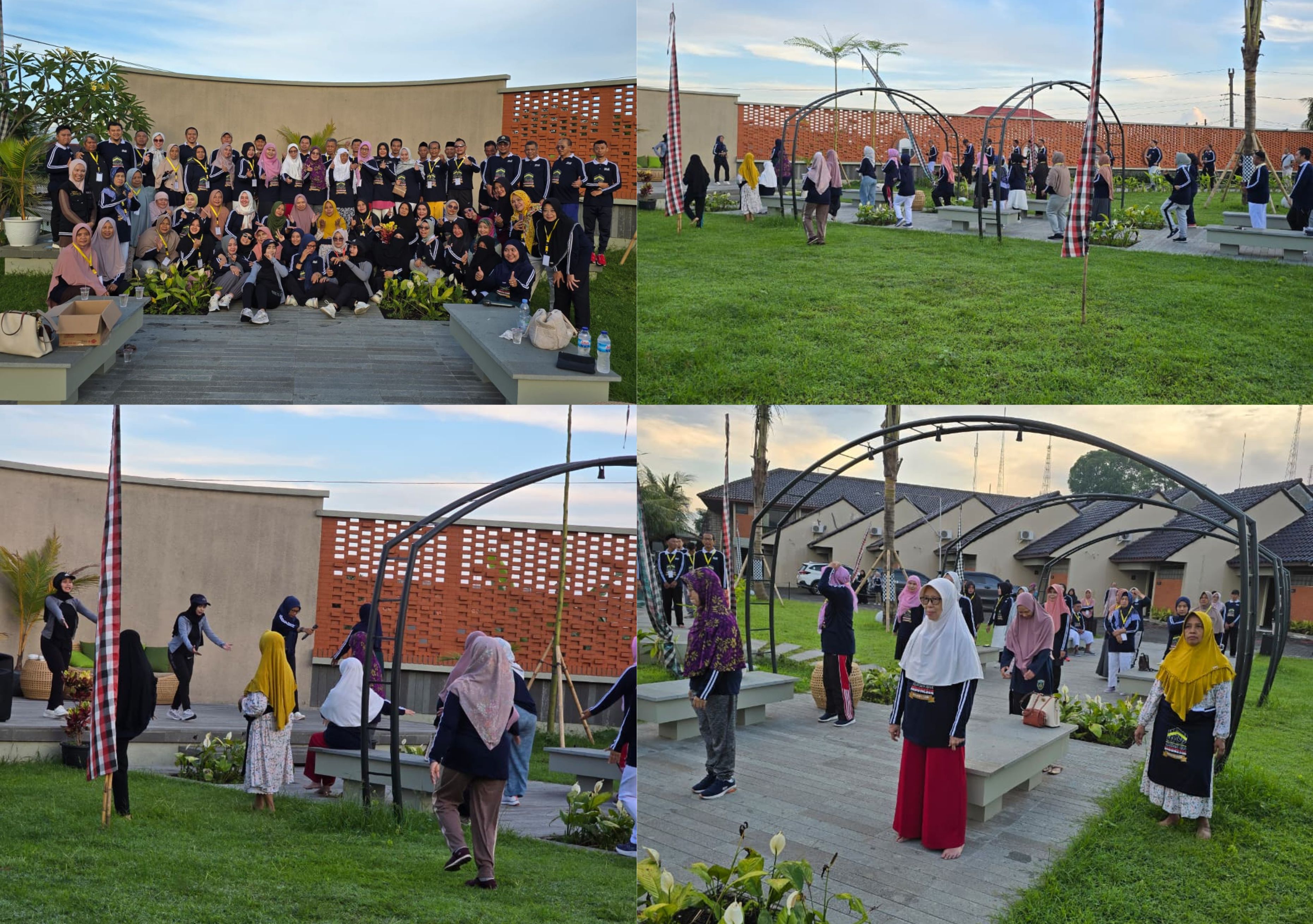
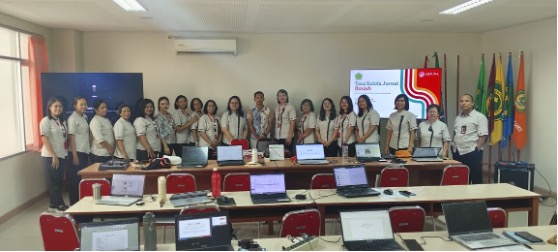
The management of high-quality scientific journals continues to face numerous challenges. This community service activity aimed to evaluate the effectiveness of a training program designed to improve participants’ understanding of DOAJ standards and national journal accreditation. This community service activity employed a pre-experimental one-group pretest–posttest design. In the initial phase, 16 participants took a pretest to assess their baseline knowledge; subsequently, they participated in a training session comprising material delivery and interactive discussions. After the activity concluded, a posttest was administered to measure the participants’ improved understanding. Data analysis to test the significance of differences before and after the training used the Wilcoxon test. Descriptive analysis results indicated an increase in the average score from 112.5 to 146.3 on the final knowledge test. Based on the Wilcoxon Signed-Rank Test, a Z-value of -3.237 was obtained (p = 0.001, p < 0.05), indicating that training on scientific journal management in accordance with DOAJ standards and national accreditation standards significantly improved participants’ understanding. Furthermore, the effect size indicated by the matched-rank biserial correlation of -0.950 suggests that the training’s impact falls into the very large category. The training not only enhanced participants’ knowledge of open access principles, policy transparency, and editorial governance but also standardized their understanding, resulting in a more consistent level of understanding among participants.
Committee on Publication Ethics. (2019). Core practices. https://publicationethics.org/
Directory of Open Access Journals. (2023). Principles of transparency and best practice in scholarly publishing.
Hanief, Y. N., & Kurniasari, I. R. (2026). Hambatan Pengelolaan Jurnal Ilmiah di Indonesia: Perspektif Aktor Editorial melalui Analisis Faktor Eksploratori: Barriers to Scientific Journal Management in Indonesia: An Editorial Actor Perspective through Exploratory Factor Analysis. Publishing Letters, 3(1), 1–10. https://doi.org/10.48078/publetters.v3i1.66
Kementerian Riset, T. dan P. T. (2018). Pedoman akreditasi jurnal ilmiah (ARJUNA).
Kretser, A., Murphy, D., Bertuzzi, S., Abraham, T., Allison, D. B., Boor, K. J., Dwyer, J., Grantham, A., Harris, L. J., Hollander, R., Jacobs-Young, C., Rovito, S., Vafiadis, D., Woteki, C., Wyndham, J., & Yada, R. (2019). Scientific Integrity Principles and Best Practices: Recommendations from a Scientific Integrity Consortium. Science and Engineering Ethics, 25(2), 327–355. https://doi.org/10.1007/s11948-019-00094-3
M. Moskovkin, V., A. Bocharova, E., & V. Balashova, O. (2014). Journal benchmarking for strategic publication management and for improving journal positioning in the world ranking systems. Campus-Wide Information Systems, 31(2/3), 82–99. https://doi.org/10.1108/CWIS-11-2013-0066
Majhi, S., Sahu, L., & Behera, K. (2023). Practices for enhancing research visibility, citations and impact: review of literature. Aslib Journal of Information Management, 75(6), 1280–1305. https://doi.org/10.1108/AJIM-11-2023-532
Masic, I. (2021). Predatory Journals and Publishers - Dilemmas: How to Assess it and How to Avoid it? Medical Archives, 75(5), 328. https://doi.org/10.5455/medarh.2021.75.328-334
Misra, D. P., Ravindran, V., & Agarwal, V. (2018). Integrity of Authorship and Peer Review Practices: Challenges and Opportunities for Improvement. Journal of Korean Medical Science, 33(46). https://doi.org/10.3346/jkms.2018.33.e287
Munawar, A., Nurendah, Y., Mulyana, M., Rustandi, I. E., Suratman, S. A., & Apsari, Z. C. W. A. (2026). Peningkatan Kompetensi Pengelolaan Jurnal Ilmiah Bagi Mahasiswa IBI Kesatuan Bogor. Jurnal Abdimas Dedikasi Kesatuan, 7(1), 29–42. https://doi.org/10.37641/jadkes.v7i1.4937
Norman, E. R. (2012). Maximizing Journal Article Citation Online: Readers, Robots, and Research Visibility. Politics & Policy, 40(1), 1–12. https://doi.org/10.1111/j.1747-1346.2011.00342.x
Ollé Castellà, C., López‐Borrull, A., & Abadal, E. (2016). The challenges facing library and information science journals: Editors’ opinions. Learned Publishing, 29(2), 89–94. https://doi.org/10.1002/leap.1016
O’Donohue, W. (2020). Criticisms of the Ethical Principles for Psychologists and Code of Conduct. Ethics & Behavior, 30(4), 275–293. https://doi.org/10.1080/10508422.2019.1679632
Ramesh, M. R. (2024). Open Access Journals: Enhancing Author Visibility and Impact. Naveen International Journal of Multidisciplinary Sciences (NIJMS), 1(2), 20–27. https://nijms.com/index.php/nijms/article/view/9
Santos-d’Amorim, K., Wang, T., Lund, B., & Macedo Dos Santos, R. N. (2024). From plagiarism to scientific paper mills: a profile of retracted articles within the SciELO Brazil collection. Ethics & Behavior, 34(1), 40–57. https://doi.org/10.1080/10508422.2022.2141747
Silitonga, F., Dwi Joko Siswanto, Natalina Kristiani, Aryananta Lufti, M. Baidlowi, Agung Prapsetyo, & Tjatur Supriyono. (2023). Pendampingan Dan Pelatihan Manajemen Publikasi Penelitian dan Pengabdian Berbasis Open Journal System Di Akademi Militer Magelang. JURNAL NAGARA BHAKTI, 1(2), 84–98. https://doi.org/10.63824/nb.v1i2.48
Sucipto, S. (2021). Pendampingan Manajemen Pengelolaan Jurnal Ilmiah untuk Persiapan Akreditasi Jurnal Nasional di Universitas Tulungagung. Archive: Jurnal Pengabdian Kepada Masyarakat, 1(1), 62–69. https://doi.org/10.55506/arch.v1i1.28
Teixeira da Silva, J. A. (2021). Conflicts of Interest Arising from Simultaneous Service by Editors of Competing Journals or Publishers. Publications, 9(1), 6. https://doi.org/10.3390/publications9010006
Templier, M., & Paré, G. (2018). Transparency in literature reviews: an assessment of reporting practices across review types and genres in top IS journals. European Journal of Information Systems, 27(5), 503–550. https://doi.org/10.1080/0960085X.2017.1398880
van Drunen, M. Z., & Fechner, D. (2023). Safeguarding Editorial Independence in an Automated Media System: The Relationship Between Law and Journalistic Perspectives. Digital Journalism, 11(9), 1723–1750. https://doi.org/10.1080/21670811.2022.2108868
Wu, D., Lu, X., Li, J., & Li, J. (2020). Does the institutional diversity of editorial boards increase journal quality? The case economics field. Scientometrics, 124(2), 1579-1597. https://doi.org/10.1007/s11192-020-03505-6
Copyright (c) 2026 Ni Nyoman Wahyu Lestarina, Nora Ekawati, Veronica Silalahi, Gabriel Wanda Sinawang, Selly Omega Dila Teju

This work is licensed under a Creative Commons Attribution-ShareAlike 4.0 International License.