Search
Search Results
##search.searchResults.foundPlural##
-

Eccentric hamstring strength and asymmetry in female handball athletes: A descriptive study
Alvito Dandy Putra Sanjaya1, Awang Firmansyah2, Aziz Abdul Hakim3, Panji Bana41. Universitas Negeri Surabaya , ID2. Universitas Negeri Surabaya , ID3. Universitas Negeri Surabaya , ID4. Universitas Negeri Surabaya , ID2025-06-17|page 60-69AbstractBackground: Handball is a competitive sport that requires high physical strength and muscle endurance. The game requires a balance of muscle strength to support athletes in performing movements such as sprints, jumps, and fast movement maneuvers. Lack of flexibility and high hamstring muscle asymmetry values are risk factors for injury to handball athletes.
Objectives: This study aims to determine the eccentric strength and hamstring muscle asymmetry in female handball athletes in Surabaya City.
Methods: The study subjects were 13 female handball athletes from Surabaya aged 18-23 years with regional-level competition experience and no lower extremity injuries. The instrument in this study is Nordbord by Vald Performance; Nordbord is a portable rapid assessment tool that can analyze large groups, providing information about the exact functional strength parameters quickly and efficiently. This study used a quantitative descriptive method to analyze hamstring muscle strength and asymmetry data.
Results: Indicated the athletes had an average (body mass of 59.30 ± 10.94 kg and height of 164.80 ± 6.80 cm). The overall eccentric hamstring strength was 88.1% of the expected norm, with right and left maximum forces averaging 230.70 ± 48.80 N and 233.61 ± 50.15 N, respectively. The average asymmetry between legs was -1.44 ± 9.14%, suggesting relatively balanced muscle strength.
Conclusions: The study concluded that hamstring eccentric strength in both legs should be improved by approximately 11.9% while maintaining the current low asymmetry levels to support muscle balance. Targeted training interventions are recommended to increase hamstring strength and minimize asymmetry, enhancing performance and reducing injury risk in female handball athletes.
APA Citation StyleSanjaya, A. D. P. , Firmansyah, A. , Hakim, A. A. , & Bana, P. (2025). Eccentric hamstring strength and asymmetry in female handball athletes: A descriptive study. Sport, Exercise, and Injury, 60-69. https://doi.org/10.56003/sei.v1i1.553 -
Eccentric hamstring strength profile and limb asymmetry in sub-elite female taekwondo athletes: Implications for injury prevention
Christina Septya Dewi1, Pudjijuniarto Pudjijuniarto2, Awang Firmansyah3, Roy Januardi Irawan41. Universitas Negeri Surabaya , ID2. Universitas Negeri Surabaya , ID3. Universitas Negeri Surabaya , ID4. Universitas Negeri Surabaya , ID2025-06-17|page 70-79AbstractBackground: Taekwondo is a physical contact sport requiring quick reactions and explosive movements such as kicking, which depend heavily on hamstring muscle strength to maintain performance and reduce injury risk.
Objectives: This study aims to profile the eccentric hamstring strength and asymmetry in sub-elite female taekwondo athletes in East Java.
Methods: This was a quantitative descriptive study with a cross-sectional approach. A total of 22 female athletes with regional competition experience and no lower limb injuries were selected using purposive sampling. Data were collected using the NordBord by Vald Performance, a reliable tool for measuring eccentric hamstring strength and asymmetry. Descriptive statistics analyzed the mean, standard deviation, minimum, maximum, and strength percentage relative to normative values.
Results: The athletes had an average age of 18.86±2.05 years, body mass of 57.45±8.90 kg, height of 160.68±6.72 cm, and BMI of24.33 ±2.51. Eccentric hamstring strength was 89.6% in the left leg, 85% in the right leg, and 87.2% overall, indicating the need for improvement.
Conclusions: The eccentric hamstring strength of both legs needs to be increased by approximately 12.8% while maintaining the current low asymmetry level to support muscle balance. Targeted hamstring strengthening exercises are recommended to enhance performance and reduce injury risk. This study is limited to female athletes; further research should include broader populations and variables.
APA Citation StyleDewi, C. S. , Pudjijuniarto, P. , Firmansyah, A. , & Irawan, R. J. (2025). Eccentric hamstring strength profile and limb asymmetry in sub-elite female taekwondo athletes: Implications for injury prevention. Sport, Exercise, and Injury, 70-79. https://doi.org/10.56003/sei.v1i1.574 -
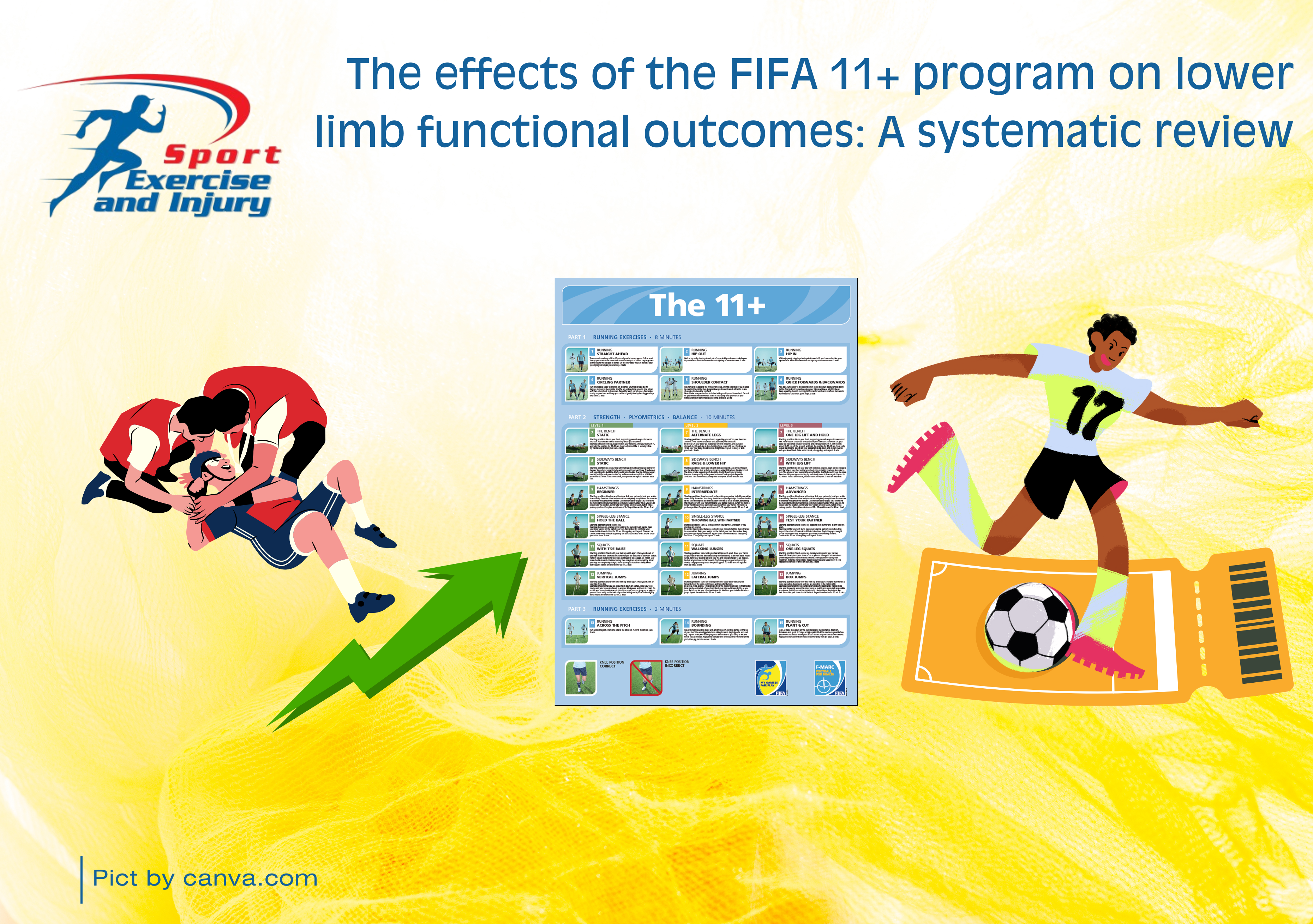
The effects of the FIFA 11+ program on lower limb functional outcomes: A systematic review
Yulingga Nanda Hanief1, Italo Sannicandro2, Raja Mohammed Firhad Raja Azidin31. State University of Malang , ID2. Clinical and Experimental Medicine Department, University of Foggia , IT3. Faculty of Sports Science and Recreation, Universiti Teknologi MARA , MY2025-12-30|page 122-138AbstractBackground: The FIFA 11+ program has been proven effective in preventing soccer injuries, but evidence regarding its impact on lower extremity functional outcomes is still scattered and reported heterogeneously.
Objectives: This systematic review aims to synthesize evidence regarding the effects of the FIFA 11+ program on lower extremity functional outcomes—including ROM, knee extension, internal and external hip rotation, and hamstring muscle strength—in athletes.
Methods: This systematic review was prospectively registered in PROSPERO (CRD420251147261) and conducted in accordance with PRISMA 2020 guidelines. A total of 14 studies involving athletes or physically active individuals met the inclusion criteria. Functional outcomes were measured using various instruments, primarily an isokinetic dynamometer for muscle strength and a goniometer for ROM measurement. The methodological quality of the studies was assessed using the Newcastle–Ottawa Scale. Due to substantial heterogeneity in study design, measurement instruments, intervention protocols, and reporting formats, a quantitative meta-analysis was not performed, and the data were synthesized using a qualitative narrative approach.
Results: Most studies (approximately 70–80%) reported an increase in hamstring muscle strength after the FIFA 11+ intervention, particularly in concentric and eccentric isokinetic measurements. Improvements in ROM and functional outcomes of the knee and hip were also reported, although results varied between studies. Evidence related to knee extension and hip rotation shows lower consistency compared to hamstring strength.
Conclusions: The FIFA 11+ program shows potential functional benefits beyond injury prevention, particularly in improving hamstring muscle strength and several aspects of joint mobility.APA Citation StyleHanief, Y. N. , Sannicandro, I. , & Azidin, R. M. F. R. (2025). The effects of the FIFA 11+ program on lower limb functional outcomes: A systematic review. Sport, Exercise, and Injury, 122-138. https://doi.org/10.56003/sei.v1i2.670 -
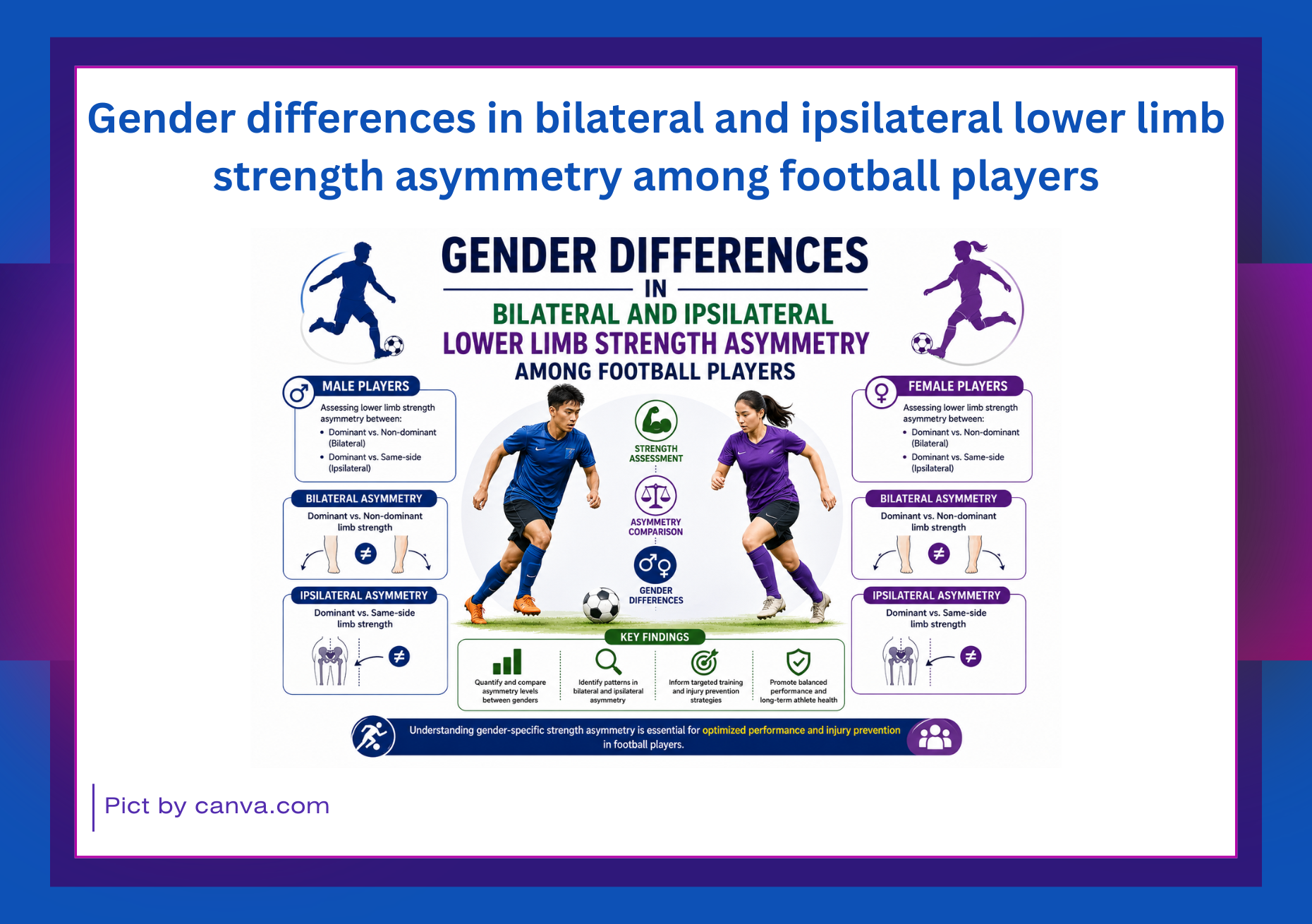
Gender differences in bilateral and ipsilateral lower limb strength asymmetry among football players
Randy R. Manimtim1, Eissel Ronquillo21. Office of Sports Development Program, Batangas State University The National Engineering University Lipa Campus , PH2. Department of Physical Education, School of Education, Holy Angel University , PH2026-06-02|page 1-10AbstractBackground: Lower limb muscle strength asymmetry is a significant factor that can impact playing ability and increase the risk of injury in soccer players. Differences in leg use and the specific movement requirements of a sport can lead to strength imbalances, either on both sides of the body or on the same side. Lower limb muscle strength asymmetry, particularly bilateral and ipsilateral strength asymmetry, is a significant factor influencing performance and increasing injury risk in football players. Differences in limb dominance and sport-specific movement demands can lead to strength imbalances.
Objectives: This study aimed to compare bilateral and ipsilateral lower limb strength asymmetry between male and female football players.
Methods: A cross-sectional study was conducted involving 50 amateur football players (26 males and 24 females; aged 18–21 years). Isokinetic strength testing of knee extensors and flexors was performed at 60°/s. Bilateral asymmetry was calculated based on peak torque differences between limbs, while ipsilateral asymmetry was assessed using the hamstring-to-quadriceps (H/Q) ratio. Statistical analyses included the Mann–Whitney U test and independent t-test (p < 0.05).
Results: Significant sex differences were found in bilateral strength asymmetry for both quadriceps (7.21 ± 4.04% vs 5.04 ± 3.13%, p = 0.02) and hamstrings (9.13 ± 5.15% vs 5.06 ± 4.04%, p = 0.01), with males showing greater asymmetry. Female athletes demonstrated values closer to the recommended asymmetry threshold (≤10–15%). No significant differences were observed in ipsilateral strength asymmetry (H/Q ratio) between groups (p > 0.05).
Conclusions: Bilateral strength asymmetry differs by sex, with male athletes exhibiting higher imbalance, while ipsilateral strength balance is comparable between groups. These findings highlight the importance of monitoring individual strength asymmetry to inform targeted training strategies, reduce injury risk, and optimize performance in football players.
APA Citation StyleManimtim, R. R. , & Ronquillo, E. (2026). Gender differences in bilateral and ipsilateral lower limb strength asymmetry among football players. Sport, Exercise, and Injury, 1-10. https://doi.org/10.56003/sei.v2i1.681 -
Analysis of sports injuries in the implementation of the new 2023 regulations for the sport of Pencak Silat in the 17-35 age category
Muhammad Miqdam Afis11. State University of Malang , ID2026-01-05|page 80-89AbstractBackground: The changes to the 2022/2023 Pencak Silat competition rules established by PESILAT are aimed at international standardization, but these changes have the potential to affect patterns and injury risks for athletes in competition categories involving intense physical contact.
Objectives: This study aims to describe the types, frequency, and body parts injured, as well as athletes' perceptions of the impact of the implementation of the new 2023 regulations on injuries among 17-35-year-old competitive Pencak Silat athletes in Malang Regency.
Methods: The study used a quantitative descriptive design with a cross-sectional approach. The sample consisted of 30 competitive Pencak Silat athletes (aged 17–35 years) selected using purposive sampling. Data were collected in March 2025 using a questionnaire distributed online via Google Forms. Data analysis was performed descriptively using frequencies and percentages, as well as simple comparative analysis based on gender.
Results: Of the 30 respondents, the most commonly reported injuries were sprains (22.0%) and bruises (19.5%). The body parts most frequently injured were the lower extremities (feet and ankles, 20.7%), followed by the hands (14.1%). The most dominant factors causing injury were lack of warm-up (27.5%) and collision/physical contact (26.4%). A total of 64% of athletes (n = 19) stated that the implementation of the new 2023 regulations had a significant effect on the occurrence of injuries. Severe injuries such as fractures, ACL, and MCL were only found in male athletes with a low percentage, while minor injuries (bruises and sprains) were more commonly reported in female athletes.
Conclusions: Soft tissue injuries, particularly sprains and bruises, are the most common types of injuries experienced by competitive Pencak Silat athletes, with injuries predominantly occurring in the lower extremities.APA Citation StyleAfis, M. M. (2026). Analysis of sports injuries in the implementation of the new 2023 regulations for the sport of Pencak Silat in the 17-35 age category. Sport, Exercise, and Injury, 80-89. https://doi.org/10.56003/sei.v1i2.641 -
Injury prevalence among cricket athletes in East Java: A cross-sectional study
Ali Ridho Fadlurrahman Najib11. State University of Malang , ID2025-06-17|page 40-49AbstractBackground: Cricket has a risk of injury that needs to be considered, especially for athletes in East Java. This study aims to understand the prevalence of injuries in East Java cricket athletes, including the type, location, cause, time of occurrence, and treatment, as an effort to prevent and improve athlete performance.
Objectives: This study aims to determine the prevalence, types, causes, timing, and management of injuries among cricket athletes in East Java.
Methods: This study uses non-experimental descriptive quantitative methods, with a cross-sectional study and total sampling technique. 25 Indonesian East Java Province Cricket athletes with an age of 22.68+2.32, height of 163.2+6.78, and weight of 60.32+10.06, consisting of 13 male athletes and 12 female athletes, were involved in this study. This research instrument used a questionnaire to collect data. Data were analyzed using percentage analysis.
Results: The results showed that abrasions (36%) and muscle cramps (20%) were the most frequent injuries, especially affecting the lower extremities (56%). Overtraining (52%) was the leading cause, and injuries mainly occurred during training (52%). The RICE method was the most frequently applied treatment (60%).
Conclusions: This study highlights the need for structured training programs and preventive strategies to reduce the incidence of injuries.
APA Citation StyleNajib, A. R. F. (2025). Injury prevalence among cricket athletes in East Java: A cross-sectional study. Sport, Exercise, and Injury, 40-49. https://doi.org/10.56003/sei.v1i1.554 -
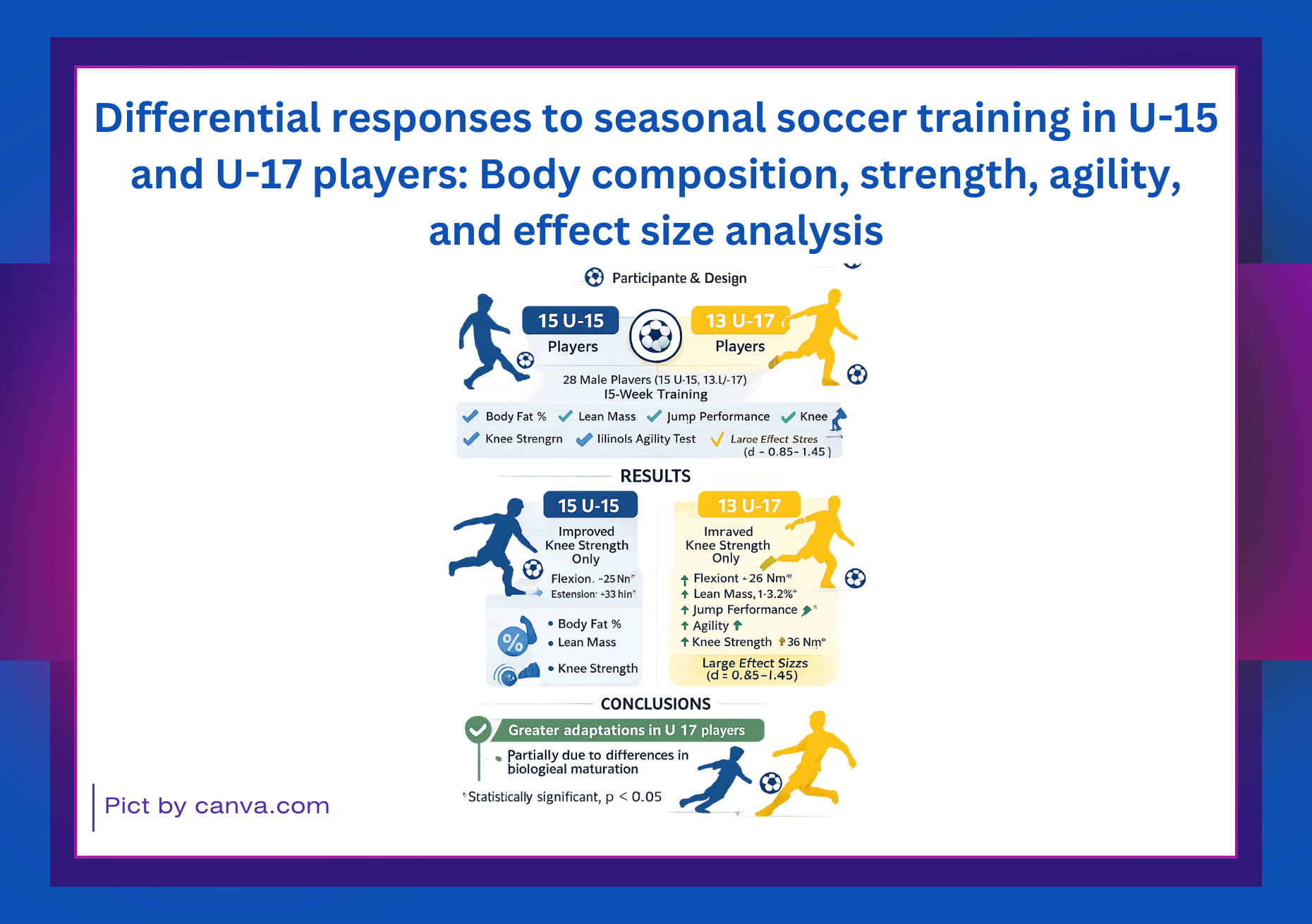
Differential responses to seasonal soccer training in U-15 and U-17 players: Body composition, strength, agility, and effect size analysis
Rick Stoop1, Georgios Georgiadis2, Iván González-García31. Football Club Utrecht, Herculesplein 241, 3584 AA Utrecht , NL2. Department of Nutrition and Movement Sciences, NUTRIM School of Nutrition and Translational Research in Metabolism, Maastricht University , NL3. Faculty of Health Sciences, Universidad Isabel I, Burgos , ES2026-06-09|page 48-63AbstractBackground: Training programs during adolescence play a crucial role in optimizing body composition and physical performance in youth soccer players. However, differences in training adaptations between age groups, particularly in agility performance, remain insufficiently explored.
Objectives: This study aimed to examine the effects of a seasonal soccer training program on body composition, strength, and agility in U-15 and U-17 soccer players.
Methods: A pre–post experimental design was applied to 28 male youth soccer players (U-15: n = 15; U-17: n = 13) competing in a football league in the Netherlands. Participants completed a 16-week training program consisting of technical, conditioning, tactical, and mental components. Body composition (height, body mass, lean mass, fat mass), jump performance (SJ, CMJ, CMJmax), isokinetic strength (knee flexion and extension peak torque), and agility (Illinois Agility Test) were assessed before and after the intervention. Data were analyzed using repeated-measures analysis of variance (ANOVA) and effect sizes were calculated using Cohen’s d.
Results: In the U-15 group, significant improvements were observed only in knee flexion (70.2 ± 15.8 vs. 95.4 ± 23.5 Nm, p = 0.006, d = 1.25) and extension peak torque (75.1 ± 20.4 vs. 96.8 ± 18.9 Nm, p = 0.012, d = 1.10). In contrast, U-17 players demonstrated significant increases in lean mass (50.2 ± 3.1% vs. 53.4 ± 2.3%, p = 0.021), reductions in fat mass (11.0 ± 2.9% vs. 8.7 ± 2.5%, p = 0.037), improvements in agility performance (16.2 ± 0.7 vs. 15.4 ± 0.65 s, p = 0.008, d = 1.18), and knee flexion peak torque (78.4 ± 26.5 vs. 118.3 ± 28.7 Nm, p = 0.003, d = 1.45), together with significant gains in jump performance (p < 0.05). Most significant changes in the U-17 group were accompanied by large effect sizes (d = 0.85–1.45).
Conclusions: The training program elicited greater physiological and performance adaptations in U-17 compared to U-15 players. The greater adaptations observed in the U-17 group may be partially influenced by differences in biological maturation; however, maturity status was not directly assessed in the present study.
APA Citation StyleStoop, R. , Georgiadis, G. , & González-García, I. (2026). Differential responses to seasonal soccer training in U-15 and U-17 players: Body composition, strength, agility, and effect size analysis. Sport, Exercise, and Injury, 48-63. https://doi.org/10.56003/sei.v2i1.735 -
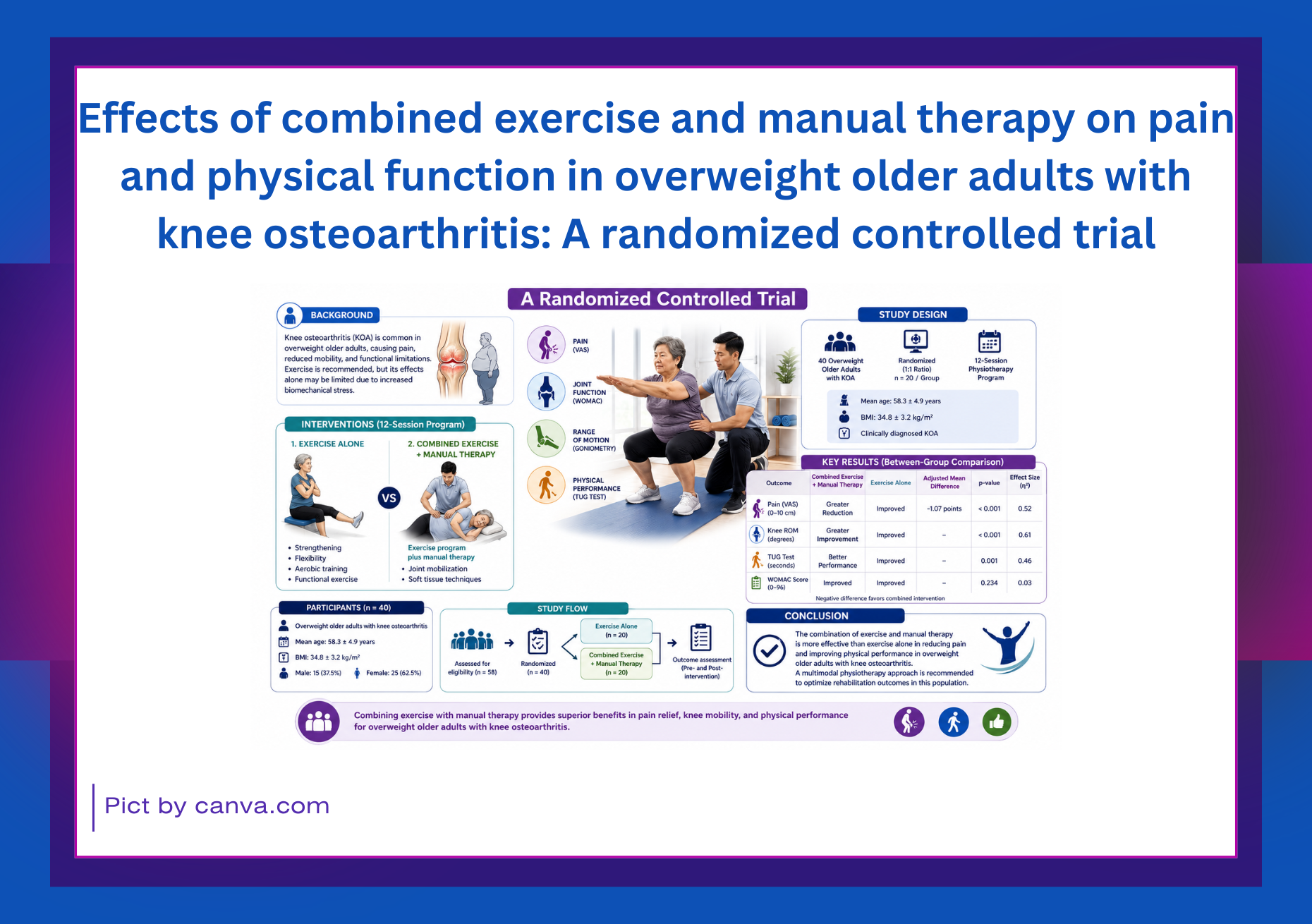
Effects of combined exercise and manual therapy on pain and physical function in overweight older adults with knee osteoarthritis: A randomized controlled trial
Seyed Ehsan Hosseini11. Department of Health Promotion and Rehabilitation, Lithuanian Sports University , LT2026-06-02|page 35-47AbstractBackground: Knee osteoarthritis (KOA) is a prevalent musculoskeletal disorder that leads to pain, reduced mobility, and functional limitations, particularly among overweight older adults. While exercise therapy is widely recommended as a primary non-pharmacological intervention, its effectiveness as a standalone approach may be limited due to increased biomechanical stress in this population.
Objectives: This study aimed to evaluate and compare the effectiveness of exercise therapy alone and a combination of exercise and manual therapy on pain, joint function, range of motion (ROM), and physical performance in overweight older adults with KOA.
Methods: A randomized controlled trial design was employed, involving 40 participants who were randomly allocated (1:1 ratio) using a computer-generated simple randomization sequence. Forty overweight older adults (mean age 58.3 ± 4.9 years; BMI 34.8 ± 3.2 kg/m²) with clinically diagnosed KOA participated in the study. Both groups underwent a 12-session physiotherapy program. Data were collected using the Visual Analog Scale (VAS) for pain, WOMAC for joint function, goniometry for ROM, and the Timed Up and Go (TUG) test for physical performance. Statistical analysis was conducted using JASP, including descriptive statistics, independent-samples t-tests, paired-samples t-tests, repeated-measures ANOVA, and ANCOVA to control for potential confounders.
Results: Both groups demonstrated significant improvements in all outcome measures. Compared with exercise alone, the combined intervention resulted in greater pain reduction (adjusted mean difference = -1.07 points, p < 0.001, η² = 0.52), greater improvement in knee ROM (p < 0.001, η² = 0.61), and better TUG performance (p = 0.001, η² = 0.46). No significant between-group difference was observed for WOMAC scores (p = 0.234, η² = 0.03).
Conclusions: The combination of exercise and manual therapy is more effective than exercise alone in improving pain and physical performance in overweight older adults with KOA. A multimodal physiotherapy approach is recommended to optimize rehabilitation outcomes in this population.
APA Citation StyleHosseini, S. E. (2026). Effects of combined exercise and manual therapy on pain and physical function in overweight older adults with knee osteoarthritis: A randomized controlled trial. Sport, Exercise, and Injury, 35-47. https://doi.org/10.56003/sei.v2i1.716

1 - 8 of 8 items