Search
Search Results
##search.searchResults.foundPlural##
-


Climate change and public health in Africa: A narrative review of resilience strategies for health systems
Kabiru Gulma1, Sa’adatu M. Julde2, Isman Wais3, Emmanuel Morna4, Abubakar S. Danbatta5, Bakam Rodine6, Anastacia Katungo Maluki71. School of Global Health and Bioethics, Euclid University, Banjul , GM2. Faculty of Pharmaceutical Sciences, Bayero University, Kano , NG3. Euclid Caisse Nationale de Sécurité Sociale de Djibouti , DJ4. Doctoral Programme in Monitoring, Measurement and Evaluation, Euclid University, Bangui , CF5. Faculty of Pharmaceutical Sciences, Bayero University, Kano , NG6. Doctoral Programme in Global Energy Policy, Euclid University, Douala , CM7. Doctoral Programme in Epidemiology and Biostatistics, Euclid University, Banjul , GM2026-05-24|page 25-40AbstractBackground: Climate change poses an escalating threat to public health in Africa, a continent responsible for less than 10% of global greenhouse gas emissions yet disproportionately bearing the burden of its consequences. Existing health systems remain fragile, under-resourced, and ill-equipped to absorb climate-related shocks.
Objectives: To synthesize evidence on the health impacts of climate change in Africa and identify strategies for building climate-resilient health systems.
Methods: This study is a narrative literature review. A comprehensive search of peer-reviewed databases and gray literature was conducted. Sources were screened against predefined inclusion criteria and synthesized thematically across six domains: climate science, contextual vulnerabilities, health systems strengthening, governance, community engagement, and financing. A total of 22 studies and reports were included and analyzed using thematic synthesis following Thomas and Harden’s (2008) three-step approach.
Results: Climate change intensifies the burden of infectious and non-communicable diseases, disrupts health infrastructure, and deepens health inequities across African regions. Resilience-building requires strengthened governance, sustained domestic and international financing, multisectoral partnerships, community engagement, and climate-adaptive health information systems.
Conclusions: Concerted, context-sensitive action that integrates climate adaptation into health policy frameworks is urgently needed to protect the health and well-being of African populations from the accelerating impacts of climate change. Practical implications include strengthening health system governance, mobilizing climate finance, investing in climate-adaptive surveillance systems, and fostering community engagement and multisectoral collaboration to build durable climate resilience across African health systems.
APA Citation StyleGulma, K. , Julde, S. M. , Wais, I. , Morna, E. , Danbatta, A. S. , Rodine, B. , & Maluki, A. K. (2026). Climate change and public health in Africa: A narrative review of resilience strategies for health systems. Public Health and Occupational Safety Journal, 25-40. https://doi.org/10.56003/phosj.v2i1.719 -
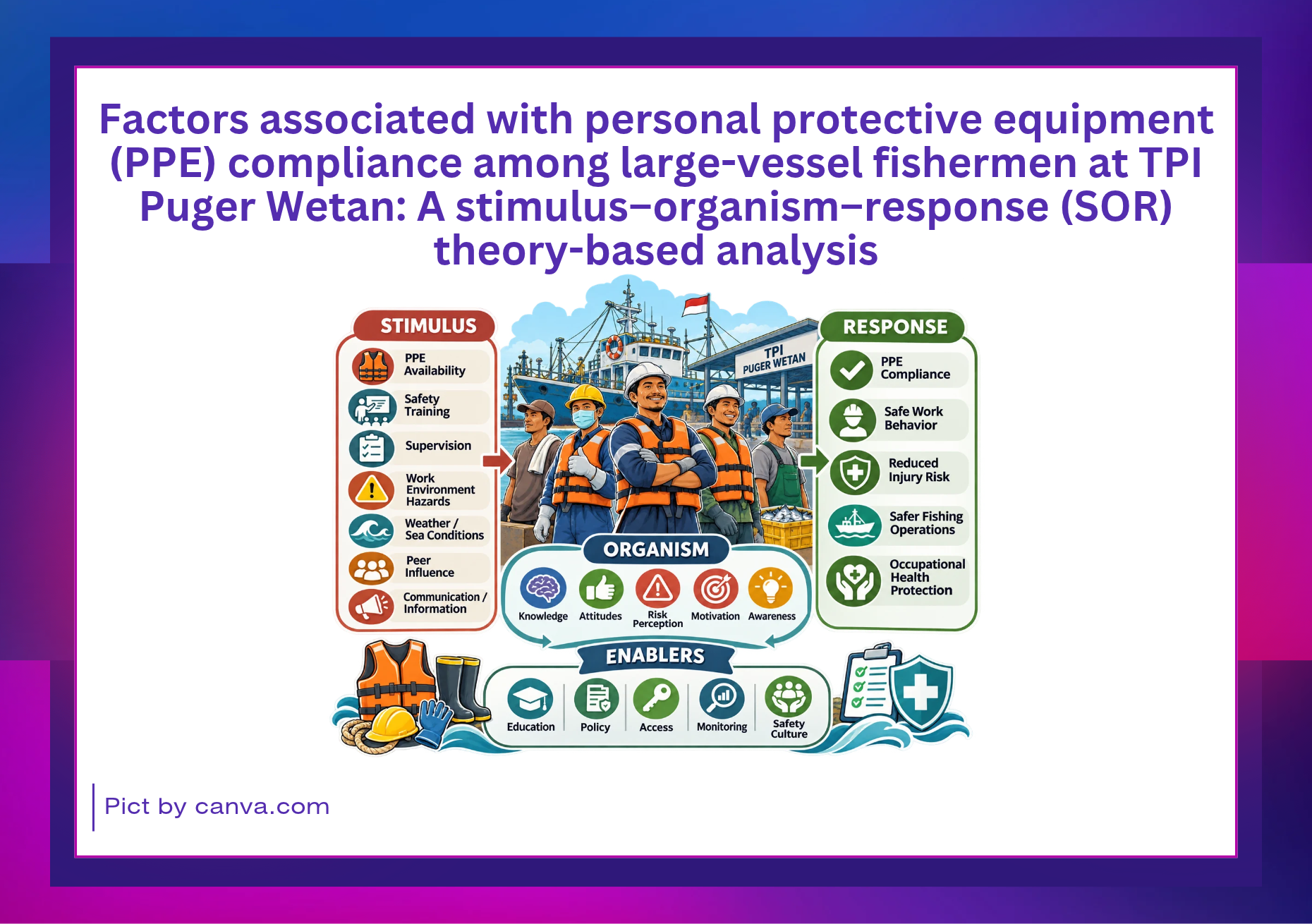
Factors associated with personal protective equipment (PPE) compliance among large-vessel fishermen at TPI Puger Wetan: A stimulus–organism–response (SOR) theory-based analysis
Putri Alifah Salsabila1, Nesya Nesya2, Fazilatu Afza3, Alisya Puspita Sari4, Kamiliyatul Yanani5, Rachel Mutiara Jasmine6, Bunga Tri Cantika7, Nazwa Ajeng Vania Putri8, Davina Zahra Fernanda9, Farida Wahyu Ningtyias10, Sri Rahayu Pudjiati11, Yunus Ariyanto12, Taufan Asrisyah Ode131. Universitas Jember , ID2. Universitas Jember , ID3. Universitas Jember , ID4. Universitas Jember , ID5. Universitas Jember , ID6. Universitas Jember , ID7. Universitas Jember , ID8. Universitas Jember , ID9. Universitas Jember , ID10. Universitas Jember , ID11. Universitas Jember , ID12. Universitas Jember , ID13. Universitas Jember , ID2026-11-19|page 70-86AbstractBackground: Large-vessel fishermen face substantial occupational hazards, yet compliance with personal protective equipment (PPE) requirements remains low. The stimulus–organism–response (SOR) theory provides a framework for exam-ining factors associated with PPE compliance.
Objectives: To identify factors associated with PPE compliance among large-vessel fishermen at the Puger Wetan Fish Landing Site (TPI Puger Wetan).
Methods: This analytical cross-sectional study included 52 fishermen selected through simple random sampling. Data were collected through structured ques-tionnaire-based interviews. Associations were examined using the Fisher–Freeman–Halton exact test (α = 0.05) because the chi-square test assumptions were not met. Cramér's V was used to assess association strength.
Results: Most respondents (63.5%) were noncompliant with PPE requirements. Significant associations were found for educational attainment (p = 0.004), knowledge (p < 0.001), PPE training (p = 0.005), regulations (p = 0.012), and reward-and-punishment systems (p < 0.001), with Cramér's V values ranging from 0.41 to 0.62. Age, length of service, working hours, attitude, PPE availability, and supervision showed no significant associations.
Conclusions: Educational attainment, knowledge, training, regulations, and re-ward-and-punishment systems were significantly associated with PPE compliance. Strengthening occupational safety education, training, and policy implementation may improve compliance. However, the cross-sectional design and unadjusted analyses preclude causal inferences.APA Citation StyleSalsabila, P. A. , Nesya, N. , Afza, F. , Sari, A. P. , Yanani, K. , Jasmine, R. M. , Cantika, B. T. , Putri, N. A. V. , Fernanda, D. Z. , Ningtyias, F. W. , Pudjiati, S. R. , Ariyanto, Y. , & Ode, T. A. (2026). Factors associated with personal protective equipment (PPE) compliance among large-vessel fishermen at TPI Puger Wetan: A stimulus–organism–response (SOR) theory-based analysis. Public Health and Occupational Safety Journal, 70-86. https://doi.org/10.56003/phosj.v2i2.780 -
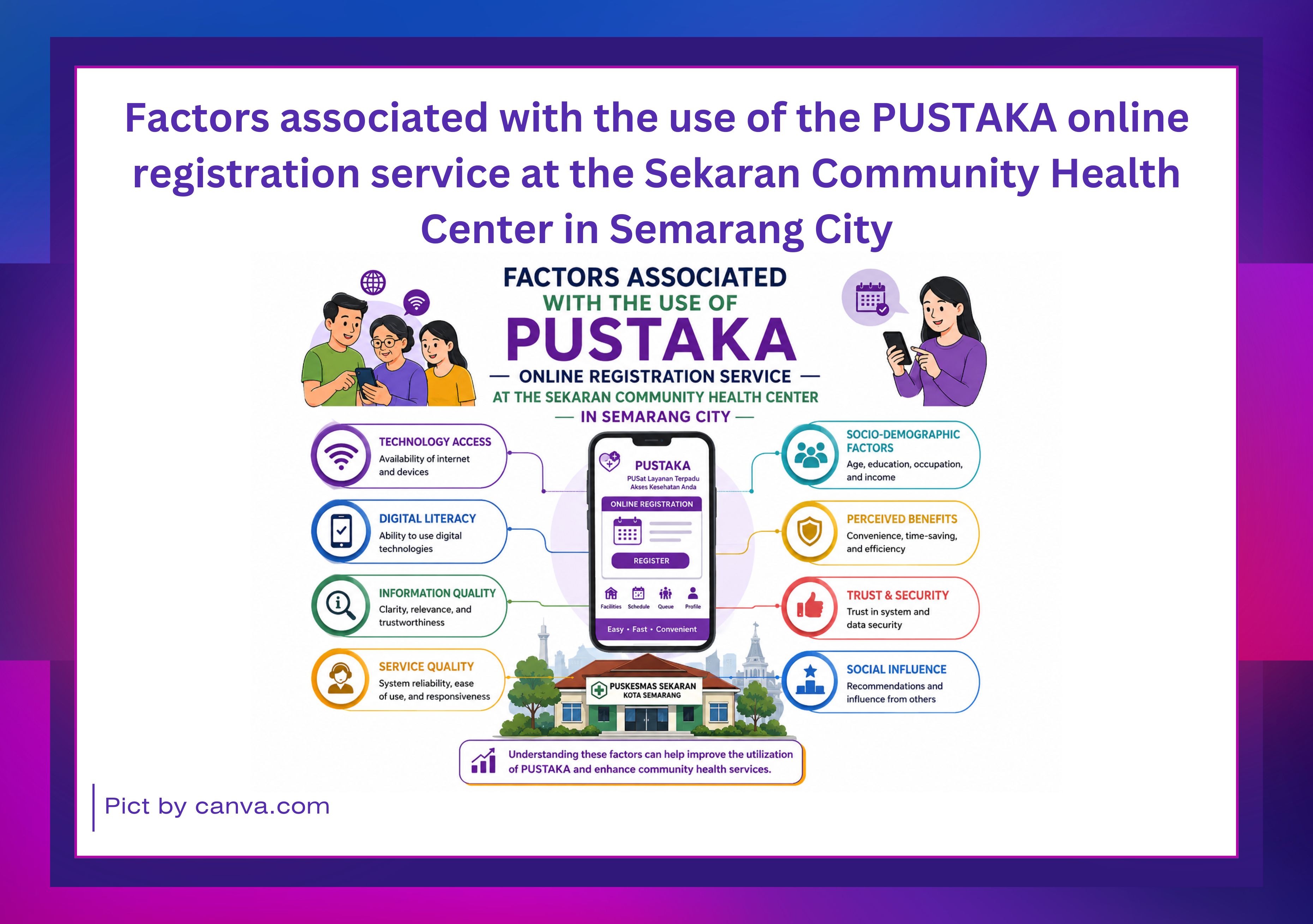
Factors associated with the use of the PUSTAKA online registration service at the Sekaran Community Health Center in Semarang City
Bunga Gustikasari Ismail1, Nurhasmadiar Nandini2, Rani Tiyas Budiyanti31. Faculty of Public Health, Universitas Diponegoro , ID2. Faculty of Public Health, Universitas Diponegoro , ID3. Faculty of Public Health, Universitas Diponegoro , ID2026-05-26|page 57-69AbstractBackground: Online registration services have been implemented in community health centers to facilitate patient access and reduce long queues by enabling appointment scheduling at specific times. However, the utilization of this service in several community health centers in Semarang City remains below the monthly target of 10%. At Sekaran Community Health Center, for example, the average utilization rate was only 1.03% between June and August 2023.
Objectives: This study analyzed the factors associated with the use of the PUSTAKA Online Registration Service at The Sekaran Community Health Center in Semarang City.
Methods: This study employed a quantitative research design with a cross-sectional approach. The population consisted of existing patients at Sekaran Community Health Center, with a sample of 97 respondents selected using accidental sampling. The variables examined included age, education, occupation, attitude, knowledge, perceived need, availability of facilities, and ease of obtaining information in relation to the decision to use PUSTAKA services. Data were collected using a closed-ended questionnaire that had previously undergone validity and reliability testing.
Results: The results of the research analysis using the chi square statistical test showed the conclusion that there was a significant relationship between the factors of age (p = 0.006), education (p = 0.007), occupation (p = 0.044), attitude (p = 0.017), perceived needs (p = 0.006), and ease of obtaining information (p = 0.021) with the decision to use PUSTAKA services at the Sekaran Health Center.
Conclusions: Meanwhile, there is no relationship between knowledge (p = 0.812) and the availability of facilities (p = 0.114) with the decision to use PUSTAKA.
APA Citation StyleIsmail, B. G. , Nandini, N. , & Budiyanti, R. T. (2026). Factors associated with the use of the PUSTAKA online registration service at the Sekaran Community Health Center in Semarang City. Public Health and Occupational Safety Journal, 57-69. https://doi.org/10.56003/phosj.v2i1.739 -
Occupational safety and health hazards among artisanal and small-scale gold miners at Mazowe Jumbo Mine, Zimbabwe: A mixed-methods cross-sectional study
Bridget Nyamombe1, Vincent Itai Tanyanyiwa21. Zimbabwe Open University , ZW2. Zimbabwe Open University , ZW2025-11-28|page 151-162AbstractBackground: Artisanal and small-scale gold mining (ASGM) is associated with multiple occupational hazards that artisans are often unaware of.
Objectives: To identify the occupational hazards and risk factors among artisanal gold miners at Mazowe Jumbo mine, Zimbabwe.
Methods: The cross-sectional study employed Mixed-methods(Sep- Nov 2023). Purposive sampling of 34 miners from two sites (response rate was 100%). The interview was administered using questionnaires, structured interviews, field observations, and document review. Quantitative data were analyzed descriptively (frequencies and proportions), and qualitative data underwent thematic analysis.
Results: Heavy lifting was reported by 100% (34/34), manual handling by 91.2% (31/34), silica dust exposure by 91.2% (31/34), and contaminated water by 85.3% (29/34). Key risk factors included lack of PPE, financial pressure, and low OSH awareness. Field observations noted unsecured shafts, poor sanitation, and evidence of substance use on site.
Conclusions: ASG miners at Mazowe Jumbo Mine face multi-domain OSH hazards. We recommend targeted OSH training programmes, provision of PPE, improved sanitation, and monitoring/ formalization of ASGM activities.
APA Citation StyleNyamombe, B. , & Tanyanyiwa, V. I. (2025). Occupational safety and health hazards among artisanal and small-scale gold miners at Mazowe Jumbo Mine, Zimbabwe: A mixed-methods cross-sectional study. Public Health and Occupational Safety Journal, 151-162. https://doi.org/10.56003/phosj.v1i2.638 -
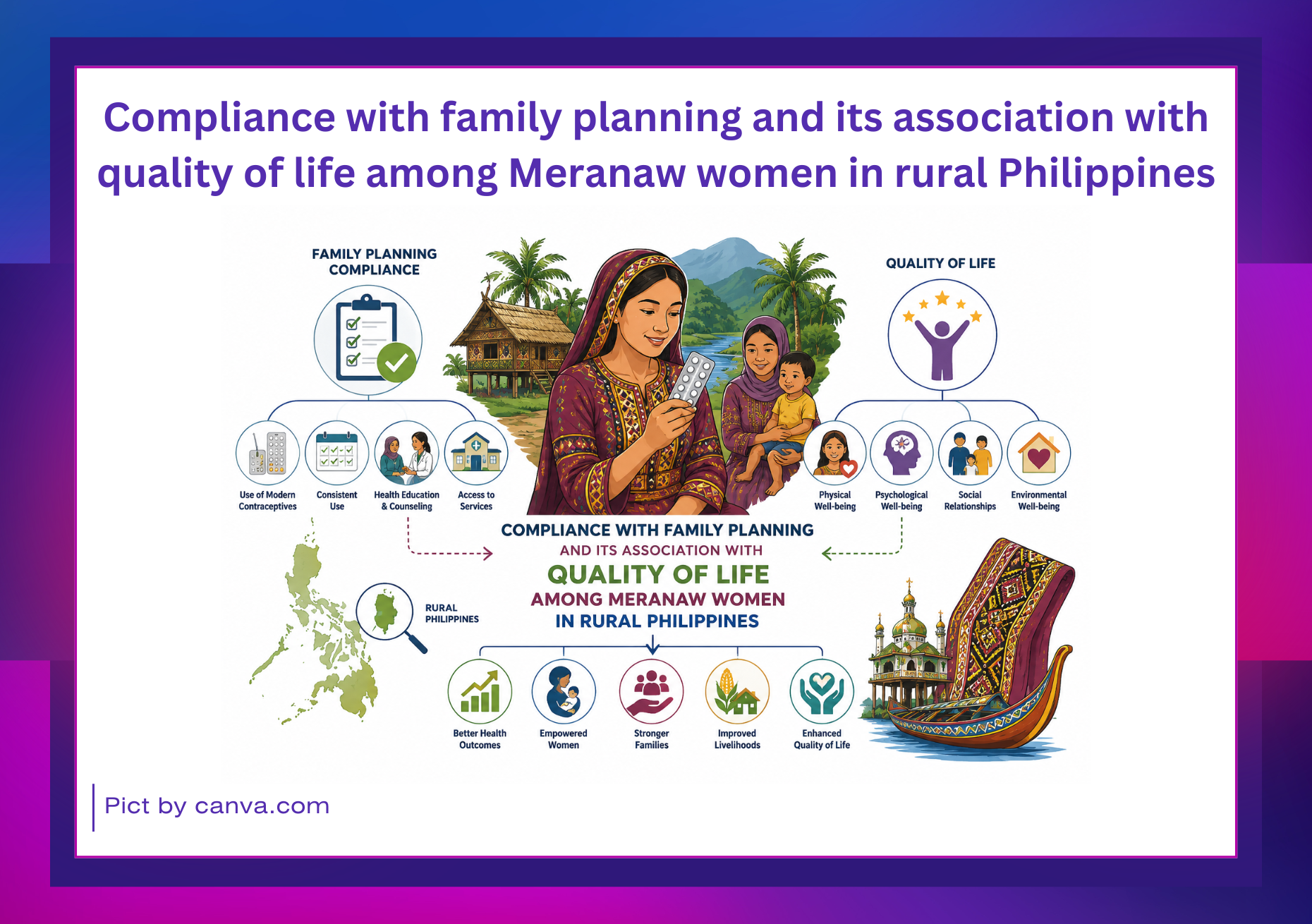
Compliance with family planning and its association with quality of life among Meranaw women in rural Philippines
Maslainie Aliola1, Hamdoni Pangandaman21. Mindanao State University - Marawi, Lanao Del Sur, 9700, Philippines , PH2. Mindanao State University, Marawi City , PH2026-05-24|page 1-13AbstractBackground: The COVID-19 pandemic disrupted access to essential health services, including family planning (FP), particularly in rural and underserved communities. These disruptions may influence women’s reproductive practices and overall quality of life (QoL).
Objectives: This study aimed to determine the level of family planning compliance and examine its influence on the quality of life among Meranaw women during the COVID-19 pandemic.
Methods: A descriptive cross-sectional design was employed among 378 Meranaw women who were family planning users in selected municipalities of Lanao del Sur, Philippines. Data were collected from January to October 2022. A stratified random sampling technique was used based on municipal distribution to ensure proportional representation of respondents. A validated researcher-developed questionnaire assessed attitude- and practice-related compliance (CVI = 0.81–0.92; α = 0.79), while QoL was measured using the WHOQOL-BREF. Data were analyzed using descriptive statistics and multiple linear regression.
Results: Respondents demonstrated high compliance in both attitude (mean = 3.61) and practice (mean = 3.41) domains. Overall QoL was rated very satisfactory (mean = 5.72), with the highest scores in the psychological (mean = 5.89) and relational (mean = 5.85) domains. Multiple regression analysis revealed that age (β = .319, p < .001), monthly income (β = –.097, p = .008), number of children (β = .395, p < .001), duration of FP use (β = .092, p = .034), and type of FP method (β = .129, p < .001) significantly predicted QoL. The model explained a substantial proportion of variance (R² = 0.974), indicating strong predictive capacity.
Conclusions: Meranaw women demonstrated high compliance with family planning practices despite pandemic-related constraints, thereby significantly improving the quality of life. Sustaining family planning services during public health crises is essential to maintaining women’s well-being, particularly in rural and culturally distinct populations.
APA Citation StyleAliola, M. , & Pangandaman, H. (2026). Compliance with family planning and its association with quality of life among Meranaw women in rural Philippines. Public Health and Occupational Safety Journal, 1-13. https://doi.org/10.56003/phosj.v2i1.698 -

Effectiveness of 3D poster in improving menstrual hygiene knowledge among adolescent girls: A quasi-experimental study
Rani Mustikawati1, Windi Chusniah Rachmawati2, Endang Sri Redjeki3, Nurnaningsih Herya Ulfah41. State University of Malang , ID2. State University of Malang , ID3. State University of Malang , ID4. State University of Malang , ID2025-04-23|page 40-52AbstractBackground: Personal hygiene during menstruation is important and must be applied during the menstrual cycle. Suppose personal hygiene during menstruation is not maintained correctly. In that case, adolescent girls have the potential to experience health problems such as vaginal discharge, irritation of the genital area, allergies, inflammation, and Urinary Tract Infection (UTI). As many as 75% of women in Indonesia have experienced vaginal discharge once, while 45% have experienced it more than 2 times.
Objectives: This study aimed to determine the effectiveness of 3D posters in increasing knowledge about personal hygiene during menstruation.
Methods: The research method used was Research and Development (R&D), which was conducted through a pre-experimental approach with one group pretest-posttest. Ninety-five adolescent girls in class VII of State Junior High School 13 Malang participated in the study obtained using a purposive sampling technique. The research instrument used a closed-type questionnaire with 10 items to measure knowledge.
Results: The 3D poster product obtained a percentage value of media feasibility of 95% for the media aspect and 92% for the material aspect, which means it is very feasible to use. After the intervention, it is known that there is an effect of providing health education using 3D posters on the knowledge of adolescent girls regarding personal hygiene during menstruation according to the p-value = 0.000 from the Wilcoxon test.
Conclusions: Personal hygiene education during menstruation should be done more often to improve the knowledge of adolescent girls. The findings support the use of 3D media in menstrual health promotion, especially in schools with limited resources.
APA Citation StyleMustikawati, R. , Rachmawati, W. C. , Redjeki, E. S. , & Ulfah, N. H. (2025). Effectiveness of 3D poster in improving menstrual hygiene knowledge among adolescent girls: A quasi-experimental study. Public Health and Occupational Safety Journal, 40-52. https://doi.org/10.56003/phosj.v1i1.531 -
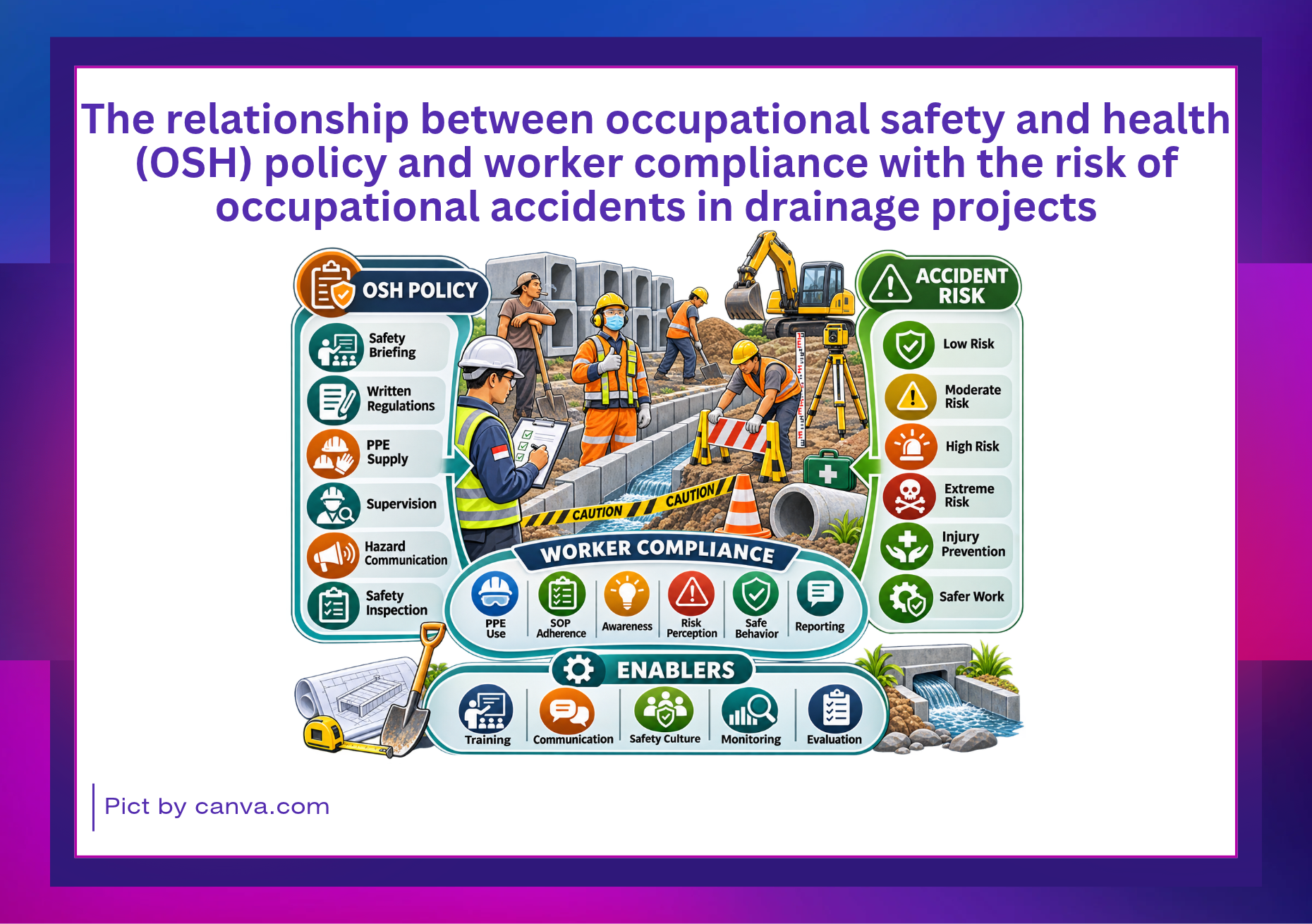
The relationship between occupational safety and health (OSH) policy and worker compliance with the risk of occupational accidents in drainage projects
Hasan Shirat1, Dwi Faqihatus Syarifah Has21. Universitas Muhammadiyah Gresik , ID2. Universitas Muhammadiyah Gresik , ID2026-11-19|page 87-98AbstractBackground: Construction workers, particularly those involved in drainage projects, are exposed to various occupational hazards that increase the risk of workplace accidents. Effective occupational safety and health (OSH) policies and worker compliance with safety procedures are essential for minimizing these risks.
Objectives: This study aimed to examine the associations of OSH policies and worker compliance with occupational accident risk among workers involved in a drainage project at PT Swadaya Cipta.
Methods: This quantitative analytical study employed a cross-sectional design. The study population comprised 65 drainage project workers at PT Swadaya Cipta, of whom 56 were selected through simple random sampling. The sample size was calculated using Slovin's formula with a 5% margin of error. Data were collected using questionnaires and the Hazard Identification, Risk Assessment, and Determining Control (HIRADC) worksheet. Associations between variables were analyzed using the chi-square test.
Results: OSH policy was significantly associated with occupational accident risk (p < .001; OR = 0.049). Worker compliance was also significantly associated with occupational accident risk (p = .002; OR = 0.138).
Conclusions: OSH policy and worker compliance were significantly associated with occupational accident risk among drainage project workers at PT Swadaya Cipta. These findings highlight the importance of effective OSH policy implementation and adherence to safety procedures in occupational accident prevention.APA Citation StyleShirat, H. , & Has, D. F. S. (2026). The relationship between occupational safety and health (OSH) policy and worker compliance with the risk of occupational accidents in drainage projects. Public Health and Occupational Safety Journal, 87-98. https://doi.org/10.56003/809 -

Correlation analysis of vaccination coverage, positivity rate, and community mobility rate on COVID-19 effective reproductive rate: SIR modeling study from Indonesia
Meirina Nur Asih Susanti1, Siti Nurrochmah2, Lucky Radita Alma3, Supriyadi Supriyadi41. State University of Malang , ID2. State University of Malang , ID3. State University of Malang , ID4. State University of Malang , ID2025-06-03|page 80-96AbstractBackground: Effective Reproduction Rate (Rt) is used to evaluate COVID-19 transmission; although Tegal City has the lowest cumulative cases in Central Java, the spread of the virus remains rapid. Intervention efforts are carried out through vaccination coverage, positivity rate, and level assessment as a shared responsibility to reduce the transmission rate.
Objectives: The purpose of this study was to estimate the spread of COVID-19 with the intervention and to determine whether there is a correlation between the COVID-19 Rt Number and vaccination coverage, positivity rate, and level assessment situation in Tegal City.
Methods: Observational quantitative research design. The type of research used was SIR (Susceptible Infected Removed) mathematical modeling and descriptive analysis through an ecological study approach and Spearman correlation statistical analysis.
Results: The results of the study showed a decrease in the number of cases of vulnerable and infected subpopulations after public health interventions, followed by the results that the positivity rate and level assessment situation were significantly correlated with the strength of the relationship powerful to the Covid-19 Effective Reproductive Rate with values (r=0.856; p=0.00) and (r=-0.712; p=0.00), while vaccination coverage was not statistically significantly correlated with a value of (r=-0.209; p=0.137).
Conclusions: The positivity rate and COVID-19 level assessment situation were statistically significantly correlated to the effective reproductive rate of COVID-19 in Tegal City with a strong correlation. Meanwhile, vaccination coverage did not correlate statistically with effective reproductive rate. Further studies must evaluate the effectiveness of combined interventions (vaccination + testing + mobility restriction) in various epidemiological settings.
APA Citation StyleSusanti, M. N. A. , Nurrochmah, S. , Alma, L. R. , & Supriyadi, S. (2025). Correlation analysis of vaccination coverage, positivity rate, and community mobility rate on COVID-19 effective reproductive rate: SIR modeling study from Indonesia. Public Health and Occupational Safety Journal, 80-96. https://doi.org/10.56003/phosj.v1i1.534 -
The relationship between quality and quantity of antenatal care services and stunting in children 24–59 months of age
Aulia Pramesti1, Hartati Eko Wardani2, Tika Dwi Tama3, Anindya Hapsari41. State University of Malang , ID2. State University of Malang , ID3. State University of Malang , ID4. State University of Malang , ID2025-06-14|page 97-113AbstractBackground: Stunting is a chronic nutritional problem whose causes include unmet nutrition in pregnant women, lack of infant nutritional intake, and socioeconomic conditions. Dinoyo Health Center covers an area with a high stunting rate in Malang City, particularly Lowokwaru District. Previous research stated that the dominant factor causing stunting in toddlers is antenatal care (ANC).
Objectives: This study aims to determine whether stunting in toddlers in the Dinoyo Community Health Center area is caused by the quality and quantity of ANC.
Methods: The research method is observational analytic with a case-control design using a retrospective approach. The population was 1643 mothers taken from three villages: Tlogomas, Dinoyo, and Sumbersari. The research sample amounted to 69 people using purpose sampling. The research was conducted in February - March 2023. Quality measurement was based on a minimum 10T service standard, while quantity measurement was based on a minimum frequency of 4 visits using a checklist sheet instrument and MCH book with Chi-Square analysis.
Results: The results obtained for ANC quality with stunting p-value = 0.609 with OR value = 1.30 (95% CI: 0.47-3.55), while ANC quantity with stunting p-value = 0.864 with OR value = 1.09 (95% CI: 0.40-2.97).
Conclusions: It is concluded that the quality and quantity of antenatal care have no association with the incidence of stunting in children under 24-59 months in the Dinoyo Community Health Center (Puskesmas) area. These findings highlight the need for multifactor interventions beyond ANC to reduce stunting, such as improved maternal nutrition and environmental sanitation.
APA Citation StylePramesti, A. , Wardani, H. E. , Tama, T. D. , & Hapsari, A. (2025). The relationship between quality and quantity of antenatal care services and stunting in children 24–59 months of age. Public Health and Occupational Safety Journal, 97-113. https://doi.org/10.56003/phosj.v1i1.539 -
Workplace stress and burnout among university lecturers in Indonesia and Malaysia: A systematic review of stressors, outcomes, and protective factors
Mimi Haryani Hassim1, Dian Puspitaningtyas Laksana2, Rachmy Rosyida Rais3, Ronal Surya Aditya41. University of Technology Malaysia , MY2. State University of Malang , ID3. State University of Malang , ID4. Universitas Jember , ID2026-01-27|page 174-192AbstractBackground: Workplace stress and burnout have emerged as critical occupational health concerns among university lecturers, particularly amid increasing academic workloads, performance pressures, and organizational demands intensified during and after the COVID-19 pandemic. Despite growing empirical attention, evidence remains fragmented, especially within Southeast Asian higher education contexts.
Objectives: This study aims to systematically review empirical research on workplace stress and burnout among university lecturers in Indonesia and Malaysia, with a focus on identifying key stressors, associated outcomes, and protective factors.
Methods: A systematic literature review was conducted following the PRISMA 2020 guidelines. Peer-reviewed articles published in English were retrieved from the Scopus database using predefined search terms related to workplace stress, burnout, lecturers, and higher education in Indonesia and Malaysia. After screening and eligibility assessment, 19 studies published between 2004 and 2025 were included. Methodological quality was assessed using the Newcastle–Ottawa Scale, and findings were synthesized through qualitative narrative analysis due to study heterogeneity.
Results: The review reveals that workplace stress and burnout are prevalent among university lecturers in both countries. Major stressors include excessive workload, role ambiguity, performance-based evaluation systems, work–life imbalance, and limited organizational support. These stressors are consistently associated with adverse outcomes such as emotional exhaustion, reduced job satisfaction, impaired performance, and increased turnover intention. Protective factors, including social support, supportive leadership, emotional intelligence, and workplace spirituality, were found to mitigate stress and burnout effects.
Conclusions: Workplace stress and burnout among university lecturers in Indonesia and Malaysia are multifactorial and systemic issues embedded in contemporary academic work environments. Organizational- and policy-level interventions are essential to promote lecturer well-being and ensure sustainable academic careers.
APA Citation StyleHassim, M. H. , Laksana, D. P. , Rais, R. R. , & Aditya, R. S. (2026). Workplace stress and burnout among university lecturers in Indonesia and Malaysia: A systematic review of stressors, outcomes, and protective factors. Public Health and Occupational Safety Journal, 174-192. https://doi.org/10.56003/phosj.v1i2.674 -
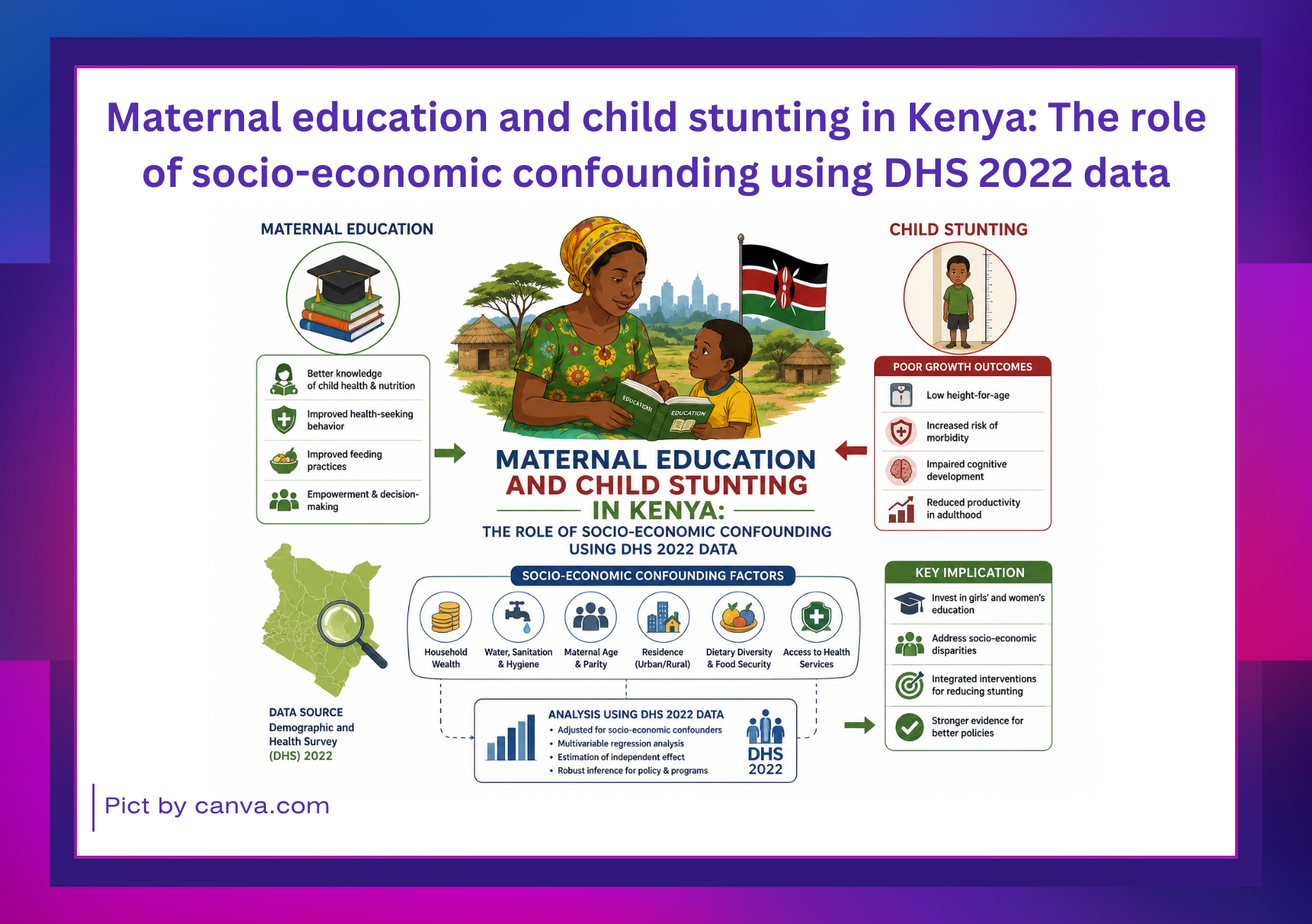
Maternal education and child stunting in Kenya: The role of socio-economic confounding using DHS 2022 data
Anastacia Katungo Maluki1, Zerai Hagos2, Kabiru Gulma3, Michael Musili Nzau41. Doctoral Programme in Epidemiology and Biostatistics, Euclid University, Banjul , GM2. Doctoral Programme in Epidemiology and Biostatistics, Euclid University, Banjul , GM3. School of Global Health and Bioethics, Euclid University, Bangui , CF4. United Nations Development Programme, New York , US2026-05-24|page 41-56AbstractBackground: Child stunting remains a major public health challenge in Kenya, reflecting long‑term nutritional deprivation and socioeconomic inequalities. Although maternal education is widely considered protective, its independent effect is often unclear due to confounding by structural factors.
Objectives: To examine the association between maternal education and child stunting among children under five in Kenya and to assess the extent of confounding and effect modification by key sociodemographic factors.
Methods: A cross‑sectional analytical study was conducted using data from the 2022 Kenya Demographic and Health Survey (KDHS). The sample included 19,530 children aged 0–59 months. Stunting was defined using height‑for‑age z-scores (<-2 SD). Descriptive, bivariate, stratified, and multivariable logistic regression analyses were performed, accounting for the complex survey design.
Results: Stunting prevalence was 18.2%. Stunting decreased with increasing maternal education, from 21.4–21.7% among children of mothers with no or primary education to 8.7% among those with higher education (χ² = 238, p < 0.001). However, the association was weak (Cramer’s V = 0.117) and attenuated after adjustment for socioeconomic factors. Household wealth was the strongest predictor, with children in the richest households having significantly lower odds of stunting than those in the poorest households (AOR = 0.268; 95% CI: 0.222–0.323; p < 0.001). Stunting risk increased with age, particularly among children aged 6–23 months, while females had lower odds than males (OR = 0.717; 95% CI: 0.662–0.776). Stratified analyses showed stronger protective effects of maternal education among older children. In contrast, variation across wealth groups should be interpreted cautiously, given inconsistent and non-significant findings in some strata. No meaningful effect modification by child sex was identified.
Conclusions: Child stunting in Kenya is primarily driven by structural socioeconomic factors. While maternal education is associated with reduced stunting, its effect is highly context dependent. Addressing poverty and inequality is essential for effective and equitable reductions in child stunting.
APA Citation StyleMaluki, A. K. , Hagos, Z. , Gulma, K. , & Nzau, M. M. (2026). Maternal education and child stunting in Kenya: The role of socio-economic confounding using DHS 2022 data. Public Health and Occupational Safety Journal, 41-56. https://doi.org/10.56003/phosj.v2i1.743 -
Factors influencing desired family size among women of childbearing age in eastern Indonesia: Evidence from the Indonesian Demographic Health Survey
Cindy Ade Aulia1, Siti Nurrochmah2, Lucky Radita Alma3, Supriyadi Supriyadi41. State University of Malang , ID2. State University of Malang , ID3. State University of Malang , ID4. State University of Malang , ID2025-06-02|page 67-79AbstractBackground: Globally, Indonesia is the fourth most populous country. Based on the results of the Indonesian Central Bureau of Statistics census, it is known that the population of Indonesia in 2017 was around 261 million people, with an average number of children desired by women of childbearing age in East Nusa Tenggara Province of 2.9 or around three children per woman of childbearing age.
Objectives: This study aimed to determine the relationship between marital status, age at first marriage, employment status, and the number of children desired.
Methods: This quantitative study uses a cross-sectional design and an observational analytic survey method. This study took survey data from the 2017 Indonesian Demographic and Health Survey. The study sample was women aged 15-49 years who were recorded as a selected sample in East Nusa Tenggara Province, totaling 1,929 women. Data analysis used the Chi-square test.
Results: The analysis showed that the p-value of marital status was 0.000, the p-value of age at first marriage was 0.000, and the p-value of employment status was 0.000, which means that there is a significant relationship between marital status, age at first marriage, and employment status with the number of children desired by women of childbearing age.
Conclusions: This study found that marital status, age at first marriage, and employment status were significantly associated with the number of children desired by women of childbearing age. The findings suggest the need for employment-based interventions and marriage education to reduce fertility preferences in areas with high TFR.
APA Citation StyleAulia, C. A. , Nurrochmah, S. , Alma, L. R. , & Supriyadi, S. (2025). Factors influencing desired family size among women of childbearing age in eastern Indonesia: Evidence from the Indonesian Demographic Health Survey. Public Health and Occupational Safety Journal, 67-79. https://doi.org/10.56003/phosj.v1i1.533 -

Role of inter-institutional partnerships in promoting holistic employee wellness programs: A convergent mixed-methods study across three public universities in Metro Manila, Philippines
Rosalie Dela Cruz11. University of Makati , PH2025-11-28|page 139-150AbstractBackground: Employee wellness has become an increasingly essential concern in higher education; yet, many public universities continue to struggle with implementing comprehensive and sustainable wellness initiatives. Inter-institutional partnerships offer opportunities to strengthen these efforts through shared resources and coordinated programming.
Objectives: This study examined how such partnerships support the development of holistic employee wellness programs across three public universities in Metro Manila.
Methods: Using a convergent mixed-methods design, quantitative data were collected from 150 employees through an 18-item validated survey and analyzed using descriptive statistics and chi-square tests to assess institutional differences in awareness, participation, and perceived effectiveness. Qualitative data from six key informants were analyzed using grounded theory techniques to identify themes related to institutional practices and collaborative mechanisms.
Results: Findings indicated significant variations among institutions in employee awareness, participation levels, and perceptions of program effectiveness. Despite the availability of wellness initiatives, participation remained limited, mainly due to workload demands, time constraints, and scheduling challenges. Qualitative themes highlighted four central factors influencing the implementation of wellness: institutional support, holistic wellness orientation, program personalization, and persistent participation barriers. These themes helped explain why engagement levels differed among institutions.
Conclusions: Overall, inter-institutional collaboration contributes positively to wellness program development, but its impact depends on strong institutional support, program relevance, and clear communication. Enhancing coordination and tailoring activities to employee needs may improve future wellness outcomes.
APA Citation StyleCruz, R. D. (2025). Role of inter-institutional partnerships in promoting holistic employee wellness programs: A convergent mixed-methods study across three public universities in Metro Manila, Philippines. Public Health and Occupational Safety Journal, 139-150. https://doi.org/10.56003/phosj.v1i2.610 -
Exploring the interplay of gender, breastfeeding practices, and minimum dietary diversity on stunting among Indonesian children aged 6–23 months
Rossa Amalia1, Hartati Eko Wardani2, Tika Dwi Tama3, Anindya Hapsari41. State University of Malang , ID2. State University of Malang , ID3. State University of Malang , ID4. State University of Malang , ID2025-06-14|page 114-126AbstractBackground: Stunting has the highest prevalence compared to other major malnutrition problems. Risk factors for stunting include gender, breastfeeding, and complementary feeding practices. Stunting requires a faster reduction in prevalence to avoid functional losses in children.
Objectives: This study aimed to determine the association between gender, early breastfeeding initiation, exclusive breastfeeding, breastfeeding status, and Minimum Dietary Diversity with the incidence of stunting.
Methods: This study was an observational analytic study with a cross-sectional approach. The population of the study was children aged 6-23 months in West Java who were sampled by the Indonesian Nutrition Status Study (SSGI) 2021, and the study sample was all members of the population who met the inclusion criteria. Data in this study were obtained through SSGI 2021 documentation and analyzed using the Chi-Square and logistic regression tests.
Results: The results of the bivariate analysis showed a significant association between gender (OR=1.249; 95%CI 1.013-1.540; p=0.042) and breastfeeding status (OR=0.693; 95%CI 0.533-0.901; p=0.007) with the incidence of stunting. Early breastfeeding initiation (p=0.792), exclusive breastfeeding (p=0.059), and MDD (p=0.882) had no significant association with the incidence of stunting in children aged 6-23 months in West Java. Multivariate analysis showed that the most influential factor in the incidence of stunting was gender (OR=1.260; 95%CI 1.022-1.555; p=0.031).
Conclusions: This study shows the association between gender and breastfeeding status on the incidence of stunting. Further research is recommended to explore the role of complementary feeding practices and maternal nutrition in stunting prevention.
APA Citation StyleAmalia, R. , Wardani, H. E. , Tama, T. D. , & Hapsari, A. (2025). Exploring the interplay of gender, breastfeeding practices, and minimum dietary diversity on stunting among Indonesian children aged 6–23 months. Public Health and Occupational Safety Journal, 114-126. https://doi.org/10.56003/phosj.v1i1.540 -

Impact of large-scale social restrictions on air quality (NO₂, CO, O₃) during COVID-19: Surabaya case study, Indonesia
Asmaul Nur Fitria1, Supriyadi Supriyadi2, Muhammad Al-Irsyad3, Anindya Hapsari41. State University of Malang , ID2. State University of Malang , ID3. State University of Malang , ID4. State University of Malang , ID2025-04-23|page 27-39AbstractBackground: The COVID-19 pandemic galvanized the world at the end of 2019. It was identified as an attack on humans and spread very quickly almost all over the world. As the person in charge of protecting the community, the government makes a policy that can suppress the spread of the COVID-19 virus.
Objectives: This study aims to determine whether implementing large-scale social restrictions (PSBB) in the COVID-19 period (2020 to 2021) impacts air quality in Surabaya City, East Java.
Methods: This quantitative research uses an Analysis of Secondary Data (ADS) approach by utilizing secondary data as the primary source. This research was conducted at the Surabaya City Environmental Service, East Java Province, in July - August 2021, with the total population being all the results of NO2, O3, and CO air quality measurements in 2020-2021 during the COVID-19 pandemic in January 2020 to December 2021 at monitoring stations in Surabaya City. This study uses Wilcoxon test analysis.
Results: The results showed that implementing the first phase of large-scale social restrictions had no significant impact on NO₂ air quality in Surabaya City (p = 0.068). Implementing the transitional PSBB (second stage) had no significant impact on NO₂ air quality in Surabaya City (p = 0.068). Implementing the first and second phases of the PSBB has no significant impact on NO₂ air quality in Surabaya City (p = 0.173).
Conclusions: The implementation of PSBB Phase One and PSBB Phase Two (transition period) did not significantly impact the air quality of NO2, CO, or O3 gases in Surabaya City. This finding challenges the common assumption that lockdowns automatically improve air quality and emphasizes the need for more comprehensive environmental policies.
APA Citation StyleFitria, A. N. , Supriyadi, S. , Al-Irsyad, M. , & Hapsari, A. (2025). Impact of large-scale social restrictions on air quality (NO₂, CO, O₃) during COVID-19: Surabaya case study, Indonesia. Public Health and Occupational Safety Journal, 27-39. https://doi.org/10.56003/phosj.v1i1.528

1 - 15 of 15 items