Search
Search Results
##search.searchResults.foundPlural##
-

Strategies for improving athlete performance through training load monitoring training at Barracuda’s Swimming Club
Prisca Widiawati1, Yulingga Nanda Hanief2, Ulma Erdilanita3, I Kadek Ryo Prananda41. State University of Malang , ID2. State University of Malang , ID3. Indonesia University of Education , ID4. State University of Malang , ID2025-02-15|page 23-31AbstractTraining load training (training load) is one of the essential strategies for improving athlete performance. The lack of understanding of coaches and athletes regarding training load calculations is the main focus of the service team. This activity aims to apply the concept of training load calculation at Barracuda's Swimming Club to minimize the risk of injury and overtraining and improve athlete performance. Training load is divided into external and internal training loads, where external loads measure the physical work done by athletes, while internal loads evaluate physiological and psychological responses to exercise. Through a Community-Based Participatory Research (CBPR) approach, this service program collaborates with coaches, athletes, and guardians to develop and implement an appropriate program. Training activities included two sessions, with material on training load calculation, Long-Term Athlete Development (LTAD), training load management, and the role of nutrition in supporting athlete performance. The pre-test and post-test results significantly increased participants' understanding of the training load. Based on the Paired T-Test analysis, there was a significant difference between the pretest and post-test scores with a p-value of 0.000, confirming that the training was effective in improving participants' understanding of training load calculation. Therefore, this program plays a crucial role in empowering coaches to make informed decisions to manage training loads, minimize injuries, and maximize athletes' potential.
APA Citation StyleWidiawati, P. , Hanief, Y. N. , Erdilanita, U. , & Ryo Prananda, I. K. (2025). Strategies for improving athlete performance through training load monitoring training at Barracuda’s Swimming Club. Darmabakti: Jurnal Pengabdian kepada Masyarakat, 23-31. https://doi.org/10.56003/darmabakti.v1i1.404 -
Great coaches, strong players: A program to enhance strength training at Batu Football Academy
Yulingga Nanda Hanief1, Raja Mohamed Firhad Raja Azidin2, Supriatna Supriatna31. State University of Malang , ID2. MARA University of Technology , MY3. State University of Malang , ID2025-02-15|page 32-39AbstractOne of the pillars of success for young footballers is good physical ability. Coaches have a challenge to improve the physical abilities of young footballers through the right training program. This activity aims to increase coaches' knowledge in developing appropriate and effective physical training programs for young footballers. 13 coaches and four assistant coaches at Batu Football Academy (BAFA) were involved in this activity. The stages of this activity include problem identification, determination of goals and objectives, program design, action plan development, activity implementation, monitoring and evaluation, sustainability plan, and follow-up. The activity results show an increase in knowledge about the preparation of training programs, which is indicated by an increase in the percentage of each question/statement asked both before and after the activity. The results of this service activity emphasize the importance of grassroots coaches' understanding of the physical demands young footballers face. In addition, coaches need to identify the physical needs of players to design specific training programs to improve their physical performance. Although a structured training program can positively impact, maintaining a balance between training intensity and recovery time remains crucial to avoid potential negative impacts.
APA Citation StyleHanief, Y. N. , Azidin, R. M. F. R. , & Supriatna, S. (2025). Great coaches, strong players: A program to enhance strength training at Batu Football Academy. Darmabakti: Jurnal Pengabdian kepada Masyarakat, 32-39. https://doi.org/10.56003/darmabakti.v1i1.426 -

Content creation training based on the works of Indonesian scholars for Islamic boarding school students in Batu
Luthfi Maulida Rochmah1, Shella Natasya2, Mohammad Ahsanuddin31. State University of Malang , ID2. State University of Malang , ID3. State University of Malang , ID2025-03-10|page 40-47AbstractDa'wah is one of the efforts that can be made to spread the meaning of religious moderation, with the leading actor being a santri, the successor of ulama. However, many Santri have not been able to actualize the teachings of pesantren sourced from turats or books of archipelago scholars into da'wah content in digital media times. This activity aims to produce content creators from among santri to intensify digital da'wah based on religious moderation. This activity uses a quantitative method with a case study approach. The service, which was implemented in the form of training, was carried out for two days, on May 20-21, 2023, at Ma'had Madrasah Aliyah Negeri (MAN) Batu City with 50 participants from representatives of Islamic boarding schools and Ma'had in Batu City. The implementation of this training received a successful predicate, with a percentage of 66% of participants answering that the implementation of the training went very well, 88% of participants answered that they would take part in further training if there were another program, and 60% of participants answered that this content creator training was efficient to be held. The service activity team hopes that training like this can continue to be carried out to provide digital da'wah education and spread the value of moderation to all santri in the archipelago.
APA Citation StyleRochmah, L. M. , Natasya, S. , & Ahsanuddin, M. (2025). Content creation training based on the works of Indonesian scholars for Islamic boarding school students in Batu. Darmabakti: Jurnal Pengabdian kepada Masyarakat, 40-47. https://doi.org/10.56003/darmabakti.v1i2.484 -
Strengthening editorial competencies and DOAJ-based journal governance through a training program at STIKES Vincentius A Paulo Surabaya
Ni Nyoman Wahyu Lestarina1, Nora Ekawati2, Veronica Silalahi3, Gabriel Wanda Sinawang4, Selly Omega Dila Teju51. STIKES Katolik St.Vincentius a Paulo Surabaya , ID2. STIKES Katolik St.Vincentius a Paulo Surabaya , ID3. STIKES Katolik St.Vincentius a Paulo Surabaya , ID4. STIKES Katolik St.Vincentius a Paulo Surabaya , ID5. STIKES Katolik St.Vincentius a Paulo Surabaya , ID2026-06-13|page 12-18AbstractThe management of high-quality scientific journals continues to face numerous challenges. This community service activity aimed to evaluate the effectiveness of a training program designed to improve participants’ understanding of DOAJ standards and national journal accreditation. This community service activity employed a pre-experimental one-group pretest–posttest design. In the initial phase, 16 participants took a pretest to assess their baseline knowledge; subsequently, they participated in a training session comprising material delivery and interactive discussions. After the activity concluded, a posttest was administered to measure the participants’ improved understanding. Data analysis to test the significance of differences before and after the training used the Wilcoxon test. Descriptive analysis results indicated an increase in the average score from 112.5 to 146.3 on the final knowledge test. Based on the Wilcoxon Signed-Rank Test, a Z-value of -3.237 was obtained (p = 0.001, p < 0.05), indicating that training on scientific journal management in accordance with DOAJ standards and national accreditation standards significantly improved participants’ understanding. Furthermore, the effect size indicated by the matched-rank biserial correlation of -0.950 suggests that the training’s impact falls into the very large category. The training not only enhanced participants’ knowledge of open access principles, policy transparency, and editorial governance but also standardized their understanding, resulting in a more consistent level of understanding among participants.
APA Citation StyleLestarina, N. N. W. , Ekawati, N. , Silalahi, V. , Sinawang, G. W. , & Teju, S. O. D. (2026). Strengthening editorial competencies and DOAJ-based journal governance through a training program at STIKES Vincentius A Paulo Surabaya. Darmabakti: Jurnal Pengabdian kepada Masyarakat, 12-18. https://doi.org/10.56003/darmabakti.v3i1.728 -

Strengthening basic soccer skills through a ball-handling training program for young children at SSB Rabbani Putra Mandiri
Ferdy Nur Alfiansyah1, Imam Hariadi21. State University of Malang , ID2. State University of Malang , ID2025-07-04|page 71-77AbstractDribbling ability is an essential basic skill in early childhood soccer. However, preliminary observations at SSB Rabbani Putra Mandiri show that the 10-year-old age group still has difficulties maintaining ball control while dribbling, such as the ball being too far from the feet, uncontrolled direction of movement, and being easily captured by opponents. This service activity aims to improve dribbling skills through a specially designed ball feeling training program based on the principles of Long-Term Athlete Development (LTAD). The implementation method used an experimental one-group pretest-posttest design with 20 participants. The training program was conducted for 22 meetings, and dribbling skills were measured using tests from Winarno (2006). The evaluation results showed a significant increase in the average value of dribbling skills, from 51.35 in the pretest to 61.75 in the posttest. The Paired T-Test test results showed a p value <0.05, which means there is a significant difference between before and after training. In conclusion, the ball feeling training program effectively improves dribbling skills in early age players. This program is expected to be adopted as part of the early childhood football training curriculum on an ongoing basis. This service activity supports the achievement of the SDGs, especially Goal 3 (healthy and prosperous life) and Goal 4 (quality education), through providing quality education.
APA Citation StyleAlfiansyah, F. N. , & Hariadi, I. (2025). Strengthening basic soccer skills through a ball-handling training program for young children at SSB Rabbani Putra Mandiri. Darmabakti: Jurnal Pengabdian kepada Masyarakat, 71-77. https://doi.org/10.56003/darmabakti.v1i2.606 -
Knowledge and attitudes toward balanced nutrition among children of Indonesian migrant workers at Pondok An-Nahdloh, Selangor, Malaysia
Nohan Arum Romadlona1, Septa Katmawanti2, Farah Paramita3, Suci Puspita Ratih4, Evada Mutiara Ramadhani5, Nadia Fauziyah Nashih61. State University of Malang , ID2. State University of Malang , ID3. State University of Malang , ID4. State University of Malang , ID5. State University of Malang , ID6. State University of Malang , ID2025-02-15|page 1-7AbstractThe number of Indonesian migrant workers in Malaysia is very high. However, access to education for Indonesian citizens' families is not yet spread evenly and appropriately. Hundreds of Indonesian migrant workers' children attended school at Sanggar Bimbingan (SB). However, various problems arise, including the lack of healthy living behavior and low-nutrition food consumption. Community service activities were carried out at Pondok An Nahdloh in Tanjung Sepat, Selangor, Malaysia, by a team of lecturers from the Department of Public Health, Universitas Negeri Malang. The core material presented includes 1) Introduction to Adolescent Nutrition, 2) Adolescent Nutrition Problems, and 3) Healthy Body Image, which is interesting through video presentations and modules. The students also underwent height and weight measurements to measure body mass index (BMI). The service activity involved 33 junior high school students aged 13-16 years, including 18 male students (55%) and 15 female students (45%). Body weight measurements showed that 61% of students weighed under 60 kg. Furthermore, the student's height is generally less than 160 cm. Calculating nutritional status based on BMI shows that 64% of students have an abnormal weight, either underweight or overweight. The average knowledge score before training was 6.8 and increased to 8.4 after training. Meanwhile, the average attitude value before training was 30.4 and increased to 31.2 after training. This score increase shows that the training program effectively increases students' knowledge and attitudes toward balanced nutrition.
APA Citation StyleRomadlona, N. A. , Katmawanti, S. , Paramita, F. , Ratih, S. P. , Ramadhani, E. M. , & Nashih, N. F. (2025). Knowledge and attitudes toward balanced nutrition among children of Indonesian migrant workers at Pondok An-Nahdloh, Selangor, Malaysia. Darmabakti: Jurnal Pengabdian kepada Masyarakat, 1-7. https://doi.org/10.56003/darmabakti.v1i1.385 -

Building young athletes' basic technical skills through an overhead pass training program at the Satria Sejati volleyball club in Semarang
M. Dandy Aryadi1, Didik Cahyono21. Universitas PGRI Semarang , ID2. Mulawarman University , ID2025-11-21|page 13-19AbstractOverhead passing skills are a fundamental technique in volleyball that often poses a challenge for young athletes, including those at the Satria Sejati Volleyball Club in Semarang. Based on initial observations, most athletes struggle to control the direction of the ball, maintain the power of their push, and keep a stable hand position. This community service activity aims to enhance the overhead passing skills of young athletes by applying a practical and easy-to-implement wall passing training method. The activity was conducted over a period of two months, with training sessions held three times a week, involving 24 athletes aged 13–17 years. The implementation method employed an experimental approach with a pretest–posttest design, where data were analyzed descriptively by comparing mean differences. The results showed an increase in passing ability from an average of 35.75 to 39.41, with a difference of 3.66 points. This improvement reflects the effectiveness of wall training in improving ball control, pushing power, and bounce accuracy. This activity also had a positive impact on increasing athlete motivation, while strengthening coaches' capacity to continuously apply scientifically based training models in the club environment.
APA Citation StyleAryadi, M. D. , & Cahyono, D. (2025). Building young athletes' basic technical skills through an overhead pass training program at the Satria Sejati volleyball club in Semarang. Darmabakti: Jurnal Pengabdian kepada Masyarakat, 13-19. https://doi.org/10.56003/darmabakti.v2i1.654 -
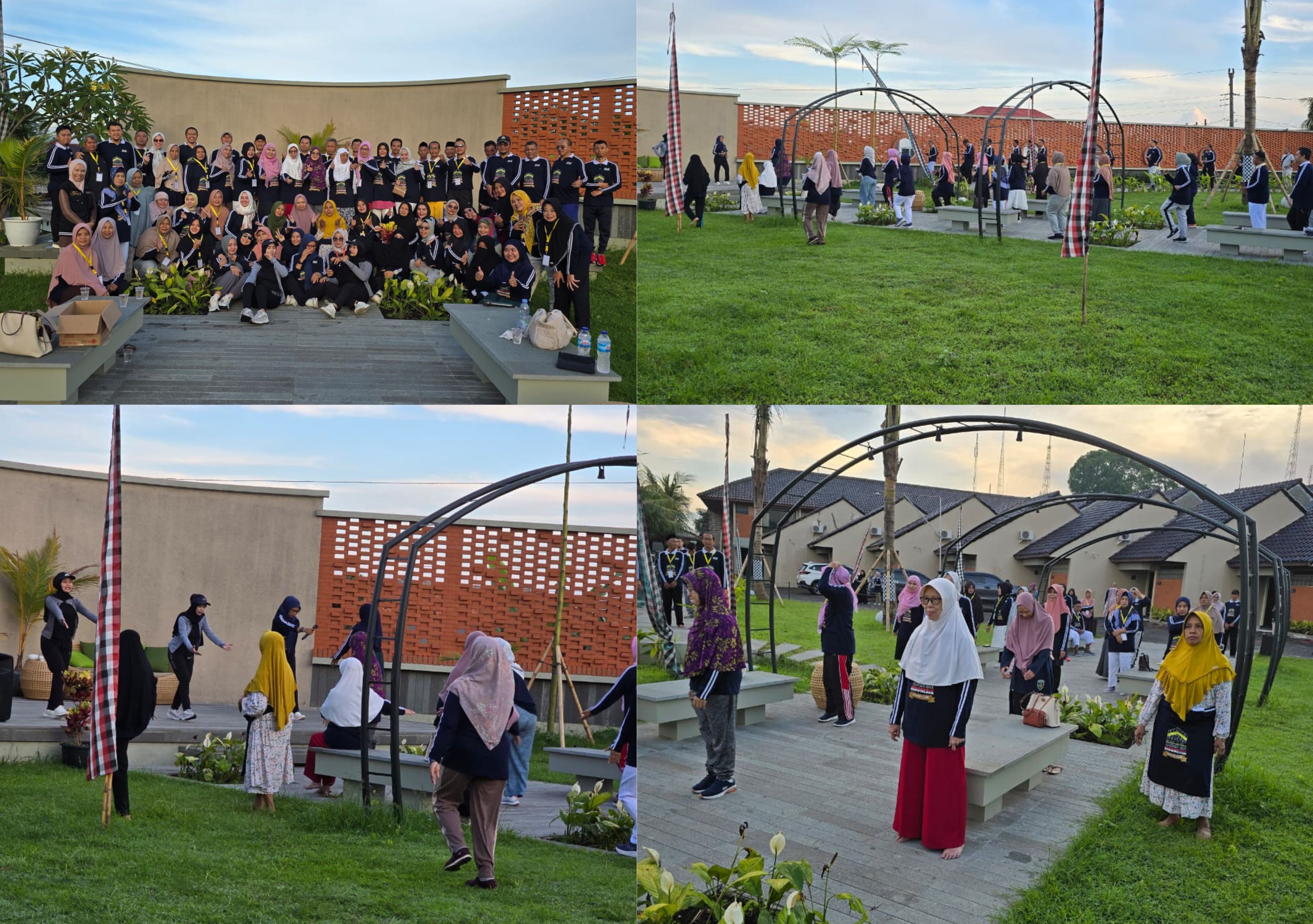
Implementation of a fitness training program for Hajj pilgrims based on structured exercises in the city of Semarang
Siti Baitul Mukarromah1, Sahri Sahri2, Gustiana Mega Anggita3, Rikha Liemiyah41. State University of Semarang , ID2. State University of Semarang , ID3. State University of Semarang , ID4. Universitas Dian Nuswantoro , ID2025-11-30|page 37-50AbstractThe majority of Hajj pilgrims in Semarang City are over 50 years old and have varying levels of physical fitness, with little to no structured physical activity prior to departure. This condition increases the risk of fatigue and musculoskeletal complaints and reduces physical readiness for performing the Hajj rituals. To address these needs, the service team implemented a structured exercise-based fitness training program tailored to the pilgrims' conditions. The program was conducted over eight weeks, with three training sessions per week, covering light to moderate intensity aerobic exercises, muscle strengthening, flexibility, and healthy lifestyle education related to nutrition, rest, and stress management. The methods and results of the activities were carried out in Semarang City, involving 75 pilgrims registered for the 2025 Hajj season. The program was implemented using a planned exercise method over eight weeks, with a frequency of three times a week, incorporating light to moderate intensity aerobic exercises, muscle strengthening to increase endurance, flexibility exercises, and healthy lifestyle education on diet, rest, and stress management. Evaluation was conducted through cardiorespiratory fitness tests (6-minute walk test), leg muscle strength measurements, and body mass index. The results of the program showed a significant improvement in the participants' fitness, marked by an increase in the 6MWT distance from 420.3 ± 52.1 meters to 510.7 ± 47.6 meters (p < 0.05), an 18.4% increase in leg muscle strength, and a decrease in average BMI of 0.9 kg/m². Participants also reported an improvement in motivation and a deeper understanding of the importance of physical preparation. This program has proven to be effective and can be recommended as a fitness training strategy for Hajj pilgrims.
APA Citation StyleMukarromah, S. B. , Sahri, S. , Anggita, G. M. , & Liemiyah, R. (2025). Implementation of a fitness training program for Hajj pilgrims based on structured exercises in the city of Semarang. Darmabakti: Jurnal Pengabdian kepada Masyarakat, 37-50. https://doi.org/10.56003/darmabakti.v2i1.667 -

Mapping the psychological profiles of athletes at the Nusantara Petanque Club in Kediri as a basis for developing a mental training program
Moch Yunus1, Sapto Adi2, Abdian Asgi Sukmana3, Ulma Erdilanita41. State University of Malang , ID2. State University of Malang , ID3. Universitas Nusantara PGRI Kediri , ID4. Indonesia University of Education , ID2025-11-22|page 20-28AbstractThis community service activity was motivated by a problem faced by the Nusantara Petanque Club Kediri, namely the lack of comprehensive mapping of athletes' psychological profiles as a basis for developing mental training programs. This situation has led coaches to continue relying on general approaches that fail to address the psychological needs of individual athletes. This activity aims to map the psychological profiles of Petanque athletes, covering six main components, namely concentration, resilience, self-efficacy, mental toughness, anxiety, and decision-making, as a first step in strengthening the mental capacity of athletes. The community service was conducted on October 25, 2025, at the Nusantara Petanque Club Kediri training facility, involving 14 active athletes. The implementation method employed a survey-based community service approach, involving the stages of coordination, socialization, completion of standardized psychological instruments, and quantitative descriptive data analysis using frequency distribution. The results of the study indicate that mental toughness, self-efficacy, and resilience fall into the high category, while decision-making tends to be moderate, and concentration is relatively low. These findings confirm that Petanque athletes' mental preparedness is quite strong, but there is a need to improve their ability to focus and make decisions under pressure. This activity contributes to providing an empirical basis for coaches to develop more specific, measurable, and sustainable psychological training programs.
APA Citation StyleYunus, M. , Adi, S. , Sukmana, A. A. , & Erdilanita, U. (2025). Mapping the psychological profiles of athletes at the Nusantara Petanque Club in Kediri as a basis for developing a mental training program. Darmabakti: Jurnal Pengabdian kepada Masyarakat, 20-28. https://doi.org/10.56003/darmabakti.v2i1.658 -
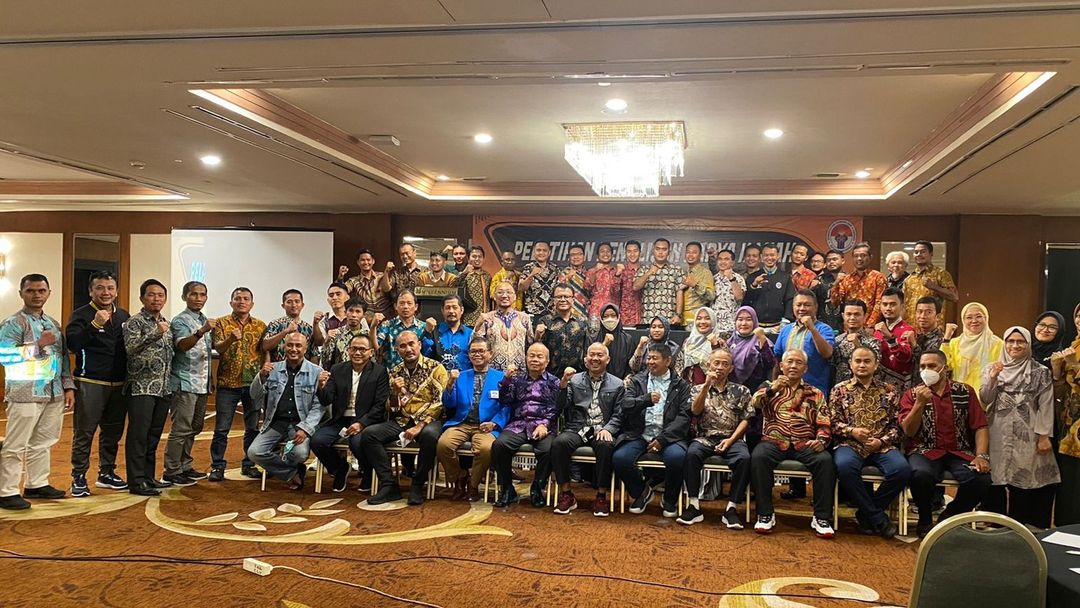
Training and mentoring in scientific article writing using artificial intelligence for physical education teachers in Indonesia
Mashuri Eko Winarno1, Tandiyo Rahayu2, Suroto Suroto3, Wahjoedi Wahjoedi4, Firmansyah Dlis5, Gusril Gusril6, Caly Setiawan7, Rif’iy Qomarullah8, Muhamad Syamsul Taufik9, Aridhotul Haqiyah10, Karisdha Pradityana11, Yulingga Nanda Hanief121. State University of Malang , ID2. State University of Semarang , ID3. Universitas Negeri Surabaya , ID4. Ganesha University of Education , ID5. State University of Jakarta , ID6. ID7. Yogyakarta State University , ID8. Cenderawasih University , ID9. Universitas Suryakancana , ID10. Universitas Islam 45 Bekasi , ID11. Universitas Islam 45 Bekasi , ID12. State University of Malang , ID2025-02-15|page 14-22AbstractPhysical education teachers face several scholarly writing challenges that can hinder their effectiveness in communicating research and pedagogical practices. One significant issue is the need for more training in academic writing, which often results in difficulties in structuring and clearly articulating their ideas. This activity aims to assist Physical Education, Sports, and Health (PJOK) teachers in improving their knowledge and understanding of writing scientific papers with the help of artificial intelligence. This activity was attended by 25 PJOK teachers who have joined the National Sports Teachers Association (IGORNAS) from various provinces in Indonesia. This activity consists of 3 stages: pre-activity, activity, and post-activity. The output of this activity, in addition to increasing knowledge of writing scientific articles with the help of artificial intelligence, is also in the form of articles submitted to the Indonesian Educational Sports Journal (JOPI). To find out whether there is an increase or not, an initial test and a final test are carried out. The instrument used to determine the initial and final knowledge is a questionnaire loaded in Google Forms. The participants accessed and filled out the questionnaire in one room simultaneously. Whether there is an increase is known from the increase in the average score of the initial and final tests. The results of training and mentoring activities show that the experience of submitting to journals has increased by 56% because all authors must send the manuscripts prepared during training to JOPI. In comparison, the second highest percentage occurs in increasing knowledge of plagiarism checker applications (24%). Meanwhile, the understanding of the bibliography writing model did not improve at all. While AI holds promise for supporting teachers in scientific writing, it is crucial to balance its use with critical evaluation and ethical standards.
APA Citation StyleWinarno, M. E. , Rahayu, T. , Suroto, S. , Wahjoedi, W. , Dlis, F. , Gusril, G. , Setiawan, C. , Qomarullah, R. , Taufik, M. S. , Haqiyah, A. , Pradityana, K. , & Hanief, Y. N. (2025). Training and mentoring in scientific article writing using artificial intelligence for physical education teachers in Indonesia. Darmabakti: Jurnal Pengabdian kepada Masyarakat, 14-22. https://doi.org/10.56003/darmabakti.v1i1.394 -
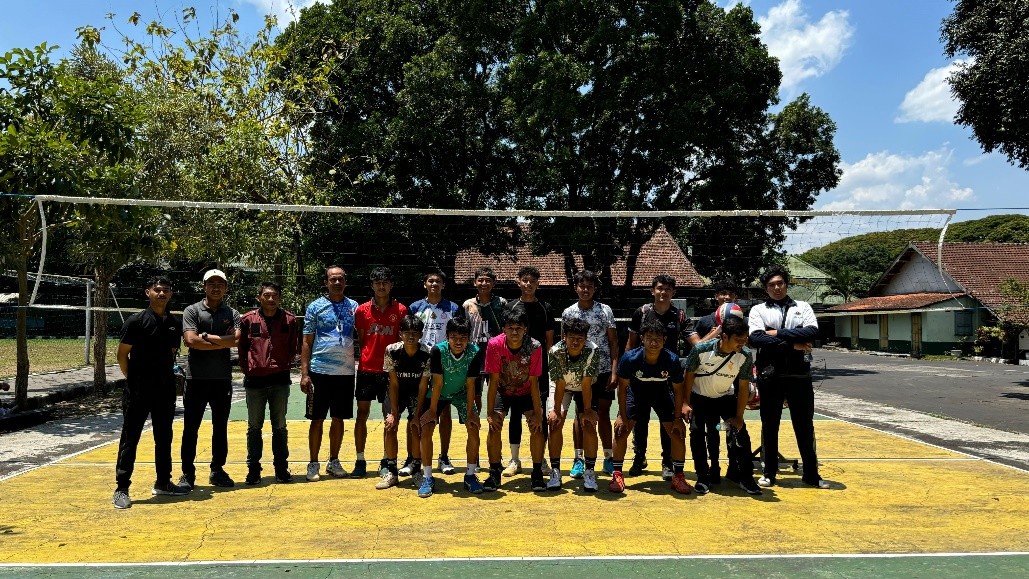
Assessment of volleyball skills as part of the development of young athletes at the Bahana Muda Club
Mahesa Dwi Chandra1, Usamah Daffa Inzaghi21. State University of Malang , ID2. State University of Malang , ID2025-06-22|page 64-70AbstractPeriodic performance evaluation is the primary foundation for improving athlete performance, especially in sports that demand high technical abilities, such as volleyball. Data-based evaluation is an important instrument for objectively identifying the strengths and weaknesses of athletes, as well as the basis for formulating targeted training programs. This community service program aims to evaluate volleyball playing skills by measuring the technical skills of athletes at the Bahana Muda Club in Malang City. This activity involved 20 male athletes who had experience competing in the Provincial Sports Week (Porprov) event and was carried out with a participatory approach. Several skill tests include passing, service, and smash/spike tests. The measurement results showed that most athletes were in the moderate category (40%), followed by the deficient category (30%), and only one athlete occupied the excellent category. These findings indicate that performance gaps between athletes require more individualized and structured training interventions. In addition to producing preliminary data on athlete performance, this activity also benefits coaches' awareness of the importance of data-based evaluation in coaching. In conclusion, the performance assessment carried out in this service program provides an objective picture of the athlete's technical readiness. It can become the basis for preparing an adaptive and sustainable training program. Therefore, it is recommended that evaluative activities like this be carried out regularly to monitor progress and ensure the continuity of athlete performance improvement.
APA Citation StyleChandra, M. D. , & Inzaghi, U. D. (2025). Assessment of volleyball skills as part of the development of young athletes at the Bahana Muda Club. Darmabakti: Jurnal Pengabdian kepada Masyarakat, 64-70. https://doi.org/10.56003/darmabakti.v1i2.602 -

Community-based production of dragon fruit and red spinach gummies to support stunting prevention among preschool children
Rizka Wulandari Putri1, Rahmatullah Rahmatullah2, Sri Haryati3, David Bahrin4, Asyeni Miftahul Jannah5, Rizza Fadilah Fitri6, Alek Al Hadi7, Fauztin Zuraida Rizqi81. Department of Chemical Engineering, Faculty of Engineering, Universitas Sriwijaya , ID2. Department of Chemical Engineering, Faculty of Engineering, Universitas Sriwijaya , ID3. Department of Chemical Engineering, Faculty of Engineering, Universitas Sriwijaya , ID4. Department of Chemical Engineering, Faculty of Engineering, Universitas Sriwijaya , ID5. Department of Chemical Engineering, Faculty of Engineering, Universitas Sriwijaya , ID6. Department of Chemical Engineering, Faculty of Engineering, Universitas Sriwijaya , ID7. Department of Mining Engineering, Faculty of Engineering, Universitas Sriwijaya , ID8. Department of Chemical Engineering, Faculty of Engineering, Universitas Sriwijaya , ID2026-06-13|page 19-27AbstractStunting remains a major nutritional challenge among Indonesian children and requires community-based interventions that promote healthy dietary practices. This community service program aimed to improve the knowledge and skills of members of the Rumah Cinta Dahlia Family Welfare Movement (PKK) in producing healthy gummies made from dragon fruit (Hylocereus polyrhizus) and red spinach as an alternative nutritious snack to support stunting prevention among children. The program involved nutrition education, practical training in gummy production, and evaluation through pre- and post-tests. A total of 46 PKK members participated in the activity. During the training, participants learned how to use lemon and citric acid as preservatives. The resulting gummies were then evaluated for texture, taste, aroma, appearance, shelf life, and consumer preference. The gummy production process involved mixing dragon fruit juice, red spinach extract, gelatin, and preservative agents, followed by molding and refrigerated storage for 35 days. The results showed that the proportion of participants with high knowledge increased from 65% before the intervention to 100% after the training. Sensory evaluation indicated that gummies preserved with lemon were preferred by 70% of participants, while 30% preferred those preserved with citric acid. The findings indicate that lemon may serve as a suitable natural preservative with good consumer acceptance and storage stability. Overall, the program successfully improved participants’ knowledge and practical skills in preparing nutritious food products and demonstrated the potential of dragon fruit and red spinach gummies as an innovative snack to support household-level stunting prevention efforts.
APA Citation StylePutri, R. W. , Rahmatullah, R. , Haryati, S. , Bahrin, D. , Jannah, A. M. , Fitri, R. F. , Hadi, A. A. , & Rizqi, F. Z. (2026). Community-based production of dragon fruit and red spinach gummies to support stunting prevention among preschool children. Darmabakti: Jurnal Pengabdian kepada Masyarakat, 19-27. https://doi.org/10.56003/darmabakti.v3i1.745 -

Optimizing the use of personal smartphones to support safe and measurable physical activity among middle school students
Yudhi Teguh Pambudi1, Topo Suhartoyo2, Abdul Malik Firdaus3, Mukhammad Miftakhul Farkhan41. Jenderal Soedirman University , ID2. Jenderal Soedirman University , ID3. Jenderal Soedirman University , ID4. Sekolah Menengah Pertama Negeri 1 Banyumas , ID2026-05-23|page 51-58AbstractThe high smartphone ownership among junior high school students in Banyumas Regency (99%) has not been matched by their use to support physical fitness. The majority of device use is limited to entertainment (games or social media), and smartphone ownership has not been fully leveraged for its functions or its role in supporting physical activity. This community service program aims to educate and train students and teachers in utilizing smartphone-based sports applications to support higher-quality physical activity. The activity was carried out in partnership with the Subject Teacher Working Group (MGMP) Physical Education, Sports, and Health (PJOK) Junior High School (SMP) Sub Rayon 06 Banyumas, involving 16 teachers and 547 students. The implementation methods included socialization, training in the implementation of the Strava (performance monitoring) and IQAir AirVisual (environmental air quality monitoring) applications, and monitoring and evaluation. The activity results showed significant behavioral changes, with 99% of participants adopting the technology. This program successfully transformed smartphones from mere entertainment devices into health-tech tools, improved students' digital literacy, and created a safe, measurable, and data-driven sports culture in the school environment.
APA Citation StylePambudi, Y. T. , Suhartoyo, T. , Firdaus, A. M. , & Farkhan, M. M. (2026). Optimizing the use of personal smartphones to support safe and measurable physical activity among middle school students. Darmabakti: Jurnal Pengabdian kepada Masyarakat, 51-58. https://doi.org/10.56003/darmabakti.v2i2.668

1 - 13 of 13 items