Search
Search Results
##search.searchResults.foundPlural##
-

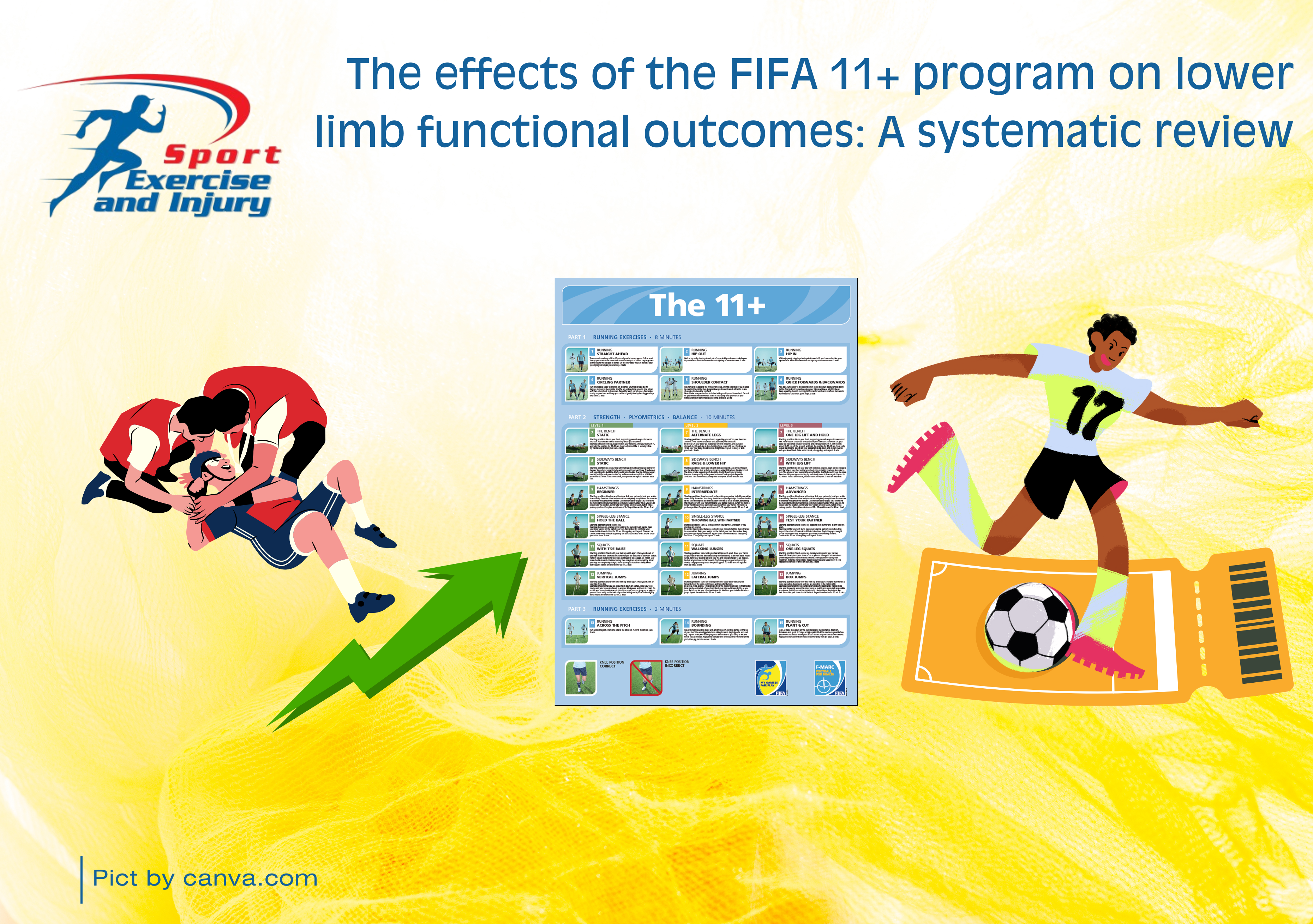
The effects of the FIFA 11+ program on lower limb functional outcomes: A systematic review
Yulingga Nanda Hanief1, Italo Sannicandro2, Raja Mohammed Firhad Raja Azidin31. State University of Malang , ID2. Clinical and Experimental Medicine Department, University of Foggia , IT3. Faculty of Sports Science and Recreation, Universiti Teknologi MARA , MY2025-12-30|page 122-138AbstractBackground: The FIFA 11+ program has been proven effective in preventing soccer injuries, but evidence regarding its impact on lower extremity functional outcomes is still scattered and reported heterogeneously.
Objectives: This systematic review aims to synthesize evidence regarding the effects of the FIFA 11+ program on lower extremity functional outcomes—including ROM, knee extension, internal and external hip rotation, and hamstring muscle strength—in athletes.
Methods: This systematic review was prospectively registered in PROSPERO (CRD420251147261) and conducted in accordance with PRISMA 2020 guidelines. A total of 14 studies involving athletes or physically active individuals met the inclusion criteria. Functional outcomes were measured using various instruments, primarily an isokinetic dynamometer for muscle strength and a goniometer for ROM measurement. The methodological quality of the studies was assessed using the Newcastle–Ottawa Scale. Due to substantial heterogeneity in study design, measurement instruments, intervention protocols, and reporting formats, a quantitative meta-analysis was not performed, and the data were synthesized using a qualitative narrative approach.
Results: Most studies (approximately 70–80%) reported an increase in hamstring muscle strength after the FIFA 11+ intervention, particularly in concentric and eccentric isokinetic measurements. Improvements in ROM and functional outcomes of the knee and hip were also reported, although results varied between studies. Evidence related to knee extension and hip rotation shows lower consistency compared to hamstring strength.
Conclusions: The FIFA 11+ program shows potential functional benefits beyond injury prevention, particularly in improving hamstring muscle strength and several aspects of joint mobility.APA Citation StyleHanief, Y. N. , Sannicandro, I. , & Azidin, R. M. F. R. (2025). The effects of the FIFA 11+ program on lower limb functional outcomes: A systematic review. Sport, Exercise, and Injury, 122-138. https://doi.org/10.56003/sei.v1i2.670 -
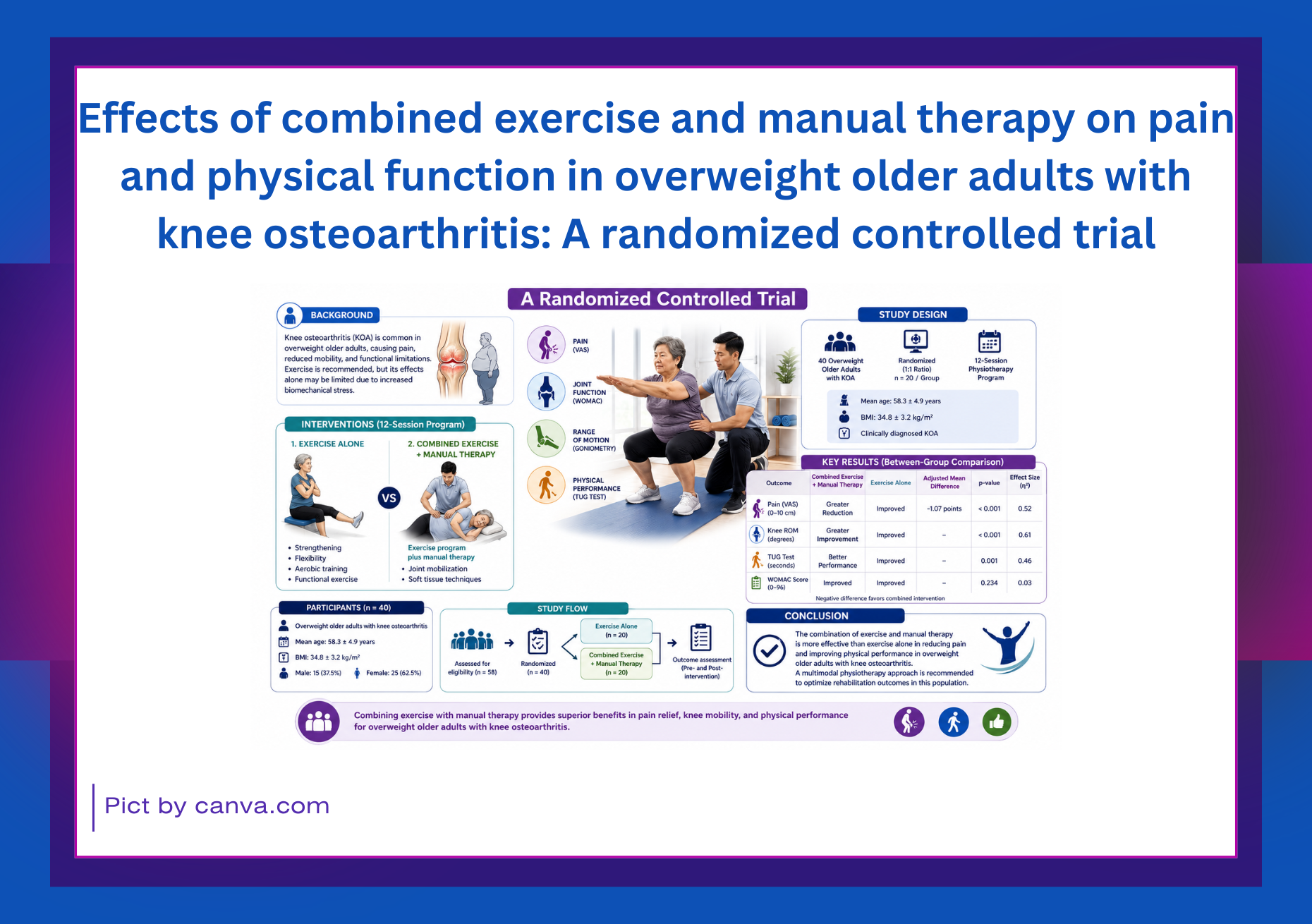
Effects of combined exercise and manual therapy on pain and physical function in overweight older adults with knee osteoarthritis: A randomized controlled trial
Seyed Ehsan Hosseini11. Department of Health Promotion and Rehabilitation, Lithuanian Sports University , LT2026-06-02|page 35-47AbstractBackground: Knee osteoarthritis (KOA) is a prevalent musculoskeletal disorder that leads to pain, reduced mobility, and functional limitations, particularly among overweight older adults. While exercise therapy is widely recommended as a primary non-pharmacological intervention, its effectiveness as a standalone approach may be limited due to increased biomechanical stress in this population.
Objectives: This study aimed to evaluate and compare the effectiveness of exercise therapy alone and a combination of exercise and manual therapy on pain, joint function, range of motion (ROM), and physical performance in overweight older adults with KOA.
Methods: A randomized controlled trial design was employed, involving 40 participants who were randomly allocated (1:1 ratio) using a computer-generated simple randomization sequence. Forty overweight older adults (mean age 58.3 ± 4.9 years; BMI 34.8 ± 3.2 kg/m²) with clinically diagnosed KOA participated in the study. Both groups underwent a 12-session physiotherapy program. Data were collected using the Visual Analog Scale (VAS) for pain, WOMAC for joint function, goniometry for ROM, and the Timed Up and Go (TUG) test for physical performance. Statistical analysis was conducted using JASP, including descriptive statistics, independent-samples t-tests, paired-samples t-tests, repeated-measures ANOVA, and ANCOVA to control for potential confounders.
Results: Both groups demonstrated significant improvements in all outcome measures. Compared with exercise alone, the combined intervention resulted in greater pain reduction (adjusted mean difference = -1.07 points, p < 0.001, η² = 0.52), greater improvement in knee ROM (p < 0.001, η² = 0.61), and better TUG performance (p = 0.001, η² = 0.46). No significant between-group difference was observed for WOMAC scores (p = 0.234, η² = 0.03).
Conclusions: The combination of exercise and manual therapy is more effective than exercise alone in improving pain and physical performance in overweight older adults with KOA. A multimodal physiotherapy approach is recommended to optimize rehabilitation outcomes in this population.
APA Citation StyleHosseini, S. E. (2026). Effects of combined exercise and manual therapy on pain and physical function in overweight older adults with knee osteoarthritis: A randomized controlled trial. Sport, Exercise, and Injury, 35-47. https://doi.org/10.56003/sei.v2i1.716 -
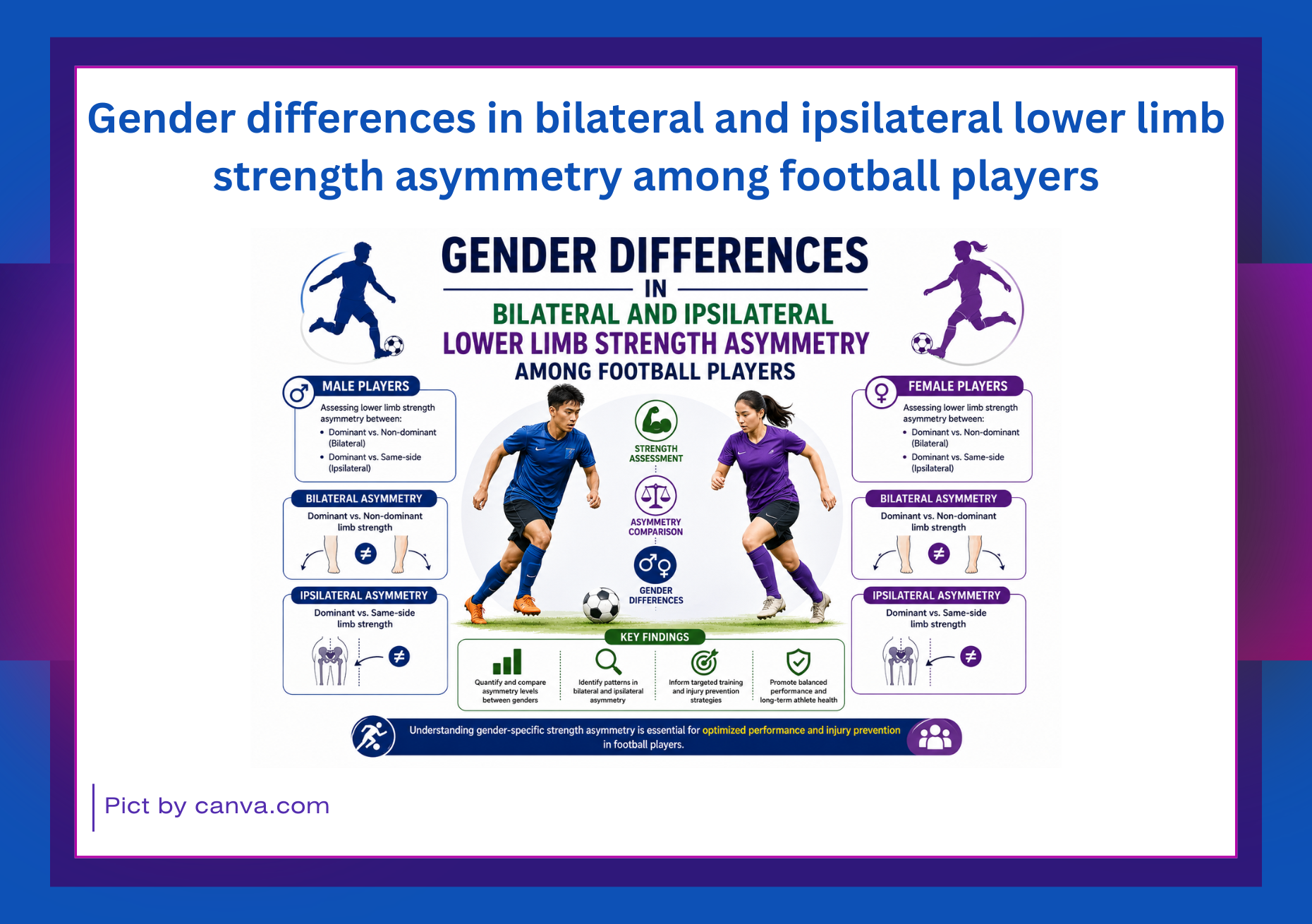
Gender differences in bilateral and ipsilateral lower limb strength asymmetry among football players
Randy R. Manimtim1, Eissel Ronquillo21. Office of Sports Development Program, Batangas State University The National Engineering University Lipa Campus , PH2. Department of Physical Education, School of Education, Holy Angel University , PH2026-06-02|page 1-10AbstractBackground: Lower limb muscle strength asymmetry is a significant factor that can impact playing ability and increase the risk of injury in soccer players. Differences in leg use and the specific movement requirements of a sport can lead to strength imbalances, either on both sides of the body or on the same side. Lower limb muscle strength asymmetry, particularly bilateral and ipsilateral strength asymmetry, is a significant factor influencing performance and increasing injury risk in football players. Differences in limb dominance and sport-specific movement demands can lead to strength imbalances.
Objectives: This study aimed to compare bilateral and ipsilateral lower limb strength asymmetry between male and female football players.
Methods: A cross-sectional study was conducted involving 50 amateur football players (26 males and 24 females; aged 18–21 years). Isokinetic strength testing of knee extensors and flexors was performed at 60°/s. Bilateral asymmetry was calculated based on peak torque differences between limbs, while ipsilateral asymmetry was assessed using the hamstring-to-quadriceps (H/Q) ratio. Statistical analyses included the Mann–Whitney U test and independent t-test (p < 0.05).
Results: Significant sex differences were found in bilateral strength asymmetry for both quadriceps (7.21 ± 4.04% vs 5.04 ± 3.13%, p = 0.02) and hamstrings (9.13 ± 5.15% vs 5.06 ± 4.04%, p = 0.01), with males showing greater asymmetry. Female athletes demonstrated values closer to the recommended asymmetry threshold (≤10–15%). No significant differences were observed in ipsilateral strength asymmetry (H/Q ratio) between groups (p > 0.05).
Conclusions: Bilateral strength asymmetry differs by sex, with male athletes exhibiting higher imbalance, while ipsilateral strength balance is comparable between groups. These findings highlight the importance of monitoring individual strength asymmetry to inform targeted training strategies, reduce injury risk, and optimize performance in football players.
APA Citation StyleManimtim, R. R. , & Ronquillo, E. (2026). Gender differences in bilateral and ipsilateral lower limb strength asymmetry among football players. Sport, Exercise, and Injury, 1-10. https://doi.org/10.56003/sei.v2i1.681 -
Eccentric hamstring strength profile and limb asymmetry in sub-elite female taekwondo athletes: Implications for injury prevention
Christina Septya Dewi1, Pudjijuniarto Pudjijuniarto2, Awang Firmansyah3, Roy Januardi Irawan41. Universitas Negeri Surabaya , ID2. Universitas Negeri Surabaya , ID3. Universitas Negeri Surabaya , ID4. Universitas Negeri Surabaya , ID2025-06-17|page 70-79AbstractBackground: Taekwondo is a physical contact sport requiring quick reactions and explosive movements such as kicking, which depend heavily on hamstring muscle strength to maintain performance and reduce injury risk.
Objectives: This study aims to profile the eccentric hamstring strength and asymmetry in sub-elite female taekwondo athletes in East Java.
Methods: This was a quantitative descriptive study with a cross-sectional approach. A total of 22 female athletes with regional competition experience and no lower limb injuries were selected using purposive sampling. Data were collected using the NordBord by Vald Performance, a reliable tool for measuring eccentric hamstring strength and asymmetry. Descriptive statistics analyzed the mean, standard deviation, minimum, maximum, and strength percentage relative to normative values.
Results: The athletes had an average age of 18.86±2.05 years, body mass of 57.45±8.90 kg, height of 160.68±6.72 cm, and BMI of24.33 ±2.51. Eccentric hamstring strength was 89.6% in the left leg, 85% in the right leg, and 87.2% overall, indicating the need for improvement.
Conclusions: The eccentric hamstring strength of both legs needs to be increased by approximately 12.8% while maintaining the current low asymmetry level to support muscle balance. Targeted hamstring strengthening exercises are recommended to enhance performance and reduce injury risk. This study is limited to female athletes; further research should include broader populations and variables.
APA Citation StyleDewi, C. S. , Pudjijuniarto, P. , Firmansyah, A. , & Irawan, R. J. (2025). Eccentric hamstring strength profile and limb asymmetry in sub-elite female taekwondo athletes: Implications for injury prevention. Sport, Exercise, and Injury, 70-79. https://doi.org/10.56003/sei.v1i1.574

1 - 4 of 4 items