Search
Search Results
##search.searchResults.foundPlural##
-

Associations and predictive value of isometric strength, isokinetic strength, and anaerobic power for 100-m freestyle performance in young swimmers
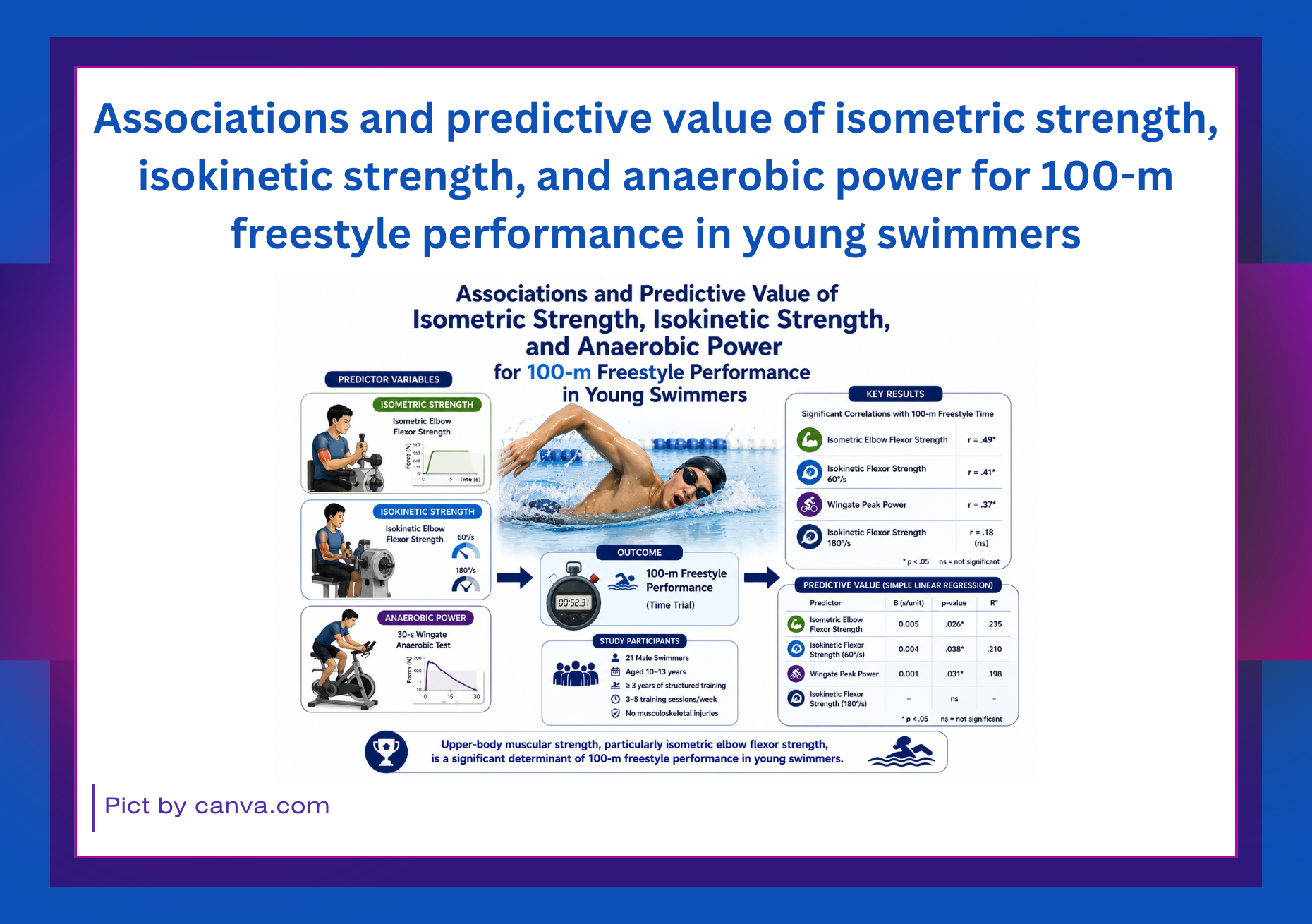
Zied Abbes1, Rabeh Labbadi2, Faten Salhi31. Physical Education Department, College of Education, Qatar University , QA2. Higher Institute of Sports and Physical Education of Kef, University of Jendouba , TN3. Higher Institute of Sports and Physical Education of Kef, University of Jendouba , TN2026-06-02|page 21-34AbstractBackground: Multiple physical and physiological factors influence sprint swimming performance; however, the relative contributions of isometric strength, isokinetic strength, and anaerobic power to 100-m freestyle performance in young swimmers remain unclear.
Objectives: This study investigated the associations and predictive contributions of physical characteristics, isometric and isokinetic upper-body strength, and anaerobic power to 100-m freestyle swimming performance in young swimmers.
Methods: A cross-sectional study was conducted with 21 male swimmers aged 10–13 years, selected purposively. Eligibility criteria included a minimum of three years of structured swimming training, regular participation in 3–5 training sessions per week, and absence of musculoskeletal injuries. Upper-body strength was assessed using isometric and isokinetic dynamometry (60°/s and 180°/s), while anaerobic power was measured using the 30-s Wingate Anaerobic Test. Swimming performance was evaluated using a 100-m freestyle time trial. Pearson correlation and linear regression analyses were performed after verification of regression assumptions.
Results: Swimming speed was significantly correlated with isometric elbow flexor strength (r = .49, p < .05), isokinetic flexor strength at 60°/s (r = .41, p < .05), and Wingate peak power (r = .37, p < .05). Simple linear regression analysis identified isometric elbow flexor strength as the strongest predictor of swimming performance (B = 0.005, p = .026, R² = .235), followed by isokinetic flexor strength at 60°/s (B = 0.004, p = .038, R² = .210) and Wingate peak power (B = 0.001, p = .031, R² = .198). No significant associations were observed for isokinetic strength at 180°/s.
Conclusions: Upper-body muscular strength, particularly isometric elbow flexor strength, is a significant determinant of 100-m freestyle swimming performance in young swimmers. These findings highlight the importance of maximal force-generating capacity, alongside anaerobic power development, for sprint swimming performance.
APA Citation StyleAbbes, Z. , Labbadi, R. , & Salhi, F. (2026). Associations and predictive value of isometric strength, isokinetic strength, and anaerobic power for 100-m freestyle performance in young swimmers. Sport, Exercise, and Injury, 21-34. https://doi.org/10.56003/sei.v2i1.726 -
Gender differences in bilateral and ipsilateral lower limb strength asymmetry among football players
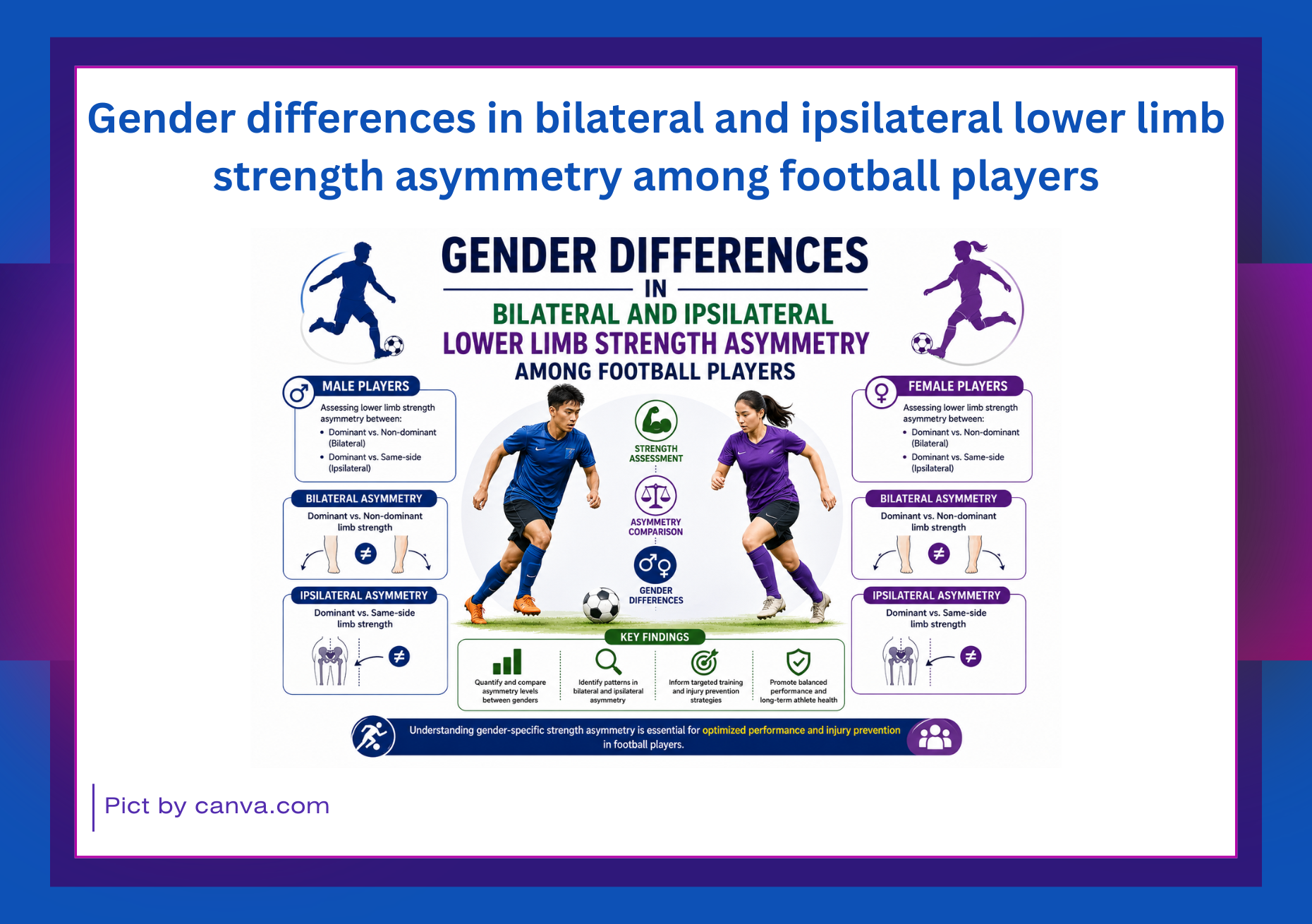
Randy R. Manimtim1, Eissel Ronquillo21. Office of Sports Development Program, Batangas State University The National Engineering University Lipa Campus , PH2. Department of Physical Education, School of Education, Holy Angel University , PH2026-06-02|page 1-10AbstractBackground: Lower limb muscle strength asymmetry is a significant factor that can impact playing ability and increase the risk of injury in soccer players. Differences in leg use and the specific movement requirements of a sport can lead to strength imbalances, either on both sides of the body or on the same side. Lower limb muscle strength asymmetry, particularly bilateral and ipsilateral strength asymmetry, is a significant factor influencing performance and increasing injury risk in football players. Differences in limb dominance and sport-specific movement demands can lead to strength imbalances.
Objectives: This study aimed to compare bilateral and ipsilateral lower limb strength asymmetry between male and female football players.
Methods: A cross-sectional study was conducted involving 50 amateur football players (26 males and 24 females; aged 18–21 years). Isokinetic strength testing of knee extensors and flexors was performed at 60°/s. Bilateral asymmetry was calculated based on peak torque differences between limbs, while ipsilateral asymmetry was assessed using the hamstring-to-quadriceps (H/Q) ratio. Statistical analyses included the Mann–Whitney U test and independent t-test (p < 0.05).
Results: Significant sex differences were found in bilateral strength asymmetry for both quadriceps (7.21 ± 4.04% vs 5.04 ± 3.13%, p = 0.02) and hamstrings (9.13 ± 5.15% vs 5.06 ± 4.04%, p = 0.01), with males showing greater asymmetry. Female athletes demonstrated values closer to the recommended asymmetry threshold (≤10–15%). No significant differences were observed in ipsilateral strength asymmetry (H/Q ratio) between groups (p > 0.05).
Conclusions: Bilateral strength asymmetry differs by sex, with male athletes exhibiting higher imbalance, while ipsilateral strength balance is comparable between groups. These findings highlight the importance of monitoring individual strength asymmetry to inform targeted training strategies, reduce injury risk, and optimize performance in football players.
APA Citation StyleManimtim, R. R. , & Ronquillo, E. (2026). Gender differences in bilateral and ipsilateral lower limb strength asymmetry among football players. Sport, Exercise, and Injury, 1-10. https://doi.org/10.56003/sei.v2i1.681 -
Eccentric hamstring strength and asymmetry in female handball athletes: A descriptive study
Alvito Dandy Putra Sanjaya1, Awang Firmansyah2, Aziz Abdul Hakim3, Panji Bana41. Universitas Negeri Surabaya , ID2. Universitas Negeri Surabaya , ID3. Universitas Negeri Surabaya , ID4. Universitas Negeri Surabaya , ID2025-06-17|page 60-69AbstractBackground: Handball is a competitive sport that requires high physical strength and muscle endurance. The game requires a balance of muscle strength to support athletes in performing movements such as sprints, jumps, and fast movement maneuvers. Lack of flexibility and high hamstring muscle asymmetry values are risk factors for injury to handball athletes.
Objectives: This study aims to determine the eccentric strength and hamstring muscle asymmetry in female handball athletes in Surabaya City.
Methods: The study subjects were 13 female handball athletes from Surabaya aged 18-23 years with regional-level competition experience and no lower extremity injuries. The instrument in this study is Nordbord by Vald Performance; Nordbord is a portable rapid assessment tool that can analyze large groups, providing information about the exact functional strength parameters quickly and efficiently. This study used a quantitative descriptive method to analyze hamstring muscle strength and asymmetry data.
Results: Indicated the athletes had an average (body mass of 59.30 ± 10.94 kg and height of 164.80 ± 6.80 cm). The overall eccentric hamstring strength was 88.1% of the expected norm, with right and left maximum forces averaging 230.70 ± 48.80 N and 233.61 ± 50.15 N, respectively. The average asymmetry between legs was -1.44 ± 9.14%, suggesting relatively balanced muscle strength.
Conclusions: The study concluded that hamstring eccentric strength in both legs should be improved by approximately 11.9% while maintaining the current low asymmetry levels to support muscle balance. Targeted training interventions are recommended to increase hamstring strength and minimize asymmetry, enhancing performance and reducing injury risk in female handball athletes.
APA Citation StyleSanjaya, A. D. P. , Firmansyah, A. , Hakim, A. A. , & Bana, P. (2025). Eccentric hamstring strength and asymmetry in female handball athletes: A descriptive study. Sport, Exercise, and Injury, 60-69. https://doi.org/10.56003/sei.v1i1.553 -
The effects of the FIFA 11+ program on lower limb functional outcomes: A systematic review
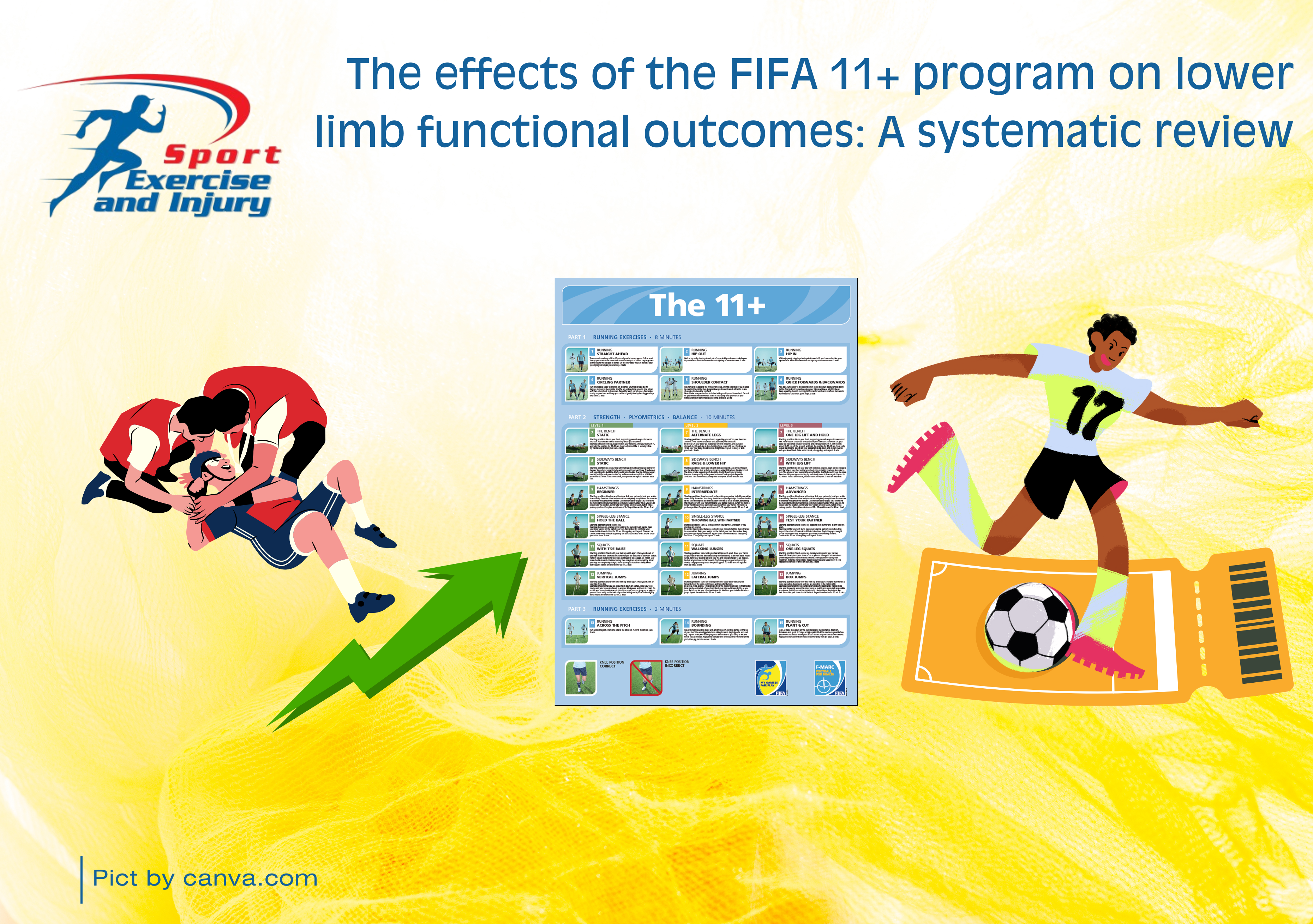
Yulingga Nanda Hanief1, Italo Sannicandro2, Raja Mohammed Firhad Raja Azidin31. State University of Malang , ID2. Clinical and Experimental Medicine Department, University of Foggia , IT3. Faculty of Sports Science and Recreation, Universiti Teknologi MARA , MY2025-12-30|page 122-138AbstractBackground: The FIFA 11+ program has been proven effective in preventing soccer injuries, but evidence regarding its impact on lower extremity functional outcomes is still scattered and reported heterogeneously.
Objectives: This systematic review aims to synthesize evidence regarding the effects of the FIFA 11+ program on lower extremity functional outcomes—including ROM, knee extension, internal and external hip rotation, and hamstring muscle strength—in athletes.
Methods: This systematic review was prospectively registered in PROSPERO (CRD420251147261) and conducted in accordance with PRISMA 2020 guidelines. A total of 14 studies involving athletes or physically active individuals met the inclusion criteria. Functional outcomes were measured using various instruments, primarily an isokinetic dynamometer for muscle strength and a goniometer for ROM measurement. The methodological quality of the studies was assessed using the Newcastle–Ottawa Scale. Due to substantial heterogeneity in study design, measurement instruments, intervention protocols, and reporting formats, a quantitative meta-analysis was not performed, and the data were synthesized using a qualitative narrative approach.
Results: Most studies (approximately 70–80%) reported an increase in hamstring muscle strength after the FIFA 11+ intervention, particularly in concentric and eccentric isokinetic measurements. Improvements in ROM and functional outcomes of the knee and hip were also reported, although results varied between studies. Evidence related to knee extension and hip rotation shows lower consistency compared to hamstring strength.
Conclusions: The FIFA 11+ program shows potential functional benefits beyond injury prevention, particularly in improving hamstring muscle strength and several aspects of joint mobility.APA Citation StyleHanief, Y. N. , Sannicandro, I. , & Azidin, R. M. F. R. (2025). The effects of the FIFA 11+ program on lower limb functional outcomes: A systematic review. Sport, Exercise, and Injury, 122-138. https://doi.org/10.56003/sei.v1i2.670

1 - 4 of 4 items