Search
Search Results
##search.searchResults.foundPlural##
-

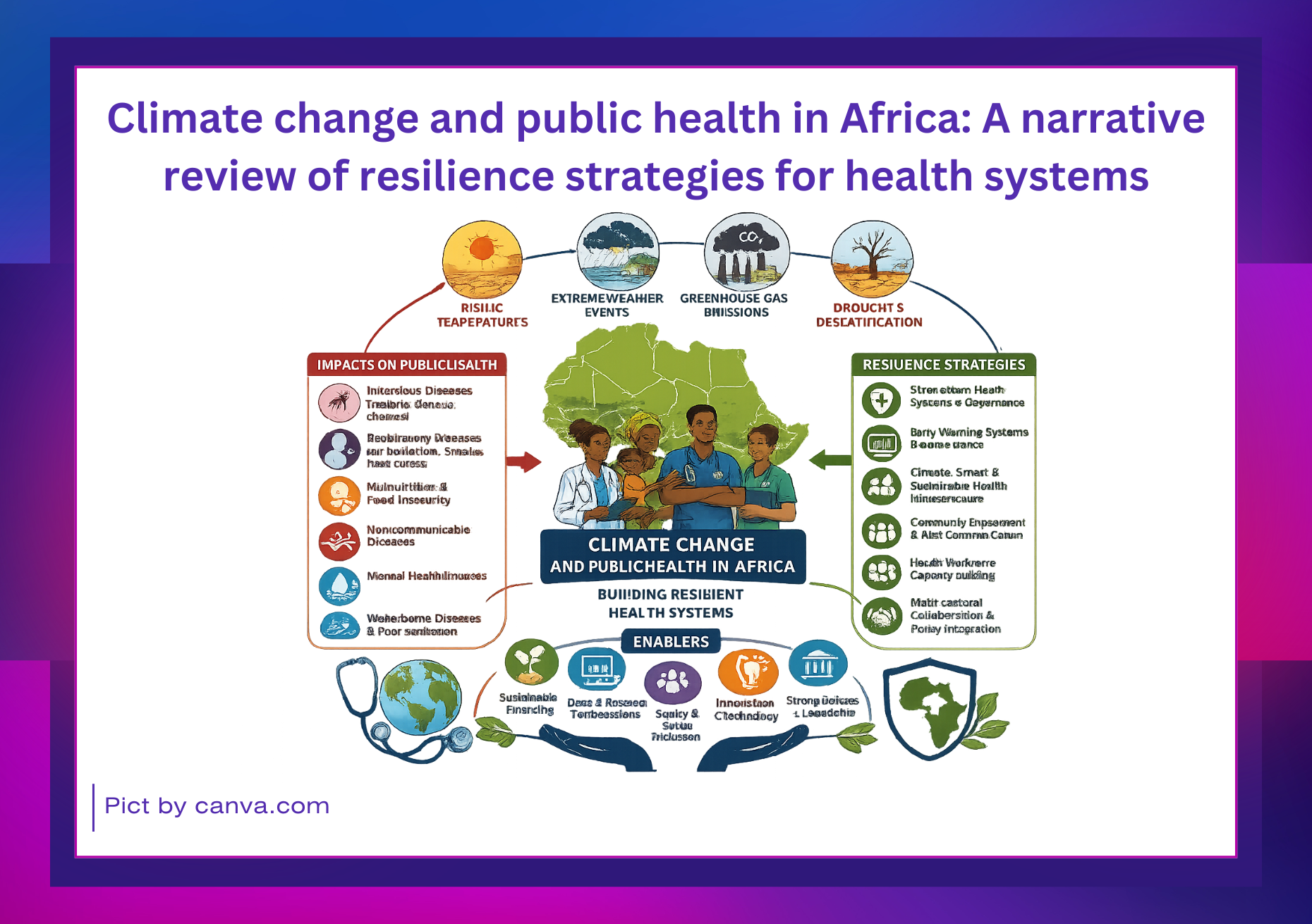
Climate change and public health in Africa: A narrative review of resilience strategies for health systems
Kabiru Gulma1, Sa’adatu M. Julde2, Isman Wais3, Emmanuel Morna4, Abubakar S. Danbatta5, Bakam Rodine6, Anastacia Katungo Maluki71. School of Global Health and Bioethics, Euclid University, Banjul , GM2. Faculty of Pharmaceutical Sciences, Bayero University, Kano , NG3. Euclid Caisse Nationale de Sécurité Sociale de Djibouti , DJ4. Doctoral Programme in Monitoring, Measurement and Evaluation, Euclid University, Bangui , CF5. Faculty of Pharmaceutical Sciences, Bayero University, Kano , NG6. Doctoral Programme in Global Energy Policy, Euclid University, Douala , CM7. Doctoral Programme in Epidemiology and Biostatistics, Euclid University, Banjul , GM2026-05-24|page 25-40AbstractBackground: Climate change poses an escalating threat to public health in Africa, a continent responsible for less than 10% of global greenhouse gas emissions yet disproportionately bearing the burden of its consequences. Existing health systems remain fragile, under-resourced, and ill-equipped to absorb climate-related shocks.
Objectives: To synthesize evidence on the health impacts of climate change in Africa and identify strategies for building climate-resilient health systems.
Methods: This study is a narrative literature review. A comprehensive search of peer-reviewed databases and gray literature was conducted. Sources were screened against predefined inclusion criteria and synthesized thematically across six domains: climate science, contextual vulnerabilities, health systems strengthening, governance, community engagement, and financing. A total of 22 studies and reports were included and analyzed using thematic synthesis following Thomas and Harden’s (2008) three-step approach.
Results: Climate change intensifies the burden of infectious and non-communicable diseases, disrupts health infrastructure, and deepens health inequities across African regions. Resilience-building requires strengthened governance, sustained domestic and international financing, multisectoral partnerships, community engagement, and climate-adaptive health information systems.
Conclusions: Concerted, context-sensitive action that integrates climate adaptation into health policy frameworks is urgently needed to protect the health and well-being of African populations from the accelerating impacts of climate change. Practical implications include strengthening health system governance, mobilizing climate finance, investing in climate-adaptive surveillance systems, and fostering community engagement and multisectoral collaboration to build durable climate resilience across African health systems.
APA Citation StyleGulma, K. , Julde, S. M. , Wais, I. , Morna, E. , Danbatta, A. S. , Rodine, B. , & Maluki, A. K. (2026). Climate change and public health in Africa: A narrative review of resilience strategies for health systems. Public Health and Occupational Safety Journal, 25-40. https://doi.org/10.56003/phosj.v2i1.719 -
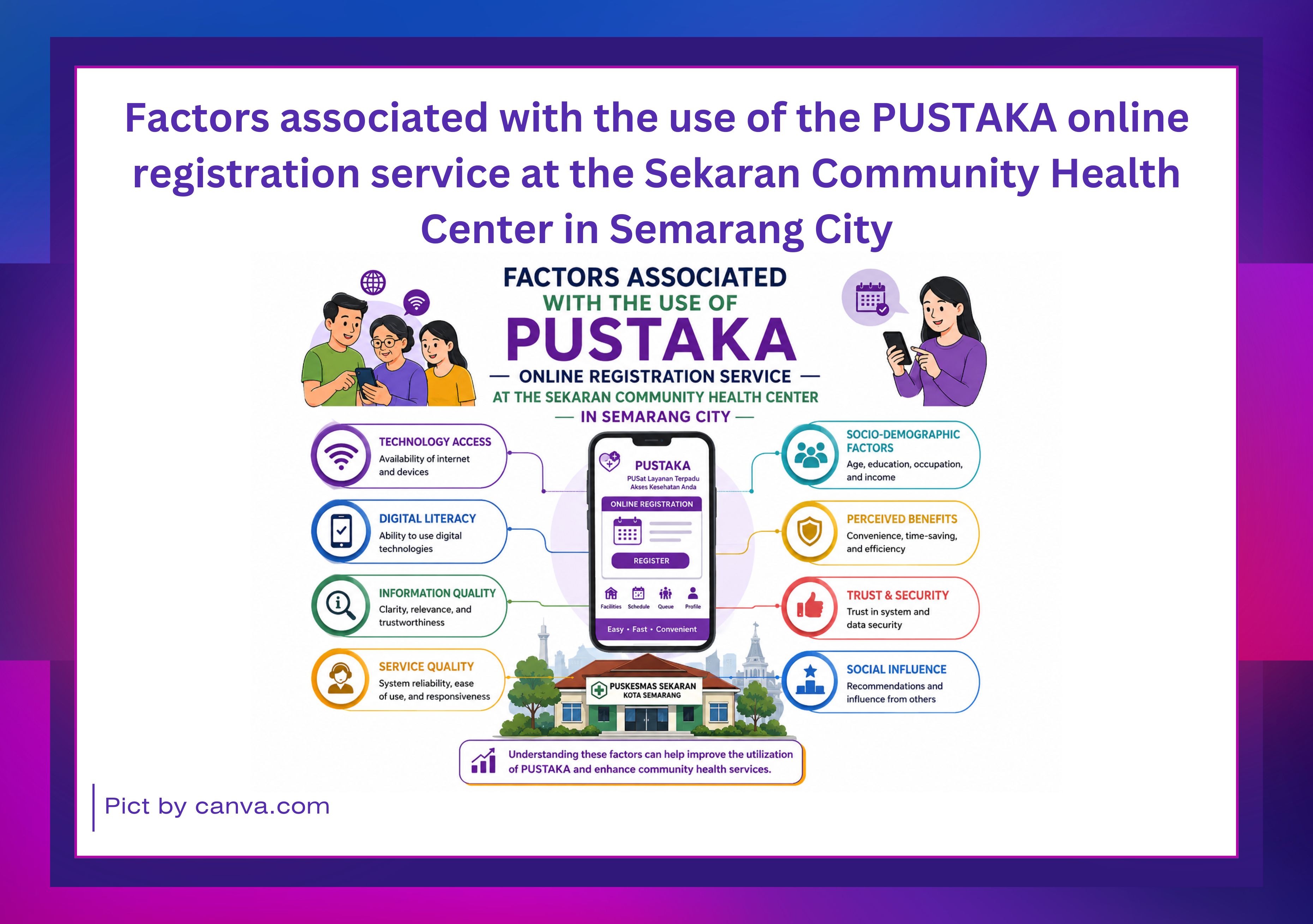
Factors associated with the use of the PUSTAKA online registration service at the Sekaran Community Health Center in Semarang City
Bunga Gustikasari Ismail1, Nurhasmadiar Nandini2, Rani Tiyas Budiyanti31. Faculty of Public Health, Universitas Diponegoro , ID2. Faculty of Public Health, Universitas Diponegoro , ID3. Faculty of Public Health, Universitas Diponegoro , ID2026-05-26|page 57-69AbstractBackground: Online registration services have been implemented in community health centers to facilitate patient access and reduce long queues by enabling appointment scheduling at specific times. However, the utilization of this service in several community health centers in Semarang City remains below the monthly target of 10%. At Sekaran Community Health Center, for example, the average utilization rate was only 1.03% between June and August 2023.
Objectives: This study analyzed the factors associated with the use of the PUSTAKA Online Registration Service at The Sekaran Community Health Center in Semarang City.
Methods: This study employed a quantitative research design with a cross-sectional approach. The population consisted of existing patients at Sekaran Community Health Center, with a sample of 97 respondents selected using accidental sampling. The variables examined included age, education, occupation, attitude, knowledge, perceived need, availability of facilities, and ease of obtaining information in relation to the decision to use PUSTAKA services. Data were collected using a closed-ended questionnaire that had previously undergone validity and reliability testing.
Results: The results of the research analysis using the chi square statistical test showed the conclusion that there was a significant relationship between the factors of age (p = 0.006), education (p = 0.007), occupation (p = 0.044), attitude (p = 0.017), perceived needs (p = 0.006), and ease of obtaining information (p = 0.021) with the decision to use PUSTAKA services at the Sekaran Health Center.
Conclusions: Meanwhile, there is no relationship between knowledge (p = 0.812) and the availability of facilities (p = 0.114) with the decision to use PUSTAKA.
APA Citation StyleIsmail, B. G. , Nandini, N. , & Budiyanti, R. T. (2026). Factors associated with the use of the PUSTAKA online registration service at the Sekaran Community Health Center in Semarang City. Public Health and Occupational Safety Journal, 57-69. https://doi.org/10.56003/phosj.v2i1.739 -
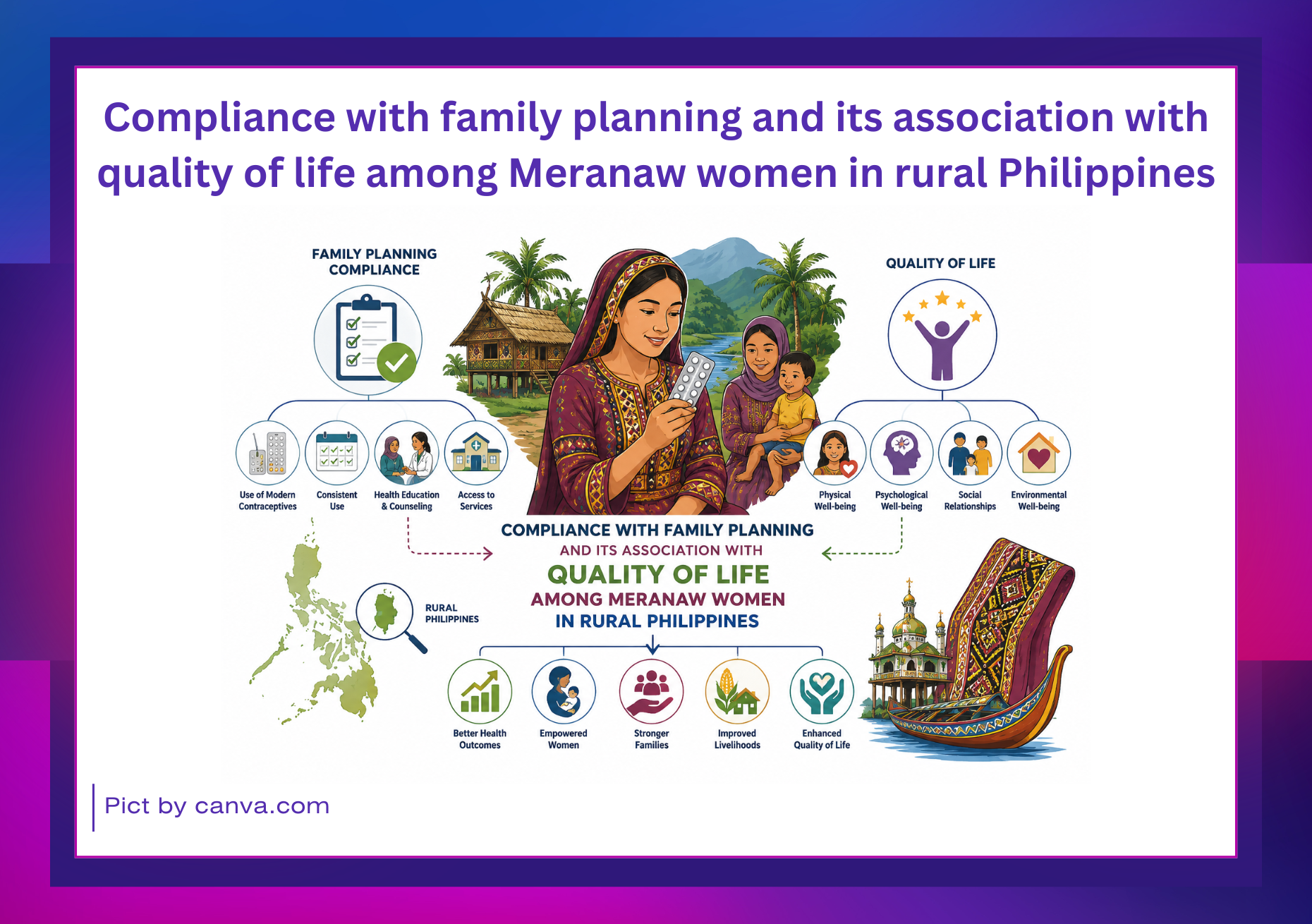
Compliance with family planning and its association with quality of life among Meranaw women in rural Philippines
Maslainie Aliola1, Hamdoni Pangandaman21. Mindanao State University - Marawi, Lanao Del Sur, 9700, Philippines , PH2. Mindanao State University, Marawi City , PH2026-05-24|page 1-13AbstractBackground: The COVID-19 pandemic disrupted access to essential health services, including family planning (FP), particularly in rural and underserved communities. These disruptions may influence women’s reproductive practices and overall quality of life (QoL).
Objectives: This study aimed to determine the level of family planning compliance and examine its influence on the quality of life among Meranaw women during the COVID-19 pandemic.
Methods: A descriptive cross-sectional design was employed among 378 Meranaw women who were family planning users in selected municipalities of Lanao del Sur, Philippines. Data were collected from January to October 2022. A stratified random sampling technique was used based on municipal distribution to ensure proportional representation of respondents. A validated researcher-developed questionnaire assessed attitude- and practice-related compliance (CVI = 0.81–0.92; α = 0.79), while QoL was measured using the WHOQOL-BREF. Data were analyzed using descriptive statistics and multiple linear regression.
Results: Respondents demonstrated high compliance in both attitude (mean = 3.61) and practice (mean = 3.41) domains. Overall QoL was rated very satisfactory (mean = 5.72), with the highest scores in the psychological (mean = 5.89) and relational (mean = 5.85) domains. Multiple regression analysis revealed that age (β = .319, p < .001), monthly income (β = –.097, p = .008), number of children (β = .395, p < .001), duration of FP use (β = .092, p = .034), and type of FP method (β = .129, p < .001) significantly predicted QoL. The model explained a substantial proportion of variance (R² = 0.974), indicating strong predictive capacity.
Conclusions: Meranaw women demonstrated high compliance with family planning practices despite pandemic-related constraints, thereby significantly improving the quality of life. Sustaining family planning services during public health crises is essential to maintaining women’s well-being, particularly in rural and culturally distinct populations.
APA Citation StyleAliola, M. , & Pangandaman, H. (2026). Compliance with family planning and its association with quality of life among Meranaw women in rural Philippines. Public Health and Occupational Safety Journal, 1-13. https://doi.org/10.56003/phosj.v2i1.698 -
The relationship between quality and quantity of antenatal care services and stunting in children 24–59 months of age
Aulia Pramesti1, Hartati Eko Wardani2, Tika Dwi Tama3, Anindya Hapsari41. State University of Malang , ID2. State University of Malang , ID3. State University of Malang , ID4. State University of Malang , ID2025-06-14|page 97-113AbstractBackground: Stunting is a chronic nutritional problem whose causes include unmet nutrition in pregnant women, lack of infant nutritional intake, and socioeconomic conditions. Dinoyo Health Center covers an area with a high stunting rate in Malang City, particularly Lowokwaru District. Previous research stated that the dominant factor causing stunting in toddlers is antenatal care (ANC).
Objectives: This study aims to determine whether stunting in toddlers in the Dinoyo Community Health Center area is caused by the quality and quantity of ANC.
Methods: The research method is observational analytic with a case-control design using a retrospective approach. The population was 1643 mothers taken from three villages: Tlogomas, Dinoyo, and Sumbersari. The research sample amounted to 69 people using purpose sampling. The research was conducted in February - March 2023. Quality measurement was based on a minimum 10T service standard, while quantity measurement was based on a minimum frequency of 4 visits using a checklist sheet instrument and MCH book with Chi-Square analysis.
Results: The results obtained for ANC quality with stunting p-value = 0.609 with OR value = 1.30 (95% CI: 0.47-3.55), while ANC quantity with stunting p-value = 0.864 with OR value = 1.09 (95% CI: 0.40-2.97).
Conclusions: It is concluded that the quality and quantity of antenatal care have no association with the incidence of stunting in children under 24-59 months in the Dinoyo Community Health Center (Puskesmas) area. These findings highlight the need for multifactor interventions beyond ANC to reduce stunting, such as improved maternal nutrition and environmental sanitation.
APA Citation StylePramesti, A. , Wardani, H. E. , Tama, T. D. , & Hapsari, A. (2025). The relationship between quality and quantity of antenatal care services and stunting in children 24–59 months of age. Public Health and Occupational Safety Journal, 97-113. https://doi.org/10.56003/phosj.v1i1.539 -
Occupational safety and health hazards among artisanal and small-scale gold miners at Mazowe Jumbo Mine, Zimbabwe: A mixed-methods cross-sectional study
Bridget Nyamombe1, Vincent Itai Tanyanyiwa21. Zimbabwe Open University , ZW2. Zimbabwe Open University , ZW2025-11-28|page 151-162AbstractBackground: Artisanal and small-scale gold mining (ASGM) is associated with multiple occupational hazards that artisans are often unaware of.
Objectives: To identify the occupational hazards and risk factors among artisanal gold miners at Mazowe Jumbo mine, Zimbabwe.
Methods: The cross-sectional study employed Mixed-methods(Sep- Nov 2023). Purposive sampling of 34 miners from two sites (response rate was 100%). The interview was administered using questionnaires, structured interviews, field observations, and document review. Quantitative data were analyzed descriptively (frequencies and proportions), and qualitative data underwent thematic analysis.
Results: Heavy lifting was reported by 100% (34/34), manual handling by 91.2% (31/34), silica dust exposure by 91.2% (31/34), and contaminated water by 85.3% (29/34). Key risk factors included lack of PPE, financial pressure, and low OSH awareness. Field observations noted unsecured shafts, poor sanitation, and evidence of substance use on site.
Conclusions: ASG miners at Mazowe Jumbo Mine face multi-domain OSH hazards. We recommend targeted OSH training programmes, provision of PPE, improved sanitation, and monitoring/ formalization of ASGM activities.
APA Citation StyleNyamombe, B. , & Tanyanyiwa, V. I. (2025). Occupational safety and health hazards among artisanal and small-scale gold miners at Mazowe Jumbo Mine, Zimbabwe: A mixed-methods cross-sectional study. Public Health and Occupational Safety Journal, 151-162. https://doi.org/10.56003/phosj.v1i2.638 -
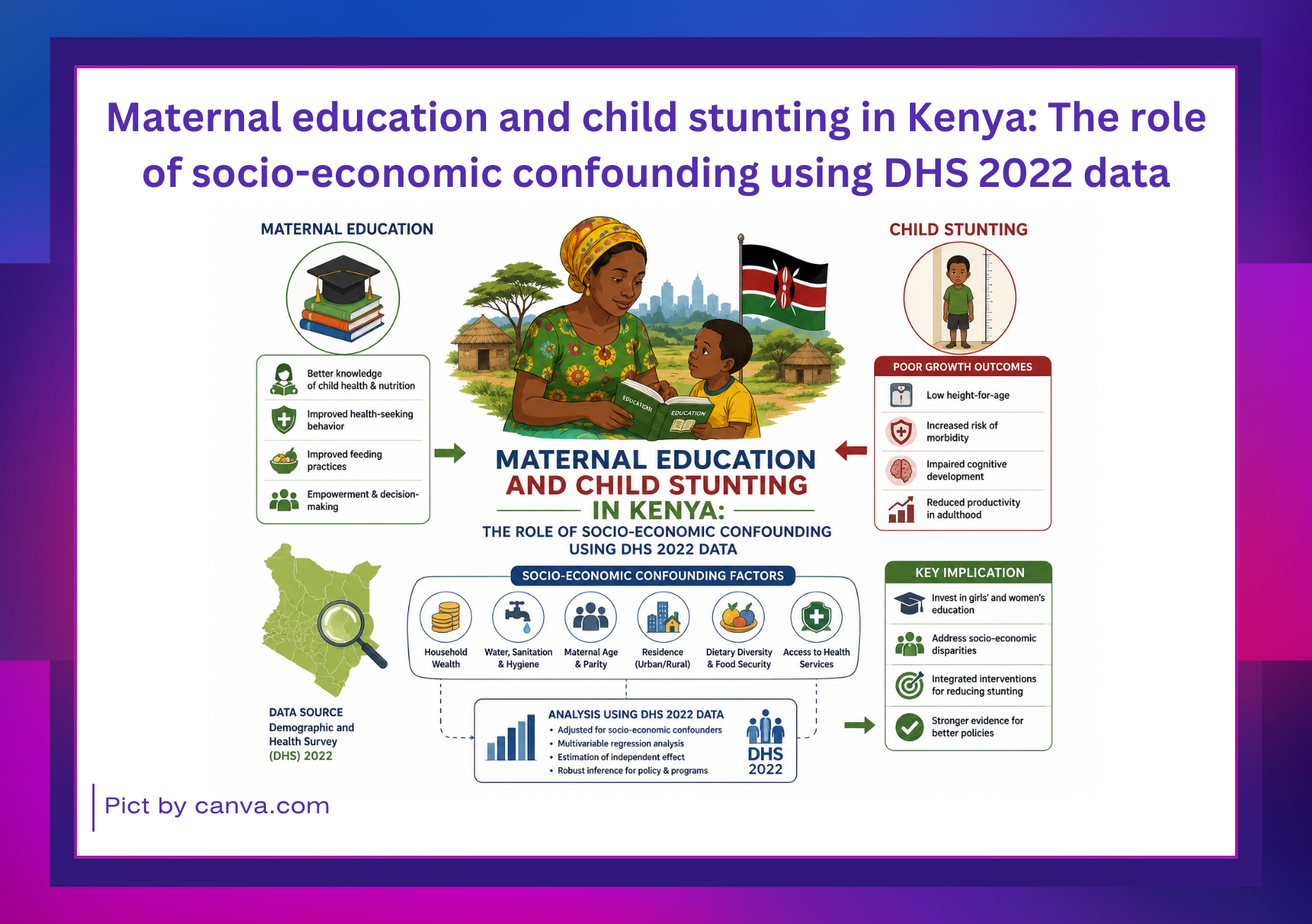
Maternal education and child stunting in Kenya: The role of socio-economic confounding using DHS 2022 data
Anastacia Katungo Maluki1, Zerai Hagos2, Kabiru Gulma3, Michael Musili Nzau41. Doctoral Programme in Epidemiology and Biostatistics, Euclid University, Banjul , GM2. Doctoral Programme in Epidemiology and Biostatistics, Euclid University, Banjul , GM3. School of Global Health and Bioethics, Euclid University, Bangui , CF4. United Nations Development Programme, New York , US2026-05-24|page 41-56AbstractBackground: Child stunting remains a major public health challenge in Kenya, reflecting long‑term nutritional deprivation and socioeconomic inequalities. Although maternal education is widely considered protective, its independent effect is often unclear due to confounding by structural factors.
Objectives: To examine the association between maternal education and child stunting among children under five in Kenya and to assess the extent of confounding and effect modification by key sociodemographic factors.
Methods: A cross‑sectional analytical study was conducted using data from the 2022 Kenya Demographic and Health Survey (KDHS). The sample included 19,530 children aged 0–59 months. Stunting was defined using height‑for‑age z-scores (<-2 SD). Descriptive, bivariate, stratified, and multivariable logistic regression analyses were performed, accounting for the complex survey design.
Results: Stunting prevalence was 18.2%. Stunting decreased with increasing maternal education, from 21.4–21.7% among children of mothers with no or primary education to 8.7% among those with higher education (χ² = 238, p < 0.001). However, the association was weak (Cramer’s V = 0.117) and attenuated after adjustment for socioeconomic factors. Household wealth was the strongest predictor, with children in the richest households having significantly lower odds of stunting than those in the poorest households (AOR = 0.268; 95% CI: 0.222–0.323; p < 0.001). Stunting risk increased with age, particularly among children aged 6–23 months, while females had lower odds than males (OR = 0.717; 95% CI: 0.662–0.776). Stratified analyses showed stronger protective effects of maternal education among older children. In contrast, variation across wealth groups should be interpreted cautiously, given inconsistent and non-significant findings in some strata. No meaningful effect modification by child sex was identified.
Conclusions: Child stunting in Kenya is primarily driven by structural socioeconomic factors. While maternal education is associated with reduced stunting, its effect is highly context dependent. Addressing poverty and inequality is essential for effective and equitable reductions in child stunting.
APA Citation StyleMaluki, A. K. , Hagos, Z. , Gulma, K. , & Nzau, M. M. (2026). Maternal education and child stunting in Kenya: The role of socio-economic confounding using DHS 2022 data. Public Health and Occupational Safety Journal, 41-56. https://doi.org/10.56003/phosj.v2i1.743 -
Effects of theory-based education versus simulation-based training on knowledge and skills in managing shortness of breath among university health volunteers
Agus Nur Wahyuda1, Marji Marji2, Nurnaningsih Herya Ulfah3, Anita Sulistyorini41. State University of Malang , ID2. State University of Malang , ID3. State University of Malang , ID4. State University of Malang , ID2026-01-14|page 163-173AbstractBackground: First aid skills for respiratory emergencies, particularly shortness of breath, are crucial for university health volunteers who often serve as the first responders. However, theory-based learning alone is not always adequate for developing practical competencies.
Objectives: This study aims to evaluate the effectiveness of theoretical education compared to the combination of theory and simulation in enhancing the knowledge and skills of university health volunteers in managing cases of shortness of breath.
Methods: A quasi-experimental pre-posttest design was conducted among 40 student volunteers of the Indonesian Red Cross Volunteer Corps (KSR-PMI), aged 18-20 years, who were equally assigned to a theory-only group or a theory-plus-simulation group. The intervention consisted of two 45-minute sessions. Knowledge and skills were assessed before and after the intervention. Data were analyzed using the Wilcoxon Signed Rank Test and the Mann–Whitney U Test with a significance level of α = 0.05.
Results: Knowledge significantly improved in both groups (p < 0.05), with no significant difference between them (p = 0.204). Skill performance improved markedly in the simulation group, increasing from 0% to 100%, compared with only 20% in the theory-only group (p < 0.001).
Conclusions: While theoretical education effectively enhances knowledge, it is insufficient for developing practical skills. Integrating simulation-based training significantly improves psychomotor competence and better prepares university health volunteers to manage respiratory emergencies.
APA Citation StyleWahyuda, A. N. , Marji, M. , Ulfah, N. H. , & Sulistyorini, A. (2026). Effects of theory-based education versus simulation-based training on knowledge and skills in managing shortness of breath among university health volunteers. Public Health and Occupational Safety Journal, 163-173. https://doi.org/10.56003/phosj.v1i2.671 -
Factors influencing desired family size among women of childbearing age in eastern Indonesia: Evidence from the Indonesian Demographic Health Survey
Cindy Ade Aulia1, Siti Nurrochmah2, Lucky Radita Alma3, Supriyadi Supriyadi41. State University of Malang , ID2. State University of Malang , ID3. State University of Malang , ID4. State University of Malang , ID2025-06-02|page 67-79AbstractBackground: Globally, Indonesia is the fourth most populous country. Based on the results of the Indonesian Central Bureau of Statistics census, it is known that the population of Indonesia in 2017 was around 261 million people, with an average number of children desired by women of childbearing age in East Nusa Tenggara Province of 2.9 or around three children per woman of childbearing age.
Objectives: This study aimed to determine the relationship between marital status, age at first marriage, employment status, and the number of children desired.
Methods: This quantitative study uses a cross-sectional design and an observational analytic survey method. This study took survey data from the 2017 Indonesian Demographic and Health Survey. The study sample was women aged 15-49 years who were recorded as a selected sample in East Nusa Tenggara Province, totaling 1,929 women. Data analysis used the Chi-square test.
Results: The analysis showed that the p-value of marital status was 0.000, the p-value of age at first marriage was 0.000, and the p-value of employment status was 0.000, which means that there is a significant relationship between marital status, age at first marriage, and employment status with the number of children desired by women of childbearing age.
Conclusions: This study found that marital status, age at first marriage, and employment status were significantly associated with the number of children desired by women of childbearing age. The findings suggest the need for employment-based interventions and marriage education to reduce fertility preferences in areas with high TFR.
APA Citation StyleAulia, C. A. , Nurrochmah, S. , Alma, L. R. , & Supriyadi, S. (2025). Factors influencing desired family size among women of childbearing age in eastern Indonesia: Evidence from the Indonesian Demographic Health Survey. Public Health and Occupational Safety Journal, 67-79. https://doi.org/10.56003/phosj.v1i1.533 -
Exploring the interplay of gender, breastfeeding practices, and minimum dietary diversity on stunting among Indonesian children aged 6–23 months
Rossa Amalia1, Hartati Eko Wardani2, Tika Dwi Tama3, Anindya Hapsari41. State University of Malang , ID2. State University of Malang , ID3. State University of Malang , ID4. State University of Malang , ID2025-06-14|page 114-126AbstractBackground: Stunting has the highest prevalence compared to other major malnutrition problems. Risk factors for stunting include gender, breastfeeding, and complementary feeding practices. Stunting requires a faster reduction in prevalence to avoid functional losses in children.
Objectives: This study aimed to determine the association between gender, early breastfeeding initiation, exclusive breastfeeding, breastfeeding status, and Minimum Dietary Diversity with the incidence of stunting.
Methods: This study was an observational analytic study with a cross-sectional approach. The population of the study was children aged 6-23 months in West Java who were sampled by the Indonesian Nutrition Status Study (SSGI) 2021, and the study sample was all members of the population who met the inclusion criteria. Data in this study were obtained through SSGI 2021 documentation and analyzed using the Chi-Square and logistic regression tests.
Results: The results of the bivariate analysis showed a significant association between gender (OR=1.249; 95%CI 1.013-1.540; p=0.042) and breastfeeding status (OR=0.693; 95%CI 0.533-0.901; p=0.007) with the incidence of stunting. Early breastfeeding initiation (p=0.792), exclusive breastfeeding (p=0.059), and MDD (p=0.882) had no significant association with the incidence of stunting in children aged 6-23 months in West Java. Multivariate analysis showed that the most influential factor in the incidence of stunting was gender (OR=1.260; 95%CI 1.022-1.555; p=0.031).
Conclusions: This study shows the association between gender and breastfeeding status on the incidence of stunting. Further research is recommended to explore the role of complementary feeding practices and maternal nutrition in stunting prevention.
APA Citation StyleAmalia, R. , Wardani, H. E. , Tama, T. D. , & Hapsari, A. (2025). Exploring the interplay of gender, breastfeeding practices, and minimum dietary diversity on stunting among Indonesian children aged 6–23 months. Public Health and Occupational Safety Journal, 114-126. https://doi.org/10.56003/phosj.v1i1.540

1 - 9 of 9 items