Search
Search Results
##search.searchResults.foundPlural##
-

Mapping the intellectual structure of lead exposure and occupational health research in mining: A bibliometric analysis (2015–2025)
Ismi Farah Syarifah1, Rizal Maulana Hasby21. Department of Public Health, Faculty of of Health Sciences, Universitas Pembangunan Nasional Veteran Jakarta , ID2. Program of Biology, Faculty of Education and Teacher Training, Universitas Bina Bangsa , ID2026-01-28|page 193-204AbstractBackground: Lead exposure remains a significant occupational health issue in the mining industry, where workers are frequently exposed to dust, particulate matter, and contaminated environments. While research has increased, the literature often develops in separate thematic streams, making it difficult to capture the overall structure and relationships between key areas of study.
Objectives: This study aims to map research trends and thematic developments related to lead exposure and occupational health in the mining industry from 2015 to 2025. The goal is to provide a comprehensive bibliometric overview of the field and identify dominant and emerging themes.
Methods: A bibliometric approach was applied using Scopus-indexed publications. Peer-reviewed articles and review papers published between 2015 and 2025 were screened for relevance, resulting in a dataset of 133 documents. Descriptive analyses examined publication trends, subject areas, document types, leading journals, authors, affiliations, and contributing countries. Keyword co-occurrence analysis was performed using VOSviewer to map thematic patterns.
Results: The volume of publications increased significantly after 2020, peaking in the early 2020s. Research predominantly focused on environmental and health-related topics, driven by empirical studies. The thematic mapping revealed three major clusters: (1) mining assessment, (2) epidemiological outcomes, and (3) occupational health risks. Although connections between exposure assessment and health outcomes were observed, these relationships remain weak.
Conclusions: Research on lead exposure and occupational health in mining has shown sustained growth and thematic maturity. However, there is limited integration between exposure monitoring and health outcome studies. Future research should focus on integrating exposure monitoring with health outcomes, particularly in high-risk mining sectors.
APA Citation StyleSyarifah, I. F. , & Hasby, R. M. (2026). Mapping the intellectual structure of lead exposure and occupational health research in mining: A bibliometric analysis (2015–2025). Public Health and Occupational Safety Journal, 193-204. https://doi.org/10.56003/phosj.v1i2.675 -
Occupational safety and health hazards among artisanal and small-scale gold miners at Mazowe Jumbo Mine, Zimbabwe: A mixed-methods cross-sectional study
Bridget Nyamombe1, Vincent Itai Tanyanyiwa21. Zimbabwe Open University , ZW2. Zimbabwe Open University , ZW2025-11-28|page 151-162AbstractBackground: Artisanal and small-scale gold mining (ASGM) is associated with multiple occupational hazards that artisans are often unaware of.
Objectives: To identify the occupational hazards and risk factors among artisanal gold miners at Mazowe Jumbo mine, Zimbabwe.
Methods: The cross-sectional study employed Mixed-methods(Sep- Nov 2023). Purposive sampling of 34 miners from two sites (response rate was 100%). The interview was administered using questionnaires, structured interviews, field observations, and document review. Quantitative data were analyzed descriptively (frequencies and proportions), and qualitative data underwent thematic analysis.
Results: Heavy lifting was reported by 100% (34/34), manual handling by 91.2% (31/34), silica dust exposure by 91.2% (31/34), and contaminated water by 85.3% (29/34). Key risk factors included lack of PPE, financial pressure, and low OSH awareness. Field observations noted unsecured shafts, poor sanitation, and evidence of substance use on site.
Conclusions: ASG miners at Mazowe Jumbo Mine face multi-domain OSH hazards. We recommend targeted OSH training programmes, provision of PPE, improved sanitation, and monitoring/ formalization of ASGM activities.
APA Citation StyleNyamombe, B. , & Tanyanyiwa, V. I. (2025). Occupational safety and health hazards among artisanal and small-scale gold miners at Mazowe Jumbo Mine, Zimbabwe: A mixed-methods cross-sectional study. Public Health and Occupational Safety Journal, 151-162. https://doi.org/10.56003/phosj.v1i2.638 -
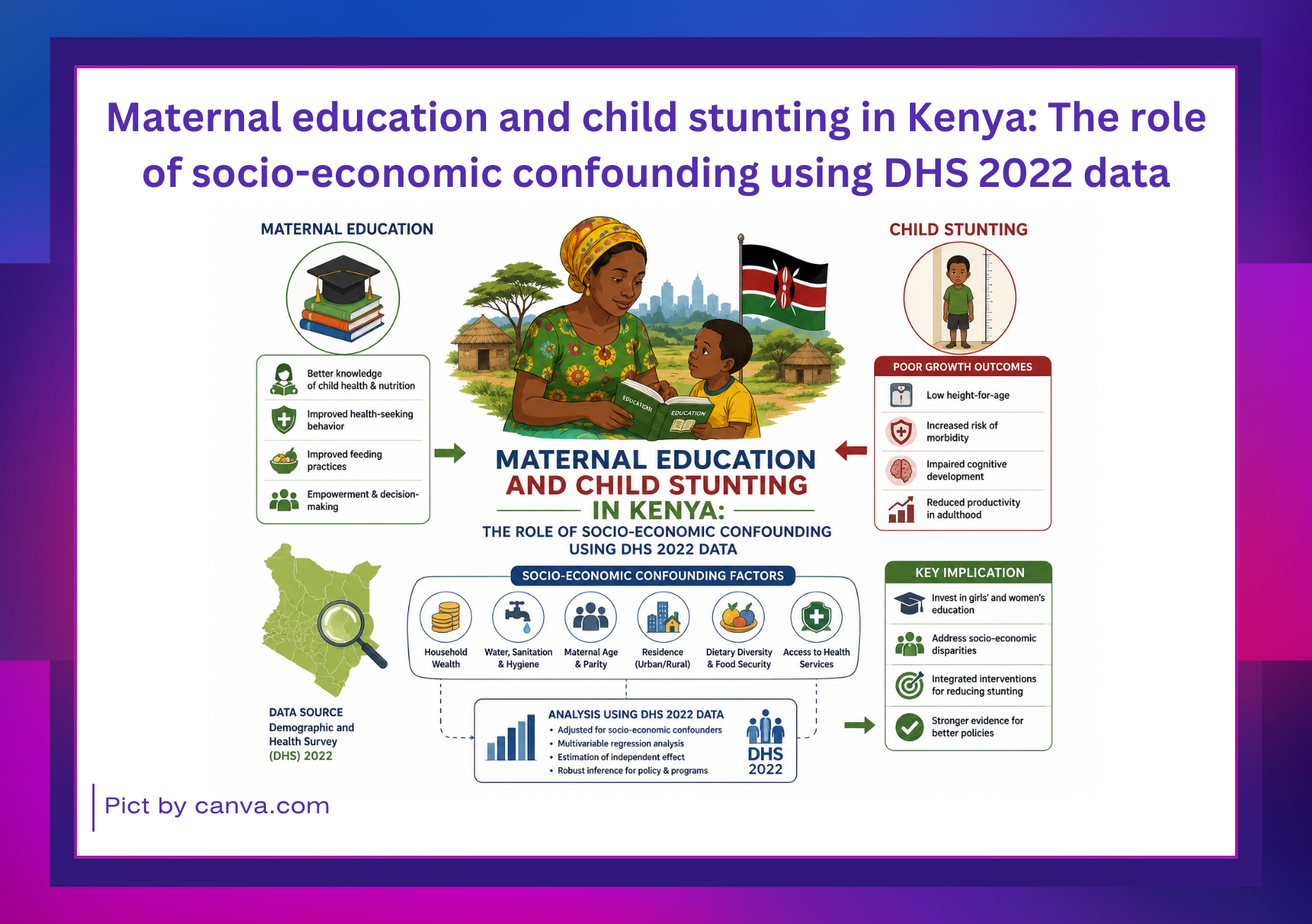
Maternal education and child stunting in Kenya: The role of socio-economic confounding using DHS 2022 data
Anastacia Katungo Maluki1, Zerai Hagos2, Kabiru Gulma3, Michael Musili Nzau41. Doctoral Programme in Epidemiology and Biostatistics, Euclid University, Banjul , GM2. Doctoral Programme in Epidemiology and Biostatistics, Euclid University, Banjul , GM3. School of Global Health and Bioethics, Euclid University, Bangui , CF4. United Nations Development Programme, New York , US2026-05-24|page 41-56AbstractBackground: Child stunting remains a major public health challenge in Kenya, reflecting long‑term nutritional deprivation and socioeconomic inequalities. Although maternal education is widely considered protective, its independent effect is often unclear due to confounding by structural factors.
Objectives: To examine the association between maternal education and child stunting among children under five in Kenya and to assess the extent of confounding and effect modification by key sociodemographic factors.
Methods: A cross‑sectional analytical study was conducted using data from the 2022 Kenya Demographic and Health Survey (KDHS). The sample included 19,530 children aged 0–59 months. Stunting was defined using height‑for‑age z-scores (<-2 SD). Descriptive, bivariate, stratified, and multivariable logistic regression analyses were performed, accounting for the complex survey design.
Results: Stunting prevalence was 18.2%. Stunting decreased with increasing maternal education, from 21.4–21.7% among children of mothers with no or primary education to 8.7% among those with higher education (χ² = 238, p < 0.001). However, the association was weak (Cramer’s V = 0.117) and attenuated after adjustment for socioeconomic factors. Household wealth was the strongest predictor, with children in the richest households having significantly lower odds of stunting than those in the poorest households (AOR = 0.268; 95% CI: 0.222–0.323; p < 0.001). Stunting risk increased with age, particularly among children aged 6–23 months, while females had lower odds than males (OR = 0.717; 95% CI: 0.662–0.776). Stratified analyses showed stronger protective effects of maternal education among older children. In contrast, variation across wealth groups should be interpreted cautiously, given inconsistent and non-significant findings in some strata. No meaningful effect modification by child sex was identified.
Conclusions: Child stunting in Kenya is primarily driven by structural socioeconomic factors. While maternal education is associated with reduced stunting, its effect is highly context dependent. Addressing poverty and inequality is essential for effective and equitable reductions in child stunting.
APA Citation StyleMaluki, A. K. , Hagos, Z. , Gulma, K. , & Nzau, M. M. (2026). Maternal education and child stunting in Kenya: The role of socio-economic confounding using DHS 2022 data. Public Health and Occupational Safety Journal, 41-56. https://doi.org/10.56003/phosj.v2i1.743 -
Effectiveness of 3D poster in improving menstrual hygiene knowledge among adolescent girls: A quasi-experimental study
Rani Mustikawati1, Windi Chusniah Rachmawati2, Endang Sri Redjeki3, Nurnaningsih Herya Ulfah41. State University of Malang , ID2. State University of Malang , ID3. State University of Malang , ID4. State University of Malang , ID2025-04-23|page 40-52AbstractBackground: Personal hygiene during menstruation is important and must be applied during the menstrual cycle. Suppose personal hygiene during menstruation is not maintained correctly. In that case, adolescent girls have the potential to experience health problems such as vaginal discharge, irritation of the genital area, allergies, inflammation, and Urinary Tract Infection (UTI). As many as 75% of women in Indonesia have experienced vaginal discharge once, while 45% have experienced it more than 2 times.
Objectives: This study aimed to determine the effectiveness of 3D posters in increasing knowledge about personal hygiene during menstruation.
Methods: The research method used was Research and Development (R&D), which was conducted through a pre-experimental approach with one group pretest-posttest. Ninety-five adolescent girls in class VII of State Junior High School 13 Malang participated in the study obtained using a purposive sampling technique. The research instrument used a closed-type questionnaire with 10 items to measure knowledge.
Results: The 3D poster product obtained a percentage value of media feasibility of 95% for the media aspect and 92% for the material aspect, which means it is very feasible to use. After the intervention, it is known that there is an effect of providing health education using 3D posters on the knowledge of adolescent girls regarding personal hygiene during menstruation according to the p-value = 0.000 from the Wilcoxon test.
Conclusions: Personal hygiene education during menstruation should be done more often to improve the knowledge of adolescent girls. The findings support the use of 3D media in menstrual health promotion, especially in schools with limited resources.
APA Citation StyleMustikawati, R. , Rachmawati, W. C. , Redjeki, E. S. , & Ulfah, N. H. (2025). Effectiveness of 3D poster in improving menstrual hygiene knowledge among adolescent girls: A quasi-experimental study. Public Health and Occupational Safety Journal, 40-52. https://doi.org/10.56003/phosj.v1i1.531 -
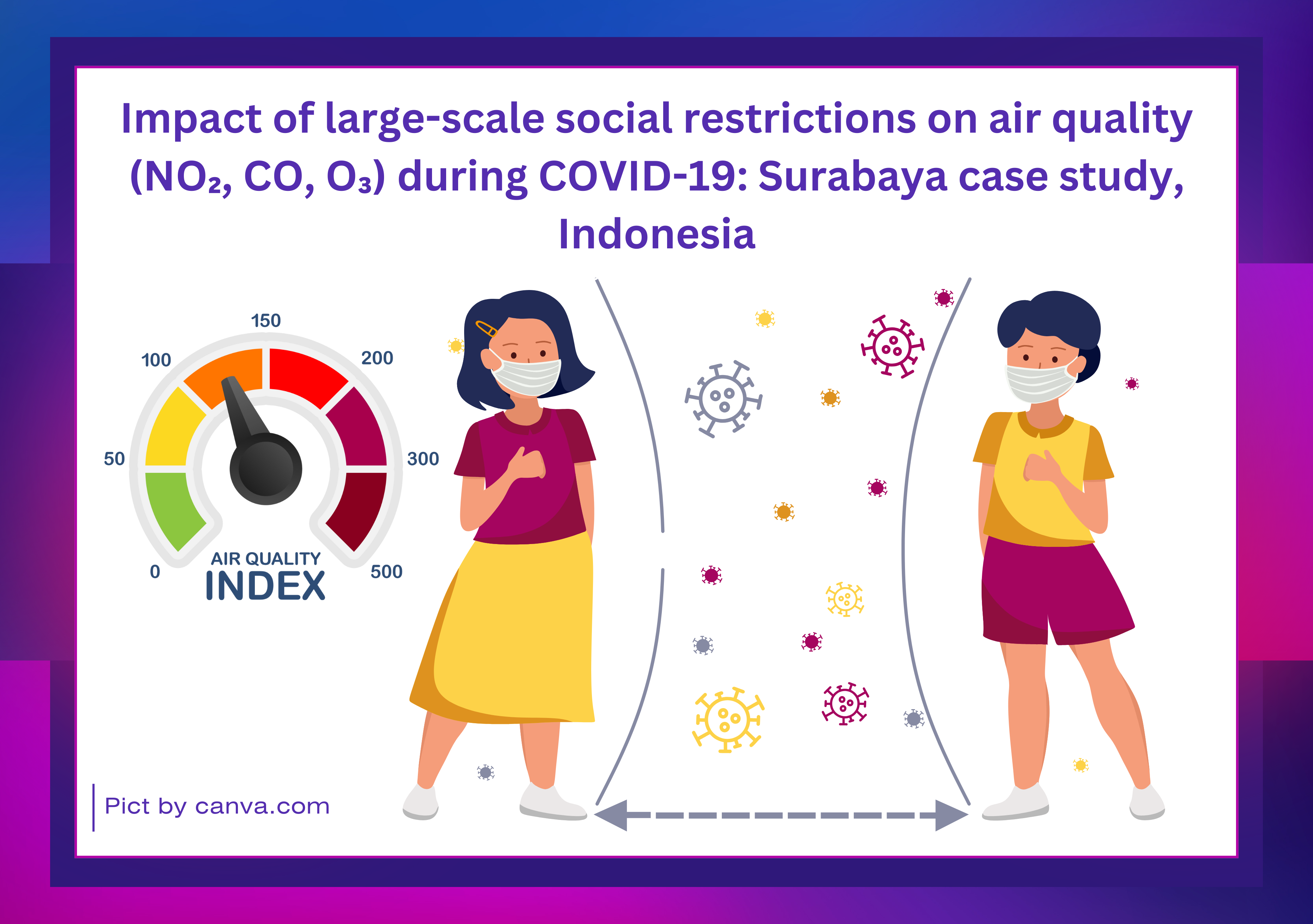
Impact of large-scale social restrictions on air quality (NO₂, CO, O₃) during COVID-19: Surabaya case study, Indonesia
Asmaul Nur Fitria1, Supriyadi Supriyadi2, Muhammad Al-Irsyad3, Anindya Hapsari41. State University of Malang , ID2. State University of Malang , ID3. State University of Malang , ID4. State University of Malang , ID2025-04-23|page 27-39AbstractBackground: The COVID-19 pandemic galvanized the world at the end of 2019. It was identified as an attack on humans and spread very quickly almost all over the world. As the person in charge of protecting the community, the government makes a policy that can suppress the spread of the COVID-19 virus.
Objectives: This study aims to determine whether implementing large-scale social restrictions (PSBB) in the COVID-19 period (2020 to 2021) impacts air quality in Surabaya City, East Java.
Methods: This quantitative research uses an Analysis of Secondary Data (ADS) approach by utilizing secondary data as the primary source. This research was conducted at the Surabaya City Environmental Service, East Java Province, in July - August 2021, with the total population being all the results of NO2, O3, and CO air quality measurements in 2020-2021 during the COVID-19 pandemic in January 2020 to December 2021 at monitoring stations in Surabaya City. This study uses Wilcoxon test analysis.
Results: The results showed that implementing the first phase of large-scale social restrictions had no significant impact on NO₂ air quality in Surabaya City (p = 0.068). Implementing the transitional PSBB (second stage) had no significant impact on NO₂ air quality in Surabaya City (p = 0.068). Implementing the first and second phases of the PSBB has no significant impact on NO₂ air quality in Surabaya City (p = 0.173).
Conclusions: The implementation of PSBB Phase One and PSBB Phase Two (transition period) did not significantly impact the air quality of NO2, CO, or O3 gases in Surabaya City. This finding challenges the common assumption that lockdowns automatically improve air quality and emphasizes the need for more comprehensive environmental policies.
APA Citation StyleFitria, A. N. , Supriyadi, S. , Al-Irsyad, M. , & Hapsari, A. (2025). Impact of large-scale social restrictions on air quality (NO₂, CO, O₃) during COVID-19: Surabaya case study, Indonesia. Public Health and Occupational Safety Journal, 27-39. https://doi.org/10.56003/phosj.v1i1.528 -
The relationship between quality and quantity of antenatal care services and stunting in children 24–59 months of age
Aulia Pramesti1, Hartati Eko Wardani2, Tika Dwi Tama3, Anindya Hapsari41. State University of Malang , ID2. State University of Malang , ID3. State University of Malang , ID4. State University of Malang , ID2025-06-14|page 97-113AbstractBackground: Stunting is a chronic nutritional problem whose causes include unmet nutrition in pregnant women, lack of infant nutritional intake, and socioeconomic conditions. Dinoyo Health Center covers an area with a high stunting rate in Malang City, particularly Lowokwaru District. Previous research stated that the dominant factor causing stunting in toddlers is antenatal care (ANC).
Objectives: This study aims to determine whether stunting in toddlers in the Dinoyo Community Health Center area is caused by the quality and quantity of ANC.
Methods: The research method is observational analytic with a case-control design using a retrospective approach. The population was 1643 mothers taken from three villages: Tlogomas, Dinoyo, and Sumbersari. The research sample amounted to 69 people using purpose sampling. The research was conducted in February - March 2023. Quality measurement was based on a minimum 10T service standard, while quantity measurement was based on a minimum frequency of 4 visits using a checklist sheet instrument and MCH book with Chi-Square analysis.
Results: The results obtained for ANC quality with stunting p-value = 0.609 with OR value = 1.30 (95% CI: 0.47-3.55), while ANC quantity with stunting p-value = 0.864 with OR value = 1.09 (95% CI: 0.40-2.97).
Conclusions: It is concluded that the quality and quantity of antenatal care have no association with the incidence of stunting in children under 24-59 months in the Dinoyo Community Health Center (Puskesmas) area. These findings highlight the need for multifactor interventions beyond ANC to reduce stunting, such as improved maternal nutrition and environmental sanitation.
APA Citation StylePramesti, A. , Wardani, H. E. , Tama, T. D. , & Hapsari, A. (2025). The relationship between quality and quantity of antenatal care services and stunting in children 24–59 months of age. Public Health and Occupational Safety Journal, 97-113. https://doi.org/10.56003/phosj.v1i1.539 -
Correlation analysis of vaccination coverage, positivity rate, and community mobility rate on COVID-19 effective reproductive rate: SIR modeling study from Indonesia
Meirina Nur Asih Susanti1, Siti Nurrochmah2, Lucky Radita Alma3, Supriyadi Supriyadi41. State University of Malang , ID2. State University of Malang , ID3. State University of Malang , ID4. State University of Malang , ID2025-06-03|page 80-96AbstractBackground: Effective Reproduction Rate (Rt) is used to evaluate COVID-19 transmission; although Tegal City has the lowest cumulative cases in Central Java, the spread of the virus remains rapid. Intervention efforts are carried out through vaccination coverage, positivity rate, and level assessment as a shared responsibility to reduce the transmission rate.
Objectives: The purpose of this study was to estimate the spread of COVID-19 with the intervention and to determine whether there is a correlation between the COVID-19 Rt Number and vaccination coverage, positivity rate, and level assessment situation in Tegal City.
Methods: Observational quantitative research design. The type of research used was SIR (Susceptible Infected Removed) mathematical modeling and descriptive analysis through an ecological study approach and Spearman correlation statistical analysis.
Results: The results of the study showed a decrease in the number of cases of vulnerable and infected subpopulations after public health interventions, followed by the results that the positivity rate and level assessment situation were significantly correlated with the strength of the relationship powerful to the Covid-19 Effective Reproductive Rate with values (r=0.856; p=0.00) and (r=-0.712; p=0.00), while vaccination coverage was not statistically significantly correlated with a value of (r=-0.209; p=0.137).
Conclusions: The positivity rate and COVID-19 level assessment situation were statistically significantly correlated to the effective reproductive rate of COVID-19 in Tegal City with a strong correlation. Meanwhile, vaccination coverage did not correlate statistically with effective reproductive rate. Further studies must evaluate the effectiveness of combined interventions (vaccination + testing + mobility restriction) in various epidemiological settings.
APA Citation StyleSusanti, M. N. A. , Nurrochmah, S. , Alma, L. R. , & Supriyadi, S. (2025). Correlation analysis of vaccination coverage, positivity rate, and community mobility rate on COVID-19 effective reproductive rate: SIR modeling study from Indonesia. Public Health and Occupational Safety Journal, 80-96. https://doi.org/10.56003/phosj.v1i1.534 -
Effects of theory-based education versus simulation-based training on knowledge and skills in managing shortness of breath among university health volunteers
Agus Nur Wahyuda1, Marji Marji2, Nurnaningsih Herya Ulfah3, Anita Sulistyorini41. State University of Malang , ID2. State University of Malang , ID3. State University of Malang , ID4. State University of Malang , ID2026-01-14|page 163-173AbstractBackground: First aid skills for respiratory emergencies, particularly shortness of breath, are crucial for university health volunteers who often serve as the first responders. However, theory-based learning alone is not always adequate for developing practical competencies.
Objectives: This study aims to evaluate the effectiveness of theoretical education compared to the combination of theory and simulation in enhancing the knowledge and skills of university health volunteers in managing cases of shortness of breath.
Methods: A quasi-experimental pre-posttest design was conducted among 40 student volunteers of the Indonesian Red Cross Volunteer Corps (KSR-PMI), aged 18-20 years, who were equally assigned to a theory-only group or a theory-plus-simulation group. The intervention consisted of two 45-minute sessions. Knowledge and skills were assessed before and after the intervention. Data were analyzed using the Wilcoxon Signed Rank Test and the Mann–Whitney U Test with a significance level of α = 0.05.
Results: Knowledge significantly improved in both groups (p < 0.05), with no significant difference between them (p = 0.204). Skill performance improved markedly in the simulation group, increasing from 0% to 100%, compared with only 20% in the theory-only group (p < 0.001).
Conclusions: While theoretical education effectively enhances knowledge, it is insufficient for developing practical skills. Integrating simulation-based training significantly improves psychomotor competence and better prepares university health volunteers to manage respiratory emergencies.
APA Citation StyleWahyuda, A. N. , Marji, M. , Ulfah, N. H. , & Sulistyorini, A. (2026). Effects of theory-based education versus simulation-based training on knowledge and skills in managing shortness of breath among university health volunteers. Public Health and Occupational Safety Journal, 163-173. https://doi.org/10.56003/phosj.v1i2.671 -
Workplace stress and burnout among university lecturers in Indonesia and Malaysia: A systematic review of stressors, outcomes, and protective factors
Mimi Haryani Hassim1, Dian Puspitaningtyas Laksana2, Rachmy Rosyida Rais3, Ronal Surya Aditya41. University of Technology Malaysia , MY2. State University of Malang , ID3. State University of Malang , ID4. Universitas Jember , ID2026-01-27|page 174-192AbstractBackground: Workplace stress and burnout have emerged as critical occupational health concerns among university lecturers, particularly amid increasing academic workloads, performance pressures, and organizational demands intensified during and after the COVID-19 pandemic. Despite growing empirical attention, evidence remains fragmented, especially within Southeast Asian higher education contexts.
Objectives: This study aims to systematically review empirical research on workplace stress and burnout among university lecturers in Indonesia and Malaysia, with a focus on identifying key stressors, associated outcomes, and protective factors.
Methods: A systematic literature review was conducted following the PRISMA 2020 guidelines. Peer-reviewed articles published in English were retrieved from the Scopus database using predefined search terms related to workplace stress, burnout, lecturers, and higher education in Indonesia and Malaysia. After screening and eligibility assessment, 19 studies published between 2004 and 2025 were included. Methodological quality was assessed using the Newcastle–Ottawa Scale, and findings were synthesized through qualitative narrative analysis due to study heterogeneity.
Results: The review reveals that workplace stress and burnout are prevalent among university lecturers in both countries. Major stressors include excessive workload, role ambiguity, performance-based evaluation systems, work–life imbalance, and limited organizational support. These stressors are consistently associated with adverse outcomes such as emotional exhaustion, reduced job satisfaction, impaired performance, and increased turnover intention. Protective factors, including social support, supportive leadership, emotional intelligence, and workplace spirituality, were found to mitigate stress and burnout effects.
Conclusions: Workplace stress and burnout among university lecturers in Indonesia and Malaysia are multifactorial and systemic issues embedded in contemporary academic work environments. Organizational- and policy-level interventions are essential to promote lecturer well-being and ensure sustainable academic careers.
APA Citation StyleHassim, M. H. , Laksana, D. P. , Rais, R. R. , & Aditya, R. S. (2026). Workplace stress and burnout among university lecturers in Indonesia and Malaysia: A systematic review of stressors, outcomes, and protective factors. Public Health and Occupational Safety Journal, 174-192. https://doi.org/10.56003/phosj.v1i2.674 -
Factors influencing desired family size among women of childbearing age in eastern Indonesia: Evidence from the Indonesian Demographic Health Survey
Cindy Ade Aulia1, Siti Nurrochmah2, Lucky Radita Alma3, Supriyadi Supriyadi41. State University of Malang , ID2. State University of Malang , ID3. State University of Malang , ID4. State University of Malang , ID2025-06-02|page 67-79AbstractBackground: Globally, Indonesia is the fourth most populous country. Based on the results of the Indonesian Central Bureau of Statistics census, it is known that the population of Indonesia in 2017 was around 261 million people, with an average number of children desired by women of childbearing age in East Nusa Tenggara Province of 2.9 or around three children per woman of childbearing age.
Objectives: This study aimed to determine the relationship between marital status, age at first marriage, employment status, and the number of children desired.
Methods: This quantitative study uses a cross-sectional design and an observational analytic survey method. This study took survey data from the 2017 Indonesian Demographic and Health Survey. The study sample was women aged 15-49 years who were recorded as a selected sample in East Nusa Tenggara Province, totaling 1,929 women. Data analysis used the Chi-square test.
Results: The analysis showed that the p-value of marital status was 0.000, the p-value of age at first marriage was 0.000, and the p-value of employment status was 0.000, which means that there is a significant relationship between marital status, age at first marriage, and employment status with the number of children desired by women of childbearing age.
Conclusions: This study found that marital status, age at first marriage, and employment status were significantly associated with the number of children desired by women of childbearing age. The findings suggest the need for employment-based interventions and marriage education to reduce fertility preferences in areas with high TFR.
APA Citation StyleAulia, C. A. , Nurrochmah, S. , Alma, L. R. , & Supriyadi, S. (2025). Factors influencing desired family size among women of childbearing age in eastern Indonesia: Evidence from the Indonesian Demographic Health Survey. Public Health and Occupational Safety Journal, 67-79. https://doi.org/10.56003/phosj.v1i1.533

1 - 10 of 10 items