Search
Search Results
##search.searchResults.foundPlural##
-

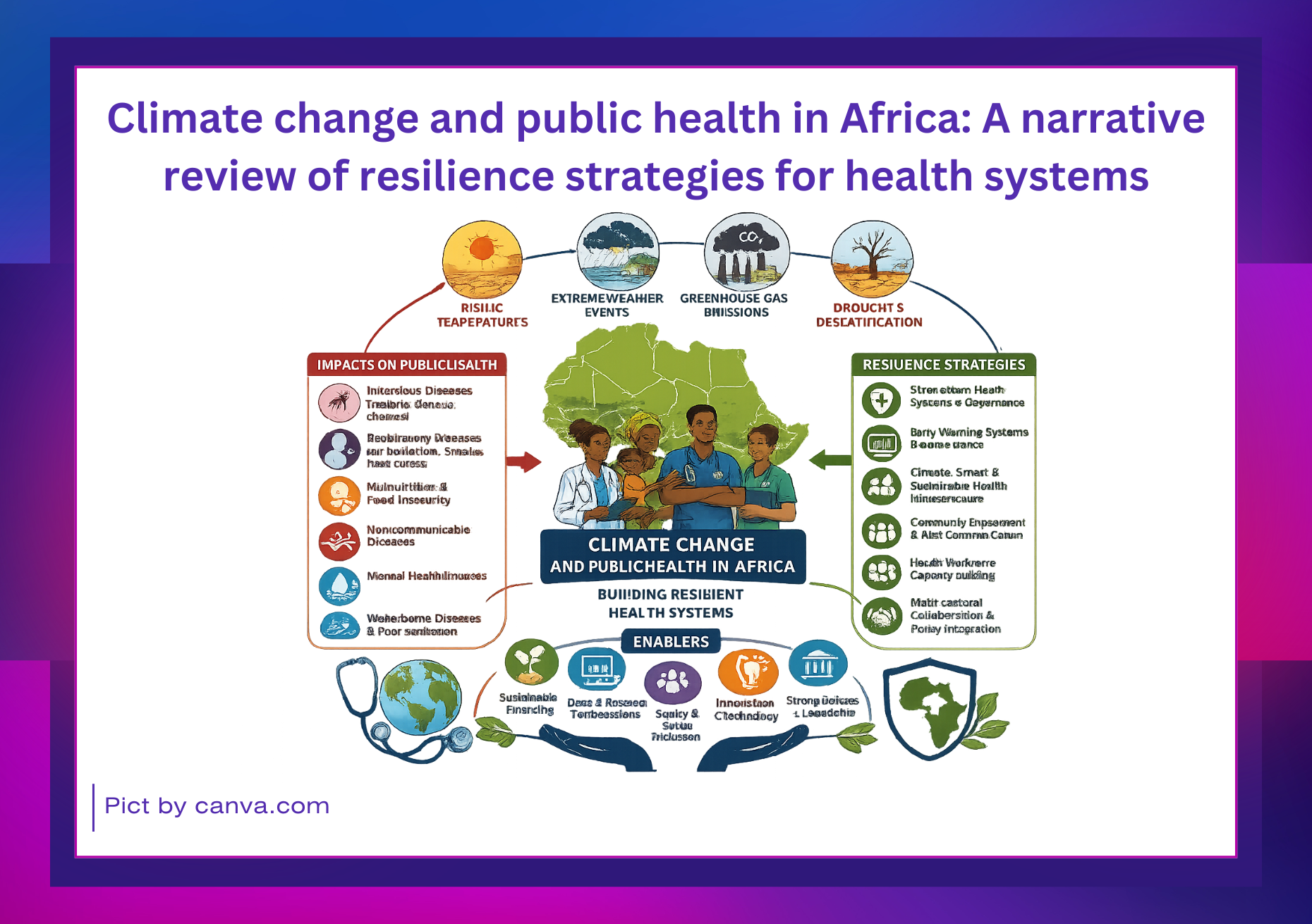
Climate change and public health in Africa: A narrative review of resilience strategies for health systems
Kabiru Gulma1, Sa’adatu M. Julde2, Isman Wais3, Emmanuel Morna4, Abubakar S. Danbatta5, Bakam Rodine6, Anastacia Katungo Maluki71. School of Global Health and Bioethics, Euclid University, Banjul , GM2. Faculty of Pharmaceutical Sciences, Bayero University, Kano , NG3. Euclid Caisse Nationale de Sécurité Sociale de Djibouti , DJ4. Doctoral Programme in Monitoring, Measurement and Evaluation, Euclid University, Bangui , CF5. Faculty of Pharmaceutical Sciences, Bayero University, Kano , NG6. Doctoral Programme in Global Energy Policy, Euclid University, Douala , CM7. Doctoral Programme in Epidemiology and Biostatistics, Euclid University, Banjul , GM2026-05-24|page 25-40AbstractBackground: Climate change poses an escalating threat to public health in Africa, a continent responsible for less than 10% of global greenhouse gas emissions yet disproportionately bearing the burden of its consequences. Existing health systems remain fragile, under-resourced, and ill-equipped to absorb climate-related shocks.
Objectives: To synthesize evidence on the health impacts of climate change in Africa and identify strategies for building climate-resilient health systems.
Methods: This study is a narrative literature review. A comprehensive search of peer-reviewed databases and gray literature was conducted. Sources were screened against predefined inclusion criteria and synthesized thematically across six domains: climate science, contextual vulnerabilities, health systems strengthening, governance, community engagement, and financing. A total of 22 studies and reports were included and analyzed using thematic synthesis following Thomas and Harden’s (2008) three-step approach.
Results: Climate change intensifies the burden of infectious and non-communicable diseases, disrupts health infrastructure, and deepens health inequities across African regions. Resilience-building requires strengthened governance, sustained domestic and international financing, multisectoral partnerships, community engagement, and climate-adaptive health information systems.
Conclusions: Concerted, context-sensitive action that integrates climate adaptation into health policy frameworks is urgently needed to protect the health and well-being of African populations from the accelerating impacts of climate change. Practical implications include strengthening health system governance, mobilizing climate finance, investing in climate-adaptive surveillance systems, and fostering community engagement and multisectoral collaboration to build durable climate resilience across African health systems.
APA Citation StyleGulma, K. , Julde, S. M. , Wais, I. , Morna, E. , Danbatta, A. S. , Rodine, B. , & Maluki, A. K. (2026). Climate change and public health in Africa: A narrative review of resilience strategies for health systems. Public Health and Occupational Safety Journal, 25-40. https://doi.org/10.56003/phosj.v2i1.719 -
Occupational safety and health hazards among artisanal and small-scale gold miners at Mazowe Jumbo Mine, Zimbabwe: A mixed-methods cross-sectional study
Bridget Nyamombe1, Vincent Itai Tanyanyiwa21. Zimbabwe Open University , ZW2. Zimbabwe Open University , ZW2025-11-28|page 151-162AbstractBackground: Artisanal and small-scale gold mining (ASGM) is associated with multiple occupational hazards that artisans are often unaware of.
Objectives: To identify the occupational hazards and risk factors among artisanal gold miners at Mazowe Jumbo mine, Zimbabwe.
Methods: The cross-sectional study employed Mixed-methods(Sep- Nov 2023). Purposive sampling of 34 miners from two sites (response rate was 100%). The interview was administered using questionnaires, structured interviews, field observations, and document review. Quantitative data were analyzed descriptively (frequencies and proportions), and qualitative data underwent thematic analysis.
Results: Heavy lifting was reported by 100% (34/34), manual handling by 91.2% (31/34), silica dust exposure by 91.2% (31/34), and contaminated water by 85.3% (29/34). Key risk factors included lack of PPE, financial pressure, and low OSH awareness. Field observations noted unsecured shafts, poor sanitation, and evidence of substance use on site.
Conclusions: ASG miners at Mazowe Jumbo Mine face multi-domain OSH hazards. We recommend targeted OSH training programmes, provision of PPE, improved sanitation, and monitoring/ formalization of ASGM activities.
APA Citation StyleNyamombe, B. , & Tanyanyiwa, V. I. (2025). Occupational safety and health hazards among artisanal and small-scale gold miners at Mazowe Jumbo Mine, Zimbabwe: A mixed-methods cross-sectional study. Public Health and Occupational Safety Journal, 151-162. https://doi.org/10.56003/phosj.v1i2.638 -
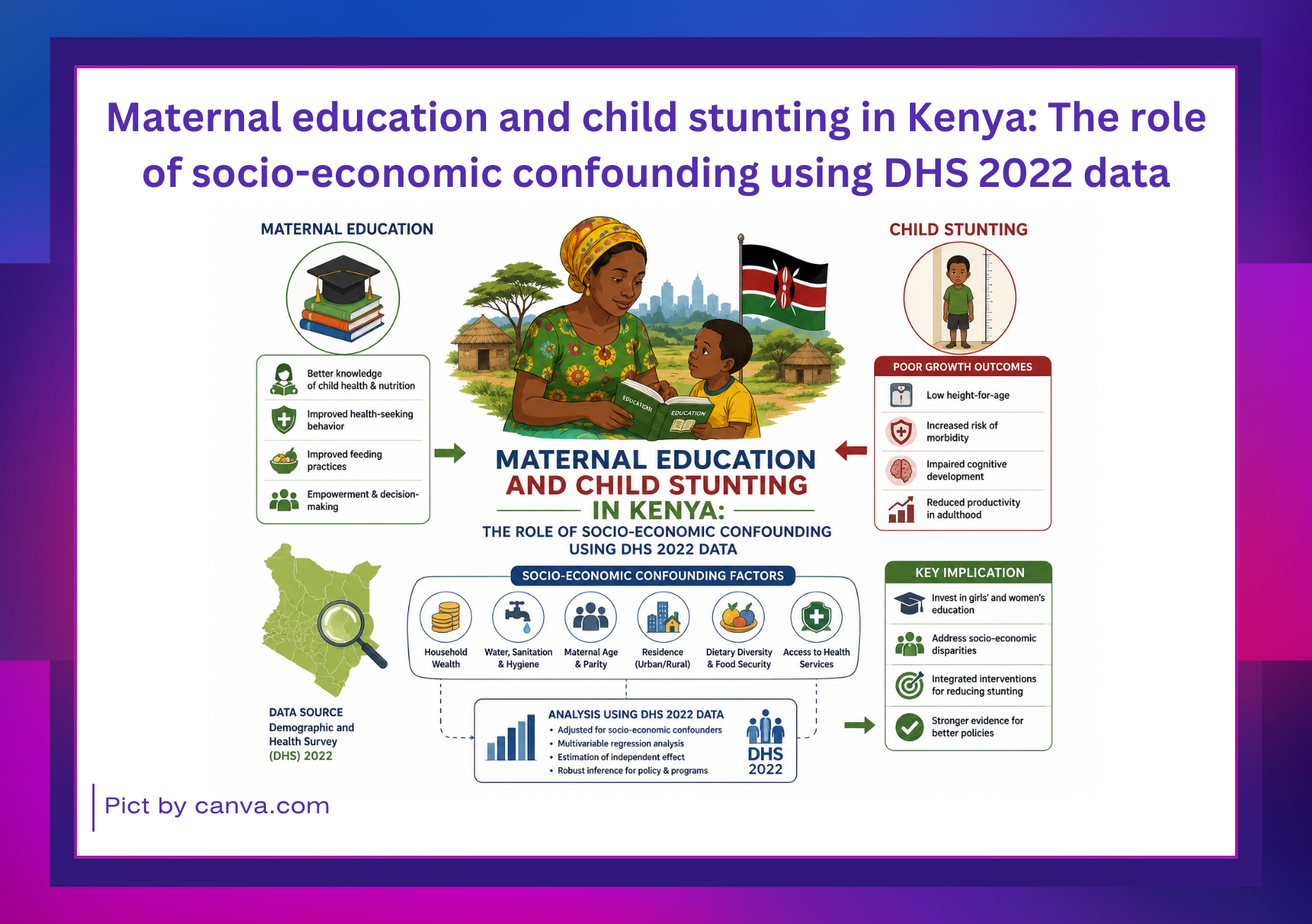
Maternal education and child stunting in Kenya: The role of socio-economic confounding using DHS 2022 data
Anastacia Katungo Maluki1, Zerai Hagos2, Kabiru Gulma3, Michael Musili Nzau41. Doctoral Programme in Epidemiology and Biostatistics, Euclid University, Banjul , GM2. Doctoral Programme in Epidemiology and Biostatistics, Euclid University, Banjul , GM3. School of Global Health and Bioethics, Euclid University, Bangui , CF4. United Nations Development Programme, New York , US2026-05-24|page 41-56AbstractBackground: Child stunting remains a major public health challenge in Kenya, reflecting long‑term nutritional deprivation and socioeconomic inequalities. Although maternal education is widely considered protective, its independent effect is often unclear due to confounding by structural factors.
Objectives: To examine the association between maternal education and child stunting among children under five in Kenya and to assess the extent of confounding and effect modification by key sociodemographic factors.
Methods: A cross‑sectional analytical study was conducted using data from the 2022 Kenya Demographic and Health Survey (KDHS). The sample included 19,530 children aged 0–59 months. Stunting was defined using height‑for‑age z-scores (<-2 SD). Descriptive, bivariate, stratified, and multivariable logistic regression analyses were performed, accounting for the complex survey design.
Results: Stunting prevalence was 18.2%. Stunting decreased with increasing maternal education, from 21.4–21.7% among children of mothers with no or primary education to 8.7% among those with higher education (χ² = 238, p < 0.001). However, the association was weak (Cramer’s V = 0.117) and attenuated after adjustment for socioeconomic factors. Household wealth was the strongest predictor, with children in the richest households having significantly lower odds of stunting than those in the poorest households (AOR = 0.268; 95% CI: 0.222–0.323; p < 0.001). Stunting risk increased with age, particularly among children aged 6–23 months, while females had lower odds than males (OR = 0.717; 95% CI: 0.662–0.776). Stratified analyses showed stronger protective effects of maternal education among older children. In contrast, variation across wealth groups should be interpreted cautiously, given inconsistent and non-significant findings in some strata. No meaningful effect modification by child sex was identified.
Conclusions: Child stunting in Kenya is primarily driven by structural socioeconomic factors. While maternal education is associated with reduced stunting, its effect is highly context dependent. Addressing poverty and inequality is essential for effective and equitable reductions in child stunting.
APA Citation StyleMaluki, A. K. , Hagos, Z. , Gulma, K. , & Nzau, M. M. (2026). Maternal education and child stunting in Kenya: The role of socio-economic confounding using DHS 2022 data. Public Health and Occupational Safety Journal, 41-56. https://doi.org/10.56003/phosj.v2i1.743 -
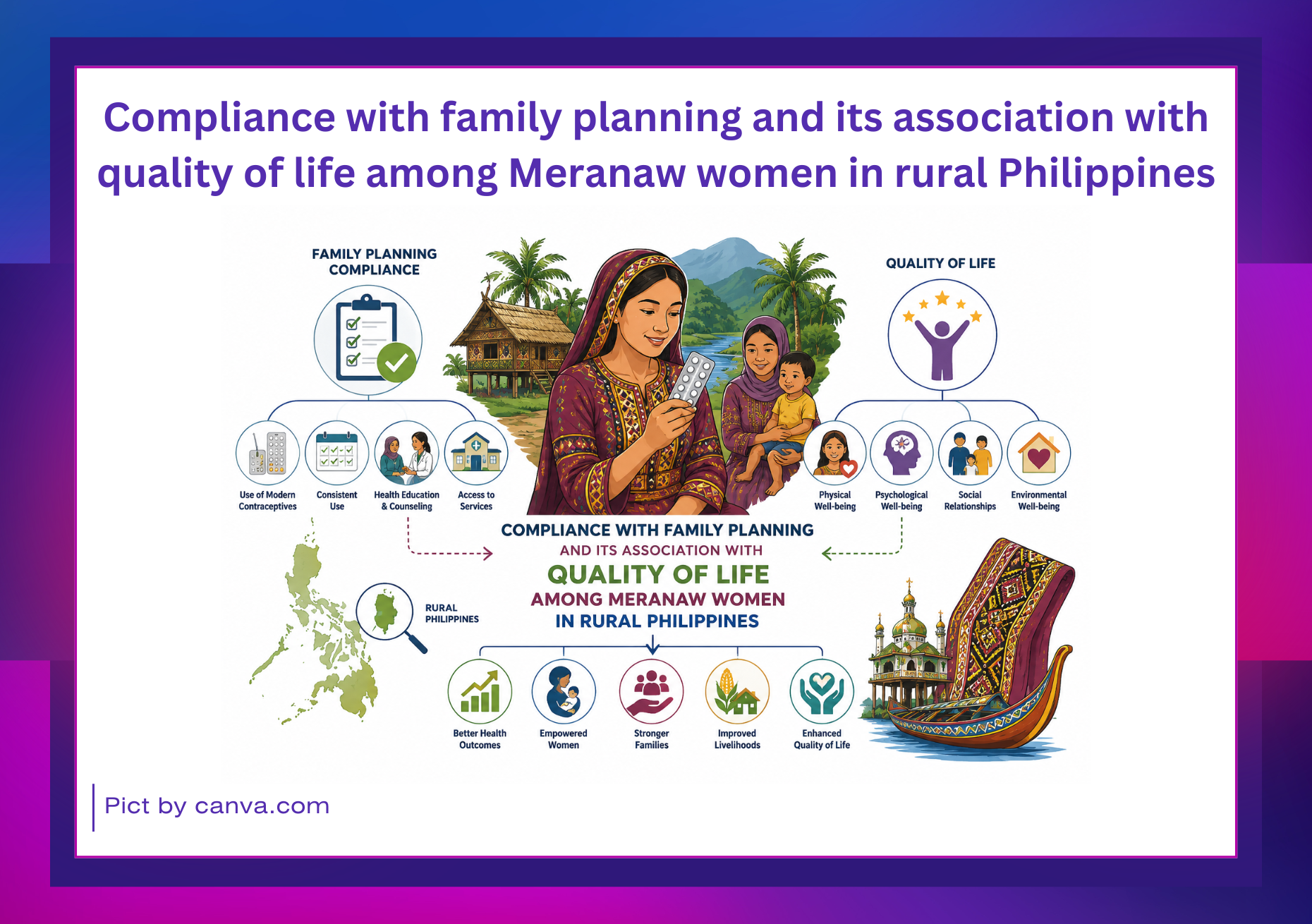
Compliance with family planning and its association with quality of life among Meranaw women in rural Philippines
Maslainie Aliola1, Hamdoni Pangandaman21. Mindanao State University - Marawi, Lanao Del Sur, 9700, Philippines , PH2. Mindanao State University, Marawi City , PH2026-05-24|page 1-13AbstractBackground: The COVID-19 pandemic disrupted access to essential health services, including family planning (FP), particularly in rural and underserved communities. These disruptions may influence women’s reproductive practices and overall quality of life (QoL).
Objectives: This study aimed to determine the level of family planning compliance and examine its influence on the quality of life among Meranaw women during the COVID-19 pandemic.
Methods: A descriptive cross-sectional design was employed among 378 Meranaw women who were family planning users in selected municipalities of Lanao del Sur, Philippines. Data were collected from January to October 2022. A stratified random sampling technique was used based on municipal distribution to ensure proportional representation of respondents. A validated researcher-developed questionnaire assessed attitude- and practice-related compliance (CVI = 0.81–0.92; α = 0.79), while QoL was measured using the WHOQOL-BREF. Data were analyzed using descriptive statistics and multiple linear regression.
Results: Respondents demonstrated high compliance in both attitude (mean = 3.61) and practice (mean = 3.41) domains. Overall QoL was rated very satisfactory (mean = 5.72), with the highest scores in the psychological (mean = 5.89) and relational (mean = 5.85) domains. Multiple regression analysis revealed that age (β = .319, p < .001), monthly income (β = –.097, p = .008), number of children (β = .395, p < .001), duration of FP use (β = .092, p = .034), and type of FP method (β = .129, p < .001) significantly predicted QoL. The model explained a substantial proportion of variance (R² = 0.974), indicating strong predictive capacity.
Conclusions: Meranaw women demonstrated high compliance with family planning practices despite pandemic-related constraints, thereby significantly improving the quality of life. Sustaining family planning services during public health crises is essential to maintaining women’s well-being, particularly in rural and culturally distinct populations.
APA Citation StyleAliola, M. , & Pangandaman, H. (2026). Compliance with family planning and its association with quality of life among Meranaw women in rural Philippines. Public Health and Occupational Safety Journal, 1-13. https://doi.org/10.56003/phosj.v2i1.698 -
Mapping the intellectual structure of lead exposure and occupational health research in mining: A bibliometric analysis (2015–2025)
Ismi Farah Syarifah1, Rizal Maulana Hasby21. Department of Public Health, Faculty of of Health Sciences, Universitas Pembangunan Nasional Veteran Jakarta , ID2. Program of Biology, Faculty of Education and Teacher Training, Universitas Bina Bangsa , ID2026-01-28|page 193-204AbstractBackground: Lead exposure remains a significant occupational health issue in the mining industry, where workers are frequently exposed to dust, particulate matter, and contaminated environments. While research has increased, the literature often develops in separate thematic streams, making it difficult to capture the overall structure and relationships between key areas of study.
Objectives: This study aims to map research trends and thematic developments related to lead exposure and occupational health in the mining industry from 2015 to 2025. The goal is to provide a comprehensive bibliometric overview of the field and identify dominant and emerging themes.
Methods: A bibliometric approach was applied using Scopus-indexed publications. Peer-reviewed articles and review papers published between 2015 and 2025 were screened for relevance, resulting in a dataset of 133 documents. Descriptive analyses examined publication trends, subject areas, document types, leading journals, authors, affiliations, and contributing countries. Keyword co-occurrence analysis was performed using VOSviewer to map thematic patterns.
Results: The volume of publications increased significantly after 2020, peaking in the early 2020s. Research predominantly focused on environmental and health-related topics, driven by empirical studies. The thematic mapping revealed three major clusters: (1) mining assessment, (2) epidemiological outcomes, and (3) occupational health risks. Although connections between exposure assessment and health outcomes were observed, these relationships remain weak.
Conclusions: Research on lead exposure and occupational health in mining has shown sustained growth and thematic maturity. However, there is limited integration between exposure monitoring and health outcome studies. Future research should focus on integrating exposure monitoring with health outcomes, particularly in high-risk mining sectors.
APA Citation StyleSyarifah, I. F. , & Hasby, R. M. (2026). Mapping the intellectual structure of lead exposure and occupational health research in mining: A bibliometric analysis (2015–2025). Public Health and Occupational Safety Journal, 193-204. https://doi.org/10.56003/phosj.v1i2.675

1 - 5 of 5 items