Vol. 1 No. 2 (2026): Journal of Artificial Intelligence in Education & Learning Innovation

This issue has been available online since January 31, 2026. All articles in this issue were authored/co-authored by 18 authors from Indonesia and the Philippines.
Published:
2026-01-31
Articles
-

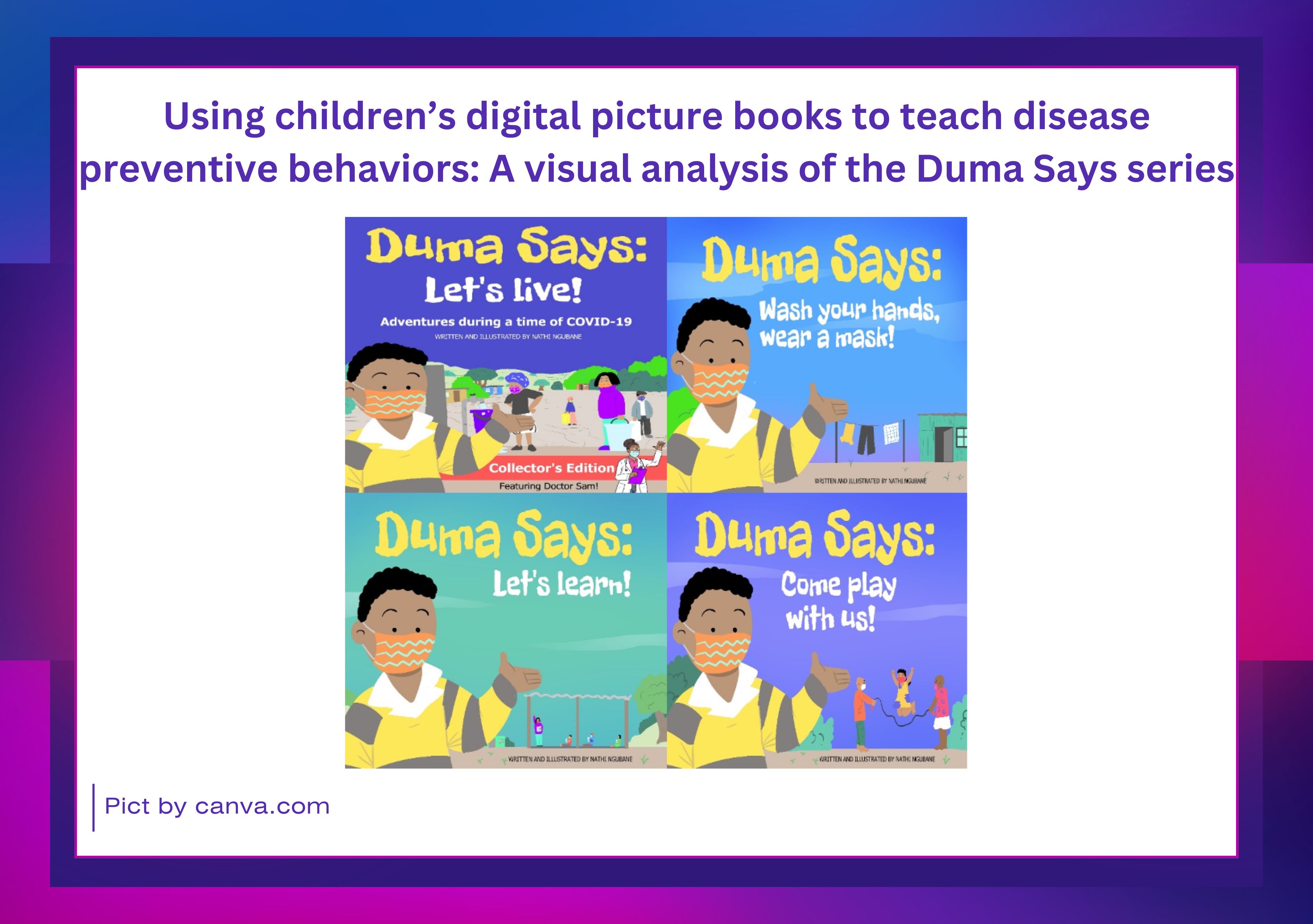
Using children’s digital picture books to teach disease preventive behaviors: A visual analysis of the Duma Says series
Esmeraldo Sarad1, Charmen Cabatuan2, Cleo Tionson3, April Grace Subong41. Mindanao State University - General Santos , PH2. Mindanao State University - General Santos , PH3. Mindanao State University - General Santos , PH4. Mindanao State University - General Santos , PHAbstractBackground: During health emergencies such as the COVID-19 pandemic, children require accessible and developmentally appropriate resources to understand disease prevention and health-related behaviors. Children’s digital picture books have emerged as a promising medium for conveying public health messages through visual storytelling and age-appropriate narratives.
Objectives: This study aimed to examine how children’s digital picture books represent disease preventive behaviors and moral values, using the Duma Says series as a case study.
Methods: A qualitative visual and textual analysis was conducted on four digital picture books from the Duma Says Collector’s Edition. The study employed qualitative visual analysis and a critical discourse approach to examine representations of hygiene practices, social responsibility, and community engagement embedded in both images and narratives.
Results: The findings indicate that the Duma Says series effectively integrates key COVID-19 preventive behaviors—such as handwashing, mask-wearing, social distancing, and sanitation—within child-friendly language and culturally contextualized visuals. In addition to promoting health practices, the books emphasize values of hope, responsibility, cooperation, and service, portraying children as active contributors to community well-being during a crisis.
Conclusions: Children’s digital picture books, such as the Duma Says series, function as effective educational tools for promoting disease prevention awareness and values-based learning. Incorporating culturally grounded digital picture books into early childhood and health education may strengthen children’s health literacy, emotional resilience, and sense of social responsibility during public health emergencies.APA Citation StyleSarad, E. , Cabatuan, C. , Tionson, C. , & Subong, A. G. (2026). Using children’s digital picture books to teach disease preventive behaviors: A visual analysis of the Duma Says series. Journal of Artificial Intelligence in Education & Learning Innovation, 1(2), 89-101. https://doi.org/10.56003/jaieli.v1i2.572 -
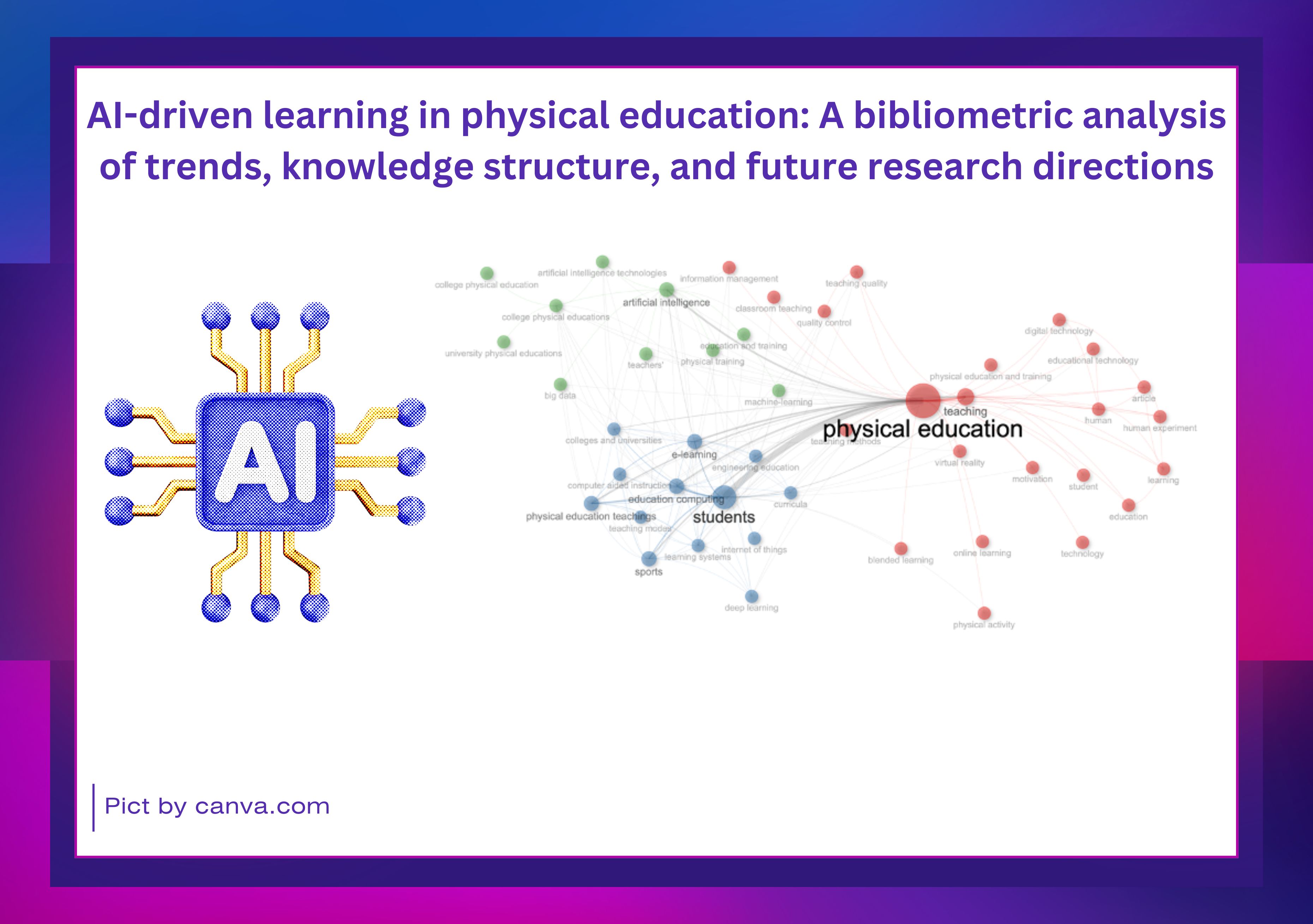
AI-driven learning in physical education: A bibliometric analysis of trends, knowledge structure, and future research directions
Amelia Larassary11. State Junior High School 1 Bunguran Tengah, Natuna Regency, Riau Islands , IDAbstractBackground: Although research on AI-driven learning in PE has expanded rapidly, existing studies remain fragmented across disciplines, journals, and methodological approaches, limiting a comprehensive understanding of the field's development and intellectual structure.
Objectives: This study aimed to systematically map the evolution, influential contributors, intellectual structure, dominant themes, and future research directions of AI-driven learning research in physical education from a bibliometric perspective.
Methods: A quantitative bibliometric analysis was conducted using data retrieved exclusively from the Scopus database. A total of 284 eligible documents published between 2020 and early 2026 were analyzed. Descriptive statistics were applied to examine publication trends, authorship, sources, institutions, and country contributions. Network and thematic analyses were performed using VOSviewer (version 1.6.20) and the Bibliometrix package in R to identify co-authorship patterns, keyword co-occurrence networks, and thematic clusters.
Results: The results indicate a sharp growth in AI-driven learning research in physical education after 2022, with publication output increasing more than fivefold from 2020 to 2025. China emerged as the leading contributing country, accounting for nearly half of the total publications, while institutional productivity was concentrated in several Russian universities. Keyword co-occurrence analysis revealed five major thematic clusters shaping the intellectual structure of the field, integrating pedagogical frameworks, computational intelligence, institutional contexts, and physical training models. Dominant research themes centered on pedagogical design, student engagement, adaptive learning systems, and the integration of educational technology. Emerging themes included virtual reality, advanced machine learning techniques, and immersive learning environments.
Conclusions: This study provides a structured and quantitative overview of AI-driven learning research in physical education, highlighting its interdisciplinary nature and rapid expansion.APA Citation StyleLarassary, A. (2026). AI-driven learning in physical education: A bibliometric analysis of trends, knowledge structure, and future research directions. Journal of Artificial Intelligence in Education & Learning Innovation, 1(2), 102-118. https://doi.org/10.56003/jaieli.v1i2.673 -
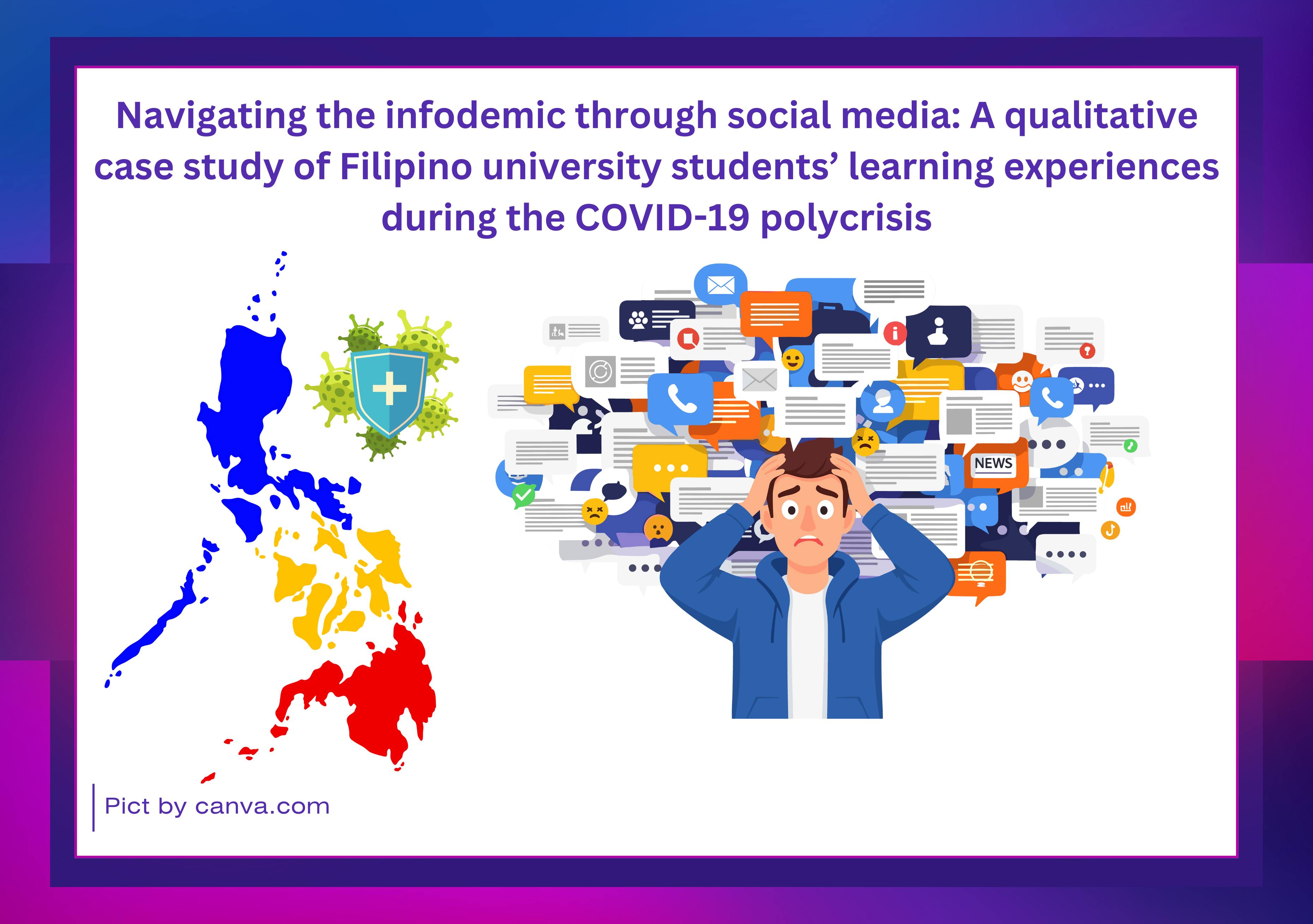
Navigating the infodemic through social media: A qualitative case study of Filipino university students’ learning experiences during the COVID-19 polycrisis
Janel Talaman1, Mc Denver Necosia2, Larence Villalon3, Edrian Mark Tomines41. Mindanao State University – General Santos , PH2. Mindanao State University – General Santos , PH3. Mindanao State University – General Santos , PH4. Mindanao State University - General Santos , PHAbstractBackground: The COVID-19 pandemic has triggered a complex crisis in higher education that has not only disrupted formal learning but also given rise to an infodemic through the rapid spread of misinformation on digital platforms, making social media both a source of learning and a source of epistemic risk for students.
Objectives: This study aims to explore how Filipino university students navigated learning experiences through social media during the COVID-19 polycrisis, focusing on preferred platforms, perceived educational relevance, and strategies for evaluating information credibility amid an infodemic.
Methods: A qualitative case study design was employed. Six Filipino university students enrolled in a Bachelor of Elementary Education program participated in this study through purposive sampling. Data were collected via online semi-structured interviews, group chat discussions, document analysis of shared social media content, and follow-up interviews. Thematic analysis was conducted following Braun and Clarke's framework to identify recurring patterns across data sources.
Results: Findings reveal that social media—particularly Facebook—served as a supplementary learning space, enabling students to access real-time information, engage with societal issues, and sustain their learning during the suspension of formal instruction. Students demonstrated active information-seeking behaviors, including cross-checking sources and exercising caution in sharing content. However, persistent exposure to misinformation highlighted their vulnerability within infodemic environments, especially in the absence of structured institutional guidance.
Conclusions: Social media can support authentic and socially relevant learning during educational disruption, but its pedagogical value depends on students' critical and digital literacy capacities.APA Citation StyleTalaman, J. , Necosia, M. D. , Villalon, L. , & Tomines, E. M. (2026). Navigating the infodemic through social media: A qualitative case study of Filipino university students’ learning experiences during the COVID-19 polycrisis. Journal of Artificial Intelligence in Education & Learning Innovation, 1(2), 119-134. https://doi.org/10.56003/jaieli.v1i2.571 -
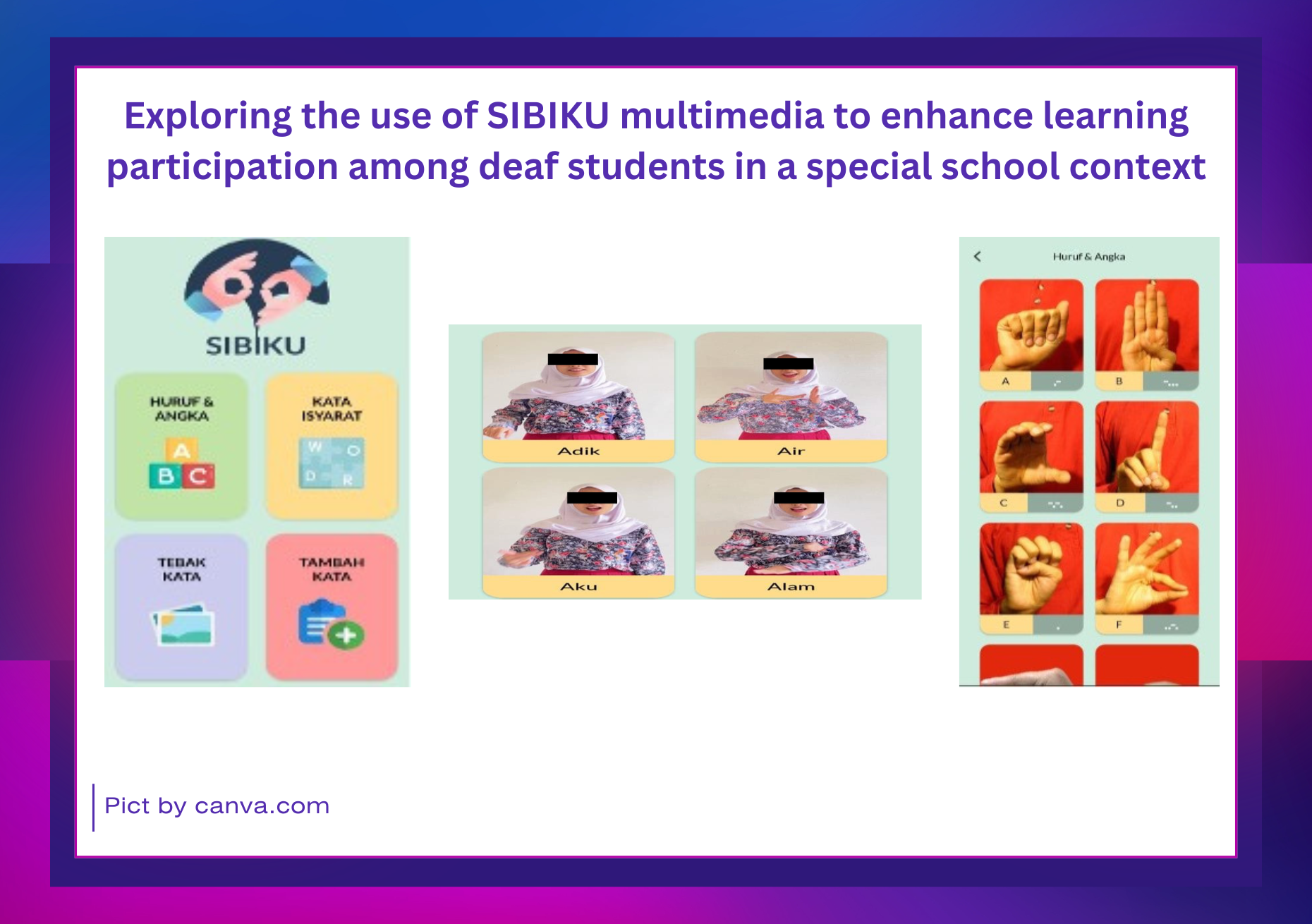
Exploring the use of SIBIKU multimedia to enhance learning participation among deaf students in a special school context
Nurina Ayuningtyas1, Ahmad Fajri Lutfi21. Universitas Muhammadiyah Kuningan , ID2. Universitas Muhammadiyah Kuningan , IDAbstractBackground: Observations at SLB C YPALB Perwari Kuningan indicate low motivation and limited participation among deaf students during learning activities. Interactive multimedia such as SIBIKU is expected to address these challenges.
Objectives: This study aims to (1) examine the implementation of SIBIKU multimedia in learning, (2) analyze students’ responses, and (3) evaluate changes in students’ learning participation and vocabulary acquisition.
Methods: This study employed a descriptive qualitative design with a field-based approach. Participants were selected using purposive sampling, consisting of one teacher and deaf students involved in computer learning activities. Data were collected through participatory observation, semi-structured interviews, and documentation. The main instrument was the researcher, supported by observation and interview guidelines. Data were analyzed using thematic analysis following Miles and Huberman’s model, including data reduction, data display, and conclusion drawing, with triangulation to ensure validity.
Results: The findings show that SIBIKU multimedia enhances student participation, as indicated by (1) increased attention to learning media, (2) active imitation of sign language movements, (3) higher frequency of student interaction and turn-taking, and (4) greater engagement in learning tasks such as word-guessing activities. Students also demonstrated improved motivation and more independent learning behavior.
Conclusions: SIBIKU multimedia provides a visually rich, interactive learning environment that effectively increases participation and engagement among deaf students, making it a promising tool for inclusive education.APA Citation StyleAyuningtyas, N. , & Lutfi, A. F. (2026). Exploring the use of SIBIKU multimedia to enhance learning participation among deaf students in a special school context. Journal of Artificial Intelligence in Education & Learning Innovation, 1(2), 135-147. https://doi.org/10.56003/jaieli.v1i2.676 -
Assessing academic integrity patterns among pre-service teachers using AI-based plagiarism detection
Irish Arroyo1, Sittie Nor Aisha Rusiana2, Daniere Maryje Tabada3, Kim Silva4, Carla Marie Rubio5, Esmeraldo Sarad6, Cathy Mae Toquero71. College of Education, Mindanao State University-General Santos , PH2. College of Education, Mindanao State University-General Santos , PH3. College of Education, Mindanao State University-General Santos , PH4. College of Education, Mindanao State University-General Santos , PH5. College of Education, Mindanao State University-General Santos , PH6. College of Education, Mindanao State University-General Santos , PH7. Faculty of Psychology, Malang State University , IDAbstractBackground: The advent of artificial intelligence has intensified concerns about academic dishonesty among students, particularly in written outputs. Plagiarism, a common form of misconduct, involves using others’ ideas without proper attribution.
Objectives: This study aimed to determine the degree and patterns of academic integrity in the pre-service teachers’ book reviews.
Methods: Employing a descriptive research design through document analysis, the study used purposive sampling to collect 40 book reviews, applying set inclusion and exclusion criteria. An AI-based plagiarism detection tool, Grammarly, was used to identify instances of plagiarism and assess the level of academic integrity reflected in the outputs. Descriptive statistical methods were applied to examine plagiarism levels across different sections of the book reviews.
Results: Results showed that the majority of pre-service teachers demonstrated a very high level of academic integrity in their book reviews, scoring 97% or interpreted as students committing 3% plagiarism. Furthermore, sectional analysis showed that the introduction and conclusion exhibited higher integrity, while the body contained the most instances of plagiarism. This suggests that students struggled more with sections requiring critical thinking, original insights, and proper citation. Most plagiarism cases were linked to failure to cite sources and unintentional misuse of references.
Conclusions: Teacher Education Institutions integrate AI-supported evaluation tools and plagiarism detection systems into instruction and assessment. Embedding academic integrity modules and discussions on AI ethics is also encouraged. Future research should involve larger and more diverse samples and utilize multiple AI detection tools to enhance the reliability and validity of findings through cross-verification.
APA Citation StyleArroyo, I. , Rusiana, S. N. A. , Tabada, D. M. , Silva, K. , Rubio, C. M. , Sarad, E. , & Toquero, C. M. (2026). Assessing academic integrity patterns among pre-service teachers using AI-based plagiarism detection. Journal of Artificial Intelligence in Education & Learning Innovation, 1(2), 148-163. https://doi.org/10.56003/jaieli.v1i2.685