Search
Search Results
##search.searchResults.foundPlural##
-

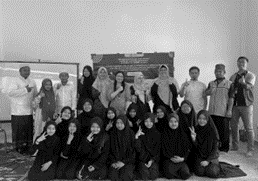
Knowledge and attitudes toward balanced nutrition among children of Indonesian migrant workers at Pondok An-Nahdloh, Selangor, Malaysia
Nohan Arum Romadlona1, Septa Katmawanti2, Farah Paramita3, Suci Puspita Ratih4, Evada Mutiara Ramadhani5, Nadia Fauziyah Nashih61. State University of Malang , ID2. State University of Malang , ID3. State University of Malang , ID4. State University of Malang , ID5. State University of Malang , ID6. State University of Malang , ID2025-02-15|page 1-7AbstractThe number of Indonesian migrant workers in Malaysia is very high. However, access to education for Indonesian citizens' families is not yet spread evenly and appropriately. Hundreds of Indonesian migrant workers' children attended school at Sanggar Bimbingan (SB). However, various problems arise, including the lack of healthy living behavior and low-nutrition food consumption. Community service activities were carried out at Pondok An Nahdloh in Tanjung Sepat, Selangor, Malaysia, by a team of lecturers from the Department of Public Health, Universitas Negeri Malang. The core material presented includes 1) Introduction to Adolescent Nutrition, 2) Adolescent Nutrition Problems, and 3) Healthy Body Image, which is interesting through video presentations and modules. The students also underwent height and weight measurements to measure body mass index (BMI). The service activity involved 33 junior high school students aged 13-16 years, including 18 male students (55%) and 15 female students (45%). Body weight measurements showed that 61% of students weighed under 60 kg. Furthermore, the student's height is generally less than 160 cm. Calculating nutritional status based on BMI shows that 64% of students have an abnormal weight, either underweight or overweight. The average knowledge score before training was 6.8 and increased to 8.4 after training. Meanwhile, the average attitude value before training was 30.4 and increased to 31.2 after training. This score increase shows that the training program effectively increases students' knowledge and attitudes toward balanced nutrition.
APA Citation StyleRomadlona, N. A. , Katmawanti, S. , Paramita, F. , Ratih, S. P. , Ramadhani, E. M. , & Nashih, N. F. (2025). Knowledge and attitudes toward balanced nutrition among children of Indonesian migrant workers at Pondok An-Nahdloh, Selangor, Malaysia. Darmabakti: Jurnal Pengabdian kepada Masyarakat, 1-7. https://doi.org/10.56003/darmabakti.v1i1.385 -

Community-based production of dragon fruit and red spinach gummies to support stunting prevention among preschool children
Rizka Wulandari Putri1, Rahmatullah Rahmatullah2, Sri Haryati3, David Bahrin4, Asyeni Miftahul Jannah5, Rizza Fadilah Fitri6, Alek Al Hadi7, Fauztin Zuraida Rizqi81. Department of Chemical Engineering, Faculty of Engineering, Universitas Sriwijaya , ID2. Department of Chemical Engineering, Faculty of Engineering, Universitas Sriwijaya , ID3. Department of Chemical Engineering, Faculty of Engineering, Universitas Sriwijaya , ID4. Department of Chemical Engineering, Faculty of Engineering, Universitas Sriwijaya , ID5. Department of Chemical Engineering, Faculty of Engineering, Universitas Sriwijaya , ID6. Department of Chemical Engineering, Faculty of Engineering, Universitas Sriwijaya , ID7. Department of Mining Engineering, Faculty of Engineering, Universitas Sriwijaya , ID8. Department of Chemical Engineering, Faculty of Engineering, Universitas Sriwijaya , ID2026-06-13|page 19-27AbstractStunting remains a major nutritional challenge among Indonesian children and requires community-based interventions that promote healthy dietary practices. This community service program aimed to improve the knowledge and skills of members of the Rumah Cinta Dahlia Family Welfare Movement (PKK) in producing healthy gummies made from dragon fruit (Hylocereus polyrhizus) and red spinach as an alternative nutritious snack to support stunting prevention among children. The program involved nutrition education, practical training in gummy production, and evaluation through pre- and post-tests. A total of 46 PKK members participated in the activity. During the training, participants learned how to use lemon and citric acid as preservatives. The resulting gummies were then evaluated for texture, taste, aroma, appearance, shelf life, and consumer preference. The gummy production process involved mixing dragon fruit juice, red spinach extract, gelatin, and preservative agents, followed by molding and refrigerated storage for 35 days. The results showed that the proportion of participants with high knowledge increased from 65% before the intervention to 100% after the training. Sensory evaluation indicated that gummies preserved with lemon were preferred by 70% of participants, while 30% preferred those preserved with citric acid. The findings indicate that lemon may serve as a suitable natural preservative with good consumer acceptance and storage stability. Overall, the program successfully improved participants’ knowledge and practical skills in preparing nutritious food products and demonstrated the potential of dragon fruit and red spinach gummies as an innovative snack to support household-level stunting prevention efforts.
APA Citation StylePutri, R. W. , Rahmatullah, R. , Haryati, S. , Bahrin, D. , Jannah, A. M. , Fitri, R. F. , Hadi, A. A. , & Rizqi, F. Z. (2026). Community-based production of dragon fruit and red spinach gummies to support stunting prevention among preschool children. Darmabakti: Jurnal Pengabdian kepada Masyarakat, 19-27. https://doi.org/10.56003/darmabakti.v3i1.745 -
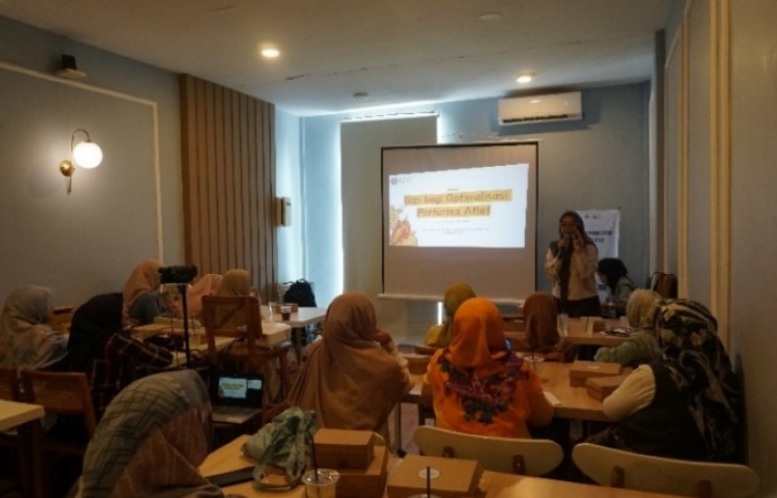
Strategies for improving athlete performance through training load monitoring training at Barracuda’s Swimming Club
Prisca Widiawati1, Yulingga Nanda Hanief2, Ulma Erdilanita3, I Kadek Ryo Prananda41. State University of Malang , ID2. State University of Malang , ID3. Indonesia University of Education , ID4. State University of Malang , ID2025-02-15|page 23-31AbstractTraining load training (training load) is one of the essential strategies for improving athlete performance. The lack of understanding of coaches and athletes regarding training load calculations is the main focus of the service team. This activity aims to apply the concept of training load calculation at Barracuda's Swimming Club to minimize the risk of injury and overtraining and improve athlete performance. Training load is divided into external and internal training loads, where external loads measure the physical work done by athletes, while internal loads evaluate physiological and psychological responses to exercise. Through a Community-Based Participatory Research (CBPR) approach, this service program collaborates with coaches, athletes, and guardians to develop and implement an appropriate program. Training activities included two sessions, with material on training load calculation, Long-Term Athlete Development (LTAD), training load management, and the role of nutrition in supporting athlete performance. The pre-test and post-test results significantly increased participants' understanding of the training load. Based on the Paired T-Test analysis, there was a significant difference between the pretest and post-test scores with a p-value of 0.000, confirming that the training was effective in improving participants' understanding of training load calculation. Therefore, this program plays a crucial role in empowering coaches to make informed decisions to manage training loads, minimize injuries, and maximize athletes' potential.
APA Citation StyleWidiawati, P. , Hanief, Y. N. , Erdilanita, U. , & Ryo Prananda, I. K. (2025). Strategies for improving athlete performance through training load monitoring training at Barracuda’s Swimming Club. Darmabakti: Jurnal Pengabdian kepada Masyarakat, 23-31. https://doi.org/10.56003/darmabakti.v1i1.404 -
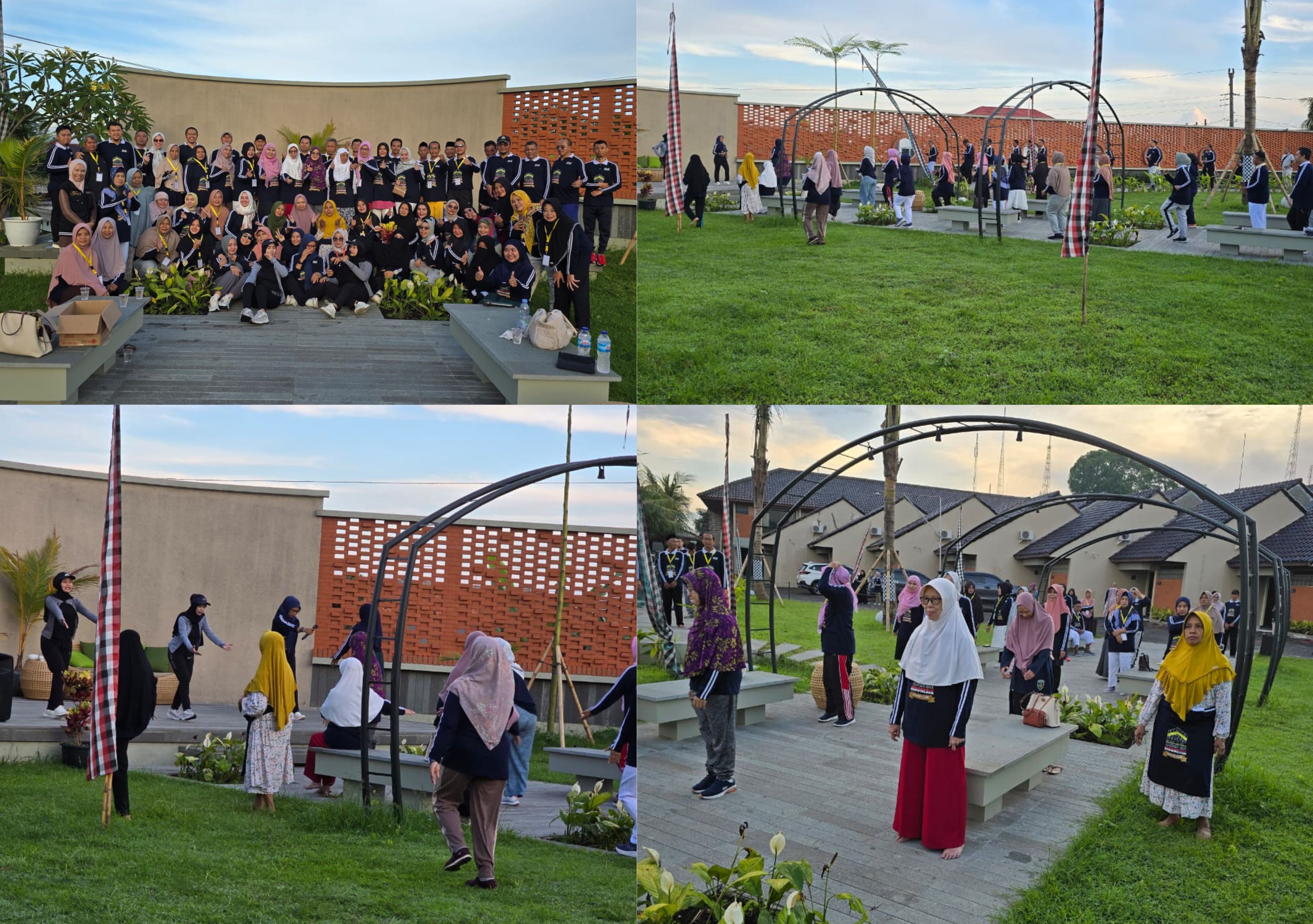
Implementation of a fitness training program for Hajj pilgrims based on structured exercises in the city of Semarang
Siti Baitul Mukarromah1, Sahri Sahri2, Gustiana Mega Anggita3, Rikha Liemiyah41. State University of Semarang , ID2. State University of Semarang , ID3. State University of Semarang , ID4. Universitas Dian Nuswantoro , ID2025-11-30|page 37-50AbstractThe majority of Hajj pilgrims in Semarang City are over 50 years old and have varying levels of physical fitness, with little to no structured physical activity prior to departure. This condition increases the risk of fatigue and musculoskeletal complaints and reduces physical readiness for performing the Hajj rituals. To address these needs, the service team implemented a structured exercise-based fitness training program tailored to the pilgrims' conditions. The program was conducted over eight weeks, with three training sessions per week, covering light to moderate intensity aerobic exercises, muscle strengthening, flexibility, and healthy lifestyle education related to nutrition, rest, and stress management. The methods and results of the activities were carried out in Semarang City, involving 75 pilgrims registered for the 2025 Hajj season. The program was implemented using a planned exercise method over eight weeks, with a frequency of three times a week, incorporating light to moderate intensity aerobic exercises, muscle strengthening to increase endurance, flexibility exercises, and healthy lifestyle education on diet, rest, and stress management. Evaluation was conducted through cardiorespiratory fitness tests (6-minute walk test), leg muscle strength measurements, and body mass index. The results of the program showed a significant improvement in the participants' fitness, marked by an increase in the 6MWT distance from 420.3 ± 52.1 meters to 510.7 ± 47.6 meters (p < 0.05), an 18.4% increase in leg muscle strength, and a decrease in average BMI of 0.9 kg/m². Participants also reported an improvement in motivation and a deeper understanding of the importance of physical preparation. This program has proven to be effective and can be recommended as a fitness training strategy for Hajj pilgrims.
APA Citation StyleMukarromah, S. B. , Sahri, S. , Anggita, G. M. , & Liemiyah, R. (2025). Implementation of a fitness training program for Hajj pilgrims based on structured exercises in the city of Semarang. Darmabakti: Jurnal Pengabdian kepada Masyarakat, 37-50. https://doi.org/10.56003/darmabakti.v2i1.667

1 - 4 of 4 items