Search
Search Results
##search.searchResults.foundPlural##
-

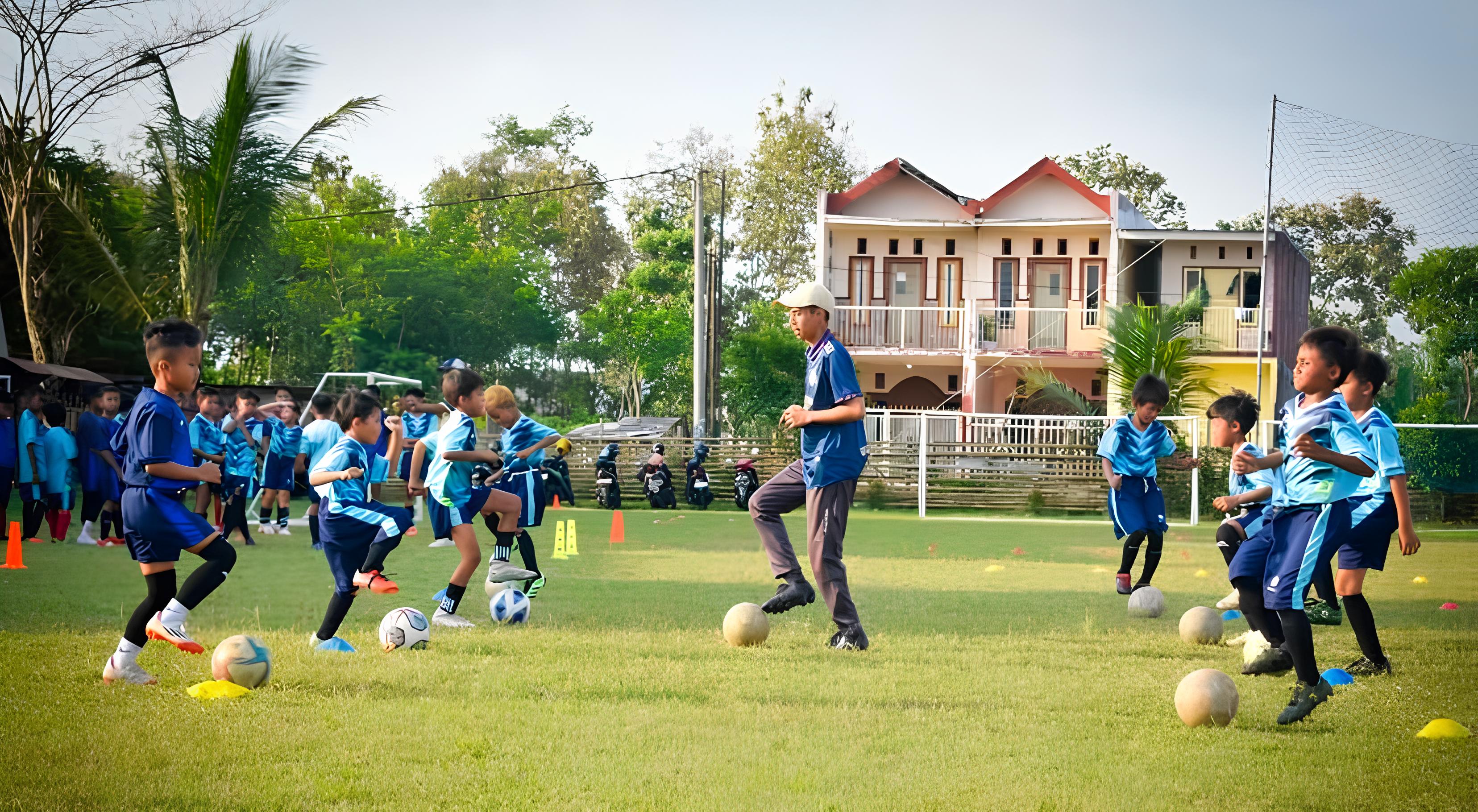
Strengthening basic soccer skills through a ball-handling training program for young children at SSB Rabbani Putra Mandiri
Ferdy Nur Alfiansyah1, Imam Hariadi21. State University of Malang , ID2. State University of Malang , ID2025-07-04|page 71-77AbstractDribbling ability is an essential basic skill in early childhood soccer. However, preliminary observations at SSB Rabbani Putra Mandiri show that the 10-year-old age group still has difficulties maintaining ball control while dribbling, such as the ball being too far from the feet, uncontrolled direction of movement, and being easily captured by opponents. This service activity aims to improve dribbling skills through a specially designed ball feeling training program based on the principles of Long-Term Athlete Development (LTAD). The implementation method used an experimental one-group pretest-posttest design with 20 participants. The training program was conducted for 22 meetings, and dribbling skills were measured using tests from Winarno (2006). The evaluation results showed a significant increase in the average value of dribbling skills, from 51.35 in the pretest to 61.75 in the posttest. The Paired T-Test test results showed a p value <0.05, which means there is a significant difference between before and after training. In conclusion, the ball feeling training program effectively improves dribbling skills in early age players. This program is expected to be adopted as part of the early childhood football training curriculum on an ongoing basis. This service activity supports the achievement of the SDGs, especially Goal 3 (healthy and prosperous life) and Goal 4 (quality education), through providing quality education.
APA Citation StyleAlfiansyah, F. N. , & Hariadi, I. (2025). Strengthening basic soccer skills through a ball-handling training program for young children at SSB Rabbani Putra Mandiri. Darmabakti: Jurnal Pengabdian kepada Masyarakat, 71-77. https://doi.org/10.56003/darmabakti.v1i2.606 -
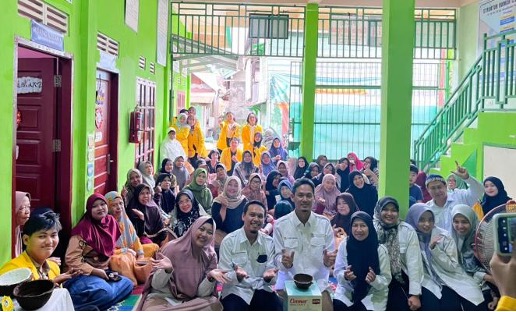
Making biopackaging from paper and leaf waste for women in the family welfare empowerment program and early childhood education teachers
Rahmatullah Rahmatullah1, Muhammad Djoni Bustan2, Budi Santoso3, Harry Waristian4, Rizka Wulandari Putri5, Rianyza Gayatri61. Department of Chemical Engineering, Faculty of Engineering, Universitas Sriwijaya , ID2. Department of Chemical Engineering, Faculty of Engineering, Universitas Sriwijaya , ID3. Department of Chemical Engineering, Faculty of Engineering, Universitas Sriwijaya , ID4. Department of Mining Engineering, Faculty of Engineering, Universitas Sriwijaya , ID5. Department of Chemical Engineering, Faculty of Engineering, Universitas Sriwijaya , ID6. Department of Chemical Engineering, Faculty of Engineering, Universitas Sriwijaya , ID2026-06-13|page 1-11AbstractVarious creative approaches can be developed to reduce the generation of both organic and inorganic waste. On the other hand, office and school paper waste, as well as plant matter such as dry leaves, are still not being utilized optimally. Biopack is an innovative cardboard container made from a mixture of paper pulp and dry leaves. This product can be used as eco-friendly packaging because it easily degrades when disposed of in soil or water after use. School paper waste and dry leaves available in the Wanaasri Palembang area hold significant potential as raw materials for Biopack. Utilizing this potential is expected to increase public awareness, particularly among the PKK Rumah Cinta Dahlia Wanaasri and the teachers at PAUD Permata Bunda, as key drivers in promoting the innovation of waste management into economically valuable products that can support the establishment of community-based businesses or entrepreneurship. This community service activity was carried out through outreach and a biopack-making demonstration using lectures and hands-on simulations. The evaluation was conducted through a questionnaire to analyze the level of effectiveness and the potential for sustainability of the activity. Survey results from activity participants revealed that 93% were not yet able to recycle used paper and leaves, 63% still disposed of used paper and leaves in trash bins, and 93–100% of participants rated the activity as beneficial, noting that it broadened their knowledge and understanding of making biopack from used paper and leaves, and that they liked the biopack products and were able to use them at home. Furthermore, it is hoped that the Wanaasri community will be able to produce its own biopack, that it will be adopted by teachers at the Permata Bunda Early Childhood Education Center as a teaching aid in the learning process, and that it will eventually be commercialized.
APA Citation StyleRahmatullah, R. , Bustan, M. D. , Santoso, B. , Waristian, H. , Putri, R. W. , & Gayatri, R. (2026). Making biopackaging from paper and leaf waste for women in the family welfare empowerment program and early childhood education teachers. Darmabakti: Jurnal Pengabdian kepada Masyarakat, 1-11. https://doi.org/10.56003/darmabakti.v3i1.742

1 - 2 of 2 items