Search
Search Results
##search.searchResults.foundPlural##
-

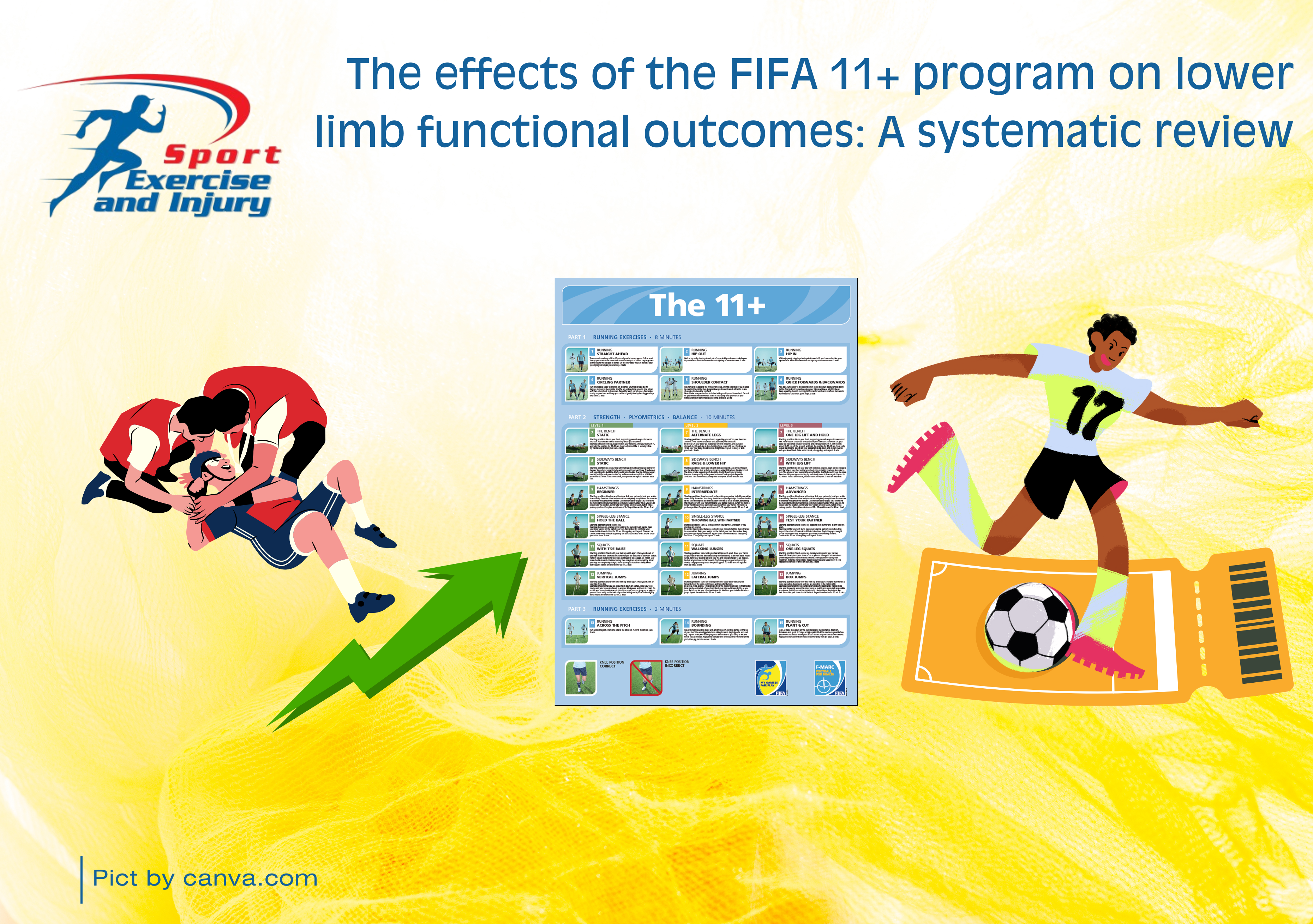
The effects of the FIFA 11+ program on lower limb functional outcomes: A systematic review
Yulingga Nanda Hanief1, Italo Sannicandro2, Raja Mohammed Firhad Raja Azidin31. State University of Malang , ID2. Clinical and Experimental Medicine Department, University of Foggia , IT3. Faculty of Sports Science and Recreation, Universiti Teknologi MARA , MY2025-12-30|page 122-138AbstractBackground: The FIFA 11+ program has been proven effective in preventing soccer injuries, but evidence regarding its impact on lower extremity functional outcomes is still scattered and reported heterogeneously.
Objectives: This systematic review aims to synthesize evidence regarding the effects of the FIFA 11+ program on lower extremity functional outcomes—including ROM, knee extension, internal and external hip rotation, and hamstring muscle strength—in athletes.
Methods: This systematic review was prospectively registered in PROSPERO (CRD420251147261) and conducted in accordance with PRISMA 2020 guidelines. A total of 14 studies involving athletes or physically active individuals met the inclusion criteria. Functional outcomes were measured using various instruments, primarily an isokinetic dynamometer for muscle strength and a goniometer for ROM measurement. The methodological quality of the studies was assessed using the Newcastle–Ottawa Scale. Due to substantial heterogeneity in study design, measurement instruments, intervention protocols, and reporting formats, a quantitative meta-analysis was not performed, and the data were synthesized using a qualitative narrative approach.
Results: Most studies (approximately 70–80%) reported an increase in hamstring muscle strength after the FIFA 11+ intervention, particularly in concentric and eccentric isokinetic measurements. Improvements in ROM and functional outcomes of the knee and hip were also reported, although results varied between studies. Evidence related to knee extension and hip rotation shows lower consistency compared to hamstring strength.
Conclusions: The FIFA 11+ program shows potential functional benefits beyond injury prevention, particularly in improving hamstring muscle strength and several aspects of joint mobility.APA Citation StyleHanief, Y. N. , Sannicandro, I. , & Azidin, R. M. F. R. (2025). The effects of the FIFA 11+ program on lower limb functional outcomes: A systematic review. Sport, Exercise, and Injury, 122-138. https://doi.org/10.56003/sei.v1i2.670 -
Injury pattern and risk factors in grassroots football: A study of 10-year-old athletes
Leo Ferdinand1, Yulingga Nanda Hanief2, Randy M. Manimtim31. State University of Malang , ID2. State University of Malang , ID3. Batangas State University TNEU , PH2025-06-17|page 27-39AbstractBackground: Young football players, especially in grassroots competitions, are highly susceptible to injury due to physical contact, fatigue, and underdeveloped motor skills, making injury prevention a critical aspect of early childhood sports.
Objectives: This study aims to analyze the types, causes, and needs for injury prevention in 10-year-old football players.
Methods: A descriptive quantitative design was used with the survey method. Data was collected through a structured questionnaire distributed to players injured during the competition. A purposive sampling technique was applied with inclusion criteria: (1) players injured during the match and (2) willing to participate. The final sample consisted of 25 athletes.
Results: A total of 25 injury incidents were recorded. The most common type of injury was contusion, reaching 13 cases (52%), followed by muscle cramps (20%) and sprains (8%). Most injuries (64%) occurred in the lower extremities, especially the knee and thigh. Injuries predominantly occurred in the second half of matches (60%), with 88% caused by physical contact with an opponent. In the absence of medical personnel, coaches often found themselves in the role of first responders, a challenging position that requires adequate training and support. Many players continued to play despite their injuries, indicating a need for improved injury management.
Conclusions: The study concluded that football injuries in children generally occur in the lower extremities, with bruising being the most dominant type. Player-to-player collisions caused most injuries, and many players could continue the match. This shows the importance of prevention, education, and follow-up for developing the sport of football.
APA Citation StyleFerdinand, L. , Hanief, Y. N. , & Manimtim, R. M. (2025). Injury pattern and risk factors in grassroots football: A study of 10-year-old athletes. Sport, Exercise, and Injury, 27-39. https://doi.org/10.56003/sei.v1i1.512 -
Injury patterns and risk factors in high school futsal: An observational study
Rafif Jendra Atmaja11. State University of Malang , ID2025-06-17|page 1-14AbstractBackground: Sports injuries at an early age are crucial and must be given attention.
Objectives: This study aims to analyze injury patterns, causative factors, and prevention strategies specific to high school futsal players.
Methods: The research method used was descriptive quantitative with a cross-sectional study approach. The population in this study were male students of State Senior High School 1 Ponorogo who participated in class meeting activities, with purposive sampling technique found 24 samples. Data collected by questionnaire included information on the type of injury, location of injury, causative factors, injury treatment and type of rehabilitation.
Results: The results showed that the most common injuries were cuts/abrasions (29%) and bruises (23%), most common in the lower extremities, namely knees (23%) and ankles (20%), the most common cause of injury was physical contact (54%), most injuries occurred during the second half (67%), the most common first aid given was cold compresses (51%) and the most common rehabilitation/therapy was massage (25%) and physiotherapy (21%).
Conclusions: The findings can be concluded that the most dominant type of injury experienced by students is abrasion, especially in the knee area. In addition, the main causative factors of injury are fatigue, infrastructure, and collisions between players. The results of this study indicate the urgency of implementing injury prevention programs and the importance of conducting post-injury rehabilitation, in an effort to minimize the risk of injury to support the sustainability of students' careers in sports.
APA Citation StyleAtmaja, R. J. (2025). Injury patterns and risk factors in high school futsal: An observational study. Sport, Exercise, and Injury, 1-14. https://doi.org/10.56003/sei.v1i1.513

1 - 3 of 3 items