Search
Search Results
##search.searchResults.foundPlural##
-

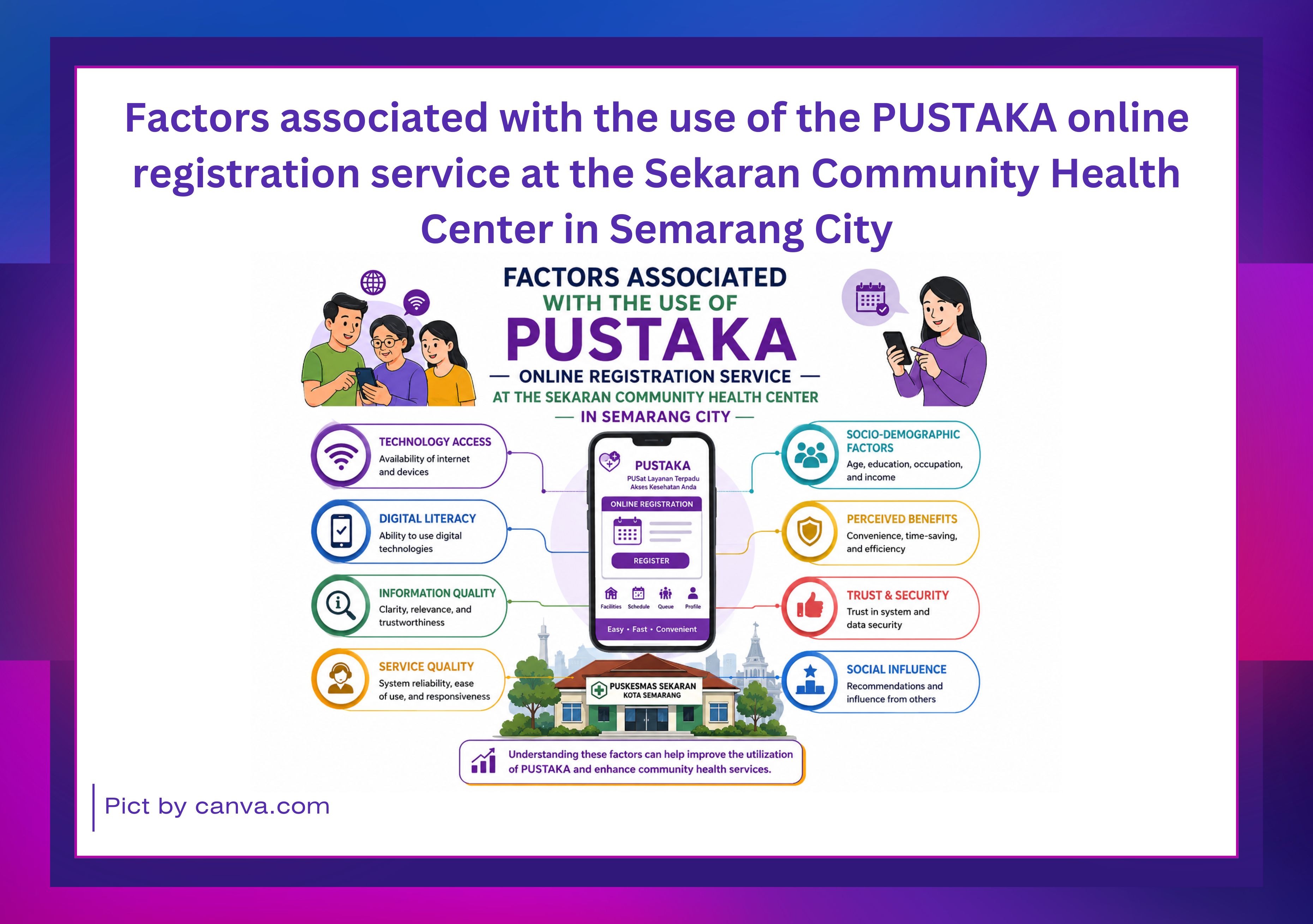
Factors associated with the use of the PUSTAKA online registration service at the Sekaran Community Health Center in Semarang City
Bunga Gustikasari Ismail1, Nurhasmadiar Nandini2, Rani Tiyas Budiyanti31. Faculty of Public Health, Universitas Diponegoro , ID2. Faculty of Public Health, Universitas Diponegoro , ID3. Faculty of Public Health, Universitas Diponegoro , ID2026-05-26|page 57-69AbstractBackground: Online registration services have been implemented in community health centers to facilitate patient access and reduce long queues by enabling appointment scheduling at specific times. However, the utilization of this service in several community health centers in Semarang City remains below the monthly target of 10%. At Sekaran Community Health Center, for example, the average utilization rate was only 1.03% between June and August 2023.
Objectives: This study analyzed the factors associated with the use of the PUSTAKA Online Registration Service at The Sekaran Community Health Center in Semarang City.
Methods: This study employed a quantitative research design with a cross-sectional approach. The population consisted of existing patients at Sekaran Community Health Center, with a sample of 97 respondents selected using accidental sampling. The variables examined included age, education, occupation, attitude, knowledge, perceived need, availability of facilities, and ease of obtaining information in relation to the decision to use PUSTAKA services. Data were collected using a closed-ended questionnaire that had previously undergone validity and reliability testing.
Results: The results of the research analysis using the chi square statistical test showed the conclusion that there was a significant relationship between the factors of age (p = 0.006), education (p = 0.007), occupation (p = 0.044), attitude (p = 0.017), perceived needs (p = 0.006), and ease of obtaining information (p = 0.021) with the decision to use PUSTAKA services at the Sekaran Health Center.
Conclusions: Meanwhile, there is no relationship between knowledge (p = 0.812) and the availability of facilities (p = 0.114) with the decision to use PUSTAKA.
APA Citation StyleIsmail, B. G. , Nandini, N. , & Budiyanti, R. T. (2026). Factors associated with the use of the PUSTAKA online registration service at the Sekaran Community Health Center in Semarang City. Public Health and Occupational Safety Journal, 57-69. https://doi.org/10.56003/phosj.v2i1.739 -
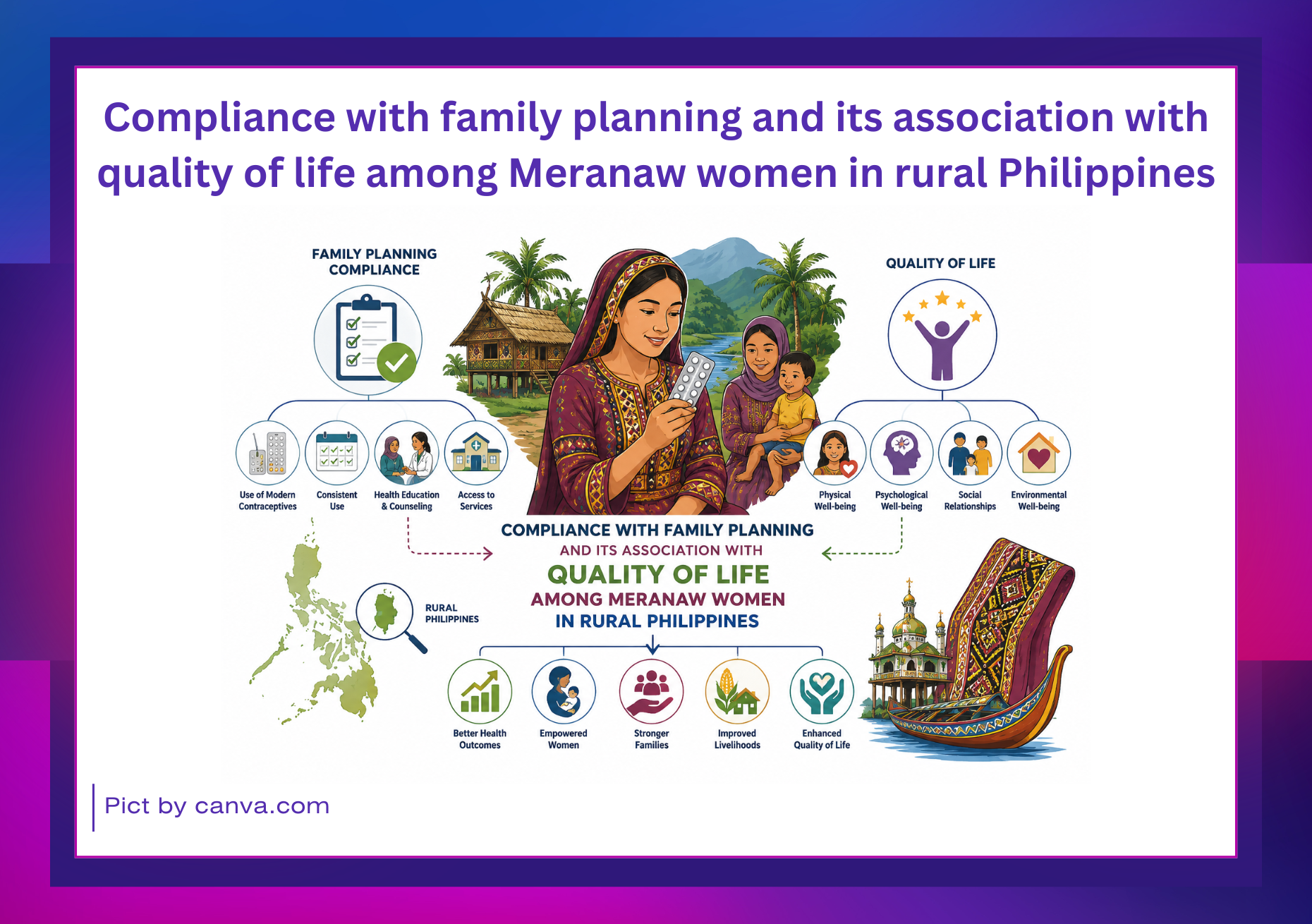
Compliance with family planning and its association with quality of life among Meranaw women in rural Philippines
Maslainie Aliola1, Hamdoni Pangandaman21. Mindanao State University - Marawi, Lanao Del Sur, 9700, Philippines , PH2. Mindanao State University, Marawi City , PH2026-05-24|page 1-13AbstractBackground: The COVID-19 pandemic disrupted access to essential health services, including family planning (FP), particularly in rural and underserved communities. These disruptions may influence women’s reproductive practices and overall quality of life (QoL).
Objectives: This study aimed to determine the level of family planning compliance and examine its influence on the quality of life among Meranaw women during the COVID-19 pandemic.
Methods: A descriptive cross-sectional design was employed among 378 Meranaw women who were family planning users in selected municipalities of Lanao del Sur, Philippines. Data were collected from January to October 2022. A stratified random sampling technique was used based on municipal distribution to ensure proportional representation of respondents. A validated researcher-developed questionnaire assessed attitude- and practice-related compliance (CVI = 0.81–0.92; α = 0.79), while QoL was measured using the WHOQOL-BREF. Data were analyzed using descriptive statistics and multiple linear regression.
Results: Respondents demonstrated high compliance in both attitude (mean = 3.61) and practice (mean = 3.41) domains. Overall QoL was rated very satisfactory (mean = 5.72), with the highest scores in the psychological (mean = 5.89) and relational (mean = 5.85) domains. Multiple regression analysis revealed that age (β = .319, p < .001), monthly income (β = –.097, p = .008), number of children (β = .395, p < .001), duration of FP use (β = .092, p = .034), and type of FP method (β = .129, p < .001) significantly predicted QoL. The model explained a substantial proportion of variance (R² = 0.974), indicating strong predictive capacity.
Conclusions: Meranaw women demonstrated high compliance with family planning practices despite pandemic-related constraints, thereby significantly improving the quality of life. Sustaining family planning services during public health crises is essential to maintaining women’s well-being, particularly in rural and culturally distinct populations.
APA Citation StyleAliola, M. , & Pangandaman, H. (2026). Compliance with family planning and its association with quality of life among Meranaw women in rural Philippines. Public Health and Occupational Safety Journal, 1-13. https://doi.org/10.56003/phosj.v2i1.698 -
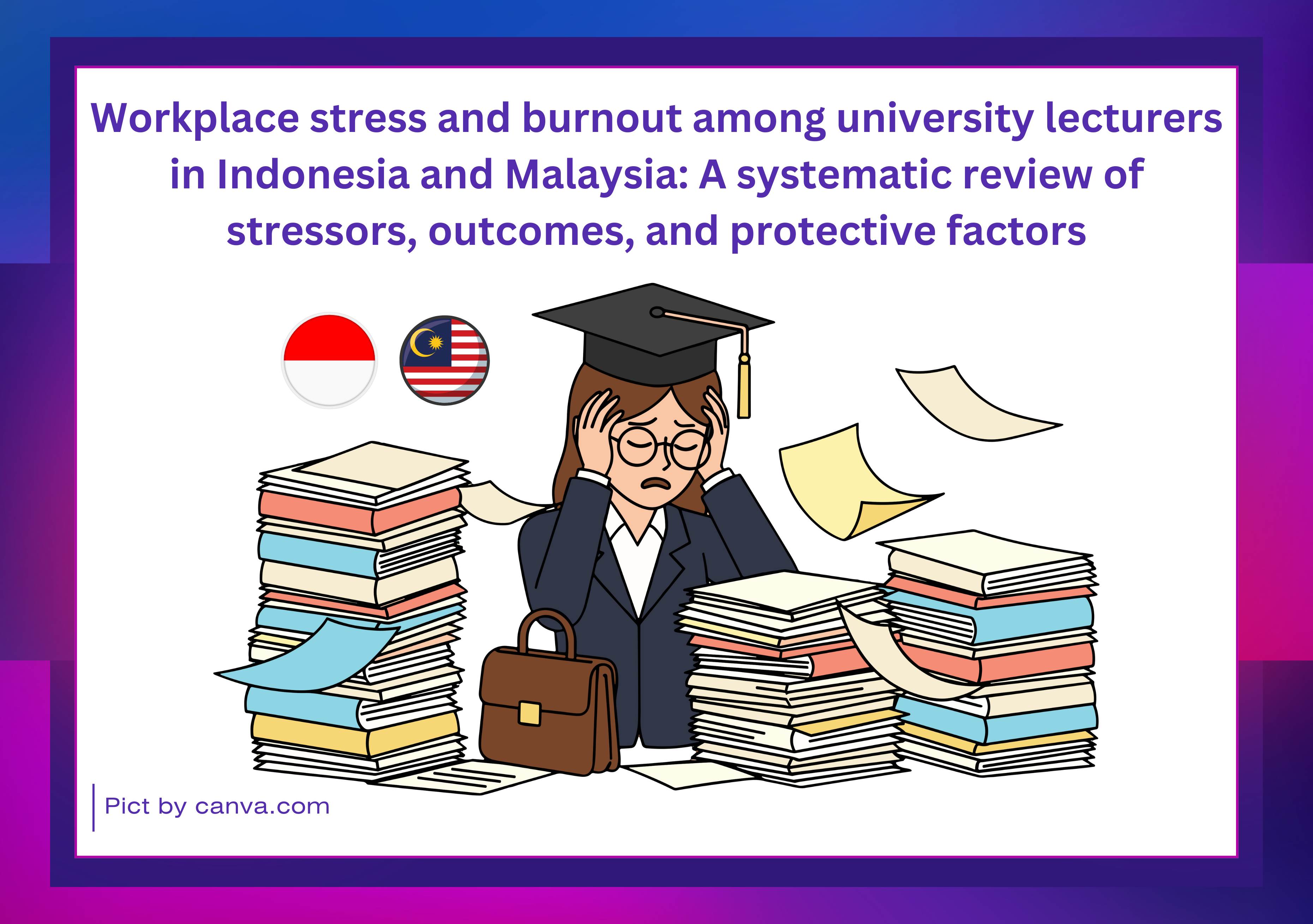
Workplace stress and burnout among university lecturers in Indonesia and Malaysia: A systematic review of stressors, outcomes, and protective factors
Mimi Haryani Hassim1, Dian Puspitaningtyas Laksana2, Rachmy Rosyida Rais3, Ronal Surya Aditya41. University of Technology Malaysia , MY2. State University of Malang , ID3. State University of Malang , ID4. Universitas Jember , ID2026-01-27|page 174-192AbstractBackground: Workplace stress and burnout have emerged as critical occupational health concerns among university lecturers, particularly amid increasing academic workloads, performance pressures, and organizational demands intensified during and after the COVID-19 pandemic. Despite growing empirical attention, evidence remains fragmented, especially within Southeast Asian higher education contexts.
Objectives: This study aims to systematically review empirical research on workplace stress and burnout among university lecturers in Indonesia and Malaysia, with a focus on identifying key stressors, associated outcomes, and protective factors.
Methods: A systematic literature review was conducted following the PRISMA 2020 guidelines. Peer-reviewed articles published in English were retrieved from the Scopus database using predefined search terms related to workplace stress, burnout, lecturers, and higher education in Indonesia and Malaysia. After screening and eligibility assessment, 19 studies published between 2004 and 2025 were included. Methodological quality was assessed using the Newcastle–Ottawa Scale, and findings were synthesized through qualitative narrative analysis due to study heterogeneity.
Results: The review reveals that workplace stress and burnout are prevalent among university lecturers in both countries. Major stressors include excessive workload, role ambiguity, performance-based evaluation systems, work–life imbalance, and limited organizational support. These stressors are consistently associated with adverse outcomes such as emotional exhaustion, reduced job satisfaction, impaired performance, and increased turnover intention. Protective factors, including social support, supportive leadership, emotional intelligence, and workplace spirituality, were found to mitigate stress and burnout effects.
Conclusions: Workplace stress and burnout among university lecturers in Indonesia and Malaysia are multifactorial and systemic issues embedded in contemporary academic work environments. Organizational- and policy-level interventions are essential to promote lecturer well-being and ensure sustainable academic careers.
APA Citation StyleHassim, M. H. , Laksana, D. P. , Rais, R. R. , & Aditya, R. S. (2026). Workplace stress and burnout among university lecturers in Indonesia and Malaysia: A systematic review of stressors, outcomes, and protective factors. Public Health and Occupational Safety Journal, 174-192. https://doi.org/10.56003/phosj.v1i2.674

1 - 3 of 3 items