Search
Search Results
##search.searchResults.foundPlural##
-

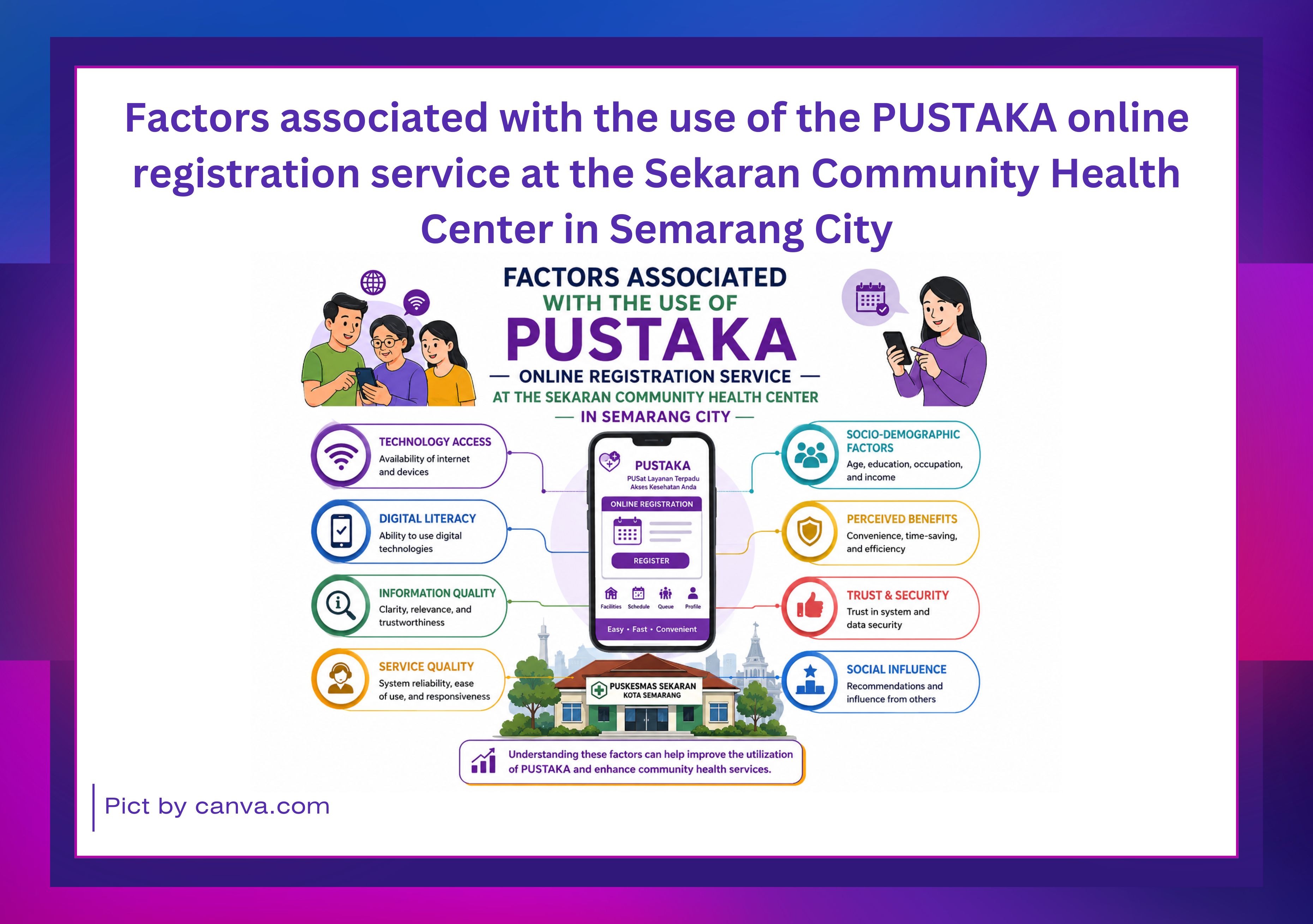
Factors associated with the use of the PUSTAKA online registration service at the Sekaran Community Health Center in Semarang City
Bunga Gustikasari Ismail1, Nurhasmadiar Nandini2, Rani Tiyas Budiyanti31. Faculty of Public Health, Universitas Diponegoro , ID2. Faculty of Public Health, Universitas Diponegoro , ID3. Faculty of Public Health, Universitas Diponegoro , ID2026-05-26|page 57-69AbstractBackground: Online registration services have been implemented in community health centers to facilitate patient access and reduce long queues by enabling appointment scheduling at specific times. However, the utilization of this service in several community health centers in Semarang City remains below the monthly target of 10%. At Sekaran Community Health Center, for example, the average utilization rate was only 1.03% between June and August 2023.
Objectives: This study analyzed the factors associated with the use of the PUSTAKA Online Registration Service at The Sekaran Community Health Center in Semarang City.
Methods: This study employed a quantitative research design with a cross-sectional approach. The population consisted of existing patients at Sekaran Community Health Center, with a sample of 97 respondents selected using accidental sampling. The variables examined included age, education, occupation, attitude, knowledge, perceived need, availability of facilities, and ease of obtaining information in relation to the decision to use PUSTAKA services. Data were collected using a closed-ended questionnaire that had previously undergone validity and reliability testing.
Results: The results of the research analysis using the chi square statistical test showed the conclusion that there was a significant relationship between the factors of age (p = 0.006), education (p = 0.007), occupation (p = 0.044), attitude (p = 0.017), perceived needs (p = 0.006), and ease of obtaining information (p = 0.021) with the decision to use PUSTAKA services at the Sekaran Health Center.
Conclusions: Meanwhile, there is no relationship between knowledge (p = 0.812) and the availability of facilities (p = 0.114) with the decision to use PUSTAKA.
APA Citation StyleIsmail, B. G. , Nandini, N. , & Budiyanti, R. T. (2026). Factors associated with the use of the PUSTAKA online registration service at the Sekaran Community Health Center in Semarang City. Public Health and Occupational Safety Journal, 57-69. https://doi.org/10.56003/phosj.v2i1.739 -

Effectiveness of 3D poster in improving menstrual hygiene knowledge among adolescent girls: A quasi-experimental study
Rani Mustikawati1, Windi Chusniah Rachmawati2, Endang Sri Redjeki3, Nurnaningsih Herya Ulfah41. State University of Malang , ID2. State University of Malang , ID3. State University of Malang , ID4. State University of Malang , ID2025-04-23|page 40-52AbstractBackground: Personal hygiene during menstruation is important and must be applied during the menstrual cycle. Suppose personal hygiene during menstruation is not maintained correctly. In that case, adolescent girls have the potential to experience health problems such as vaginal discharge, irritation of the genital area, allergies, inflammation, and Urinary Tract Infection (UTI). As many as 75% of women in Indonesia have experienced vaginal discharge once, while 45% have experienced it more than 2 times.
Objectives: This study aimed to determine the effectiveness of 3D posters in increasing knowledge about personal hygiene during menstruation.
Methods: The research method used was Research and Development (R&D), which was conducted through a pre-experimental approach with one group pretest-posttest. Ninety-five adolescent girls in class VII of State Junior High School 13 Malang participated in the study obtained using a purposive sampling technique. The research instrument used a closed-type questionnaire with 10 items to measure knowledge.
Results: The 3D poster product obtained a percentage value of media feasibility of 95% for the media aspect and 92% for the material aspect, which means it is very feasible to use. After the intervention, it is known that there is an effect of providing health education using 3D posters on the knowledge of adolescent girls regarding personal hygiene during menstruation according to the p-value = 0.000 from the Wilcoxon test.
Conclusions: Personal hygiene education during menstruation should be done more often to improve the knowledge of adolescent girls. The findings support the use of 3D media in menstrual health promotion, especially in schools with limited resources.
APA Citation StyleMustikawati, R. , Rachmawati, W. C. , Redjeki, E. S. , & Ulfah, N. H. (2025). Effectiveness of 3D poster in improving menstrual hygiene knowledge among adolescent girls: A quasi-experimental study. Public Health and Occupational Safety Journal, 40-52. https://doi.org/10.56003/phosj.v1i1.531 -

Development of snakes and ladders game to increase knowledge of the dangers of smoking among elementary school students: A quasi-experimental study in Malang, Indonesia
Novita Rizky Ramadhani1, Windi Chusniah Rachmawati2, Moch. Yunus3, Nurnaningsih Herya Ulfah41. State University of Malang , ID2. State University of Malang , ID3. State University of Malang , ID4. State University of Malang , ID2025-04-23|page 53-66AbstractBackground: The smoking trend has now infected school-age children, with 19.2% of students aged 13-15 years in Indonesia and 2,859 children in Malang City recorded as active smokers, which is influenced by a lack of understanding of the dangers of smoking. Educational interventions such as Snakes and Ladders game-based health promotion media must be developed to build a culture of not smoking from an early age.
Objectives: The purpose of the study was to develop educational game media in the form of snakes and ladders as a tool for delivering health information about the dangers of smoking to students of Oro-Oro Dowo Malang State Elementary School.
Methods: Research and Development (R&D) type research with a one-group pretest and posttest trial aims to determine the effectiveness of the Snakes and Ladders game as a health promotion media on the dangers of smoking behavior. The subjects needed in this study are media experts, material experts, and students aged 9-13 years as research samples.
Results: The average result of increasing knowledge is 0.000 using the Wilcoxon test, so there is a difference in the average value of knowledge in the pretest and posttest data. In the feasibility test results, the assessment results were obtained in the very feasible category. Game media is effective and very feasible to be a health promotion media in efforts to promote the dangers of smoking in children.
Conclusions: The Snakes and Ladders game media developed is feasible to be a health promotion media in efforts to promote the dangers of smoking behavior in children. The Snakes and Ladders game media influences increasing students' knowledge of Oro-Oro Dowo Malang State Elementary School about the dangers of smoking. Further research needs to evaluate media's long-term impact and adaptation in various socio-cultural contexts.
APA Citation StyleRamadhani, N. R. , Rachmawati, W. C. , Yunus, M. , & Ulfah, N. H. (2025). Development of snakes and ladders game to increase knowledge of the dangers of smoking among elementary school students: A quasi-experimental study in Malang, Indonesia. Public Health and Occupational Safety Journal, 53-66. https://doi.org/10.56003/phosj.v1i1.530 -
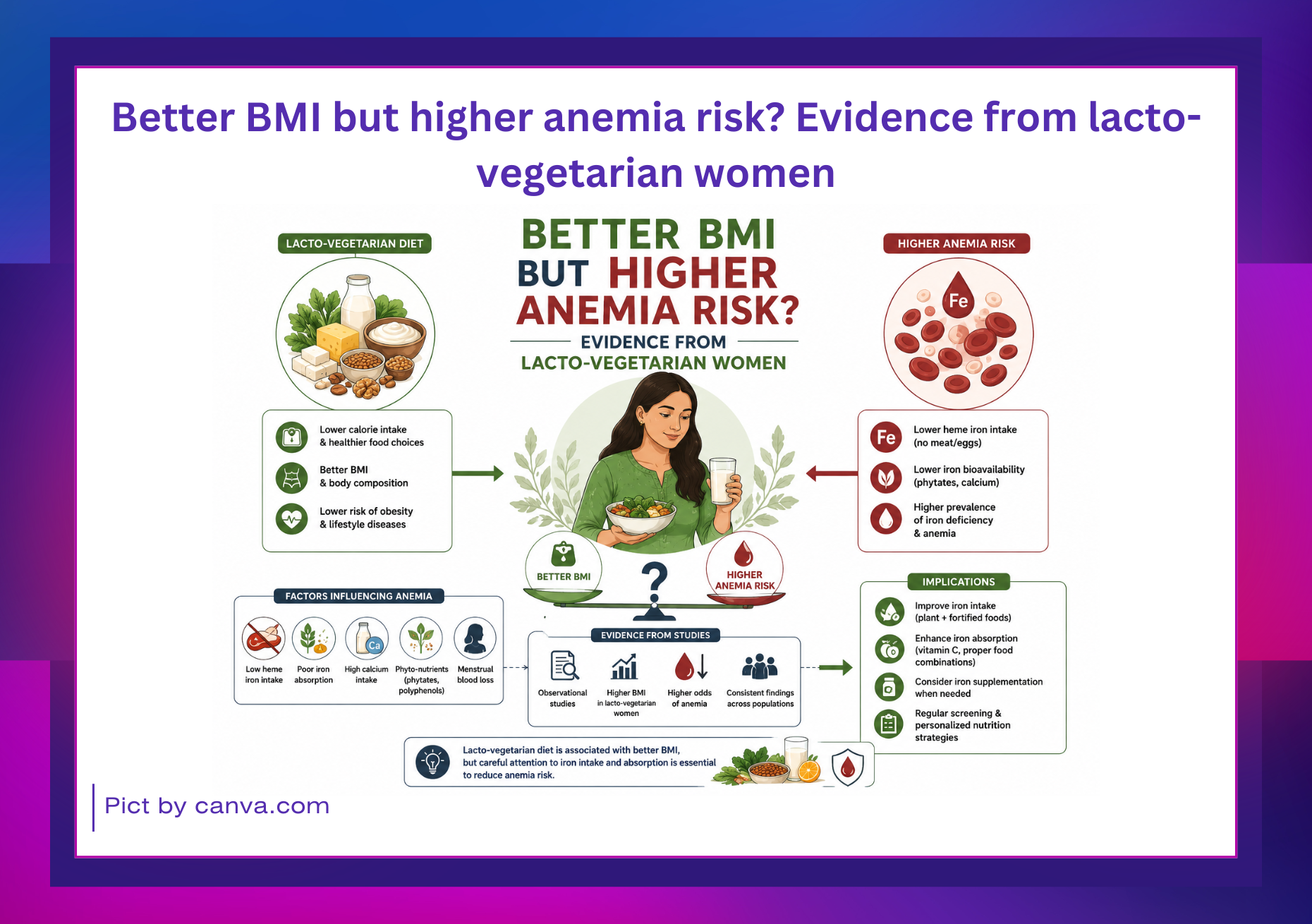
Better BMI but higher anemia risk? Evidence from lacto-vegetarian women
Hamid Nurrohman1, Ha Thi Thu Trang21. Department of Preventive and Restorative Dental Sciences, University of California , US2. Nursing Program, School of Medicine and Pharmacy, Vietnam National University, Hanoi , VN2026-05-24|page 14-24AbstractBackground: The increasing adoption of plant-based diets in the United States, particularly lacto-vegetarian patterns, has been driven by their perceived metabolic benefits. However, middle-aged women represent a nutritionally vulnerable group due to menopausal transitions and a high risk of anemia. In this context, the potential trade-off between improved body weight and micronutrient deficiencies remains insufficiently explored.
Objectives: This study examined the nutritional trade-offs between lacto-vegetarian and non-vegetarian diets, focusing on body mass index (BMI), anemia status, and lifestyle behaviors among middle-aged women in California, USA.
Methods: A cross-sectional study was conducted between June and September 2025 in California, USA, involving 40 women aged 40–65 years (20 lacto-vegetarians and 20 non-vegetarians), selected purposively. Socio-demographic characteristics and lifestyle behaviors were collected using a validated structured questionnaire. BMI, blood pressure, and hemoglobin levels were measured using standardized procedures. Data were analyzed using the Mann–Whitney U test and Spearman rank correlation, with results summarized using median and interquartile range (IQR) where appropriate. Statistical significance was set at p < 0.05.
Results: Lacto-vegetarian women showed a higher proportion of normal BMI compared to non-vegetarians (50% vs 30%, p=0.04). However, anemia prevalence was markedly higher among lacto-vegetarians (70% vs 10%, p=0.001). No significant differences were observed in physical activity, smoking, or blood pressure (p>0.05). These findings indicate a clear nutritional trade-off: improved weight status is associated with increased anemia risk.
Conclusions: Lacto-vegetarian diets were associated with more favorable BMI profiles but a significantly higher risk of anemia. These findings highlight the need for targeted nutritional strategies and public health interventions in the United States, particularly emphasizing iron and vitamin B12 adequacy among middle-aged women adopting plant-based diets.
APA Citation StyleNurrohman, H. , & Trang, H. T. T. (2026). Better BMI but higher anemia risk? Evidence from lacto-vegetarian women. Public Health and Occupational Safety Journal, 14-24. https://doi.org/10.56003/phosj.v2i1.714 -
Role of inter-institutional partnerships in promoting holistic employee wellness programs: A convergent mixed-methods study across three public universities in Metro Manila, Philippines
Rosalie Dela Cruz11. University of Makati , PH2025-11-28|page 139-150AbstractBackground: Employee wellness has become an increasingly essential concern in higher education; yet, many public universities continue to struggle with implementing comprehensive and sustainable wellness initiatives. Inter-institutional partnerships offer opportunities to strengthen these efforts through shared resources and coordinated programming.
Objectives: This study examined how such partnerships support the development of holistic employee wellness programs across three public universities in Metro Manila.
Methods: Using a convergent mixed-methods design, quantitative data were collected from 150 employees through an 18-item validated survey and analyzed using descriptive statistics and chi-square tests to assess institutional differences in awareness, participation, and perceived effectiveness. Qualitative data from six key informants were analyzed using grounded theory techniques to identify themes related to institutional practices and collaborative mechanisms.
Results: Findings indicated significant variations among institutions in employee awareness, participation levels, and perceptions of program effectiveness. Despite the availability of wellness initiatives, participation remained limited, mainly due to workload demands, time constraints, and scheduling challenges. Qualitative themes highlighted four central factors influencing the implementation of wellness: institutional support, holistic wellness orientation, program personalization, and persistent participation barriers. These themes helped explain why engagement levels differed among institutions.
Conclusions: Overall, inter-institutional collaboration contributes positively to wellness program development, but its impact depends on strong institutional support, program relevance, and clear communication. Enhancing coordination and tailoring activities to employee needs may improve future wellness outcomes.
APA Citation StyleCruz, R. D. (2025). Role of inter-institutional partnerships in promoting holistic employee wellness programs: A convergent mixed-methods study across three public universities in Metro Manila, Philippines. Public Health and Occupational Safety Journal, 139-150. https://doi.org/10.56003/phosj.v1i2.610 -
Workplace stress and burnout among university lecturers in Indonesia and Malaysia: A systematic review of stressors, outcomes, and protective factors
Mimi Haryani Hassim1, Dian Puspitaningtyas Laksana2, Rachmy Rosyida Rais3, Ronal Surya Aditya41. University of Technology Malaysia , MY2. State University of Malang , ID3. State University of Malang , ID4. Universitas Jember , ID2026-01-27|page 174-192AbstractBackground: Workplace stress and burnout have emerged as critical occupational health concerns among university lecturers, particularly amid increasing academic workloads, performance pressures, and organizational demands intensified during and after the COVID-19 pandemic. Despite growing empirical attention, evidence remains fragmented, especially within Southeast Asian higher education contexts.
Objectives: This study aims to systematically review empirical research on workplace stress and burnout among university lecturers in Indonesia and Malaysia, with a focus on identifying key stressors, associated outcomes, and protective factors.
Methods: A systematic literature review was conducted following the PRISMA 2020 guidelines. Peer-reviewed articles published in English were retrieved from the Scopus database using predefined search terms related to workplace stress, burnout, lecturers, and higher education in Indonesia and Malaysia. After screening and eligibility assessment, 19 studies published between 2004 and 2025 were included. Methodological quality was assessed using the Newcastle–Ottawa Scale, and findings were synthesized through qualitative narrative analysis due to study heterogeneity.
Results: The review reveals that workplace stress and burnout are prevalent among university lecturers in both countries. Major stressors include excessive workload, role ambiguity, performance-based evaluation systems, work–life imbalance, and limited organizational support. These stressors are consistently associated with adverse outcomes such as emotional exhaustion, reduced job satisfaction, impaired performance, and increased turnover intention. Protective factors, including social support, supportive leadership, emotional intelligence, and workplace spirituality, were found to mitigate stress and burnout effects.
Conclusions: Workplace stress and burnout among university lecturers in Indonesia and Malaysia are multifactorial and systemic issues embedded in contemporary academic work environments. Organizational- and policy-level interventions are essential to promote lecturer well-being and ensure sustainable academic careers.
APA Citation StyleHassim, M. H. , Laksana, D. P. , Rais, R. R. , & Aditya, R. S. (2026). Workplace stress and burnout among university lecturers in Indonesia and Malaysia: A systematic review of stressors, outcomes, and protective factors. Public Health and Occupational Safety Journal, 174-192. https://doi.org/10.56003/phosj.v1i2.674

1 - 6 of 6 items