Search
Search Results
##search.searchResults.foundPlural##
-

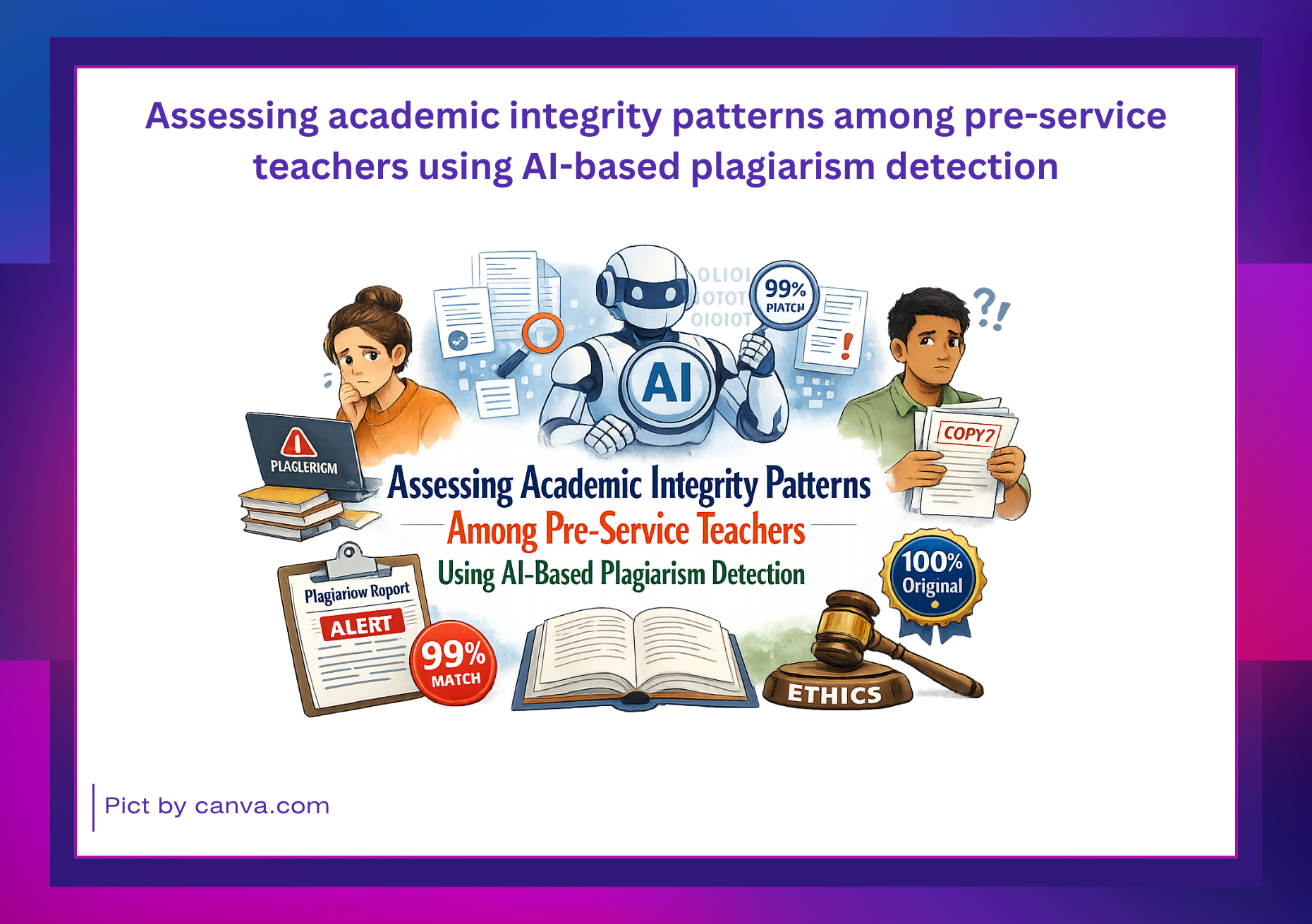
Assessing academic integrity patterns among pre-service teachers using AI-based plagiarism detection
Irish Arroyo1, Sittie Nor Aisha Rusiana2, Daniere Maryje Tabada3, Kim Silva4, Carla Marie Rubio5, Esmeraldo Sarad6, Cathy Mae Toquero71. College of Education, Mindanao State University-General Santos , PH2. College of Education, Mindanao State University-General Santos , PH3. College of Education, Mindanao State University-General Santos , PH4. College of Education, Mindanao State University-General Santos , PH5. College of Education, Mindanao State University-General Santos , PH6. College of Education, Mindanao State University-General Santos , PH7. Faculty of Psychology, Malang State University , ID2026-04-06|page 148-163AbstractBackground: The advent of artificial intelligence has intensified concerns about academic dishonesty among students, particularly in written outputs. Plagiarism, a common form of misconduct, involves using others’ ideas without proper attribution.
Objectives: This study aimed to determine the degree and patterns of academic integrity in the pre-service teachers’ book reviews.
Methods: Employing a descriptive research design through document analysis, the study used purposive sampling to collect 40 book reviews, applying set inclusion and exclusion criteria. An AI-based plagiarism detection tool, Grammarly, was used to identify instances of plagiarism and assess the level of academic integrity reflected in the outputs. Descriptive statistical methods were applied to examine plagiarism levels across different sections of the book reviews.
Results: Results showed that the majority of pre-service teachers demonstrated a very high level of academic integrity in their book reviews, scoring 97% or interpreted as students committing 3% plagiarism. Furthermore, sectional analysis showed that the introduction and conclusion exhibited higher integrity, while the body contained the most instances of plagiarism. This suggests that students struggled more with sections requiring critical thinking, original insights, and proper citation. Most plagiarism cases were linked to failure to cite sources and unintentional misuse of references.
Conclusions: Teacher Education Institutions integrate AI-supported evaluation tools and plagiarism detection systems into instruction and assessment. Embedding academic integrity modules and discussions on AI ethics is also encouraged. Future research should involve larger and more diverse samples and utilize multiple AI detection tools to enhance the reliability and validity of findings through cross-verification.
APA Citation StyleArroyo, I. , Rusiana, S. N. A. , Tabada, D. M. , Silva, K. , Rubio, C. M. , Sarad, E. , & Toquero, C. M. (2026). Assessing academic integrity patterns among pre-service teachers using AI-based plagiarism detection. Journal of Artificial Intelligence in Education & Learning Innovation, 148-163. https://doi.org/10.56003/jaieli.v1i2.685 -
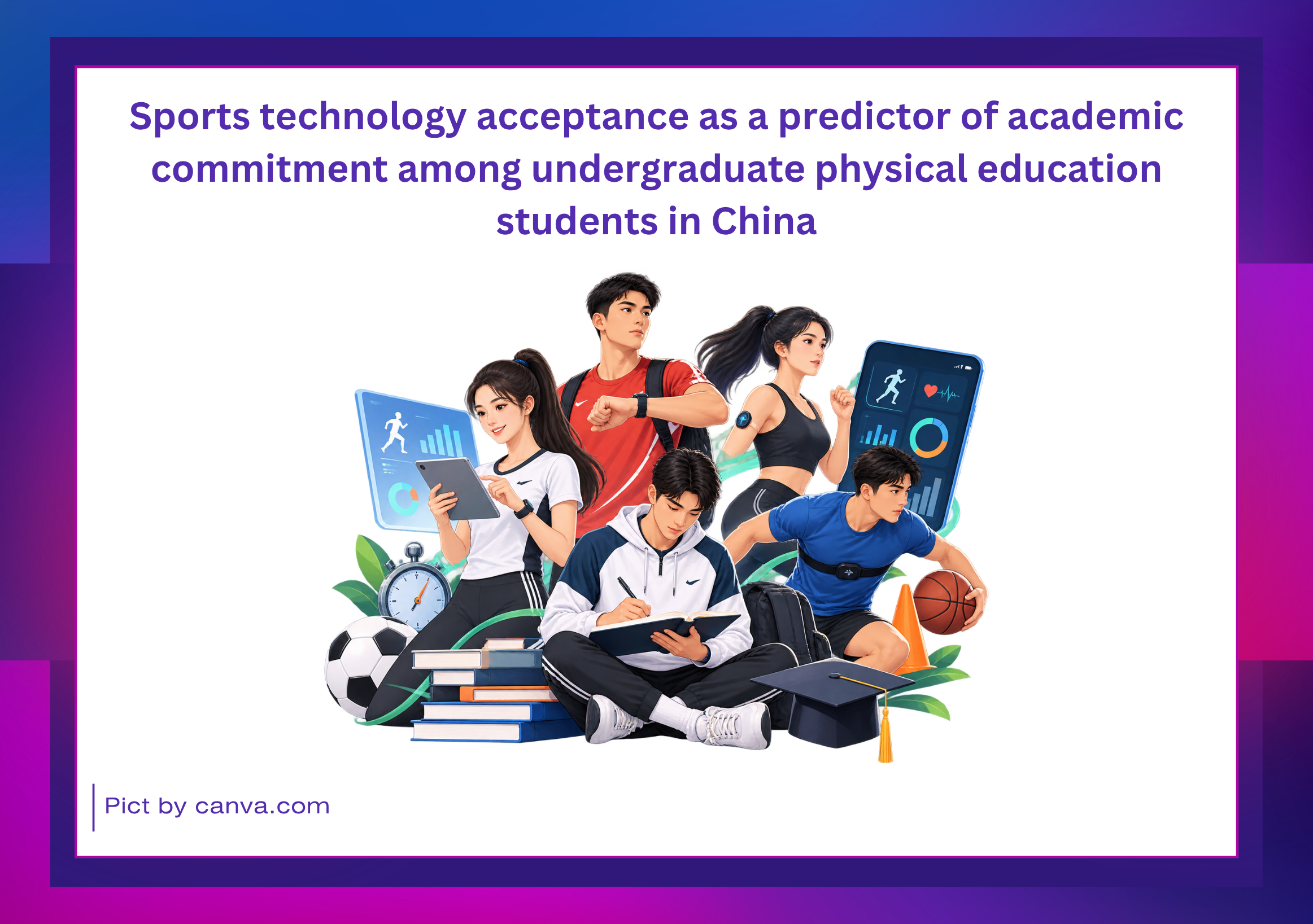
Sports technology acceptance as a predictor of academic commitment among undergraduate physical education students in China
Yingxue Su11. Inner Normal Mongolia University , CN2026-09-08|page 72-84AbstractBackground: Sports analytics and digital learning technologies are increasingly incorporated into physical education and sport-related higher education. However, evidence regarding the relationship between students’ acceptance of sports-related technologies and their academic commitment remains limited, particularly among undergraduate Physical Education students in China.
Objectives: This study aimed to examine the association between Sports Technology Acceptance (STA) and Academic Commitment and to determine whether STA statistically predicts Academic Commitment within a cross-sectional structural model among undergraduate Physical Education students.
Methods: This quantitative study employed a cross-sectional correlational design involving 150 undergraduate students enrolled in the Bachelor of Physical Education program at Inner Mongolia Normal University, China, who were recruited using convenience sampling. Data were collected using the Higher Education Student Commitment Scale and an adapted Technology Use Tendency Scale in the Classroom to assess STA. Descriptive statistics, Pearson correlation analysis, and structural equation modeling (SEM) were performed using IBM SPSS Statistics 26 and IBM SPSS Amos 24.
Results: The mean Academic Commitment score was 3.68 (SD = 0.71), while the mean STA score was 4.01 (SD = 0.65). STA was moderately and positively correlated with Academic Commitment (r = .47, p < .01). The structural model showed a significant positive path from STA to Academic Commitment (β = .49, t = 6.81, p < .001), accounting for 24% of the variance in Academic Commitment (R² = .24). The reported model-fit indices indicated acceptable fit (CFI = .956, RMSEA = .057).
Conclusions: Sports Technology Acceptance was moderately and positively associated with Academic Commitment among undergraduate Physical Education students at one university in China. Within the cross-sectional structural model, STA accounted for 24% of the variance in Academic Commitment; therefore, the observed statistical prediction should not be interpreted as evidence of temporal or causal effects.
APA Citation StyleSu, Y. (2026). Sports technology acceptance as a predictor of academic commitment among undergraduate physical education students in China. Journal of Artificial Intelligence in Education & Learning Innovation, 72-84. https://doi.org/10.56003/jaieli.v2i1.748 -

Effects of Chat-GPT (Generative Pre-Trained Transformer) in the Writing Skills of Undergraduate Students: A Scoping Review
Hamdoni Pangandaman1, Mirella Veras2, Samiel Macalaba3, Abolbashar Mangontawar4, Sittie Ainah Mai-Alauya5, Saliha Janine Gubaten6, Maslainie Aliola7, Norhanie Lininding8, Paida Abdulmalik9, Sittie Hainieh Taratingan101. Mindanao State University, Marawi City , PH2. Department of Physical Therapy, College of Rehabilitation Sciences, Rady Faculty of Health Sciences, University of Manitoba , CA3. Mindanao State University, Main Campus, Marawi City , PH4. Mindanao State University, Marawi City , PH5. Mindanao State University, Marawi City , PH6. Mindanao State University, Marawi City , PH7. Mindanao State University, Marawi City , PH8. Mindanao State University, Marawi City , PH9. Mindanao State University, Marawi City , PH10. Mindanao State University, Marawi City , PH2026-07-02|page 14-31AbstractBackground: The integration of artificial intelligence (AI) in academic settings has gained increasing attention, particularly in improving students' writing skills. ChatGPT, a generative AI tool, has been explored as a potential aid in academic writing, providing instant feedback and enhancing students' ability to structure, revise, and refine their written work. However, there remains a need to systematically assess its effectiveness in undergraduate education
Objectives: This study aimed to evaluate the impact of ChatGPT on the writing skills of undergraduate students through a scoping review, analyzing its effectiveness in enhancing grammar, vocabulary, coherence, and overall writing proficiency.
Methods: A scoping review methodology was employed to identify relevant studies published between 2020 and 2024. A comprehensive search was conducted across seven academic databases: ScienceDirect, Scopus, ProQuest, EBSCOhost, Sage Journals, Taylor & Francis, and PubMed, using Boolean operators and predefined inclusion criteria. The studies were appraised using the Joanna Briggs Institute (JBI) Critical Appraisal Tool for quasi-experimental research and the ROBVIS checklist for randomized controlled trials (RCTs) to assess the risk of bias. The synthesis was conducted following the Synthesis Without Meta-Analysis (SWiM) guidelines, with PRISMA used for article selection and appraisal.
Results: A total of nine studies were included in the review, conducted in Saudi Arabia, China, Ecuador, Indonesia, Iran, Pakistan, and India, involving a total of 839 undergraduate students. The duration of interventions varied, with most lasting between 10 to 16 weeks. The overall risk of bias was low, indicating strong methodological reliability. The findings revealed that ChatGPT significantly improved students' writing proficiency, particularly in areas of grammatical accuracy, vocabulary use, organization, and argument structure. Also, students using ChatGPT exhibited increased engagement and motivation in writing tasks compared to traditional methods. However, some studies cautioned against over-reliance on AI-generated text and raised concerns about academic integrity and originality.
Conclusion: ChatGPT demonstrates promising potential as an AI-assisted writing tool, offering immediate feedback, structured learning support, and improved writing outcomes for undergraduate students. While its effectiveness is evident, further research is needed to establish best practices for integrating AI into academic writing instruction, ensuring that students develop critical thinking and independent writing skills while leveraging AI’s benefits responsibly.
APA Citation StylePangandaman, H. , Veras, M. , Macalaba, S. , Mangontawar, A. , Mai-Alauya, S. A. , Gubaten, S. J. , Aliola, M. , Lininding, N. , Abdulmalik, P. , & Taratingan, S. H. (2026). Effects of Chat-GPT (Generative Pre-Trained Transformer) in the Writing Skills of Undergraduate Students: A Scoping Review. Journal of Artificial Intelligence in Education & Learning Innovation, 14-31. https://doi.org/10.56003/jaieli.v2i1.712 -
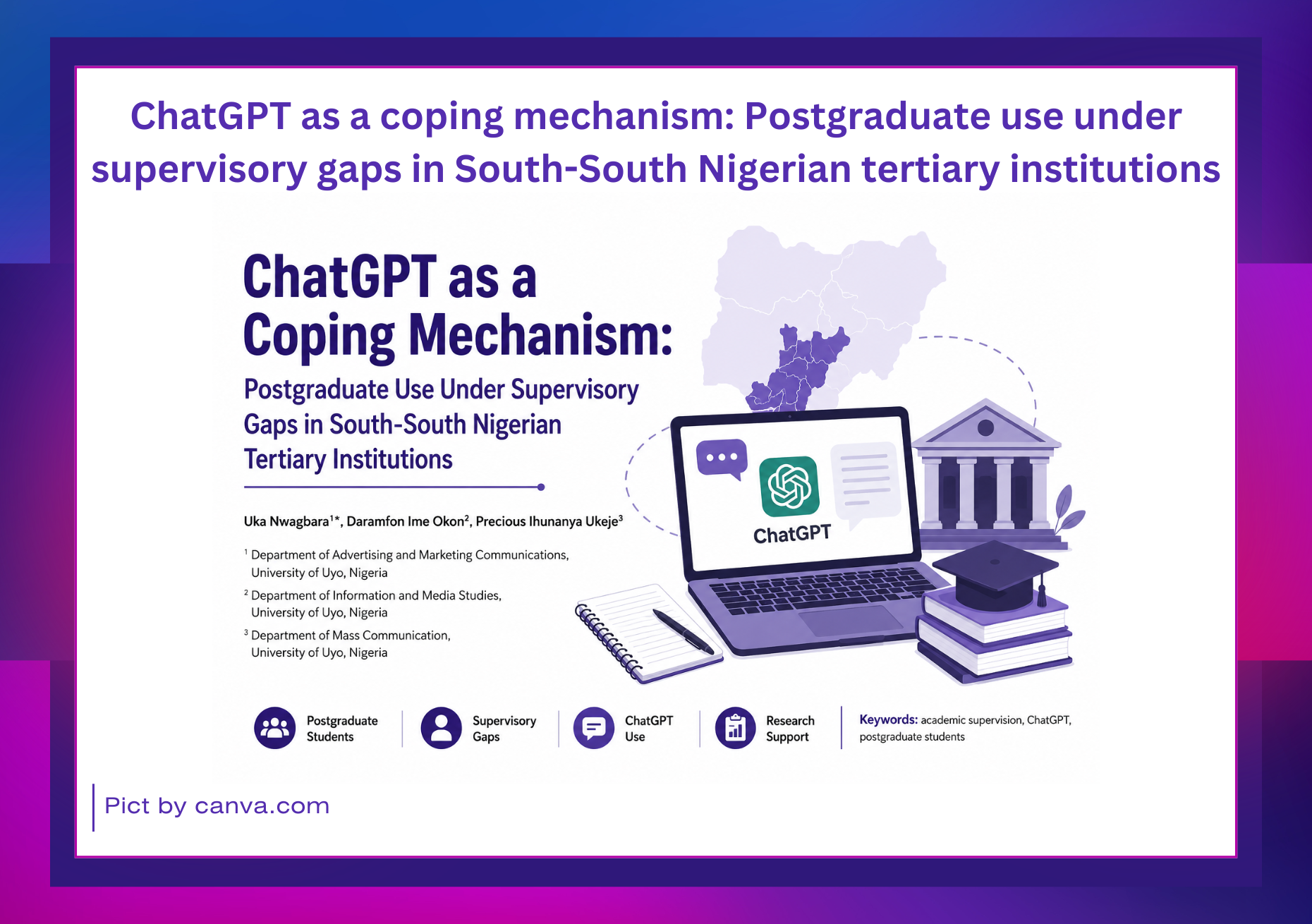
ChatGPT as a coping mechanism: Postgraduate use under supervisory gaps in South-South Nigerian tertiary institutions
Uka Nwagbara1, Daramfon Okon2, Precious Ukeje31. University of Uyo , NG2. University of Uyo , NG3. University of Uyo , NG2026-07-02|page 1-13AbstractBackground: Generative AI tools like ChatGPT are common in higher education, especially where students lack timely academic support. In many South-South Nigerian universities, gaps in postgraduate supervision may influence how students use such tools.
Objectives: This study examines how postgraduate students become aware of ChatGPT, how much they use it, and why they rely on it when supervision is limited.
Methods: A qualitative exploratory design was used. Twenty-one postgraduate students were purposively selected from universities in South-South Nigeria. Data were collected through online semi-structured interviews using a validated guide. Inductive thematic analysis, using Braun & Clarke’s framework, was applied to identify patterns in the data.
Results: Findings show that awareness of ChatGPT is mostly informal, driven by peers, social media, and personal trial and error. Many students use ChatGPT frequently, especially during proposal writing, data analysis, and thesis development. Its use is strongly linked to delays or gaps in supervision.
Conclusions: ChatGPT is widely used as a support tool and coping strategy, rather than merely a convenience. Its role reflects gaps in supervision and the need for clearer institutional guidance and training.
APA Citation StyleNwagbara, U. , Okon, D. , & Ukeje, P. (2026). ChatGPT as a coping mechanism: Postgraduate use under supervisory gaps in South-South Nigerian tertiary institutions. Journal of Artificial Intelligence in Education & Learning Innovation, 1-13. https://doi.org/10.56003/jaieli.v2i1.711 -
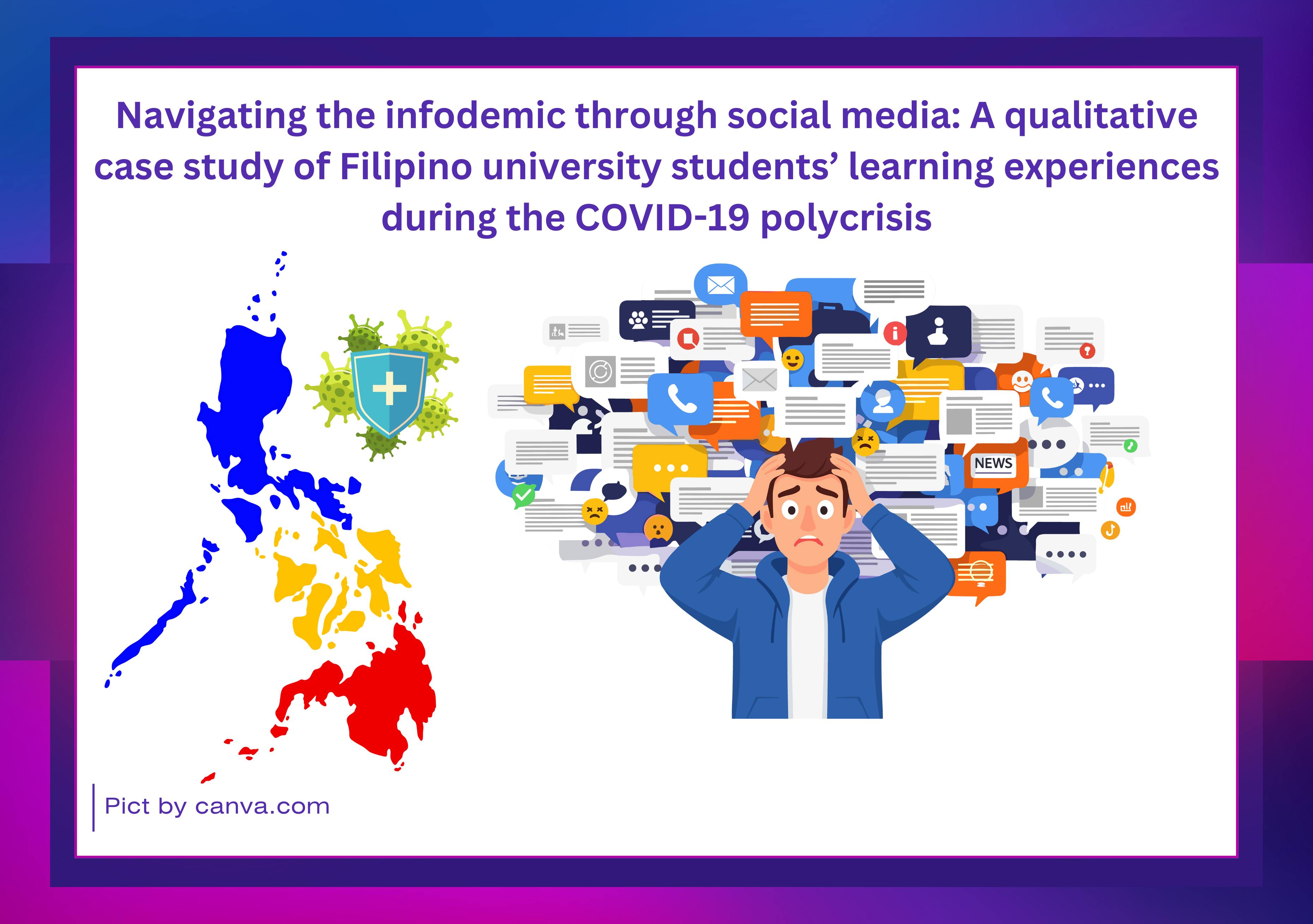
Navigating the infodemic through social media: A qualitative case study of Filipino university students’ learning experiences during the COVID-19 polycrisis
Janel Talaman1, Mc Denver Necosia2, Larence Villalon3, Edrian Mark Tomines41. Mindanao State University – General Santos , PH2. Mindanao State University – General Santos , PH3. Mindanao State University – General Santos , PH4. Mindanao State University - General Santos , PH2026-04-06|page 119-134AbstractBackground: The COVID-19 pandemic has triggered a complex crisis in higher education that has not only disrupted formal learning but also given rise to an infodemic through the rapid spread of misinformation on digital platforms, making social media both a source of learning and a source of epistemic risk for students.
Objectives: This study aims to explore how Filipino university students navigated learning experiences through social media during the COVID-19 polycrisis, focusing on preferred platforms, perceived educational relevance, and strategies for evaluating information credibility amid an infodemic.
Methods: A qualitative case study design was employed. Six Filipino university students enrolled in a Bachelor of Elementary Education program participated in this study through purposive sampling. Data were collected via online semi-structured interviews, group chat discussions, document analysis of shared social media content, and follow-up interviews. Thematic analysis was conducted following Braun and Clarke's framework to identify recurring patterns across data sources.
Results: Findings reveal that social media—particularly Facebook—served as a supplementary learning space, enabling students to access real-time information, engage with societal issues, and sustain their learning during the suspension of formal instruction. Students demonstrated active information-seeking behaviors, including cross-checking sources and exercising caution in sharing content. However, persistent exposure to misinformation highlighted their vulnerability within infodemic environments, especially in the absence of structured institutional guidance.
Conclusions: Social media can support authentic and socially relevant learning during educational disruption, but its pedagogical value depends on students' critical and digital literacy capacities.APA Citation StyleTalaman, J. , Necosia, M. D. , Villalon, L. , & Tomines, E. M. (2026). Navigating the infodemic through social media: A qualitative case study of Filipino university students’ learning experiences during the COVID-19 polycrisis. Journal of Artificial Intelligence in Education & Learning Innovation, 119-134. https://doi.org/10.56003/jaieli.v1i2.571 -
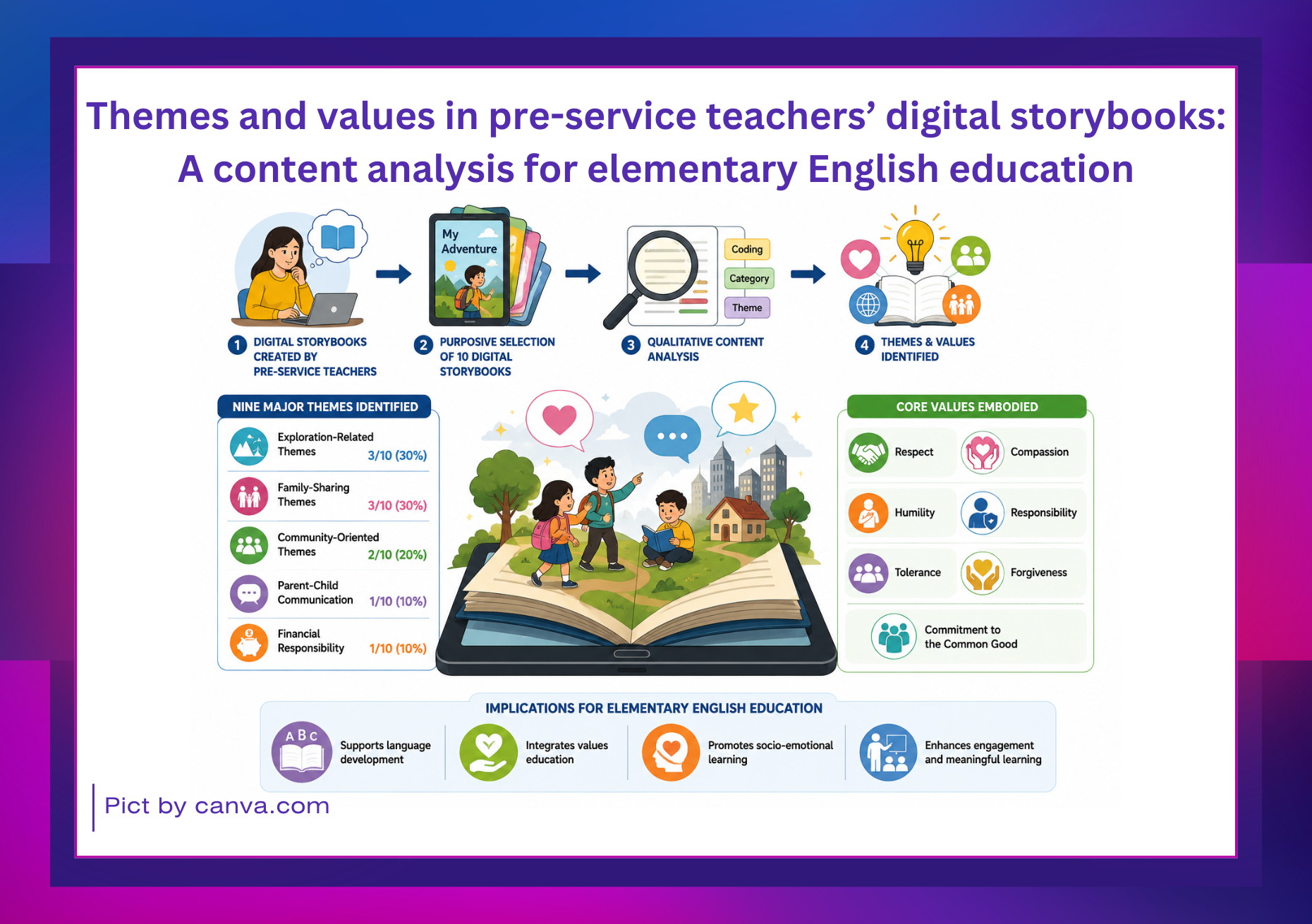
Themes and values in pre-service teachers’ digital storybooks: A content analysis for elementary English education
Najma Macatanto1, Desiery Maghinay2, John Dale Pendon3, Carla Marie Rubio4, Esmeraldo Sarad5, Kim Silva61. College of Education, Mindanao State University-General Santos , PH2. College of Education, Mindanao State University-General Santos , PH3. College of Education, Mindanao State University-General Santos , PH4. College of Education, Mindanao State University-General Santos , PH5. College of Education, Mindanao State University-General Santos , PH6. College of Education, Mindanao State University-General Santos , PH2026-07-02|page 32-43AbstractBackground: Digital storytelling has emerged as an innovative pedagogical approach that promotes meaningful learning experiences and enhances student engagement.
Objectives: This study examined the themes and values embedded in digital storybooks created by pre-service teachers and explored their implications for teaching English in elementary education.
Methods: Using a qualitative content analysis design, ten digital storybooks were purposively selected based on predetermined inclusion criteria. Data were analyzed through directed content analysis using an adapted thematic analysis framework.
Results: Findings revealed nine major themes. The most prominent were exploration-related themes (3 out of 10 storybooks, 30%) and family-sharing themes (3 out of 10 storybooks, 30%), followed by community-oriented themes (2 out of 10 storybooks, 20%). Other themes included parent-child communication and financial responsibility. The digital storybooks also embodied core values such as respect, compassion, humility, responsibility, tolerance, forgiveness, and commitment to the common good.
Conclusions: These findings suggest that digital storybooks can serve as effective resources for integrating language development, values education, and socio-emotional learning in elementary English classrooms. The study is limited by its small sample size and context-specific dataset. Further research should include a larger dataset and cross-cultural analysis to strengthen the generalizability of findings.
APA Citation StyleMacatanto, N. , Maghinay, D. , Pendon, J. D. , Rubio, C. M. , Sarad, E. , & Silva, K. (2026). Themes and values in pre-service teachers’ digital storybooks: A content analysis for elementary English education. Journal of Artificial Intelligence in Education & Learning Innovation, 32-43. https://doi.org/10.56003/jaieli.v2i1.701 -
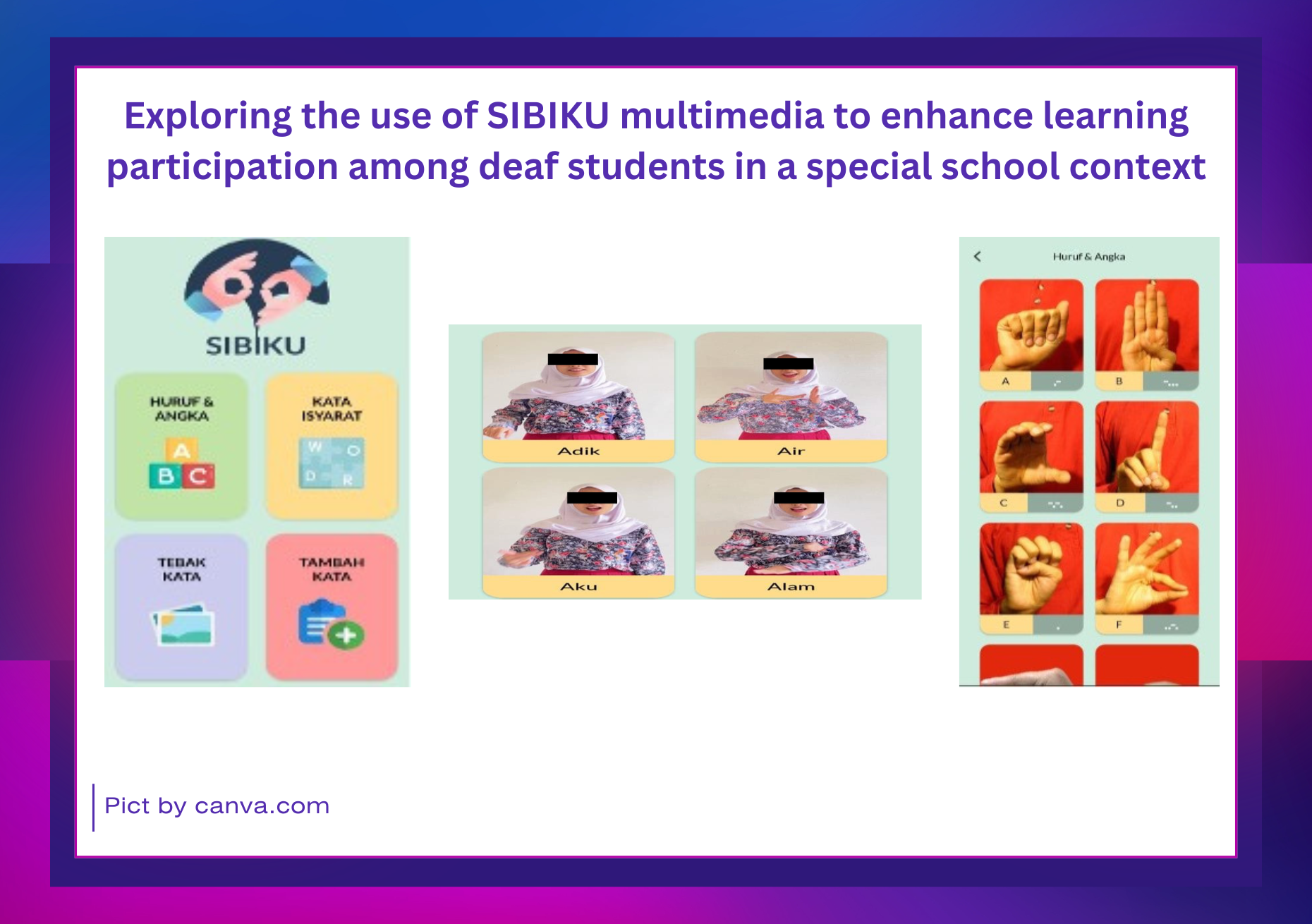
Exploring the use of SIBIKU multimedia to enhance learning participation among deaf students in a special school context
Nurina Ayuningtyas1, Ahmad Fajri Lutfi21. Universitas Muhammadiyah Kuningan , ID2. Universitas Muhammadiyah Kuningan , ID2026-04-06|page 135-147AbstractBackground: Observations at SLB C YPALB Perwari Kuningan indicate low motivation and limited participation among deaf students during learning activities. Interactive multimedia such as SIBIKU is expected to address these challenges.
Objectives: This study aims to (1) examine the implementation of SIBIKU multimedia in learning, (2) analyze students’ responses, and (3) evaluate changes in students’ learning participation and vocabulary acquisition.
Methods: This study employed a descriptive qualitative design with a field-based approach. Participants were selected using purposive sampling, consisting of one teacher and deaf students involved in computer learning activities. Data were collected through participatory observation, semi-structured interviews, and documentation. The main instrument was the researcher, supported by observation and interview guidelines. Data were analyzed using thematic analysis following Miles and Huberman’s model, including data reduction, data display, and conclusion drawing, with triangulation to ensure validity.
Results: The findings show that SIBIKU multimedia enhances student participation, as indicated by (1) increased attention to learning media, (2) active imitation of sign language movements, (3) higher frequency of student interaction and turn-taking, and (4) greater engagement in learning tasks such as word-guessing activities. Students also demonstrated improved motivation and more independent learning behavior.
Conclusions: SIBIKU multimedia provides a visually rich, interactive learning environment that effectively increases participation and engagement among deaf students, making it a promising tool for inclusive education.APA Citation StyleAyuningtyas, N. , & Lutfi, A. F. (2026). Exploring the use of SIBIKU multimedia to enhance learning participation among deaf students in a special school context. Journal of Artificial Intelligence in Education & Learning Innovation, 135-147. https://doi.org/10.56003/jaieli.v1i2.676

1 - 7 of 7 items