Search
Search Results
##search.searchResults.foundPlural##
-

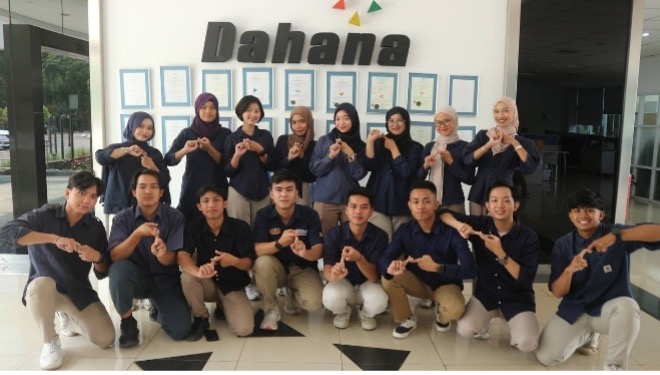
University-industry collaboration in internship programs: Implications for the development of PT Dahana
Aura Puja Lestari1, Muhammad Hilman Haidar2, Gunaryo Gunaryo3, Yusuf Bramastya Apriliyanto4, Latisa Stefi Alivia5, Adrian Rezki Anggara61. Universitas Pertahanan Republik Indonesia , ID2. Departemen Pengembangan Usaha dan Manajemen Portofolio, PT Dahana , ID3. Universitas Pertahanan Republik Indonesia , ID4. Universitas Pertahanan Republik Indonesia , ID5. Universitas Pertahanan Republik Indonesia , ID6. Universitas Pertahanan Republik Indonesia , ID2025-11-29|page 29-36AbstractThe internship program is a form of experiential learning designed to bridge the gap between theoretical knowledge acquired in higher education and practical experience in the workplace. This study aims to evaluate the performance of internship students participating in the Magang Generasi Bertalenta (MAGENTA) program at PT Dahana. The evaluation seeks to provide a comprehensive overview of students' competencies, discipline, responsibility, and adaptability throughout the internship period. This research employed a descriptive qualitative method with a survey approach. The primary data collection instrument was a structured questionnaire distributed to field supervisors who assessed the interns' performance. The collected data were analyzed to determine the effectiveness of the internship program in enhancing students' professional skills and its impact on the workplace environment. The results indicated that, in general, the internship students demonstrated good performance, characterized by a high level of discipline, a strong sense of responsibility, and quick adaptability to the company's work culture. The MAGENTA program at PT Dahana has proven to be effective in developing students' competencies and strengthening the partnership between higher education institutions and the industrial sector.
APA Citation StyleLestari, A. P. , Haidar, M. H. , Gunaryo, G. , Apriliyanto, Y. B. , Alivia, L. S. , & Anggara, A. R. (2025). University-industry collaboration in internship programs: Implications for the development of PT Dahana. Darmabakti: Jurnal Pengabdian kepada Masyarakat, 29-36. https://doi.org/10.56003/darmabakti.v2i1.659 -

Building young athletes' basic technical skills through an overhead pass training program at the Satria Sejati volleyball club in Semarang
M. Dandy Aryadi1, Didik Cahyono21. Universitas PGRI Semarang , ID2. Mulawarman University , ID2025-11-21|page 13-19AbstractOverhead passing skills are a fundamental technique in volleyball that often poses a challenge for young athletes, including those at the Satria Sejati Volleyball Club in Semarang. Based on initial observations, most athletes struggle to control the direction of the ball, maintain the power of their push, and keep a stable hand position. This community service activity aims to enhance the overhead passing skills of young athletes by applying a practical and easy-to-implement wall passing training method. The activity was conducted over a period of two months, with training sessions held three times a week, involving 24 athletes aged 13–17 years. The implementation method employed an experimental approach with a pretest–posttest design, where data were analyzed descriptively by comparing mean differences. The results showed an increase in passing ability from an average of 35.75 to 39.41, with a difference of 3.66 points. This improvement reflects the effectiveness of wall training in improving ball control, pushing power, and bounce accuracy. This activity also had a positive impact on increasing athlete motivation, while strengthening coaches' capacity to continuously apply scientifically based training models in the club environment.
APA Citation StyleAryadi, M. D. , & Cahyono, D. (2025). Building young athletes' basic technical skills through an overhead pass training program at the Satria Sejati volleyball club in Semarang. Darmabakti: Jurnal Pengabdian kepada Masyarakat, 13-19. https://doi.org/10.56003/darmabakti.v2i1.654 -

Implementation of a smokeless incinerator for environmentally friendly waste management in Ploso Village, Kediri Regency
Dentina Nurhayati Elmi1, Muhammad Budi Hidayat2, Talitha Leila Arsanti3, Qurrota A’yunin4, Laela Dwi Lestari5, Dimas Yasin Romli6, M. Ubaidillah Ridwanulloh7, Agus Miftakus Surur81. Universitas Islam Negeri (UIN) Syekh Wasil, Kediri , ID2. Universitas Islam Negeri (UIN) Syekh Wasil, Kediri , ID3. Universitas Islam Negeri (UIN) Syekh Wasil, Kediri , ID4. Universitas Islam Negeri (UIN) Syekh Wasil, Kediri , ID5. Universitas Islam Negeri (UIN) Syekh Wasil, Kediri , ID6. Universitas Islam Negeri (UIN) Syekh Wasil, Kediri , ID7. Universitas Islam Negeri (UIN) Syekh Wasil, Kediri , ID8. Universitas Islam Negeri (UIN) Syekh Wasil Kediri , ID2025-11-21|page 1-12AbstractEnvironmental management, particularly waste management, is one of the main challenges that requires serious attention. In communities, household waste and dry leaves are generally still disposed of through open burning, which has become a daily habit. This practice has the potential to cause various negative impacts on the environment, public health, and the quality of life of residents. This program aims to introduce the Smokeless Burn Barrel as an innovative solution for household waste management and burning. The activity was conducted in Ploso Village, Mojo District, Kediri Regency, utilizing a Participatory Action Research (PAR) approach that encompassed observation, problem identification, and action stages. The results of the implementation demonstrate that the use of the Smokeless Burn Barrel can accelerate the burning process, with an average time of 14.75 minutes, resulting in a 49.17% increase in efficiency compared to conventional methods. The combustion temperature also increased significantly, reaching an average of 351°C, representing a 63.94% increase, which resulted in a more complete combustion process with significantly less black and white smoke and minimal ash residue. Thus, the Smokeless Burn Barrel method has been proven effective in reducing the amount of residual waste, increasing energy efficiency during the combustion process, and having a positive impact on environmental management at the household level.
APA Citation StyleElmi, D. N. , Hidayat, M. B. , Arsanti, T. L. , A’yunin, Q. , Lestari, L. D. , Romli, D. Y. , Ridwanulloh, M. U. , & Surur, A. M. (2025). Implementation of a smokeless incinerator for environmentally friendly waste management in Ploso Village, Kediri Regency. Darmabakti: Jurnal Pengabdian kepada Masyarakat, 1-12. https://doi.org/10.56003/darmabakti.v2i1.628 -
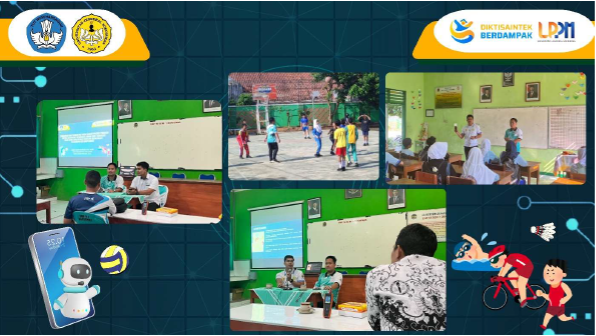
Optimizing the use of personal smartphones to support safe and measurable physical activity among middle school students
Yudhi Teguh Pambudi1, Topo Suhartoyo2, Abdul Malik Firdaus3, Mukhammad Miftakhul Farkhan41. Jenderal Soedirman University , ID2. Jenderal Soedirman University , ID3. Jenderal Soedirman University , ID4. Sekolah Menengah Pertama Negeri 1 Banyumas , ID2026-05-23|page 51-58AbstractThe high smartphone ownership among junior high school students in Banyumas Regency (99%) has not been matched by their use to support physical fitness. The majority of device use is limited to entertainment (games or social media), and smartphone ownership has not been fully leveraged for its functions or its role in supporting physical activity. This community service program aims to educate and train students and teachers in utilizing smartphone-based sports applications to support higher-quality physical activity. The activity was carried out in partnership with the Subject Teacher Working Group (MGMP) Physical Education, Sports, and Health (PJOK) Junior High School (SMP) Sub Rayon 06 Banyumas, involving 16 teachers and 547 students. The implementation methods included socialization, training in the implementation of the Strava (performance monitoring) and IQAir AirVisual (environmental air quality monitoring) applications, and monitoring and evaluation. The activity results showed significant behavioral changes, with 99% of participants adopting the technology. This program successfully transformed smartphones from mere entertainment devices into health-tech tools, improved students' digital literacy, and created a safe, measurable, and data-driven sports culture in the school environment.
APA Citation StylePambudi, Y. T. , Suhartoyo, T. , Firdaus, A. M. , & Farkhan, M. M. (2026). Optimizing the use of personal smartphones to support safe and measurable physical activity among middle school students. Darmabakti: Jurnal Pengabdian kepada Masyarakat, 51-58. https://doi.org/10.56003/darmabakti.v2i2.668

1 - 4 of 4 items