Search
Search Results
##search.searchResults.foundPlural##
-

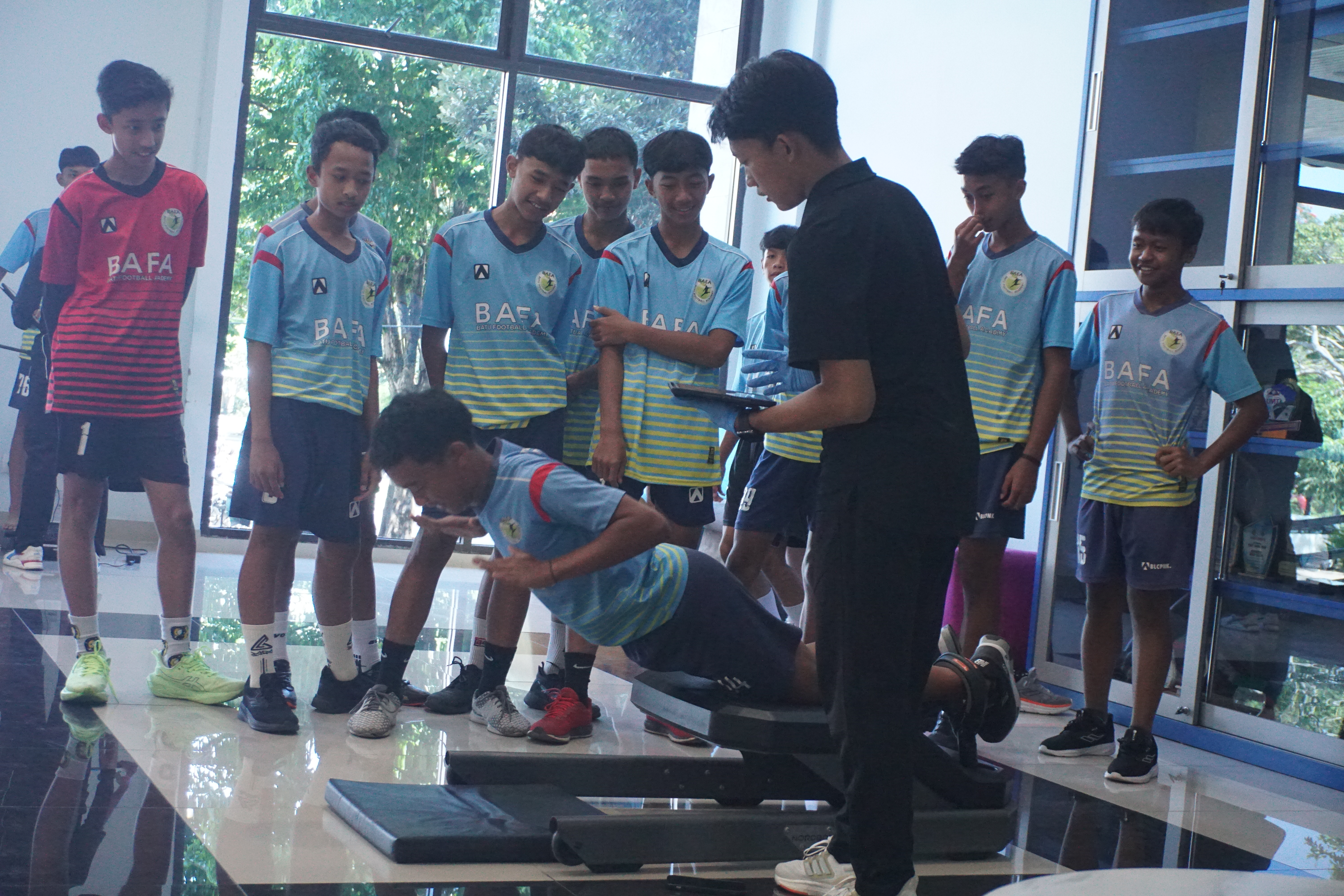
First aid education for sports-related injuries among parents and football athletes at Batu Football Academy (BAFA)
Yulingga Nanda Hanief1, Awang Firmansyah2, Ulma Erdilanita3, Dinda Arisetya Purwadi41. State University of Malang , ID2. Universitas Negeri Surabaya , ID3. Indonesia University of Education , ID4. State University of Malang , ID2025-02-15|page 8-13AbstractFootball is one of the sports that accounts for many injuries. Inappropriate first aid for injuries will have a prolonged impact on the health of athletes; even teenage football athletes cannot continue their desire to become professional footballers. This activity aims to increase understanding about providing first aid to someone injured, especially for parents and football athletes at Batu Football Academy (BAFA). This activity uses a counseling approach and presentation of material accompanied by hamstring muscle measurement activities as a follow-up to the injury prevention program. The participants involved were 25 people, consisting of 5 parents of athletes and 20 soccer athletes who are members of the Batu Football Academy (BAFA). To determine whether there is an increase in understanding, an initial test (pretest) and a final test (posttest) are carried out. The test instrument is a questionnaire that collects information about understanding first aid for injuries. The activity results increased the average score in the initial test (60.8) and the final test (89.6) by 28.8. This activity effectively increases understanding of first aid in sports injuries. Both parents and athletes need to know how to provide first aid for injuries so that chronic and permanent injuries do not arise. Proper injury management is essential for athletes, offering many benefits that enhance recovery and performance.
APA Citation StyleHanief, Y. N. , Firmansyah, A. , Erdilanita, U. , & Purwadi, D. A. (2025). First aid education for sports-related injuries among parents and football athletes at Batu Football Academy (BAFA). Darmabakti: Jurnal Pengabdian kepada Masyarakat, 8-13. https://doi.org/10.56003/darmabakti.v1i1.393 -

Mapping the psychological profiles of athletes at the Nusantara Petanque Club in Kediri as a basis for developing a mental training program
Moch Yunus1, Sapto Adi2, Abdian Asgi Sukmana3, Ulma Erdilanita41. State University of Malang , ID2. State University of Malang , ID3. Universitas Nusantara PGRI Kediri , ID4. Indonesia University of Education , ID2025-11-22|page 20-28AbstractThis community service activity was motivated by a problem faced by the Nusantara Petanque Club Kediri, namely the lack of comprehensive mapping of athletes' psychological profiles as a basis for developing mental training programs. This situation has led coaches to continue relying on general approaches that fail to address the psychological needs of individual athletes. This activity aims to map the psychological profiles of Petanque athletes, covering six main components, namely concentration, resilience, self-efficacy, mental toughness, anxiety, and decision-making, as a first step in strengthening the mental capacity of athletes. The community service was conducted on October 25, 2025, at the Nusantara Petanque Club Kediri training facility, involving 14 active athletes. The implementation method employed a survey-based community service approach, involving the stages of coordination, socialization, completion of standardized psychological instruments, and quantitative descriptive data analysis using frequency distribution. The results of the study indicate that mental toughness, self-efficacy, and resilience fall into the high category, while decision-making tends to be moderate, and concentration is relatively low. These findings confirm that Petanque athletes' mental preparedness is quite strong, but there is a need to improve their ability to focus and make decisions under pressure. This activity contributes to providing an empirical basis for coaches to develop more specific, measurable, and sustainable psychological training programs.
APA Citation StyleYunus, M. , Adi, S. , Sukmana, A. A. , & Erdilanita, U. (2025). Mapping the psychological profiles of athletes at the Nusantara Petanque Club in Kediri as a basis for developing a mental training program. Darmabakti: Jurnal Pengabdian kepada Masyarakat, 20-28. https://doi.org/10.56003/darmabakti.v2i1.658 -
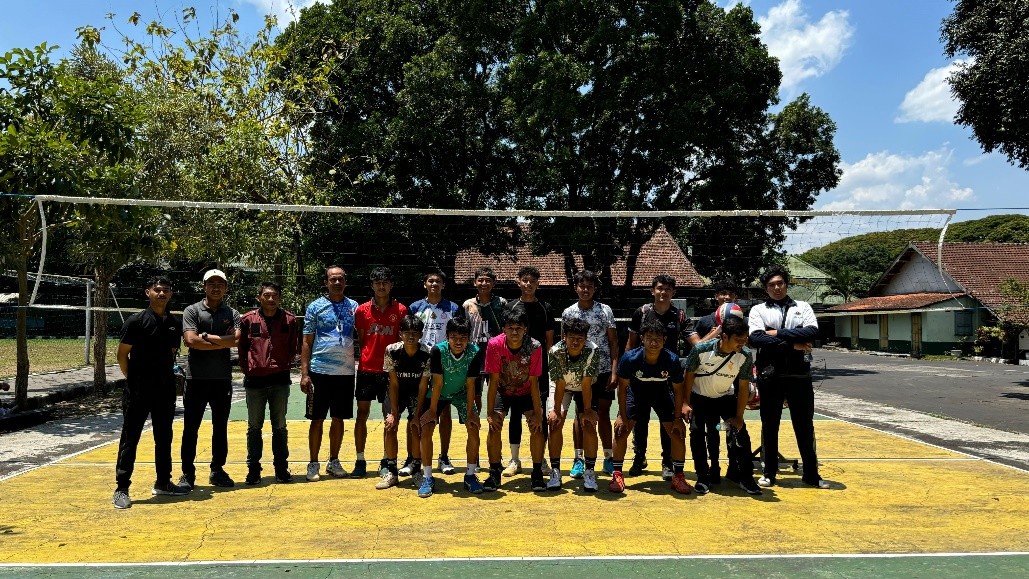
Assessment of volleyball skills as part of the development of young athletes at the Bahana Muda Club
Mahesa Dwi Chandra1, Usamah Daffa Inzaghi21. State University of Malang , ID2. State University of Malang , ID2025-06-22|page 64-70AbstractPeriodic performance evaluation is the primary foundation for improving athlete performance, especially in sports that demand high technical abilities, such as volleyball. Data-based evaluation is an important instrument for objectively identifying the strengths and weaknesses of athletes, as well as the basis for formulating targeted training programs. This community service program aims to evaluate volleyball playing skills by measuring the technical skills of athletes at the Bahana Muda Club in Malang City. This activity involved 20 male athletes who had experience competing in the Provincial Sports Week (Porprov) event and was carried out with a participatory approach. Several skill tests include passing, service, and smash/spike tests. The measurement results showed that most athletes were in the moderate category (40%), followed by the deficient category (30%), and only one athlete occupied the excellent category. These findings indicate that performance gaps between athletes require more individualized and structured training interventions. In addition to producing preliminary data on athlete performance, this activity also benefits coaches' awareness of the importance of data-based evaluation in coaching. In conclusion, the performance assessment carried out in this service program provides an objective picture of the athlete's technical readiness. It can become the basis for preparing an adaptive and sustainable training program. Therefore, it is recommended that evaluative activities like this be carried out regularly to monitor progress and ensure the continuity of athlete performance improvement.
APA Citation StyleChandra, M. D. , & Inzaghi, U. D. (2025). Assessment of volleyball skills as part of the development of young athletes at the Bahana Muda Club. Darmabakti: Jurnal Pengabdian kepada Masyarakat, 64-70. https://doi.org/10.56003/darmabakti.v1i2.602 -

Building young athletes' basic technical skills through an overhead pass training program at the Satria Sejati volleyball club in Semarang
M. Dandy Aryadi1, Didik Cahyono21. Universitas PGRI Semarang , ID2. Mulawarman University , ID2025-11-21|page 13-19AbstractOverhead passing skills are a fundamental technique in volleyball that often poses a challenge for young athletes, including those at the Satria Sejati Volleyball Club in Semarang. Based on initial observations, most athletes struggle to control the direction of the ball, maintain the power of their push, and keep a stable hand position. This community service activity aims to enhance the overhead passing skills of young athletes by applying a practical and easy-to-implement wall passing training method. The activity was conducted over a period of two months, with training sessions held three times a week, involving 24 athletes aged 13–17 years. The implementation method employed an experimental approach with a pretest–posttest design, where data were analyzed descriptively by comparing mean differences. The results showed an increase in passing ability from an average of 35.75 to 39.41, with a difference of 3.66 points. This improvement reflects the effectiveness of wall training in improving ball control, pushing power, and bounce accuracy. This activity also had a positive impact on increasing athlete motivation, while strengthening coaches' capacity to continuously apply scientifically based training models in the club environment.
APA Citation StyleAryadi, M. D. , & Cahyono, D. (2025). Building young athletes' basic technical skills through an overhead pass training program at the Satria Sejati volleyball club in Semarang. Darmabakti: Jurnal Pengabdian kepada Masyarakat, 13-19. https://doi.org/10.56003/darmabakti.v2i1.654 -
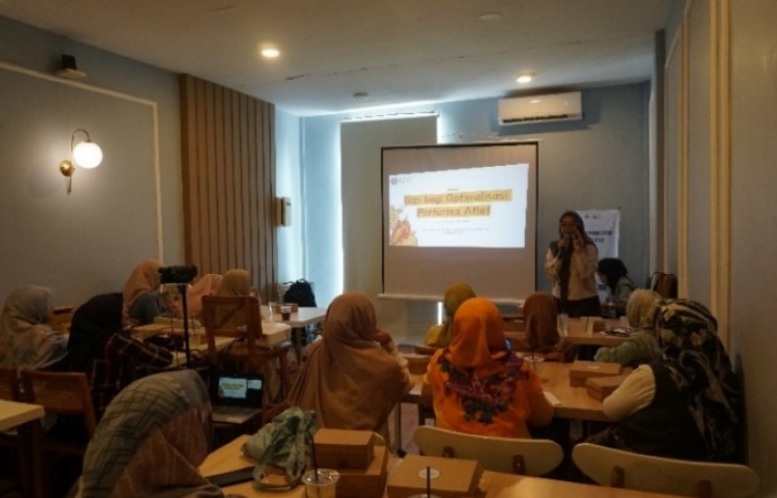
Strategies for improving athlete performance through training load monitoring training at Barracuda’s Swimming Club
Prisca Widiawati1, Yulingga Nanda Hanief2, Ulma Erdilanita3, I Kadek Ryo Prananda41. State University of Malang , ID2. State University of Malang , ID3. Indonesia University of Education , ID4. State University of Malang , ID2025-02-15|page 23-31AbstractTraining load training (training load) is one of the essential strategies for improving athlete performance. The lack of understanding of coaches and athletes regarding training load calculations is the main focus of the service team. This activity aims to apply the concept of training load calculation at Barracuda's Swimming Club to minimize the risk of injury and overtraining and improve athlete performance. Training load is divided into external and internal training loads, where external loads measure the physical work done by athletes, while internal loads evaluate physiological and psychological responses to exercise. Through a Community-Based Participatory Research (CBPR) approach, this service program collaborates with coaches, athletes, and guardians to develop and implement an appropriate program. Training activities included two sessions, with material on training load calculation, Long-Term Athlete Development (LTAD), training load management, and the role of nutrition in supporting athlete performance. The pre-test and post-test results significantly increased participants' understanding of the training load. Based on the Paired T-Test analysis, there was a significant difference between the pretest and post-test scores with a p-value of 0.000, confirming that the training was effective in improving participants' understanding of training load calculation. Therefore, this program plays a crucial role in empowering coaches to make informed decisions to manage training loads, minimize injuries, and maximize athletes' potential.
APA Citation StyleWidiawati, P. , Hanief, Y. N. , Erdilanita, U. , & Ryo Prananda, I. K. (2025). Strategies for improving athlete performance through training load monitoring training at Barracuda’s Swimming Club. Darmabakti: Jurnal Pengabdian kepada Masyarakat, 23-31. https://doi.org/10.56003/darmabakti.v1i1.404 -

Technical guidance on mental toughness in achieving final match results for students in the Special Sports Class (KKO)
Sugeng Purwanto1, Sujarwo2, Agus Supriyanto3, Yuyun Ari Wibowo41. Yogyakarta State University , ID2. Yogyakarta State University , ID3. Yogyakarta State University , ID4. Yogyakarta State University , ID2025-05-15|page 48-53AbstractMental toughness is a set of attitudes, values, behaviors, and emotions that enable an individual to survive, face various obstacles or pressures that are felt, and achieve the desired goals. Special Sports Class (KKO) is a co-curricular activity intended to increase students' interest and talent to become potential athletes in the future. There are various factors related to mental toughness, such as self-development through challenges, sports awareness of students, how students' attitudes or behavior when facing pressure, and the desire or enthusiasm of students in reaching the match. According to interviews with several KKO students, 70% of KKO students do not understand mental toughness, so it is necessary to provide technical guidance related to it. This community service activity was carried out thanks to the collaboration of lecturers from the Faculty of Sport and Health Sciences (FIKK), Universitas Negeri Yogyakarta (UNY) as resource persons and those in charge of the KKO Class of State Junior High School (SMPN) I Kalasan, Sleman Regency. The activity was carried out in theory and practice on July 10-11, 2024, at SMPN I Kalasan with the participants of all students, coaches, and sports teachers who handle KKO at SMPN 1 Kalasan, totaling 50 people, consisting of 6 coaches, two sports teachers, and 42 KKO students. The results of this activity show that 92% of KKO students need mental toughness guidance in facing matches, and the remaining 8% of KKO students need further mental toughness guidance assistance in facing matches.
APA Citation StylePurwanto, S. , Sujarwo, S. , Supriyanto, A. , & Wibowo, Y. A. (2025). Technical guidance on mental toughness in achieving final match results for students in the Special Sports Class (KKO). Darmabakti: Jurnal Pengabdian kepada Masyarakat, 48-53. https://doi.org/10.56003/darmabakti.v1i2.461

1 - 6 of 6 items