Search
Search Results
##search.searchResults.foundPlural##
-

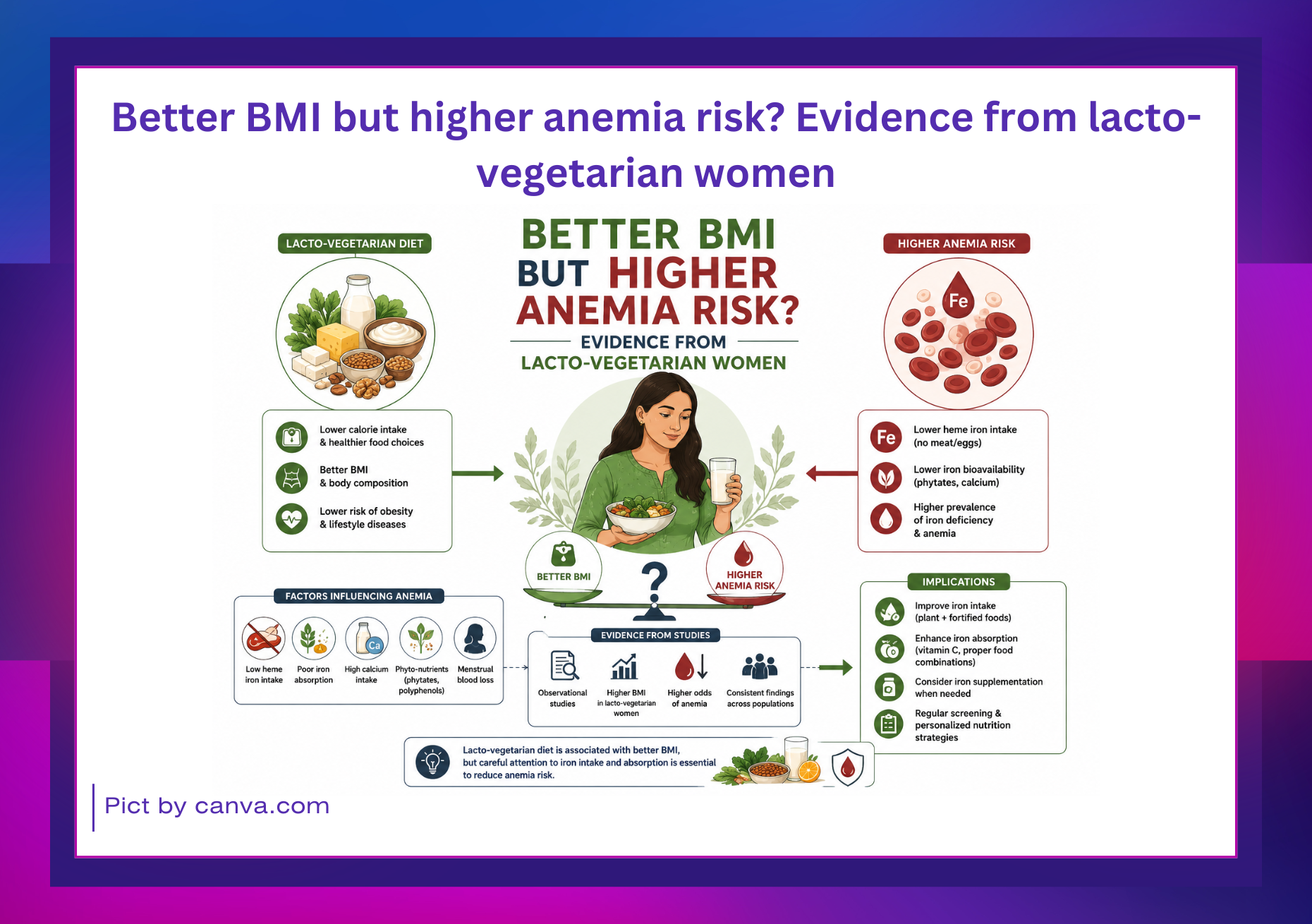
Better BMI but higher anemia risk? Evidence from lacto-vegetarian women
Hamid Nurrohman1, Ha Thi Thu Trang21. Department of Preventive and Restorative Dental Sciences, University of California , US2. Nursing Program, School of Medicine and Pharmacy, Vietnam National University, Hanoi , VN2026-05-24|page 14-24AbstractBackground: The increasing adoption of plant-based diets in the United States, particularly lacto-vegetarian patterns, has been driven by their perceived metabolic benefits. However, middle-aged women represent a nutritionally vulnerable group due to menopausal transitions and a high risk of anemia. In this context, the potential trade-off between improved body weight and micronutrient deficiencies remains insufficiently explored.
Objectives: This study examined the nutritional trade-offs between lacto-vegetarian and non-vegetarian diets, focusing on body mass index (BMI), anemia status, and lifestyle behaviors among middle-aged women in California, USA.
Methods: A cross-sectional study was conducted between June and September 2025 in California, USA, involving 40 women aged 40–65 years (20 lacto-vegetarians and 20 non-vegetarians), selected purposively. Socio-demographic characteristics and lifestyle behaviors were collected using a validated structured questionnaire. BMI, blood pressure, and hemoglobin levels were measured using standardized procedures. Data were analyzed using the Mann–Whitney U test and Spearman rank correlation, with results summarized using median and interquartile range (IQR) where appropriate. Statistical significance was set at p < 0.05.
Results: Lacto-vegetarian women showed a higher proportion of normal BMI compared to non-vegetarians (50% vs 30%, p=0.04). However, anemia prevalence was markedly higher among lacto-vegetarians (70% vs 10%, p=0.001). No significant differences were observed in physical activity, smoking, or blood pressure (p>0.05). These findings indicate a clear nutritional trade-off: improved weight status is associated with increased anemia risk.
Conclusions: Lacto-vegetarian diets were associated with more favorable BMI profiles but a significantly higher risk of anemia. These findings highlight the need for targeted nutritional strategies and public health interventions in the United States, particularly emphasizing iron and vitamin B12 adequacy among middle-aged women adopting plant-based diets.
APA Citation StyleNurrohman, H. , & Trang, H. T. T. (2026). Better BMI but higher anemia risk? Evidence from lacto-vegetarian women. Public Health and Occupational Safety Journal, 14-24. https://doi.org/10.56003/phosj.v2i1.714 -
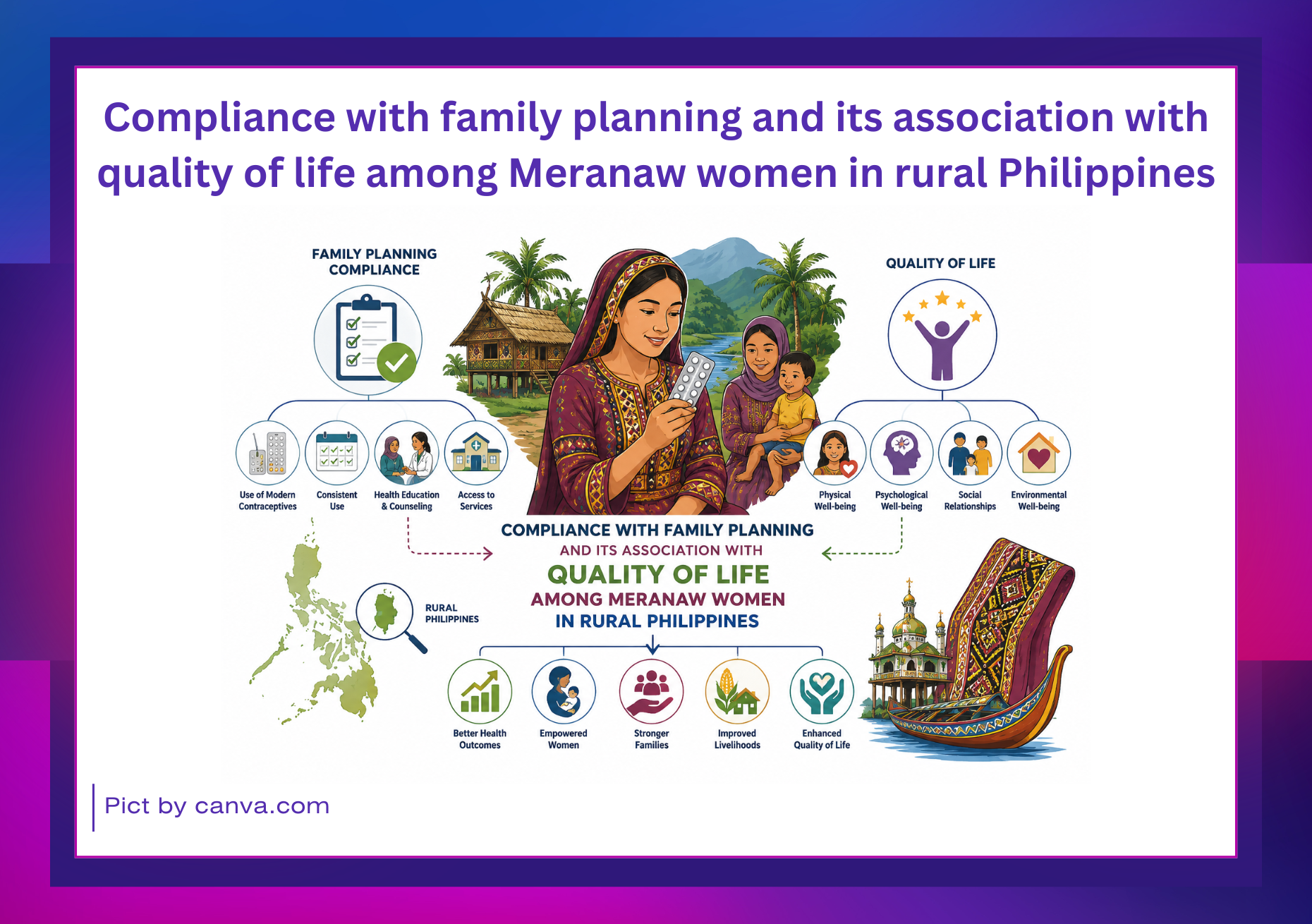
Compliance with family planning and its association with quality of life among Meranaw women in rural Philippines
Maslainie Aliola1, Hamdoni Pangandaman21. Mindanao State University - Marawi, Lanao Del Sur, 9700, Philippines , PH2. Mindanao State University, Marawi City , PH2026-05-24|page 1-13AbstractBackground: The COVID-19 pandemic disrupted access to essential health services, including family planning (FP), particularly in rural and underserved communities. These disruptions may influence women’s reproductive practices and overall quality of life (QoL).
Objectives: This study aimed to determine the level of family planning compliance and examine its influence on the quality of life among Meranaw women during the COVID-19 pandemic.
Methods: A descriptive cross-sectional design was employed among 378 Meranaw women who were family planning users in selected municipalities of Lanao del Sur, Philippines. Data were collected from January to October 2022. A stratified random sampling technique was used based on municipal distribution to ensure proportional representation of respondents. A validated researcher-developed questionnaire assessed attitude- and practice-related compliance (CVI = 0.81–0.92; α = 0.79), while QoL was measured using the WHOQOL-BREF. Data were analyzed using descriptive statistics and multiple linear regression.
Results: Respondents demonstrated high compliance in both attitude (mean = 3.61) and practice (mean = 3.41) domains. Overall QoL was rated very satisfactory (mean = 5.72), with the highest scores in the psychological (mean = 5.89) and relational (mean = 5.85) domains. Multiple regression analysis revealed that age (β = .319, p < .001), monthly income (β = –.097, p = .008), number of children (β = .395, p < .001), duration of FP use (β = .092, p = .034), and type of FP method (β = .129, p < .001) significantly predicted QoL. The model explained a substantial proportion of variance (R² = 0.974), indicating strong predictive capacity.
Conclusions: Meranaw women demonstrated high compliance with family planning practices despite pandemic-related constraints, thereby significantly improving the quality of life. Sustaining family planning services during public health crises is essential to maintaining women’s well-being, particularly in rural and culturally distinct populations.
APA Citation StyleAliola, M. , & Pangandaman, H. (2026). Compliance with family planning and its association with quality of life among Meranaw women in rural Philippines. Public Health and Occupational Safety Journal, 1-13. https://doi.org/10.56003/phosj.v2i1.698 -

Spatial mapping and correlation between healthy home coverage and tuberculosis incidence in Malang district
Fatma Lidya Zulfa1, Hartati Eko Wardani2, Tika Dwi Tama3, Anindya Hapsari4, Rara Warih Gayatri5, Erni Astutik61. State University of Malang , ID2. State University of Malang , ID3. State University of Malang , ID4. State University of Malang , ID5. State University of Malang , ID6. Airlangga University , ID2025-04-23|page 1-16AbstractBackground: According to the Ministry of Health, 91% of active tuberculosis (TB) cases in Indonesia occur in crowded and slum areas. The Healthy Homes Program under the Healthy Indonesia Indicators (2010) aims to improve housing conditions in such areas to meet health standards. Malang District, with the second-highest housing density in East Java, ranks fifth in TB cases, suggesting residential exposure as a contributing factor.
Objectives: This study aims to map trends and examine the correlation between healthy home coverage and TB incidence in the Malang District Health Center Working Area 2019-2021.
Methods: The study was conducted in January-April 2023 at the Malang District Health Office with a unit of analysis of 39 health centers. The variables of this study were the coverage of healthy homes and the incidence of BTA-positive pulmonary TB. The study used a mixed ecological study and Pearson correlation test with secondary data from the Malang District Health Office and BPS.
Results: TB incidence showed a decreasing trend alongside increasing healthy home coverage. Nine health centers remained in high-incidence zones, and five exhibited poor housing coverage. Correlation analysis revealed a weak, negative relationship (r = -0.084). High TB incidence was still found in areas meeting healthy home criteria.
Conclusions: The incidence rate of BTA-positive pulmonary TB in the working area of the Malang District Health Center showed a downward trend for 3 years. Future research using individual data and other specific risk factors that may influence TB incidence is recommended.
APA Citation StyleZulfa, F. L. , Wardani, H. E. , Tama, T. D. , Hapsari, A. , Gayatri, R. W. , & Astutik, E. (2025). Spatial mapping and correlation between healthy home coverage and tuberculosis incidence in Malang district. Public Health and Occupational Safety Journal, 1-16. https://doi.org/10.56003/phosj.v1i1.532

1 - 3 of 3 items