Search
Search Results
##search.searchResults.foundPlural##
-

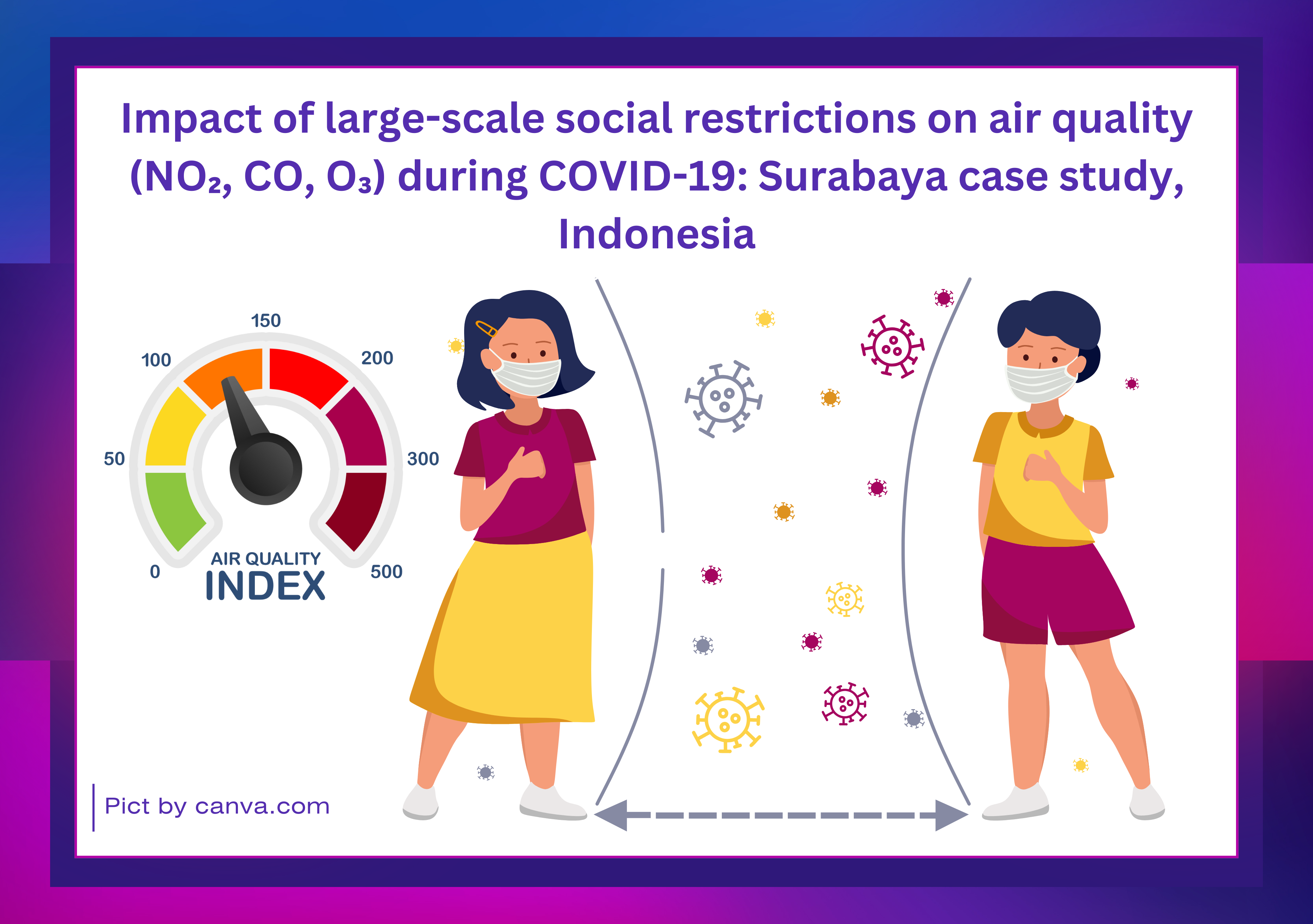
Impact of large-scale social restrictions on air quality (NO₂, CO, O₃) during COVID-19: Surabaya case study, Indonesia
Asmaul Nur Fitria1, Supriyadi Supriyadi2, Muhammad Al-Irsyad3, Anindya Hapsari41. State University of Malang , ID2. State University of Malang , ID3. State University of Malang , ID4. State University of Malang , ID2025-04-23|page 27-39AbstractBackground: The COVID-19 pandemic galvanized the world at the end of 2019. It was identified as an attack on humans and spread very quickly almost all over the world. As the person in charge of protecting the community, the government makes a policy that can suppress the spread of the COVID-19 virus.
Objectives: This study aims to determine whether implementing large-scale social restrictions (PSBB) in the COVID-19 period (2020 to 2021) impacts air quality in Surabaya City, East Java.
Methods: This quantitative research uses an Analysis of Secondary Data (ADS) approach by utilizing secondary data as the primary source. This research was conducted at the Surabaya City Environmental Service, East Java Province, in July - August 2021, with the total population being all the results of NO2, O3, and CO air quality measurements in 2020-2021 during the COVID-19 pandemic in January 2020 to December 2021 at monitoring stations in Surabaya City. This study uses Wilcoxon test analysis.
Results: The results showed that implementing the first phase of large-scale social restrictions had no significant impact on NO₂ air quality in Surabaya City (p = 0.068). Implementing the transitional PSBB (second stage) had no significant impact on NO₂ air quality in Surabaya City (p = 0.068). Implementing the first and second phases of the PSBB has no significant impact on NO₂ air quality in Surabaya City (p = 0.173).
Conclusions: The implementation of PSBB Phase One and PSBB Phase Two (transition period) did not significantly impact the air quality of NO2, CO, or O3 gases in Surabaya City. This finding challenges the common assumption that lockdowns automatically improve air quality and emphasizes the need for more comprehensive environmental policies.
APA Citation StyleFitria, A. N. , Supriyadi, S. , Al-Irsyad, M. , & Hapsari, A. (2025). Impact of large-scale social restrictions on air quality (NO₂, CO, O₃) during COVID-19: Surabaya case study, Indonesia. Public Health and Occupational Safety Journal, 27-39. https://doi.org/10.56003/phosj.v1i1.528 -
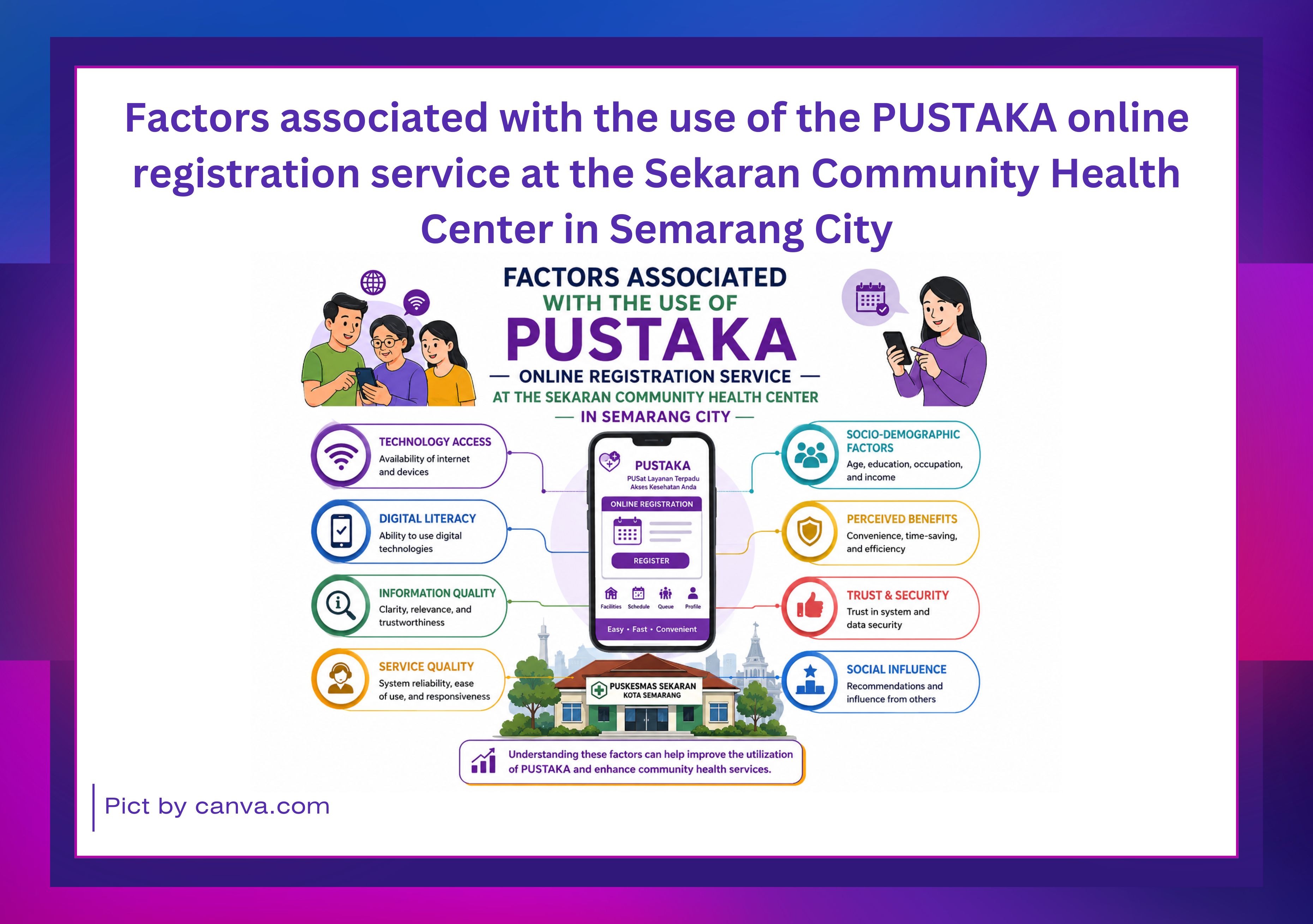
Factors associated with the use of the PUSTAKA online registration service at the Sekaran Community Health Center in Semarang City
Bunga Gustikasari Ismail1, Nurhasmadiar Nandini2, Rani Tiyas Budiyanti31. Faculty of Public Health, Universitas Diponegoro , ID2. Faculty of Public Health, Universitas Diponegoro , ID3. Faculty of Public Health, Universitas Diponegoro , ID2026-05-26|page 57-69AbstractBackground: Online registration services have been implemented in community health centers to facilitate patient access and reduce long queues by enabling appointment scheduling at specific times. However, the utilization of this service in several community health centers in Semarang City remains below the monthly target of 10%. At Sekaran Community Health Center, for example, the average utilization rate was only 1.03% between June and August 2023.
Objectives: This study analyzed the factors associated with the use of the PUSTAKA Online Registration Service at The Sekaran Community Health Center in Semarang City.
Methods: This study employed a quantitative research design with a cross-sectional approach. The population consisted of existing patients at Sekaran Community Health Center, with a sample of 97 respondents selected using accidental sampling. The variables examined included age, education, occupation, attitude, knowledge, perceived need, availability of facilities, and ease of obtaining information in relation to the decision to use PUSTAKA services. Data were collected using a closed-ended questionnaire that had previously undergone validity and reliability testing.
Results: The results of the research analysis using the chi square statistical test showed the conclusion that there was a significant relationship between the factors of age (p = 0.006), education (p = 0.007), occupation (p = 0.044), attitude (p = 0.017), perceived needs (p = 0.006), and ease of obtaining information (p = 0.021) with the decision to use PUSTAKA services at the Sekaran Health Center.
Conclusions: Meanwhile, there is no relationship between knowledge (p = 0.812) and the availability of facilities (p = 0.114) with the decision to use PUSTAKA.
APA Citation StyleIsmail, B. G. , Nandini, N. , & Budiyanti, R. T. (2026). Factors associated with the use of the PUSTAKA online registration service at the Sekaran Community Health Center in Semarang City. Public Health and Occupational Safety Journal, 57-69. https://doi.org/10.56003/phosj.v2i1.739 -
Effectiveness of fly traps with a variety of baits on the number of flies trapped in the primary market among farmers in Batu city
Hasbi Ash Shiddiqy1, Muhammad Al-Irsyad2, Agung Kurniawan3, Hartati Eko Wardani41. State University of Malang , ID2. State University of Malang , ID3. State University of Malang , ID4. State University of Malang , ID2025-04-23|page 17-26AbstractBackground: Diarrhea is one of the top ten diseases in Batu City. One of the vectors causing this disease is flies, often found in traditional market environments. Fly control efforts can be carried out using traps combined with various types of bait, but the effectiveness of trap and bait variations has not been systematically studied.
Objectives: This study aims to determine the effectiveness of fly traps with various baits on the number of flies trapped in Among Tani Main Market, Batu City.
Methods: This study used a quasi-experimental design with a posttest-only group design. The variables observed were the number of flies trapped in three types of traps (bottles, nets, and blocks) and three variations of bait (shrimp, fish gills, and chicken offal). Traps were set for two hours for three days with three repetitions. The instruments used were modified fly traps and laboratory inventory. Data were analyzed using Levene's test for homogeneity and one-way ANOVA to determine differences between treatments.
Results: ANOVA test results showed no significant difference (p > 0.05) between bait and trap variations in the number of flies trapped. However, bottle traps with fish gill bait descriptively showed the highest number of catches (395 flies over three days).
Conclusions: Although there was no statistically significant difference, the bottle trap with fish gill bait was descriptively the most effective at catching flies. This study suggests using bottle traps with fish gill bait as an alternative to fly control in the market environment. Further research is recommended to examine the effect of environmental conditions and types of fly species on the effectiveness of traps and baits.
APA Citation StyleShiddiqy, H. A. , Al-Irsyad, M. , Kurniawan, A. , & Wardani, H. E. (2025). Effectiveness of fly traps with a variety of baits on the number of flies trapped in the primary market among farmers in Batu city. Public Health and Occupational Safety Journal, 17-26. https://doi.org/10.56003/phosj.v1i1.529 -
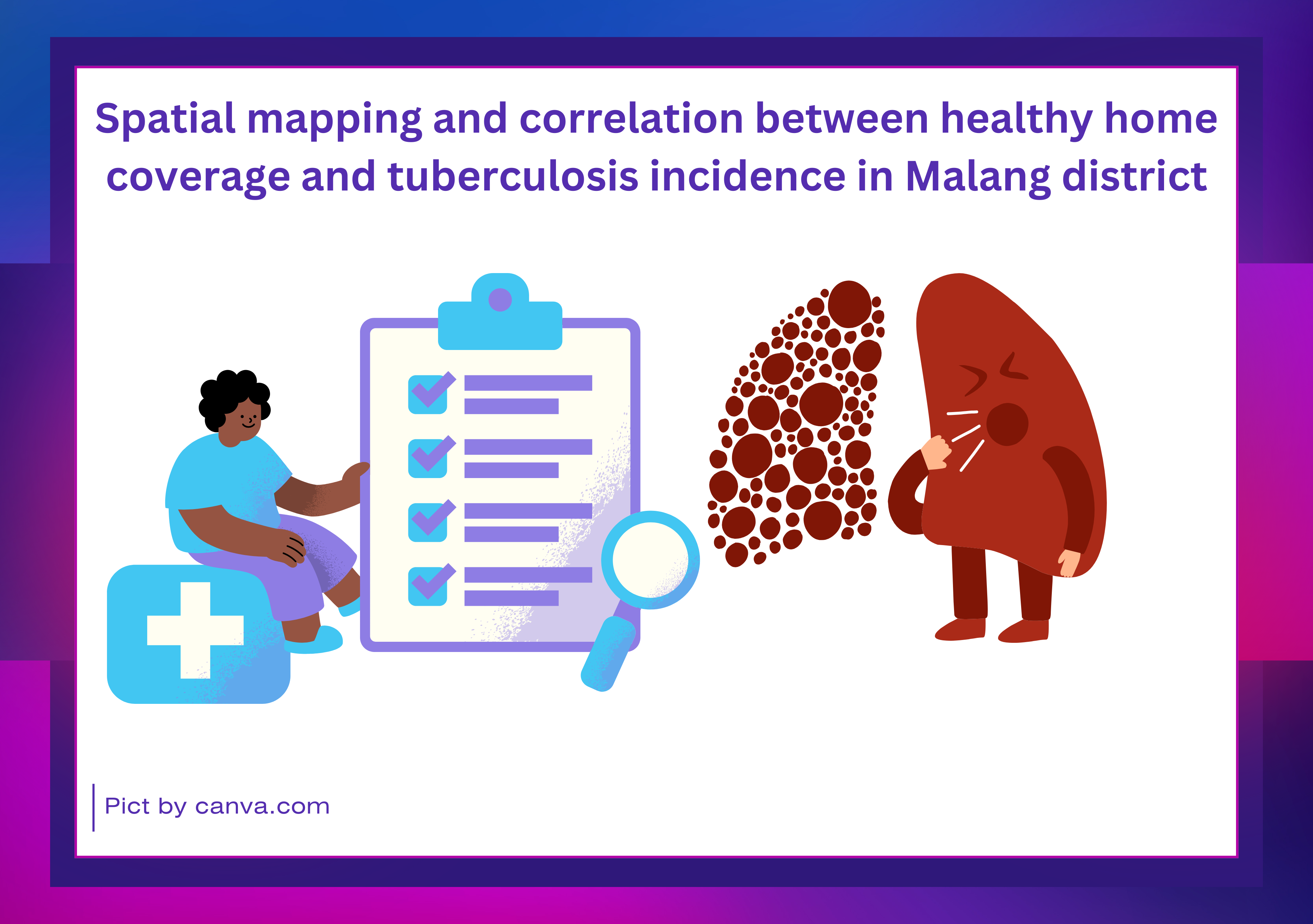
Spatial mapping and correlation between healthy home coverage and tuberculosis incidence in Malang district
Fatma Lidya Zulfa1, Hartati Eko Wardani2, Tika Dwi Tama3, Anindya Hapsari4, Rara Warih Gayatri5, Erni Astutik61. State University of Malang , ID2. State University of Malang , ID3. State University of Malang , ID4. State University of Malang , ID5. State University of Malang , ID6. Airlangga University , ID2025-04-23|page 1-16AbstractBackground: According to the Ministry of Health, 91% of active tuberculosis (TB) cases in Indonesia occur in crowded and slum areas. The Healthy Homes Program under the Healthy Indonesia Indicators (2010) aims to improve housing conditions in such areas to meet health standards. Malang District, with the second-highest housing density in East Java, ranks fifth in TB cases, suggesting residential exposure as a contributing factor.
Objectives: This study aims to map trends and examine the correlation between healthy home coverage and TB incidence in the Malang District Health Center Working Area 2019-2021.
Methods: The study was conducted in January-April 2023 at the Malang District Health Office with a unit of analysis of 39 health centers. The variables of this study were the coverage of healthy homes and the incidence of BTA-positive pulmonary TB. The study used a mixed ecological study and Pearson correlation test with secondary data from the Malang District Health Office and BPS.
Results: TB incidence showed a decreasing trend alongside increasing healthy home coverage. Nine health centers remained in high-incidence zones, and five exhibited poor housing coverage. Correlation analysis revealed a weak, negative relationship (r = -0.084). High TB incidence was still found in areas meeting healthy home criteria.
Conclusions: The incidence rate of BTA-positive pulmonary TB in the working area of the Malang District Health Center showed a downward trend for 3 years. Future research using individual data and other specific risk factors that may influence TB incidence is recommended.
APA Citation StyleZulfa, F. L. , Wardani, H. E. , Tama, T. D. , Hapsari, A. , Gayatri, R. W. , & Astutik, E. (2025). Spatial mapping and correlation between healthy home coverage and tuberculosis incidence in Malang district. Public Health and Occupational Safety Journal, 1-16. https://doi.org/10.56003/phosj.v1i1.532

1 - 4 of 4 items