Search
Search Results
##search.searchResults.foundPlural##
-

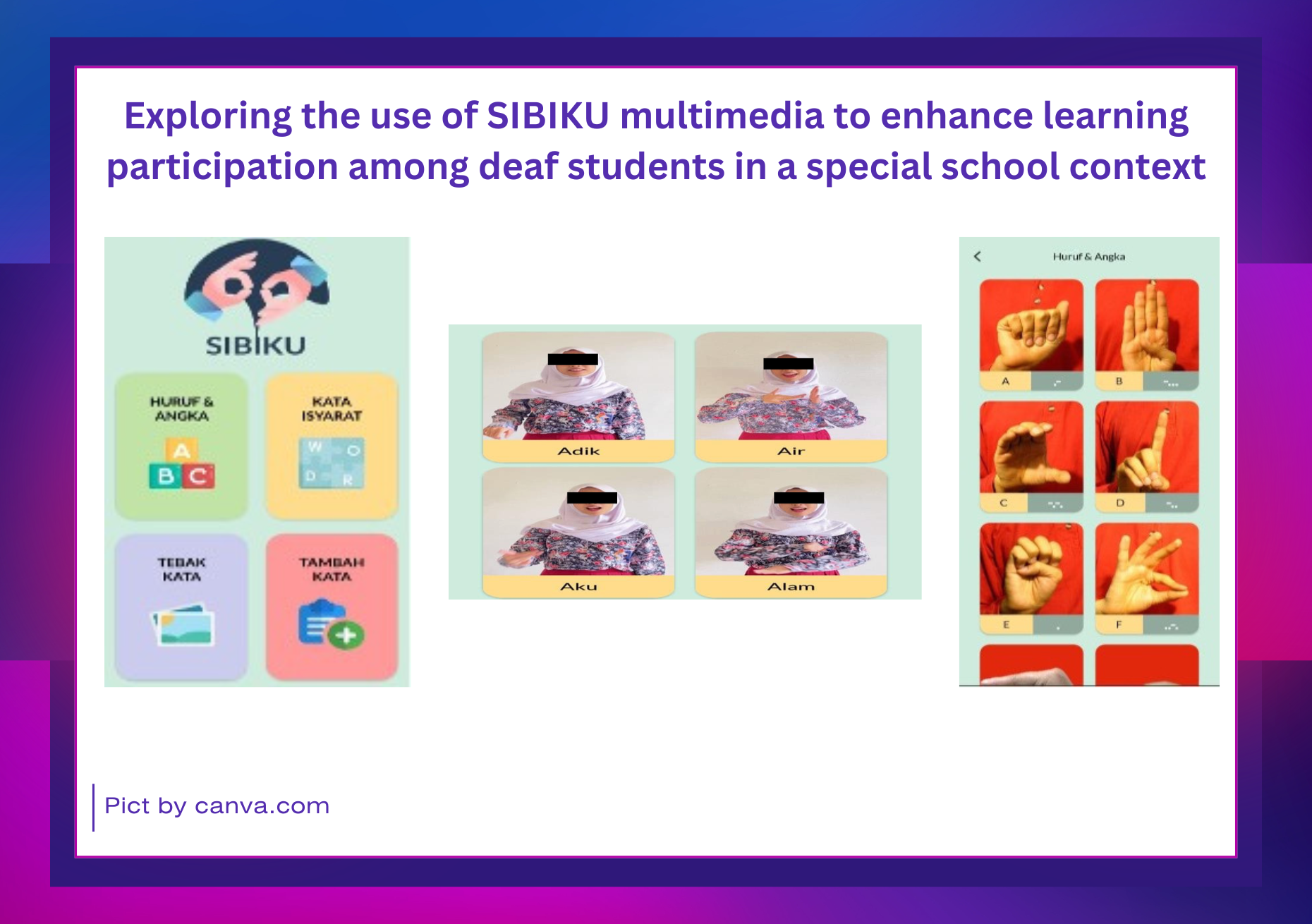
Exploring the use of SIBIKU multimedia to enhance learning participation among deaf students in a special school context
Nurina Ayuningtyas1, Ahmad Fajri Lutfi21. Universitas Muhammadiyah Kuningan , ID2. Universitas Muhammadiyah Kuningan , ID2026-04-06|page 135-147AbstractBackground: Observations at SLB C YPALB Perwari Kuningan indicate low motivation and limited participation among deaf students during learning activities. Interactive multimedia such as SIBIKU is expected to address these challenges.
Objectives: This study aims to (1) examine the implementation of SIBIKU multimedia in learning, (2) analyze students’ responses, and (3) evaluate changes in students’ learning participation and vocabulary acquisition.
Methods: This study employed a descriptive qualitative design with a field-based approach. Participants were selected using purposive sampling, consisting of one teacher and deaf students involved in computer learning activities. Data were collected through participatory observation, semi-structured interviews, and documentation. The main instrument was the researcher, supported by observation and interview guidelines. Data were analyzed using thematic analysis following Miles and Huberman’s model, including data reduction, data display, and conclusion drawing, with triangulation to ensure validity.
Results: The findings show that SIBIKU multimedia enhances student participation, as indicated by (1) increased attention to learning media, (2) active imitation of sign language movements, (3) higher frequency of student interaction and turn-taking, and (4) greater engagement in learning tasks such as word-guessing activities. Students also demonstrated improved motivation and more independent learning behavior.
Conclusions: SIBIKU multimedia provides a visually rich, interactive learning environment that effectively increases participation and engagement among deaf students, making it a promising tool for inclusive education.APA Citation StyleAyuningtyas, N. , & Lutfi, A. F. (2026). Exploring the use of SIBIKU multimedia to enhance learning participation among deaf students in a special school context. Journal of Artificial Intelligence in Education & Learning Innovation, 135-147. https://doi.org/10.56003/jaieli.v1i2.676 -

Enhancing basketball technique learning using I-spring application: A study in high school physical education
Hadi Saputro1, Rama Kurniawan2, Surya Adi Saputra3, Usman Wahyudi41. State University of Malang , ID2. State University of Malang , ID3. State University of Malang , ID4. State University of Malang , ID2025-10-08|page 1-14AbstractBackground: High school students feel less able to master the subject of Physical Education, Sports, and Health (PJOK) Basketball material in a relatively short meeting, so it needs innovative learning.
Objectives: This research was conducted to develop learning media for basketball game material based on the I-Spring application to facilitate students' learning.
Methods: This research uses the Research and Development (R&D) method using the ADDIE model, which refers to Lee and Owens. Data collection was done through direct observation and questionnaire distribution. The research subjects were the students of Senior High School 1 Gondanglegi, Malang Regency, Indonesia, which amounted to 866 students. The data analysis method used is descriptive qualitative using Likert scale calculation.
Results: The observation results showed that 95.5% of students had participated in basketball learning in class or on the field, 71.2% of students had difficulty learning the basic techniques of basketball games, and 92.4 students needed application-based learning media to understand more deeply and be able to practice basic basketball techniques. Small group trials on 10 students obtained results of 85.2% and 86.4% for large group trials with 30 students.
Conclusions: The developed product is feasible for PJOK learning, especially basketball material at State Senior High School 1 Gondanglegi. Future studies are encouraged to expand the material coverage and evaluate long-term learning outcomes using the developed application.
APA Citation StyleSaputro, H. , Kurniawan, R. , Saputra, S. A. , & Wahyudi, U. (2025). Enhancing basketball technique learning using I-spring application: A study in high school physical education. Journal of Artificial Intelligence in Education & Learning Innovation, 1-14. https://doi.org/10.56003/jaieli.v1i1.522 -
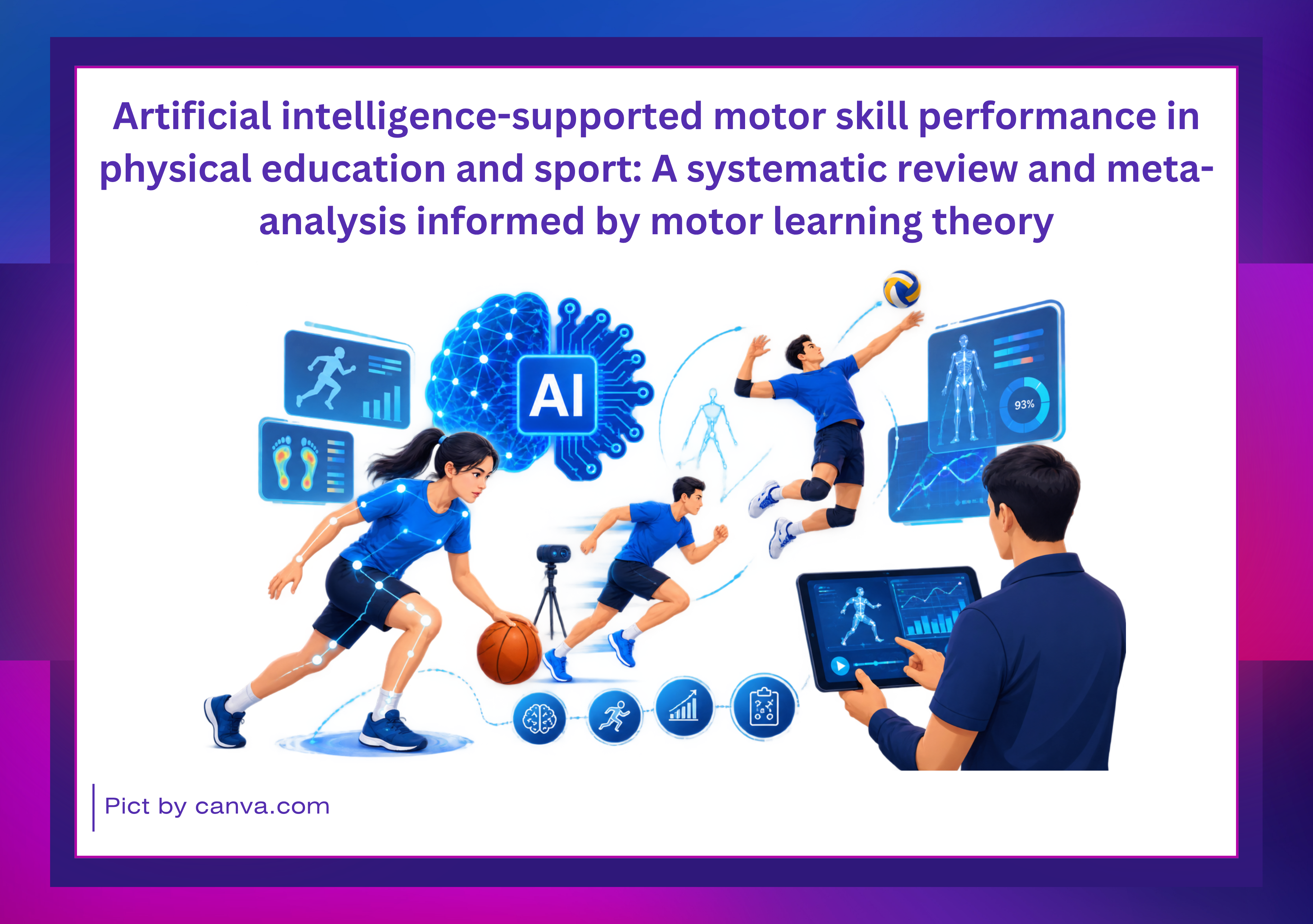
Artificial intelligence-supported motor skill performance in physical education and sport: A systematic review and meta-analysis informed by motor learning theory
Yulingga Nanda Hanief1, Vera Septi Sistiasih2, Ferdinando Cereda3, Spyridon Plakias41. Department of Sport Education, Faculty of Sports Science, Universitas Negeri Semarang , ID2. Department of Sport Education, Faculty of Sports Science, Universitas Negeri Semarang , ID3. Department of Education, The Catholic University of the Sacred Heart in Milan, Italy , IT4. Department of Physical Education and Sport Science, University of Thessaly , GR2026-08-30|page 44-71AbstractBackground: Artificial Intelligence (AI) has increasingly been integrated into physical education (PE) to support motor learning through technologies such as computer vision, motion tracking, intelligent tutoring systems, virtual reality, and generative AI. However, evidence regarding its effectiveness remains fragmented across different intervention types and learning contexts.
Objectives: This study aimed to evaluate the effects of AI-supported interventions on motor skill performance in physical education and sport settings and to synthesize complementary learning-related outcomes.
Methods: A systematic review and meta-analysis were conducted in accordance with PRISMA 2020. Scopus, PubMed, and ProQuest were searched through 22 June 2026. Eligible studies evaluated AI-supported, adaptive, or intelligent interventions in physical education, sport, or motor skill-learning contexts and reported learner-level motor performance; complementary learning-related outcomes were synthesized narratively. Risk of bias was assessed using RoB 2 and ROBINS-I, and standardized mean differences (SMDs) with 95% confidence intervals (CIs) were synthesized using a random-effects model.
Results: Fifteen studies were included in the qualitative synthesis; six contributed to the meta-analysis and nine were synthesized narratively. The pooled estimate favored the designated AI-supported experimental conditions over their comparators (SMD = 3.15, 95% CI 1.86–4.44; p < .001; I² = 98%). Given the small evidence base, very high heterogeneity, and variable risk of bias, the magnitude of this pooled effect is uncertain. Qualitative findings concerned short-term motor skill performance and complementary outcomes such as engagement, motivation, learning interest, and self-directed learning.
Conclusions: AI-supported interventions may improve short-term motor skill performance in some physical education and sport contexts and may support complementary learning-related outcomes. However, the evidence is preliminary and highly heterogeneous, and immediate post-intervention performance should not be interpreted as definitive evidence of durable motor learning, retention, or transfer. AI should be considered a complementary pedagogical tool rather than a replacement for teacher or coach expertise.
APA Citation StyleHanief, Y. N. , Sistiasih, V. S. , Cereda, F. , & Plakias, S. (2026). Artificial intelligence-supported motor skill performance in physical education and sport: A systematic review and meta-analysis informed by motor learning theory. Journal of Artificial Intelligence in Education & Learning Innovation, 44-71. https://doi.org/10.56003/jaieli.v2i1.753 -
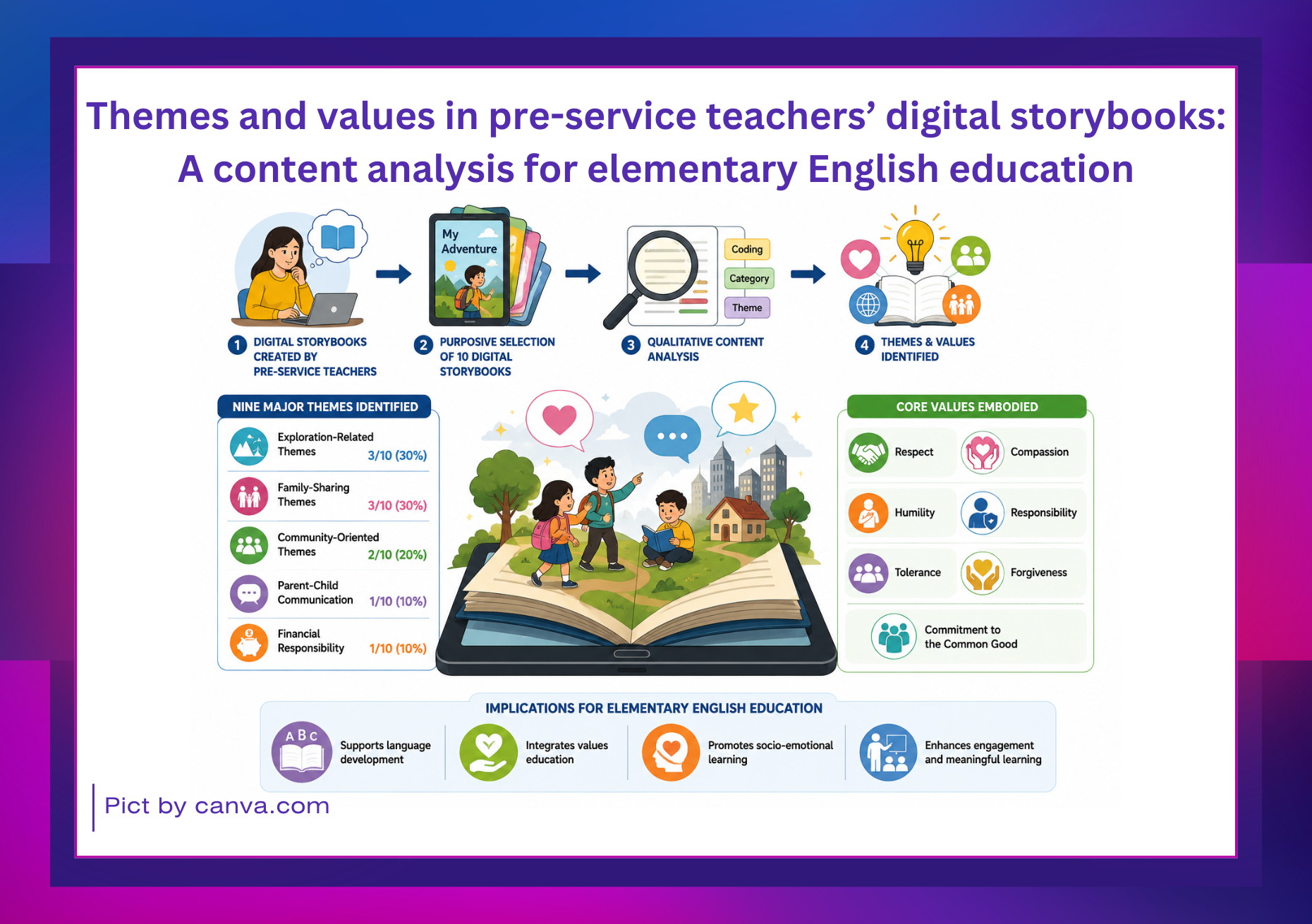
Themes and values in pre-service teachers’ digital storybooks: A content analysis for elementary English education
Najma Macatanto1, Desiery Maghinay2, John Dale Pendon3, Carla Marie Rubio4, Esmeraldo Sarad5, Kim Silva61. College of Education, Mindanao State University-General Santos , PH2. College of Education, Mindanao State University-General Santos , PH3. College of Education, Mindanao State University-General Santos , PH4. College of Education, Mindanao State University-General Santos , PH5. College of Education, Mindanao State University-General Santos , PH6. College of Education, Mindanao State University-General Santos , PH2026-07-02|page 32-43AbstractBackground: Digital storytelling has emerged as an innovative pedagogical approach that promotes meaningful learning experiences and enhances student engagement.
Objectives: This study examined the themes and values embedded in digital storybooks created by pre-service teachers and explored their implications for teaching English in elementary education.
Methods: Using a qualitative content analysis design, ten digital storybooks were purposively selected based on predetermined inclusion criteria. Data were analyzed through directed content analysis using an adapted thematic analysis framework.
Results: Findings revealed nine major themes. The most prominent were exploration-related themes (3 out of 10 storybooks, 30%) and family-sharing themes (3 out of 10 storybooks, 30%), followed by community-oriented themes (2 out of 10 storybooks, 20%). Other themes included parent-child communication and financial responsibility. The digital storybooks also embodied core values such as respect, compassion, humility, responsibility, tolerance, forgiveness, and commitment to the common good.
Conclusions: These findings suggest that digital storybooks can serve as effective resources for integrating language development, values education, and socio-emotional learning in elementary English classrooms. The study is limited by its small sample size and context-specific dataset. Further research should include a larger dataset and cross-cultural analysis to strengthen the generalizability of findings.
APA Citation StyleMacatanto, N. , Maghinay, D. , Pendon, J. D. , Rubio, C. M. , Sarad, E. , & Silva, K. (2026). Themes and values in pre-service teachers’ digital storybooks: A content analysis for elementary English education. Journal of Artificial Intelligence in Education & Learning Innovation, 32-43. https://doi.org/10.56003/jaieli.v2i1.701

1 - 4 of 4 items