Search
Search Results
##search.searchResults.foundPlural##
-


Development of KAREBU (cultural diversity card game) to enhance curiosity in fourth-grade elementary students
Etyka Rina Mahanani1, Erif Ahdhianto2, Yohannes Kurniawan Barus31. State University of Malang , ID2. State University of Malang , ID3. State University of Malang , ID2025-10-08|page 15-31AbstractBackground: Learning media is one of the important components of education.
Objectives: The purpose of this research and development was to develop the KAREBU (Cultural Diversity Card) learning media to strengthen the curiosity character of fourth-grade students in the subject of Natural and Social Sciences with local cultural diversity material that is valid, practical, and effective.
Methods: Using the ADDIE model (Analysis, Design, Development, Implementation, Evaluation), this study developed KAREBU cards integrated with augmented reality (AR) technology. This research instrument is in the form of interviews, observations, and questionnaires given to instrument experts, material experts, media experts, and users, including teachers and students. Data collection stages were carried out through observation, interviews, needs questionnaires, validation questionnaires, practicality questionnaires, and curiosity questionnaires before and after using the media.
Results: The results showed that the KAREBU learning media met the valid, practical, and effective criteria. KAREBU media received a validity score from material experts of 3.72 with a valid category, a score from media experts of 4.91 with a very valid category, and a score from users of 4.73 with a very valid category. The KAREBU learning media received a practicality score from teachers of 4.49 with a convenient category and a practicality score from students of 98.5% with a convenient category. The level of media effectiveness in strengthening students' curiosity was obtained from the results of the questionnaire before and after using the media, which was calculated using the N-Gain Score test with a value of 0.76 and high effectiveness criteria.
Conclusions: Therefore, it was concluded that the KAREBU learning media effectively strengthens students' curiosity. Further studies could explore the long-term impacts of KAREBU on cross-cultural empathy.
APA Citation StyleMahanani, E. R. , Ahdhianto, E. , & Barus, Y. K. (2025). Development of KAREBU (cultural diversity card game) to enhance curiosity in fourth-grade elementary students. Journal of Artificial Intelligence in Education & Learning Innovation, 15-31. https://doi.org/10.56003/jaieli.v1i1.526 -
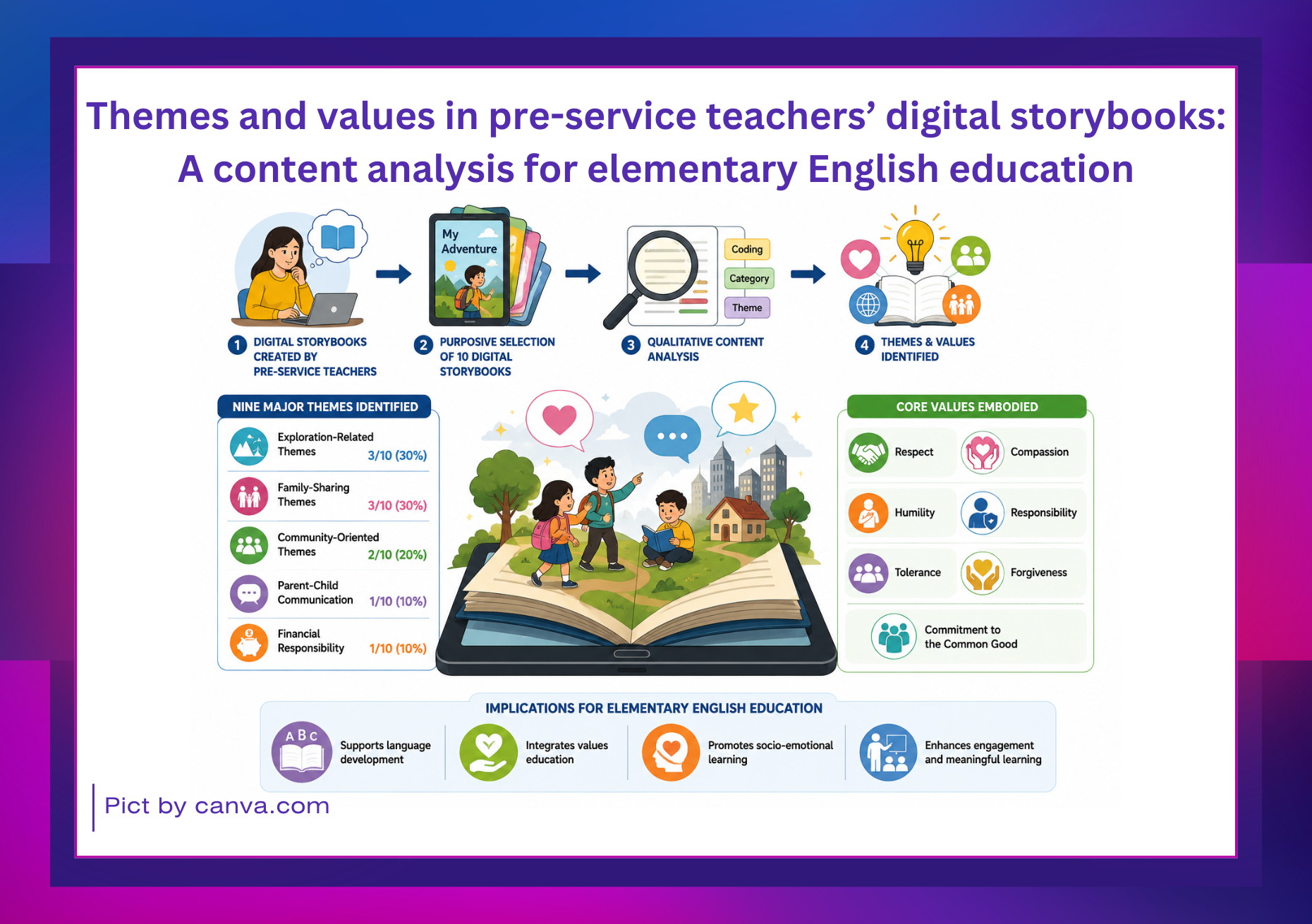
Themes and values in pre-service teachers’ digital storybooks: A content analysis for elementary English education
Najma Macatanto1, Desiery Maghinay2, John Dale Pendon3, Carla Marie Rubio4, Esmeraldo Sarad5, Kim Silva61. College of Education, Mindanao State University-General Santos , PH2. College of Education, Mindanao State University-General Santos , PH3. College of Education, Mindanao State University-General Santos , PH4. College of Education, Mindanao State University-General Santos , PH5. College of Education, Mindanao State University-General Santos , PH6. College of Education, Mindanao State University-General Santos , PH2026-07-02|page 32-43AbstractBackground: Digital storytelling has emerged as an innovative pedagogical approach that promotes meaningful learning experiences and enhances student engagement.
Objectives: This study examined the themes and values embedded in digital storybooks created by pre-service teachers and explored their implications for teaching English in elementary education.
Methods: Using a qualitative content analysis design, ten digital storybooks were purposively selected based on predetermined inclusion criteria. Data were analyzed through directed content analysis using an adapted thematic analysis framework.
Results: Findings revealed nine major themes. The most prominent were exploration-related themes (3 out of 10 storybooks, 30%) and family-sharing themes (3 out of 10 storybooks, 30%), followed by community-oriented themes (2 out of 10 storybooks, 20%). Other themes included parent-child communication and financial responsibility. The digital storybooks also embodied core values such as respect, compassion, humility, responsibility, tolerance, forgiveness, and commitment to the common good.
Conclusions: These findings suggest that digital storybooks can serve as effective resources for integrating language development, values education, and socio-emotional learning in elementary English classrooms. The study is limited by its small sample size and context-specific dataset. Further research should include a larger dataset and cross-cultural analysis to strengthen the generalizability of findings.
APA Citation StyleMacatanto, N. , Maghinay, D. , Pendon, J. D. , Rubio, C. M. , Sarad, E. , & Silva, K. (2026). Themes and values in pre-service teachers’ digital storybooks: A content analysis for elementary English education. Journal of Artificial Intelligence in Education & Learning Innovation, 32-43. https://doi.org/10.56003/jaieli.v2i1.701 -
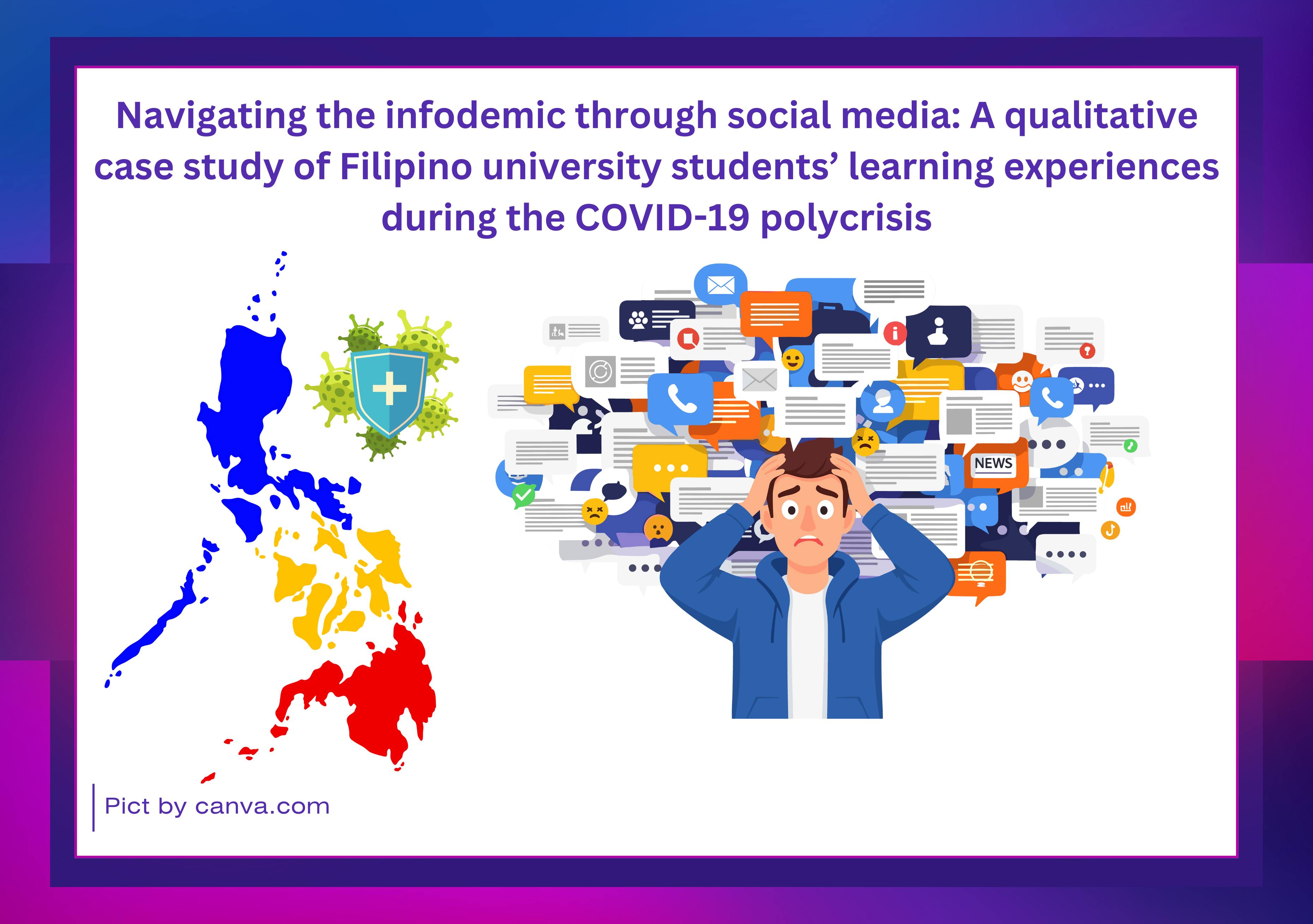
Navigating the infodemic through social media: A qualitative case study of Filipino university students’ learning experiences during the COVID-19 polycrisis
Janel Talaman1, Mc Denver Necosia2, Larence Villalon3, Edrian Mark Tomines41. Mindanao State University – General Santos , PH2. Mindanao State University – General Santos , PH3. Mindanao State University – General Santos , PH4. Mindanao State University - General Santos , PH2026-04-06|page 119-134AbstractBackground: The COVID-19 pandemic has triggered a complex crisis in higher education that has not only disrupted formal learning but also given rise to an infodemic through the rapid spread of misinformation on digital platforms, making social media both a source of learning and a source of epistemic risk for students.
Objectives: This study aims to explore how Filipino university students navigated learning experiences through social media during the COVID-19 polycrisis, focusing on preferred platforms, perceived educational relevance, and strategies for evaluating information credibility amid an infodemic.
Methods: A qualitative case study design was employed. Six Filipino university students enrolled in a Bachelor of Elementary Education program participated in this study through purposive sampling. Data were collected via online semi-structured interviews, group chat discussions, document analysis of shared social media content, and follow-up interviews. Thematic analysis was conducted following Braun and Clarke's framework to identify recurring patterns across data sources.
Results: Findings reveal that social media—particularly Facebook—served as a supplementary learning space, enabling students to access real-time information, engage with societal issues, and sustain their learning during the suspension of formal instruction. Students demonstrated active information-seeking behaviors, including cross-checking sources and exercising caution in sharing content. However, persistent exposure to misinformation highlighted their vulnerability within infodemic environments, especially in the absence of structured institutional guidance.
Conclusions: Social media can support authentic and socially relevant learning during educational disruption, but its pedagogical value depends on students' critical and digital literacy capacities.APA Citation StyleTalaman, J. , Necosia, M. D. , Villalon, L. , & Tomines, E. M. (2026). Navigating the infodemic through social media: A qualitative case study of Filipino university students’ learning experiences during the COVID-19 polycrisis. Journal of Artificial Intelligence in Education & Learning Innovation, 119-134. https://doi.org/10.56003/jaieli.v1i2.571 -
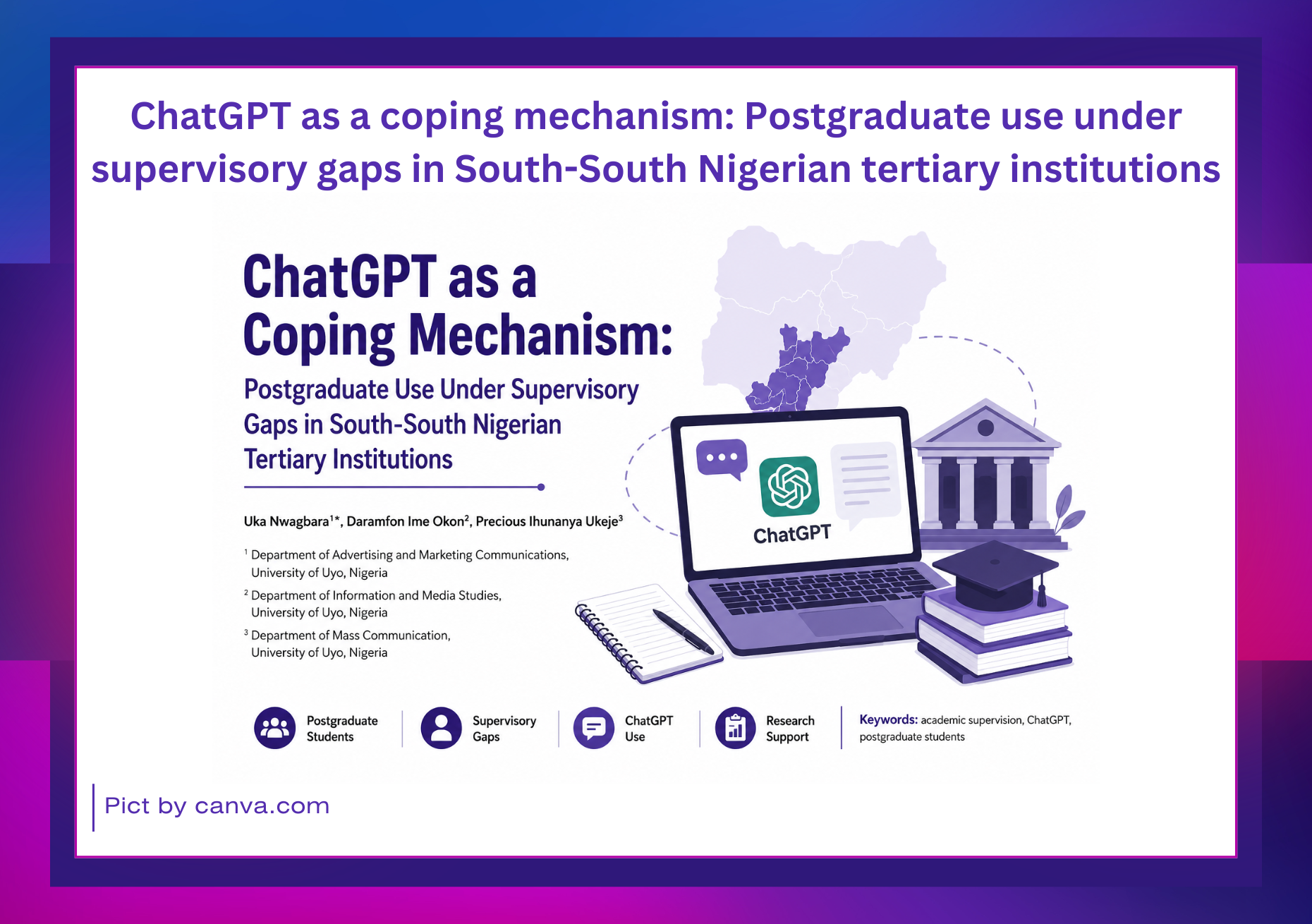
ChatGPT as a coping mechanism: Postgraduate use under supervisory gaps in South-South Nigerian tertiary institutions
Uka Nwagbara1, Daramfon Okon2, Precious Ukeje31. University of Uyo , NG2. University of Uyo , NG3. University of Uyo , NG2026-07-02|page 1-13AbstractBackground: Generative AI tools like ChatGPT are common in higher education, especially where students lack timely academic support. In many South-South Nigerian universities, gaps in postgraduate supervision may influence how students use such tools.
Objectives: This study examines how postgraduate students become aware of ChatGPT, how much they use it, and why they rely on it when supervision is limited.
Methods: A qualitative exploratory design was used. Twenty-one postgraduate students were purposively selected from universities in South-South Nigeria. Data were collected through online semi-structured interviews using a validated guide. Inductive thematic analysis, using Braun & Clarke’s framework, was applied to identify patterns in the data.
Results: Findings show that awareness of ChatGPT is mostly informal, driven by peers, social media, and personal trial and error. Many students use ChatGPT frequently, especially during proposal writing, data analysis, and thesis development. Its use is strongly linked to delays or gaps in supervision.
Conclusions: ChatGPT is widely used as a support tool and coping strategy, rather than merely a convenience. Its role reflects gaps in supervision and the need for clearer institutional guidance and training.
APA Citation StyleNwagbara, U. , Okon, D. , & Ukeje, P. (2026). ChatGPT as a coping mechanism: Postgraduate use under supervisory gaps in South-South Nigerian tertiary institutions. Journal of Artificial Intelligence in Education & Learning Innovation, 1-13. https://doi.org/10.56003/jaieli.v2i1.711

1 - 4 of 4 items