Search
Search Results
##search.searchResults.foundPlural##
-

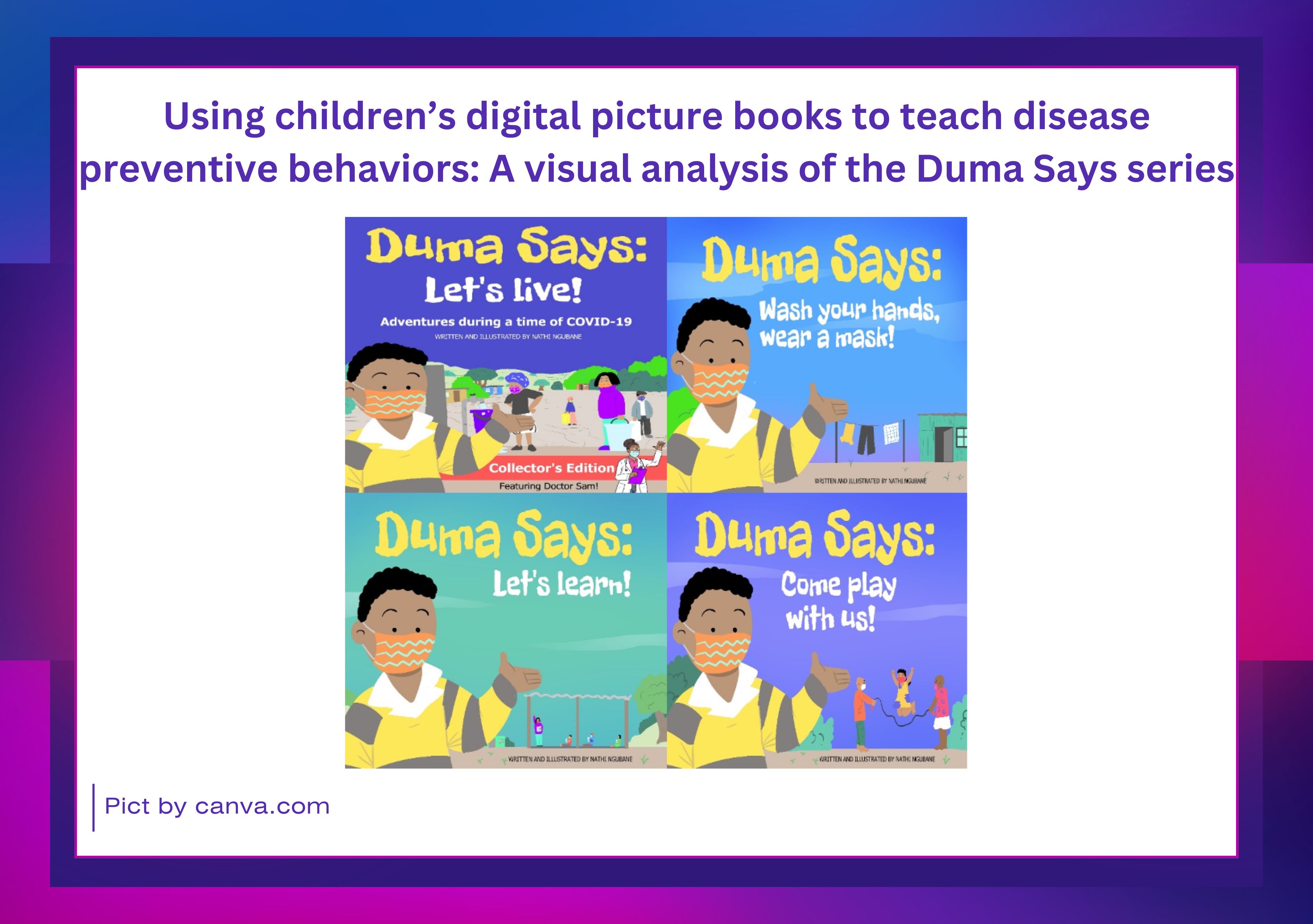
Using children’s digital picture books to teach disease preventive behaviors: A visual analysis of the Duma Says series
Esmeraldo Sarad1, Charmen Cabatuan2, Cleo Tionson3, April Grace Subong41. Mindanao State University - General Santos , PH2. Mindanao State University - General Santos , PH3. Mindanao State University - General Santos , PH4. Mindanao State University - General Santos , PH2026-04-06|page 89-101AbstractBackground: During health emergencies such as the COVID-19 pandemic, children require accessible and developmentally appropriate resources to understand disease prevention and health-related behaviors. Children’s digital picture books have emerged as a promising medium for conveying public health messages through visual storytelling and age-appropriate narratives.
Objectives: This study aimed to examine how children’s digital picture books represent disease preventive behaviors and moral values, using the Duma Says series as a case study.
Methods: A qualitative visual and textual analysis was conducted on four digital picture books from the Duma Says Collector’s Edition. The study employed qualitative visual analysis and a critical discourse approach to examine representations of hygiene practices, social responsibility, and community engagement embedded in both images and narratives.
Results: The findings indicate that the Duma Says series effectively integrates key COVID-19 preventive behaviors—such as handwashing, mask-wearing, social distancing, and sanitation—within child-friendly language and culturally contextualized visuals. In addition to promoting health practices, the books emphasize values of hope, responsibility, cooperation, and service, portraying children as active contributors to community well-being during a crisis.
Conclusions: Children’s digital picture books, such as the Duma Says series, function as effective educational tools for promoting disease prevention awareness and values-based learning. Incorporating culturally grounded digital picture books into early childhood and health education may strengthen children’s health literacy, emotional resilience, and sense of social responsibility during public health emergencies.APA Citation StyleSarad, E. , Cabatuan, C. , Tionson, C. , & Subong, A. G. (2026). Using children’s digital picture books to teach disease preventive behaviors: A visual analysis of the Duma Says series. Journal of Artificial Intelligence in Education & Learning Innovation, 89-101. https://doi.org/10.56003/jaieli.v1i2.572 -
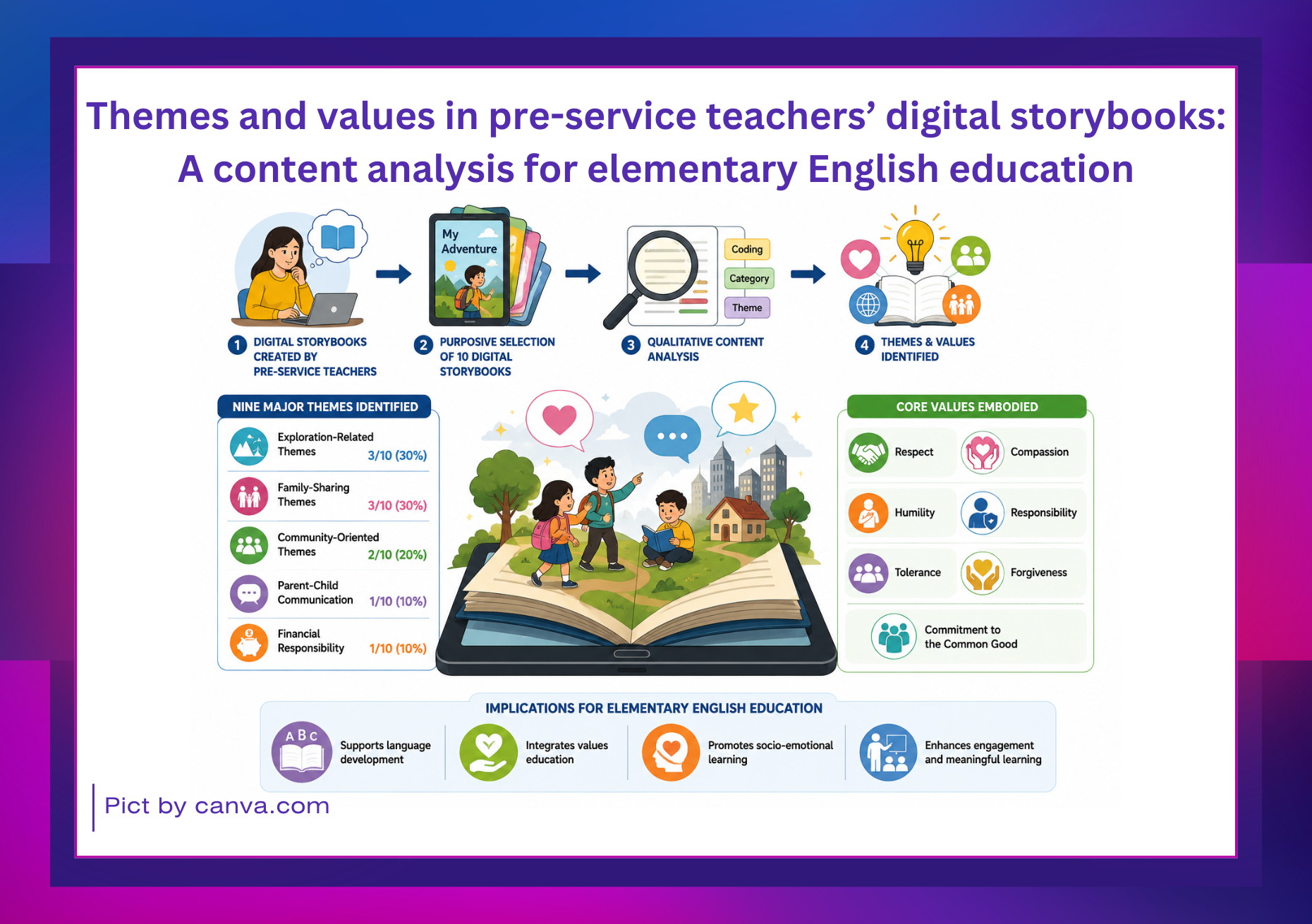
Themes and values in pre-service teachers’ digital storybooks: A content analysis for elementary English education
Najma Macatanto1, Desiery Maghinay2, John Dale Pendon3, Carla Marie Rubio4, Esmeraldo Sarad5, Kim Silva61. College of Education, Mindanao State University-General Santos , PH2. College of Education, Mindanao State University-General Santos , PH3. College of Education, Mindanao State University-General Santos , PH4. College of Education, Mindanao State University-General Santos , PH5. College of Education, Mindanao State University-General Santos , PH6. College of Education, Mindanao State University-General Santos , PH2026-07-02|page 32-43AbstractBackground: Digital storytelling has emerged as an innovative pedagogical approach that promotes meaningful learning experiences and enhances student engagement.
Objectives: This study examined the themes and values embedded in digital storybooks created by pre-service teachers and explored their implications for teaching English in elementary education.
Methods: Using a qualitative content analysis design, ten digital storybooks were purposively selected based on predetermined inclusion criteria. Data were analyzed through directed content analysis using an adapted thematic analysis framework.
Results: Findings revealed nine major themes. The most prominent were exploration-related themes (3 out of 10 storybooks, 30%) and family-sharing themes (3 out of 10 storybooks, 30%), followed by community-oriented themes (2 out of 10 storybooks, 20%). Other themes included parent-child communication and financial responsibility. The digital storybooks also embodied core values such as respect, compassion, humility, responsibility, tolerance, forgiveness, and commitment to the common good.
Conclusions: These findings suggest that digital storybooks can serve as effective resources for integrating language development, values education, and socio-emotional learning in elementary English classrooms. The study is limited by its small sample size and context-specific dataset. Further research should include a larger dataset and cross-cultural analysis to strengthen the generalizability of findings.
APA Citation StyleMacatanto, N. , Maghinay, D. , Pendon, J. D. , Rubio, C. M. , Sarad, E. , & Silva, K. (2026). Themes and values in pre-service teachers’ digital storybooks: A content analysis for elementary English education. Journal of Artificial Intelligence in Education & Learning Innovation, 32-43. https://doi.org/10.56003/jaieli.v2i1.701 -
Factors influencing teachers’ attrition in public basic schools in Techiman Municipality, Ghana: An embedded mixed methods study
Joseph Kyeremeh1, Dickson Adom2, Michael Ato Essuman3, Lim Seon Pek41. Kwame Nkrumah University of Science and Technology , GH2. Kwame Nkrumah University of Science and Technology , GH3. Kwame Nkrumah University of Science and Technology , GH4. INTI International University , MY2025-10-08|page 66-88AbstractBackground: The high teacher attrition rate in public primary schools in Techiman, Ghana, has become a serious problem that directly impacts the quality of education and the achievement of national education development goals.
Objectives: The study investigated factors that influence teachers' attrition in the Techiman Municipality.
Methods: One hundred ninety-seven teachers were sampled for the study using convenience and simple random sampling techniques. This study utilized the embedded mixed methods design with descriptive survey and phenomenology as research methods to collect quantitative and qualitative datasets using questionnaires and interviews as data collection tools. The qualitative data were analyzed using thematic analysis, while the quantitative data were analyzed using descriptive and inferential statistics using the SPSS software.
Results: It was found that teachers perceived salary as the major employer-related factor in teachers' attrition (relative importance index (RII) = 0.85). team member-related factors, such as the willingness of teachers to pursue another career outside education, were perceived as the primary factor of attrition (RII = 0.78). In contrast, an external-related factor, such as better opportunities in some other occupations, was ranked the first major contributor to teachers' attrition (RII = 0.88). The overall assessment of the factors of attrition based on the relative importance index revealed that Employer-related factors are the major contributor to teachers' attrition (RII = 0.70).
Conclusions: The study recommends that the Ghana government find innovative ways of increasing teachers' salaries as a source of motivation and offer them other incentive packages to aid in retaining them in the service.
APA Citation StyleKyeremeh, J. , Adom, D. , Essuman, M. A. , & Pek, L. S. (2025). Factors influencing teachers’ attrition in public basic schools in Techiman Municipality, Ghana: An embedded mixed methods study. Journal of Artificial Intelligence in Education & Learning Innovation, 66-88. https://doi.org/10.56003/jaieli.v1i1.578 -
Academic goals and learning strategies of pre-service teachers during emergency online learning in the Philippines
Swen Joshryll Acebes1, Jaizel Malitante2, Nikki Tuble3, Rowena Bongolto41. Mindanao State University - General Santos , PH2. Mindanao State University - General Santos , PH3. Mindanao State University - General Santos , PH4. Mindanao State University - General Santos , PH2025-10-08|page 32-49AbstractBackground: The COVID-19 pandemic has lasted an extended period, during which many students have reported being adversely affected by the escalating global crisis.
Objectives: This study examined the academic goals, learning barriers, facilitative strategies, and ways forward of pre-service teachers during emergency online learning.
Methods: This qualitative case study employed content analysis to examine data gathered through focus group discussions. To explore the implications of survey findings and gain deeper insights into students' perspectives on remote learning, the researchers conducted Focus Group Discussions (FGDs) with twelve purposively selected pre-service teachers via Google Meet. The discussion transcripts were analyzed to construct a compelling narrative, supported by literature and prior research, to explain emerging themes.
Results: Among the twelve participants, ten reported experiencing psychosocial stress, eight cited recurring technical issues, and seven mentioned financial constraints as significant learning barriers. Despite these challenges, the participants remained motivated to complete their coursework, viewing academic achievement as a stepping stone toward improving their socio-economic conditions. They employed various strategies, including scheduling, note-taking, goal-setting, optimistic thinking, parental scaffolding, and systematic planning, to adapt to online learning. To ensure credibility, the researchers used member checking, peer debriefing, and FGD and survey data triangulation.
Conclusions: These findings highlight the resilience and adaptability of pre-service teachers in navigating the challenges of emergency online learning, underscoring the need for supportive institutional policies and resources. Future research may consider comparing student experiences in public and private institutions or examining the long-term impact of emergency remote learning on teaching efficacy. Pedagogical and academic implications are further discussed.
APA Citation StyleAcebes, S. J. , Malitante, J. , Tuble, N. , & Bongolto, R. (2025). Academic goals and learning strategies of pre-service teachers during emergency online learning in the Philippines. Journal of Artificial Intelligence in Education & Learning Innovation, 32-49. https://doi.org/10.56003/jaieli.v1i1.569 -
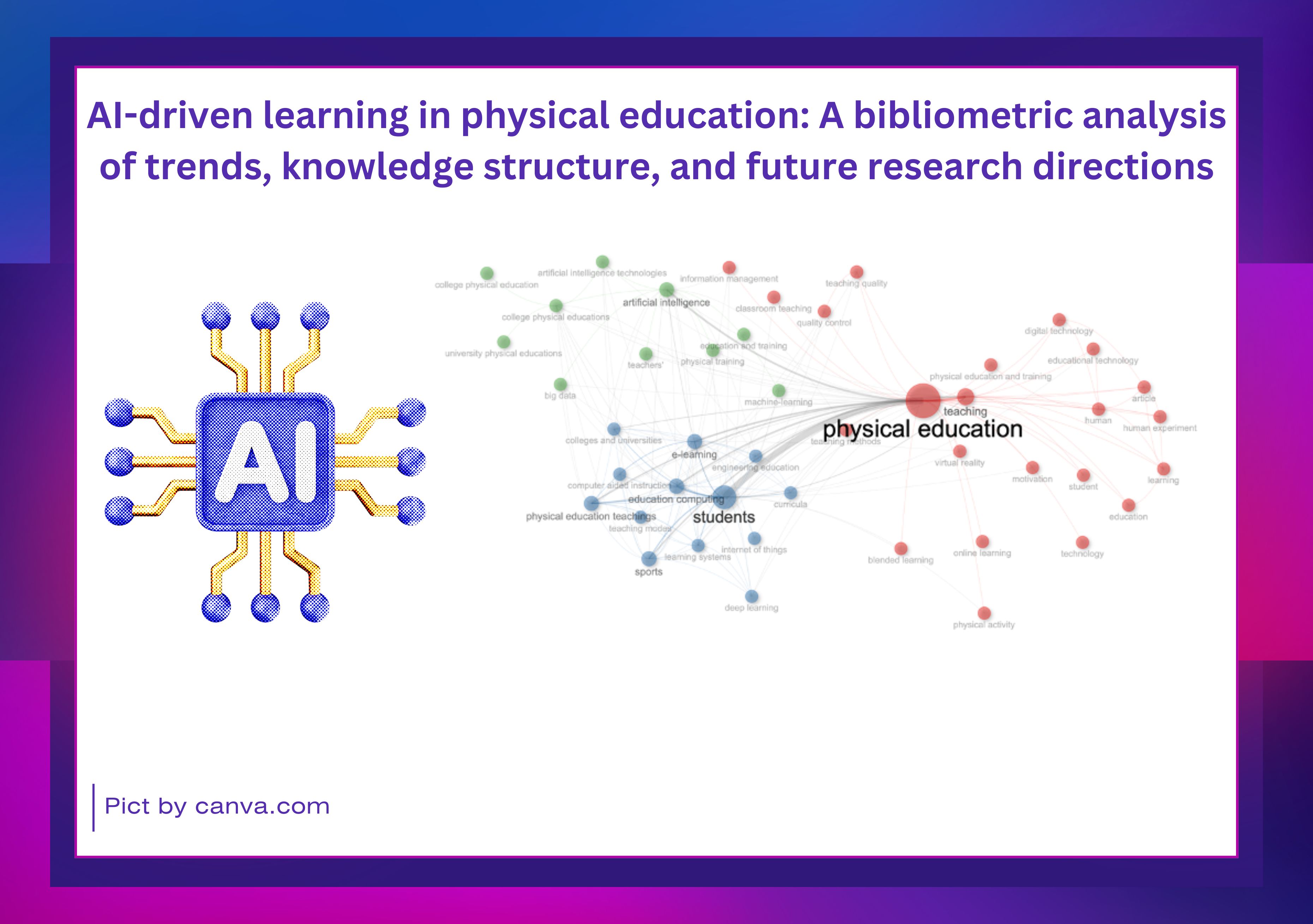
AI-driven learning in physical education: A bibliometric analysis of trends, knowledge structure, and future research directions
Amelia Larassary11. State Junior High School 1 Bunguran Tengah, Natuna Regency, Riau Islands , ID2026-04-06|page 102-118AbstractBackground: Although research on AI-driven learning in PE has expanded rapidly, existing studies remain fragmented across disciplines, journals, and methodological approaches, limiting a comprehensive understanding of the field's development and intellectual structure.
Objectives: This study aimed to systematically map the evolution, influential contributors, intellectual structure, dominant themes, and future research directions of AI-driven learning research in physical education from a bibliometric perspective.
Methods: A quantitative bibliometric analysis was conducted using data retrieved exclusively from the Scopus database. A total of 284 eligible documents published between 2020 and early 2026 were analyzed. Descriptive statistics were applied to examine publication trends, authorship, sources, institutions, and country contributions. Network and thematic analyses were performed using VOSviewer (version 1.6.20) and the Bibliometrix package in R to identify co-authorship patterns, keyword co-occurrence networks, and thematic clusters.
Results: The results indicate a sharp growth in AI-driven learning research in physical education after 2022, with publication output increasing more than fivefold from 2020 to 2025. China emerged as the leading contributing country, accounting for nearly half of the total publications, while institutional productivity was concentrated in several Russian universities. Keyword co-occurrence analysis revealed five major thematic clusters shaping the intellectual structure of the field, integrating pedagogical frameworks, computational intelligence, institutional contexts, and physical training models. Dominant research themes centered on pedagogical design, student engagement, adaptive learning systems, and the integration of educational technology. Emerging themes included virtual reality, advanced machine learning techniques, and immersive learning environments.
Conclusions: This study provides a structured and quantitative overview of AI-driven learning research in physical education, highlighting its interdisciplinary nature and rapid expansion.APA Citation StyleLarassary, A. (2026). AI-driven learning in physical education: A bibliometric analysis of trends, knowledge structure, and future research directions. Journal of Artificial Intelligence in Education & Learning Innovation, 102-118. https://doi.org/10.56003/jaieli.v1i2.673 -
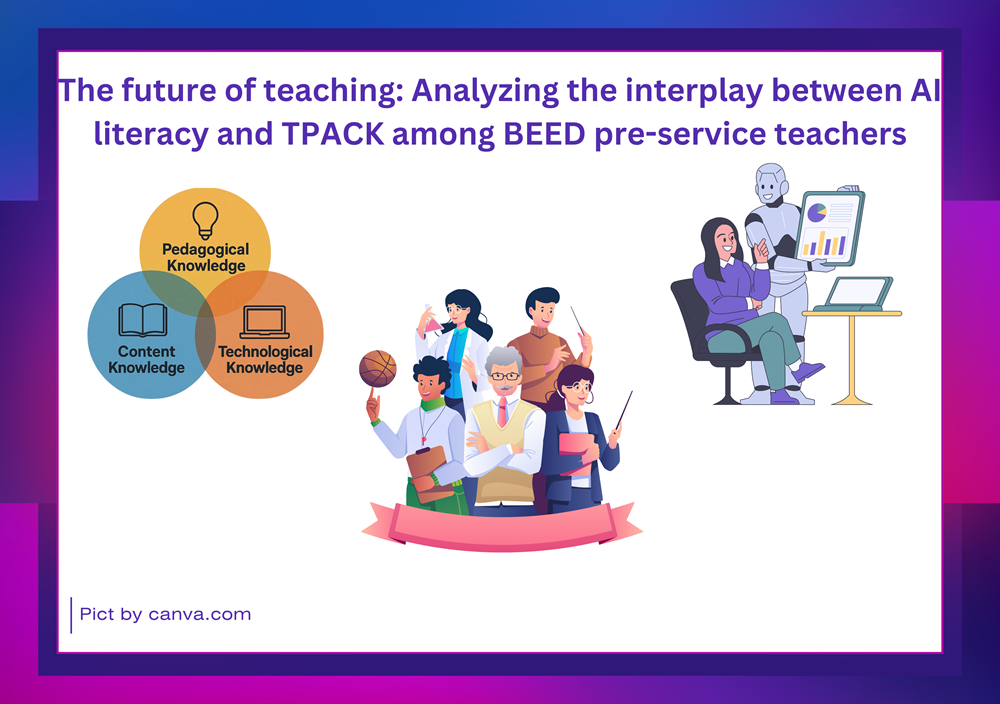
The future of teaching: Analyzing the interplay between AI literacy and TPACK among BEED pre-service teachers
Karl Alvin Aglibot1, Chelsea Lorraine Rito2, Larence Villalon3, Nelvin Gampal 41. Mindanao State University - General Santos , PH2. Mindanao State University – General Santos , PH3. Mindanao State University – General Santos , PH4. Mindanao State University – General Santos , PH2025-10-08|page 50-65AbstractBackground: As artificial intelligence (AI) continues transforming the educational landscape, pre-service teachers must develop theoretical understanding and practical skills in AI integration.
Objectives: This study explored the relationship between AI literacy and TPACK among 139 BEED pre-service teachers.
Methods: Using descriptive statistics, Spearman's correlation, and multiple linear regression analysis, the study investigated how components of AI literacy relate to TPACK.
Results: Results revealed that the pre-service teachers demonstrated high levels of AI literacy, particularly in ethical awareness and intrinsic motivation. Pre-service teachers expressed strong interest in AI's educational potential and a commitment to its responsible use. While their foundational AI knowledge was high, many reported moderate self-efficacy and lacked confidence in executing AI-related tasks. Gaps were also noted in applying AI concepts to real-world teaching scenarios and designing AI-driven solutions. Furthermore, the results showed high TPACK proficiency, with strength in pedagogical and technological knowledge, though weaknesses were observed in content areas like mathematics and technical troubleshooting. A moderate positive correlation (Spearman's ρ = 0.48, p < 0.05) between AI literacy and TPACK indicates a meaningful association. Regression analysis revealed that AI literacy components explained 25.5% of the variance in TPACK. Cognitive learning emerged as the only significant predictor.
Conclusions: The findings underscore the need for teacher education programs to provide hands-on, cognitive-focused AI training. Hence, enhancing pre-service teachers' cognitive and practical skills is essential to thoroughly preparing them for AI-enhanced teaching environments' demands.
APA Citation StyleAglibot, K. A. , Rito, C. L. , Villalon, L. , & Gampal , N. (2025). The future of teaching: Analyzing the interplay between AI literacy and TPACK among BEED pre-service teachers. Journal of Artificial Intelligence in Education & Learning Innovation, 50-65. https://doi.org/10.56003/jaieli.v1i1.570

1 - 6 of 6 items