Search
Search Results
##search.searchResults.foundPlural##
-

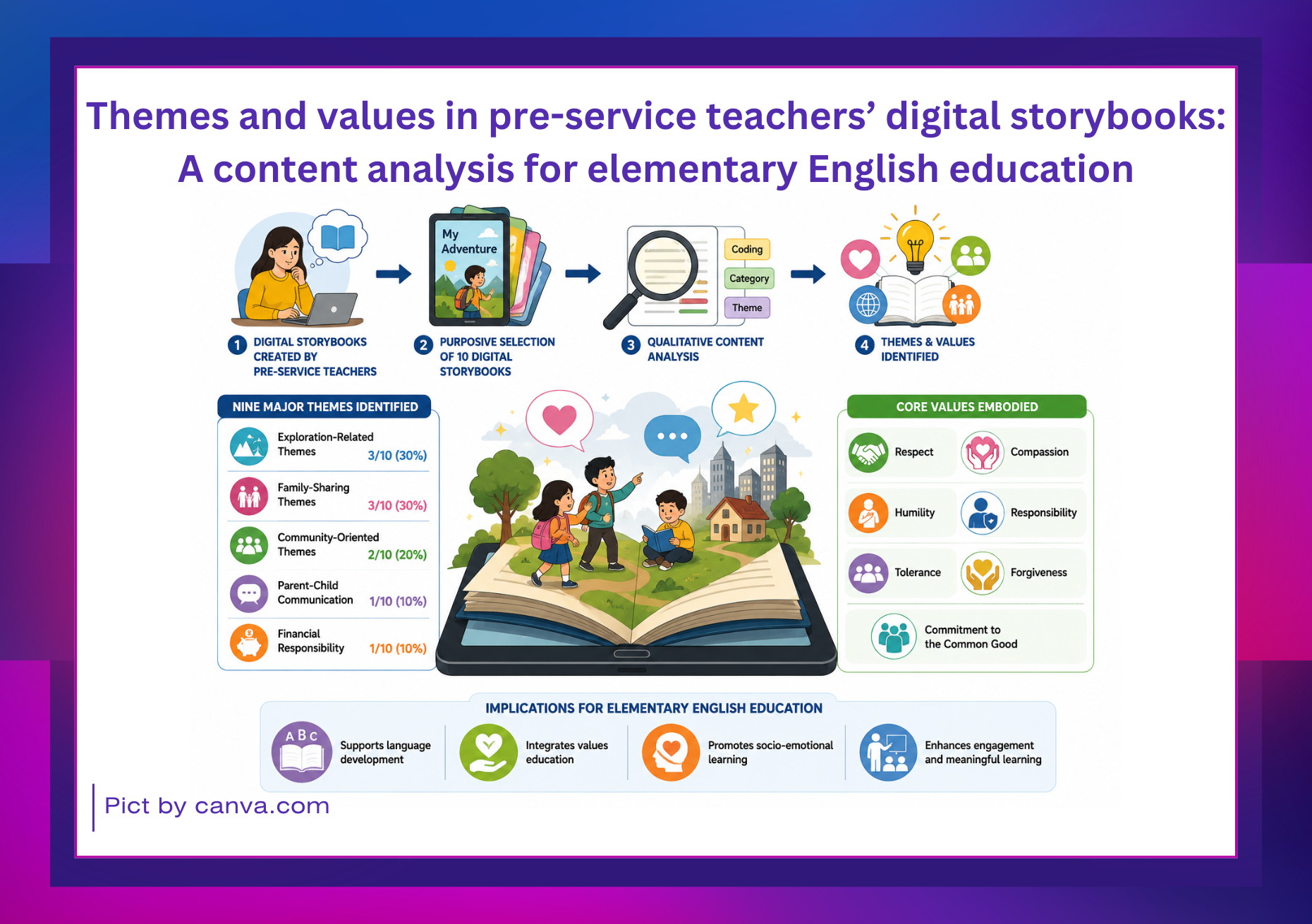
Themes and values in pre-service teachers’ digital storybooks: A content analysis for elementary English education
Najma Macatanto1, Desiery Maghinay2, John Dale Pendon3, Carla Marie Rubio4, Esmeraldo Sarad5, Kim Silva61. College of Education, Mindanao State University-General Santos , PH2. College of Education, Mindanao State University-General Santos , PH3. College of Education, Mindanao State University-General Santos , PH4. College of Education, Mindanao State University-General Santos , PH5. College of Education, Mindanao State University-General Santos , PH6. College of Education, Mindanao State University-General Santos , PH2026-07-02|page 32-43AbstractBackground: Digital storytelling has emerged as an innovative pedagogical approach that promotes meaningful learning experiences and enhances student engagement.
Objectives: This study examined the themes and values embedded in digital storybooks created by pre-service teachers and explored their implications for teaching English in elementary education.
Methods: Using a qualitative content analysis design, ten digital storybooks were purposively selected based on predetermined inclusion criteria. Data were analyzed through directed content analysis using an adapted thematic analysis framework.
Results: Findings revealed nine major themes. The most prominent were exploration-related themes (3 out of 10 storybooks, 30%) and family-sharing themes (3 out of 10 storybooks, 30%), followed by community-oriented themes (2 out of 10 storybooks, 20%). Other themes included parent-child communication and financial responsibility. The digital storybooks also embodied core values such as respect, compassion, humility, responsibility, tolerance, forgiveness, and commitment to the common good.
Conclusions: These findings suggest that digital storybooks can serve as effective resources for integrating language development, values education, and socio-emotional learning in elementary English classrooms. The study is limited by its small sample size and context-specific dataset. Further research should include a larger dataset and cross-cultural analysis to strengthen the generalizability of findings.
APA Citation StyleMacatanto, N. , Maghinay, D. , Pendon, J. D. , Rubio, C. M. , Sarad, E. , & Silva, K. (2026). Themes and values in pre-service teachers’ digital storybooks: A content analysis for elementary English education. Journal of Artificial Intelligence in Education & Learning Innovation, 32-43. https://doi.org/10.56003/jaieli.v2i1.701 -
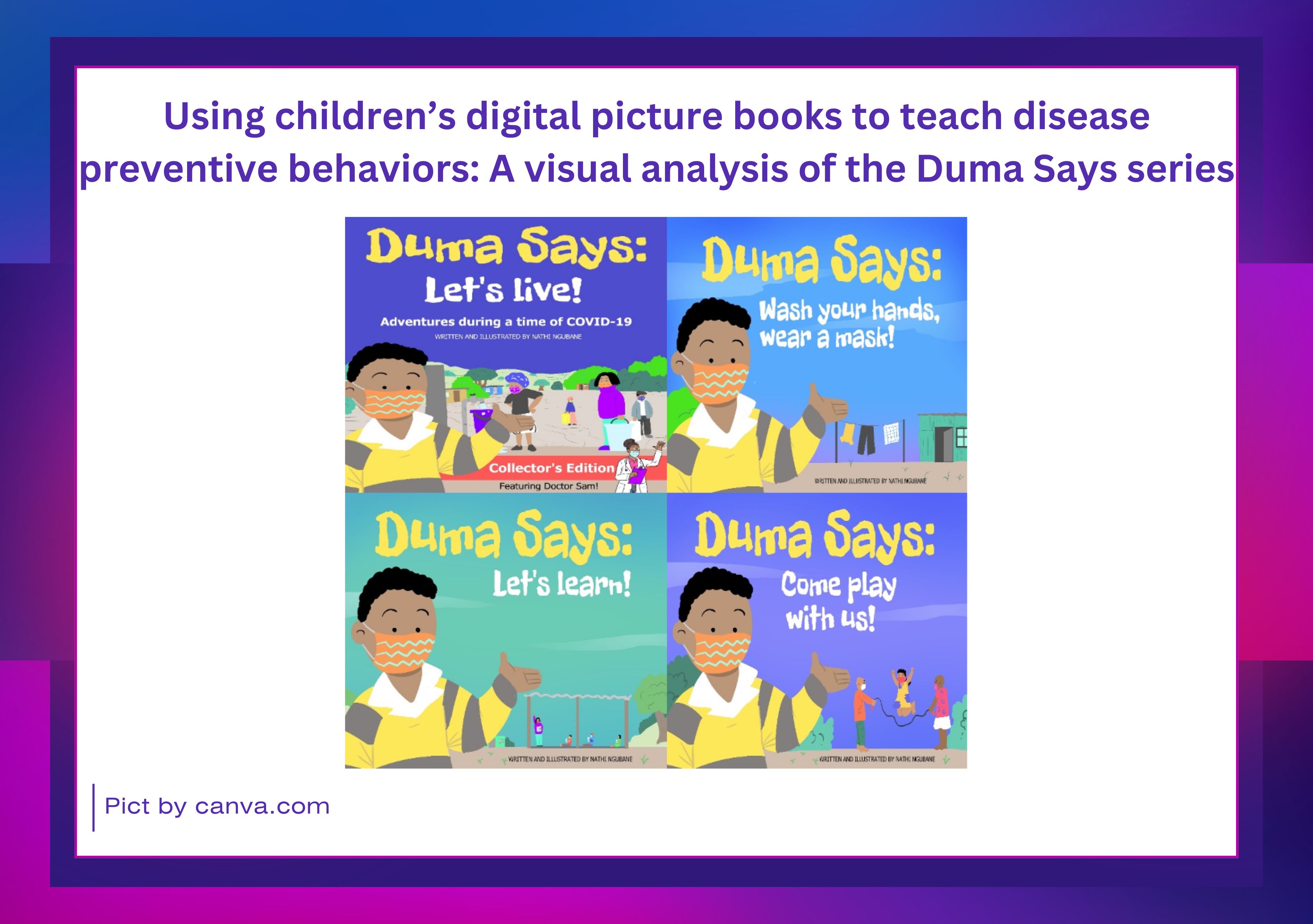
Using children’s digital picture books to teach disease preventive behaviors: A visual analysis of the Duma Says series
Esmeraldo Sarad1, Charmen Cabatuan2, Cleo Tionson3, April Grace Subong41. Mindanao State University - General Santos , PH2. Mindanao State University - General Santos , PH3. Mindanao State University - General Santos , PH4. Mindanao State University - General Santos , PH2026-04-06|page 89-101AbstractBackground: During health emergencies such as the COVID-19 pandemic, children require accessible and developmentally appropriate resources to understand disease prevention and health-related behaviors. Children’s digital picture books have emerged as a promising medium for conveying public health messages through visual storytelling and age-appropriate narratives.
Objectives: This study aimed to examine how children’s digital picture books represent disease preventive behaviors and moral values, using the Duma Says series as a case study.
Methods: A qualitative visual and textual analysis was conducted on four digital picture books from the Duma Says Collector’s Edition. The study employed qualitative visual analysis and a critical discourse approach to examine representations of hygiene practices, social responsibility, and community engagement embedded in both images and narratives.
Results: The findings indicate that the Duma Says series effectively integrates key COVID-19 preventive behaviors—such as handwashing, mask-wearing, social distancing, and sanitation—within child-friendly language and culturally contextualized visuals. In addition to promoting health practices, the books emphasize values of hope, responsibility, cooperation, and service, portraying children as active contributors to community well-being during a crisis.
Conclusions: Children’s digital picture books, such as the Duma Says series, function as effective educational tools for promoting disease prevention awareness and values-based learning. Incorporating culturally grounded digital picture books into early childhood and health education may strengthen children’s health literacy, emotional resilience, and sense of social responsibility during public health emergencies.APA Citation StyleSarad, E. , Cabatuan, C. , Tionson, C. , & Subong, A. G. (2026). Using children’s digital picture books to teach disease preventive behaviors: A visual analysis of the Duma Says series. Journal of Artificial Intelligence in Education & Learning Innovation, 89-101. https://doi.org/10.56003/jaieli.v1i2.572

1 - 2 of 2 items