Search
Search Results
##search.searchResults.foundPlural##
-


Development of KAREBU (cultural diversity card game) to enhance curiosity in fourth-grade elementary students
Etyka Rina Mahanani1, Erif Ahdhianto2, Yohannes Kurniawan Barus31. State University of Malang , ID2. State University of Malang , ID3. State University of Malang , ID2025-10-08|page 15-31AbstractBackground: Learning media is one of the important components of education.
Objectives: The purpose of this research and development was to develop the KAREBU (Cultural Diversity Card) learning media to strengthen the curiosity character of fourth-grade students in the subject of Natural and Social Sciences with local cultural diversity material that is valid, practical, and effective.
Methods: Using the ADDIE model (Analysis, Design, Development, Implementation, Evaluation), this study developed KAREBU cards integrated with augmented reality (AR) technology. This research instrument is in the form of interviews, observations, and questionnaires given to instrument experts, material experts, media experts, and users, including teachers and students. Data collection stages were carried out through observation, interviews, needs questionnaires, validation questionnaires, practicality questionnaires, and curiosity questionnaires before and after using the media.
Results: The results showed that the KAREBU learning media met the valid, practical, and effective criteria. KAREBU media received a validity score from material experts of 3.72 with a valid category, a score from media experts of 4.91 with a very valid category, and a score from users of 4.73 with a very valid category. The KAREBU learning media received a practicality score from teachers of 4.49 with a convenient category and a practicality score from students of 98.5% with a convenient category. The level of media effectiveness in strengthening students' curiosity was obtained from the results of the questionnaire before and after using the media, which was calculated using the N-Gain Score test with a value of 0.76 and high effectiveness criteria.
Conclusions: Therefore, it was concluded that the KAREBU learning media effectively strengthens students' curiosity. Further studies could explore the long-term impacts of KAREBU on cross-cultural empathy.
APA Citation StyleMahanani, E. R. , Ahdhianto, E. , & Barus, Y. K. (2025). Development of KAREBU (cultural diversity card game) to enhance curiosity in fourth-grade elementary students. Journal of Artificial Intelligence in Education & Learning Innovation, 15-31. https://doi.org/10.56003/jaieli.v1i1.526 -
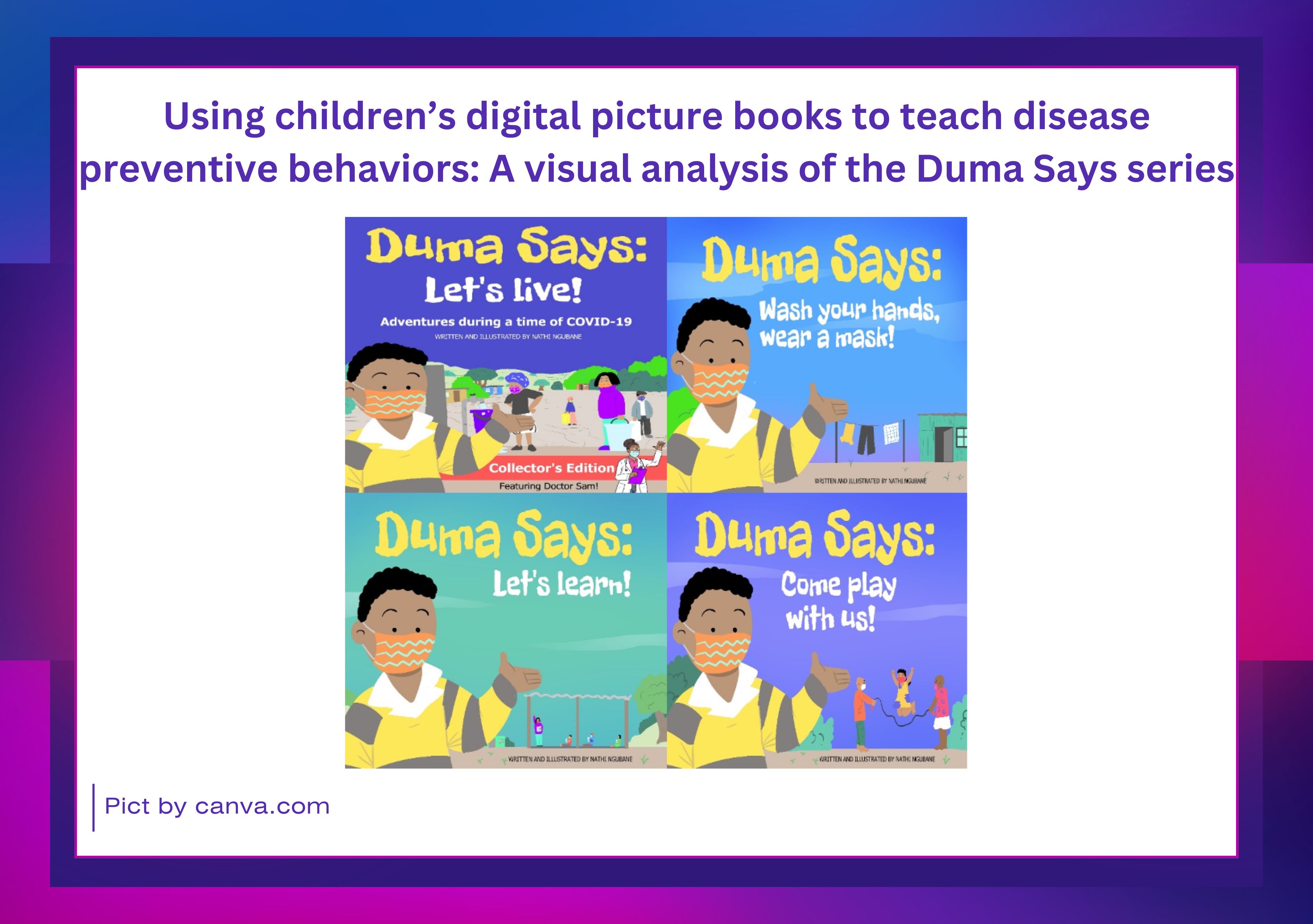
Using children’s digital picture books to teach disease preventive behaviors: A visual analysis of the Duma Says series
Esmeraldo Sarad1, Charmen Cabatuan2, Cleo Tionson3, April Grace Subong41. Mindanao State University - General Santos , PH2. Mindanao State University - General Santos , PH3. Mindanao State University - General Santos , PH4. Mindanao State University - General Santos , PH2026-04-06|page 89-101AbstractBackground: During health emergencies such as the COVID-19 pandemic, children require accessible and developmentally appropriate resources to understand disease prevention and health-related behaviors. Children’s digital picture books have emerged as a promising medium for conveying public health messages through visual storytelling and age-appropriate narratives.
Objectives: This study aimed to examine how children’s digital picture books represent disease preventive behaviors and moral values, using the Duma Says series as a case study.
Methods: A qualitative visual and textual analysis was conducted on four digital picture books from the Duma Says Collector’s Edition. The study employed qualitative visual analysis and a critical discourse approach to examine representations of hygiene practices, social responsibility, and community engagement embedded in both images and narratives.
Results: The findings indicate that the Duma Says series effectively integrates key COVID-19 preventive behaviors—such as handwashing, mask-wearing, social distancing, and sanitation—within child-friendly language and culturally contextualized visuals. In addition to promoting health practices, the books emphasize values of hope, responsibility, cooperation, and service, portraying children as active contributors to community well-being during a crisis.
Conclusions: Children’s digital picture books, such as the Duma Says series, function as effective educational tools for promoting disease prevention awareness and values-based learning. Incorporating culturally grounded digital picture books into early childhood and health education may strengthen children’s health literacy, emotional resilience, and sense of social responsibility during public health emergencies.APA Citation StyleSarad, E. , Cabatuan, C. , Tionson, C. , & Subong, A. G. (2026). Using children’s digital picture books to teach disease preventive behaviors: A visual analysis of the Duma Says series. Journal of Artificial Intelligence in Education & Learning Innovation, 89-101. https://doi.org/10.56003/jaieli.v1i2.572

1 - 2 of 2 items